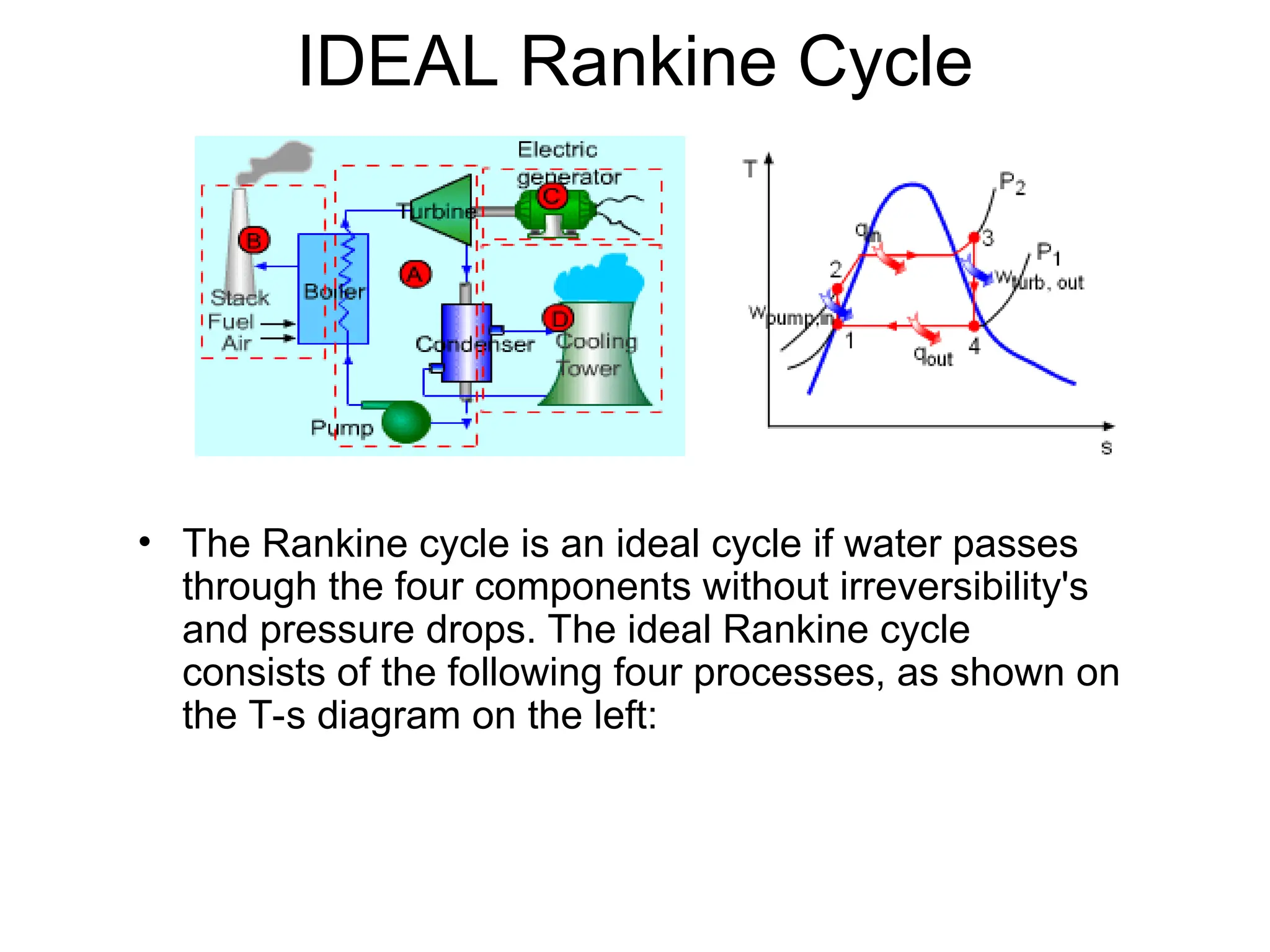
• The Rankine cycle is an ideal cycle if water passes
through the four components without irreversibility's
and pressure drops. The ideal Rankine cycle
consists of the following four processes, as shown on
the T-s diagram on the left:
IDEAL Rankine Cycle
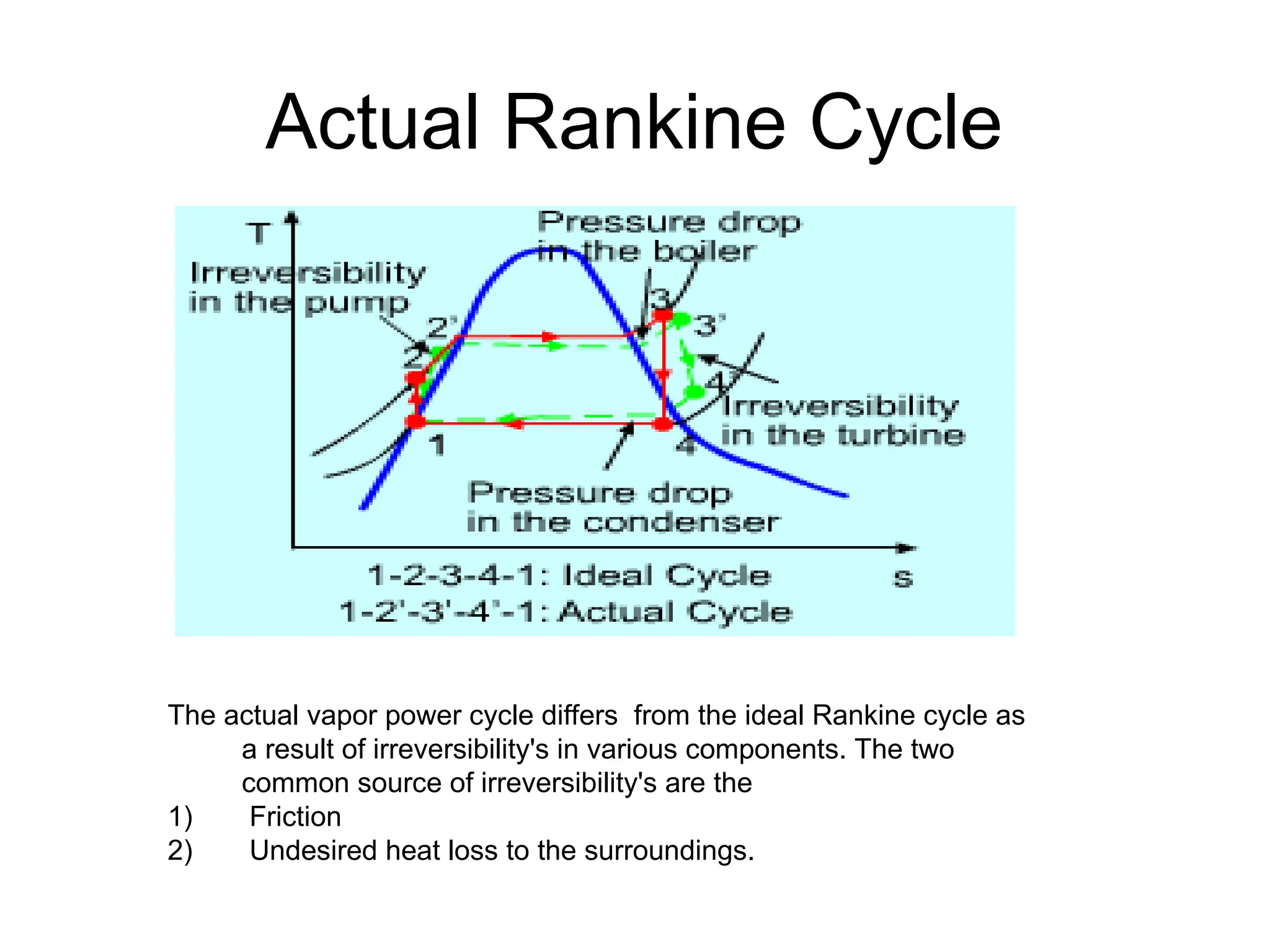
Actual Rankine Cycle
The actual vapor power cycle differs from the ideal Rankine cycle as
a result of irreversibility's in various components. The two
common source of irreversibility's are the
1) Friction
2) Undesired heat loss to the surroundings.
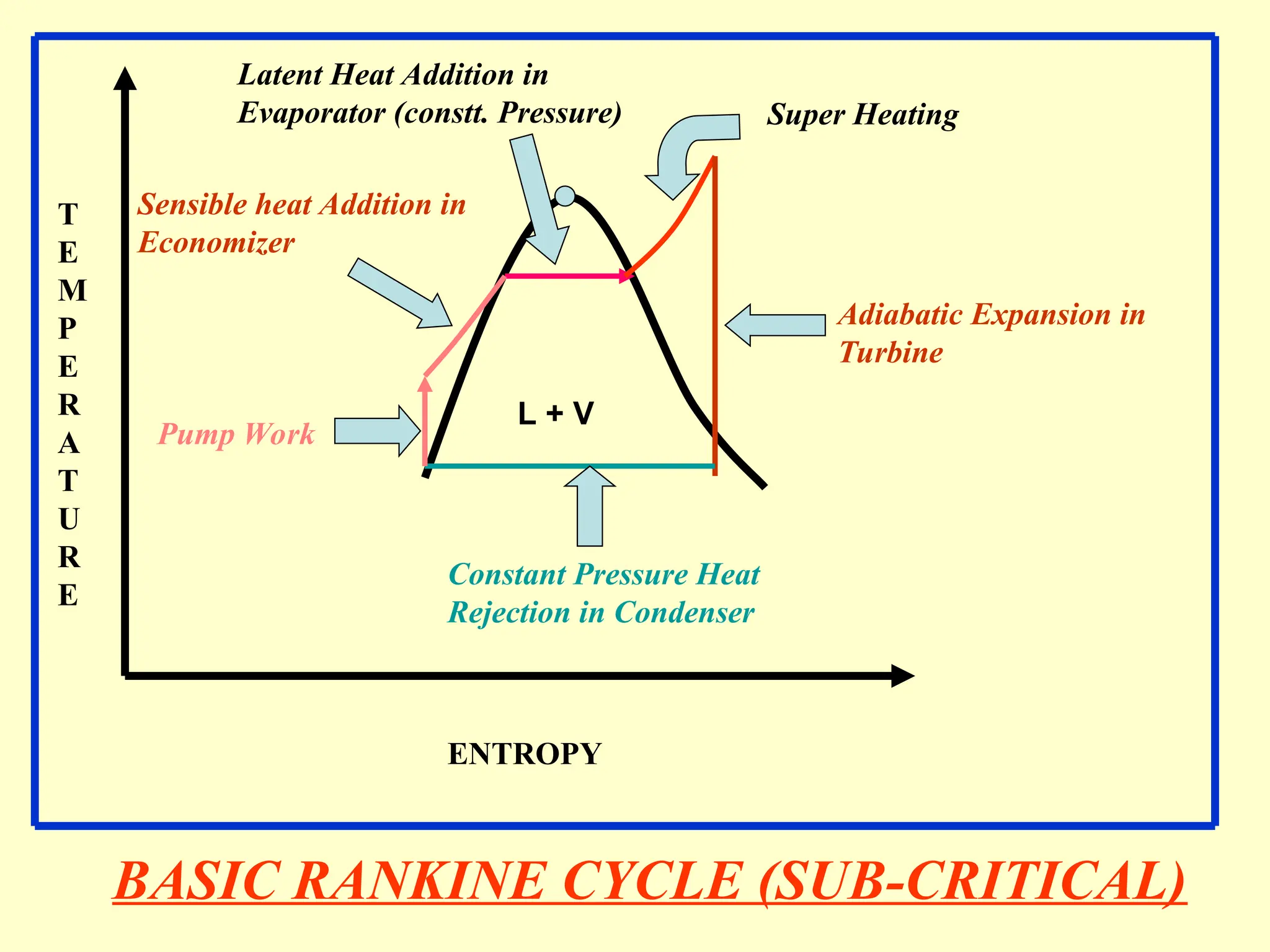
Adiabatic Expansion in
Turbine
Constant Pressure Heat
Rejection in Condenser
Pump Work
Sensible heat Addition in
Economizer
ENTROPY
T
E
M
P
E
R
A
T
U
R
E
Latent Heat Addition in
Evaporator (constt. Pressure) Super Heating
L + V
BASIC RANKINE CYCLE (SUB-CRITICAL)
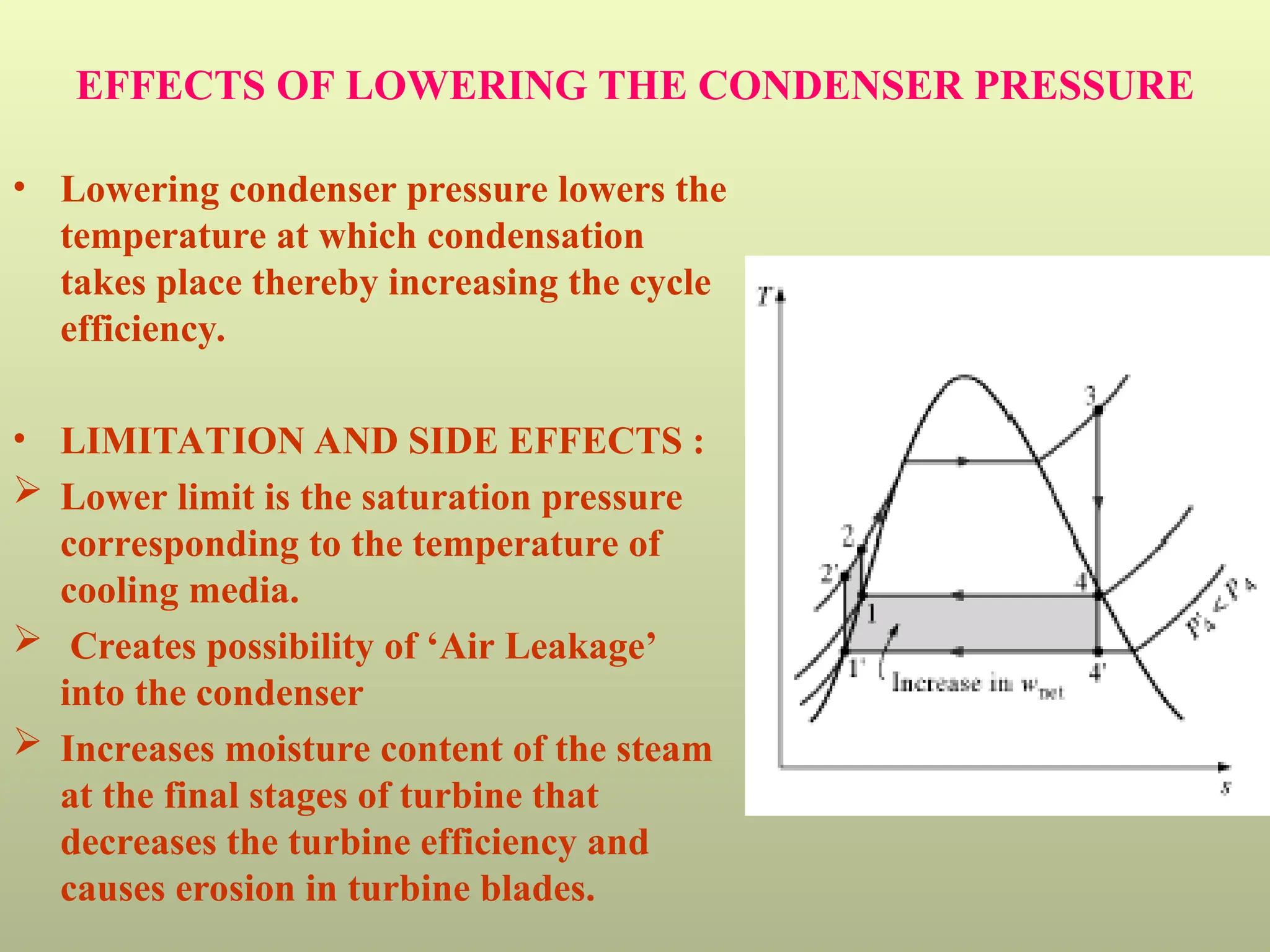
EFFECTS OF LOWERING THE CONDENSER PRESSURE
• Lowering condenser pressure lowers the
temperature at which condensation
takes place thereby increasing the cycle
efficiency.
• LIMITATION AND SIDE EFFECTS :
 Lower limit is the saturation pressure
corresponding to the temperature of
cooling media.
 Creates possibility of ‘Air Leakage’
into the condenser
 Increases moisture content of the steam
at the final stages of turbine that
decreases the turbine efficiency and
causes erosion in turbine blades.
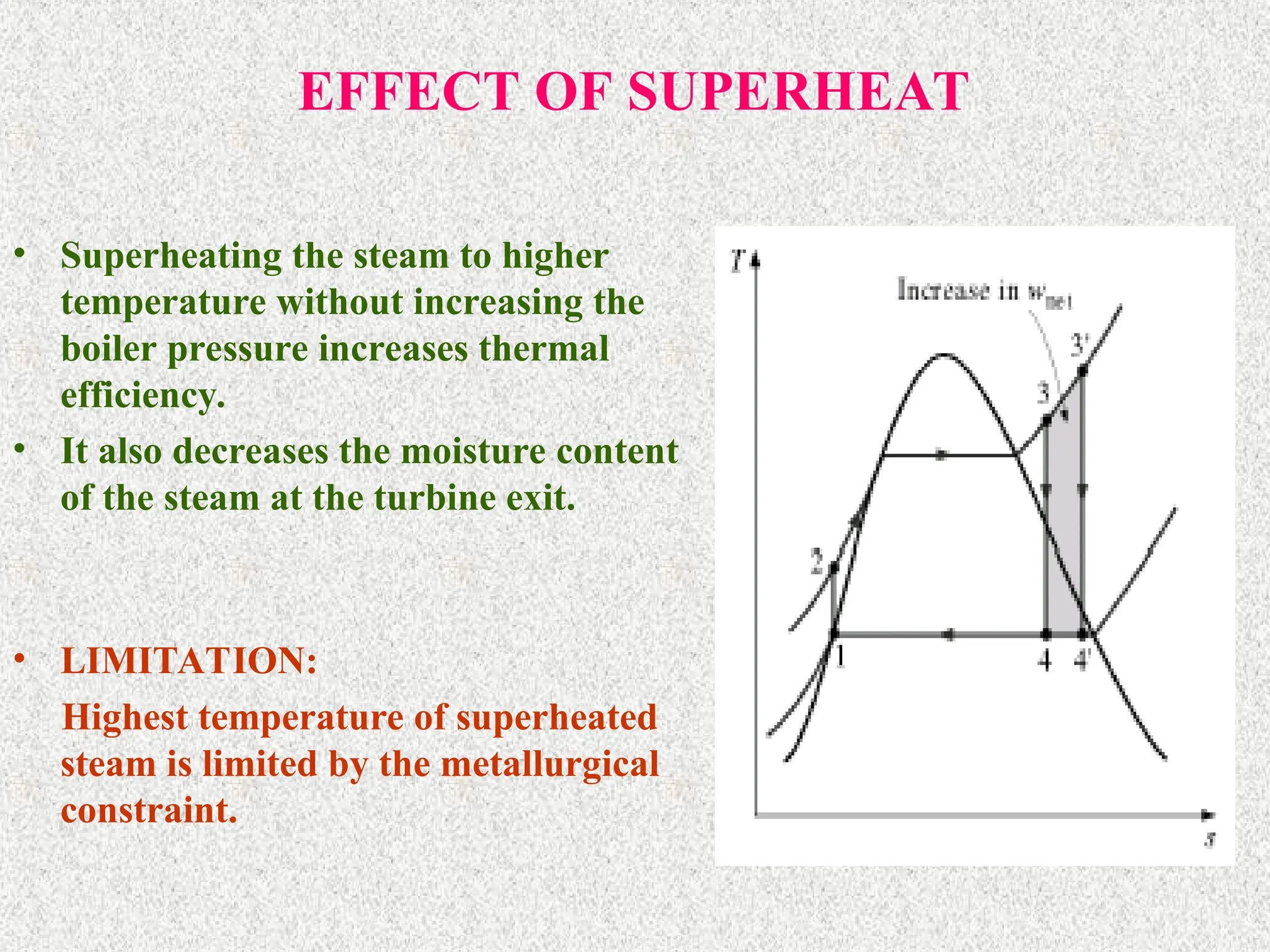
EFFECT OF SUPERHEAT
• Superheating the steam to higher
temperature without increasing the
boiler pressure increases thermal
efficiency.
• It also decreases the moisture content
of the steam at the turbine exit.
• LIMITATION:
Highest temperature of superheated
steam is limited by the metallurgical
constraint.
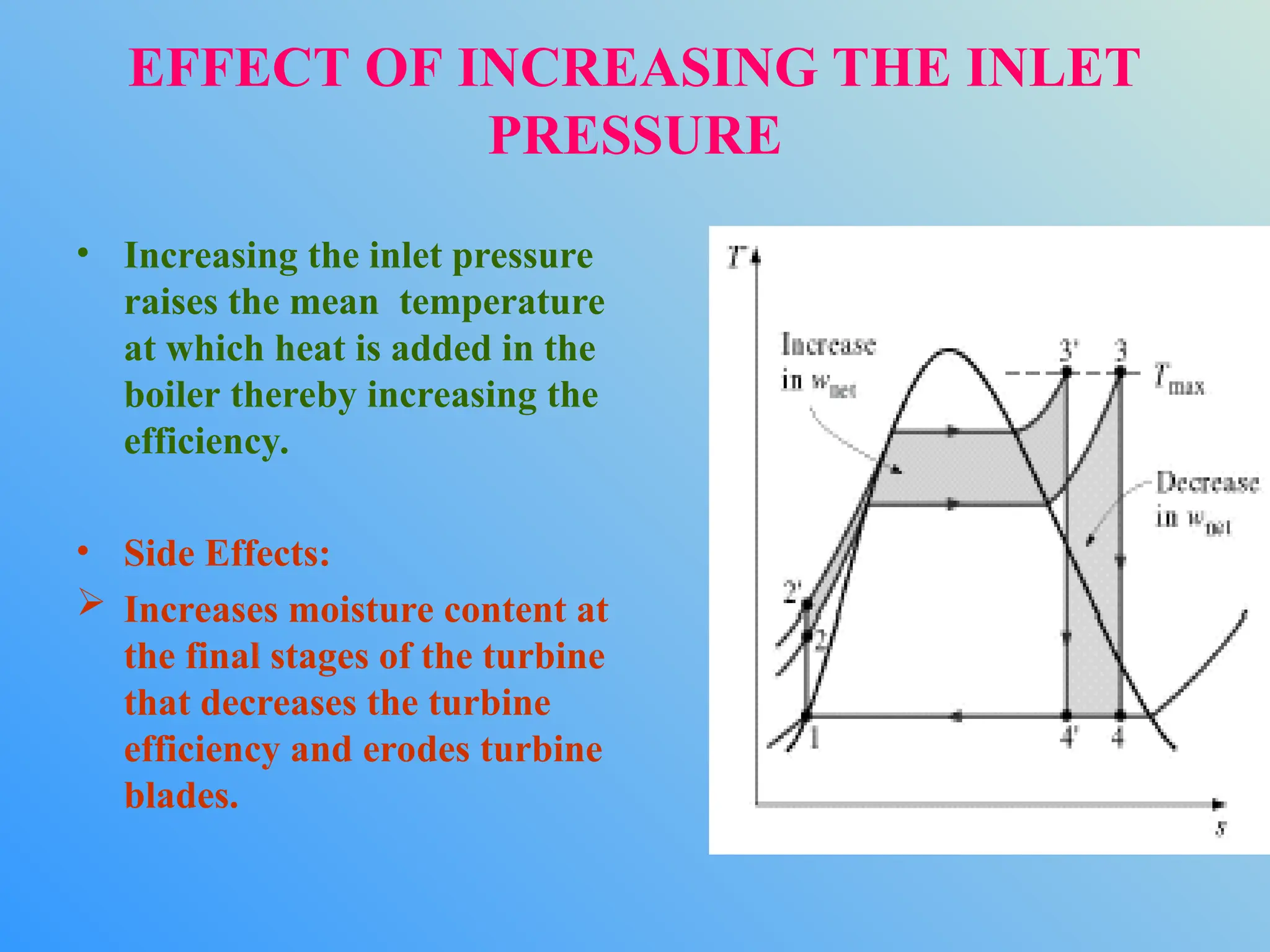
EFFECT OF INCREASING THE INLET
PRESSURE
• Increasing the inlet pressure
raises the mean temperature
at which heat is added in the
boiler thereby increasing the
efficiency.
• Side Effects:
 Increases moisture content at
the final stages of the turbine
that decreases the turbine
efficiency and erodes turbine
blades.
C
ENTROPY
T
E
M
P
E
R
A
T
U
R
E
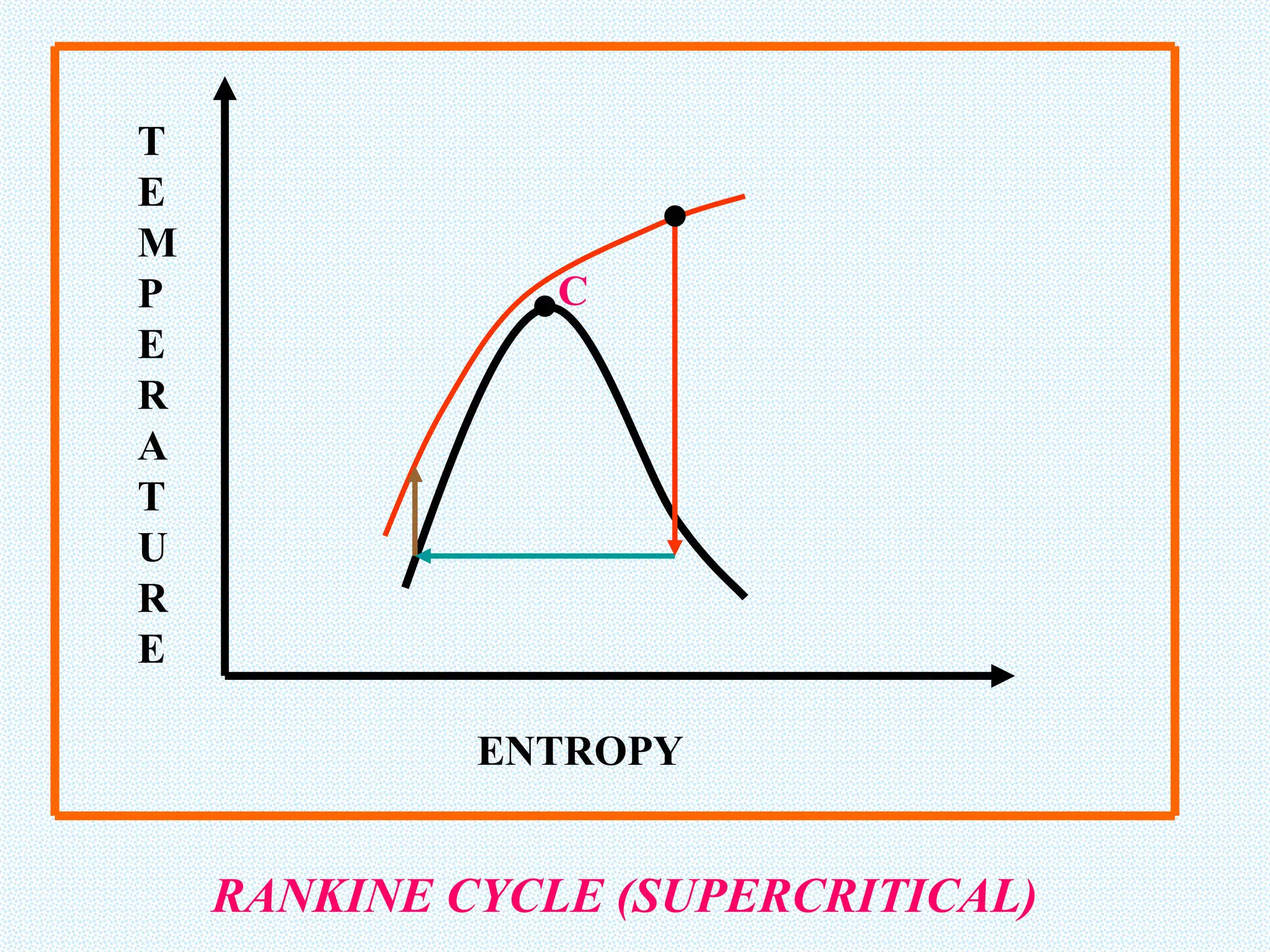
RANKINE CYCLE (SUPERCRITICAL)
• Efficiency of fossil fired power plants can be increased by increasing
the pressure and temperature of the steam at the turbine inlet, if
possible, even beyond the critical point of water ie supercritical state.
• Increased efficiency of the Rankine-Steam Power Cycle results in
decreased amounts of fossil fuel consumed and emissions generated
besides lowering the per unit generation cost.
• An increase in power plant efficiency from 30% to 50% is estimated to
decrease CO2 emission by nearly 30%.
• To allow these increases, advanced materials are needed that are able to
withstand higher temperatures and pressures in terms of :
 Strength,
 Creep, and
 oxidation resistance.
INCREASING THE EFFICIENCY OF
RANKINE CYCLE
RANKINEeeeeee Cycleee xyz 04.07.2024.ppt

  • 1.
    • The Rankinecycle is an ideal cycle if water passes through the four components without irreversibility's and pressure drops. The ideal Rankine cycle consists of the following four processes, as shown on the T-s diagram on the left: IDEAL Rankine Cycle
  • 2.
    Actual Rankine Cycle Theactual vapor power cycle differs from the ideal Rankine cycle as a result of irreversibility's in various components. The two common source of irreversibility's are the 1) Friction 2) Undesired heat loss to the surroundings.
  • 3.
    Adiabatic Expansion in Turbine ConstantPressure Heat Rejection in Condenser Pump Work Sensible heat Addition in Economizer ENTROPY T E M P E R A T U R E Latent Heat Addition in Evaporator (constt. Pressure) Super Heating L + V BASIC RANKINE CYCLE (SUB-CRITICAL)
  • 4.
    EFFECTS OF LOWERINGTHE CONDENSER PRESSURE • Lowering condenser pressure lowers the temperature at which condensation takes place thereby increasing the cycle efficiency. • LIMITATION AND SIDE EFFECTS :  Lower limit is the saturation pressure corresponding to the temperature of cooling media.  Creates possibility of ‘Air Leakage’ into the condenser  Increases moisture content of the steam at the final stages of turbine that decreases the turbine efficiency and causes erosion in turbine blades.
  • 5.
    EFFECT OF SUPERHEAT •Superheating the steam to higher temperature without increasing the boiler pressure increases thermal efficiency. • It also decreases the moisture content of the steam at the turbine exit. • LIMITATION: Highest temperature of superheated steam is limited by the metallurgical constraint.
  • 6.
    EFFECT OF INCREASINGTHE INLET PRESSURE • Increasing the inlet pressure raises the mean temperature at which heat is added in the boiler thereby increasing the efficiency. • Side Effects:  Increases moisture content at the final stages of the turbine that decreases the turbine efficiency and erodes turbine blades.
  • 7.
  • 9.
    • Efficiency offossil fired power plants can be increased by increasing the pressure and temperature of the steam at the turbine inlet, if possible, even beyond the critical point of water ie supercritical state. • Increased efficiency of the Rankine-Steam Power Cycle results in decreased amounts of fossil fuel consumed and emissions generated besides lowering the per unit generation cost. • An increase in power plant efficiency from 30% to 50% is estimated to decrease CO2 emission by nearly 30%. • To allow these increases, advanced materials are needed that are able to withstand higher temperatures and pressures in terms of :  Strength,  Creep, and  oxidation resistance. INCREASING THE EFFICIENCY OF RANKINE CYCLE