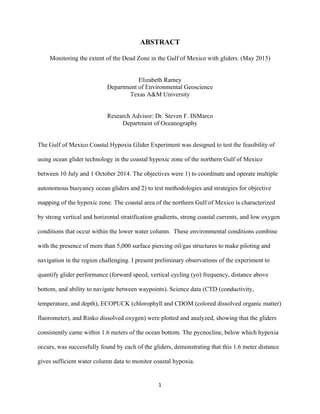
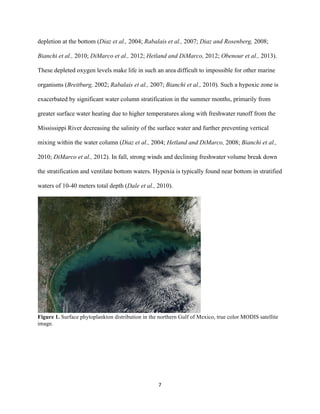
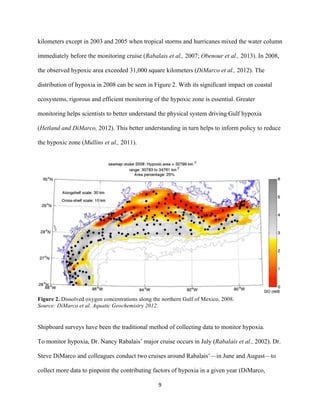
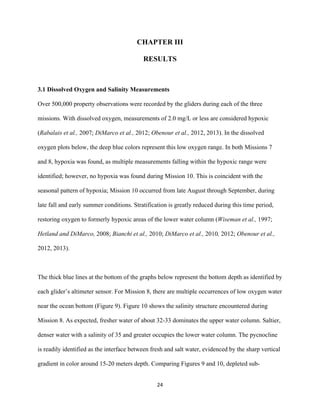
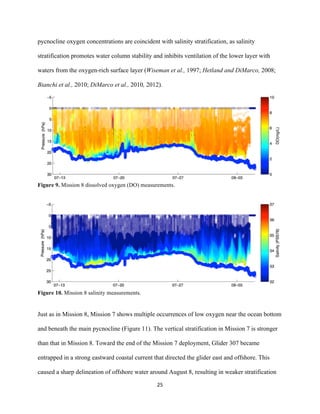
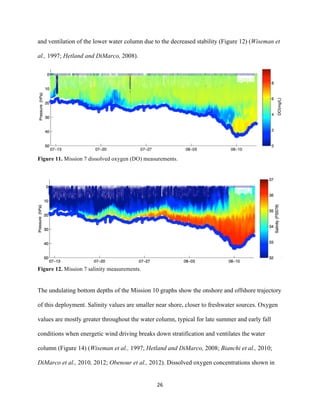
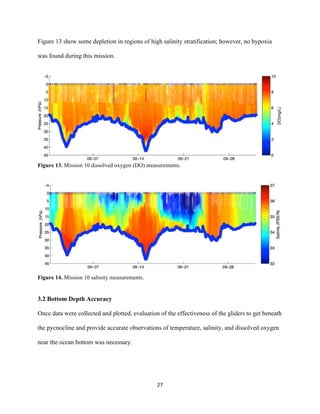
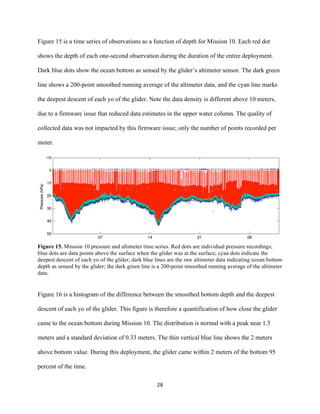
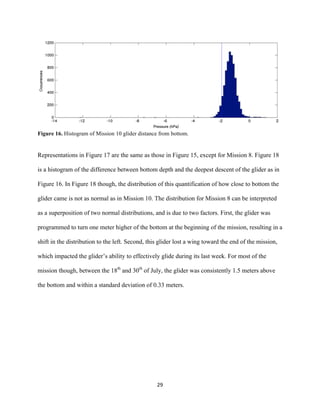
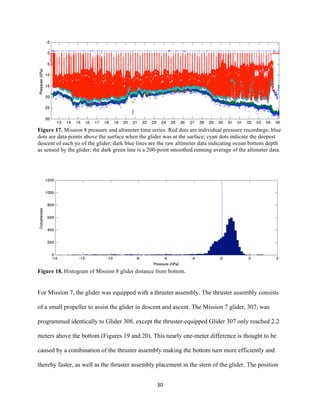
This document discusses a study that used autonomous ocean gliders to monitor the extent of hypoxia, or low dissolved oxygen levels, in the northern Gulf of Mexico. The hypoxic zone is driven by nutrient inputs from the Mississippi River that fuel phytoplankton growth, and stratification that prevents oxygen replenishment at depth. The goals of the study were to operate multiple gliders to objectively map the hypoxic zone and test their performance. Glider data on conductivity, temperature, depth, chlorophyll, colored dissolved organic matter, and dissolved oxygen were analyzed and showed the gliders could successfully find the pycnocline below which hypoxia occurs.


![Comments2_ East Central Portland coral survey 2009[1]](https://cdn.slidesharecdn.com/ss_thumbnails/7dbcf378-1bc7-422c-9248-f85ca0022636-160409022052-thumbnail.jpg?width=640&height=640&fit=bounds)


