Radiotherapy in COVID Era
Dr. MANISH DUTT
SENIOR RESIDENT
Department of Radiation Oncology
THE PANDEMIC
• COVID-19 declared as Public Health Emergency Of International Concern on
January 30 and pandemic by the WHO on 11th march
• Caused by SARS CoV 2
• 2,36,94,646 patients worldwide with 8,14,354 deaths as on 27th august 20
• India 33,14,953 patients with 60,390 deaths
• Dramatic overload of patients in need of hospitalization and intensive care
• Hospital activities have been reorganized to concentrate health-care efforts on
COVID-19 patients.
• Objectives -providing optimal care to our patients while ensuring the safety and
protection of all the health-care workers involved
CONCERN FOR CANCER PATIENTS
• Cancer patients with their immunosuppressive state are at increased risk of
contracting covid 19
• Older age, poor Performance Status and more frequent hospital admissions -risk
factors for contracting the virus
• higher occurrence rate of severe events in COVID-19 positive cancer patients(
Onder et al)*
• Cancer patients have a 5-fold higher risk of admission to the intensive care unit,
invasive ventilation, and death
*characteristics of patients dying in relation to COVID-19 in Italy. JAMA. 2020 Mar 23.
Cancer patients most vulnerable for COVID serious events
1. On cytotoxic chemotherapy
2. On radical RT for lung cancer
3. Haemato-Lymphoid malignancies at any treatment stage
4. On immunotherapy or other antibody treatments or on targeted therapies
5. BMT in last 6 months, or on immunosuppression drugs
6. Age >60 or cardiorespiratory diseases
CONCERN FOR ONCOLOGISTS & HOSPITAL STAFF
• Personal risk of exposure (PPE, work practices & nature of cases)
• Risk of exposure to family members (including elderly and children)
• Logistics & local constraints( shortage of manpower, ventilators)
• “COVID Free Sanctuary” for staff, patients & relatives
• Maintaining diagnostic & treatment services for outpatient / inpatient
• Ensuring supplies of PPE, consumables and testing kits
• High-volume centers will have greater difficulty providing service when staff
levels are decreased
PRIORITIZING PATIENTS*
• risk-benefit assessment on a case-by-case basis with morbidity assessment (covid
risk vs treatment benefit)
• reduce contacts and optimize the workforce
• Ensure appropriateness and the effectiveness of therapeutic approach
• categorizing tumor into
Rapidly proliferating (Category 1: lymphoma, head and neck, Ca lung,
cervical cancer, etc.)
Relatively less aggressive (Category 2 :breast, prostate, etc.)
*COVID-19 pandemic: Radiotherapy precautions and preparedness
Mummudi Naveen, Tibdewal Anil, Ghosh-Laskar Sarbani, Agarwal Jai Prakash
NHS PRIORITY LEVELS* FOR RADIOTHERAPY DURING COVID
• Priority 1: Radical, curative intent radiotherapy (RT) for Category 1 tumors and
patients who have already started treatment
• Priority 2: Urgent palliative RT for cord compression with salvageable
neurological function and superior vena cava obstruction syndrome
• Priority 3: Radical RT for Category 2 tumors or post op R1 or R2 (gross residual
disease)
• Priority 4: Palliative RT for alleviating symptoms to reduce burden on other
healthcare services if that would reduce the need for further interventions
• Priority 5: Adjuvant RT, if R0 resection and there is a ≤20% risk of local
recurrence at 10 years (ER+ve early breast ca) , Radical RT for prostate cancers on
neo-adjuvant hormone therapy
*COVID-19 pandemic: Radiotherapy precautions and preparedness
Mummudi Naveen, Tibdewal Anil, Ghosh-Laskar Sarbani, Agarwal Jai Prakash
MANAGING OUTPATIENT DEPARTMENT
• public safety measures (social distancing, wearing of surgical mask in public
spaces, following hand hygiene)
• Patients should be screened and triaged before they enter the hospital premise
• Offer telephonic/video consultation
• Refer patients to an oncology center close to their place of residence
• Referral letters can be given via mail/in electronic form
• During outpatient consultation, minimum 2 m distance should be maintained
• Invasive follow-up investigations can be postponed
PRINCIPLES OF RADIOTHERAPY TREATMENT*
• Prioritize based on diagnosis, prognosis, and urgency for initiating treatment
• Hypofractionation schedules should be pursued where appropriate (breast,
prostate, and lung cancer)
• Palliative RT treatment for symptomatic relief can be delivered in single fraction
or weekly once regimens
• patients with suspected or proven COVID-19 infection and who are symptomatic
treatment may be deferred until resolution
• Patients with infective symptoms but tested negative for COVID-19 may be
allowed to continue treatment with adequate protective equipment
*An advisory by the association of radiation oncologists of India for radiation therapy patients and staff among COVID 19 pandemic
Talapatra Kaustav, Gupta Manoj, Singh Kishore, Giri G V, Vashistha Rajesh
• Patients who have already started the treatment should continue their scheduled
therapeutic treatment as interruptions can preclude the expected outcome
• reasonable to explore different therapeutic strategies
1. When RT is planned with a palliative intent (opioids and NSAIDS)
2. When RT can be safely postponed in clinical management of a disease
(neoadjuvant hormone therapy in prostate cancer)
SOP FOLLOWED IN MACHINE AREA
• Appointments for treatment can be staggered throughout the day
• Thermal screening outside the treatment area
• Orfid cast not to be piled over each other
• Sanitize couch after each patient
• Telephonic weekly reviews of patients to reduce footfall in hospital
• Onboard imaging may be minimized to reduce the treatment time
• Symptomatic patients can be treated on a separate machine or at a different time
slot
• Credible updates and information related to COVID-19 infection and its
prevention can be displayed in patient waiting areas for awareness
INPATIENT CARE
• Routine admissions can be suspended
• Precautionary measures should be strictly observed, especially if the patient is
the elderly, frail, or with multiple/ uncontrolled comorbidities
• Doctors and other staff should be trained in infection prevention and control
practices
• Routine visiting hours by relatives may be suspended
• Maintain separate area of hospital for admission and isolation of proven cases,
limit exposure.
Practical suggestions for various cancers
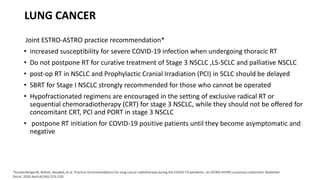
LUNG CANCER
Joint ESTRO-ASTRO practice recommendation*
• increased susceptibility for severe COVID-19 infection when undergoing thoracic RT
• Do not postpone RT for curative treatment of Stage 3 NSCLC ,LS-SCLC and palliative NSCLC
• post-op RT in NSCLC and Prophylactic Cranial Irradiation (PCI) in SCLC should be delayed
• SBRT for Stage I NSCLC strongly recommended for those who cannot be operated
• Hypofractionated regimens are encouraged in the setting of exclusive radical RT or
sequential chemoradiotherapy (CRT) for stage 3 NSCLC, while they should not be offered for
concomitant CRT, PCI and PORT in stage 3 NSCLC
• postpone RT initiation for COVID-19 positive patients until they become asymptomatic and
negative
*GuckenbergerM, BelkaC, BezjakA, et al. Practice recommendations for lung cancer radiotherapy during the COVID-19 pandemic: an ESTRO-ASTRO consensus statement. Radiother
Oncol. 2020 April;6(146):223–229.
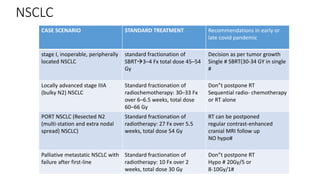
NSCLC
CASE SCENARIO STANDARD TREATMENT Recommendations in early or
late covid pandemic
stage I, inoperable, peripherally
located NSCLC
standard fractionation of
SBRT3–4 Fx total dose 45–54
Gy
Decision as per tumor growth
Single # SBRT(30-34 GY in single
#
Locally advanced stage IIIA
(bulky N2) NSCLC
Standard fractionation of
radiochemotherapy: 30–33 Fx
over 6–6.5 weeks, total dose
60–66 Gy
Don”t postpone RT
Sequential radio- chemotherapy
or RT alone
PORT NSCLC (Resected N2
(multi-station and extra nodal
spread) NSCLC)
Standard fractionation of
radiotherapy: 27 Fx over 5.5
weeks, total dose 54 Gy
RT can be postponed
regular contrast-enhanced
cranial MRI follow up
NO hypo#
Palliative metastatic NSCLC with
failure after first-line
Standard fractionation of
radiotherapy: 10 Fx over 2
weeks, total dose 30 Gy
Don”t postpone RT
Hypo # 20Gy/5 or
8-10Gy/1#
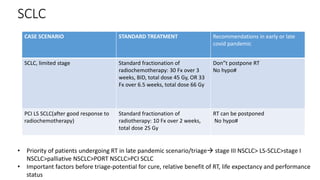
SCLC
CASE SCENARIO STANDARD TREATMENT Recommendations in early or late
covid pandemic
SCLC, limited stage Standard fractionation of
radiochemotherapy: 30 Fx over 3
weeks, BID, total dose 45 Gy, OR 33
Fx over 6.5 weeks, total dose 66 Gy
Don”t postpone RT
No hypo#
PCI LS SCLC(after good response to
radiochemotherapy)
Standard fractionation of
radiotherapy: 10 Fx over 2 weeks,
total dose 25 Gy
RT can be postponed
No hypo#
• Priority of patients undergoing RT in late pandemic scenario/triage stage III NSCLC> LS-SCLC>stage I
NSCLC>palliative NSCLC>PORT NSCLC>PCI SCLC
• Important factors before triage-potential for cure, relative benefit of RT, life expectancy and performance
status
RECTAL CANCER
• Short-course RT regimen (25 Gy in 5 Gy per fraction) followed by delayed surgery
(5–13 weeks) for T3N0-2 patients
• pCR significantly higher in delayed surgery (13-week interval), with no
differences in sphincter preservation and negative margin resection rates
compared to immediate surgery *
• Preserve long-course RT (50.4–54 Gy in 1.8 Gy per fraction) + concurrent
Chemotherapy for clinical T4 disease*
• Oral therapies instead of systemic intravenous chemotherapy as concomitant
treatment (non inferiority of capecitabine over 5 FU infusion
* De FeliceF, PetruccianiN . Treatment approach in locally advanced rectal cancer during coronavirus (COVID-19) pandemic: long course or short course? Colorectal
Dis. 2020 Apr 1;22(6):642–643.
PROSTATE CANCER
• Active surveillance preferred for very low, low-risk prostate cancer
• Neo-adjuvant hormonal therapy strategies to postpone radical treatment in
intermediate and high-risk
• For patients with non-metastatic disease, avoid initiating ADT for patients with
PSA doubling time > 9 months
• Early salvage radiotherapy should be chosen over adjuvant radiotherapy after
radical prostatectomy
• prophylactic whole pelvic radiation therapy (WPRT) should be avoided during this
time due to the increased risk of grade IV lymphopenia
• shorter RT regimen ( 5–7 fractions in total) should be preferred*
* Care of prostate cancer patients during the COVID-19 pandemic: recommendations of the NCCN
• Defer initial post-treatment monitoring (PSA-based testing and digital rectal exam
[DRE]) until deemed safe
• Consideration to use 3-, 4-, or 6-month formulations of ADT should be preferred
over 1-month injections
• Defer repeat imaging over time if PSA is declining and absence of symptoms until
risk of COVID-19 has resolved.
HEAD AND NECK CANCER
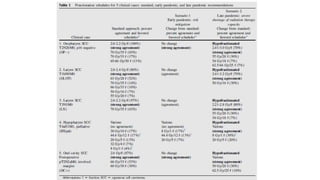
recommendations for 5 common clinical cases*
1. Oropharyngeal (SCC), T2 with multiple ipsilateral nodes <3 cm, M0; this was
subdivided into 1a: p16 negative (OP-) and 1b: p16 positive (OP+)
2. Laryngeal glottic SCC, T1bN0M0 (GLOT)
3. Laryngeal SCC, T3N1M0 with impaired vocal cord mobility (LX)
4. Metastatic hypopharyngeal SCC, T4aN1M1 obstructed, bleeding, with several lung
metastases (HXpal)
5. Resected oral cavity SCC, pT2N2aM0; this was subdivided into 5a: with positive
margins (OC+) and 5b: with close but clear 3 mm margins (OC-
*ThomsonDJ, PalmaD, GuckenbergerM, et al. Practice recommendations for risk-adapted head and neck cancer radiotherapy during the COVID-19 pandemic: an ASTRO-ESTRO
consensus statement. Int J Radiat Oncol Biol Phys. 2020 Apr 14;S0360-3016(20):31034–31038.
ASTRO and ESTRO consensus*
• In a situation of severly reduced resources priority from high to low is OP+ > OP-
> LX > OC+ >GLOT > Hxpal> OC-
• HNSCC radical radiation therapy is high or very high priority.
• Do not postpone the initiation of radiation therapy by more than 4-6
weeks(except for HX pall, where a single fraction could be used)
• Delay initiation of RT until recovery for SARS-CoV-2 + patients
• continue RT in those with SARS-CoV-2 related mild symptoms who had completed
more than 2 weeks of treatment
• Interrupt RT in case of severe symptoms until recovery
*ThomsonDJ, PalmaD, GuckenbergerM, et al. Practice recommendations for risk-adapted head and neck cancer radiotherapy during the COVID-19 pandemic: an ASTRO-ESTRO
consensus statement. Int J Radiat Oncol Biol Phys. 2020 Apr 14;S0360-3016(20):31034–31038.
ASTRO and ESTRO consensus
• In early pandemic situation standard treatment (CTRT) but in late pandemic
scenario consider hypo # RT
• use concomitant chemotherapy only with conventional or mildly hypo# RT of 2.4
Gy/fraction
• In the case of absolute operating room closure radical CTRT is recommended for
cases that are typically managed by primary surgery(as opposed to clinical
surveillance, systemic therapy, or palliative RT) ex. Oral tongue, T4a N2B larynx
• for oral cavity cancers waiting for surgical capacity upto 8 weeks can be done for
early stage and upto 4 weeks for locally advanced cancers
• Do not use induction chemotherapy to delay initiation of treatment
• Prophylactic NG tube insertion should be avoided
• For older patients or those with comorbidities the use of chemotherapy should
be restricted.
• Simpler planning techniques whenever feasible can be used to reduce machine
burden and optimize treatment
• Shortening overall treatment time of CRT regimen by using accelerated schedules
(six fractions per week), or Simultaneous Integrated Boost (SIB) technique can be
considered
BREAST CANCER
three priority levels as per COVID-19 Pandemic Breast Cancer Consortium
• OPD consultations via telemedicine.
A. patients who need urgent treatment (immediately life threatening, febrile
neutropenia, intractable pain, clinically unstable post op pt.) in whom a short
delay will significantly alter the prognosis
B. patients who should start treatment before the end of the pandemic and a
short delay (e.g. 6–12 weeks) would not impact overall outcome for these
patients(new pt, on NACT, planned for RT)
C. patients for whom therapy can be safely rescheduled until the pandemic is
over(on follow up, on oral agents)
DietzJR, MoranMS, IsakoffSJ, et al. Recommendations for prioritization, treatment, and triage of breast cancer patients during the COVID-19 pandemic. The COVID-19 pandemic breast
cancer consortium. Breast Cancer Res Treat. 2020 Apr 24;181(3):487–497
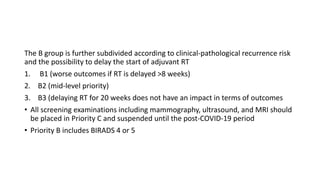
The B group is further subdivided according to clinical-pathological recurrence risk
and the possibility to delay the start of adjuvant RT
1. B1 (worse outcomes if RT is delayed >8 weeks)
2. B2 (mid-level priority)
3. B3 (delaying RT for 20 weeks does not have an impact in terms of outcomes
• All screening examinations including mammography, ultrasound, and MRI should
be placed in Priority C and suspended until the post-COVID-19 period
• Priority B includes BIRADS 4 or 5
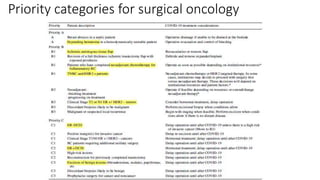
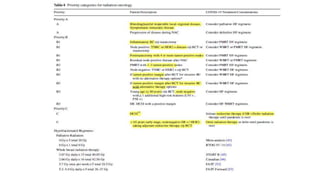
Priority categories for surgical oncology
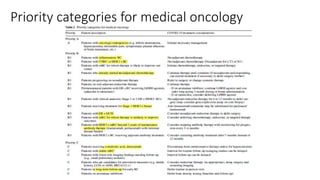
Priority categories for medical oncology
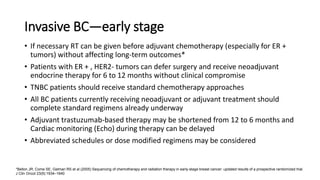
Invasive BC—early stage
• If necessary RT can be given before adjuvant chemotherapy (especially for ER +
tumors) without affecting long-term outcomes*
• Patients with ER + , HER2- tumors can defer surgery and receive neoadjuvant
endocrine therapy for 6 to 12 months without clinical compromise
• TNBC patients should receive standard chemotherapy approaches
• All BC patients currently receiving neoadjuvant or adjuvant treatment should
complete standard regimens already underway
• Adjuvant trastuzumab-based therapy may be shortened from 12 to 6 months and
Cardiac monitoring (Echo) during therapy can be delayed
• Abbreviated schedules or dose modified regimens may be considered
*Bellon JR, Come SE, Gelman RS et al (2005) Sequencing of chemotherapy and radiation therapy in early-stage breast cancer: updated results of a prospective randomized trial.
J Clin Oncol 23(9):1934–1940
Invasive BC—advanced stage
• Patients without signs or symptoms of tumor progression may defer routine
restaging scans
• oral targeted agents (CDK4/6, mTOR) in ER + , metastatic BC must be weighed
against the increased risk of adverse events.
• Dose reduction can minimize treatment related toxicities
• Trastuzumab and pertuzumab for metastatic HER2 + BC may reasonably be
administered at longer intervals (e.g. 4 weeks)
• Prophylactic administration of G-CSF growth factor support to minimize
neutropenia
Principles of radiation therapy in covid era
• short palliative RT regimens should be utilized for symptomatic priority A patients
• No or delayed RT after pandemic in select
• No brachytherapy but external beam APBI
• Boost to tumor bed when indicated should preferably be simultaneous and
integrated
• Prophylactic nodal RT only in high risk cases
• Keep RT technique as simple as possible
• CT-RT sequencing may alter (deferred Chemo)
• As few fractions for Whole Breast / CW / Boost RT -Hypo & Ultra
Hypofractionation
• Moderate-hypofractionated schemes are strongly recommended
• Hypo# regimens 40Gy/15#, 42.5Gy/16# should be used
• (28–30 Gy FAST) or (26 Gy FAST FORWARD) can be considered as valid options in
selected pts ( early breast ca with negative margins)*
• Safe omission of treatment for elderly patients who underwent adjuvant
endocrine therapy#
#DragunAE, AjkayNJ, RileyEC, et al. First results of a phase 2 trial of once-weekly hypofractionated breast irradiation (WHBI) for early-stage breast cancer. Int J Radiat Oncol
Biol Phys. 2017;98:595–602
#KunklerIH, WilliamsLJ, JackWJL, et al. Breast-conserving surgery with or without irradiation in women aged 65 years or older with early breast cancer (PRIME II): a randomized controlled trial.
Lancet Oncol. 2015;16:266–273.
Pre-Op RT for Breast Cancer
• No Level I evidence
• Patient selection:
►Newly diagnosed IBC with no option of systemic therapy.
►Completion of all Neo adjtherapy with no option of endocrine/Her2
directed therapy.
►Locoregional progression/ poor response despite use of all available
neoadjuvanttherapies.
BRACHYTHERAPY
• high level of priority for all those patients diagnosed with gynecologic, breast, or
prostate cancer for whom temporizing options (e.g. endocrine therapy) may not
be possible*
• Advisable to maintain BT services available for the oncologic patients as delay in
brachytherapy may affect oncological outcomes
*WilliamsVM, KahnJM, HarkenriderMM, et al. COVID-19 impact on timing of brachytherapy treatment and strategies for risk mitigation. Brachytherapy. 2020 Apr 21;S1538-
4721(20):30079–30089.
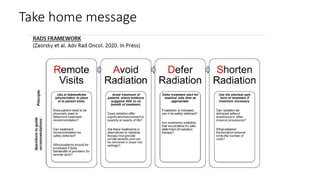
Take home message

Radiotherapy in covid era

  • 1.
    Radiotherapy in COVIDEra Dr. MANISH DUTT SENIOR RESIDENT Department of Radiation Oncology
  • 2.
    THE PANDEMIC • COVID-19declared as Public Health Emergency Of International Concern on January 30 and pandemic by the WHO on 11th march • Caused by SARS CoV 2 • 2,36,94,646 patients worldwide with 8,14,354 deaths as on 27th august 20 • India 33,14,953 patients with 60,390 deaths • Dramatic overload of patients in need of hospitalization and intensive care • Hospital activities have been reorganized to concentrate health-care efforts on COVID-19 patients. • Objectives -providing optimal care to our patients while ensuring the safety and protection of all the health-care workers involved
  • 3.
    CONCERN FOR CANCERPATIENTS • Cancer patients with their immunosuppressive state are at increased risk of contracting covid 19 • Older age, poor Performance Status and more frequent hospital admissions -risk factors for contracting the virus • higher occurrence rate of severe events in COVID-19 positive cancer patients( Onder et al)* • Cancer patients have a 5-fold higher risk of admission to the intensive care unit, invasive ventilation, and death *characteristics of patients dying in relation to COVID-19 in Italy. JAMA. 2020 Mar 23.
  • 4.
    Cancer patients mostvulnerable for COVID serious events 1. On cytotoxic chemotherapy 2. On radical RT for lung cancer 3. Haemato-Lymphoid malignancies at any treatment stage 4. On immunotherapy or other antibody treatments or on targeted therapies 5. BMT in last 6 months, or on immunosuppression drugs 6. Age >60 or cardiorespiratory diseases
  • 5.
    CONCERN FOR ONCOLOGISTS& HOSPITAL STAFF • Personal risk of exposure (PPE, work practices & nature of cases) • Risk of exposure to family members (including elderly and children) • Logistics & local constraints( shortage of manpower, ventilators) • “COVID Free Sanctuary” for staff, patients & relatives • Maintaining diagnostic & treatment services for outpatient / inpatient • Ensuring supplies of PPE, consumables and testing kits • High-volume centers will have greater difficulty providing service when staff levels are decreased
  • 6.
    PRIORITIZING PATIENTS* • risk-benefitassessment on a case-by-case basis with morbidity assessment (covid risk vs treatment benefit) • reduce contacts and optimize the workforce • Ensure appropriateness and the effectiveness of therapeutic approach • categorizing tumor into Rapidly proliferating (Category 1: lymphoma, head and neck, Ca lung, cervical cancer, etc.) Relatively less aggressive (Category 2 :breast, prostate, etc.) *COVID-19 pandemic: Radiotherapy precautions and preparedness Mummudi Naveen, Tibdewal Anil, Ghosh-Laskar Sarbani, Agarwal Jai Prakash
  • 7.
    NHS PRIORITY LEVELS*FOR RADIOTHERAPY DURING COVID • Priority 1: Radical, curative intent radiotherapy (RT) for Category 1 tumors and patients who have already started treatment • Priority 2: Urgent palliative RT for cord compression with salvageable neurological function and superior vena cava obstruction syndrome • Priority 3: Radical RT for Category 2 tumors or post op R1 or R2 (gross residual disease) • Priority 4: Palliative RT for alleviating symptoms to reduce burden on other healthcare services if that would reduce the need for further interventions • Priority 5: Adjuvant RT, if R0 resection and there is a ≤20% risk of local recurrence at 10 years (ER+ve early breast ca) , Radical RT for prostate cancers on neo-adjuvant hormone therapy *COVID-19 pandemic: Radiotherapy precautions and preparedness Mummudi Naveen, Tibdewal Anil, Ghosh-Laskar Sarbani, Agarwal Jai Prakash
  • 8.
    MANAGING OUTPATIENT DEPARTMENT •public safety measures (social distancing, wearing of surgical mask in public spaces, following hand hygiene) • Patients should be screened and triaged before they enter the hospital premise • Offer telephonic/video consultation • Refer patients to an oncology center close to their place of residence • Referral letters can be given via mail/in electronic form • During outpatient consultation, minimum 2 m distance should be maintained • Invasive follow-up investigations can be postponed
  • 9.
    PRINCIPLES OF RADIOTHERAPYTREATMENT* • Prioritize based on diagnosis, prognosis, and urgency for initiating treatment • Hypofractionation schedules should be pursued where appropriate (breast, prostate, and lung cancer) • Palliative RT treatment for symptomatic relief can be delivered in single fraction or weekly once regimens • patients with suspected or proven COVID-19 infection and who are symptomatic treatment may be deferred until resolution • Patients with infective symptoms but tested negative for COVID-19 may be allowed to continue treatment with adequate protective equipment *An advisory by the association of radiation oncologists of India for radiation therapy patients and staff among COVID 19 pandemic Talapatra Kaustav, Gupta Manoj, Singh Kishore, Giri G V, Vashistha Rajesh
  • 10.
    • Patients whohave already started the treatment should continue their scheduled therapeutic treatment as interruptions can preclude the expected outcome • reasonable to explore different therapeutic strategies 1. When RT is planned with a palliative intent (opioids and NSAIDS) 2. When RT can be safely postponed in clinical management of a disease (neoadjuvant hormone therapy in prostate cancer)
  • 11.
    SOP FOLLOWED INMACHINE AREA • Appointments for treatment can be staggered throughout the day • Thermal screening outside the treatment area • Orfid cast not to be piled over each other • Sanitize couch after each patient • Telephonic weekly reviews of patients to reduce footfall in hospital • Onboard imaging may be minimized to reduce the treatment time • Symptomatic patients can be treated on a separate machine or at a different time slot • Credible updates and information related to COVID-19 infection and its prevention can be displayed in patient waiting areas for awareness
  • 12.
    INPATIENT CARE • Routineadmissions can be suspended • Precautionary measures should be strictly observed, especially if the patient is the elderly, frail, or with multiple/ uncontrolled comorbidities • Doctors and other staff should be trained in infection prevention and control practices • Routine visiting hours by relatives may be suspended • Maintain separate area of hospital for admission and isolation of proven cases, limit exposure.
  • 13.
  • 14.
    LUNG CANCER Joint ESTRO-ASTROpractice recommendation* • increased susceptibility for severe COVID-19 infection when undergoing thoracic RT • Do not postpone RT for curative treatment of Stage 3 NSCLC ,LS-SCLC and palliative NSCLC • post-op RT in NSCLC and Prophylactic Cranial Irradiation (PCI) in SCLC should be delayed • SBRT for Stage I NSCLC strongly recommended for those who cannot be operated • Hypofractionated regimens are encouraged in the setting of exclusive radical RT or sequential chemoradiotherapy (CRT) for stage 3 NSCLC, while they should not be offered for concomitant CRT, PCI and PORT in stage 3 NSCLC • postpone RT initiation for COVID-19 positive patients until they become asymptomatic and negative *GuckenbergerM, BelkaC, BezjakA, et al. Practice recommendations for lung cancer radiotherapy during the COVID-19 pandemic: an ESTRO-ASTRO consensus statement. Radiother Oncol. 2020 April;6(146):223–229.
  • 15.
    NSCLC CASE SCENARIO STANDARDTREATMENT Recommendations in early or late covid pandemic stage I, inoperable, peripherally located NSCLC standard fractionation of SBRT3–4 Fx total dose 45–54 Gy Decision as per tumor growth Single # SBRT(30-34 GY in single # Locally advanced stage IIIA (bulky N2) NSCLC Standard fractionation of radiochemotherapy: 30–33 Fx over 6–6.5 weeks, total dose 60–66 Gy Don”t postpone RT Sequential radio- chemotherapy or RT alone PORT NSCLC (Resected N2 (multi-station and extra nodal spread) NSCLC) Standard fractionation of radiotherapy: 27 Fx over 5.5 weeks, total dose 54 Gy RT can be postponed regular contrast-enhanced cranial MRI follow up NO hypo# Palliative metastatic NSCLC with failure after first-line Standard fractionation of radiotherapy: 10 Fx over 2 weeks, total dose 30 Gy Don”t postpone RT Hypo # 20Gy/5 or 8-10Gy/1#
  • 16.
    SCLC CASE SCENARIO STANDARDTREATMENT Recommendations in early or late covid pandemic SCLC, limited stage Standard fractionation of radiochemotherapy: 30 Fx over 3 weeks, BID, total dose 45 Gy, OR 33 Fx over 6.5 weeks, total dose 66 Gy Don”t postpone RT No hypo# PCI LS SCLC(after good response to radiochemotherapy) Standard fractionation of radiotherapy: 10 Fx over 2 weeks, total dose 25 Gy RT can be postponed No hypo# • Priority of patients undergoing RT in late pandemic scenario/triage stage III NSCLC> LS-SCLC>stage I NSCLC>palliative NSCLC>PORT NSCLC>PCI SCLC • Important factors before triage-potential for cure, relative benefit of RT, life expectancy and performance status
  • 17.
    RECTAL CANCER • Short-courseRT regimen (25 Gy in 5 Gy per fraction) followed by delayed surgery (5–13 weeks) for T3N0-2 patients • pCR significantly higher in delayed surgery (13-week interval), with no differences in sphincter preservation and negative margin resection rates compared to immediate surgery * • Preserve long-course RT (50.4–54 Gy in 1.8 Gy per fraction) + concurrent Chemotherapy for clinical T4 disease* • Oral therapies instead of systemic intravenous chemotherapy as concomitant treatment (non inferiority of capecitabine over 5 FU infusion * De FeliceF, PetruccianiN . Treatment approach in locally advanced rectal cancer during coronavirus (COVID-19) pandemic: long course or short course? Colorectal Dis. 2020 Apr 1;22(6):642–643.
  • 18.
    PROSTATE CANCER • Activesurveillance preferred for very low, low-risk prostate cancer • Neo-adjuvant hormonal therapy strategies to postpone radical treatment in intermediate and high-risk • For patients with non-metastatic disease, avoid initiating ADT for patients with PSA doubling time > 9 months • Early salvage radiotherapy should be chosen over adjuvant radiotherapy after radical prostatectomy • prophylactic whole pelvic radiation therapy (WPRT) should be avoided during this time due to the increased risk of grade IV lymphopenia • shorter RT regimen ( 5–7 fractions in total) should be preferred* * Care of prostate cancer patients during the COVID-19 pandemic: recommendations of the NCCN
  • 19.
    • Defer initialpost-treatment monitoring (PSA-based testing and digital rectal exam [DRE]) until deemed safe • Consideration to use 3-, 4-, or 6-month formulations of ADT should be preferred over 1-month injections • Defer repeat imaging over time if PSA is declining and absence of symptoms until risk of COVID-19 has resolved.
  • 20.
    HEAD AND NECKCANCER recommendations for 5 common clinical cases* 1. Oropharyngeal (SCC), T2 with multiple ipsilateral nodes <3 cm, M0; this was subdivided into 1a: p16 negative (OP-) and 1b: p16 positive (OP+) 2. Laryngeal glottic SCC, T1bN0M0 (GLOT) 3. Laryngeal SCC, T3N1M0 with impaired vocal cord mobility (LX) 4. Metastatic hypopharyngeal SCC, T4aN1M1 obstructed, bleeding, with several lung metastases (HXpal) 5. Resected oral cavity SCC, pT2N2aM0; this was subdivided into 5a: with positive margins (OC+) and 5b: with close but clear 3 mm margins (OC- *ThomsonDJ, PalmaD, GuckenbergerM, et al. Practice recommendations for risk-adapted head and neck cancer radiotherapy during the COVID-19 pandemic: an ASTRO-ESTRO consensus statement. Int J Radiat Oncol Biol Phys. 2020 Apr 14;S0360-3016(20):31034–31038.
  • 21.
    ASTRO and ESTROconsensus* • In a situation of severly reduced resources priority from high to low is OP+ > OP- > LX > OC+ >GLOT > Hxpal> OC- • HNSCC radical radiation therapy is high or very high priority. • Do not postpone the initiation of radiation therapy by more than 4-6 weeks(except for HX pall, where a single fraction could be used) • Delay initiation of RT until recovery for SARS-CoV-2 + patients • continue RT in those with SARS-CoV-2 related mild symptoms who had completed more than 2 weeks of treatment • Interrupt RT in case of severe symptoms until recovery *ThomsonDJ, PalmaD, GuckenbergerM, et al. Practice recommendations for risk-adapted head and neck cancer radiotherapy during the COVID-19 pandemic: an ASTRO-ESTRO consensus statement. Int J Radiat Oncol Biol Phys. 2020 Apr 14;S0360-3016(20):31034–31038.
  • 22.
    ASTRO and ESTROconsensus • In early pandemic situation standard treatment (CTRT) but in late pandemic scenario consider hypo # RT • use concomitant chemotherapy only with conventional or mildly hypo# RT of 2.4 Gy/fraction • In the case of absolute operating room closure radical CTRT is recommended for cases that are typically managed by primary surgery(as opposed to clinical surveillance, systemic therapy, or palliative RT) ex. Oral tongue, T4a N2B larynx • for oral cavity cancers waiting for surgical capacity upto 8 weeks can be done for early stage and upto 4 weeks for locally advanced cancers
  • 23.
    • Do notuse induction chemotherapy to delay initiation of treatment • Prophylactic NG tube insertion should be avoided • For older patients or those with comorbidities the use of chemotherapy should be restricted. • Simpler planning techniques whenever feasible can be used to reduce machine burden and optimize treatment • Shortening overall treatment time of CRT regimen by using accelerated schedules (six fractions per week), or Simultaneous Integrated Boost (SIB) technique can be considered
  • 25.
    BREAST CANCER three prioritylevels as per COVID-19 Pandemic Breast Cancer Consortium • OPD consultations via telemedicine. A. patients who need urgent treatment (immediately life threatening, febrile neutropenia, intractable pain, clinically unstable post op pt.) in whom a short delay will significantly alter the prognosis B. patients who should start treatment before the end of the pandemic and a short delay (e.g. 6–12 weeks) would not impact overall outcome for these patients(new pt, on NACT, planned for RT) C. patients for whom therapy can be safely rescheduled until the pandemic is over(on follow up, on oral agents) DietzJR, MoranMS, IsakoffSJ, et al. Recommendations for prioritization, treatment, and triage of breast cancer patients during the COVID-19 pandemic. The COVID-19 pandemic breast cancer consortium. Breast Cancer Res Treat. 2020 Apr 24;181(3):487–497
  • 26.
    The B groupis further subdivided according to clinical-pathological recurrence risk and the possibility to delay the start of adjuvant RT 1. B1 (worse outcomes if RT is delayed >8 weeks) 2. B2 (mid-level priority) 3. B3 (delaying RT for 20 weeks does not have an impact in terms of outcomes • All screening examinations including mammography, ultrasound, and MRI should be placed in Priority C and suspended until the post-COVID-19 period • Priority B includes BIRADS 4 or 5
  • 27.
    Priority categories forsurgical oncology
  • 28.
    Priority categories formedical oncology
  • 29.
    Invasive BC—early stage •If necessary RT can be given before adjuvant chemotherapy (especially for ER + tumors) without affecting long-term outcomes* • Patients with ER + , HER2- tumors can defer surgery and receive neoadjuvant endocrine therapy for 6 to 12 months without clinical compromise • TNBC patients should receive standard chemotherapy approaches • All BC patients currently receiving neoadjuvant or adjuvant treatment should complete standard regimens already underway • Adjuvant trastuzumab-based therapy may be shortened from 12 to 6 months and Cardiac monitoring (Echo) during therapy can be delayed • Abbreviated schedules or dose modified regimens may be considered *Bellon JR, Come SE, Gelman RS et al (2005) Sequencing of chemotherapy and radiation therapy in early-stage breast cancer: updated results of a prospective randomized trial. J Clin Oncol 23(9):1934–1940
  • 30.
    Invasive BC—advanced stage •Patients without signs or symptoms of tumor progression may defer routine restaging scans • oral targeted agents (CDK4/6, mTOR) in ER + , metastatic BC must be weighed against the increased risk of adverse events. • Dose reduction can minimize treatment related toxicities • Trastuzumab and pertuzumab for metastatic HER2 + BC may reasonably be administered at longer intervals (e.g. 4 weeks) • Prophylactic administration of G-CSF growth factor support to minimize neutropenia
  • 31.
    Principles of radiationtherapy in covid era • short palliative RT regimens should be utilized for symptomatic priority A patients • No or delayed RT after pandemic in select • No brachytherapy but external beam APBI • Boost to tumor bed when indicated should preferably be simultaneous and integrated • Prophylactic nodal RT only in high risk cases • Keep RT technique as simple as possible • CT-RT sequencing may alter (deferred Chemo)
  • 32.
    • As fewfractions for Whole Breast / CW / Boost RT -Hypo & Ultra Hypofractionation • Moderate-hypofractionated schemes are strongly recommended • Hypo# regimens 40Gy/15#, 42.5Gy/16# should be used • (28–30 Gy FAST) or (26 Gy FAST FORWARD) can be considered as valid options in selected pts ( early breast ca with negative margins)* • Safe omission of treatment for elderly patients who underwent adjuvant endocrine therapy# #DragunAE, AjkayNJ, RileyEC, et al. First results of a phase 2 trial of once-weekly hypofractionated breast irradiation (WHBI) for early-stage breast cancer. Int J Radiat Oncol Biol Phys. 2017;98:595–602 #KunklerIH, WilliamsLJ, JackWJL, et al. Breast-conserving surgery with or without irradiation in women aged 65 years or older with early breast cancer (PRIME II): a randomized controlled trial. Lancet Oncol. 2015;16:266–273.
  • 33.
    Pre-Op RT forBreast Cancer • No Level I evidence • Patient selection: ►Newly diagnosed IBC with no option of systemic therapy. ►Completion of all Neo adjtherapy with no option of endocrine/Her2 directed therapy. ►Locoregional progression/ poor response despite use of all available neoadjuvanttherapies.
  • 35.
    BRACHYTHERAPY • high levelof priority for all those patients diagnosed with gynecologic, breast, or prostate cancer for whom temporizing options (e.g. endocrine therapy) may not be possible* • Advisable to maintain BT services available for the oncologic patients as delay in brachytherapy may affect oncological outcomes *WilliamsVM, KahnJM, HarkenriderMM, et al. COVID-19 impact on timing of brachytherapy treatment and strategies for risk mitigation. Brachytherapy. 2020 Apr 21;S1538- 4721(20):30079–30089.
  • 36.

Editor's Notes

  • #18 high fatality rate even for operations usually associated with a very low morbidity
  • #26 Priority A includes, for example, clinically unstable postoperative patients and those with potential medical oncologic emergencies (e.g. febrile neutropenia, intractable pain) Priority C patients are those presenting for routine follow-up for benign or malignant conditions (including those on oral adjuvant agents and those not on active treatment), T1N0 ER + / HER2—cancers, dcis
  • #27 one member of the multidisciplinary team in-person or Remotely depending on need. These include newly newly diagnosed BC patients; established patients with new problems (breast infection, palpable findings, and significant symptoms from therapy); patients on active IV chemotherapy; patients com pleting neoadjuvant therapy preparing for surgery; routine postoperative patients; and patients being evaluated and planned for radiation the Patients completing neoadjuvant chemotherapy are categorized as Priority B1 Patients with hormone receptor-positive BC are Priority B3 or C because neoadjuvant endocrine therapy allows for deferment of definitive surgery