Ricken Ram
Introduction
   When we think of radio waves, we assume they
    are only used for radio and broadcasting. In
    reality, they are used for many more things ,
    these include mobile phones, WIFI and
    television . Through this presentation I will
    discuss the use and importance of radio waves
    and how they apply to mediums beyond radio
    broadcasting.
Radio Waves
With regards to the electromagnetic spectrum, radio waves have the
   longest wavelength. The following diagram represents the
   wavelength for AM, FM and TV.


As you can see from the diagram, AM has the longest wavelength as it is
broadcasted further than TV and AM radio. With AM radio having a wider
coverage, this implements issues of quality. The bandwidth is usually around
5 kHz, although the human ear has a musical range of 20hz which leads to
an imperfect sound when compared to the superior FM radio quality. Having
discussed this, it leads me to further research into how radio waves take part
in mediums other than radio.
WIFI
   WIFI uses radio waves in a similar way to how a radio
    operates. This process involves the computer
    translating data into a radio signal which is then sent
    out through an antenna. This signal is then received by
    a wireless router, which goes through the process of
    decoding. The router then sends the information via a
    wired Ethernet cable.

   A notable difference between WIFI and other radio
    waves is the amount of data that is transmitted. The
    frequency transmitted via WIFI is either 2.4 GHz or 5
    GHz. With this frequency being relatively high, It allows
    more data to be transferred. Cell phones and
    television, in comparison use a lower frequency due to
    less data being needed for the signal.
Mobile phones
From an international perspective mobile phones are referred to as ‘cell
   phones’. The term ‘cell’ derives from how a mobile phone operates.
   the function involves a cellular pattern, which is basically a number
   of areas that are divided into cells. These cells require a base
   station which make up the network and have both a radio and
   transmitter tower. In large cities, they can have hundreds of towers
   set up to keep up with the high demand of mobile phone use.

A mobile phone carries little power in terms of transmission, and
   therefore connects to the nearest transmitter within a base station.
   It can be noted that in more urban areas it is likely to get a stronger
   signal , in comparison to rural areas where less base stations are
   likely to be.
Television
   The antennae of a television is used to receive the signal, which is
    found in the form of electronic magnetic waves (like a radio)

   The television signal is sent in two forms; one is the video which is
    through AM , and sound can be recieved by either AM or FM signal.

   On average a TV signal needs a bandwidth of 4 Hz , although a
    further 2 Hz needs to be acounted for sound.

   The video signal (separately) then goes through the process of
    amplitude- modulation along with the sound which is then merged
    and picked up via the antennae
Radar
A radar works through a signal being transmitted, which bounces of an
    object which is then received by a receiver. Radars use
    electromagnetic waves and microwaves


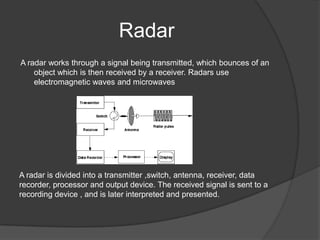
A radar is divided into a transmitter ,switch, antenna, receiver, data
recorder, processor and output device. The received signal is sent to a
recording device , and is later interpreted and presented.
What are the importance of radio
waves ?
   The significance of radio waves during the 21st century goes far
    beyond communication. Notably, with new technological
    advancements such as SATNAV, it is true that we have surpassed
    the initial intentions of use for radio waves.

   It is true that radio technology was responsible for overseas
    connection and led to the speed of receiving transmissions from
    such a long distance, considerably shorter.

   Radio waves are relied upon in such fields as the military and
    aircraft based jobs and serve importance , particularly with regards
    to AM radio transmissions.
Conclusion
   The importance of radio waves in modern day is highly depended
    upon, whether it be for radio or other extensive medias we use
    radio waves for. Without it, we would suffer in terms of long
    distance communication and also the luxuries of such things as
    satellite navigation which is one of many devices that make modern
    day living so convenient.
References
    How WIFI works (WWW) Marshall brain and Tracy V. Wilson (2011)
    ttp://computer.howstuffworks.com/wireless-network1.htmhttp://

  www.infoplease.com/ce6/sci/A0860617.html
Uses of radio waves (WWW) Columbia university (2007)


   How cell phones use radiation (WWW) Marshall Brain, Jeff Tyson and Juila Layton
    (2011) http://electronics.howstuffworks.com/cell-phone2.htm

   http://science.hq.nasa.gov/kids/imagers/ems/radio.html Radio waves (WWW) Ruth Netting
    (2007)

   Image source- http://science.hq.nasa.gov/kids/imagers/ems/radio.gif

   http://en.wikipedia.org/wiki/Radio#Video Television radio signal (WWW) (2011)

   http://www.ig.utexas.edu/research/projects/mars/education/pictures/radar/rad_system.g
    if Radar diagram (WWW)

 http://www.ig.utexas.edu/research/projects/mars/education/radar_works.htm
How radars works (WWW) Institutes for Geophysics

Radio individual presentation

  • 1.
  • 2.
    Introduction  When we think of radio waves, we assume they are only used for radio and broadcasting. In reality, they are used for many more things , these include mobile phones, WIFI and television . Through this presentation I will discuss the use and importance of radio waves and how they apply to mediums beyond radio broadcasting.
  • 3.
    Radio Waves With regardsto the electromagnetic spectrum, radio waves have the longest wavelength. The following diagram represents the wavelength for AM, FM and TV. As you can see from the diagram, AM has the longest wavelength as it is broadcasted further than TV and AM radio. With AM radio having a wider coverage, this implements issues of quality. The bandwidth is usually around 5 kHz, although the human ear has a musical range of 20hz which leads to an imperfect sound when compared to the superior FM radio quality. Having discussed this, it leads me to further research into how radio waves take part in mediums other than radio.
  • 4.
    WIFI  WIFI uses radio waves in a similar way to how a radio operates. This process involves the computer translating data into a radio signal which is then sent out through an antenna. This signal is then received by a wireless router, which goes through the process of decoding. The router then sends the information via a wired Ethernet cable.  A notable difference between WIFI and other radio waves is the amount of data that is transmitted. The frequency transmitted via WIFI is either 2.4 GHz or 5 GHz. With this frequency being relatively high, It allows more data to be transferred. Cell phones and television, in comparison use a lower frequency due to less data being needed for the signal.
  • 5.
    Mobile phones From aninternational perspective mobile phones are referred to as ‘cell phones’. The term ‘cell’ derives from how a mobile phone operates. the function involves a cellular pattern, which is basically a number of areas that are divided into cells. These cells require a base station which make up the network and have both a radio and transmitter tower. In large cities, they can have hundreds of towers set up to keep up with the high demand of mobile phone use. A mobile phone carries little power in terms of transmission, and therefore connects to the nearest transmitter within a base station. It can be noted that in more urban areas it is likely to get a stronger signal , in comparison to rural areas where less base stations are likely to be.
  • 6.
    Television  The antennae of a television is used to receive the signal, which is found in the form of electronic magnetic waves (like a radio)  The television signal is sent in two forms; one is the video which is through AM , and sound can be recieved by either AM or FM signal.  On average a TV signal needs a bandwidth of 4 Hz , although a further 2 Hz needs to be acounted for sound.  The video signal (separately) then goes through the process of amplitude- modulation along with the sound which is then merged and picked up via the antennae
  • 7.
    Radar A radar worksthrough a signal being transmitted, which bounces of an object which is then received by a receiver. Radars use electromagnetic waves and microwaves A radar is divided into a transmitter ,switch, antenna, receiver, data recorder, processor and output device. The received signal is sent to a recording device , and is later interpreted and presented.
  • 8.
    What are theimportance of radio waves ?  The significance of radio waves during the 21st century goes far beyond communication. Notably, with new technological advancements such as SATNAV, it is true that we have surpassed the initial intentions of use for radio waves.  It is true that radio technology was responsible for overseas connection and led to the speed of receiving transmissions from such a long distance, considerably shorter.  Radio waves are relied upon in such fields as the military and aircraft based jobs and serve importance , particularly with regards to AM radio transmissions.
  • 9.
    Conclusion  The importance of radio waves in modern day is highly depended upon, whether it be for radio or other extensive medias we use radio waves for. Without it, we would suffer in terms of long distance communication and also the luxuries of such things as satellite navigation which is one of many devices that make modern day living so convenient.
  • 10.
    References  How WIFI works (WWW) Marshall brain and Tracy V. Wilson (2011) ttp://computer.howstuffworks.com/wireless-network1.htmhttp://  www.infoplease.com/ce6/sci/A0860617.html Uses of radio waves (WWW) Columbia university (2007)  How cell phones use radiation (WWW) Marshall Brain, Jeff Tyson and Juila Layton (2011) http://electronics.howstuffworks.com/cell-phone2.htm  http://science.hq.nasa.gov/kids/imagers/ems/radio.html Radio waves (WWW) Ruth Netting (2007)  Image source- http://science.hq.nasa.gov/kids/imagers/ems/radio.gif  http://en.wikipedia.org/wiki/Radio#Video Television radio signal (WWW) (2011)  http://www.ig.utexas.edu/research/projects/mars/education/pictures/radar/rad_system.g if Radar diagram (WWW)  http://www.ig.utexas.edu/research/projects/mars/education/radar_works.htm How radars works (WWW) Institutes for Geophysics