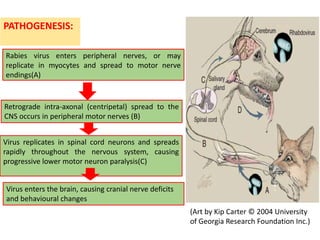
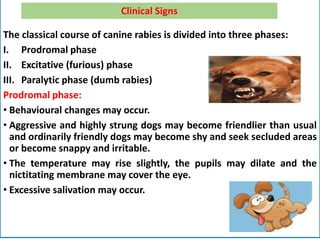
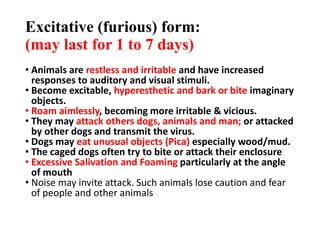
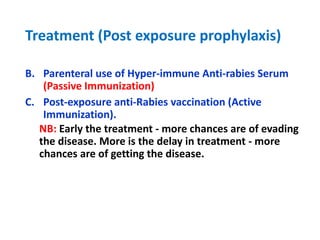
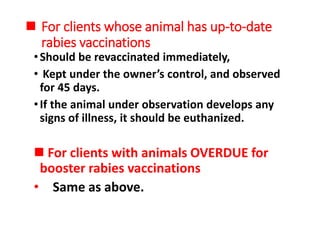
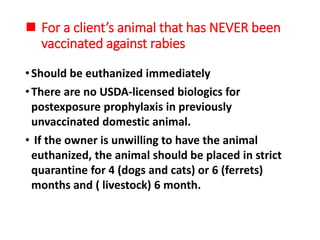
The document discusses the pathogenesis and clinical signs of rabies in dogs and other animals. It describes how the rabies virus spreads retrograde from peripheral nerves to the central nervous system (A,B), causing progressive paralysis (C). It outlines the classical phases of canine rabies including the prodromal, excitative/furious, and paralytic phases. The excitative phase involves restlessness, hyperesthesia, aggression and vicious behavior. The paralytic phase involves incoordination, paralysis and death. Post-exposure prophylaxis involves wound cleaning, rabies immunoglobulin, and vaccination.


![PERI-PROSTHETIC FRACTURE NAIL-PLATE CONSTRUCT [NPC].pptx](https://cdn.slidesharecdn.com/ss_thumbnails/drarunkumardrmohamedashrafperiprostheticfrasturenail-plateconstructnpc-260209164459-7e9d15a1-thumbnail.jpg?width=640&height=640&fit=bounds)


