QUIZZ
I. MULTIPLE CHOICE
1. Total distance an object travels with direction.
A. Displacement
B. Distance
C. Path
D. Velocity
2. What is the formula to calculate the speed of a car?
A. S = time/distance
B. S = distance/time
C. S = distance x time
D. S = time x distance
3. In what way is velocity different from speed ?
A. Velocity is measured in SI unit.
B. Velocity is measured in a specified direction.
C. Velocity means the distance divided by time.
D. Velocity is measured horizontally.
4. When an object starts from rest, what is its original
velocity?
A. Depends on the problem
B. 0
C. Always positive
D. Always negative
5. What is the unit of acceleration?
A. g/cm3
B. m/s
C. m/s2
D. N/m
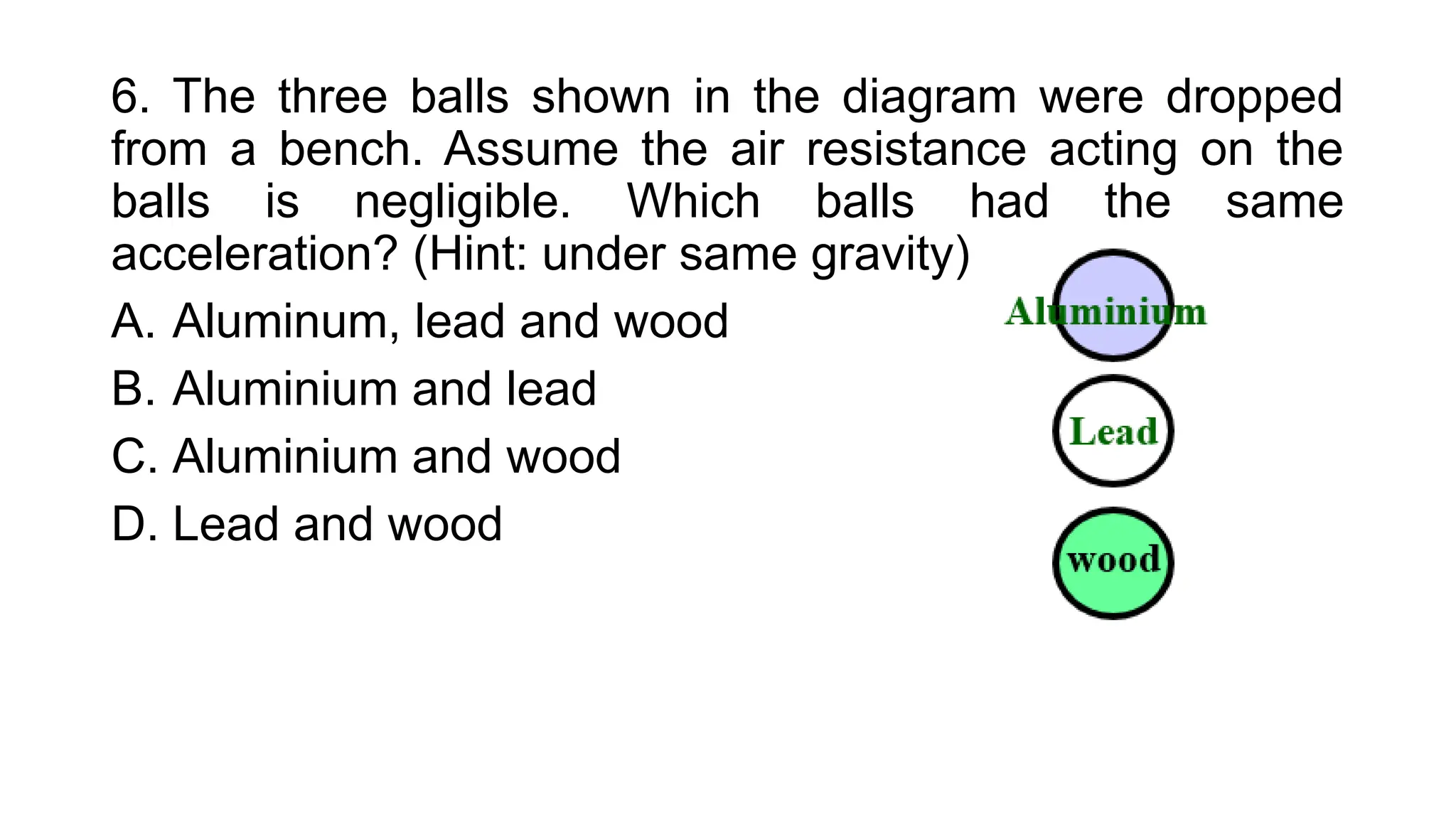
6. The three balls shown in the diagram were dropped
from a bench. Assume the air resistance acting on the
balls is negligible. Which balls had the same
acceleration? (Hint: under same gravity)
A. Aluminum, lead and wood
B. Aluminium and lead
C. Aluminium and wood
D. Lead and wood
7. The table shows the speed of four cars, measured at the
start of and at the end of one minute. Which car has the
greatest acceleration?
A
B
C
D
8. A girl on a bicycle rides down a hill without pedalling. What
happens to the bicycle at X?
A. It stops.
B. It slows down.
C. It moves at a constant speed.
D. It continues to accelerate.
9. Which speed-time graph is for an object at rest?
A
B
C
D
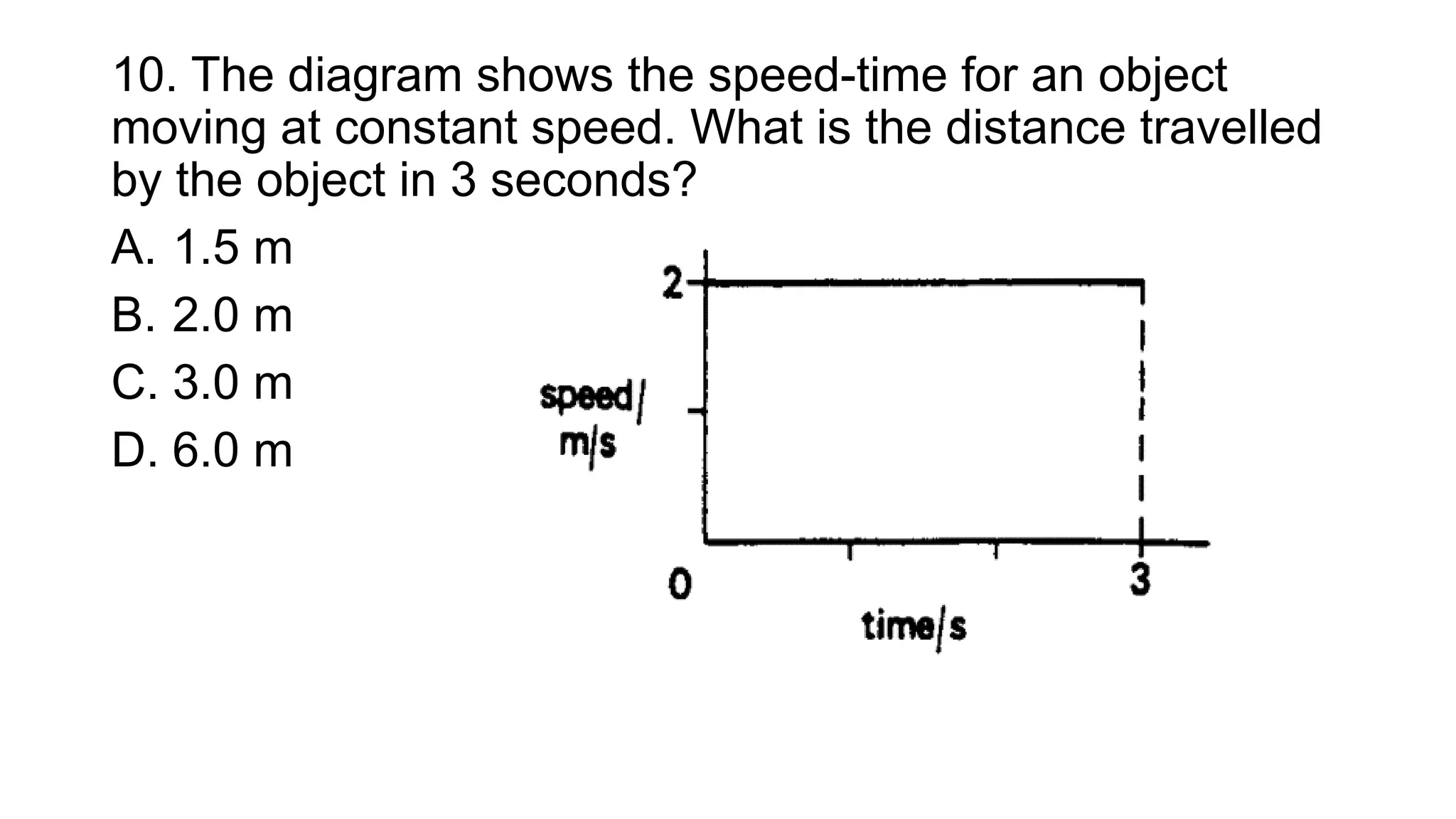
10. The diagram shows the speed-time for an object
moving at constant speed. What is the distance travelled
by the object in 3 seconds?
A. 1.5 m
B. 2.0 m
C. 3.0 m
D. 6.0 m
11. The diagram is a speed -time graph for a car. Which
two sections of the graph show the car travelling at
constant speed?
A. PQ and QR
B. RS and TU
C. RS and UV
D. ST and UV
12. The speed-time graph is for a cyclist. What distance
was covered at constant speed?
A. 1 m
B. 2 m
C. 3 m
D. 4 m
13. Which graph shows constant speed followed by
increasing speed?
A
B
C
D
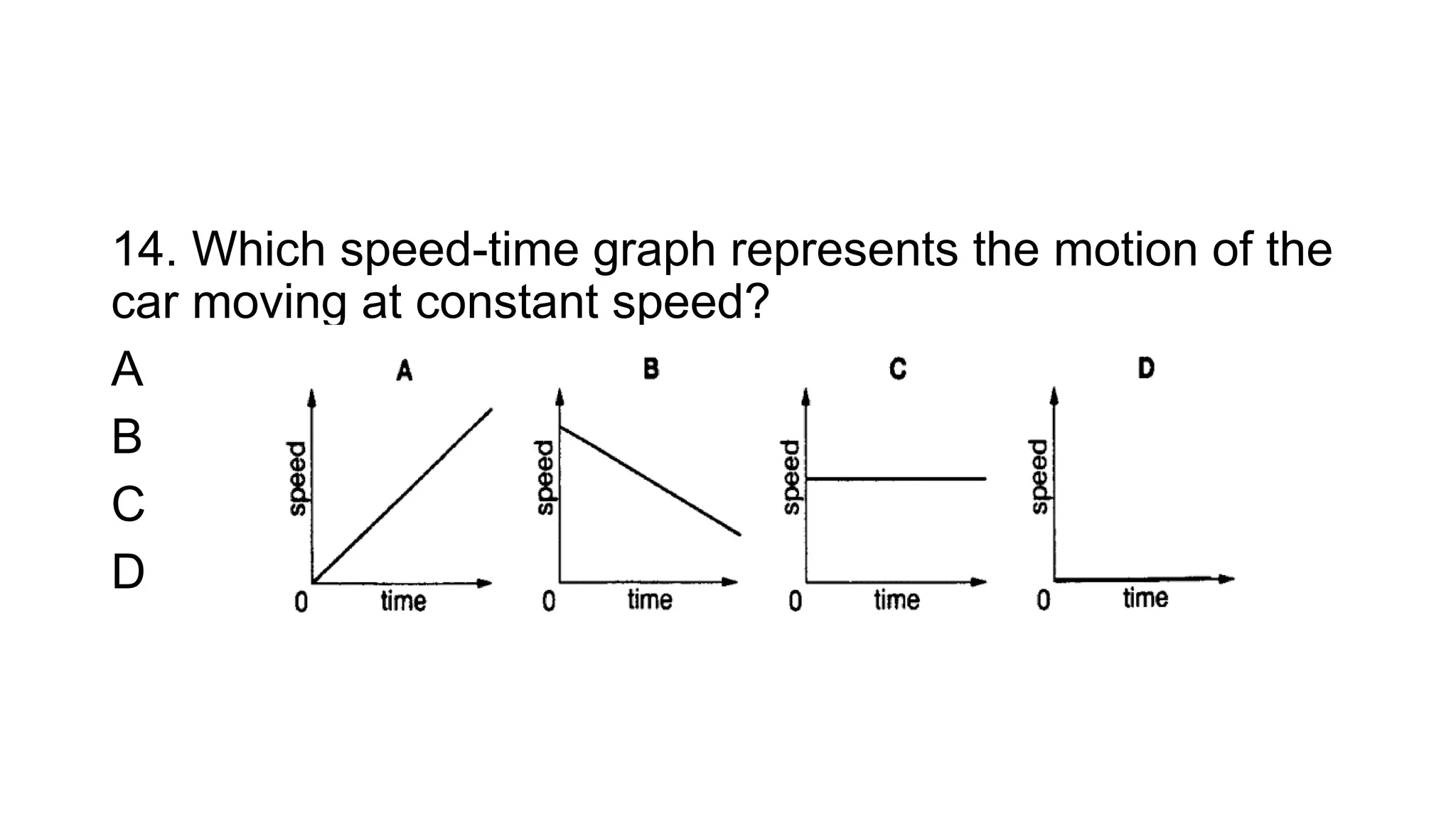
14. Which speed-time graph represents the motion of the
car moving at constant speed?
A
B
C
D
15. The diagram shows a speed-time graph for a car
moving with constant acceleration. What is represented
by the shaded area under the graph?
A. Acceleration
B. Distance
C. Speed
D. Time
II. PROBLEM SOLVING
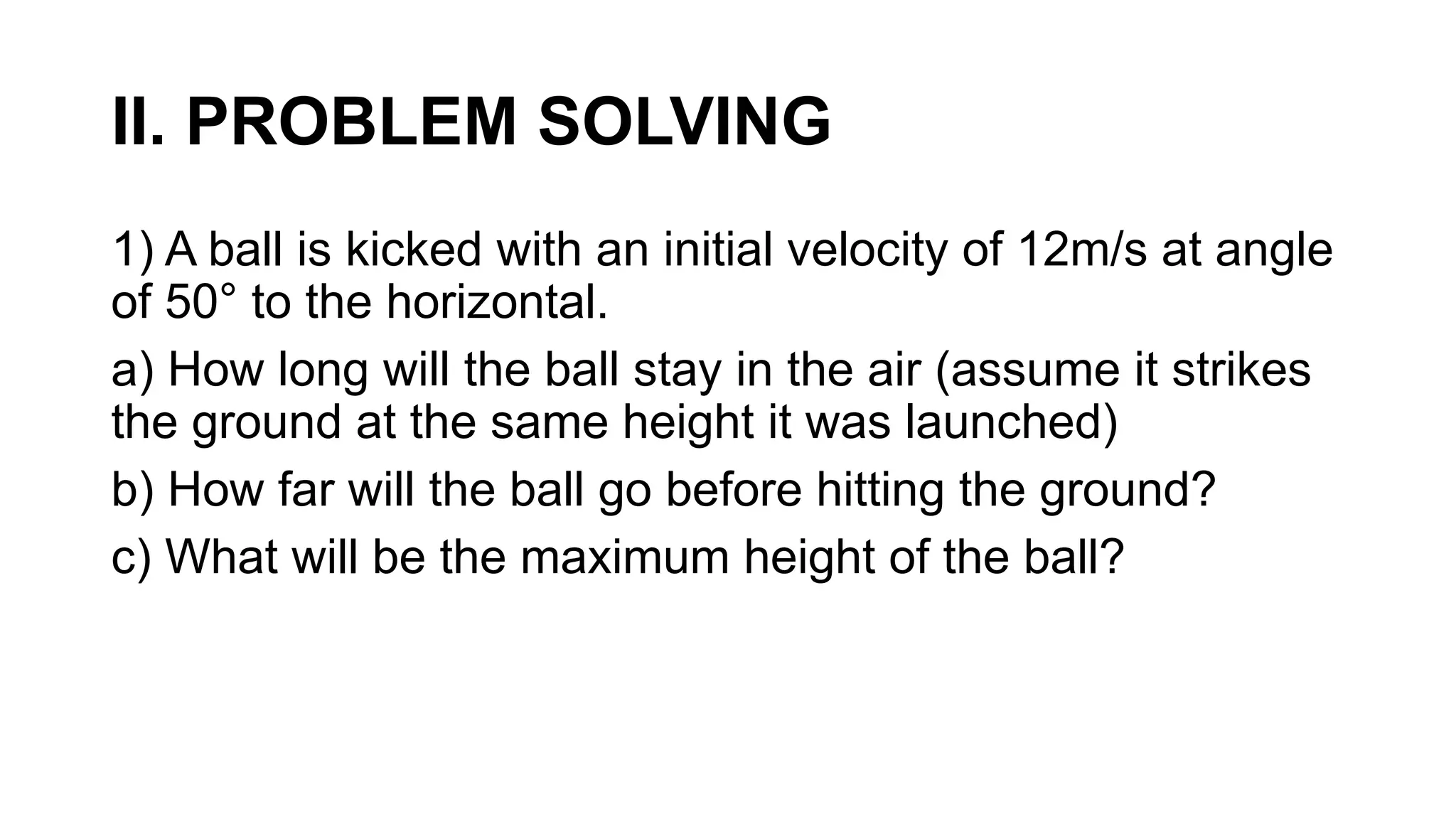
1) A ball is kicked with an initial velocity of 12m/s at angle
of 50° to the horizontal.
a) How long will the ball stay in the air (assume it strikes
the ground at the same height it was launched)
b) How far will the ball go before hitting the ground?
c) What will be the maximum height of the ball?
ANSWER KEY
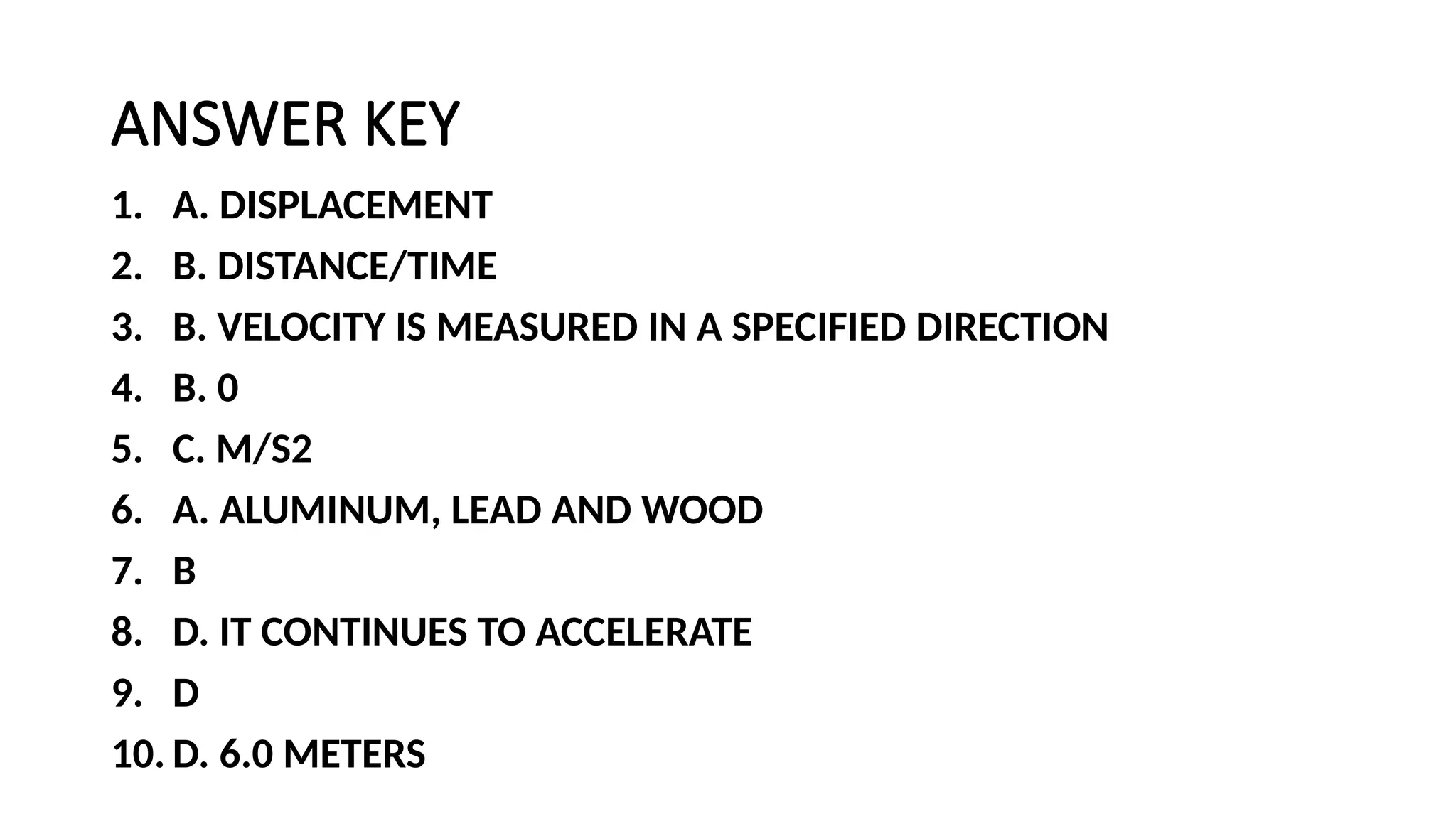
1. A. DISPLACEMENT
2. B. DISTANCE/TIME
3. B. VELOCITY IS MEASURED IN A SPECIFIED DIRECTION
4. B. 0
5. C. M/S2
6. A. ALUMINUM, LEAD AND WOOD
7. B
8. D. IT CONTINUES TO ACCELERATE
9. D
10. D. 6.0 METERS
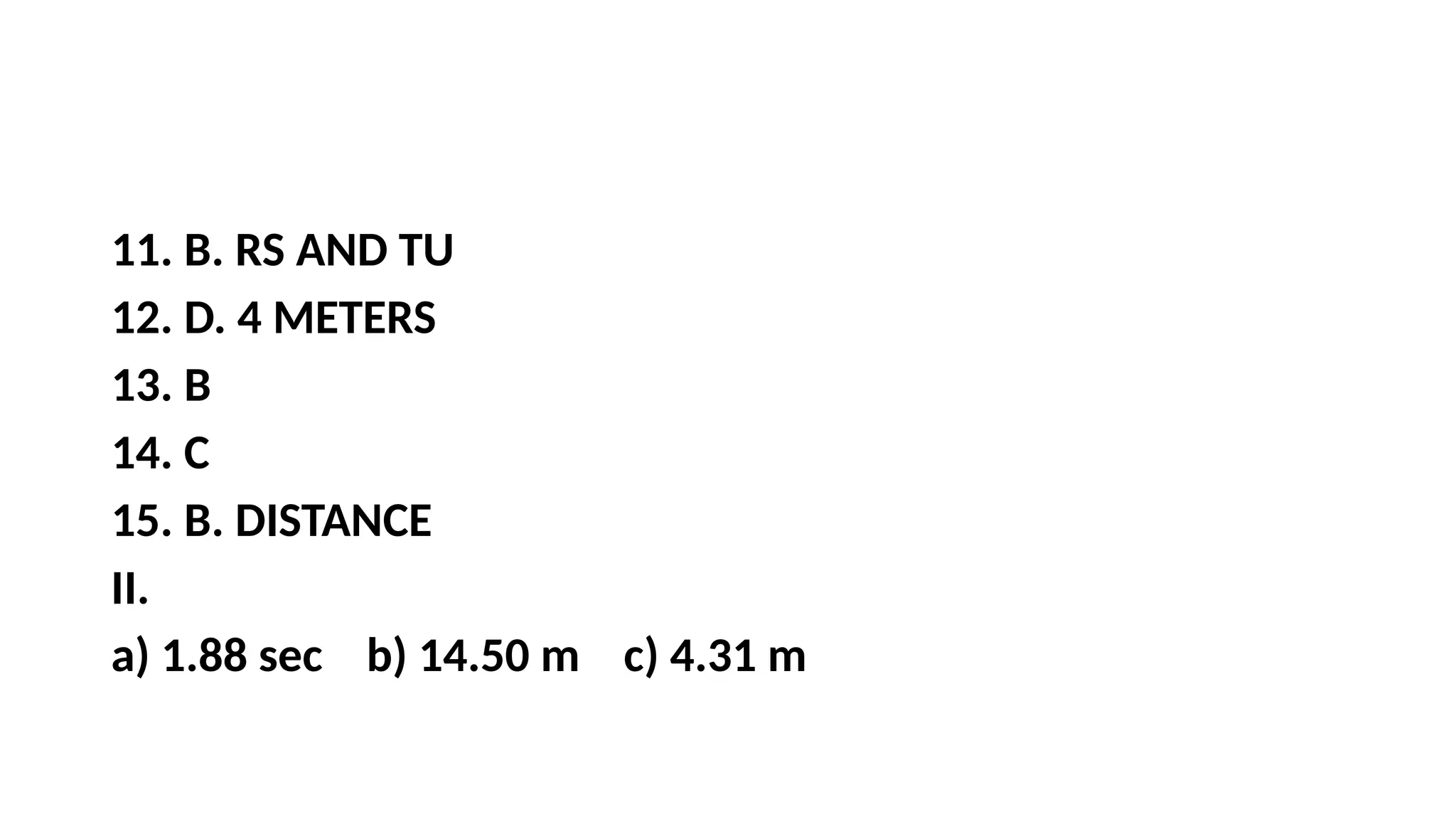
11. B. RS AND TU
12. D. 4 METERS
13. B
14. C
15. B. DISTANCE
II.
a) 1.88 sec b) 14.50 m c) 4.31 m

QUIZZ physics.pptxxxxxxxxxxxxxxxxxxxxxxxxxxxxx

  • 1.
  • 2.
    I. MULTIPLE CHOICE 1.Total distance an object travels with direction. A. Displacement B. Distance C. Path D. Velocity
  • 3.
    2. What isthe formula to calculate the speed of a car? A. S = time/distance B. S = distance/time C. S = distance x time D. S = time x distance
  • 4.
    3. In whatway is velocity different from speed ? A. Velocity is measured in SI unit. B. Velocity is measured in a specified direction. C. Velocity means the distance divided by time. D. Velocity is measured horizontally.
  • 5.
    4. When anobject starts from rest, what is its original velocity? A. Depends on the problem B. 0 C. Always positive D. Always negative
  • 6.
    5. What isthe unit of acceleration? A. g/cm3 B. m/s C. m/s2 D. N/m
  • 7.
    6. The threeballs shown in the diagram were dropped from a bench. Assume the air resistance acting on the balls is negligible. Which balls had the same acceleration? (Hint: under same gravity) A. Aluminum, lead and wood B. Aluminium and lead C. Aluminium and wood D. Lead and wood
  • 8.
    7. The tableshows the speed of four cars, measured at the start of and at the end of one minute. Which car has the greatest acceleration? A B C D
  • 9.
    8. A girlon a bicycle rides down a hill without pedalling. What happens to the bicycle at X? A. It stops. B. It slows down. C. It moves at a constant speed. D. It continues to accelerate.
  • 10.
    9. Which speed-timegraph is for an object at rest? A B C D
  • 11.
    10. The diagramshows the speed-time for an object moving at constant speed. What is the distance travelled by the object in 3 seconds? A. 1.5 m B. 2.0 m C. 3.0 m D. 6.0 m
  • 12.
    11. The diagramis a speed -time graph for a car. Which two sections of the graph show the car travelling at constant speed? A. PQ and QR B. RS and TU C. RS and UV D. ST and UV
  • 13.
    12. The speed-timegraph is for a cyclist. What distance was covered at constant speed? A. 1 m B. 2 m C. 3 m D. 4 m
  • 14.
    13. Which graphshows constant speed followed by increasing speed? A B C D
  • 15.
    14. Which speed-timegraph represents the motion of the car moving at constant speed? A B C D
  • 16.
    15. The diagramshows a speed-time graph for a car moving with constant acceleration. What is represented by the shaded area under the graph? A. Acceleration B. Distance C. Speed D. Time
  • 17.
    II. PROBLEM SOLVING 1)A ball is kicked with an initial velocity of 12m/s at angle of 50° to the horizontal. a) How long will the ball stay in the air (assume it strikes the ground at the same height it was launched) b) How far will the ball go before hitting the ground? c) What will be the maximum height of the ball?
  • 18.
    ANSWER KEY 1. A.DISPLACEMENT 2. B. DISTANCE/TIME 3. B. VELOCITY IS MEASURED IN A SPECIFIED DIRECTION 4. B. 0 5. C. M/S2 6. A. ALUMINUM, LEAD AND WOOD 7. B 8. D. IT CONTINUES TO ACCELERATE 9. D 10. D. 6.0 METERS
  • 19.
    11. B. RSAND TU 12. D. 4 METERS 13. B 14. C 15. B. DISTANCE II. a) 1.88 sec b) 14.50 m c) 4.31 m