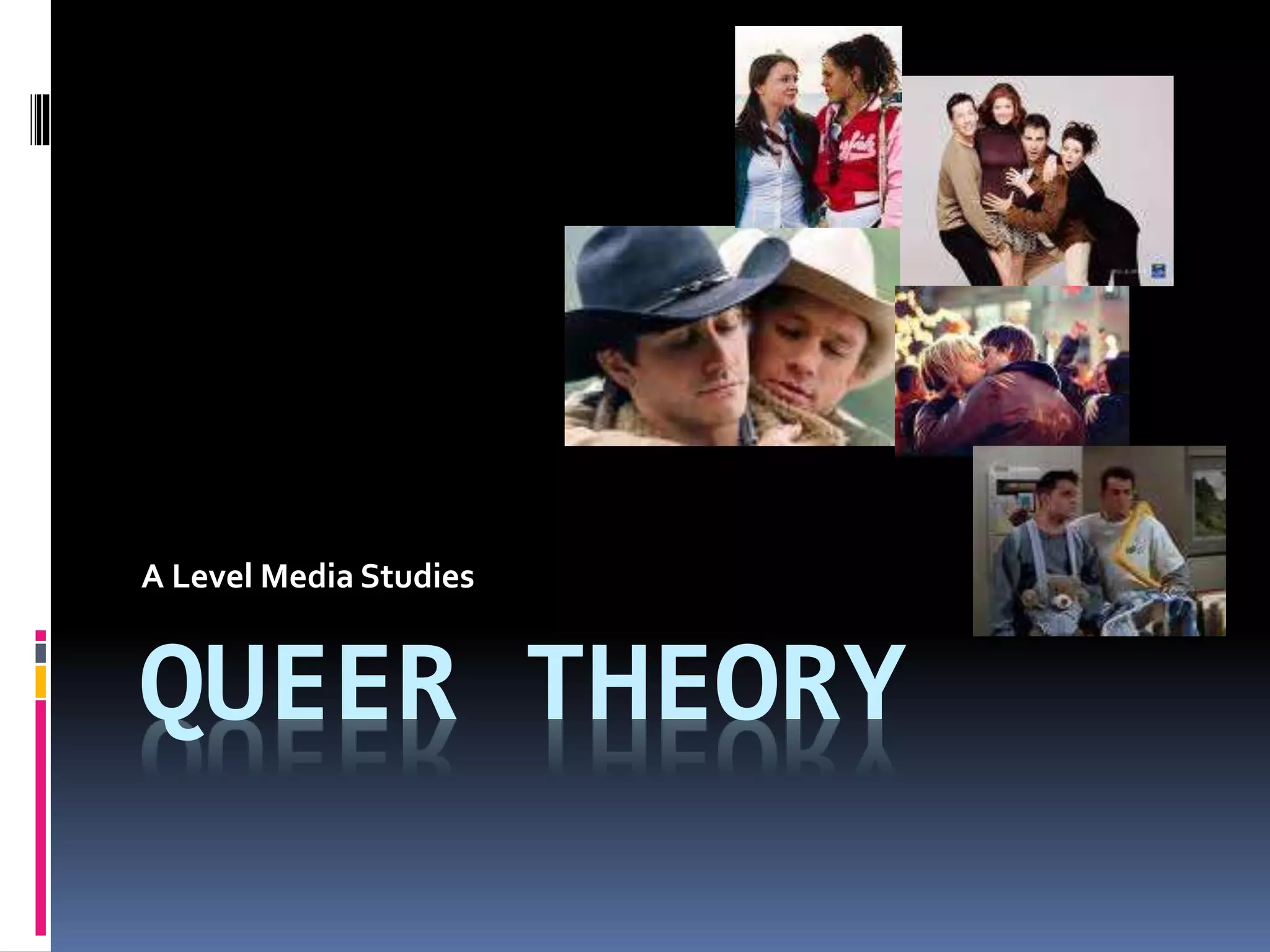
QUEER THEORY
A Level Media Studies
Definition...
 A field of critical theory that emerged in the
early 1990s.
 Explores and challenges the way in which
heterosexuality is constructed as normal...
 And the way in which the media has limited
the representations of gay men and women.
 Challenges the traditionally held assumptions
that there is an oppositional divide between
being gay and heterosexual
 Suggests sexual identity is more fluid.
 For example...
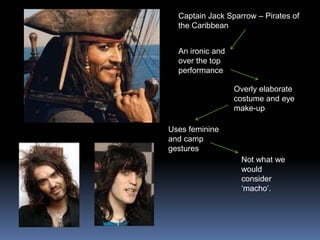
Captain Jack Sparrow – Pirates of
the Caribbean
An ironic and
over the top
performance
Overly elaborate
costume and eye
make-up
Uses feminine
and camp
gestures
Not what we
would
consider
‘macho’.
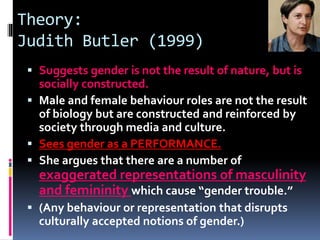
Theory:
Judith Butler (1999)
 Suggests gender is not the result of nature, but is
socially constructed.
 Male and female behaviour roles are not the result
of biology but are constructed and reinforced by
society through media and culture.
 Sees gender as a PERFORMANCE.
 She argues that there are a number of
exaggerated representations of masculinity
and femininity which cause “gender trouble.”
 (Any behaviour or representation that disrupts
culturally accepted notions of gender.)
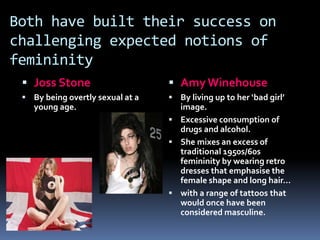
Both have built their success on
challenging expected notions of
femininity
 Joss Stone
 By being overtly sexual at a
young age.
 Amy Winehouse
 By living up to her ‘bad girl’
image.
 Excessive consumption of
drugs and alcohol.
 She mixes an excess of
traditional 1950s/60s
femininity by wearing retro
dresses that emphasise the
female shape and long hair...
 with a range of tattoos that
would once have been
considered masculine.
The History...
 1950s – police actively enforced laws that
prohibited sexual activities between men.
 Sexually ‘abnormal’ and ‘deviant’.
 1967 – homosexuality is decriminalised in UK
(2009 for India)
 In parts of Africa and Asia today it is still
punishable by death
 1977 – World Health Organisation refers to
homosexuality as a mental illness (removed
in 1990)
 Civil partnerships legal in UK from 2004.
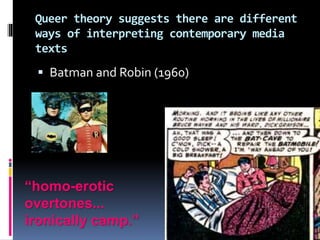
Queer theory suggests there are different
ways of interpreting contemporary media
texts
 Batman and Robin (1960)
“homo-erotic
overtones...
ironically camp.”
Contemporary Texts
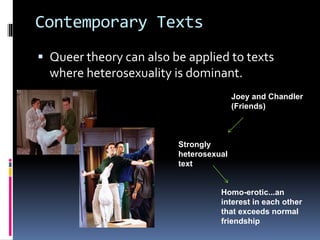
 Queer theory can also be applied to texts
where heterosexuality is dominant.
Joey and Chandler
(Friends)
Strongly
heterosexual
text
Homo-erotic...an
interest in each other
that exceeds normal
friendship
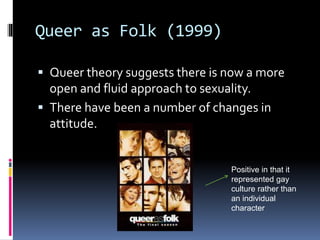
Queer as Folk (1999)
 Queer theory suggests there is now a more
open and fluid approach to sexuality.
 There have been a number of changes in
attitude.
Positive in that it
represented gay
culture rather than
an individual
character
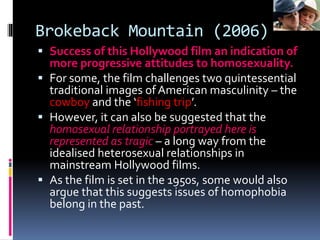
Brokeback Mountain (2006)
 Success of this Hollywood film an indication of
more progressive attitudes to homosexuality.
 For some, the film challenges two quintessential
traditional images of American masculinity – the
cowboy and the ‘fishing trip’.
 However, it can also be suggested that the
homosexual relationship portrayed here is
represented as tragic – a long way from the
idealised heterosexual relationships in
mainstream Hollywood films.
 As the film is set in the 1950s, some would also
argue that this suggests issues of homophobia
belong in the past.
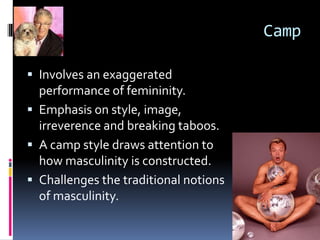
Camp
 Involves an exaggerated
performance of femininity.
 Emphasis on style, image,
irreverence and breaking taboos.
 A camp style draws attention to
how masculinity is constructed.
 Challenges the traditional notions
of masculinity.
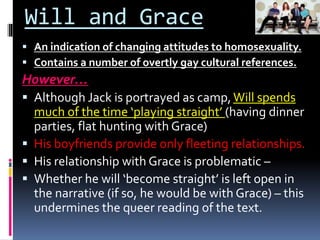
Will and Grace
 An indication of changing attitudes to homosexuality.
 Contains a number of overtly gay cultural references.
However…
 Although Jack is portrayed as camp,Will spends
much of the time ‘playing straight’ (having dinner
parties, flat hunting with Grace)
 His boyfriends provide only fleeting relationships.
 His relationship with Grace is problematic –
 Whether he will ‘become straight’ is left open in
the narrative (if so, he would be with Grace) – this
undermines the queer reading of the text.
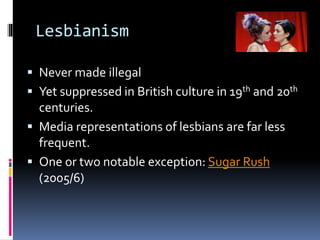
Lesbianism
 Never made illegal
 Yet suppressed in British culture in 19th and 20th
centuries.
 Media representations of lesbians are far less
frequent.
 One or two notable exception: Sugar Rush
(2005/6)
In conclusion...
 ‘Gender trouble’ is evident everywhere in
mainstream media.
 Queer theorists suggest this is evidence of a
move towards increasing tolerance of sexual
diversity.
 Others argue that these representations simply
present alternatives to the ‘norm’ of
heterosexuality.
 Are they just used because of their shock value,
not due to any desire to promote diversity?
Task:
Watch the clip taken fromWill and Grace
 Consider the two gay characters within the scene
and the way in which they are represented
Analyse the clip commenting on:
 Whether you think the media has limited the
representations of gay men
 Whether the media challenges the traditionally
held assumption that there is a clear divide
between being gay and heterosexual
 And consider if the programme suggests sexual
identity is more fluid in more recent media texts.

Queertheory 111204154233 phpapp01

  • 1.
    QUEER THEORY A LevelMedia Studies
  • 2.
    Definition...  A fieldof critical theory that emerged in the early 1990s.  Explores and challenges the way in which heterosexuality is constructed as normal...  And the way in which the media has limited the representations of gay men and women.  Challenges the traditionally held assumptions that there is an oppositional divide between being gay and heterosexual  Suggests sexual identity is more fluid.  For example...
  • 3.
    Captain Jack Sparrow– Pirates of the Caribbean An ironic and over the top performance Overly elaborate costume and eye make-up Uses feminine and camp gestures Not what we would consider ‘macho’.
  • 4.
    Theory: Judith Butler (1999) Suggests gender is not the result of nature, but is socially constructed.  Male and female behaviour roles are not the result of biology but are constructed and reinforced by society through media and culture.  Sees gender as a PERFORMANCE.  She argues that there are a number of exaggerated representations of masculinity and femininity which cause “gender trouble.”  (Any behaviour or representation that disrupts culturally accepted notions of gender.)
  • 5.
    Both have builttheir success on challenging expected notions of femininity  Joss Stone  By being overtly sexual at a young age.  Amy Winehouse  By living up to her ‘bad girl’ image.  Excessive consumption of drugs and alcohol.  She mixes an excess of traditional 1950s/60s femininity by wearing retro dresses that emphasise the female shape and long hair...  with a range of tattoos that would once have been considered masculine.
  • 6.
    The History...  1950s– police actively enforced laws that prohibited sexual activities between men.  Sexually ‘abnormal’ and ‘deviant’.  1967 – homosexuality is decriminalised in UK (2009 for India)  In parts of Africa and Asia today it is still punishable by death  1977 – World Health Organisation refers to homosexuality as a mental illness (removed in 1990)  Civil partnerships legal in UK from 2004.
  • 7.
    Queer theory suggeststhere are different ways of interpreting contemporary media texts  Batman and Robin (1960) “homo-erotic overtones... ironically camp.”
  • 8.
    Contemporary Texts  Queertheory can also be applied to texts where heterosexuality is dominant. Joey and Chandler (Friends) Strongly heterosexual text Homo-erotic...an interest in each other that exceeds normal friendship
  • 9.
    Queer as Folk(1999)  Queer theory suggests there is now a more open and fluid approach to sexuality.  There have been a number of changes in attitude. Positive in that it represented gay culture rather than an individual character
  • 10.
    Brokeback Mountain (2006) Success of this Hollywood film an indication of more progressive attitudes to homosexuality.  For some, the film challenges two quintessential traditional images of American masculinity – the cowboy and the ‘fishing trip’.  However, it can also be suggested that the homosexual relationship portrayed here is represented as tragic – a long way from the idealised heterosexual relationships in mainstream Hollywood films.  As the film is set in the 1950s, some would also argue that this suggests issues of homophobia belong in the past.
  • 11.
    Camp  Involves anexaggerated performance of femininity.  Emphasis on style, image, irreverence and breaking taboos.  A camp style draws attention to how masculinity is constructed.  Challenges the traditional notions of masculinity.
  • 12.
    Will and Grace An indication of changing attitudes to homosexuality.  Contains a number of overtly gay cultural references. However…  Although Jack is portrayed as camp,Will spends much of the time ‘playing straight’ (having dinner parties, flat hunting with Grace)  His boyfriends provide only fleeting relationships.  His relationship with Grace is problematic –  Whether he will ‘become straight’ is left open in the narrative (if so, he would be with Grace) – this undermines the queer reading of the text.
  • 13.
    Lesbianism  Never madeillegal  Yet suppressed in British culture in 19th and 20th centuries.  Media representations of lesbians are far less frequent.  One or two notable exception: Sugar Rush (2005/6)
  • 14.
    In conclusion...  ‘Gendertrouble’ is evident everywhere in mainstream media.  Queer theorists suggest this is evidence of a move towards increasing tolerance of sexual diversity.  Others argue that these representations simply present alternatives to the ‘norm’ of heterosexuality.  Are they just used because of their shock value, not due to any desire to promote diversity?
  • 15.
    Task: Watch the cliptaken fromWill and Grace  Consider the two gay characters within the scene and the way in which they are represented Analyse the clip commenting on:  Whether you think the media has limited the representations of gay men  Whether the media challenges the traditionally held assumption that there is a clear divide between being gay and heterosexual  And consider if the programme suggests sexual identity is more fluid in more recent media texts.