FINALLY, A NEXT-GEN CRO
Building a QMS from a
Regulatory Perspective
www.ProximaCRO.com
Carmen Brown
Regulatory and Quality Manager
Carmen.Brown@ProximaCRO.com
TODAY’S TOPICS
We will be covering:
• An overview of ISO 13485
• The five sections
• How to integrate Regulatory
Strategy into Quality
• QMS Strategy
• Quality vs. Regulatory
• Timing
• Importance
Let’s Start at the Beginning
Ø What is a QMS?
Ø A Quality Management System (QMS) is defined as a formal
system that documents the structure, processes, roles,
responsibilities,
and procedures required to achieve effective quality
management.
Ø A QMS helps a company meet its Regulatory Requirements
Ø Who needs a QMS?
Ø Class II and III Medical Devices (some Class I)
Quality vs Regulatory
Regulatory Quality
• Faster
• May be cheaper
• Gain an understanding of
what is required to gain
marketing authorization
• Reactive
• Time consuming
• Can be expensive
• Appears as if it can be
done at any time
• Preventative
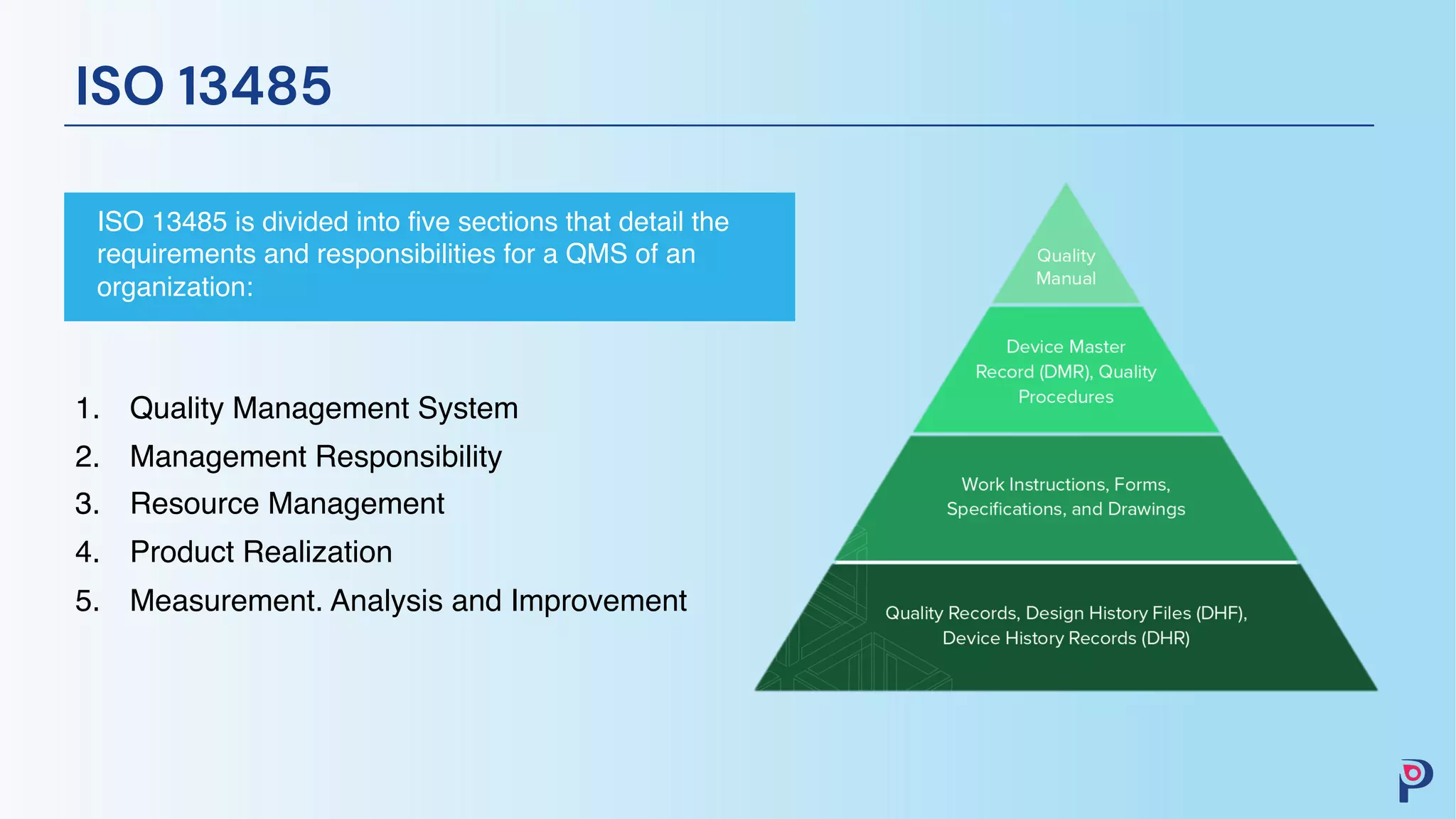
ISO 13485
ISO 13485 is divided into five sections that detail the
requirements and responsibilities for a QMS of an
organization:
1. Quality Management System
2. Management Responsibility
3. Resource Management
4. Product Realization
5. Measurement. Analysis and Improvement
4. Quality Management System
Ø 4 Quality Manual
Ø 4.1 General requirements
Ø 4.2 Documentation requirements
Ø 4.2.3 Medical Device File
1. Description of product, intended use,
indications for use
2. Product labeling and instructions for use
3. Specifications for the product
4. Specifications for manufacturing, inspection,
labeling, packaging, storage, handling, and
distribution
5. Specifications for measuring and monitoring
Ø 4.2.4 Plan for Control of Documents
Ø 4.2.5 Plan for Control of Records
5. Management Responsibility
Ø 5.1 Management Commitment
Ø 5.2 Customer Focus
Ø Top management shall ensure that customer requirements and
applicable regulatory requirements are determined and met.
Ø 5.3 Quality Policy
Ø 5.4 Planning
Ø 5.5 Responsibility, authority and communication
Ø 5.6 Management Review
1
The Quality Policy is the key to ensuring effectiveness of your QMS.
It reflects the management’s commitment to quality and expresses the purpose of the
organization. It should be communicated and understood throughout the company.
2
QMS Planning ensures that a QMS is effective by incorporating key quality
objectives for the company. The goals should be objective and measurable and
should relate to the quality policy. It is important to define the quality objectives as
regulations continue to evolve.
3
Executive Management ensures that roles and responsibilities of the QMS are
well defined. This includes providing necessary authority to applicable personnel
and appointing a management representative.
.
4
A Management Review is done at least once per year and is done to establish
and embrace the company’s quality culture. The ultimate objective is to evaluate
suitability, adequacy, and effectiveness of your QMS.
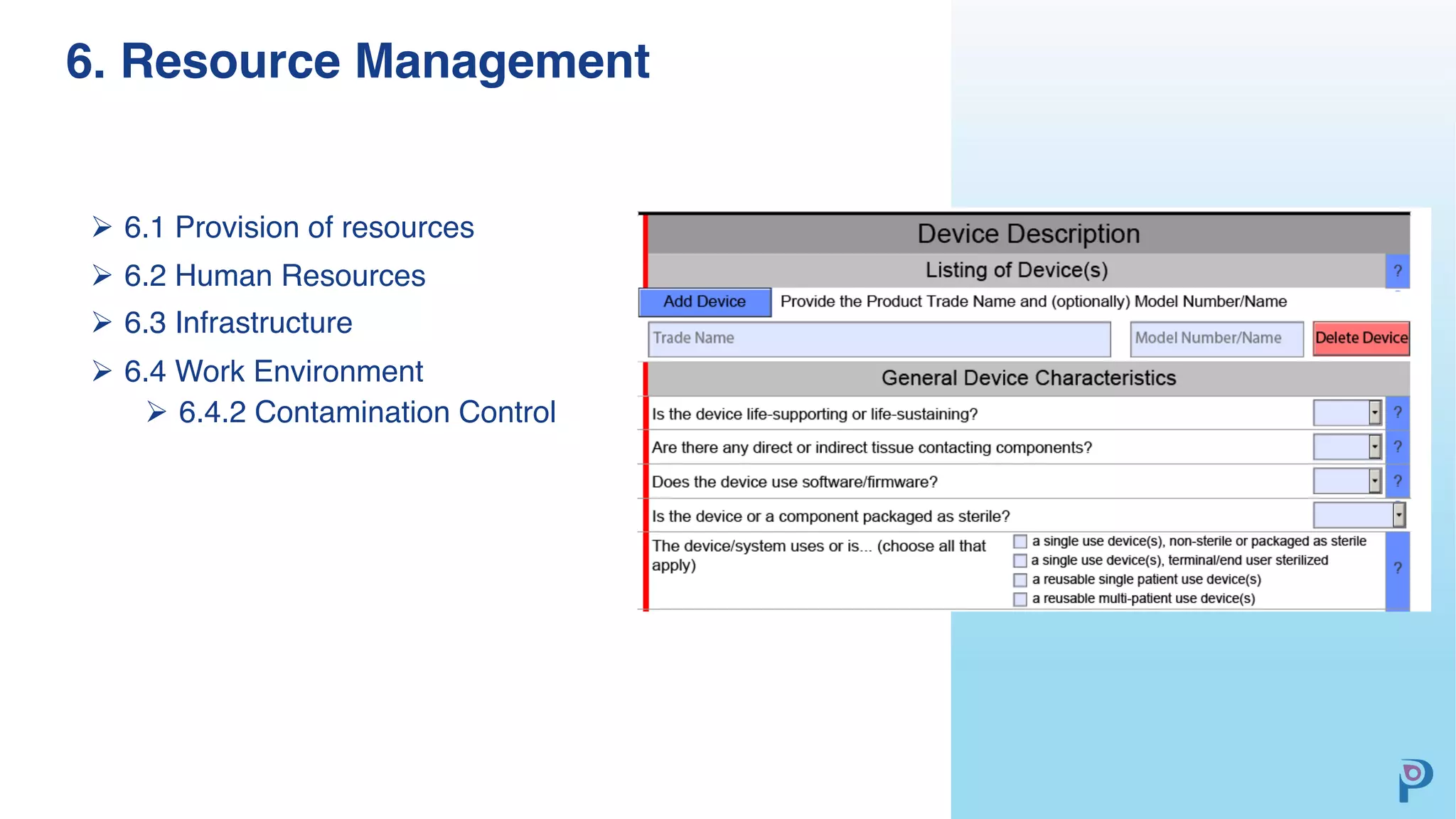
6. Resource Management
Ø 6.1 Provision of resources
Ø 6.2 Human Resources
Ø 6.3 Infrastructure
Ø 6.4 Work Environment
Ø 6.4.2 Contamination Control
7. Product Realization
Ø 7.1 Planning of product realization
Ø Risk management
Ø Required Verification and Validation, monitoring, measurement,
inspection, distribution, and traceability activities specific to the
product together with the criteria for product acceptance
Ø Records provide evidence
Ø 7.2 Customer-related process
Ø requirements specified by the customer, including the
requirements for delivery and post-delivery activities;
Ø requirements not stated by the customer but necessary for
specified or intended use, as known;
Ø applicable regulatory requirements related to the product;
Ø any user training needed to ensure specified performance and
safe use of the medical device.
Ø 7.3 Design and Development
Ø Design Controls
Ø 7.4 Purchasing
Ø 7.5 Production and service provision
Ø 7.5.6 Validation
8. Measurement, Analysis and Improvement
Ø 8.2 Monitoring and Measurement
Ø 8.2.1 Feedback
Ø 8.2.2 Complaint Handling
Ø 8.2.3 Reporting to regulatory authorities
Ø 8.2.4 Internal Audit
Ø 8.2.5 Monitoring and Measurement of Processes
Ø 8.2.6 Monitoring and Measurement of Product
Ø8.3 Control of nonconforming product
Ø8.4 Analysis of Data
Øconformity to product requirements;
THANK
YOU
www.ProximaCRO.com
2450 Holcombe Blvd,
Houston, TX 77021
832 835-1923

QMS from a Regulatory Perspective

  • 1.
    FINALLY, A NEXT-GENCRO Building a QMS from a Regulatory Perspective www.ProximaCRO.com
  • 2.
    Carmen Brown Regulatory andQuality Manager Carmen.Brown@ProximaCRO.com
  • 3.
    TODAY’S TOPICS We willbe covering: • An overview of ISO 13485 • The five sections • How to integrate Regulatory Strategy into Quality • QMS Strategy • Quality vs. Regulatory • Timing • Importance
  • 4.
    Let’s Start atthe Beginning Ø What is a QMS? Ø A Quality Management System (QMS) is defined as a formal system that documents the structure, processes, roles, responsibilities, and procedures required to achieve effective quality management. Ø A QMS helps a company meet its Regulatory Requirements Ø Who needs a QMS? Ø Class II and III Medical Devices (some Class I)
  • 5.
    Quality vs Regulatory RegulatoryQuality • Faster • May be cheaper • Gain an understanding of what is required to gain marketing authorization • Reactive • Time consuming • Can be expensive • Appears as if it can be done at any time • Preventative
  • 6.
    ISO 13485 ISO 13485is divided into five sections that detail the requirements and responsibilities for a QMS of an organization: 1. Quality Management System 2. Management Responsibility 3. Resource Management 4. Product Realization 5. Measurement. Analysis and Improvement
  • 7.
    4. Quality ManagementSystem Ø 4 Quality Manual Ø 4.1 General requirements Ø 4.2 Documentation requirements Ø 4.2.3 Medical Device File 1. Description of product, intended use, indications for use 2. Product labeling and instructions for use 3. Specifications for the product 4. Specifications for manufacturing, inspection, labeling, packaging, storage, handling, and distribution 5. Specifications for measuring and monitoring Ø 4.2.4 Plan for Control of Documents Ø 4.2.5 Plan for Control of Records
  • 8.
    5. Management Responsibility Ø5.1 Management Commitment Ø 5.2 Customer Focus Ø Top management shall ensure that customer requirements and applicable regulatory requirements are determined and met. Ø 5.3 Quality Policy Ø 5.4 Planning Ø 5.5 Responsibility, authority and communication Ø 5.6 Management Review
  • 9.
    1 The Quality Policyis the key to ensuring effectiveness of your QMS. It reflects the management’s commitment to quality and expresses the purpose of the organization. It should be communicated and understood throughout the company. 2 QMS Planning ensures that a QMS is effective by incorporating key quality objectives for the company. The goals should be objective and measurable and should relate to the quality policy. It is important to define the quality objectives as regulations continue to evolve. 3 Executive Management ensures that roles and responsibilities of the QMS are well defined. This includes providing necessary authority to applicable personnel and appointing a management representative. . 4 A Management Review is done at least once per year and is done to establish and embrace the company’s quality culture. The ultimate objective is to evaluate suitability, adequacy, and effectiveness of your QMS.
  • 10.
    6. Resource Management Ø6.1 Provision of resources Ø 6.2 Human Resources Ø 6.3 Infrastructure Ø 6.4 Work Environment Ø 6.4.2 Contamination Control
  • 11.
    7. Product Realization Ø7.1 Planning of product realization Ø Risk management Ø Required Verification and Validation, monitoring, measurement, inspection, distribution, and traceability activities specific to the product together with the criteria for product acceptance Ø Records provide evidence Ø 7.2 Customer-related process Ø requirements specified by the customer, including the requirements for delivery and post-delivery activities; Ø requirements not stated by the customer but necessary for specified or intended use, as known; Ø applicable regulatory requirements related to the product; Ø any user training needed to ensure specified performance and safe use of the medical device. Ø 7.3 Design and Development Ø Design Controls Ø 7.4 Purchasing Ø 7.5 Production and service provision Ø 7.5.6 Validation
  • 12.
    8. Measurement, Analysisand Improvement Ø 8.2 Monitoring and Measurement Ø 8.2.1 Feedback Ø 8.2.2 Complaint Handling Ø 8.2.3 Reporting to regulatory authorities Ø 8.2.4 Internal Audit Ø 8.2.5 Monitoring and Measurement of Processes Ø 8.2.6 Monitoring and Measurement of Product Ø8.3 Control of nonconforming product Ø8.4 Analysis of Data Øconformity to product requirements;
  • 13.