In what ways does your media product use,
develop or challenge forms and conventions of
real media products?
By Siân Davey
Mise En Scene
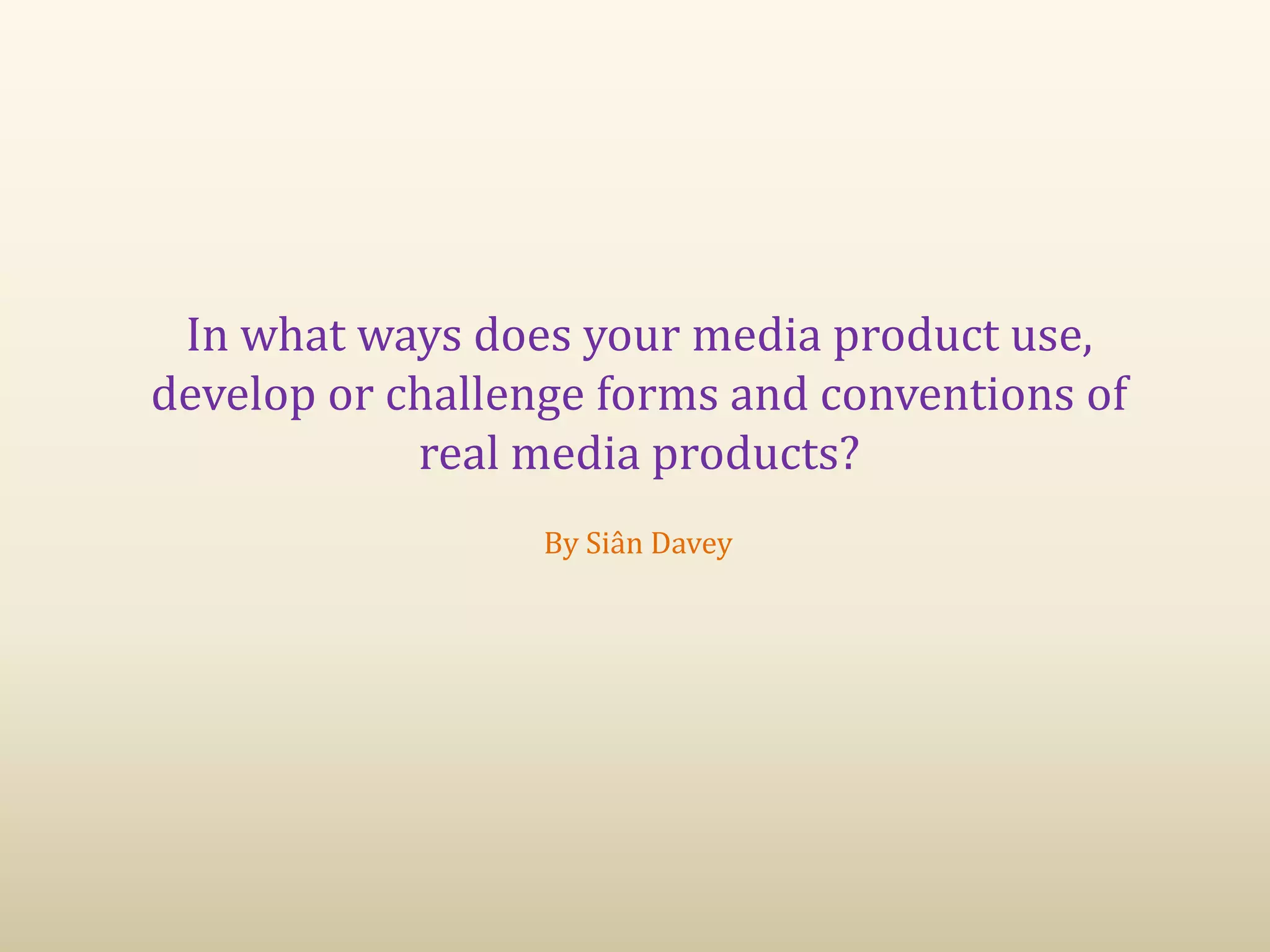
We gave our actors no specific costume, as
we wanted our characters to represent
modern day fashions of our target
audience. This develops the convention of
realism that we try and keep throughout
the whole trailer. Our protagonist had
smudge make up to give the effect of
distress and worry, which hopefully helps
the guess that she has been possessed by a
demon. The whole cast are wearing
coats, hats and scarfs as we filmed in
December and January, which gives the
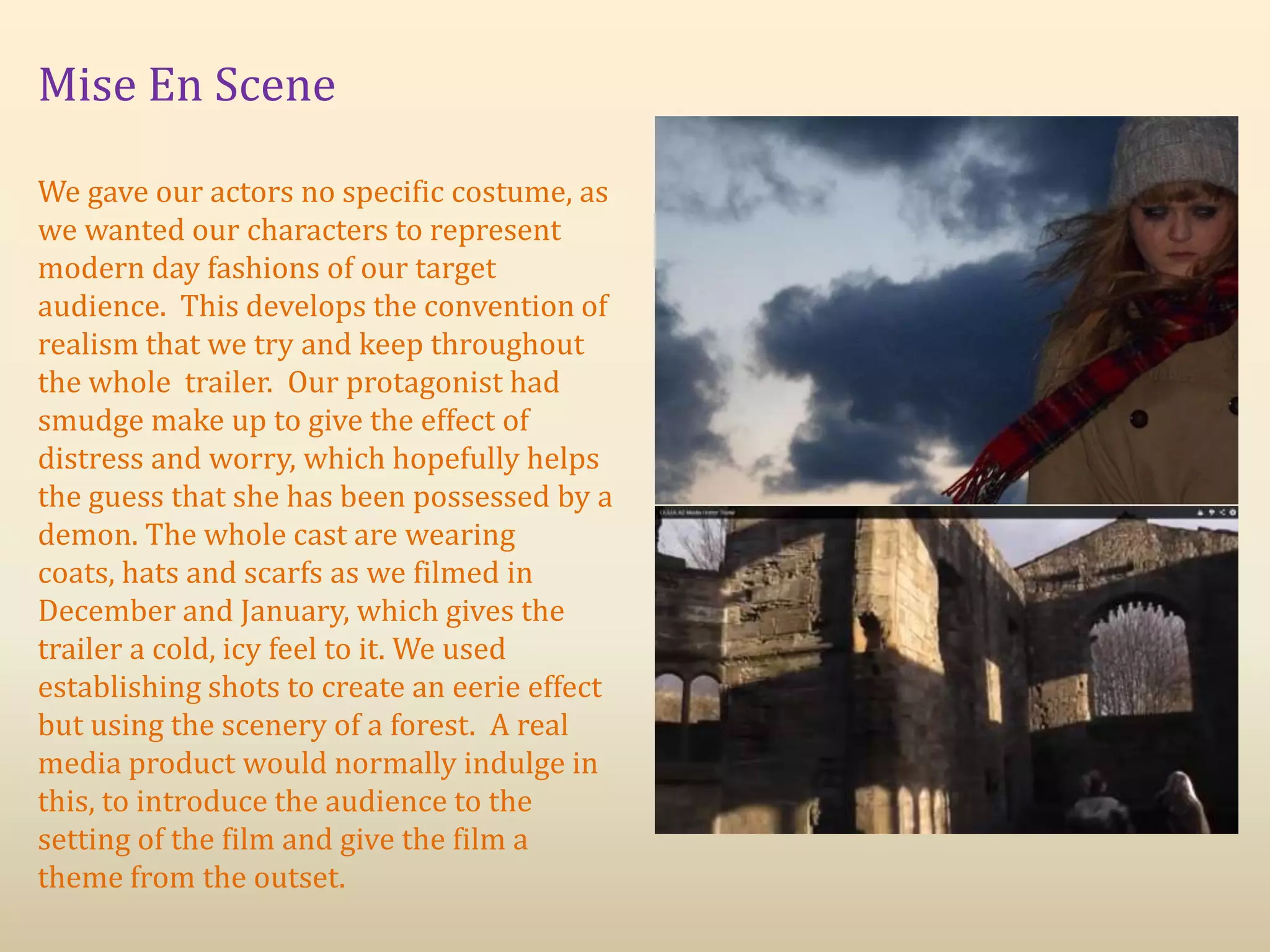
trailer a cold, icy feel to it. We used
establishing shots to create an eerie effect
but using the scenery of a forest. A real
media product would normally indulge in
this, to introduce the audience to the
setting of the film and give the film a
theme from the outset.
Lighting
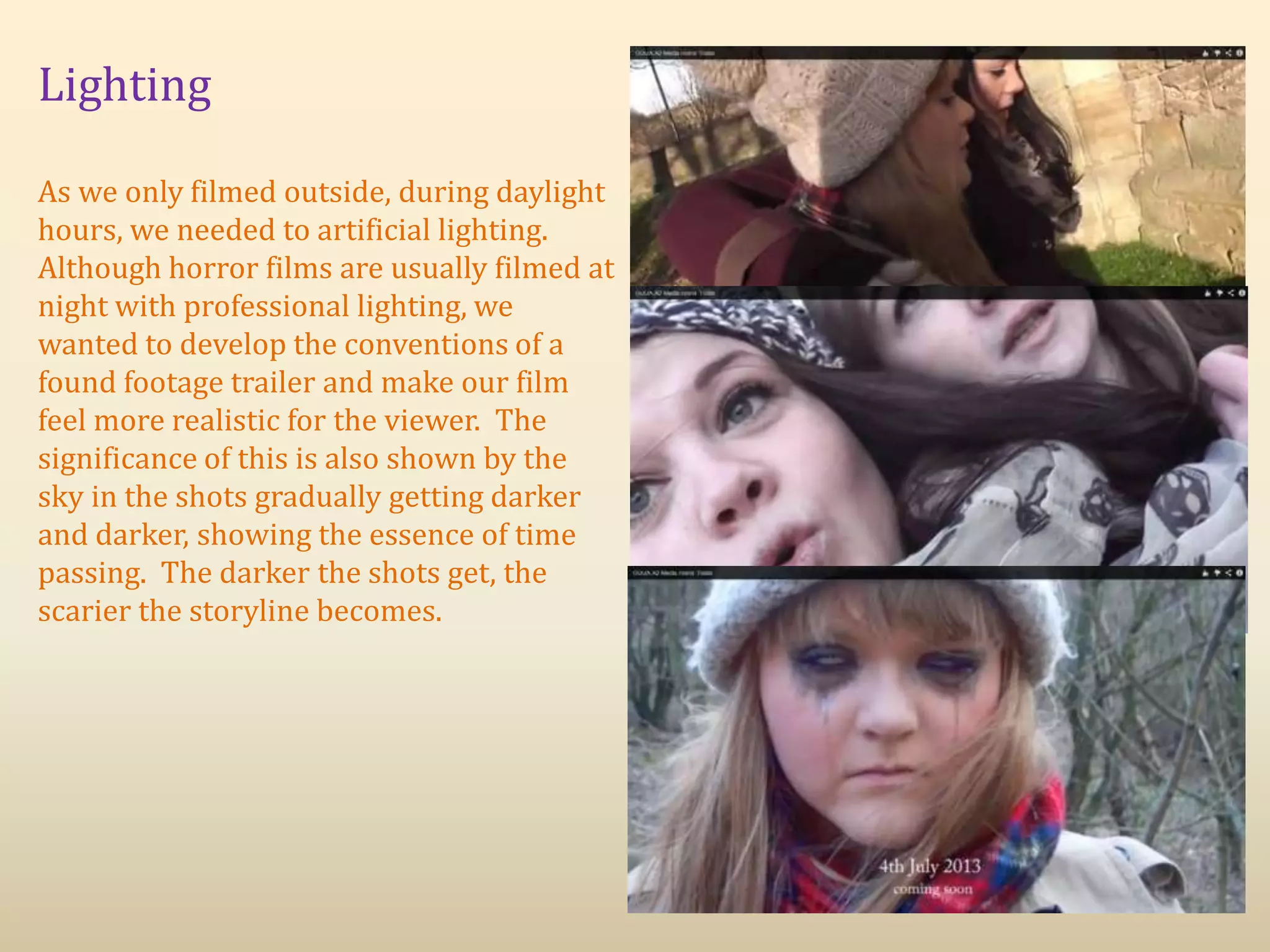
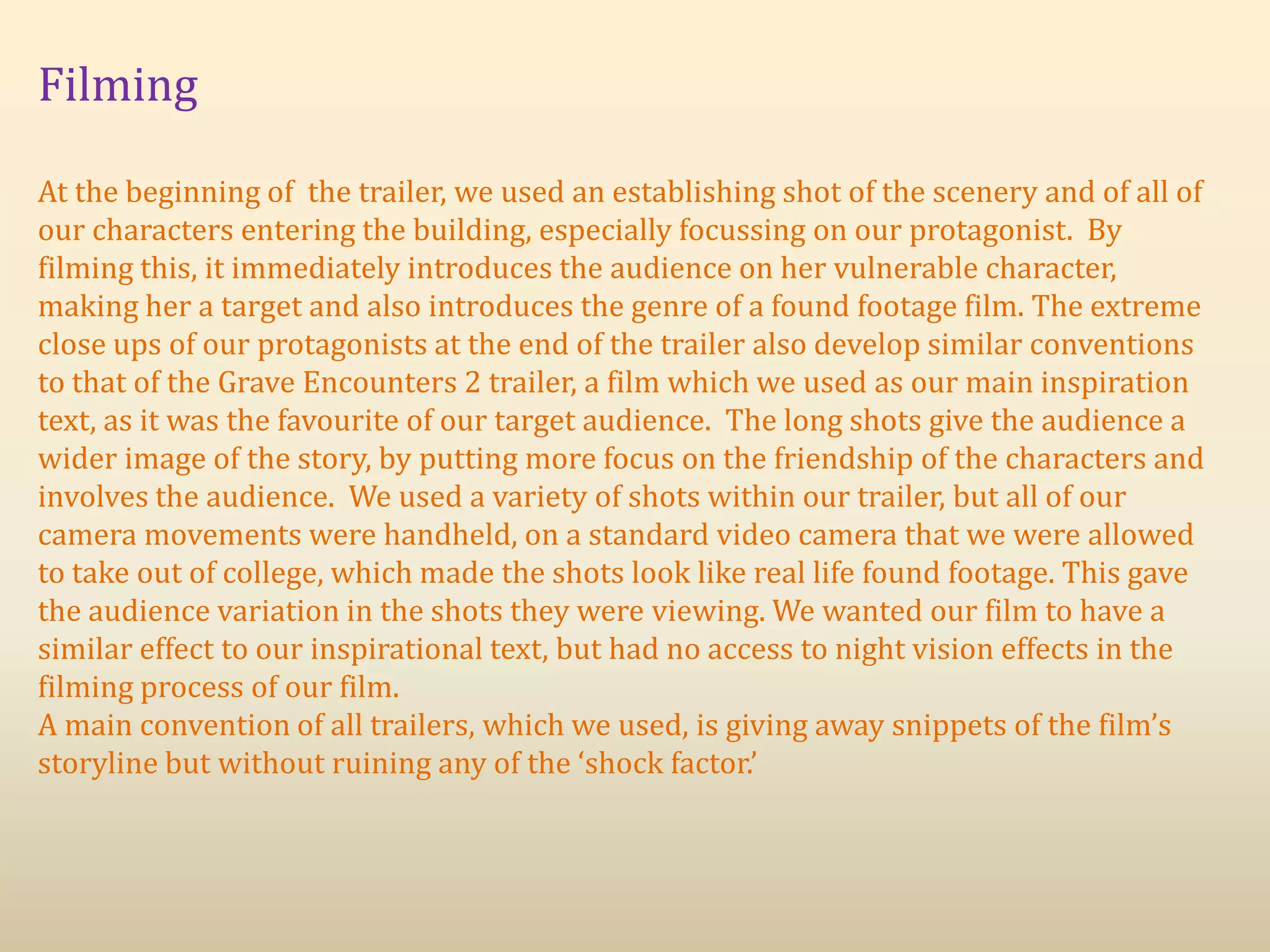
As we only filmed outside, during daylight
hours, we needed to artificial lighting.
Although horror films are usually filmed at
night with professional lighting, we
wanted to develop the conventions of a
found footage trailer and make our film
feel more realistic for the viewer. The
significance of this is also shown by the
sky in the shots gradually getting darker
and darker, showing the essence of time
passing. The darker the shots get, the
scarier the storyline becomes.
Filming
At the beginning of the trailer, we used an establishing shot of the scenery and of all of
our characters entering the building, especially focussing on our protagonist. By
filming this, it immediately introduces the audience on her vulnerable character,
making her a target and also introduces the genre of a found footage film. The extreme
close ups of our protagonists at the end of the trailer also develop similar conventions
to that of the Grave Encounters 2 trailer, a film which we used as our main inspiration
text, as it was the favourite of our target audience. The long shots give the audience a
wider image of the story, by putting more focus on the friendship of the characters and
involves the audience. We used a variety of shots within our trailer, but all of our
camera movements were handheld, on a standard video camera that we were allowed
to take out of college, which made the shots look like real life found footage. This gave
the audience variation in the shots they were viewing. We wanted our film to have a
similar effect to our inspirational text, but had no access to night vision effects in the
filming process of our film.
A main convention of all trailers, which we used, is giving away snippets of the film’s
storyline but without ruining any of the ‘shock factor.’

Q1

  • 1.
    In what waysdoes your media product use, develop or challenge forms and conventions of real media products? By Siân Davey
  • 2.
    Mise En Scene Wegave our actors no specific costume, as we wanted our characters to represent modern day fashions of our target audience. This develops the convention of realism that we try and keep throughout the whole trailer. Our protagonist had smudge make up to give the effect of distress and worry, which hopefully helps the guess that she has been possessed by a demon. The whole cast are wearing coats, hats and scarfs as we filmed in December and January, which gives the trailer a cold, icy feel to it. We used establishing shots to create an eerie effect but using the scenery of a forest. A real media product would normally indulge in this, to introduce the audience to the setting of the film and give the film a theme from the outset.
  • 3.
    Lighting As we onlyfilmed outside, during daylight hours, we needed to artificial lighting. Although horror films are usually filmed at night with professional lighting, we wanted to develop the conventions of a found footage trailer and make our film feel more realistic for the viewer. The significance of this is also shown by the sky in the shots gradually getting darker and darker, showing the essence of time passing. The darker the shots get, the scarier the storyline becomes.
  • 4.
    Filming At the beginningof the trailer, we used an establishing shot of the scenery and of all of our characters entering the building, especially focussing on our protagonist. By filming this, it immediately introduces the audience on her vulnerable character, making her a target and also introduces the genre of a found footage film. The extreme close ups of our protagonists at the end of the trailer also develop similar conventions to that of the Grave Encounters 2 trailer, a film which we used as our main inspiration text, as it was the favourite of our target audience. The long shots give the audience a wider image of the story, by putting more focus on the friendship of the characters and involves the audience. We used a variety of shots within our trailer, but all of our camera movements were handheld, on a standard video camera that we were allowed to take out of college, which made the shots look like real life found footage. This gave the audience variation in the shots they were viewing. We wanted our film to have a similar effect to our inspirational text, but had no access to night vision effects in the filming process of our film. A main convention of all trailers, which we used, is giving away snippets of the film’s storyline but without ruining any of the ‘shock factor.’