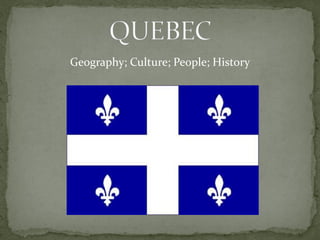
Geography; Culture; People; History
 Largest Province located in
East-central Canada
 2nd most populous province
 Nearly 3 times the size of
France
 90% of Quebec lies within the Canadian Shield
 Prone to infrequent though significant
  earthquakes
 St. Lawrence River
 Only Canadian province with a predominantly French-
  speaking population
 French is the sole official language in Quebec
 Considerable Irish, Italian, and North American
  Indian population
 Western Culture
 The folk music of Quebec: songs of France and
  Celtic music
 Civil union system for opposite-sex and same-sex
  unions
 Large numbers of Canadian, French, Irish, Italian,
  Scottish, and German people
 The population of Quebec has grown more than
  700% since 1851
 1.5% of Quebec’s population are aborigines.
 Quebec is the site where French settlers founded the
  colony of New France in the 1600s and 1700s
 In 1534, Jacques Cartier took possession of the territory
  in the name of King Francis I of France
 After a few failures at colonization, Samuel de
  Champlain laid out the foundation of French Canada
 Quebec City was founded in 1608 by de Champlain
 The French and Indian War
 The Royal Proclamation of 1763: Britain acquires New
  France
 2007 and Three Fundamental Values: Equality
  between Men and Women; Primacy of the French
  Language; Separation of State and Religion
 www.wikipedia.org/wiki/Quebec#geography
 www.wikipedia.org/wiki/culture_of_Quebec
 www.wikipedia.org/wiki/history_of_Quebec
 http://history.howstuffworks.com/canadian-
  history/history-of-quebec.htm
 http://www.quebecguidetouristique.travel/geography.
  aspx
QUEBEC
THE CULTURE OF QUEBEC
Quebec: Culture

 A western culture that is rooted in the history of the French
  speaking minority
 Quebec has 11 indigenous nations, each with its distinct
  language and culture
 Quebec City, the capital of Quebec, is a Mecca for French
  culture and heritage
Quebec: Literature

 It was not until 1760 that the first books and notable works were
  written and printed
 The newspaper, too, became the most convenient vehicle of popular
  thought (though British dominance prevailed)
 By the 1860s, Quebec authors had earned a certain autonomy; it was
  now easier to mass produce a book
 Renowned 20th century authors like Esther Delisle and Jacques
  Godbout made their marks
Quebec: Theatre

 Until the 20th century, theatrical activity in Quebec was nearly
  inactive
 The Church interfered heavily with theatrical display in pre and
  post-Conquest Quebec
 In the mid 1900s, theatre groups began to rise and prosper in
  Quebec
 Currently, theatre and dance plays a prominent role in the
  culture of Quebec
Quebec: Architecture

 French settlers brought with them the Quebec architecture
    similar to their native France
   Quebec City contains 4 centuries of architecture (since 1608)
   The Roman Catholic religion has heavily influenced the
    architecture of Quebec
   Secular architecture, like homes built
    in the 17th and 18th centuries, still survive
   Today, more modern
     architecture has been
    added to the mix
Sources

 www.wikipedia.org/wiki/Quebec_culture
 www.wecmontreal2010.ca
 www.faculty.marianopolis.edu
 www.canadiantheatre.com
 www.wikipedia.org/wiki/architecture_of_Quebec_C
 ity
QUEBEC
CONTEMPORARY ISSUES
Quebec: Politics

 Provincial government, namely a constitutional monarchy
  and parliamentary democracy
 Jean Charest is the current Premier of Quebec, appointed
  June 6, 2003
 Parties include the Quebec Liberal Party, Parti Quebecois
  (PQ), and Action Democratique du Quebec (ADQ)
Quebec: Politics

 Quebec Liberal Party: Centre-left liberal party, it believes
  Quebec should remain part of Canada and operate within
  its federal structure
 Parti Quebecois: Left-wing party, it advocates national
  sovereignty for Quebec and secession from Canada
 ADQ: Populist, conservative, nationalist, it wantss Quebec
  to become more autonomous though reside in the Canadian
  Confederation
Quebec: Economy

 The economy of Quebec is post-industrial, with a potential for
  growth
 Quebec’s aerospace industry is ranked sixth in the world for its
  production value
 Ground transportation, information technology, the health care
  industry, and tourism generate billions of dollars toward the
  growing economy of Quebec
 In 2002, Quebec had international exports of roughly $68 billion
Quebec: Diplomatic Relations

 1967, Québec created a department responsible for Québec's foreign
  governmental activity in order to pilot the development of the major
  increase of its international activity.
 Since 1977, the Premier of Québec and the Prime Minister of France
  have met often to set and fine-tune objectives and priorities for
  relations between their respective governments
 Quebec’s International Policy: in 2006, this was established to “assert
  Quebec’s desire to pursue vigorous, concerted and multilateral
  international initiatives in accordance with its needs.”
 Quebec continues to assert its position in the world
Sources

 www.wikipedia.org/wiki/politics_of_quebec
 www.wikipedia.org/wiki/economy_of_quebec
 http://www.mri.gouv.qc.ca/en/relations_quebec/eu
  rope/france/relations.asp
 http://www.gouv.qc.ca/portail/quebec/pgs/commu
  n/portrait/monde/?lang=en

Q U E B E C

  • 1.
  • 2.
     Largest Provincelocated in East-central Canada  2nd most populous province  Nearly 3 times the size of France
  • 3.
     90% ofQuebec lies within the Canadian Shield  Prone to infrequent though significant earthquakes  St. Lawrence River
  • 4.
     Only Canadianprovince with a predominantly French- speaking population  French is the sole official language in Quebec  Considerable Irish, Italian, and North American Indian population
  • 5.
     Western Culture The folk music of Quebec: songs of France and Celtic music  Civil union system for opposite-sex and same-sex unions
  • 6.
     Large numbersof Canadian, French, Irish, Italian, Scottish, and German people  The population of Quebec has grown more than 700% since 1851  1.5% of Quebec’s population are aborigines.
  • 7.
     Quebec isthe site where French settlers founded the colony of New France in the 1600s and 1700s  In 1534, Jacques Cartier took possession of the territory in the name of King Francis I of France  After a few failures at colonization, Samuel de Champlain laid out the foundation of French Canada
  • 8.
     Quebec Citywas founded in 1608 by de Champlain  The French and Indian War  The Royal Proclamation of 1763: Britain acquires New France  2007 and Three Fundamental Values: Equality between Men and Women; Primacy of the French Language; Separation of State and Religion
  • 9.
     www.wikipedia.org/wiki/Quebec#geography  www.wikipedia.org/wiki/culture_of_Quebec www.wikipedia.org/wiki/history_of_Quebec  http://history.howstuffworks.com/canadian- history/history-of-quebec.htm  http://www.quebecguidetouristique.travel/geography. aspx
  • 10.
  • 11.
    Quebec: Culture  Awestern culture that is rooted in the history of the French speaking minority  Quebec has 11 indigenous nations, each with its distinct language and culture  Quebec City, the capital of Quebec, is a Mecca for French culture and heritage
  • 12.
    Quebec: Literature  Itwas not until 1760 that the first books and notable works were written and printed  The newspaper, too, became the most convenient vehicle of popular thought (though British dominance prevailed)  By the 1860s, Quebec authors had earned a certain autonomy; it was now easier to mass produce a book  Renowned 20th century authors like Esther Delisle and Jacques Godbout made their marks
  • 13.
    Quebec: Theatre  Untilthe 20th century, theatrical activity in Quebec was nearly inactive  The Church interfered heavily with theatrical display in pre and post-Conquest Quebec  In the mid 1900s, theatre groups began to rise and prosper in Quebec  Currently, theatre and dance plays a prominent role in the culture of Quebec
  • 14.
    Quebec: Architecture  Frenchsettlers brought with them the Quebec architecture similar to their native France  Quebec City contains 4 centuries of architecture (since 1608)  The Roman Catholic religion has heavily influenced the architecture of Quebec  Secular architecture, like homes built in the 17th and 18th centuries, still survive  Today, more modern architecture has been added to the mix
  • 15.
    Sources  www.wikipedia.org/wiki/Quebec_culture  www.wecmontreal2010.ca www.faculty.marianopolis.edu  www.canadiantheatre.com  www.wikipedia.org/wiki/architecture_of_Quebec_C ity
  • 16.
  • 17.
    Quebec: Politics  Provincialgovernment, namely a constitutional monarchy and parliamentary democracy  Jean Charest is the current Premier of Quebec, appointed June 6, 2003  Parties include the Quebec Liberal Party, Parti Quebecois (PQ), and Action Democratique du Quebec (ADQ)
  • 18.
    Quebec: Politics  QuebecLiberal Party: Centre-left liberal party, it believes Quebec should remain part of Canada and operate within its federal structure  Parti Quebecois: Left-wing party, it advocates national sovereignty for Quebec and secession from Canada  ADQ: Populist, conservative, nationalist, it wantss Quebec to become more autonomous though reside in the Canadian Confederation
  • 19.
    Quebec: Economy  Theeconomy of Quebec is post-industrial, with a potential for growth  Quebec’s aerospace industry is ranked sixth in the world for its production value  Ground transportation, information technology, the health care industry, and tourism generate billions of dollars toward the growing economy of Quebec  In 2002, Quebec had international exports of roughly $68 billion
  • 20.
    Quebec: Diplomatic Relations 1967, Québec created a department responsible for Québec's foreign governmental activity in order to pilot the development of the major increase of its international activity.  Since 1977, the Premier of Québec and the Prime Minister of France have met often to set and fine-tune objectives and priorities for relations between their respective governments  Quebec’s International Policy: in 2006, this was established to “assert Quebec’s desire to pursue vigorous, concerted and multilateral international initiatives in accordance with its needs.”  Quebec continues to assert its position in the world
  • 21.
    Sources  www.wikipedia.org/wiki/politics_of_quebec  www.wikipedia.org/wiki/economy_of_quebec http://www.mri.gouv.qc.ca/en/relations_quebec/eu rope/france/relations.asp  http://www.gouv.qc.ca/portail/quebec/pgs/commu n/portrait/monde/?lang=en