django weekend Cardiff - 7-9th Feb 2014

Python in Astronomy
Dr Haley Gomez
@astrofairy

thanks to Edward Gomez (@zemogle) and Thomas Robitaille (@astrofrog)
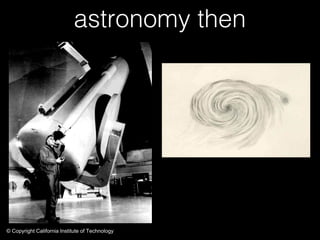
astronomy then

© Copyright California Institute of Technology
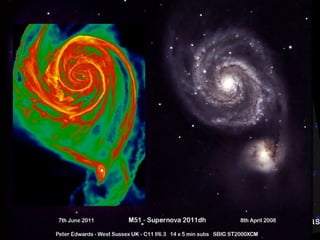
astronomy now

very hot
gas

cold gas
how do we store this?

FITS format
•

first successful cross-platform way to share
astronomical data

•

contains metadata which can be read

•

long term data storage
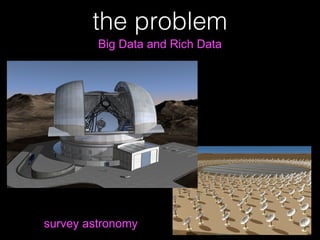
the problem
Big Data and Rich Data

survey astronomy
How do we prepare the
astronomy community?
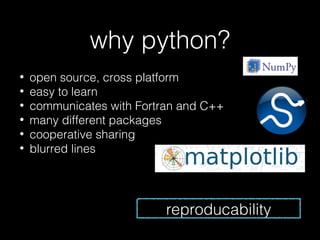
why python?
•
•
•
•
•
•

open source, cross platform
easy to learn
communicates with Fortran and C++
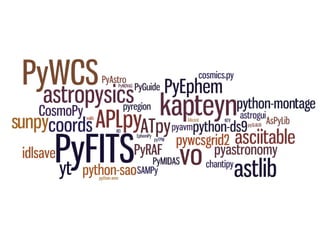
many different packages
cooperative sharing
blurred lines

reproducability
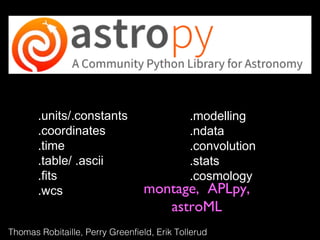
.units/.constants
.coordinates
.time
.table/ .ascii
.fits
.wcs

.modelling
.ndata
.convolution
.stats
.cosmology

montage, APLpy,
astroML

Thomas Robitaille, Perry Greenfield, Erik Tollerud
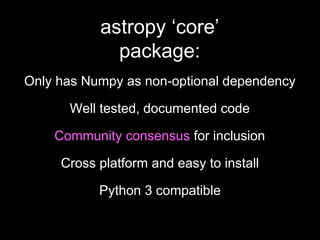
astropy ‘core’
package:
Only has Numpy as non-optional dependency
Well tested, documented code
Community consensus for inclusion
Cross platform and easy to install
Python 3 compatible
e.g. astropy.units
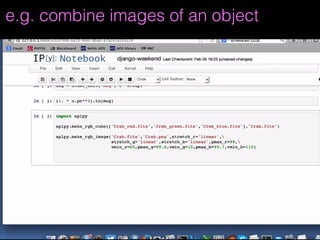
e.g. combine images of an object
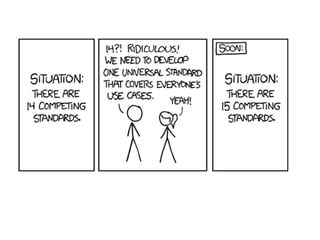
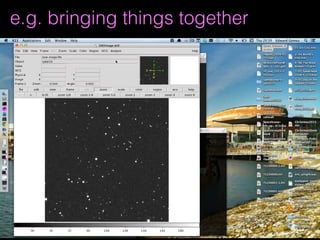
e.g. bringing things together
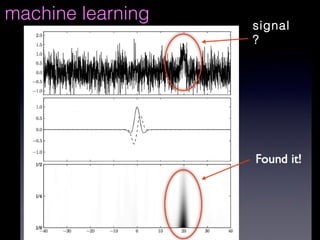
machine learning

signal
?
http://www.astropy.org
http://aplpy.github.io/

This research made use of Astropy, a community-developed core
Python package for Astronomy (Astropy Collaboration, 2013)

Python in Astronomy

Editor's Notes

  • #3 Drawing of M51 M51 Spiral Galaxy Drawing by Lord Rosse using the 72 inch Birr Reflector in 1845. Edwin Hubble at the 48" Schmidt Telescope, Palomar Observatory, 1949. .
  • #13 How to contribute
  • #19 iraf own development language ssp - hybrid of c and fortran