PYOGENIC LIVER ABSCESS
Dr. M. RIZWAN
M.S.(U)
Assistant Professor
DEPT of SURGERY
R.A. & U.T.M.C.H
Welcome to another lecture
on
‫قیحی‬ ‫کبد‬ ‫دبیال‬
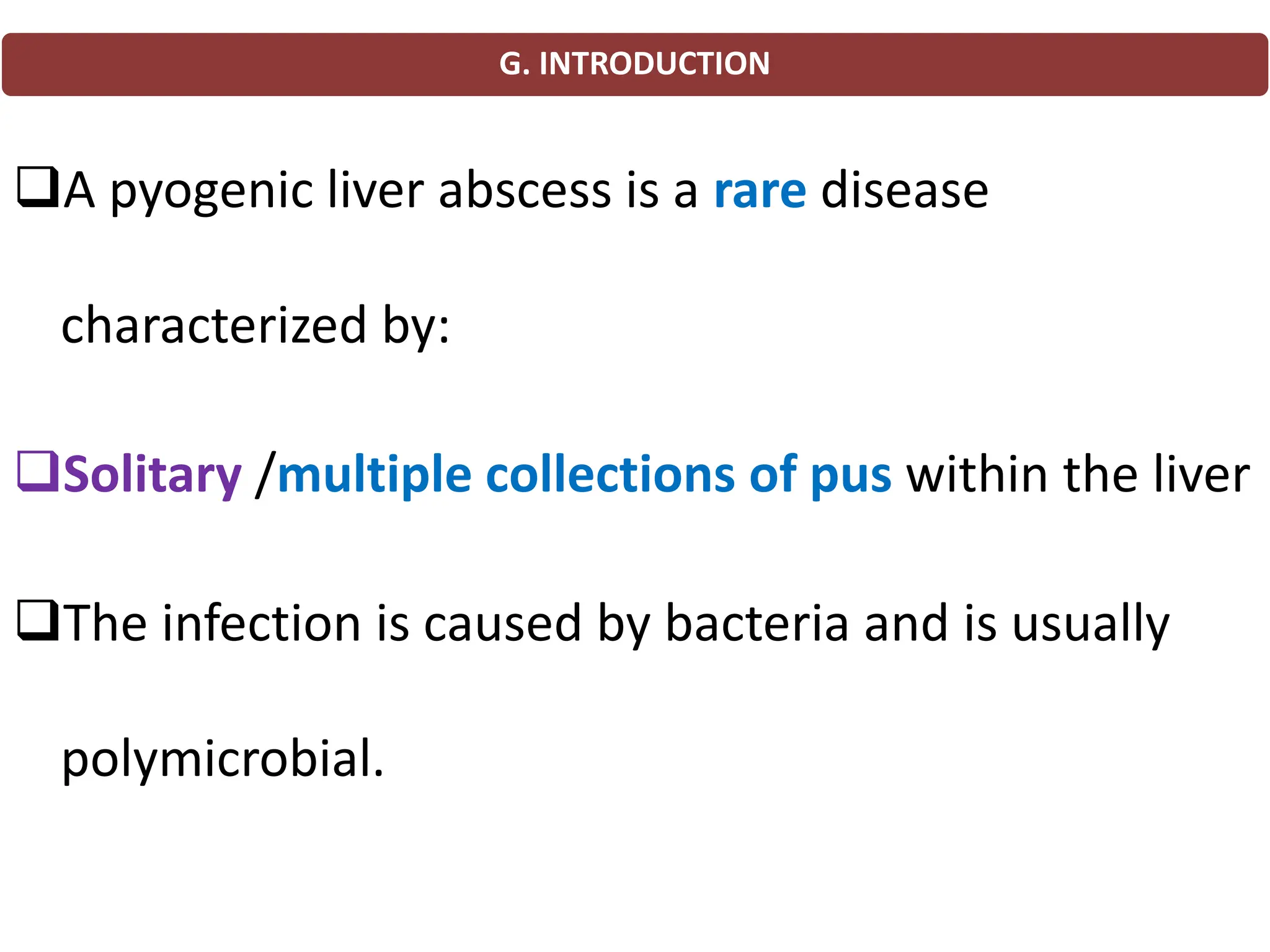
G. INTRODUCTION
❑A pyogenic liver abscess is a rare disease
characterized by:
❑Solitary /multiple collections of pus within the liver
❑The infection is caused by bacteria and is usually
polymicrobial.
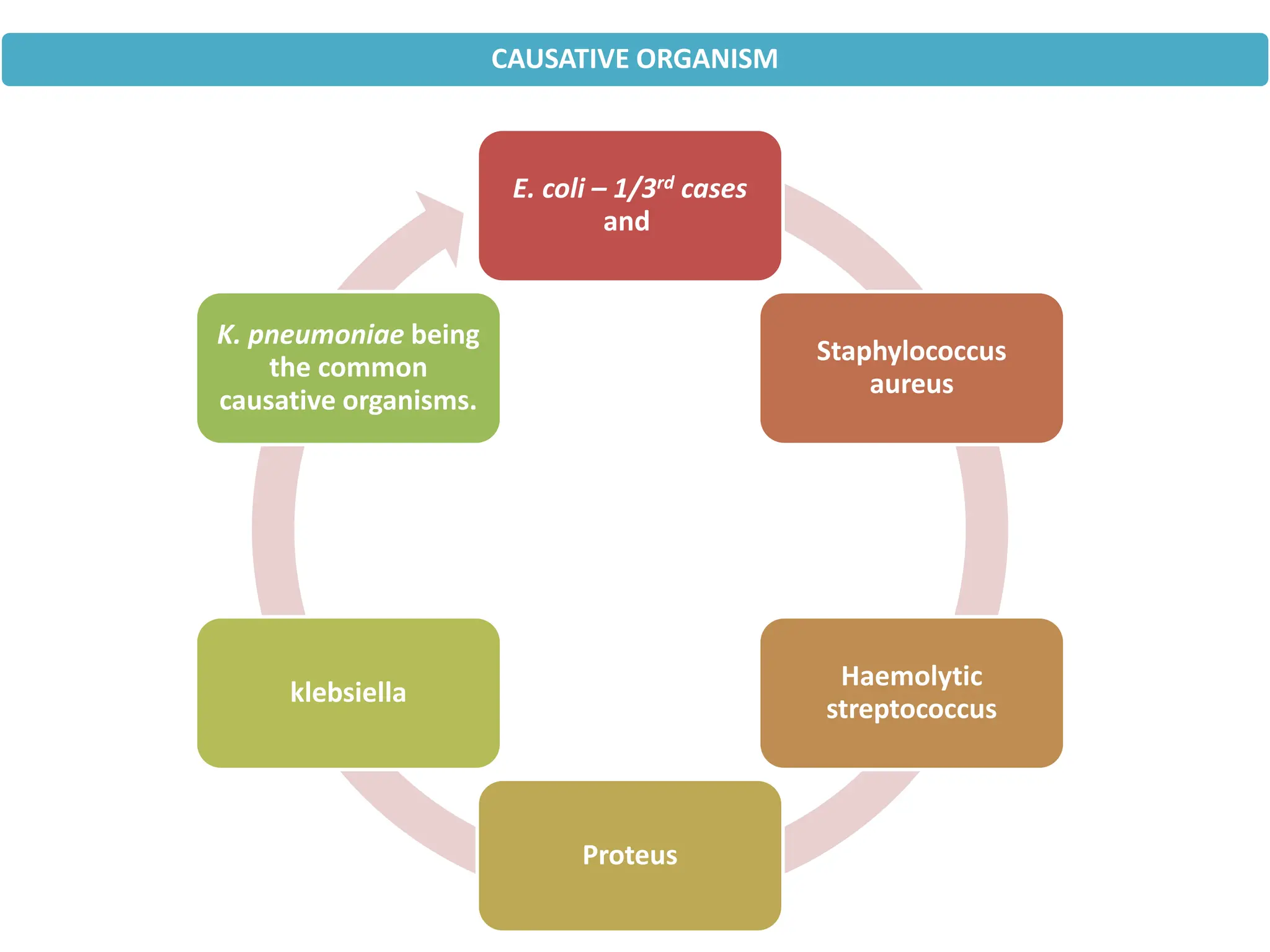
CAUSATIVE ORGANISM
E. coli – 1/3rd cases
and
Staphylococcus
aureus
Haemolytic
streptococcus
Proteus
klebsiella
K. pneumoniae being
the common
causative organisms.
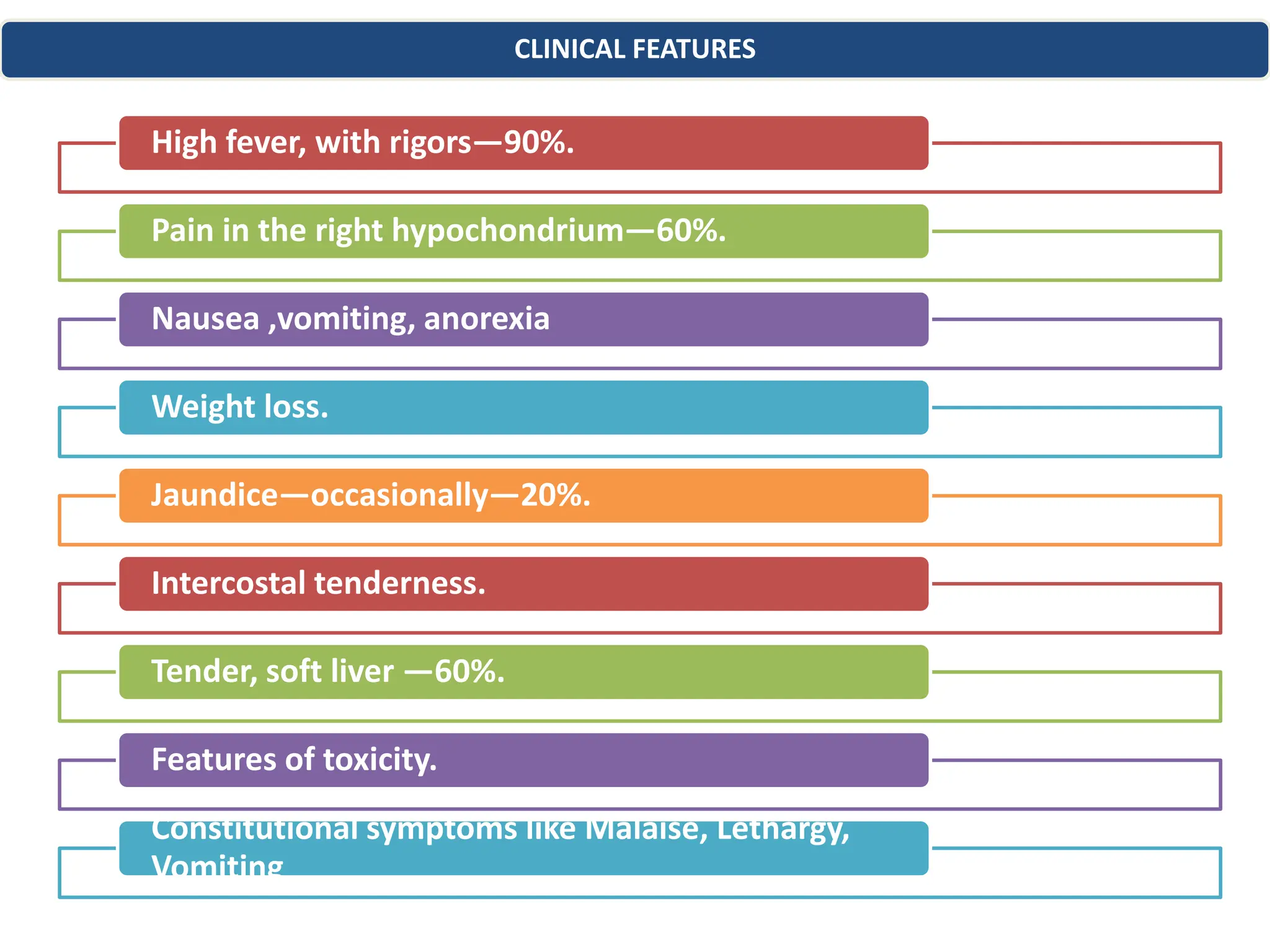
CLINICAL FEATURES
High fever, with rigors—90%.
Pain in the right hypochondrium—60%.
Nausea ,vomiting, anorexia
Weight loss.
Jaundice—occasionally—20%.
Intercostal tenderness.
Tender, soft liver —60%.
Features of toxicity.
Constitutional symptoms like Malaise, Lethargy,
Vomiting
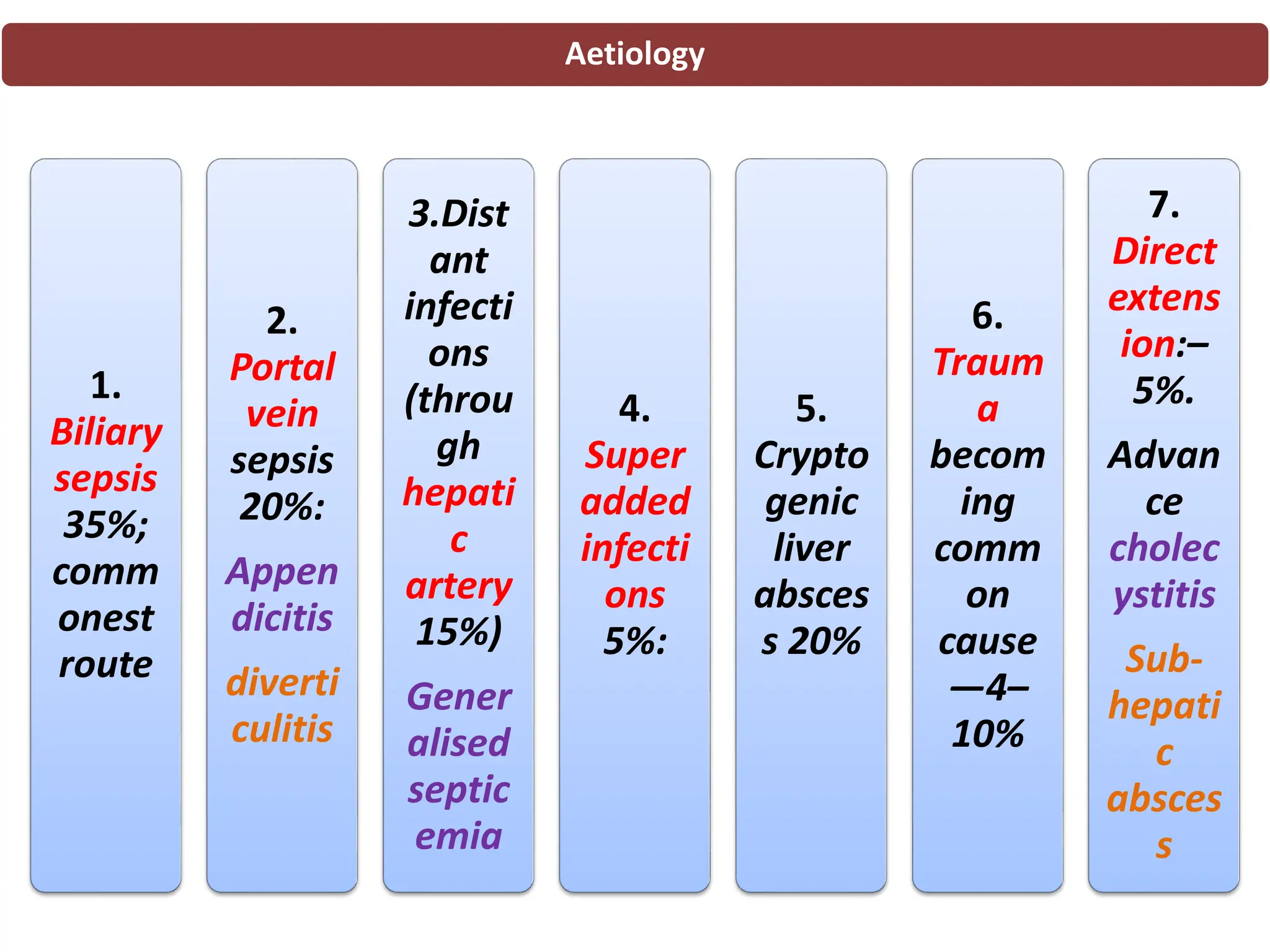
1.
Biliary
sepsis
35%;
comm
onest
route
2.
Portal
vein
sepsis
20%:
Appen
dicitis
diverti
culitis
3.Dist
ant
infecti
ons
(throu
gh
hepati
c
artery
15%)
Gener
alised
septic
emia
4.
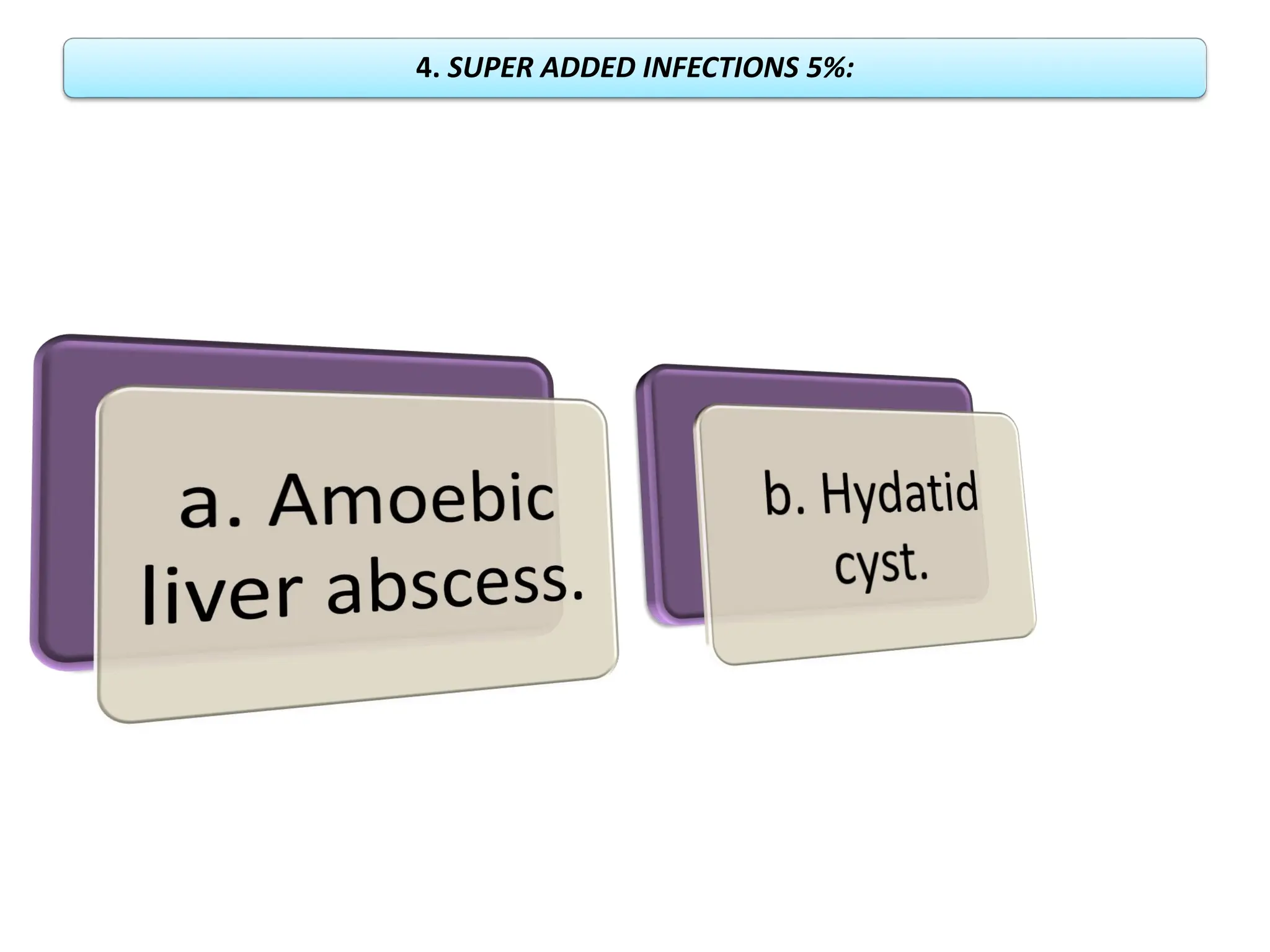
Super
added
infecti
ons
5%:
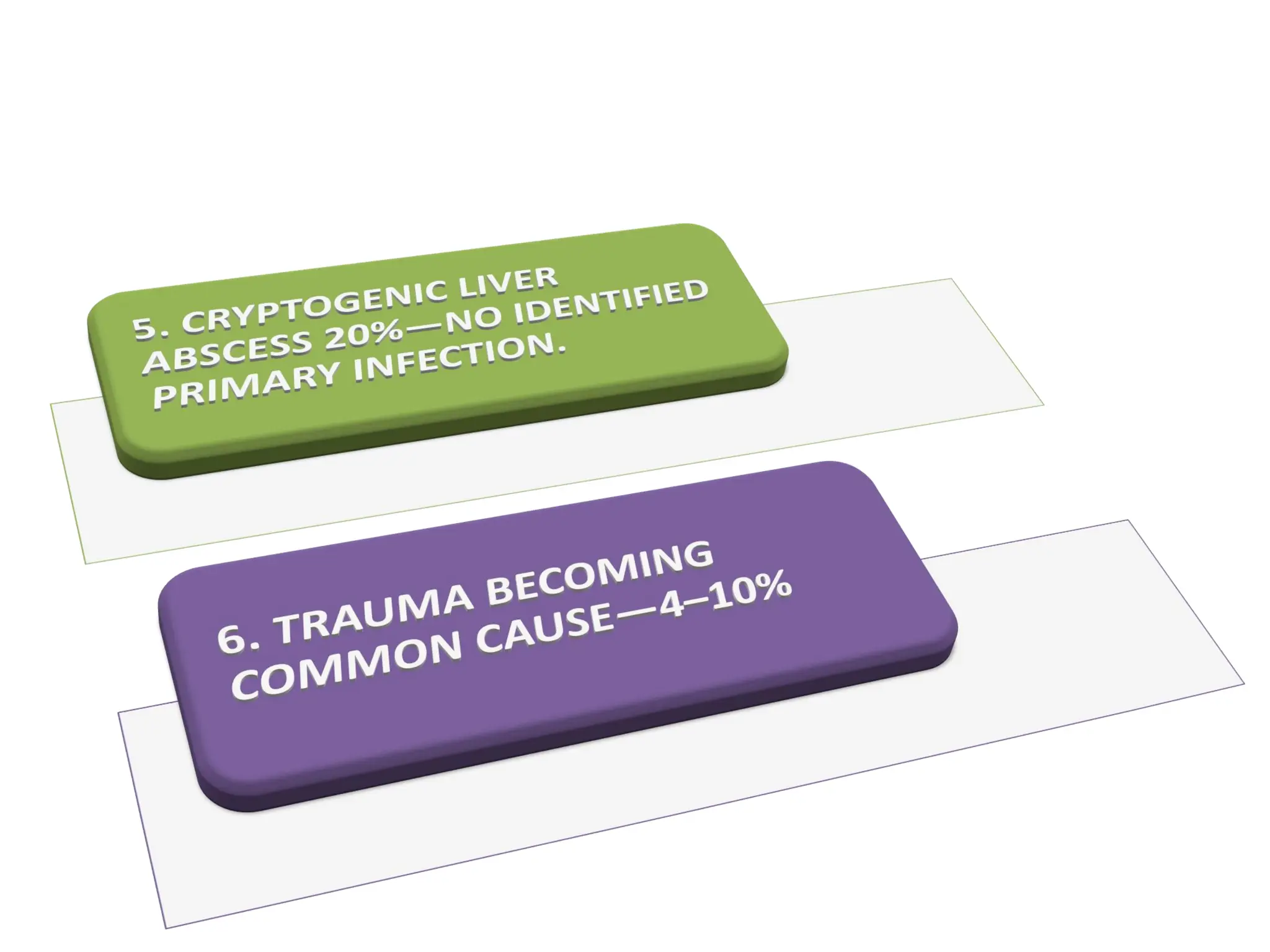
5.
Crypto
genic
liver
absces
s 20%
6.
Traum
a
becom
ing
comm
on
cause
—4–
10%
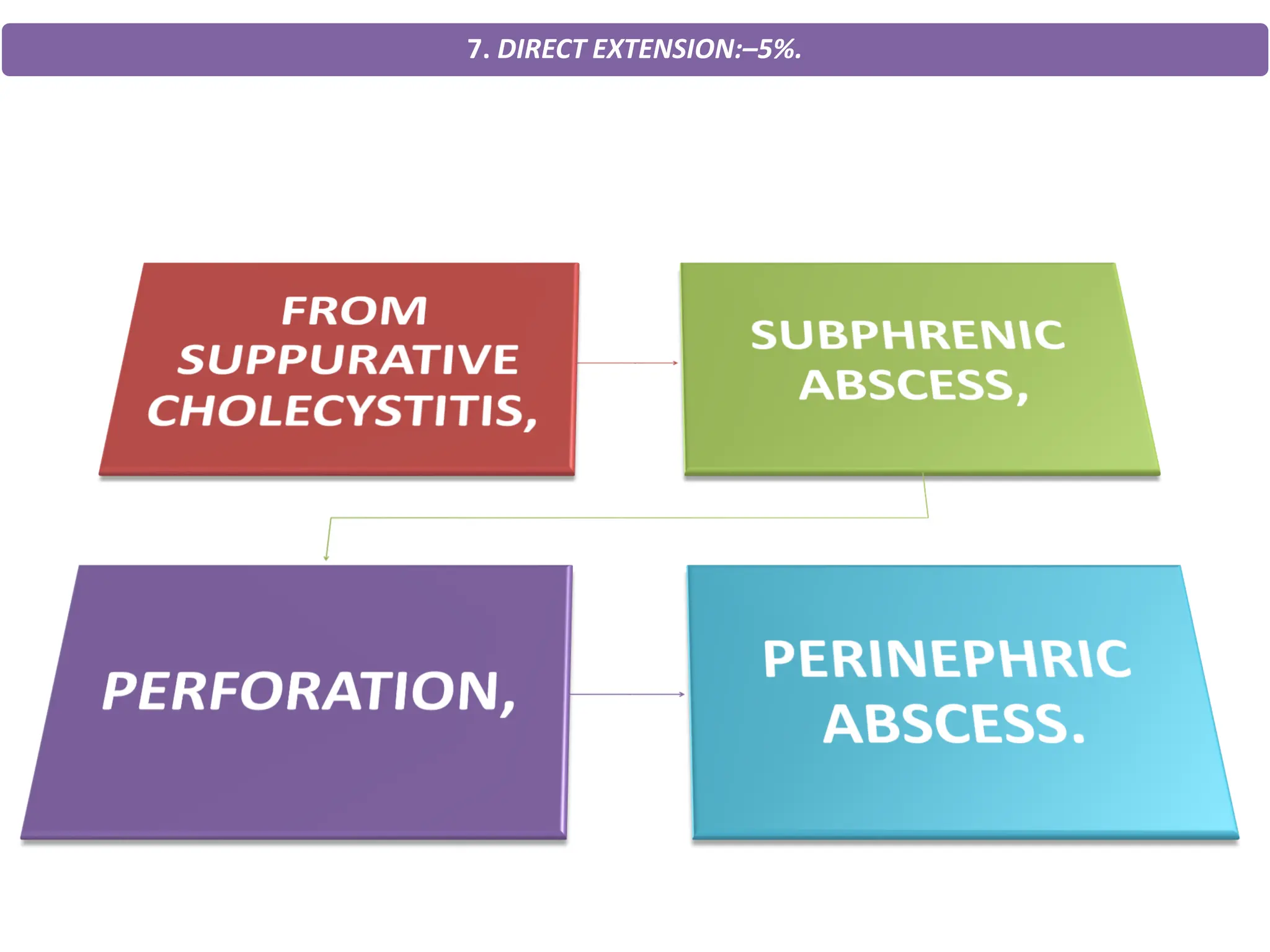
7.
Direct
extens
ion:–
5%.
Advan
ce
cholec
ystitis
Sub-
hepati
c
absces
s
Aetiology
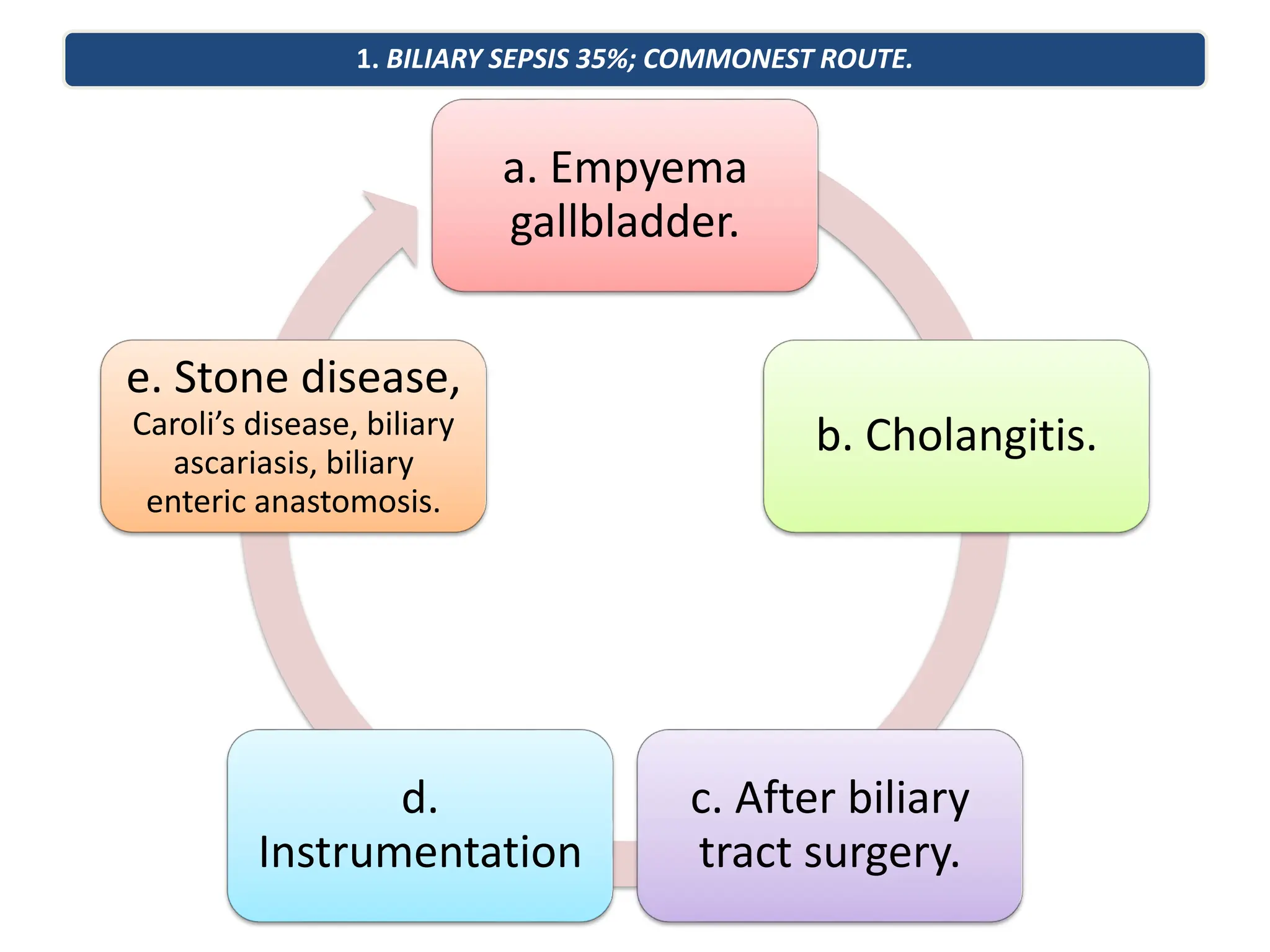
1. BILIARY SEPSIS 35%; COMMONEST ROUTE.
a. Empyema
gallbladder.
b. Cholangitis.
c. After biliary
tract surgery.
d.
Instrumentation
e. Stone disease,
Caroli’s disease, biliary
ascariasis, biliary
enteric anastomosis.
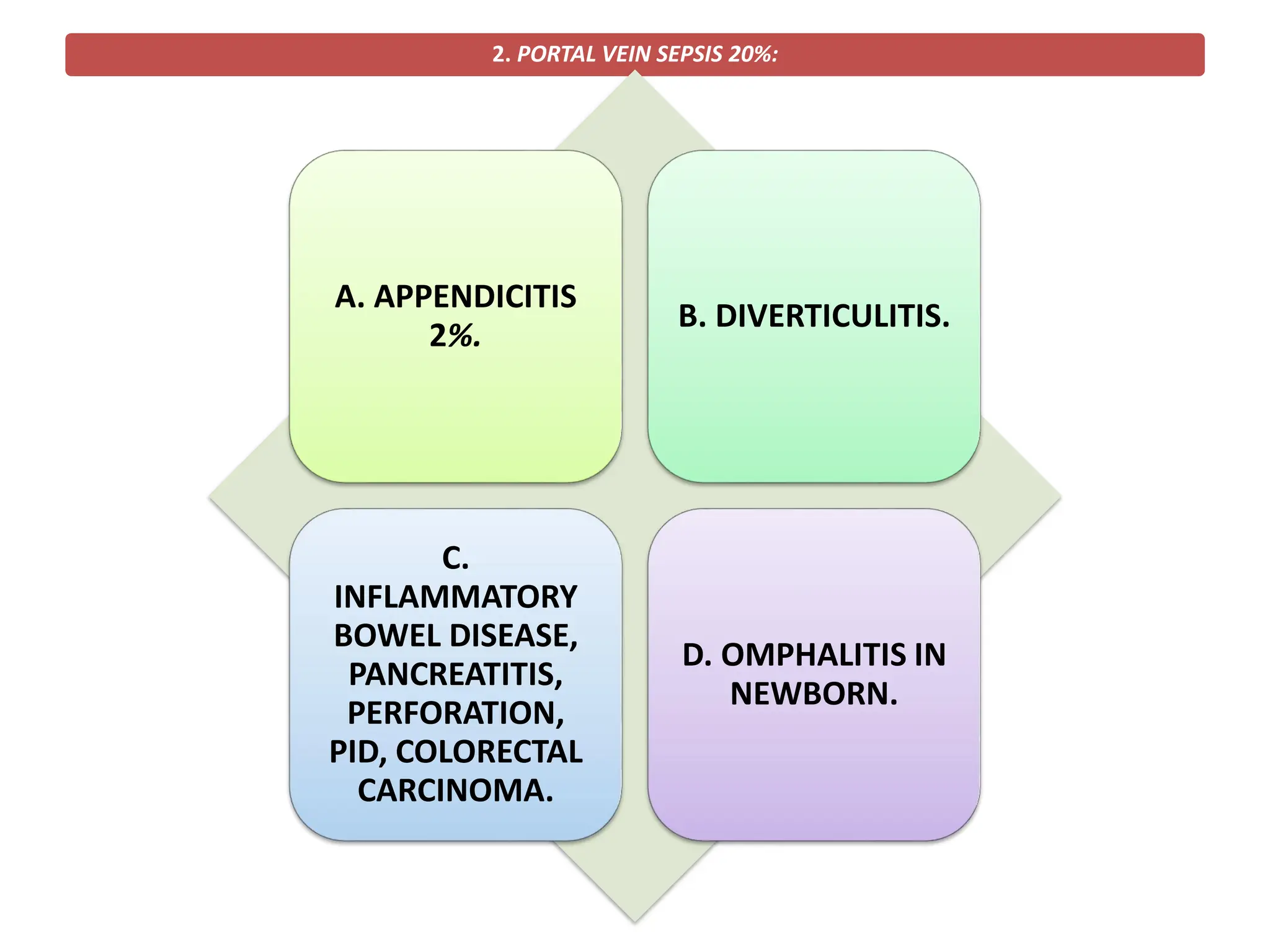
2. PORTAL VEIN SEPSIS 20%:
A. APPENDICITIS
2%.
B. DIVERTICULITIS.
C.
INFLAMMATORY
BOWEL DISEASE,
PANCREATITIS,
PERFORATION,
PID, COLORECTAL
CARCINOMA.
D. OMPHALITIS IN
NEWBORN.
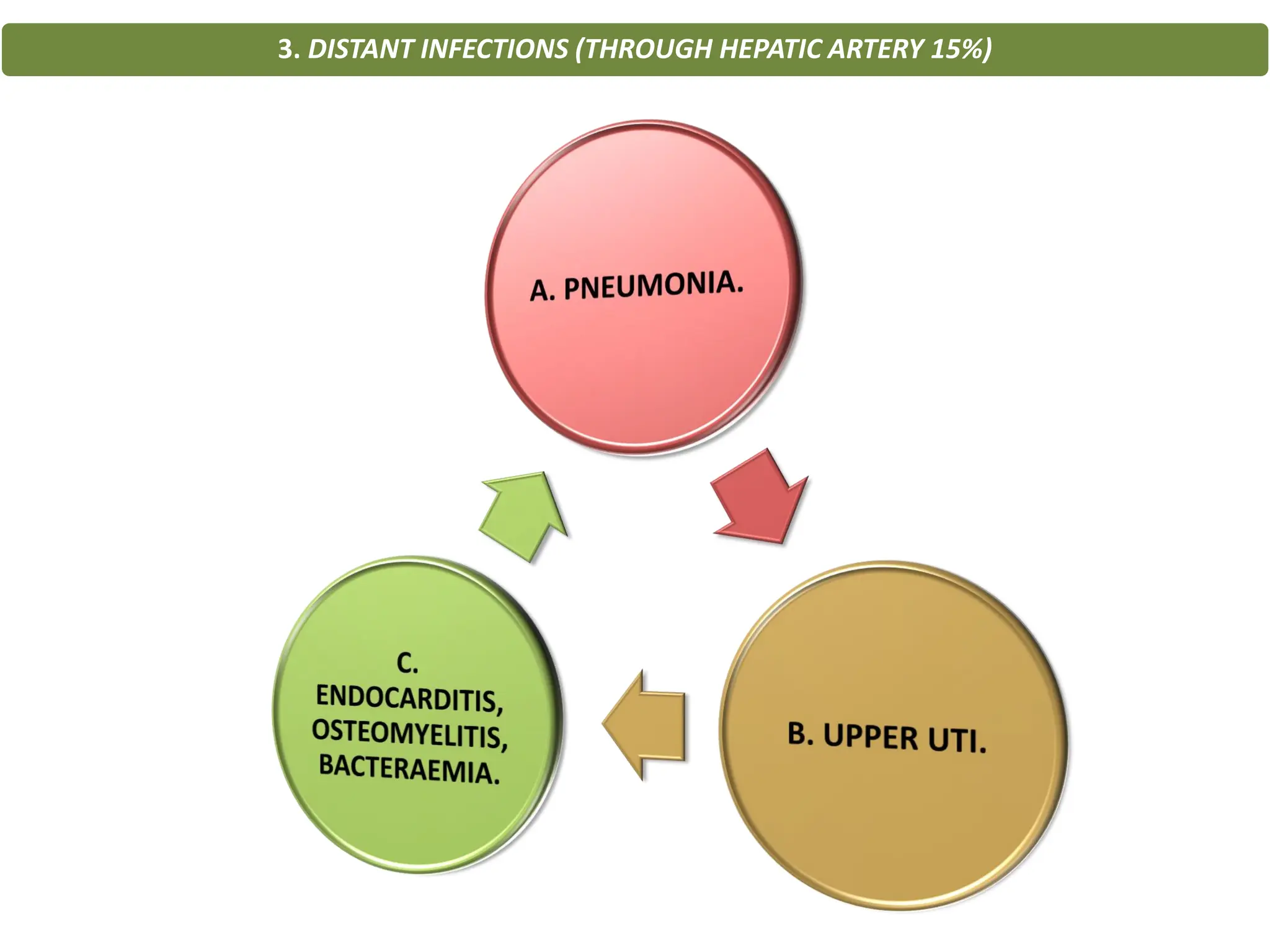
3. DISTANT INFECTIONS (THROUGH HEPATIC ARTERY 15%)
4. SUPER ADDED INFECTIONS 5%:
7. DIRECT EXTENSION:–5%.
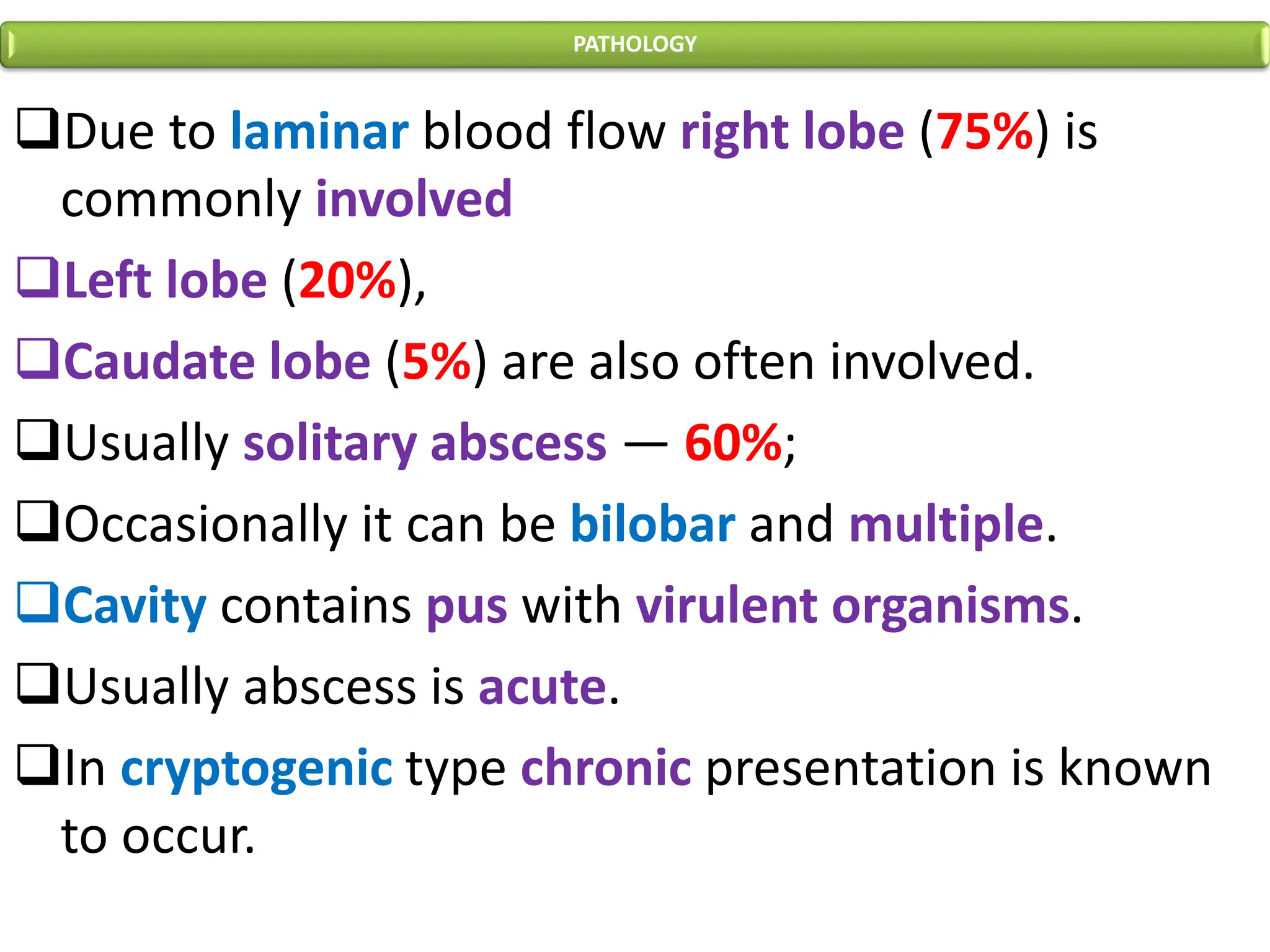
PATHOLOGY
❑Due to laminar blood flow right lobe (75%) is
commonly involved
❑Left lobe (20%),
❑Caudate lobe (5%) are also often involved.
❑Usually solitary abscess — 60%;
❑Occasionally it can be bilobar and multiple.
❑Cavity contains pus with virulent organisms.
❑Usually abscess is acute.
❑In cryptogenic type chronic presentation is known
to occur.
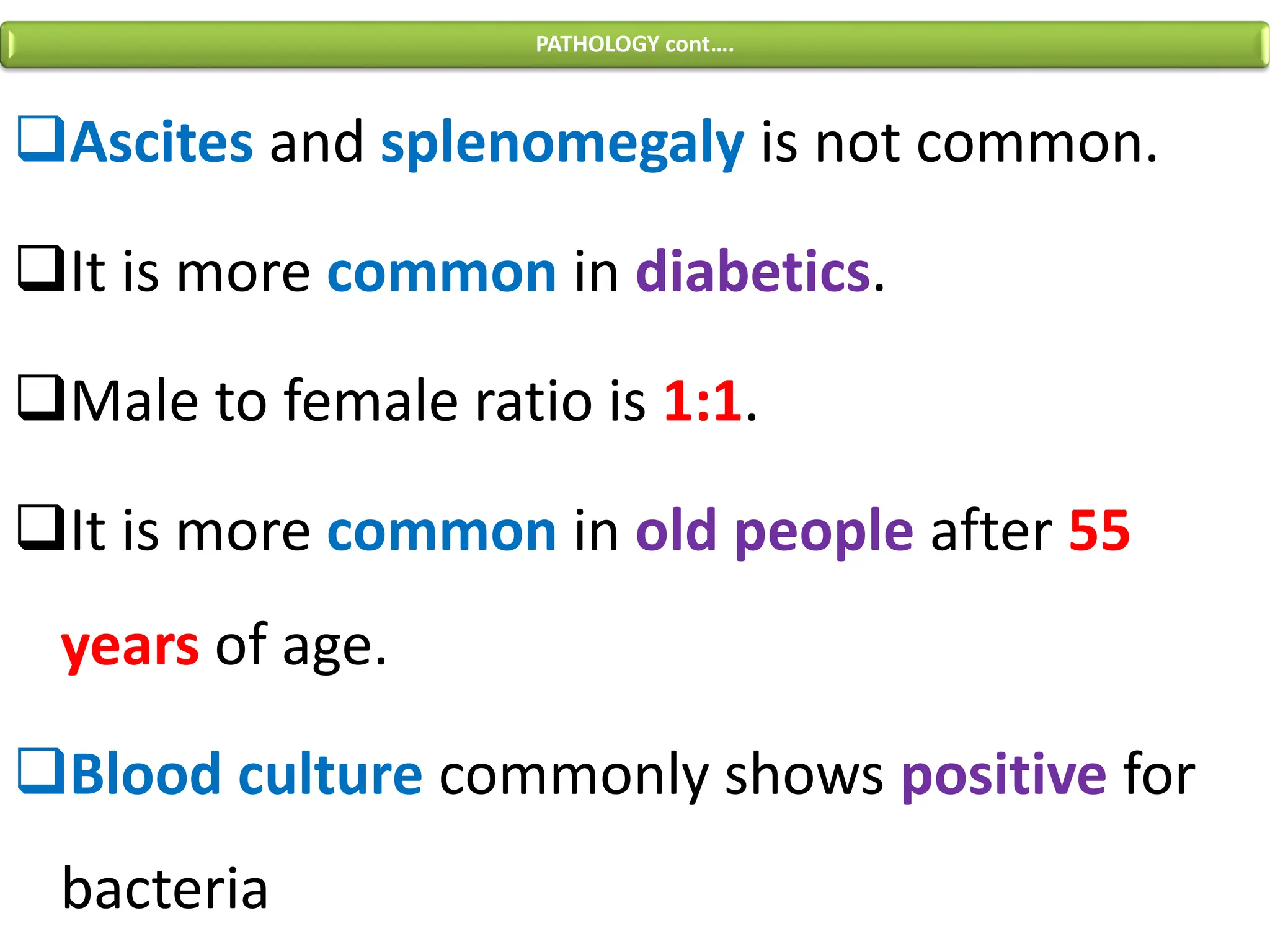
❑Ascites and splenomegaly is not common.
❑It is more common in diabetics.
❑Male to female ratio is 1:1.
❑It is more common in old people after 55
years of age.
❑Blood culture commonly shows positive for
bacteria
PATHOLOGY cont….
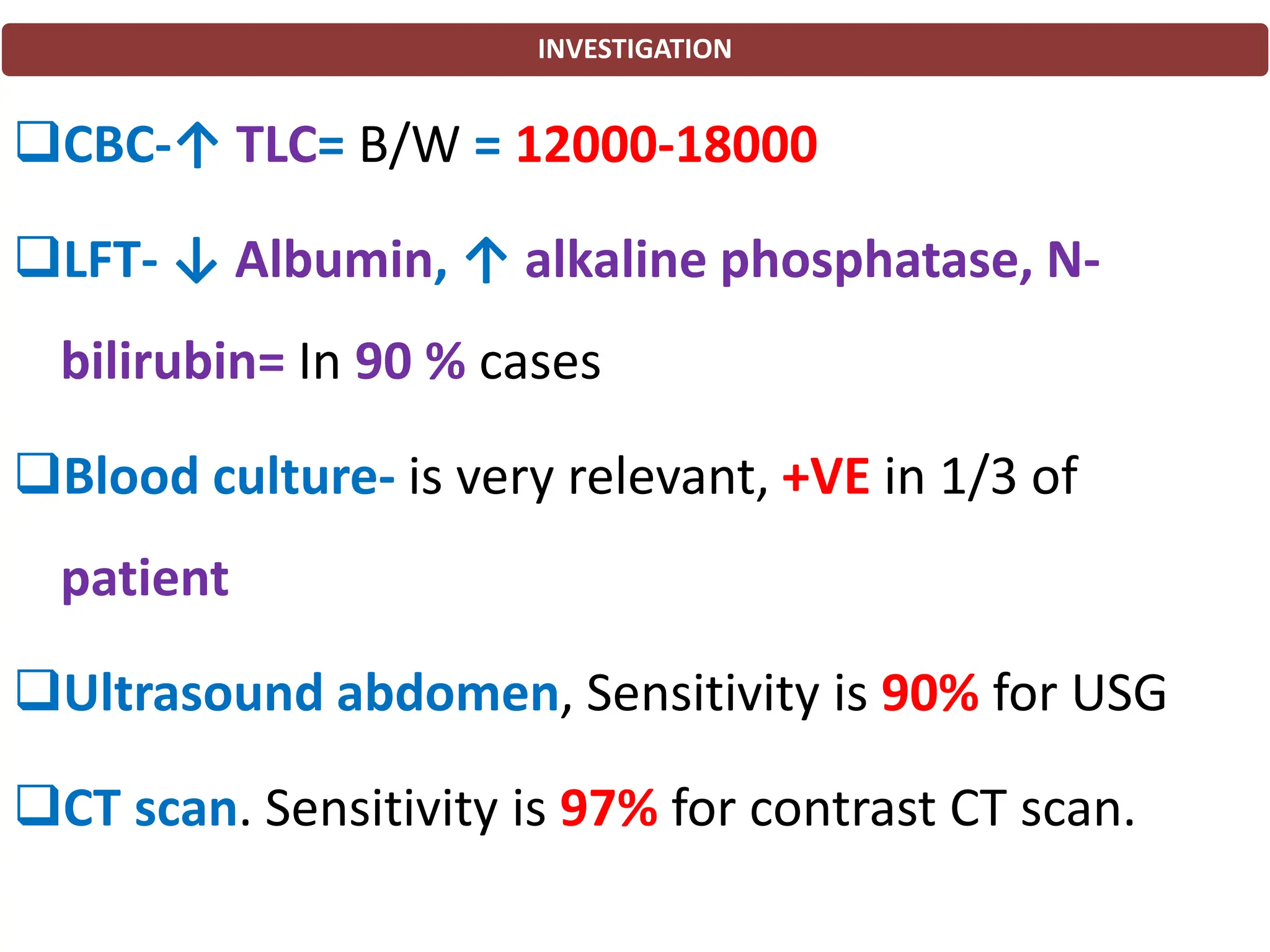
INVESTIGATION
❑CBC-↑ TLC= B/W = 12000-18000
❑LFT- ↓ Albumin, ↑ alkaline phosphatase, N-
bilirubin= In 90 % cases
❑Blood culture- is very relevant, +VE in 1/3 of
patient
❑Ultrasound abdomen, Sensitivity is 90% for USG
❑CT scan. Sensitivity is 97% for contrast CT scan.
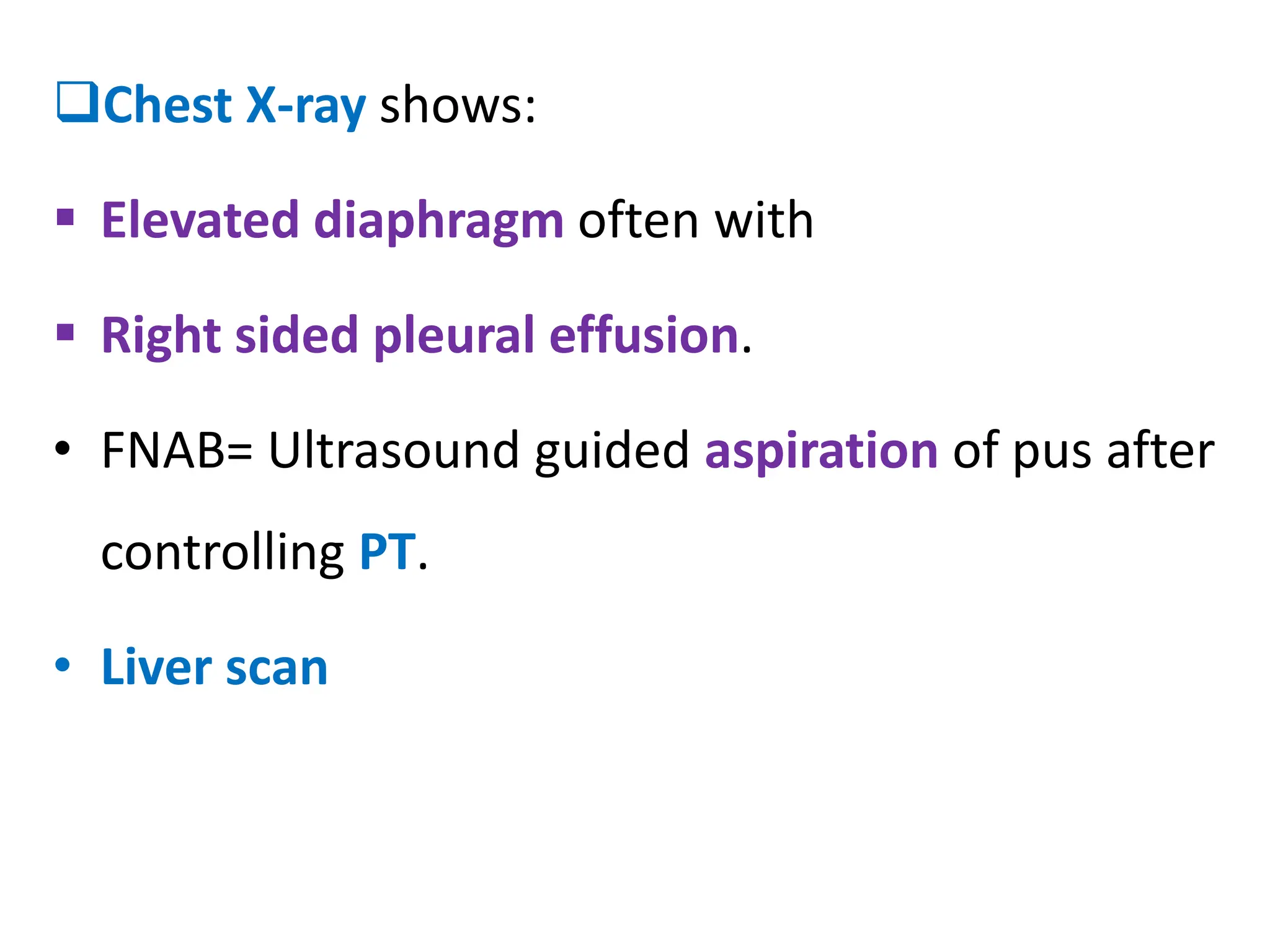
❑Chest X-ray shows:
▪ Elevated diaphragm often with
▪ Right sided pleural effusion.
• FNAB= Ultrasound guided aspiration of pus after
controlling PT.
• Liver scan
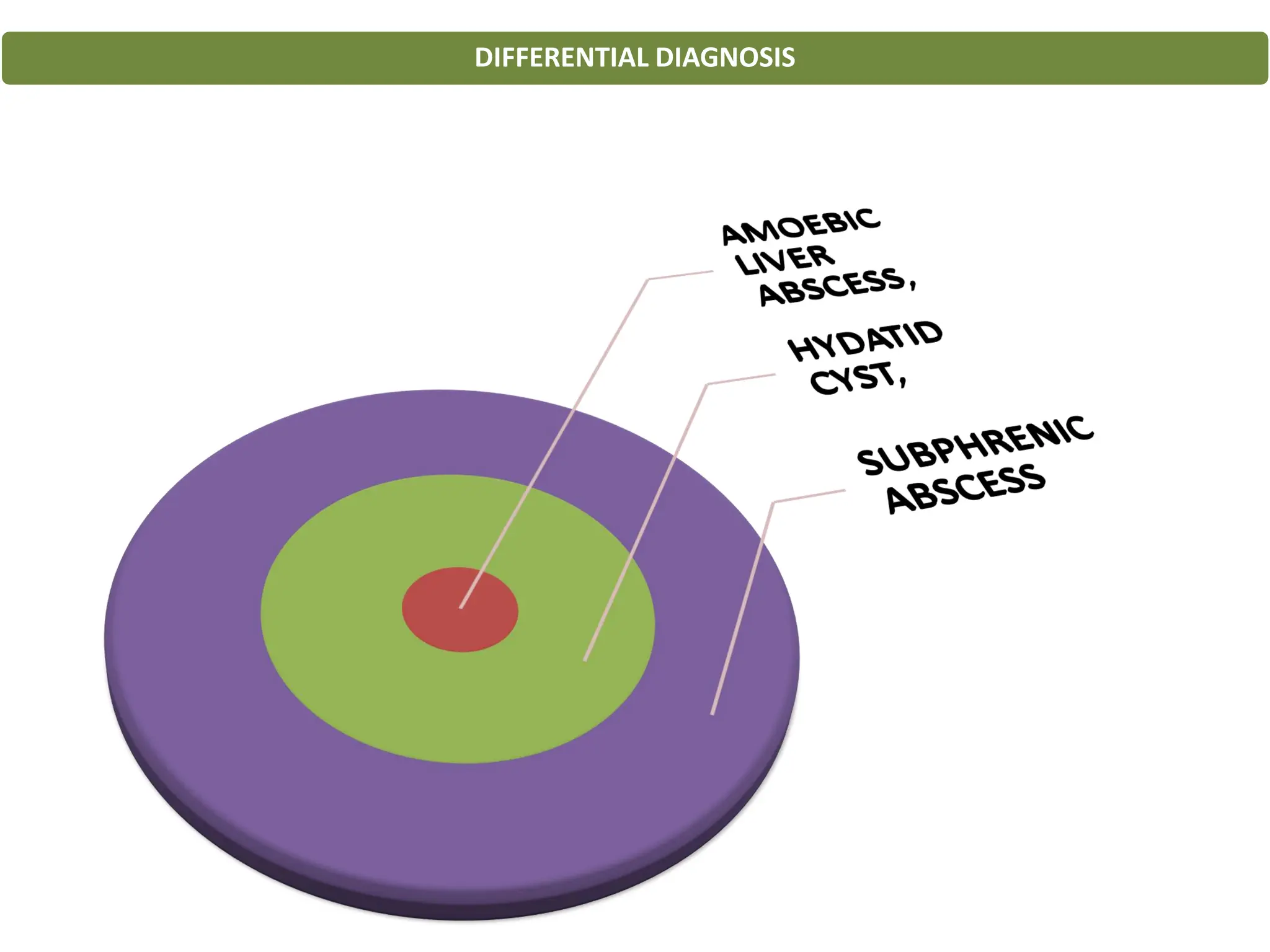
DIFFERENTIAL DIAGNOSIS
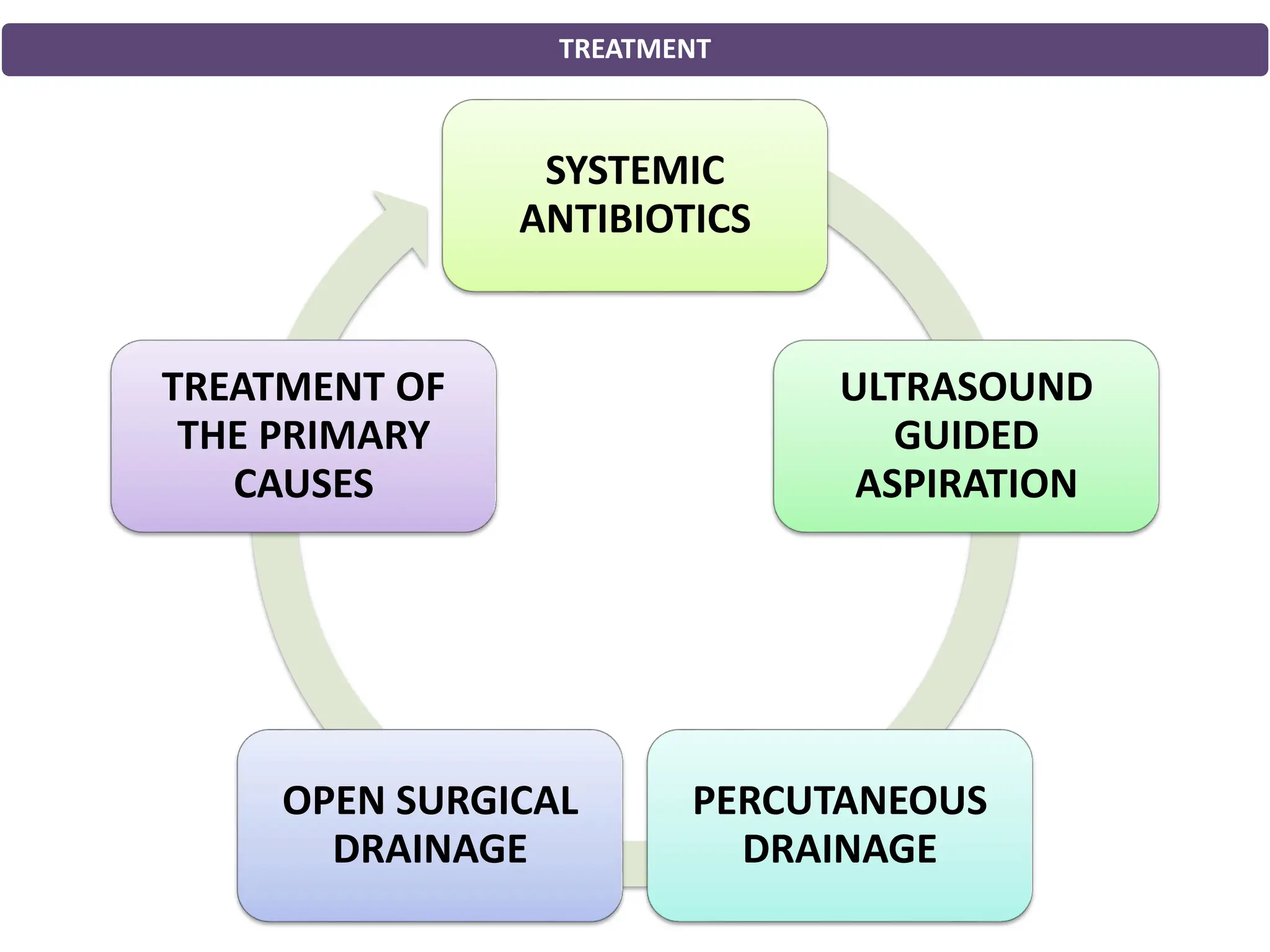
SYSTEMIC
ANTIBIOTICS
ULTRASOUND
GUIDED
ASPIRATION
PERCUTANEOUS
DRAINAGE
OPEN SURGICAL
DRAINAGE
TREATMENT OF
THE PRIMARY
CAUSES
TREATMENT
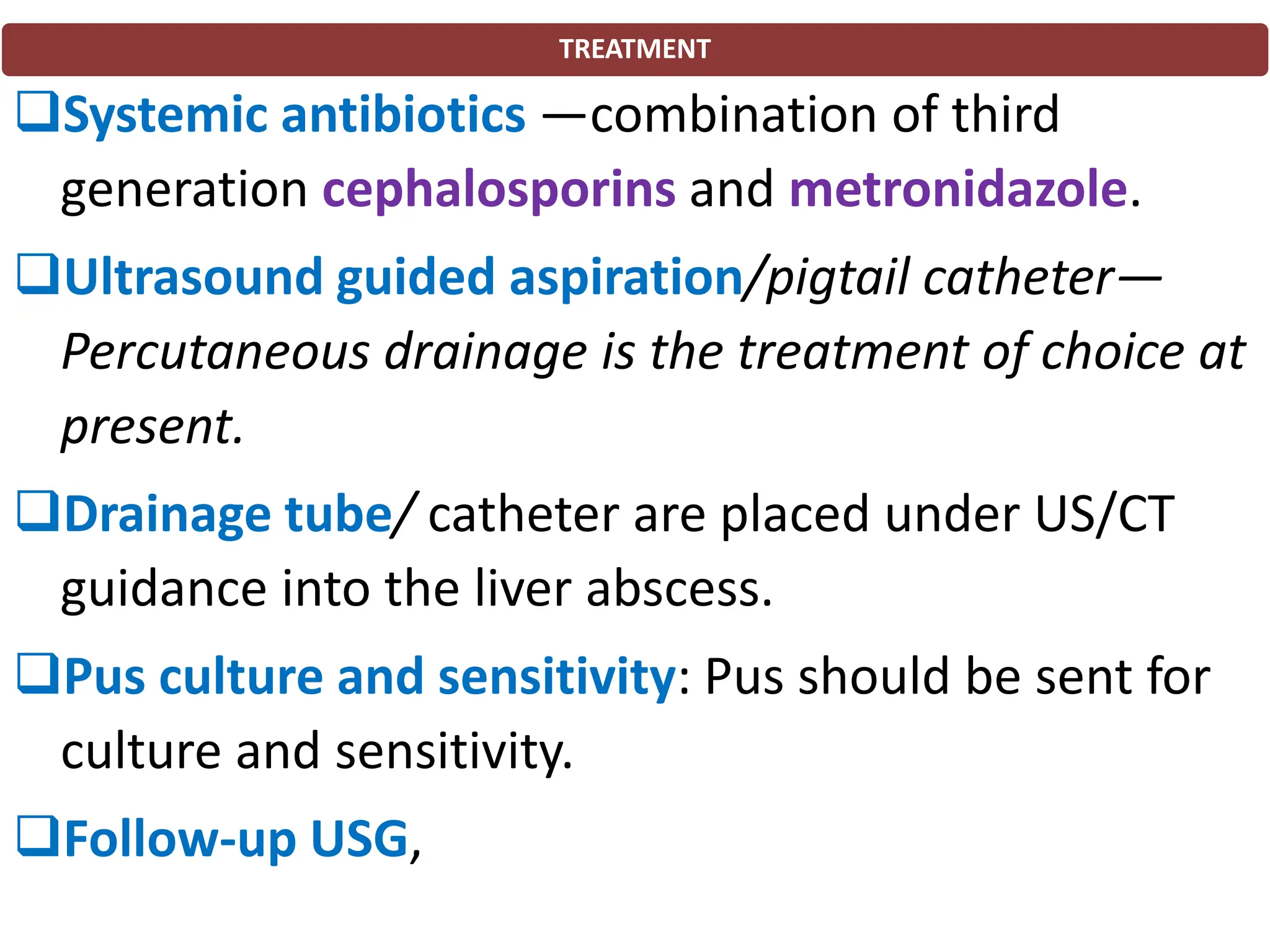
TREATMENT
❑Systemic antibiotics —combination of third
generation cephalosporins and metronidazole.
❑Ultrasound guided aspiration/pigtail catheter—
Percutaneous drainage is the treatment of choice at
present.
❑Drainage tube/ catheter are placed under US/CT
guidance into the liver abscess.
❑Pus culture and sensitivity: Pus should be sent for
culture and sensitivity.
❑Follow-up USG,
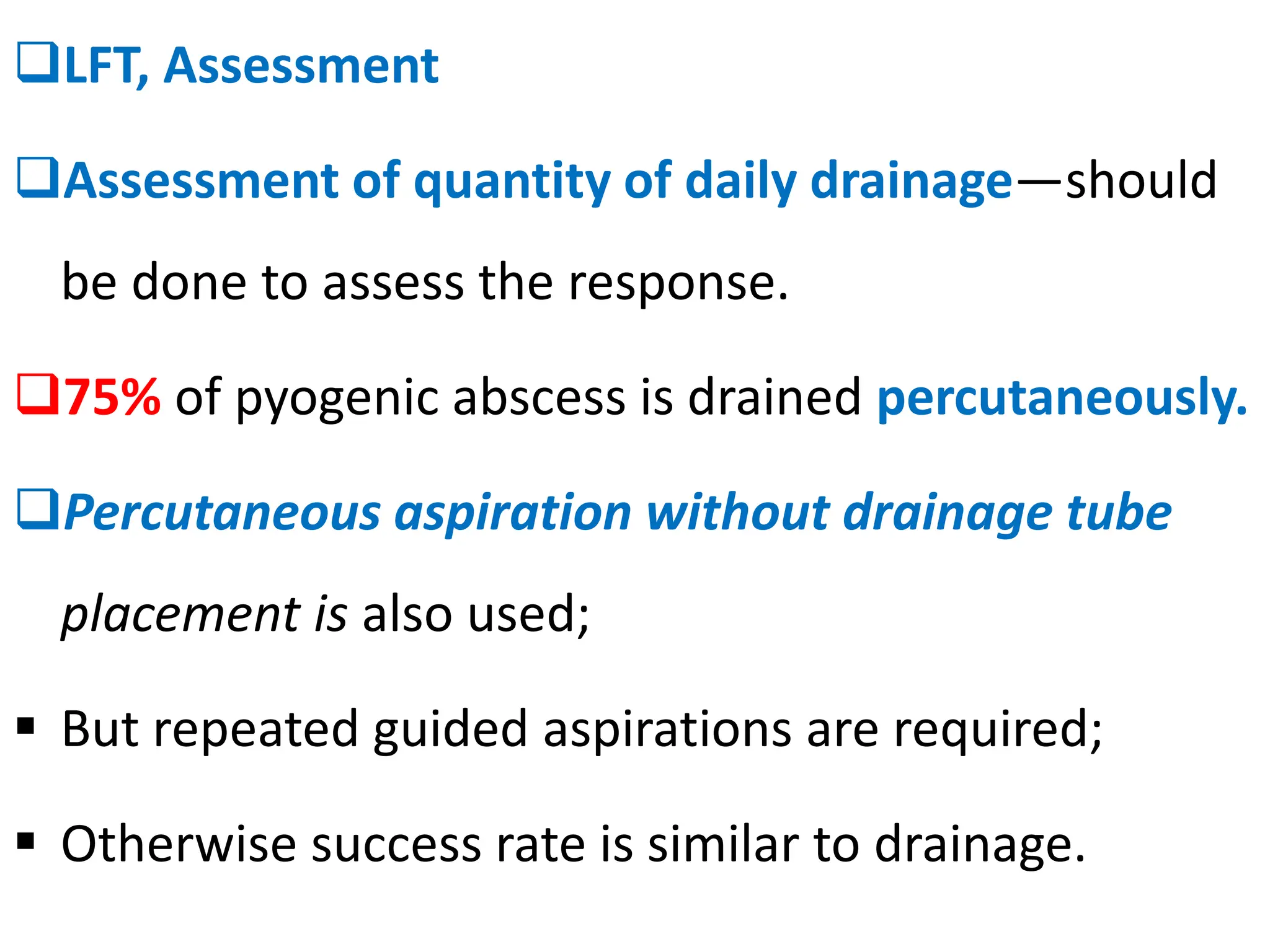
❑LFT, Assessment
❑Assessment of quantity of daily drainage—should
be done to assess the response.
❑75% of pyogenic abscess is drained percutaneously.
❑Percutaneous aspiration without drainage tube
placement is also used;
▪ But repeated guided aspirations are required;
▪ Otherwise success rate is similar to drainage.
OPEN
SURGICAL
DRAINAGE
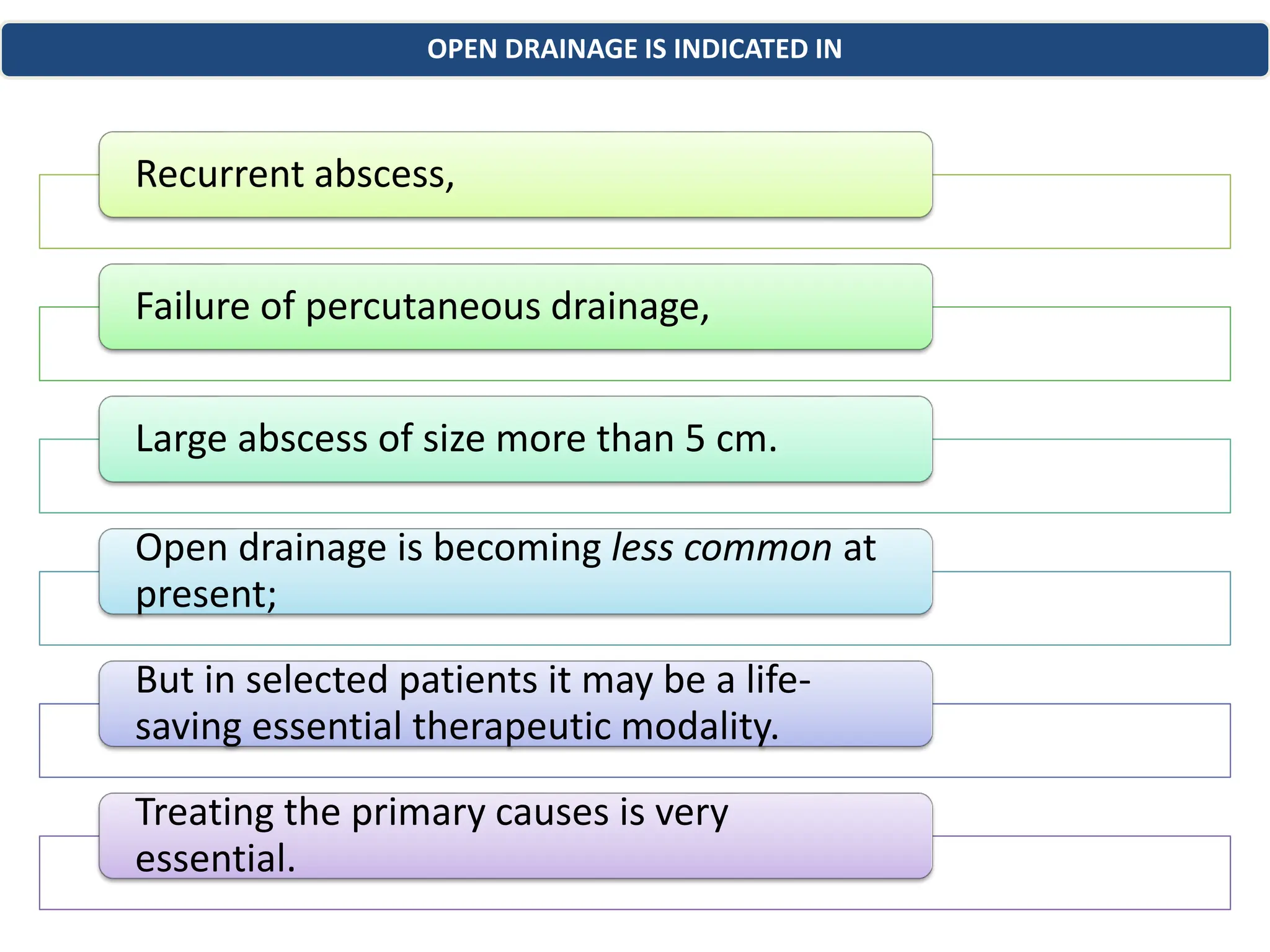
OPEN DRAINAGE IS INDICATED IN
Recurrent abscess,
Failure of percutaneous drainage,
Large abscess of size more than 5 cm.
Open drainage is becoming less common at
present;
But in selected patients it may be a life-
saving essential therapeutic modality.
Treating the primary causes is very
essential.
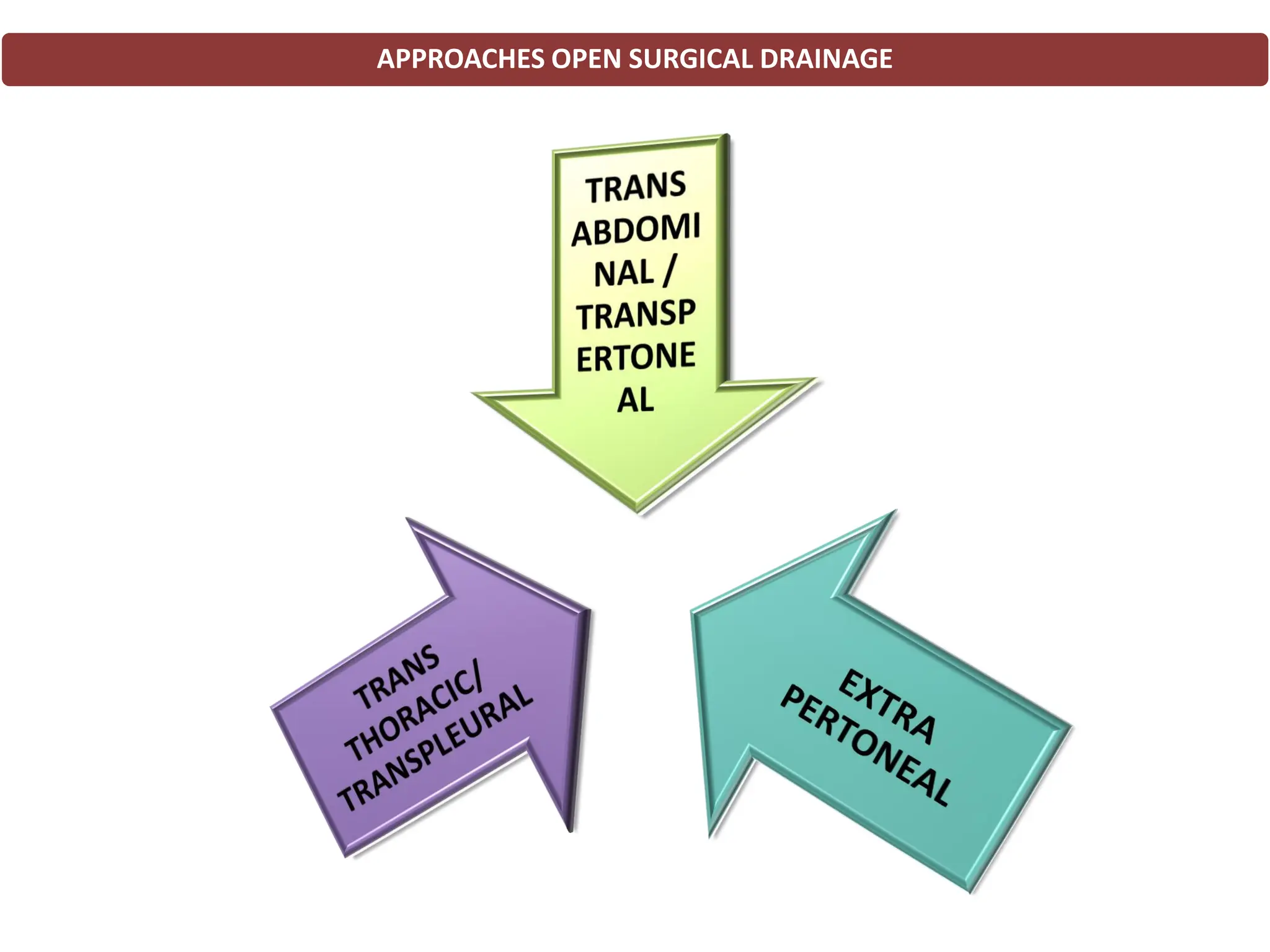
APPROACHES OPEN SURGICAL DRAINAGE
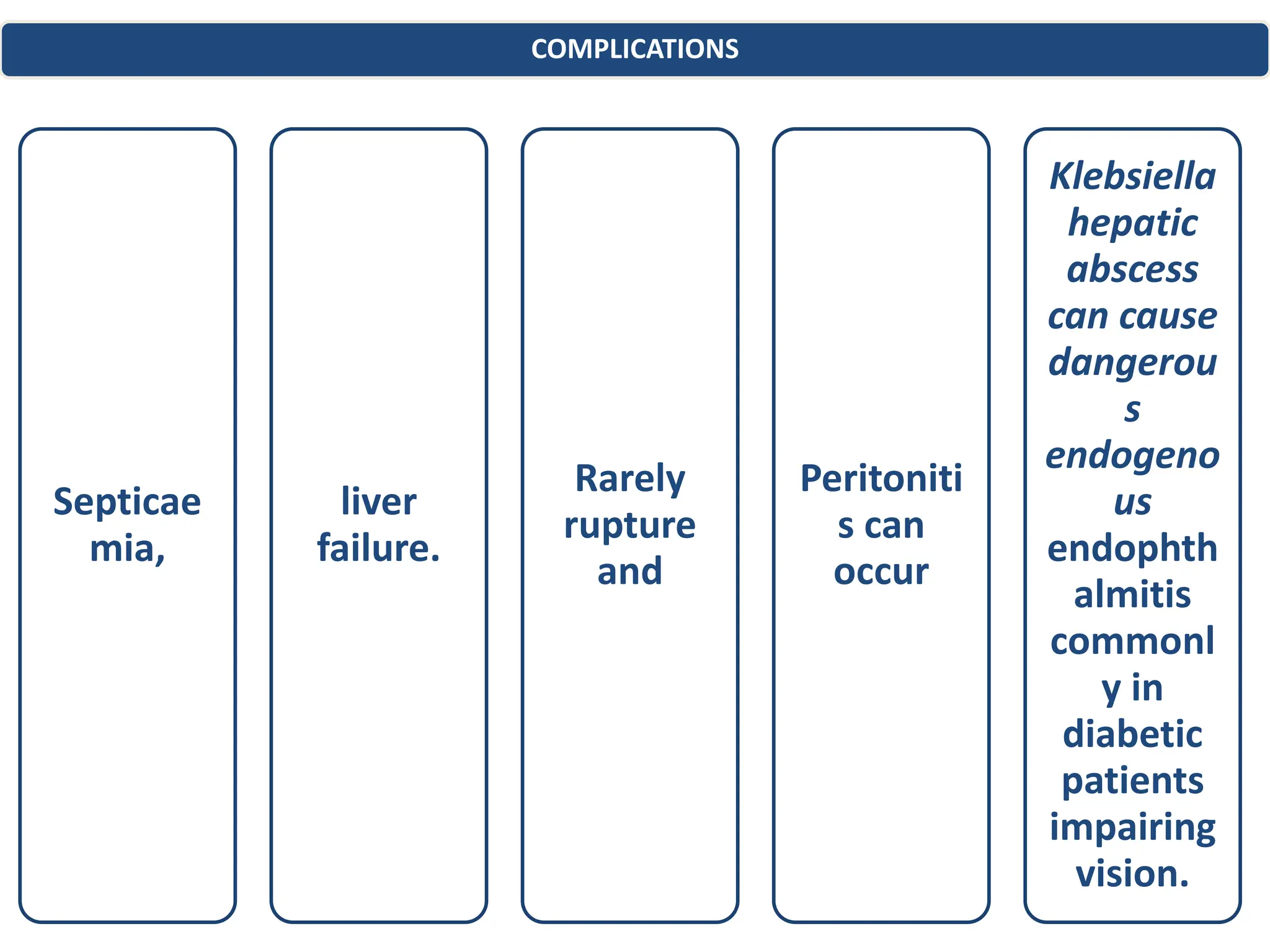
COMPLICATIONS
Septicae
mia,
liver
failure.
Rarely
rupture
and
Peritoniti
s can
occur
Klebsiella
hepatic
abscess
can cause
dangerou
s
endogeno
us
endophth
almitis
commonl
y in
diabetic
patients
impairing
vision.
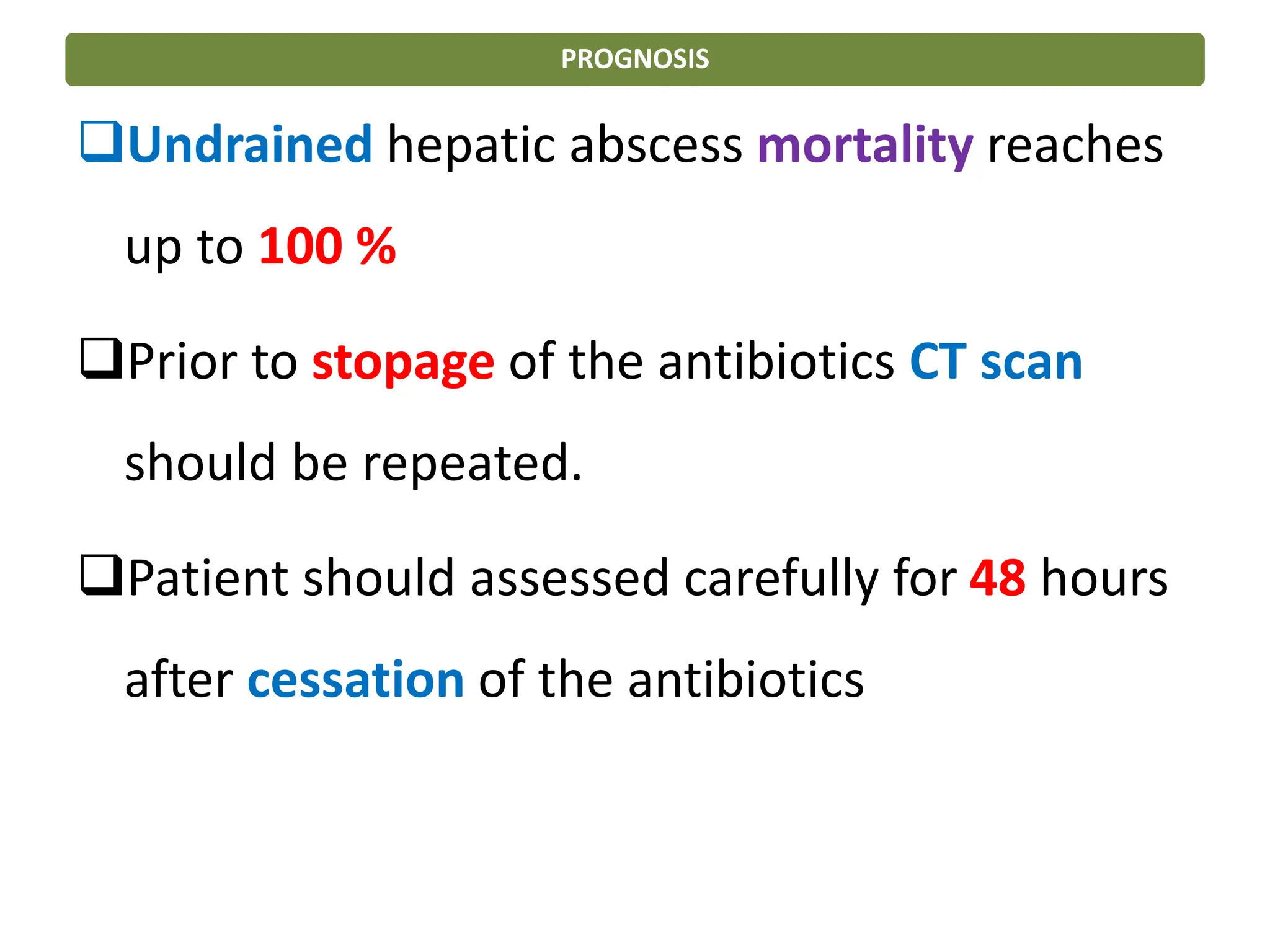
PROGNOSIS
❑Undrained hepatic abscess mortality reaches
up to 100 %
❑Prior to stopage of the antibiotics CT scan
should be repeated.
❑Patient should assessed carefully for 48 hours
after cessation of the antibiotics
THANK
YOU

PYOGENIC LIVER ABSCESS-converted.pdf.24/08/24