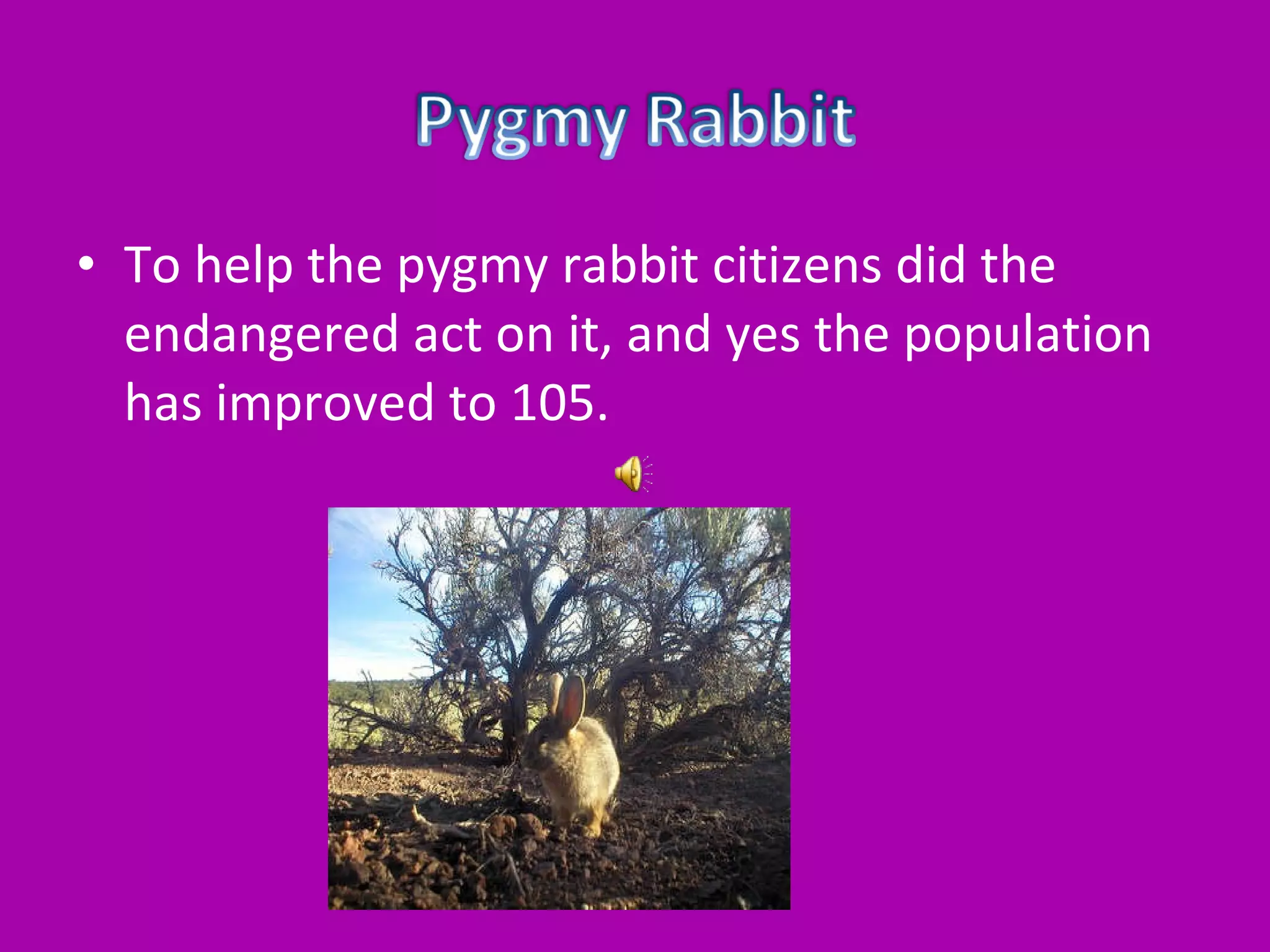
It’s very small and weighs up to one pound. The rabbit’s life span is 3-7 years and is up to one foot in length. The family members are called Leporidae. During the photoperiod about six young are born.
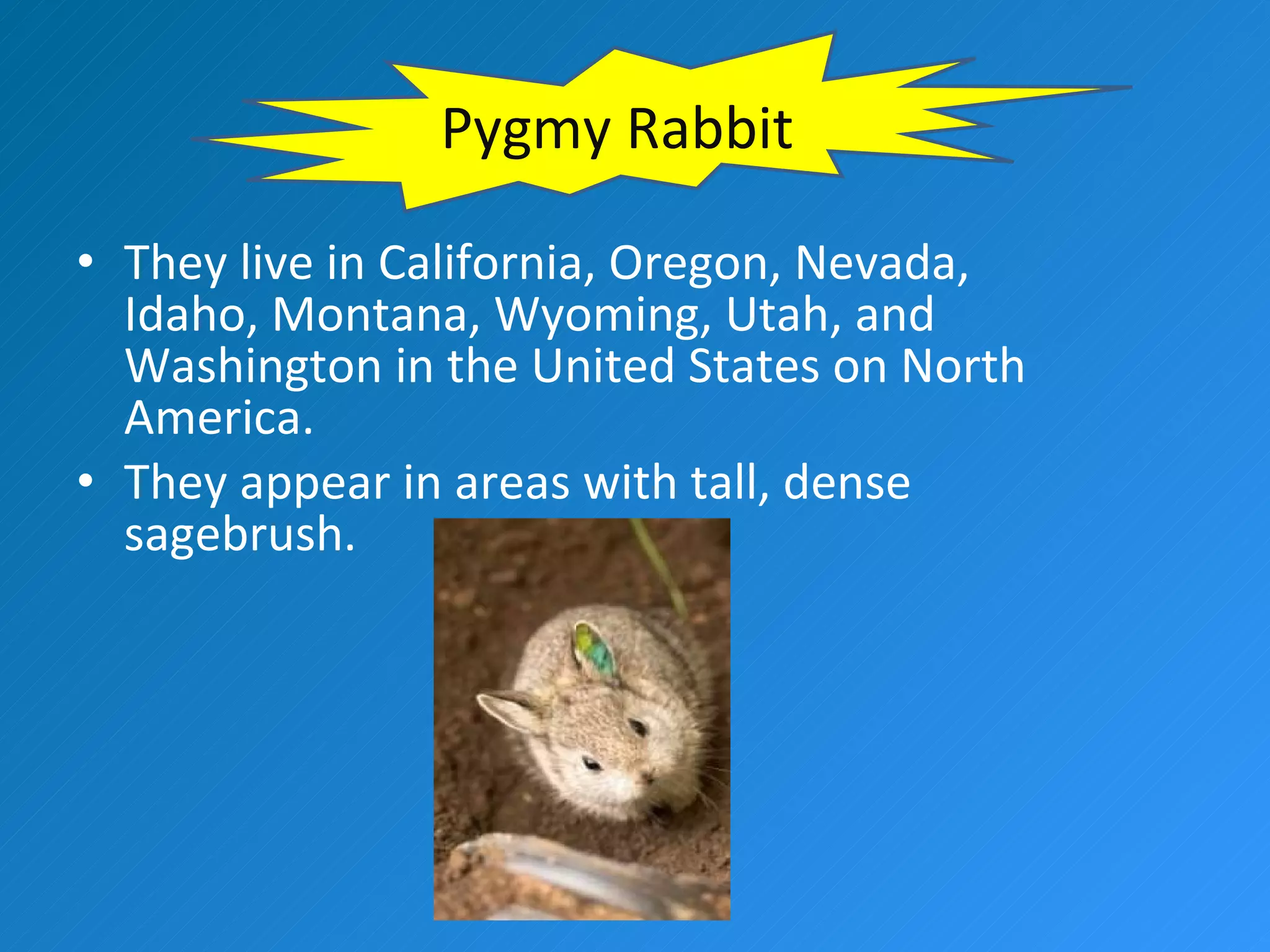
They live in California, Oregon, Nevada, Idaho, Montana, Wyoming, Utah, and Washington in the United States on North America. They appear in areas with tall, dense sagebrush.  Pygmy Rabbit
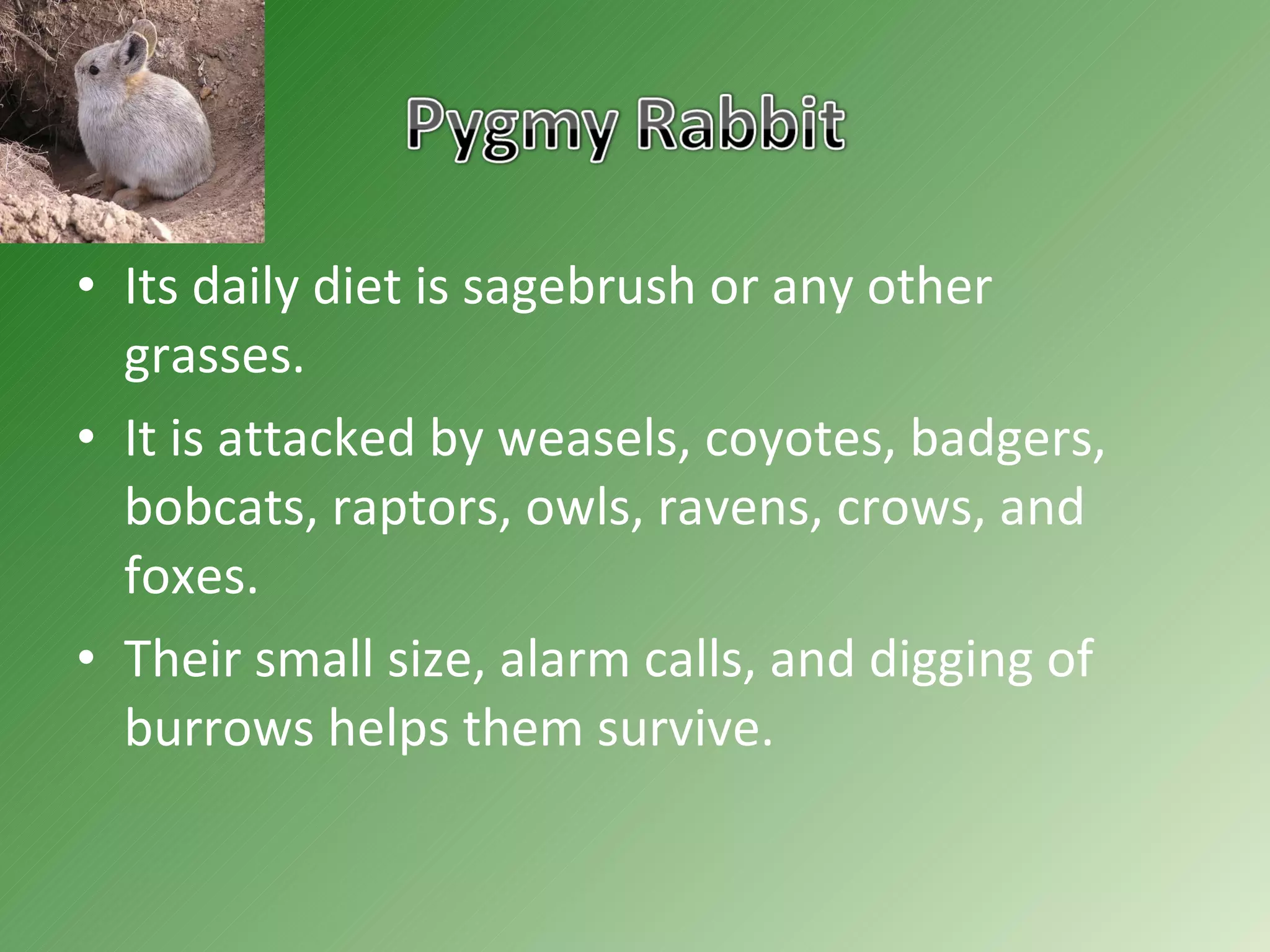
Its daily diet is sagebrush or any other grasses. It is attacked by weasels, coyotes, badgers, bobcats, raptors, owls, ravens, crows, and foxes.  Their small size, alarm calls, and digging of burrows helps them survive.
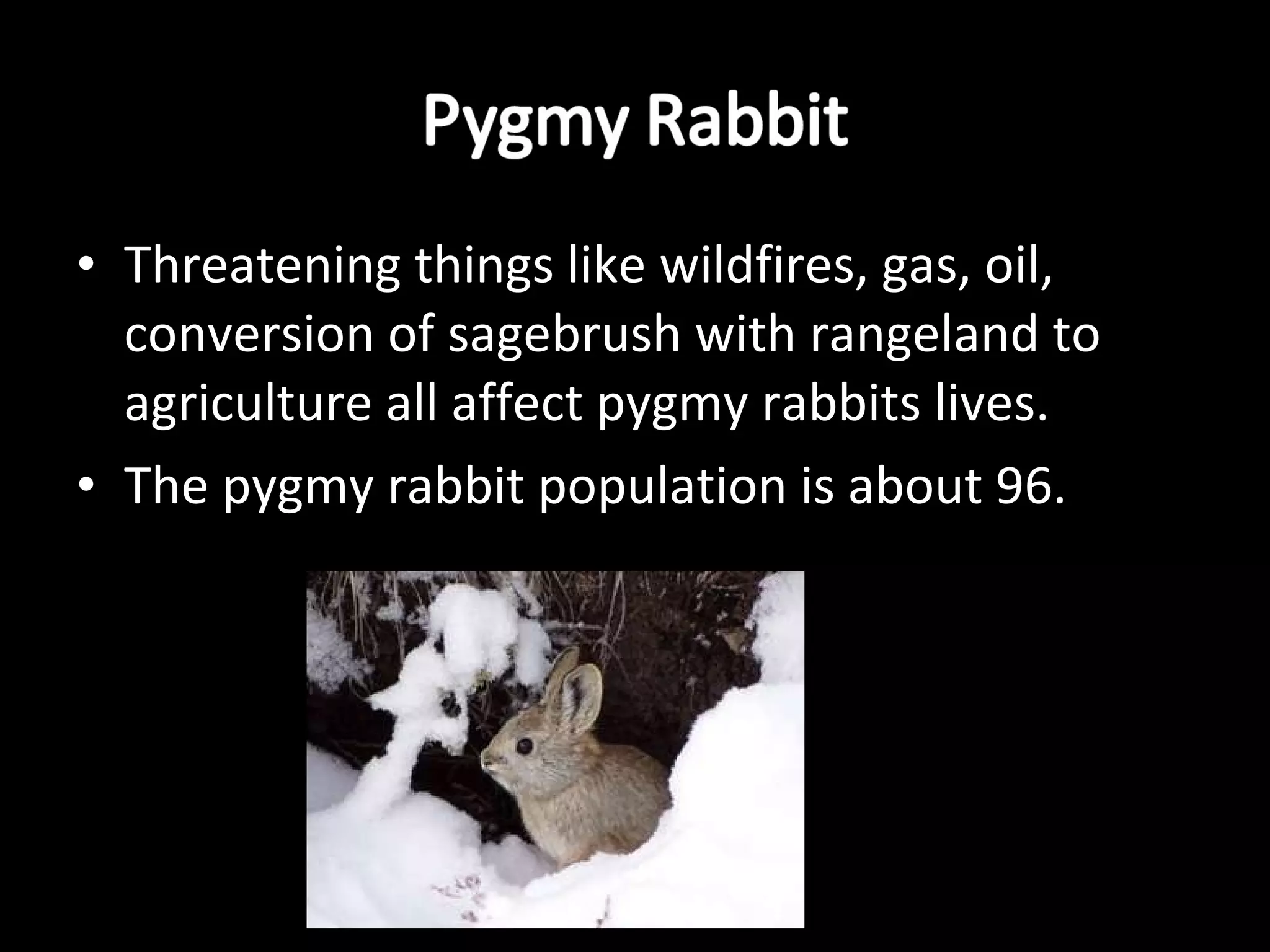
Threatening things like wildfires, gas, oil, conversion of sagebrush with rangeland to agriculture all affect pygmy rabbits lives. The pygmy rabbit population is about 96.
To help the pygmy rabbit citizens did the endangered act on it, and yes the population has improved to 105.

Pygmy%20 rabbit[1]

  • 1.
  • 2.
    It’s very smalland weighs up to one pound. The rabbit’s life span is 3-7 years and is up to one foot in length. The family members are called Leporidae. During the photoperiod about six young are born.
  • 3.
    They live inCalifornia, Oregon, Nevada, Idaho, Montana, Wyoming, Utah, and Washington in the United States on North America. They appear in areas with tall, dense sagebrush. Pygmy Rabbit
  • 4.
    Its daily dietis sagebrush or any other grasses. It is attacked by weasels, coyotes, badgers, bobcats, raptors, owls, ravens, crows, and foxes. Their small size, alarm calls, and digging of burrows helps them survive.
  • 5.
    Threatening things likewildfires, gas, oil, conversion of sagebrush with rangeland to agriculture all affect pygmy rabbits lives. The pygmy rabbit population is about 96.
  • 6.
    To help thepygmy rabbit citizens did the endangered act on it, and yes the population has improved to 105.