Pursuing Global Alignment of
Risk Management Guidelines

Vincent Tophoff, International Federation of
Accountants (IFAC)

COSO, IFAC, ISO, RIMS, and ROGB Panel
Discussion and Networking Event

Chicago

September 24, 2013

Page 1 | Confidential and Proprietary Information
International Federation of Accountants
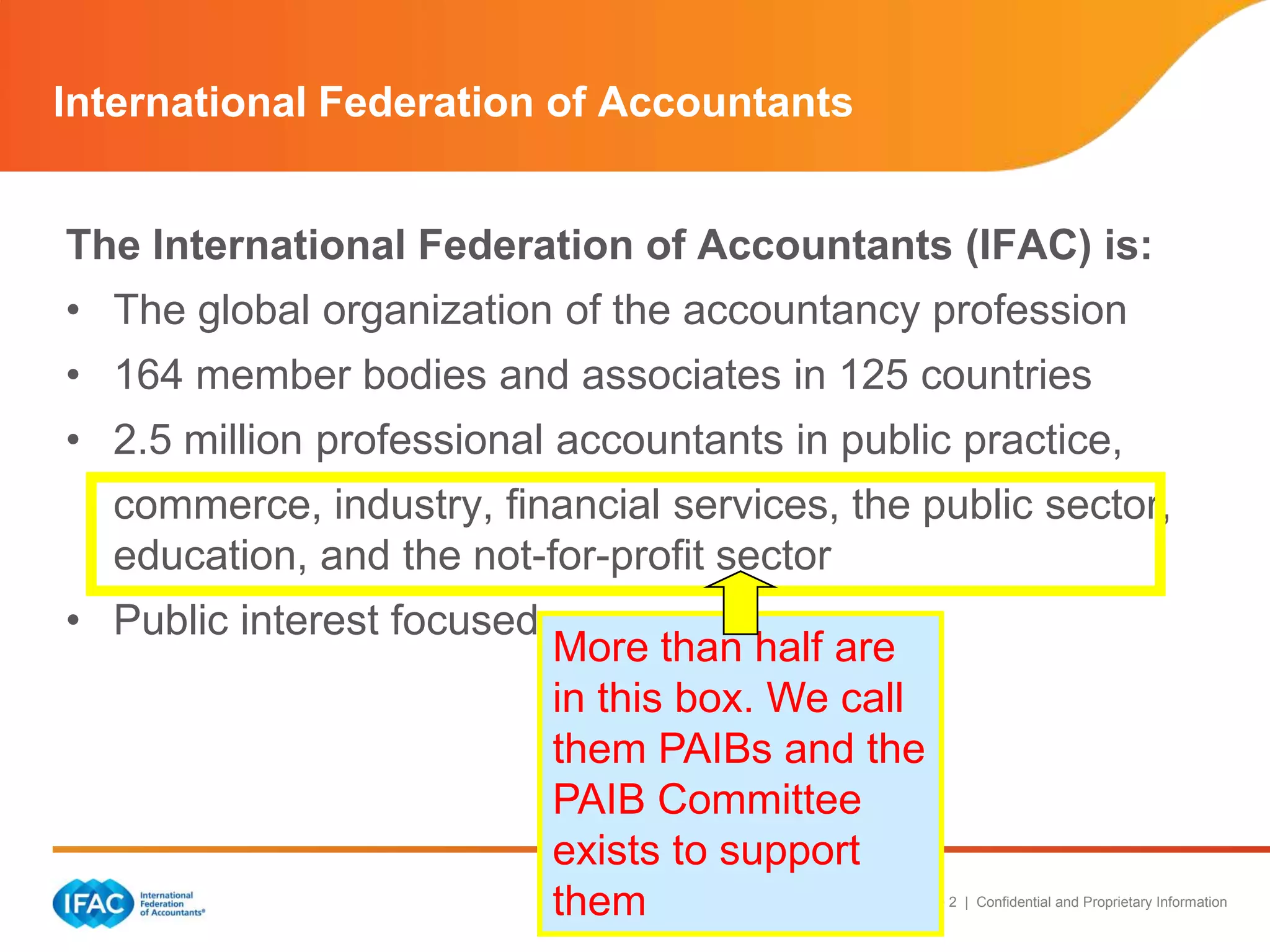
The International Federation of Accountants (IFAC) is:
• The global organization of the accountancy profession
• 164 member bodies and associates in 125 countries
• 2.5 million professional accountants in public practice,
commerce, industry, financial services, the public sector,
education, and the not-for-profit sector
• Public interest focused

More than half are
in this box. We call
them PAIBs and the
PAIB Committee
exists to support
them

Page 2 | Confidential and Proprietary Information
International Federation of Accountants
What IFAC does:
• Establish and promote adherence to high quality
professional standards
• Further adoption and implementation of standards
• Support the global development of the accountancy
profession
• Provides a global voice and promotes the value of
professional accountants worldwide
• Helps its members support professional accountants
in business and small and medium practices
Page 3 | Confidential and Proprietary Information
Professional Accountants in Business
• Supports professional accountants in following areas:
– Governance and ethics
– Risk management and internal control
– Sustainability and corporate responsibility
– Financial and performance management
– Business reporting
– Promoting and contributing to the value of professional accountants

• All areas of critical importance to professional accountants
(and for risk managers too…)

Page 4 | Confidential and Proprietary Information
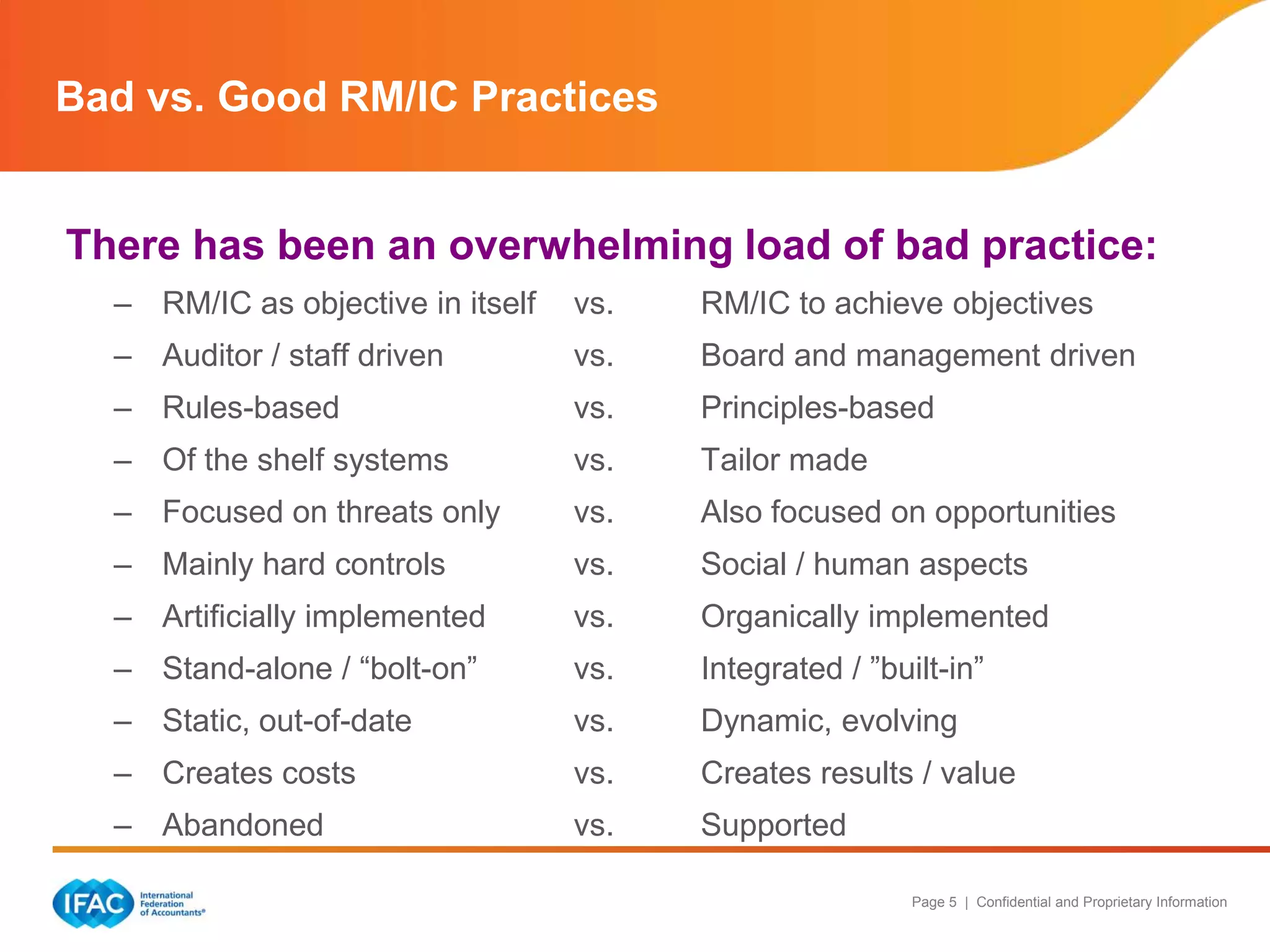
Bad vs. Good RM/IC Practices

There has been an overwhelming load of bad practice:
– RM/IC as objective in itself

vs.

RM/IC to achieve objectives

– Auditor / staff driven

vs.

Board and management driven

– Rules-based

vs.

Principles-based

– Of the shelf systems

vs.

Tailor made

– Focused on threats only

vs.

Also focused on opportunities

– Mainly hard controls

vs.

Social / human aspects

– Artificially implemented

vs.

Organically implemented

– Stand-alone / “bolt-on”

vs.

Integrated / ”built-in”

– Static, out-of-date

vs.

Dynamic, evolving

– Creates costs

vs.

Creates results / value

– Abandoned

vs.

Supported
Page 5 | Confidential and Proprietary Information
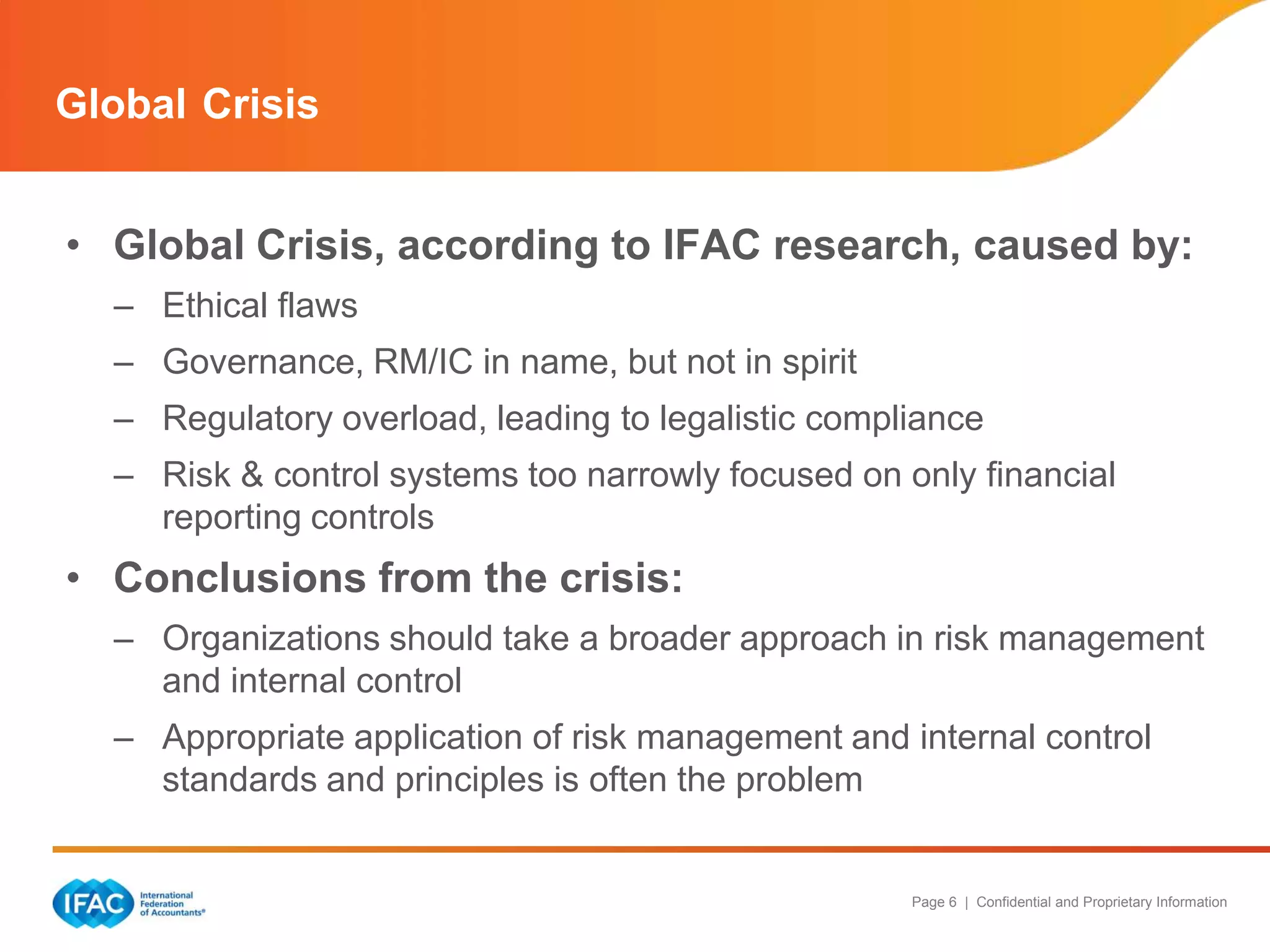
Global Crisis
• Global Crisis, according to IFAC research, caused by:
– Ethical flaws
– Governance, RM/IC in name, but not in spirit
– Regulatory overload, leading to legalistic compliance
– Risk & control systems too narrowly focused on only financial
reporting controls

• Conclusions from the crisis:
– Organizations should take a broader approach in risk management
and internal control
– Appropriate application of risk management and internal control
standards and principles is often the problem

Page 6 | Confidential and Proprietary Information
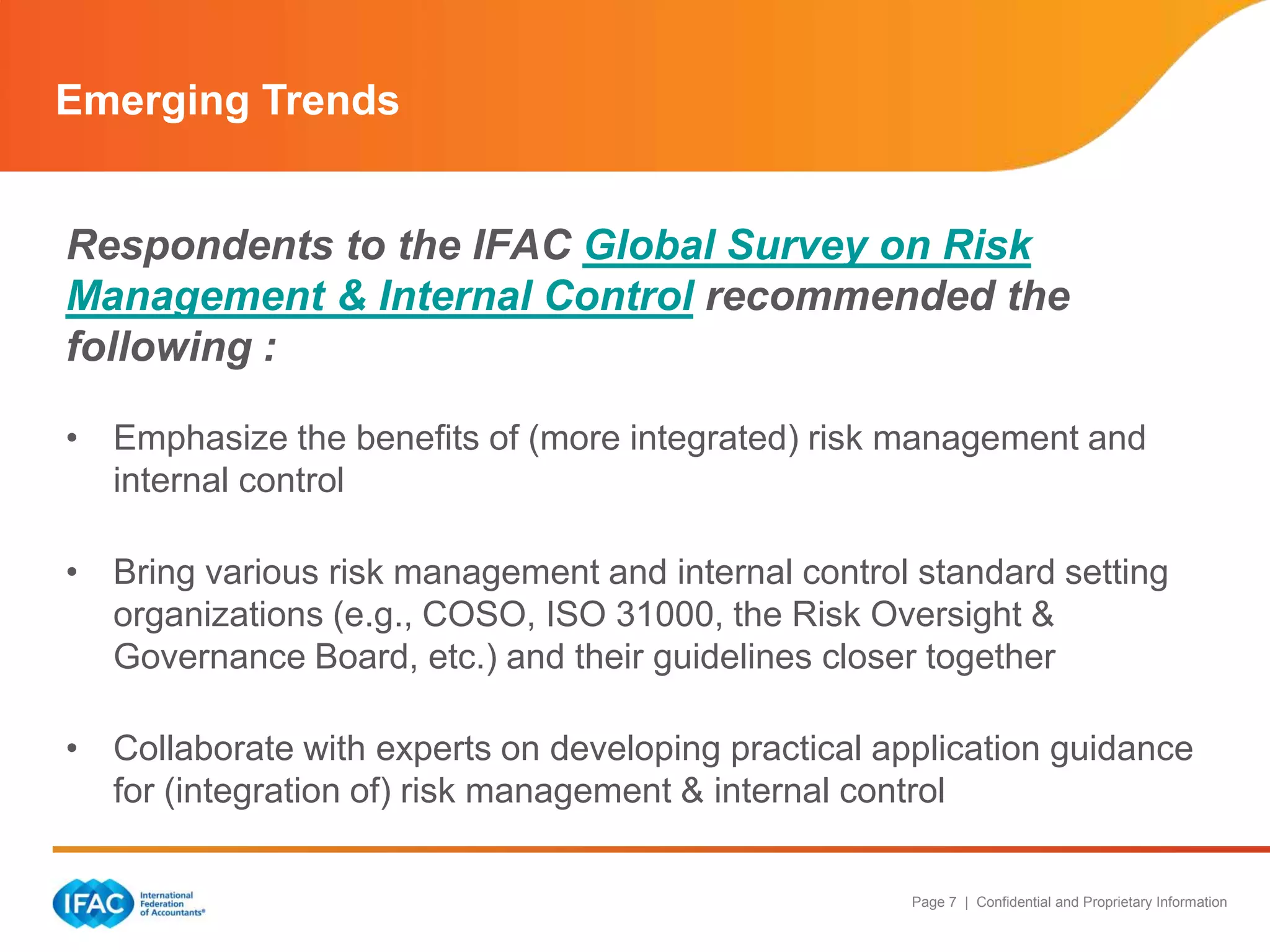
Emerging Trends
Respondents to the IFAC Global Survey on Risk
Management & Internal Control recommended the
following :
• Emphasize the benefits of (more integrated) risk management and
internal control
• Bring various risk management and internal control standard setting
organizations (e.g., COSO, ISO 31000, the Risk Oversight &
Governance Board, etc.) and their guidelines closer together
• Collaborate with experts on developing practical application guidance
for (integration of) risk management & internal control
Page 7 | Confidential and Proprietary Information
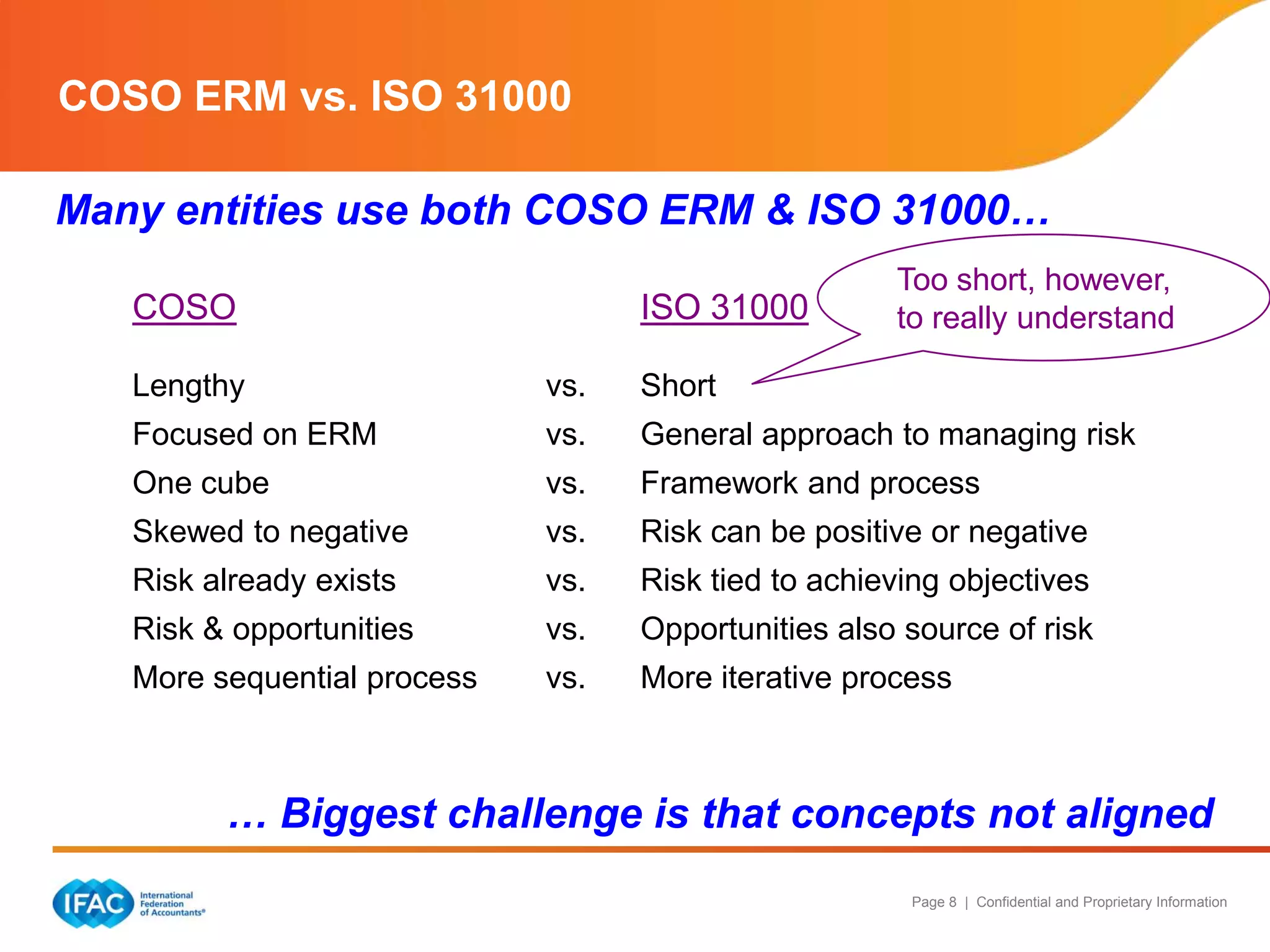
COSO ERM vs. ISO 31000
Many entities use both COSO ERM & ISO 31000…
COSO

ISO 31000

Too short, however,
to really understand

Lengthy

vs.

Short

Focused on ERM

vs.

General approach to managing risk

One cube

vs.

Framework and process

Skewed to negative

vs.

Risk can be positive or negative

Risk already exists

vs.

Risk tied to achieving objectives

Risk & opportunities

vs.

Opportunities also source of risk

More sequential process

vs.

More iterative process

… Biggest challenge is that concepts not aligned
Page 8 | Confidential and Proprietary Information
Next step > Further Global Alignment of Guidelines
• IFAC facilitates further global alignment of risk
management and internal control guidelines
• Through bringing various risk management and internal
control standard setting organizations (and their
guidelines!) closer together
• As per the outcomes of our survey!
• And now over to you…

Page 9 | Confidential and Proprietary Information
• For further information please contact:
• Vincent Tophoff at vincenttophoff@ifac.org

• Visit www.ifac.org

Page 10 | Confidential and Proprietary Information

Pursuing Global Alignment of Risk Management Guidelines

  • 1.
    Pursuing Global Alignmentof Risk Management Guidelines Vincent Tophoff, International Federation of Accountants (IFAC) COSO, IFAC, ISO, RIMS, and ROGB Panel Discussion and Networking Event Chicago September 24, 2013 Page 1 | Confidential and Proprietary Information
  • 2.
    International Federation ofAccountants The International Federation of Accountants (IFAC) is: • The global organization of the accountancy profession • 164 member bodies and associates in 125 countries • 2.5 million professional accountants in public practice, commerce, industry, financial services, the public sector, education, and the not-for-profit sector • Public interest focused More than half are in this box. We call them PAIBs and the PAIB Committee exists to support them Page 2 | Confidential and Proprietary Information
  • 3.
    International Federation ofAccountants What IFAC does: • Establish and promote adherence to high quality professional standards • Further adoption and implementation of standards • Support the global development of the accountancy profession • Provides a global voice and promotes the value of professional accountants worldwide • Helps its members support professional accountants in business and small and medium practices Page 3 | Confidential and Proprietary Information
  • 4.
    Professional Accountants inBusiness • Supports professional accountants in following areas: – Governance and ethics – Risk management and internal control – Sustainability and corporate responsibility – Financial and performance management – Business reporting – Promoting and contributing to the value of professional accountants • All areas of critical importance to professional accountants (and for risk managers too…) Page 4 | Confidential and Proprietary Information
  • 5.
    Bad vs. GoodRM/IC Practices There has been an overwhelming load of bad practice: – RM/IC as objective in itself vs. RM/IC to achieve objectives – Auditor / staff driven vs. Board and management driven – Rules-based vs. Principles-based – Of the shelf systems vs. Tailor made – Focused on threats only vs. Also focused on opportunities – Mainly hard controls vs. Social / human aspects – Artificially implemented vs. Organically implemented – Stand-alone / “bolt-on” vs. Integrated / ”built-in” – Static, out-of-date vs. Dynamic, evolving – Creates costs vs. Creates results / value – Abandoned vs. Supported Page 5 | Confidential and Proprietary Information
  • 6.
    Global Crisis • GlobalCrisis, according to IFAC research, caused by: – Ethical flaws – Governance, RM/IC in name, but not in spirit – Regulatory overload, leading to legalistic compliance – Risk & control systems too narrowly focused on only financial reporting controls • Conclusions from the crisis: – Organizations should take a broader approach in risk management and internal control – Appropriate application of risk management and internal control standards and principles is often the problem Page 6 | Confidential and Proprietary Information
  • 7.
    Emerging Trends Respondents tothe IFAC Global Survey on Risk Management & Internal Control recommended the following : • Emphasize the benefits of (more integrated) risk management and internal control • Bring various risk management and internal control standard setting organizations (e.g., COSO, ISO 31000, the Risk Oversight & Governance Board, etc.) and their guidelines closer together • Collaborate with experts on developing practical application guidance for (integration of) risk management & internal control Page 7 | Confidential and Proprietary Information
  • 8.
    COSO ERM vs.ISO 31000 Many entities use both COSO ERM & ISO 31000… COSO ISO 31000 Too short, however, to really understand Lengthy vs. Short Focused on ERM vs. General approach to managing risk One cube vs. Framework and process Skewed to negative vs. Risk can be positive or negative Risk already exists vs. Risk tied to achieving objectives Risk & opportunities vs. Opportunities also source of risk More sequential process vs. More iterative process … Biggest challenge is that concepts not aligned Page 8 | Confidential and Proprietary Information
  • 9.
    Next step >Further Global Alignment of Guidelines • IFAC facilitates further global alignment of risk management and internal control guidelines • Through bringing various risk management and internal control standard setting organizations (and their guidelines!) closer together • As per the outcomes of our survey! • And now over to you… Page 9 | Confidential and Proprietary Information
  • 10.
    • For furtherinformation please contact: • Vincent Tophoff at vincenttophoff@ifac.org • Visit www.ifac.org Page 10 | Confidential and Proprietary Information