PURPOSEFUL
WRITING FOR
PROFESSIONS
BASIC PARTS OF A
PROFESSIONAL
CORRESPONDENCE
1. LETTERHEAD OR HEADING
2. DATELINE
3. INSIDE ADDRESS
4. SALUTATION
5. BODY OF THE LETTER
6. COMPLIMENTARY CLOSE
7. SIGNATURE BLOCK
8. REFERENCE INITIALS
OPTIONAL PARTS
OF A BUSINESS
LETTER
1. ATTENTION LINE
2. SUBJECT LINE
3. ENCLOSURE NOTATION
4. CC NOTATION (CARBON COPY
NOTATION)
5. BCC NOTATION (BLIND CARBON COPY
NOTATION)
6. POSTSCRIPT
7. MAILING NOTATION
LETTER FORMAT
AND PUNCTUATION
STYLE
FORMATSOR
STYLES OF
BUSINESS LETTER
1. FULL BLOCK STYLE
2. MODIFIED BLOCK STYLE
3. SEMI-BLOCK STYLE
4. SIMPLIFIED NOMA (National Office
Management Association)
PUNCTUATION
STYLES
1. OPEN PUNCTUATION
2. STANDARD PUNCTUATION
3. CLOSED PUNCTUATION
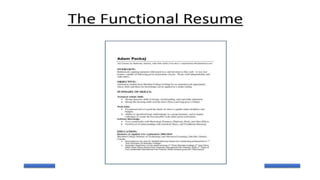
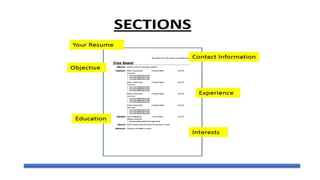
RESUME
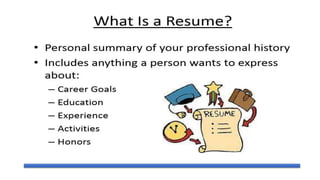
A resume provides a summary of
your background including your
education, work, and other
qualifications for a job, admission to
a college or university, or a scholar
grant.
The purpose of a resume is mainly to
interest an employer or a universty
official enough to call you for an
interview.
- TARGETED
TARGETED
Highly focused resume intended for specific job; a capsule of work
experience.
Concise, direct, and easy to read
May focus firmly on one specific job or work.
Content may appear limited.
APPLICATION FOR
COLLEGE
ADMISSION
HOW TO PREPARE
FOR COLLEGE
• DECIDE ON THE COLLEGE DEGREE YOU WANT TO TAKE
• MEET WITH YOUR COUNSELOR TO ENSURE THAT YOU ARE ON THE
RIGHT TRACK ON YOUR COURSE SELECTION
• EXPLORE SCHOOL WEBSITES
• STAY ACTIVE IN EXTRA CURRICULAR ACTIVITIES
• TAKE NOTE OF ADMISSION TESTS
• BE READY TO EMBRACE DIVERSITY
CHOOSING YOUR
COURSE
• YOUR INTEREST
• APTITUDE
• FINANCES
• TIME
• VALUES
• WILLINGNESS TO LEARN
• GOALS
• COMMITMENT
FINDING THE
RIGHT SCHOOL
• RANK WHAT MATTERS MOST TO YOU
• CHECK THE SCHOOL’S PROFILE
• GET SOME GUIDANCE
• VSIT THE SCHOOL WEBSITE
• TAKE A TOUR
• EXPLORE COLLEGE COST
APPLICATION FOR
EMPLOYMENT
APPLICATION
LETTER
Probably, the letter of application is the first business
letter that you will write after graduation. Man and women
who have chosen a career are eager to get a job after
graduation.
In fact, the letter of application may be the most
important letter that you will have to write in your lifetime.
Your success in getting a highly rewarding job, or being
misemployed may depend much on such letter.
A letter of application is essentially a sales letter –
a personal sales letter. You sell your skills, services and
personality to your prospective employer. Your letter
should reveal your worth with sufficient assurance. It
must be carefully and thoughtfully written to create the
most favorable impression. It should induce the
employer to interview you.
KINDS OF APPLICATION LETTER
1. SOLICITED – if one writes an application letter to
answer an advertisement.
2. UNSOLICITED –if one writes an application letter
because somebody told him that an employer is
looking for someone to fill a position.
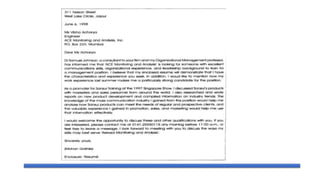
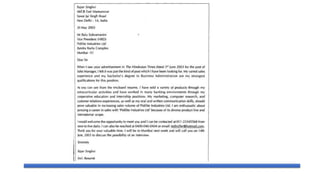
(see examples on pages 196-197)
BLIND
ADVERTISMENTS
PURPOSEFUL WRITING FOR PROFESSIONS

PURPOSEFUL WRITING FOR PROFESSIONS

  • 1.
  • 2.
    BASIC PARTS OFA PROFESSIONAL CORRESPONDENCE
  • 3.
    1. LETTERHEAD ORHEADING 2. DATELINE 3. INSIDE ADDRESS 4. SALUTATION 5. BODY OF THE LETTER 6. COMPLIMENTARY CLOSE 7. SIGNATURE BLOCK 8. REFERENCE INITIALS
  • 4.
    OPTIONAL PARTS OF ABUSINESS LETTER
  • 5.
    1. ATTENTION LINE 2.SUBJECT LINE 3. ENCLOSURE NOTATION 4. CC NOTATION (CARBON COPY NOTATION) 5. BCC NOTATION (BLIND CARBON COPY NOTATION) 6. POSTSCRIPT 7. MAILING NOTATION
  • 6.
  • 7.
  • 8.
    1. FULL BLOCKSTYLE 2. MODIFIED BLOCK STYLE 3. SEMI-BLOCK STYLE 4. SIMPLIFIED NOMA (National Office Management Association)
  • 9.
  • 10.
    1. OPEN PUNCTUATION 2.STANDARD PUNCTUATION 3. CLOSED PUNCTUATION
  • 11.
  • 13.
    A resume providesa summary of your background including your education, work, and other qualifications for a job, admission to a college or university, or a scholar grant.
  • 14.
    The purpose ofa resume is mainly to interest an employer or a universty official enough to call you for an interview.
  • 16.
  • 23.
    TARGETED Highly focused resumeintended for specific job; a capsule of work experience. Concise, direct, and easy to read May focus firmly on one specific job or work. Content may appear limited.
  • 25.
  • 26.
  • 27.
    • DECIDE ONTHE COLLEGE DEGREE YOU WANT TO TAKE • MEET WITH YOUR COUNSELOR TO ENSURE THAT YOU ARE ON THE RIGHT TRACK ON YOUR COURSE SELECTION • EXPLORE SCHOOL WEBSITES • STAY ACTIVE IN EXTRA CURRICULAR ACTIVITIES • TAKE NOTE OF ADMISSION TESTS • BE READY TO EMBRACE DIVERSITY
  • 28.
  • 29.
    • YOUR INTEREST •APTITUDE • FINANCES • TIME • VALUES • WILLINGNESS TO LEARN • GOALS • COMMITMENT
  • 30.
  • 31.
    • RANK WHATMATTERS MOST TO YOU • CHECK THE SCHOOL’S PROFILE • GET SOME GUIDANCE • VSIT THE SCHOOL WEBSITE • TAKE A TOUR • EXPLORE COLLEGE COST
  • 32.
  • 34.
  • 35.
    Probably, the letterof application is the first business letter that you will write after graduation. Man and women who have chosen a career are eager to get a job after graduation. In fact, the letter of application may be the most important letter that you will have to write in your lifetime. Your success in getting a highly rewarding job, or being misemployed may depend much on such letter.
  • 36.
    A letter ofapplication is essentially a sales letter – a personal sales letter. You sell your skills, services and personality to your prospective employer. Your letter should reveal your worth with sufficient assurance. It must be carefully and thoughtfully written to create the most favorable impression. It should induce the employer to interview you.
  • 49.
    KINDS OF APPLICATIONLETTER 1. SOLICITED – if one writes an application letter to answer an advertisement. 2. UNSOLICITED –if one writes an application letter because somebody told him that an employer is looking for someone to fill a position. (see examples on pages 196-197)
  • 50.