Class 5


ICS 2014
How to Build a Startup
A Descubrir y Validar Nuestro Producto
Customer Discovery


With the Support of:
                                   www.realstarters.com
                                                      1
INDEX
PARTE 1                           PARTE 2
• Dónde estamos?                  • Status grupos
• Discovery                         •   Propuesta de valor
  •   Preparación Entrevista        •   Lista de Clientes
      del Problema                      (Evangelistas)
  •   Entrevista del Problema
  •   Construir MVP v1
      (Demo)
  •   Entrevista de la Solución


                                                             2
0_DÓNDE ESTAMOS
Qué hemos visto hasta ahora?


                               3
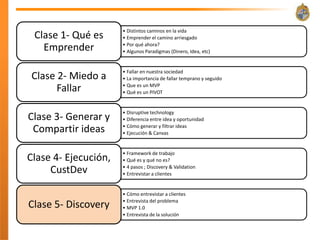
• Distintos caminos en la vida
 Clase 1- Qué es      • Emprender el camino arriesgado
                      • Por qué ahora?
   Emprender          • Algunos Paradigmas (Dinero, Idea, etc)


                      • Fallar en nuestra sociedad
Clase 2- Miedo a      • La importancia de fallar temprano y seguido
                      • Que es un MVP
      Fallar          • Qué es un PIVOT


                      • Disruptive technology
Clase 3- Generar y    • Diferencia entre idea y oportunidad
                      • Cómo generar y filtrar ideas
 Compartir ideas      • Ejecución & Canvas


                      • Framework de trabajo
Clase 4- Ejecución,   • Qué es y qué no es?
                      • 4 pasos ; Discovery & Validation
     CustDev          • Entrevistar a clientes


                      • Cómo entrevistar a clientes
                      • Entrevista del problema
Clase 5- Discovery    • MVP 1.0
                      • Entrevista de la solución
1_Discovery
Build something that people want
(important but not enough)


                                   5
INTRO TO DISCOVERY
OVERVIEW


                     6
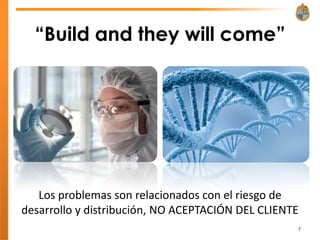
“Build and they will come”


   Los problemas son relacionados con el riesgo de
desarrollo y distribución, NO ACEPTACIÓN DEL CLIENTE
                                                   7
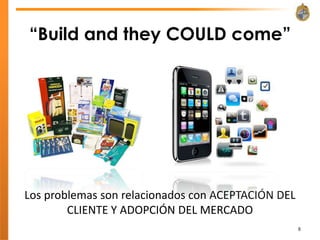
“Build and they COULD come”


Los problemas son relacionados con ACEPTACIÓN DEL
        CLIENTE Y ADOPCIÓN DEL MERCADO
                                                    8
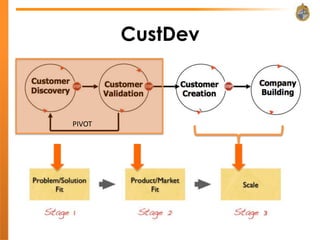
CustDev


PIVOT
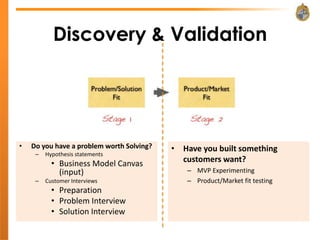
Discovery & Validation


•   Do you have a problem worth Solving?   • Have you built something
     –   Hypothesis statements
           • Business Model Canvas           customers want?
             (input)                          – MVP Experimenting
     –   Customer Interviews                  – Product/Market fit testing
           • Preparation
           • Problem Interview
           • Solution Interview
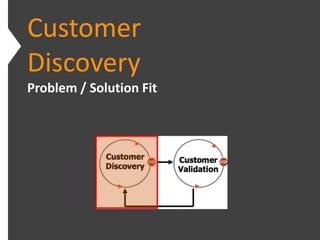
Customer
Discovery
Problem / Solution Fit
Discovery
• Meta: Comprobar que el producto resuelve un
  problema para un grupo identificado de
  usuarios
• Darnos cuenta si vale la pena solucionar este
  problema ($$)


                                              12
Discovery Tasks
A ensuciarse las manos y “salir del edificio”


                                                13
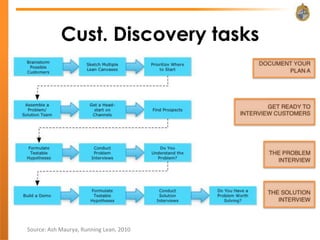
Cust. Discovery tasks


Source: Ash Maurya, Running Lean, 2010
Task#1 Multiple Canvases
               (done)
Objective:
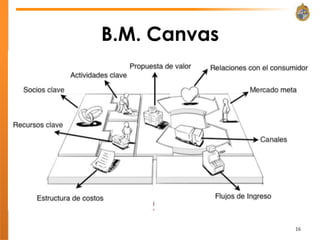
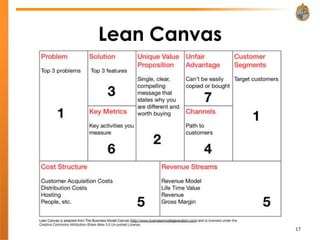
  – Document what is in our mind (hypotheses)
  – Document customer`s feedback on the
    hypotheses we have (pivoting if necessary)
  – Common language
B.M. Canvas


              16
Lean Canvas


              17
Task#2 Interviews Preparation (Done)

Objective:
  – Get ready to start interviewing real customers
  – Select first potential customers (in the market
    segment you decided to attack)
  – First approaches to the customer channels
  – Decouple the problem from the solution and test
    the problem before binding yourself to a solution
Task#2 Interviews Preparation (Done)

• B2C: Find at least 10-15 prospects for a 2
  weeks interview period (1 week)
• B2B: Find between 5-10 prospects for a 2
  weeks interview period (1 week)
• These prospect customers will be used to test
  your business model canvas hypotheses
• Prioritize where to start (which customer in
  my segment is more interesting?)
Task#2 Interviews Preparation (Done)

• How to find prospects?
  1.   1 Degree contacts
  2.   Ask for Intros
  3.   Cold Calling, Emailing, LinkedIn
  4.   Move around the Industry (e.g. Events, trade
       shows, Meetups, etc)
• Don’t be shy!
Task#3 Problem Interview
Objective:
  – Know which problem is worth solving for the
    customer (Talk to customers to understand their
    worldview before formulating a solution)
  – We want to answer:
     • Customer Segments: Who has the pain? (Early
       adopters)
     • Problem: What are you solving?
My magic phrase in every customer
     development interview is ‘that’s
        interesting – tell me more'
Cindy Alvarez, Blogger, cindyalvarez.com


                                           22
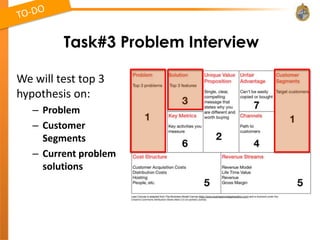
Task#3 Problem Interview

We will test top 3
hypothesis on:
   – Problem
   – Customer
     Segments
   – Current problem
     solutions
Task#3 Problem Interview
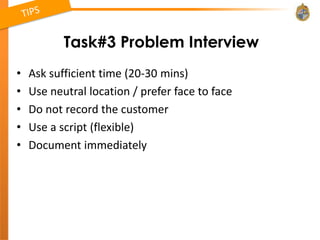
•   Ask sufficient time (20-30 mins)
•   Use neutral location / prefer face to face
•   Do not record the customer
•   Use a script (flexible)
•   Document immediately
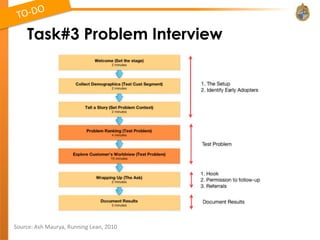
Task#3 Problem Interview


Source: Ash Maurya, Running Lean, 2010
Task #4 MVP v1.0 (Demo)
Objective:
  – Place the first attempt of our product/service’s
    value proposition in front of the customer, in order
    to diminish the uncertainty around each hypothesis
    under test
  – We use the term “demo” loosely to refer to
    anything that can stand in place for the actual
    solution
Most customers are great at
   articulating problems, but not
        visualizing solutions
RealStarters.com


                                    27
EXAMPLE
 • Dot-com bubble 1990
 • First mover->fast (pushed by
   investor, Amazon Strategy)
 • Business Model -> Groceries
   delivery to your home within a
   30mins window
 • Larger dot-com flop in history
 • Money spent > sales growth
 • NOT MVP!


                                    28
EXAMPLE
 • Hypothesis: customers were willing
   and ready to buy shoes online
 • Experiment: ask to take pictures of
   inventories in shoe stores and offered to
   buy them after selling them online

 • Experiment designed for one
   question: is there already sufficient
   demand for a superior online
   shopping experience? -> YES
 • This is an MVP


                                           29
Task #4 MVP v1.0 (Demo)

         • Hypothesis: SME’s search for
           suppliers using search engines and
           are willing to buy If price is OK
         • Experiment: open an Alibaba.com
           store and promote products +
           individual websites optimized for
           search (SEO)
         • Experiment designed for one
           question: is there already sufficient
           demand for online sourced products
           from China?-> YES

         • This is an MVP
                                                   30
Task #4 MVP v1.0 (Demo)
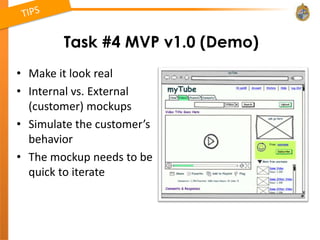
• Make it look real
• Internal vs. External
  (customer) mockups
• Simulate the customer’s
  behavior
• The mockup needs to be
  quick to iterate
Task #4 MVP v1.0 (Demo)
• The mockup needs to
  minimize on waste
• Each problem solved must
  be present in your MVP
• Use real-looking information
  (NOT lorem ipsum !!)
• THINK BIG, ACT SMALL!!
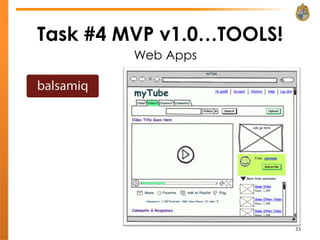
Task #4 MVP v1.0…TOOLS!
         Web Apps


                          33
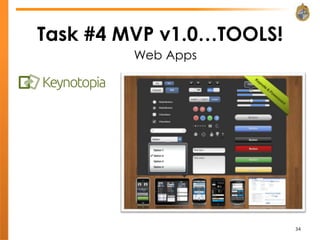
Task #4 MVP v1.0…TOOLS!
         Web Apps


                          34
DEMO
Example


          35
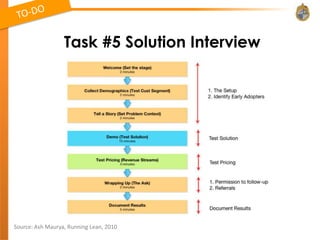
Task #5 Solution Interview

Objective:
  – Take our first product demo
    (MVP, draft, mockup, etc) out to the real customer
    and achieve problem/solution fit.
  – Answer the questions:
      • Solution: How will you solve these problems?
      • Revenue Streams: What is the Pricing Model?
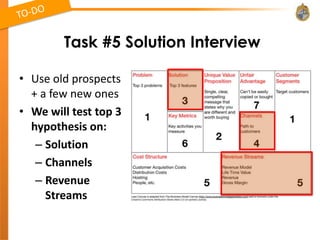
Task #5 Solution Interview

• Use old prospects
  + a few new ones
• We will test top 3
  hypothesis on:
   – Solution
   – Channels
   – Revenue
     Streams
Task #5 Solution Interview


Source: Ash Maurya, Running Lean, 2010
Criterios de Salida
Cuándo avanzamos a
Validation?


                      39
EXIT
1. Tenemos claros los problemas TOP del nuestro
   segmento
  – Cuánto estarían dispuestos a pagar para resolver estos
    problemas?
2. Tenemos un MVP que soluciona estos
   problemas
  – Clientes están de acuerdo
  – Cuánto pagarían por esta solución?
3. Entendemos el día a día del cliente antes y
   después de nuestro producto
                                                         40
2_FIRST PROJECT
PRESENTATION
Preparation for class #7
This is 20% of your grade, remember!


                                       41
What you must present
1. Start with your project’s value proposition
   (pitch)
2. Process from your initial idea until now (all
   pivots you made)
   – Follow chronological sequence of changes
   – Use the canvas to structure your presentation
     (remember your pivots are based on each module of
     the canvas)
3. Show customer’s problem interview results
4. Show the MVP v1.0 details
                                                         42
Constraints & Tips
1. 5 minutes, not more (we will have a clock!)
2. Max. 10 slides
3. Language: Initial pitch in English, rest could be in Spanish
4. DEADLINE TO BE UPLOADED TO SLIDESHARE.NET AND
   SHARED IN THE BLOG: MONDAY 16TH, 11:59 AM (DELAY WILL
   CAUSE LOWER GRADE!)
5. More images the better
6. Practice your presentation, do not memorize it…You will only
   make an awesome presentation by being sure about what
   you say


                                                             43
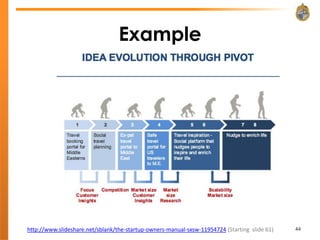
Example


http://www.slideshare.net/sblank/the-startup-owners-manual-sxsw-11954724 (Starting slide 61)   44
RESUMIENDO


             45
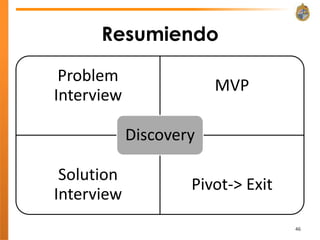
Resumiendo

 Problem
                        MVP
Interview

            Discovery

 Solution
                    Pivot-> Exit
Interview
                                   46
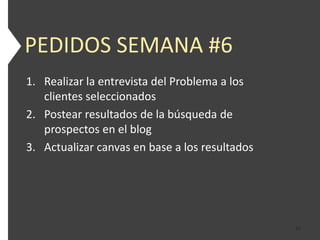
PEDIDOS SEMANA #6
1. Realizar la entrevista del Problema a los
   clientes seleccionados
2. Postear resultados de la búsqueda de
   prospectos en el blog
3. Actualizar canvas en base a los resultados


                                                47
CLASS
ACTIVITY
Class feedback


                 48

Puc class5 discovery

  • 1.
    Class 5 ICS 2014 Howto Build a Startup A Descubrir y Validar Nuestro Producto Customer Discovery With the Support of: www.realstarters.com 1
  • 2.
    INDEX PARTE 1 PARTE 2 • Dónde estamos? • Status grupos • Discovery • Propuesta de valor • Preparación Entrevista • Lista de Clientes del Problema (Evangelistas) • Entrevista del Problema • Construir MVP v1 (Demo) • Entrevista de la Solución 2
  • 3.
    0_DÓNDE ESTAMOS Qué hemosvisto hasta ahora? 3
  • 4.
    • Distintos caminosen la vida Clase 1- Qué es • Emprender el camino arriesgado • Por qué ahora? Emprender • Algunos Paradigmas (Dinero, Idea, etc) • Fallar en nuestra sociedad Clase 2- Miedo a • La importancia de fallar temprano y seguido • Que es un MVP Fallar • Qué es un PIVOT • Disruptive technology Clase 3- Generar y • Diferencia entre idea y oportunidad • Cómo generar y filtrar ideas Compartir ideas • Ejecución & Canvas • Framework de trabajo Clase 4- Ejecución, • Qué es y qué no es? • 4 pasos ; Discovery & Validation CustDev • Entrevistar a clientes • Cómo entrevistar a clientes • Entrevista del problema Clase 5- Discovery • MVP 1.0 • Entrevista de la solución
  • 5.
    1_Discovery Build something thatpeople want (important but not enough) 5
  • 6.
  • 7.
    “Build and theywill come” Los problemas son relacionados con el riesgo de desarrollo y distribución, NO ACEPTACIÓN DEL CLIENTE 7
  • 8.
    “Build and theyCOULD come” Los problemas son relacionados con ACEPTACIÓN DEL CLIENTE Y ADOPCIÓN DEL MERCADO 8
  • 9.
  • 10.
    Discovery & Validation • Do you have a problem worth Solving? • Have you built something – Hypothesis statements • Business Model Canvas customers want? (input) – MVP Experimenting – Customer Interviews – Product/Market fit testing • Preparation • Problem Interview • Solution Interview
  • 11.
  • 12.
    Discovery • Meta: Comprobarque el producto resuelve un problema para un grupo identificado de usuarios • Darnos cuenta si vale la pena solucionar este problema ($$) 12
  • 13.
    Discovery Tasks A ensuciarselas manos y “salir del edificio” 13
  • 14.
    Cust. Discovery tasks Source:Ash Maurya, Running Lean, 2010
  • 15.
    Task#1 Multiple Canvases (done) Objective: – Document what is in our mind (hypotheses) – Document customer`s feedback on the hypotheses we have (pivoting if necessary) – Common language
  • 16.
  • 17.
  • 18.
    Task#2 Interviews Preparation(Done) Objective: – Get ready to start interviewing real customers – Select first potential customers (in the market segment you decided to attack) – First approaches to the customer channels – Decouple the problem from the solution and test the problem before binding yourself to a solution
  • 19.
    Task#2 Interviews Preparation(Done) • B2C: Find at least 10-15 prospects for a 2 weeks interview period (1 week) • B2B: Find between 5-10 prospects for a 2 weeks interview period (1 week) • These prospect customers will be used to test your business model canvas hypotheses • Prioritize where to start (which customer in my segment is more interesting?)
  • 20.
    Task#2 Interviews Preparation(Done) • How to find prospects? 1. 1 Degree contacts 2. Ask for Intros 3. Cold Calling, Emailing, LinkedIn 4. Move around the Industry (e.g. Events, trade shows, Meetups, etc) • Don’t be shy!
  • 21.
    Task#3 Problem Interview Objective: – Know which problem is worth solving for the customer (Talk to customers to understand their worldview before formulating a solution) – We want to answer: • Customer Segments: Who has the pain? (Early adopters) • Problem: What are you solving?
  • 22.
    My magic phrasein every customer development interview is ‘that’s interesting – tell me more' Cindy Alvarez, Blogger, cindyalvarez.com 22
  • 23.
    Task#3 Problem Interview Wewill test top 3 hypothesis on: – Problem – Customer Segments – Current problem solutions
  • 24.
    Task#3 Problem Interview • Ask sufficient time (20-30 mins) • Use neutral location / prefer face to face • Do not record the customer • Use a script (flexible) • Document immediately
  • 25.
    Task#3 Problem Interview Source:Ash Maurya, Running Lean, 2010
  • 26.
    Task #4 MVPv1.0 (Demo) Objective: – Place the first attempt of our product/service’s value proposition in front of the customer, in order to diminish the uncertainty around each hypothesis under test – We use the term “demo” loosely to refer to anything that can stand in place for the actual solution
  • 27.
    Most customers aregreat at articulating problems, but not visualizing solutions RealStarters.com 27
  • 28.
    EXAMPLE • Dot-combubble 1990 • First mover->fast (pushed by investor, Amazon Strategy) • Business Model -> Groceries delivery to your home within a 30mins window • Larger dot-com flop in history • Money spent > sales growth • NOT MVP! 28
  • 29.
    EXAMPLE • Hypothesis:customers were willing and ready to buy shoes online • Experiment: ask to take pictures of inventories in shoe stores and offered to buy them after selling them online • Experiment designed for one question: is there already sufficient demand for a superior online shopping experience? -> YES • This is an MVP 29
  • 30.
    Task #4 MVPv1.0 (Demo) • Hypothesis: SME’s search for suppliers using search engines and are willing to buy If price is OK • Experiment: open an Alibaba.com store and promote products + individual websites optimized for search (SEO) • Experiment designed for one question: is there already sufficient demand for online sourced products from China?-> YES • This is an MVP 30
  • 31.
    Task #4 MVPv1.0 (Demo) • Make it look real • Internal vs. External (customer) mockups • Simulate the customer’s behavior • The mockup needs to be quick to iterate
  • 32.
    Task #4 MVPv1.0 (Demo) • The mockup needs to minimize on waste • Each problem solved must be present in your MVP • Use real-looking information (NOT lorem ipsum !!) • THINK BIG, ACT SMALL!!
  • 33.
    Task #4 MVPv1.0…TOOLS! Web Apps 33
  • 34.
    Task #4 MVPv1.0…TOOLS! Web Apps 34
  • 35.
  • 36.
    Task #5 SolutionInterview Objective: – Take our first product demo (MVP, draft, mockup, etc) out to the real customer and achieve problem/solution fit. – Answer the questions: • Solution: How will you solve these problems? • Revenue Streams: What is the Pricing Model?
  • 37.
    Task #5 SolutionInterview • Use old prospects + a few new ones • We will test top 3 hypothesis on: – Solution – Channels – Revenue Streams
  • 38.
    Task #5 SolutionInterview Source: Ash Maurya, Running Lean, 2010
  • 39.
    Criterios de Salida Cuándoavanzamos a Validation? 39
  • 40.
    EXIT 1. Tenemos claroslos problemas TOP del nuestro segmento – Cuánto estarían dispuestos a pagar para resolver estos problemas? 2. Tenemos un MVP que soluciona estos problemas – Clientes están de acuerdo – Cuánto pagarían por esta solución? 3. Entendemos el día a día del cliente antes y después de nuestro producto 40
  • 41.
    2_FIRST PROJECT PRESENTATION Preparation forclass #7 This is 20% of your grade, remember! 41
  • 42.
    What you mustpresent 1. Start with your project’s value proposition (pitch) 2. Process from your initial idea until now (all pivots you made) – Follow chronological sequence of changes – Use the canvas to structure your presentation (remember your pivots are based on each module of the canvas) 3. Show customer’s problem interview results 4. Show the MVP v1.0 details 42
  • 43.
    Constraints & Tips 1.5 minutes, not more (we will have a clock!) 2. Max. 10 slides 3. Language: Initial pitch in English, rest could be in Spanish 4. DEADLINE TO BE UPLOADED TO SLIDESHARE.NET AND SHARED IN THE BLOG: MONDAY 16TH, 11:59 AM (DELAY WILL CAUSE LOWER GRADE!) 5. More images the better 6. Practice your presentation, do not memorize it…You will only make an awesome presentation by being sure about what you say 43
  • 44.
  • 45.
  • 46.
    Resumiendo Problem MVP Interview Discovery Solution Pivot-> Exit Interview 46
  • 47.
    PEDIDOS SEMANA #6 1.Realizar la entrevista del Problema a los clientes seleccionados 2. Postear resultados de la búsqueda de prospectos en el blog 3. Actualizar canvas en base a los resultados 47
  • 48.