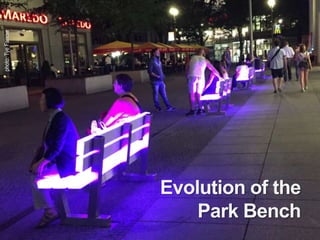
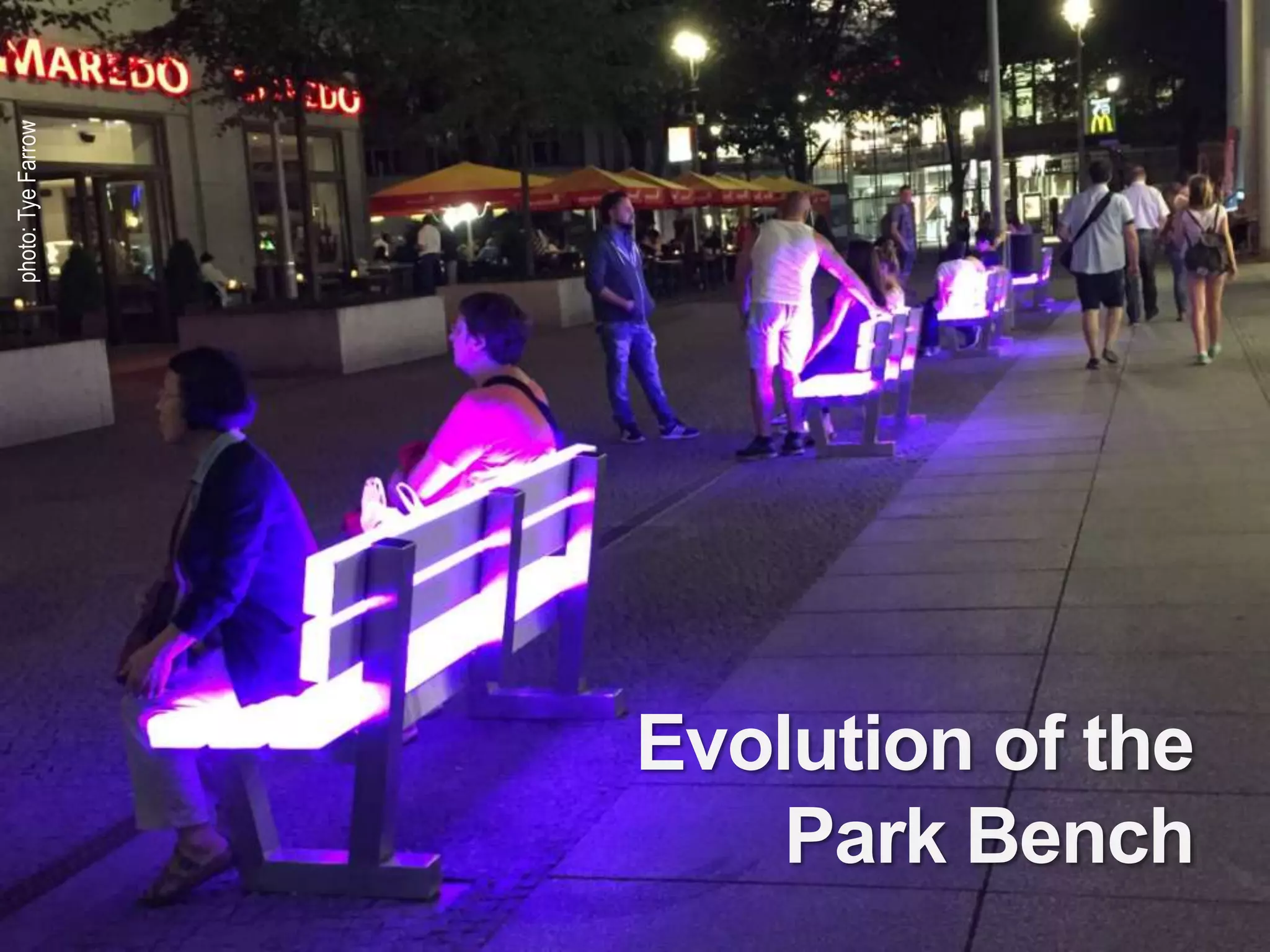
Evolution of the
Park Bench
photo:TyeFarrow
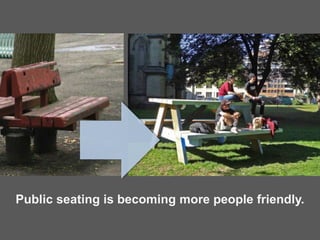
Public seating is becoming more people-friendly...
This ‘park bench’ has
escaped from the box.
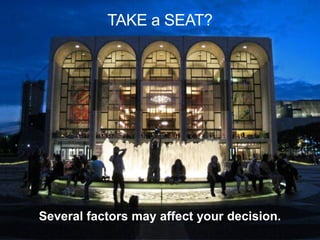
Several factors may affect your decision.
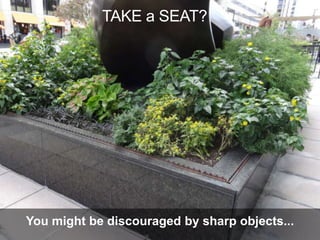
TAKE a SEAT?
You might be discouraged by sharp objects...
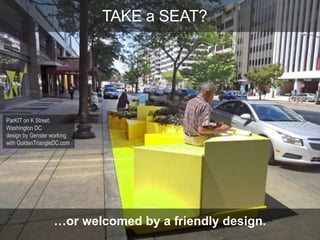
TAKE a SEAT?
TAKE a SEAT?
…or welcomed by a cheerful design.
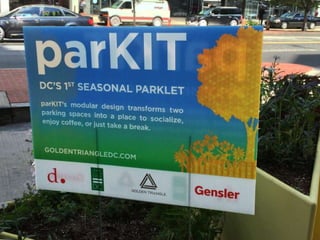
ParKIT on K Street,
Washington DC
design by Gensler working
with GoldenTriangleDC.com
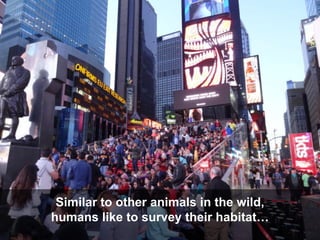
Similar to other animals in the wild,
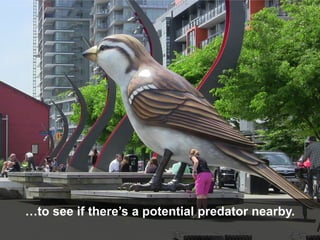
humans like to survey their habitat…
…to see if there’s a potential predator nearby.
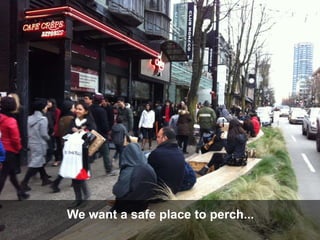
We want a safe place to perch...
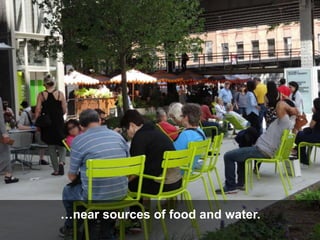
…near sources of food and water.
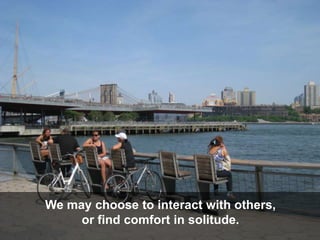
We may choose to interact with others,
or find comfort in solitude.
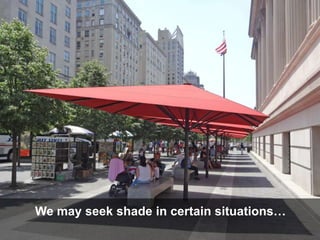
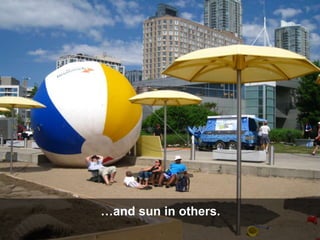
We may seek shade in certain situations…
…and sun in others.
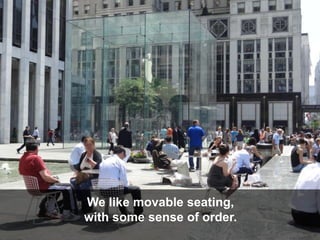
We like movable seating,
with some sense of order.
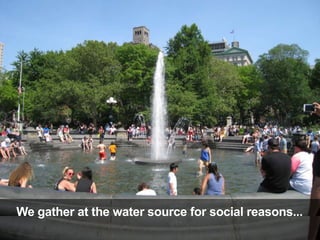
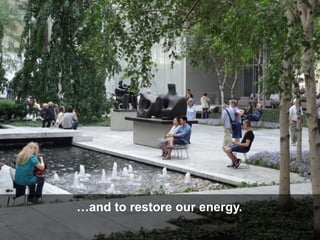
We gather at the water source for social reasons...
…and to restore our energy.
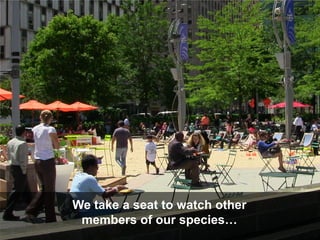
We take a seat to watch other
members of our species…
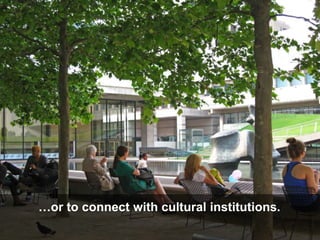
…or to connect with cultural institutions.
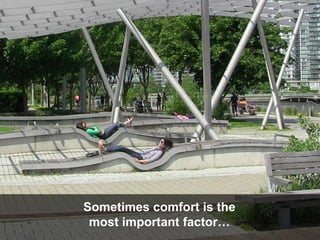
Sometimes comfort is the
most important factor…
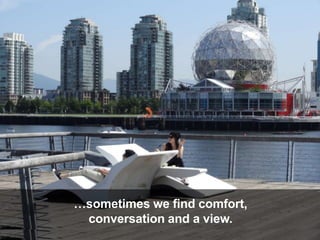
…sometimes we find comfort,
conversation and a view.
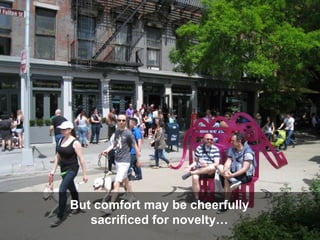
But comfort may be cheerfully
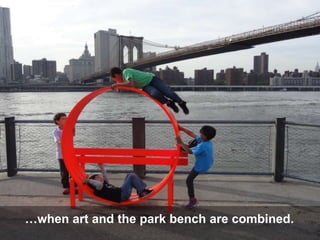
sacrificed for novelty…
…when art and the park bench are combined.
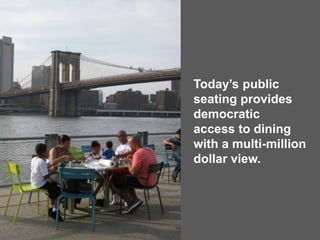
Today’s public
seating provides
democratic
access to dining
with a multi-million
dollar view.
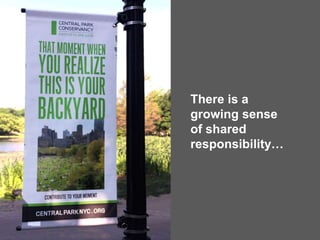
There is a
growing sense
of shared
responsibility…
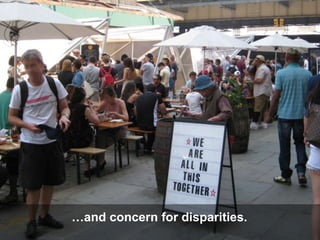
…and concern for disparities.
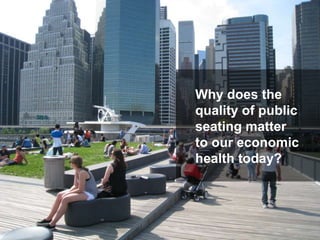
Why does the
quality of public
seating matter
to our economic
health today?
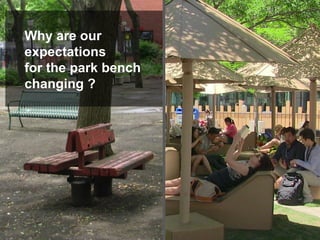
Why are our
expectations
for the park bench
changing ?
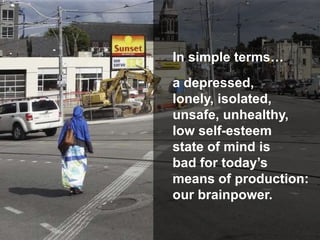
In stark economic
terms…
a depressed,
lonely, isolated,
unsafe, unhealthy,
low self-esteem
state of mind is
bad for today’s
means of production:
our brainpower.
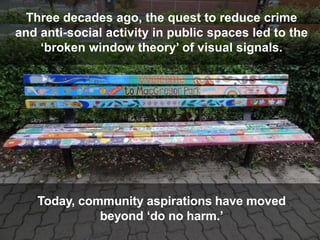
Three decades ago, the quest to reduce crime
and anti-social activity in public spaces led to the
‘broken windows theory’ of visual signals.
Today, community aspirations have moved
beyond ‘do no harm.’
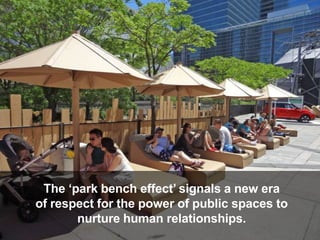
The ‘park bench effect’ signals a new era
of respect for the power of public spaces to
nurture human relationships.
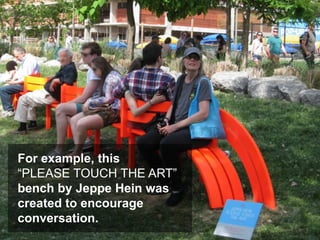
For example, this
“PLEASE TOUCH THE ART”
bench by Jeppe Hein was
created to encourage
conversation.
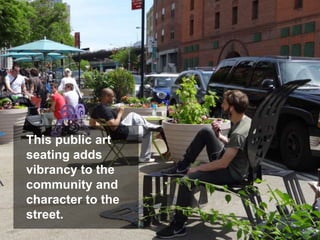
This public art
seating adds
vibrancy to the
community and
character to the
street.
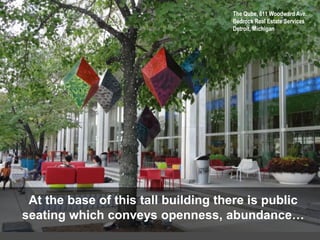
At the base of this tall building there is public
seating which conveys openness, abundance…
The Qube, 611 Woodward Ave.
Bedrock Real Estate Services
Detroit, Michigan
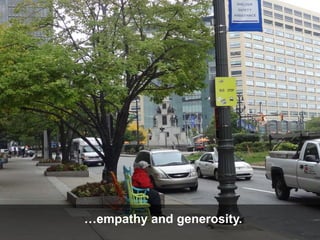
…empathy and generosity.
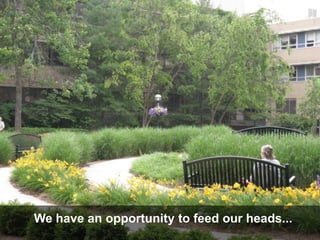
We have an opportunity to feed our heads...
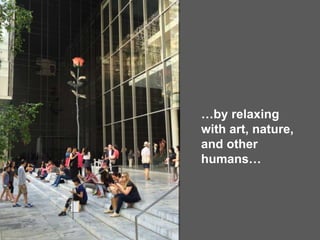
…by relaxing
with art, nature,
and other
humans…
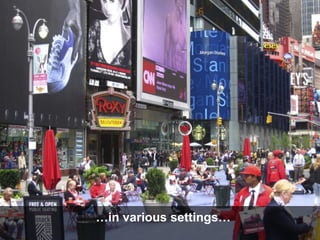
…in various settings…
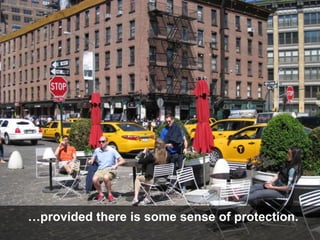
…provided there is some sense of protection.
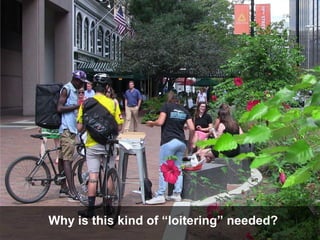
Why is this kind of “loitering” needed?
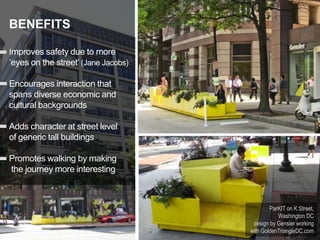
ParKIT on K Street,
Washington DC
design by Gensler working
with GoldenTriangleDC.com
BENEFITS
Improves safety due to more
‘eyes on the street’ (Jane Jacobs)
Encourages interaction that
spans diverse economic and
cultural backgrounds
Adds character at street level
of generic tall buildings
Promotes walking by making
the journey more interesting
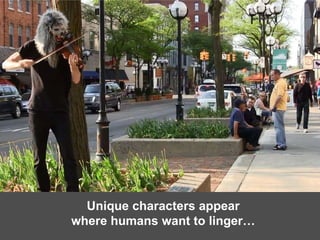
Unique characters appear
where humans want to linger…
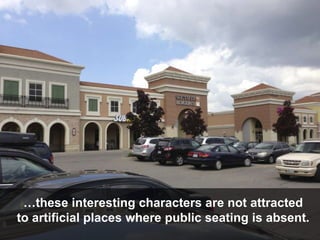
…these interesting characters are not attracted
to artificial places where public seating is absent.
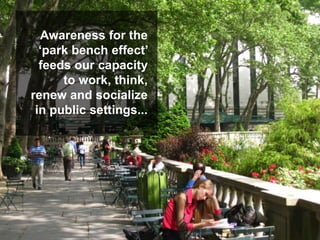
Awareness for the
‘park bench effect’
feeds our capacity
to work, think,
renew and socialize
in public settings...
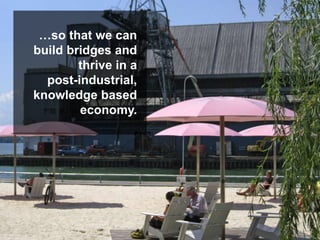
…so that we can
build bridges and
thrive in a
post-industrial,
knowledge based
economy.
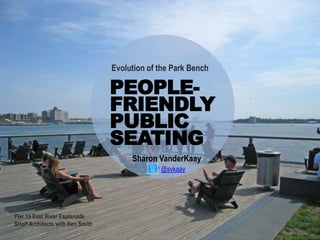
PEOPLE-
FRIENDLY
PUBLIC
SEATING
Sharon VanderKaay
@svkaay
Evolution of the Park Bench
Pier 15 East River Esplanade
SHoP Architects with Ken Smith

People Friendly Public Seating: Evolution of the Park Bench