TYPES & CAUSES OF PTOSIS
by
Dr MAZHAR ALI
DEFINITION
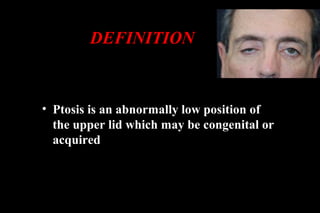
• Ptosis is an abnormally low position of
the upper lid which may be congenital or
acquired
Typess
• Congenital
1. Simple
2. Complicated
• Acquired
1. Neurogenic
2. Myogenic
3. Aponeurotic
4 Mechanical
Pseudoptosis
Congenital Ptosis
• Commonest form of ptosis
• Usually bilateral / Heriditary
• Due to defective development of LPS
• Simple congenital ptosis is an isolated
abnormality
Congenital Ptosis
• Complicated – when associated with
developmental abnormality of surrounding
structures
Associated Superior rectus palsy
Abnormal synkineses – Marcus Gunn ptosis
Dystrophy of the LPS
Blepharophimosis syndrome (Ptosis,
horizontal shortening of palp aperture,
epicanthus inversus, telecanthus lat ectropion
of the lower lids)
Simple congenital ptosis
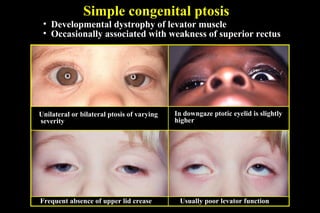
• Developmental dystrophy of levator muscle
• Occasionally associated with weakness of superior rectus
Unilateral or bilateral ptosis of varying
severity
In downgaze ptotic eyelid is slightly
higher
Frequent absence of upper lid crease Usually poor levator function
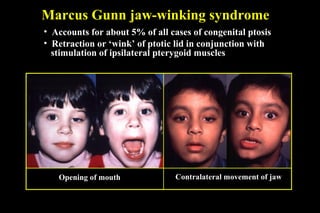
Marcus Gunn jaw-winking syndrome
• Accounts for about 5% of all cases of congenital ptosis
• Retraction or ‘wink’ of ptotic lid in conjunction with
stimulation of ipsilateral pterygoid muscles
Opening of mouth Contralateral movement of jaw
Acquired Ptosis
• Usually unilateral
Types
1.Neurogenic – Third nerve paralysis or due to
reduced sympathetic innervation (Horner
syndrome – ptosis, anhydrosis and miosis)
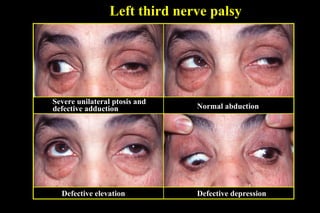
Left third nerve palsy
Severe unilateral ptosis and
defective adduction Normal abduction
Defective elevation Defective depression
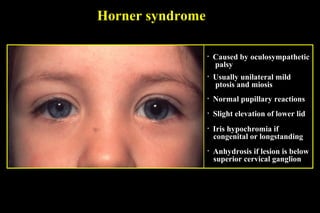
Horner syndrome
• Caused by oculosympathetic
palsy
• Usually unilateral mild
ptosis and miosis
• Slight elevation of lower lid
• Normal pupillary reactions
• Iris hypochromia if
congenital or longstanding
• Anhydrosis if lesion is below
superior cervical ganglion
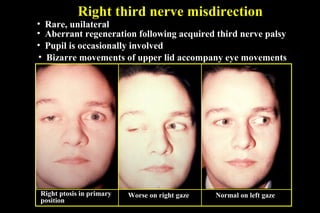
Right third nerve misdirection
• Rare, unilateral
• Aberrant regeneration following acquired third nerve palsy
• Pupil is occasionally involved
• Bizarre movements of upper lid accompany eye movements
Right ptosis in primary
position
Worse on right gaze Normal on left gaze
Acquired Ptosis
2. Myogenic – gradual onset, bilateral
condition, symmetrical
Myotonic dystrophy
Chronic progressive exophthalmoplegia
Mysthenia gravis ( damage to acetyl-cholin
receptor at postsynaptic membrane with
presence of antiacetylcholine receptor
antibodies)
Acquired Ptosis
Mysthenia Gravis-
Symptoms – variable
Signs – bilateral ptosis, increases by
prolonged fixation or attempt to look up ,
external ophthalmoplegia – partial or
complete
Conformation by edrophonium injection
test
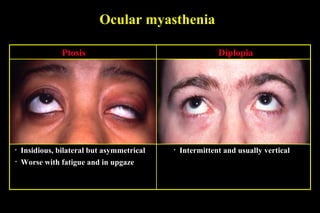
Ocular myasthenia
• Insidious, bilateral but asymmetrical
• Worse with fatigue and in upgaze
Ptosis
• Intermittent and usually vertical
Diplopia
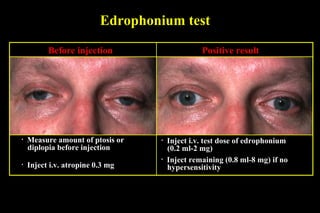
Edrophonium test
• Measure amount of ptosis or
diplopia before injection
• Inject i.v. atropine 0.3 mg
• Inject i.v. test dose of edrophonium
(0.2 ml-2 mg)
• Inject remaining (0.8 ml-8 mg) if no
hypersensitivity
Before injection Positive result
Acquired Ptosis
Aponeurotic Ptosis
Is involutional is due to weakness
or disinsertion of LPS aponeurosis from ant
surface of tarsal plate
High lid fold with good LPS function
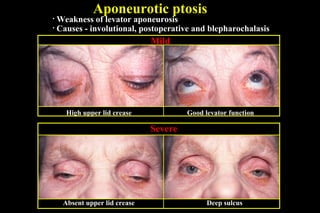
Aponeurotic ptosis
• Weakness of levator aponeurosis
• Causes - involutional, postoperative and blepharochalasis
High upper lid crease Good levator function
Absent upper lid crease Deep sulcus
Mild
Severe
Acquired Ptosis
• Mechanical Ptosis –
• ptosis is caused by the gravitational effect
of a mass or by scarring
• Tumour or inflammation weight down the
lid
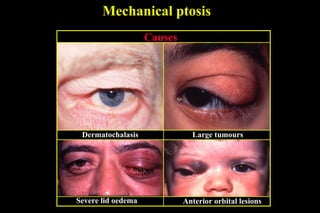
Mechanical ptosis
Causes
Dermatochalasis Large tumours
Severe lid oedema Anterior orbital lesions
Pseudoptosis
• false impression of ptosis may be caused by the following
• 1 Lack of support of the lids by the globe may be due
to an orbital volume deficit associated with an artificial
eye
• 2 Contralateral lid retraction,
•
3 Ipsilateral hypotropia causes pseudoptosis because
the upper lid follows the globe downwards
• 4 Brow ptosis due to excessive skin on the brow, or 7th
nerve palsy,
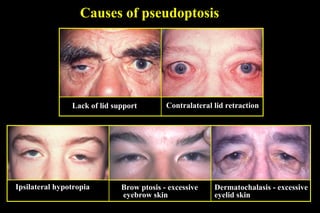
Causes of pseudoptosis
Ipsilateral hypotropia Brow ptosis - excessive
eyebrow skin
Dermatochalasis - excessive
eyelid skin
Lack of lid support Contralateral lid retraction
THANKS

ptosis ppt

  • 2.
    TYPES & CAUSESOF PTOSIS by Dr MAZHAR ALI
  • 3.
    DEFINITION • Ptosis isan abnormally low position of the upper lid which may be congenital or acquired
  • 4.
    Typess • Congenital 1. Simple 2.Complicated • Acquired 1. Neurogenic 2. Myogenic 3. Aponeurotic 4 Mechanical Pseudoptosis
  • 5.
    Congenital Ptosis • Commonestform of ptosis • Usually bilateral / Heriditary • Due to defective development of LPS • Simple congenital ptosis is an isolated abnormality
  • 6.
    Congenital Ptosis • Complicated– when associated with developmental abnormality of surrounding structures Associated Superior rectus palsy Abnormal synkineses – Marcus Gunn ptosis Dystrophy of the LPS Blepharophimosis syndrome (Ptosis, horizontal shortening of palp aperture, epicanthus inversus, telecanthus lat ectropion of the lower lids)
  • 7.
    Simple congenital ptosis •Developmental dystrophy of levator muscle • Occasionally associated with weakness of superior rectus Unilateral or bilateral ptosis of varying severity In downgaze ptotic eyelid is slightly higher Frequent absence of upper lid crease Usually poor levator function
  • 8.
    Marcus Gunn jaw-winkingsyndrome • Accounts for about 5% of all cases of congenital ptosis • Retraction or ‘wink’ of ptotic lid in conjunction with stimulation of ipsilateral pterygoid muscles Opening of mouth Contralateral movement of jaw
  • 9.
    Acquired Ptosis • Usuallyunilateral Types 1.Neurogenic – Third nerve paralysis or due to reduced sympathetic innervation (Horner syndrome – ptosis, anhydrosis and miosis)
  • 10.
    Left third nervepalsy Severe unilateral ptosis and defective adduction Normal abduction Defective elevation Defective depression
  • 11.
    Horner syndrome • Causedby oculosympathetic palsy • Usually unilateral mild ptosis and miosis • Slight elevation of lower lid • Normal pupillary reactions • Iris hypochromia if congenital or longstanding • Anhydrosis if lesion is below superior cervical ganglion
  • 12.
    Right third nervemisdirection • Rare, unilateral • Aberrant regeneration following acquired third nerve palsy • Pupil is occasionally involved • Bizarre movements of upper lid accompany eye movements Right ptosis in primary position Worse on right gaze Normal on left gaze
  • 13.
    Acquired Ptosis 2. Myogenic– gradual onset, bilateral condition, symmetrical Myotonic dystrophy Chronic progressive exophthalmoplegia Mysthenia gravis ( damage to acetyl-cholin receptor at postsynaptic membrane with presence of antiacetylcholine receptor antibodies)
  • 14.
    Acquired Ptosis Mysthenia Gravis- Symptoms– variable Signs – bilateral ptosis, increases by prolonged fixation or attempt to look up , external ophthalmoplegia – partial or complete Conformation by edrophonium injection test
  • 15.
    Ocular myasthenia • Insidious,bilateral but asymmetrical • Worse with fatigue and in upgaze Ptosis • Intermittent and usually vertical Diplopia
  • 16.
    Edrophonium test • Measureamount of ptosis or diplopia before injection • Inject i.v. atropine 0.3 mg • Inject i.v. test dose of edrophonium (0.2 ml-2 mg) • Inject remaining (0.8 ml-8 mg) if no hypersensitivity Before injection Positive result
  • 17.
    Acquired Ptosis Aponeurotic Ptosis Isinvolutional is due to weakness or disinsertion of LPS aponeurosis from ant surface of tarsal plate High lid fold with good LPS function
  • 18.
    Aponeurotic ptosis • Weaknessof levator aponeurosis • Causes - involutional, postoperative and blepharochalasis High upper lid crease Good levator function Absent upper lid crease Deep sulcus Mild Severe
  • 19.
    Acquired Ptosis • MechanicalPtosis – • ptosis is caused by the gravitational effect of a mass or by scarring • Tumour or inflammation weight down the lid
  • 20.
    Mechanical ptosis Causes Dermatochalasis Largetumours Severe lid oedema Anterior orbital lesions
  • 21.
    Pseudoptosis • false impressionof ptosis may be caused by the following • 1 Lack of support of the lids by the globe may be due to an orbital volume deficit associated with an artificial eye • 2 Contralateral lid retraction, • 3 Ipsilateral hypotropia causes pseudoptosis because the upper lid follows the globe downwards • 4 Brow ptosis due to excessive skin on the brow, or 7th nerve palsy,
  • 22.
    Causes of pseudoptosis Ipsilateralhypotropia Brow ptosis - excessive eyebrow skin Dermatochalasis - excessive eyelid skin Lack of lid support Contralateral lid retraction
  • 23.