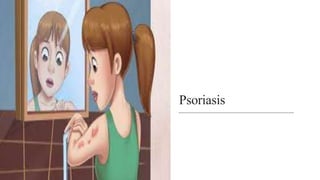
Psoriasis
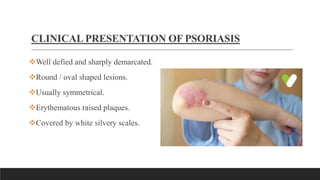
CLINICAL PRESENTATION OF PSORIASIS
Well defied and sharply demarcated.
Round / oval shaped lesions.
Usually symmetrical.
Erythematous raised plaques.
Covered by white silvery scales.
TYPES OF PSORIASIS
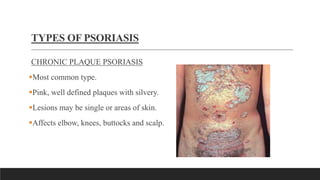
CHRONIC PLAQUE PSORIASIS
Most common type.
Pink, well defined plaques with silvery.
Lesions may be single or areas of skin.
Affects elbow, knees, buttocks and scalp.
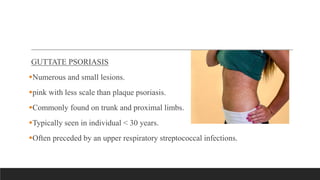
GUTTATE PSORIASIS
Numerous and small lesions.
pink with less scale than plaque psoriasis.
Commonly found on trunk and proximal limbs.
Typically seen in individual < 30 years.
Often preceded by an upper respiratory streptococcal infections.
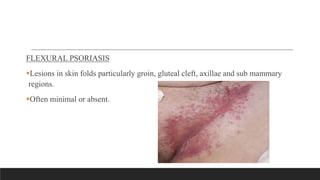
FLEXURAL PSORIASIS
Lesions in skin folds particularly groin, gluteal cleft, axillae and sub mammary
regions.
Often minimal or absent.
ERYTHRODERMIC PSORIAIS
Generalized erythema covering entire skin surface.
Patient may become febrile,
hyperthermic and dehydrated.
Relatively uncommon.
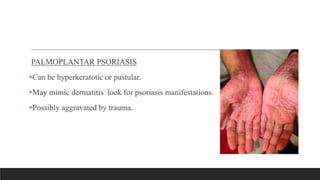
PALMOPLANTAR PSORIASIS
Can be hyperkeratotic or pustular.
May mimic dermatitis look for psoriasis manifestations.
Possibly aggravated by trauma.
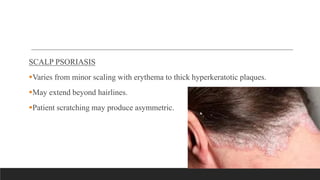
SCALP PSORIASIS
Varies from minor scaling with erythema to thick hyperkeratotic plaques.
May extend beyond hairlines.
Patient scratching may produce asymmetric.
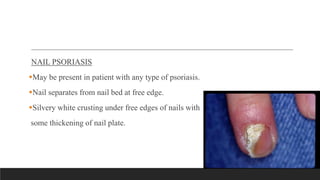
NAIL PSORIASIS
May be present in patient with any type of psoriasis.
Nail separates from nail bed at free edge.
Silvery white crusting under free edges of nails with
some thickening of nail plate.
TOPICAL THERAPIES
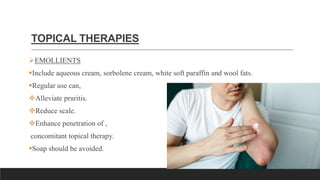
EMOLLIENTS
Include aqueous cream, sorbolene cream, white soft paraffin and wool fats.
Regular use can,
Alleviate pruritis.
Reduce scale.
Enhance penetration of ,
concomitant topical therapy.
Soap should be avoided.
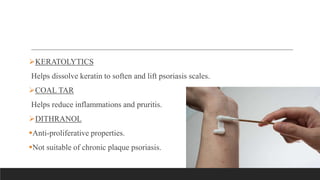
KERATOLYTICS
Helps dissolve keratin to soften and lift psoriasis scales.
COAL TAR
Helps reduce inflammations and pruritis.
DITHRANOL
Anti-proliferative properties.
Not suitable of chronic plaque psoriasis.
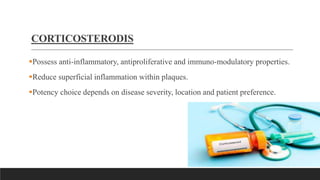
CORTICOSTERODIS
Possess anti-inflammatory, antiproliferative and immuno-modulatory properties.
Reduce superficial inflammation within plaques.
Potency choice depends on disease severity, location and patient preference.
NURSING DIAGNOSIS
Impaired skin integrity related to lesions and inflammatory response as evidence
by itching all over the body.
Risk of infection related to hyponatremia as evidence by loss of protein and
fluid from lesions.
Acute pain related to inflammation as evidence by patient verbalization and pain
scale reading.
Psoriasis (1).pptx

Psoriasis (1).pptx

  • 2.
  • 3.
    CLINICAL PRESENTATION OFPSORIASIS Well defied and sharply demarcated. Round / oval shaped lesions. Usually symmetrical. Erythematous raised plaques. Covered by white silvery scales.
  • 4.
    TYPES OF PSORIASIS CHRONICPLAQUE PSORIASIS Most common type. Pink, well defined plaques with silvery. Lesions may be single or areas of skin. Affects elbow, knees, buttocks and scalp.
  • 5.
    GUTTATE PSORIASIS Numerous andsmall lesions. pink with less scale than plaque psoriasis. Commonly found on trunk and proximal limbs. Typically seen in individual < 30 years. Often preceded by an upper respiratory streptococcal infections.
  • 6.
    FLEXURAL PSORIASIS Lesions inskin folds particularly groin, gluteal cleft, axillae and sub mammary regions. Often minimal or absent.
  • 7.
    ERYTHRODERMIC PSORIAIS Generalized erythemacovering entire skin surface. Patient may become febrile, hyperthermic and dehydrated. Relatively uncommon.
  • 8.
    PALMOPLANTAR PSORIASIS Can behyperkeratotic or pustular. May mimic dermatitis look for psoriasis manifestations. Possibly aggravated by trauma.
  • 9.
    SCALP PSORIASIS Varies fromminor scaling with erythema to thick hyperkeratotic plaques. May extend beyond hairlines. Patient scratching may produce asymmetric.
  • 10.
    NAIL PSORIASIS May bepresent in patient with any type of psoriasis. Nail separates from nail bed at free edge. Silvery white crusting under free edges of nails with some thickening of nail plate.
  • 11.
    TOPICAL THERAPIES EMOLLIENTS Include aqueouscream, sorbolene cream, white soft paraffin and wool fats. Regular use can, Alleviate pruritis. Reduce scale. Enhance penetration of , concomitant topical therapy. Soap should be avoided.
  • 12.
    KERATOLYTICS Helps dissolve keratinto soften and lift psoriasis scales. COAL TAR Helps reduce inflammations and pruritis. DITHRANOL Anti-proliferative properties. Not suitable of chronic plaque psoriasis.
  • 13.
    CORTICOSTERODIS Possess anti-inflammatory, antiproliferativeand immuno-modulatory properties. Reduce superficial inflammation within plaques. Potency choice depends on disease severity, location and patient preference.
  • 14.
    NURSING DIAGNOSIS Impaired skinintegrity related to lesions and inflammatory response as evidence by itching all over the body. Risk of infection related to hyponatremia as evidence by loss of protein and fluid from lesions. Acute pain related to inflammation as evidence by patient verbalization and pain scale reading.