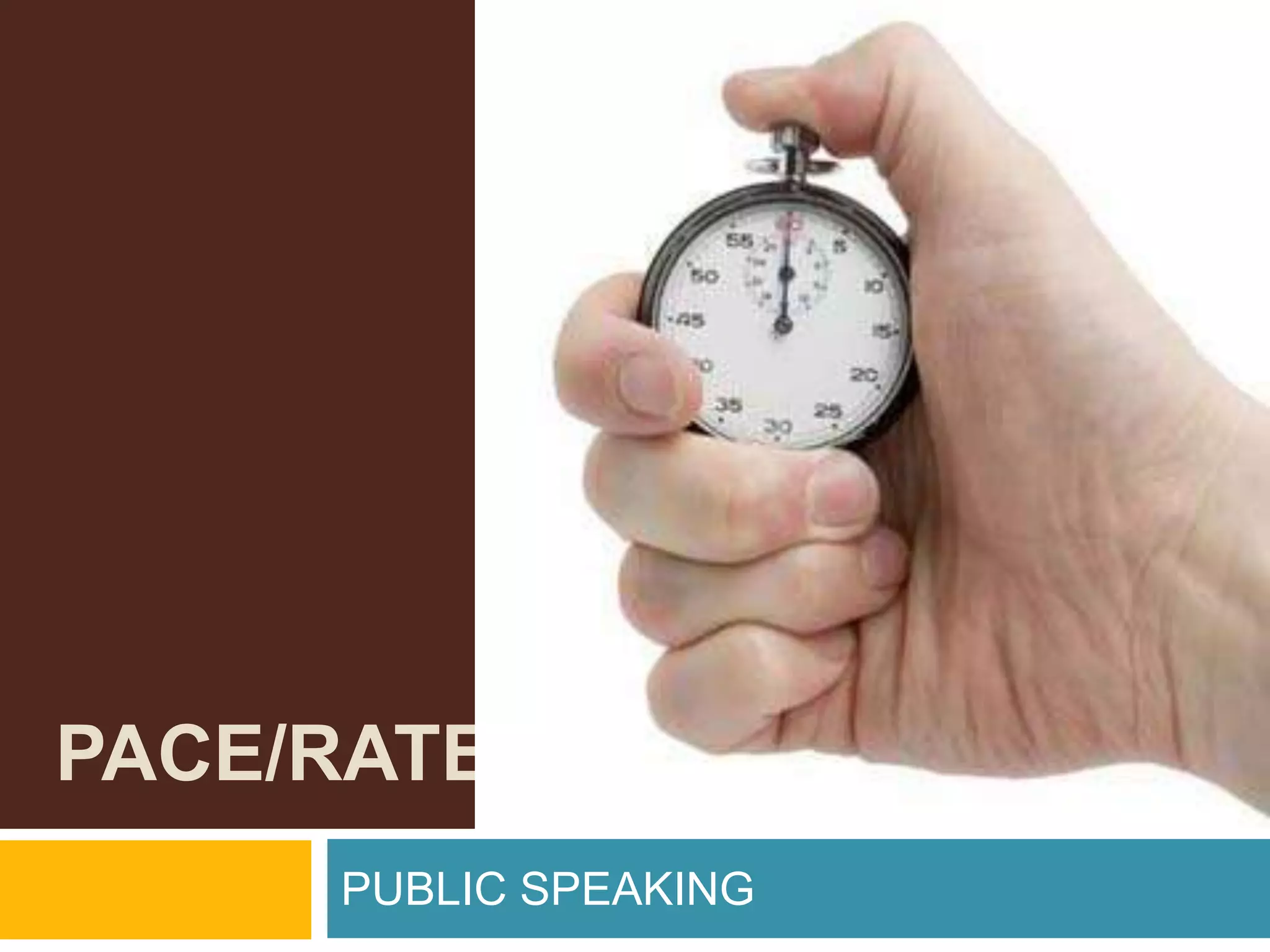
PACE/RATE
PUBLIC SPEAKING
TO REVIEW…
Speak naturally.
 Aim for a comfortable rate of speech.
 Not too fast.
 Not too slow.
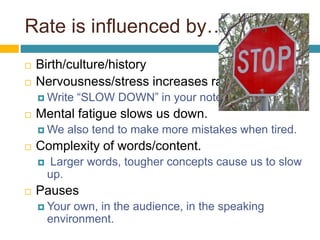
Rate is influenced by…
 Birth/culture/history
 Nervousness/stress increases rate.
 Write “SLOW DOWN” in your notes.
 Mental fatigue slows us down.
 We also tend to make more mistakes when tired.
 Complexity of words/content.
 Larger words, tougher concepts cause us to slow
up.
 Pauses
 Your own, in the audience, in the speaking
environment.
Fast or slow?
 Generally, slow is better than fast.
 Again, it’s most important to be comfortable
and CLEAR.
 Aim for clarity.
 Work within your vocabulary.
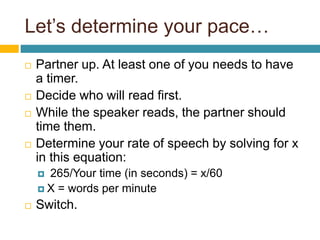
Let’s determine your pace…
 Partner up. At least one of you needs to have
a timer.
 Decide who will read first.
 While the speaker reads, the partner should
time them.
 Determine your rate of speech by solving for x
in this equation:
 265/Your time (in seconds) = x/60
 X = words per minute
 Switch.
Works Cited
 Dlugan, Andrew. "Speech Pauses: 12 Techniques to
Speak Volumes with Your Silence." Six Minutes RSS.
Six Minutes, 5 Nov. 2012. Web. 18 Feb. 2015.
<http://sixminutes.dlugan.com/pause-speech/>.
 Dlugan, Andrew. "Toastmasters Speech 6: Vocal
Variety." Six Minutes RSS. Six Minutes, 27 Aug. 2013.
Web. 18 Feb. 2015.
<http://sixminutes.dlugan.com/toastmasters-speech-6-
vocal-variety/>.
 Dlugan, Andrew. "What Is the Average Speaking
Rate?" Six Minutes RSS. Six Minutes, 12 Nov. 2012.
Web. 18 Feb. 2015.
<http://sixminutes.dlugan.com/speaking-rate/>.

Ps rate

  • 1.
  • 2.
  • 3.
    Speak naturally.  Aimfor a comfortable rate of speech.  Not too fast.  Not too slow.
  • 4.
    Rate is influencedby…  Birth/culture/history  Nervousness/stress increases rate.  Write “SLOW DOWN” in your notes.  Mental fatigue slows us down.  We also tend to make more mistakes when tired.  Complexity of words/content.  Larger words, tougher concepts cause us to slow up.  Pauses  Your own, in the audience, in the speaking environment.
  • 5.
    Fast or slow? Generally, slow is better than fast.  Again, it’s most important to be comfortable and CLEAR.  Aim for clarity.  Work within your vocabulary.
  • 6.
    Let’s determine yourpace…  Partner up. At least one of you needs to have a timer.  Decide who will read first.  While the speaker reads, the partner should time them.  Determine your rate of speech by solving for x in this equation:  265/Your time (in seconds) = x/60  X = words per minute  Switch.
  • 7.
    Works Cited  Dlugan,Andrew. "Speech Pauses: 12 Techniques to Speak Volumes with Your Silence." Six Minutes RSS. Six Minutes, 5 Nov. 2012. Web. 18 Feb. 2015. <http://sixminutes.dlugan.com/pause-speech/>.  Dlugan, Andrew. "Toastmasters Speech 6: Vocal Variety." Six Minutes RSS. Six Minutes, 27 Aug. 2013. Web. 18 Feb. 2015. <http://sixminutes.dlugan.com/toastmasters-speech-6- vocal-variety/>.  Dlugan, Andrew. "What Is the Average Speaking Rate?" Six Minutes RSS. Six Minutes, 12 Nov. 2012. Web. 18 Feb. 2015. <http://sixminutes.dlugan.com/speaking-rate/>.