TIPS OF SPEAKING IN
    THE PUBLIC
There are
 some tips
 when you
  want to
speak in the
   public
Be Prepared. Practice,
 practice, practice!
        Rehearse out loud with all
        equipment you plan on
        using. Revise as necessary.
        Work to control filler
        words; Practice, pause and
        breathe.
Know your material.
       Pick a topic you are
       interested in. Know more
       about it than you include
       in your speech. Use
       humor, personal stories
       and conversational
       language – that way you
       won’t easily forget what
       to say.
Know the room
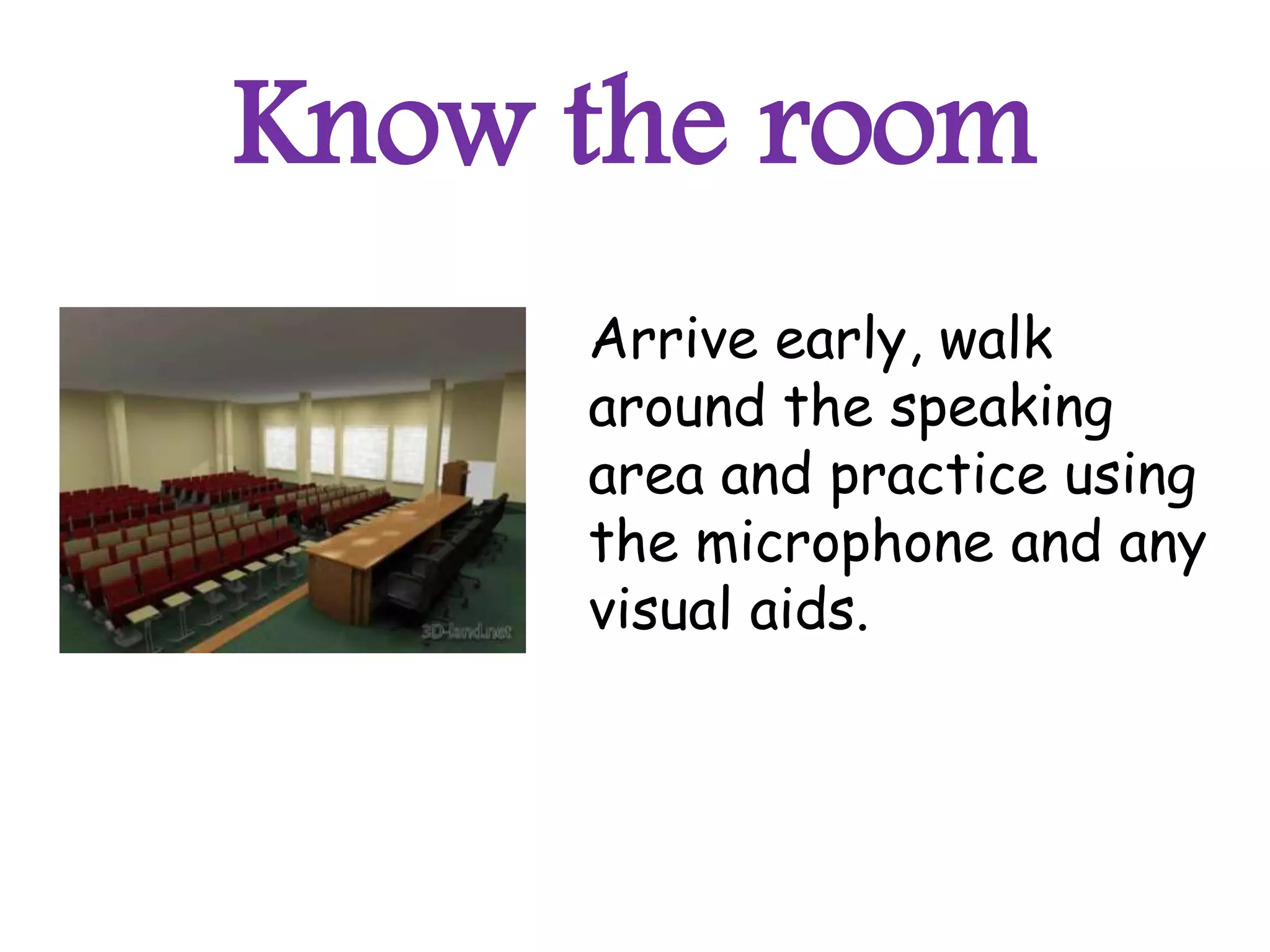
     Arrive early, walk
     around the speaking
     area and practice using
     the microphone and any
     visual aids.
Relax
 Begin by addressing the
 audience. It buys you
 time and calms your
 nervousness. Pause,
 smile and count to three
 before saying anything.
 ("One one-thousand, two
 one-thousand, three
 one-thousand. Pause.
 Begin.) Transform
 nervous energy into
 enthusiasm.
Don’t apologize

      Don’t apologize for any
      nervousness or problem
      – the audience probably
      never noticed it.
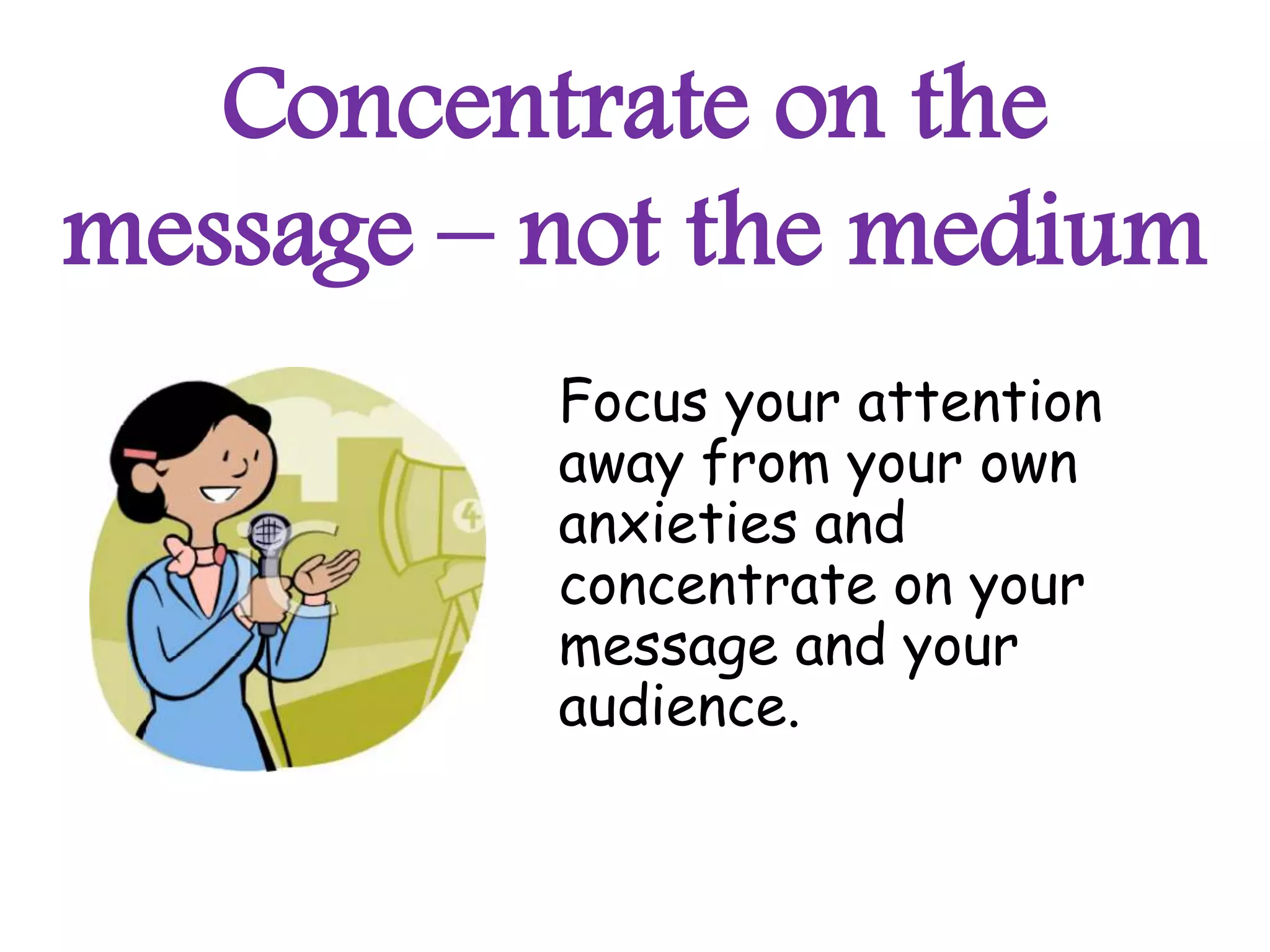
Concentrate on the
message – not the medium
          Focus your attention
          away from your own
          anxieties and
          concentrate on your
          message and your
          audience.
Use body language
A speech may have great
content, but if a
speaker’s body language
does not show
confidence then the
message cannot be
delivered effectively. A
speaker must exude
confidence in their
message.
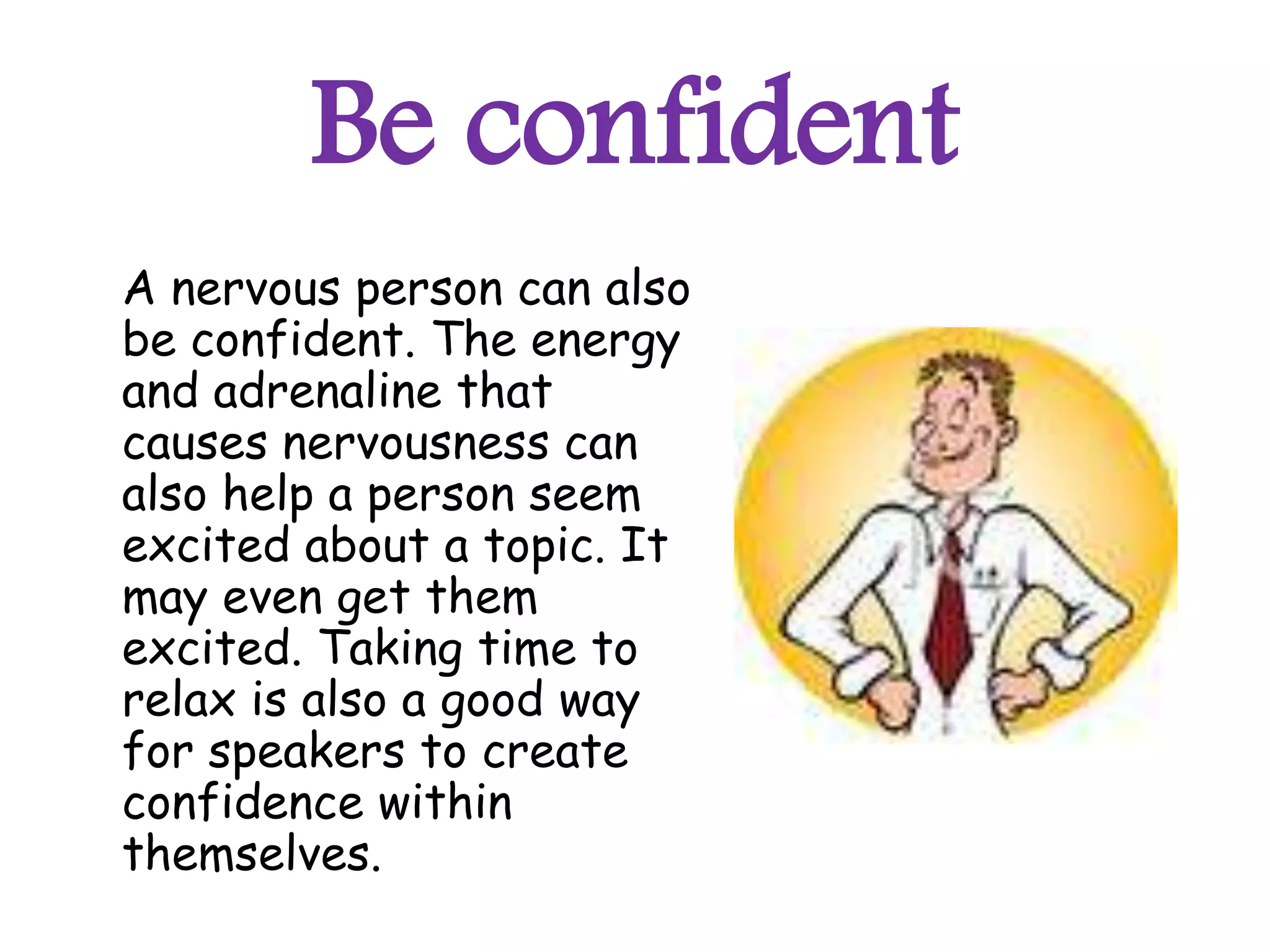
Be confident
A nervous person can also
be confident. The energy
and adrenaline that
causes nervousness can
also help a person seem
excited about a topic. It
may even get them
excited. Taking time to
relax is also a good way
for speakers to create
confidence within
themselves.
Connect with the
       audience
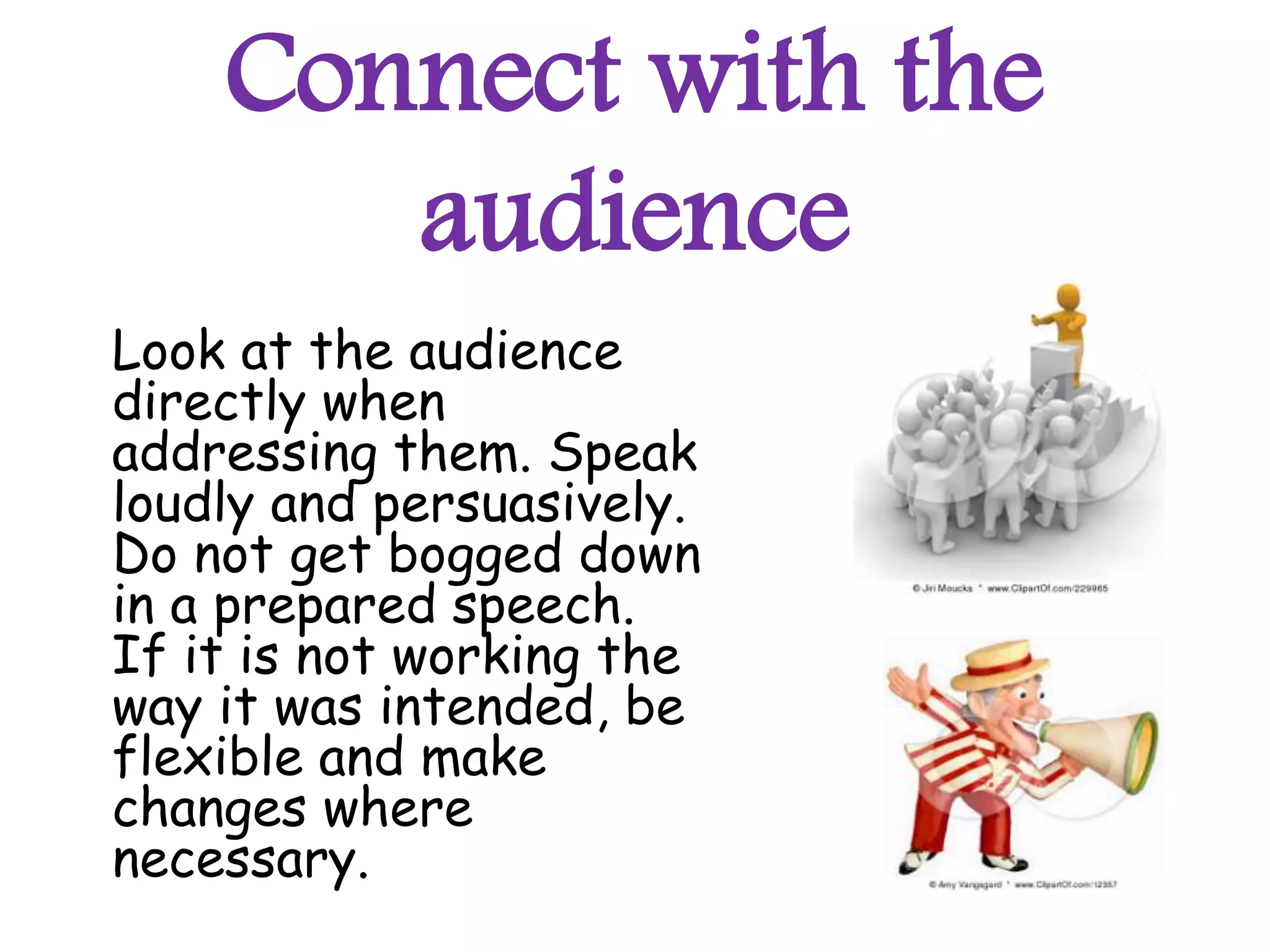
Look at the audience
directly when
addressing them. Speak
loudly and persuasively.
Do not get bogged down
in a prepared speech.
If it is not working the
way it was intended, be
flexible and make
changes where
necessary.
Be Aware of Time
       Constraints
When practicing at
home use a stopwatch.
Cut the speech down
to fit those time
constraints and allow a
little extra time at the
end. Do not use an
extraneous words or
repetitive sentences.
References
http://www.toastmasters.org/tips.asp
http://publicspeakingtips.net/
Tips of speaking in the public

Tips of speaking in the public

  • 1.
    TIPS OF SPEAKINGIN THE PUBLIC
  • 2.
    There are sometips when you want to speak in the public
  • 3.
    Be Prepared. Practice, practice, practice! Rehearse out loud with all equipment you plan on using. Revise as necessary. Work to control filler words; Practice, pause and breathe.
  • 4.
    Know your material. Pick a topic you are interested in. Know more about it than you include in your speech. Use humor, personal stories and conversational language – that way you won’t easily forget what to say.
  • 5.
    Know the room Arrive early, walk around the speaking area and practice using the microphone and any visual aids.
  • 6.
    Relax Begin byaddressing the audience. It buys you time and calms your nervousness. Pause, smile and count to three before saying anything. ("One one-thousand, two one-thousand, three one-thousand. Pause. Begin.) Transform nervous energy into enthusiasm.
  • 7.
    Don’t apologize Don’t apologize for any nervousness or problem – the audience probably never noticed it.
  • 8.
    Concentrate on the message– not the medium Focus your attention away from your own anxieties and concentrate on your message and your audience.
  • 9.
    Use body language Aspeech may have great content, but if a speaker’s body language does not show confidence then the message cannot be delivered effectively. A speaker must exude confidence in their message.
  • 10.
    Be confident A nervousperson can also be confident. The energy and adrenaline that causes nervousness can also help a person seem excited about a topic. It may even get them excited. Taking time to relax is also a good way for speakers to create confidence within themselves.
  • 11.
    Connect with the audience Look at the audience directly when addressing them. Speak loudly and persuasively. Do not get bogged down in a prepared speech. If it is not working the way it was intended, be flexible and make changes where necessary.
  • 12.
    Be Aware ofTime Constraints When practicing at home use a stopwatch. Cut the speech down to fit those time constraints and allow a little extra time at the end. Do not use an extraneous words or repetitive sentences.
  • 13.