PRESENTATION ON LAWS RELATED TO INTESTATE
PROPERTY INHERITANCE IN INDIA
COURSE: 1.4.6
GENDER, SCHOOL AND SOCIETY
BY: ANKITA DATTA
REGISTRATION NO. 2115007030 OF 2021-2022
UNIVERSITY ROLL 150072 NO. 21004
B.ED. SEMESTER IV
SESSION: 2021-2023
UNDER THE SUPERVISION OF: DR. SUTAPA THAKUR, DR. KUMAR VISHWABANNDHU,
DR. ENAKSHI BHATTACHARYA DUTTA
GOVERNMENT COLLEGE OF EDUCATION
(C.T.E.), BANIPUR
Disclaimer
Laws related to
Intestate Property
Inheritance in India
Property is a system of rights that gives people legal control of
valuable things, and also refers to the valuable things themselves.
What is property?
 Inheritance, also called succession, the devolution of property
on an heir or heirs upon the death of the owner.
 The term inheritance also designates the property itself. In
modern society, the process is regulated in minute detail by
law.
What is property
inheritance?
Hindu inheritance intestate testate
Property
Inheritance
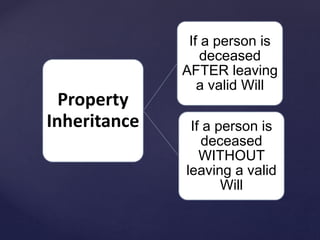
If a person is
deceased
AFTER leaving
a valid Will
If a person is
deceased
WITHOUT
leaving a valid
Will
Testate Succession
 A will outlines how a person want their assets to be distributed
among their heirs after they decease
 It specifies who will receive what portion of the property
 It may also include other provisions, such as the appointment of
an executor to manage the distribution process
When a person dies without leaving a valid will, their property
must be shared out according to certain rules.
Intestate Property
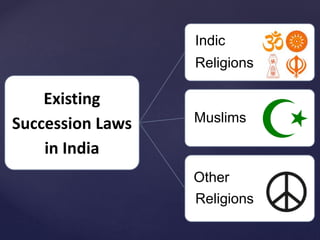
Existing
Succession Laws
in India
Indic
Religions
Muslims
Other
Religions
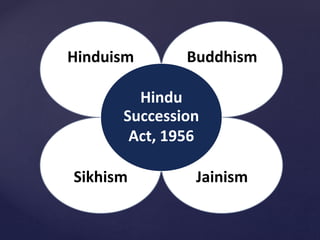
Hinduism Buddhism
Sikhism Jainism
Hindu
Succession
Act, 1956
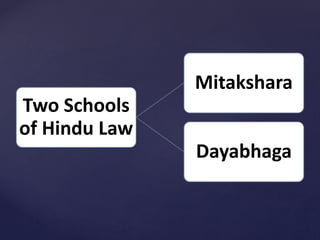
Two Schools
of Hindu Law
Mitakshara
Dayabhaga
Two Schools of Hindu Law
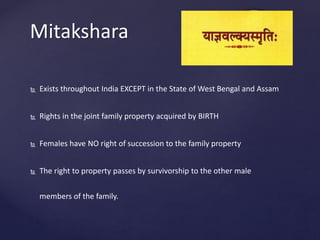
Mitakshara
 Exists throughout India EXCEPT in the State of West Bengal and Assam
 Rights in the joint family property acquired by BIRTH
 Females have NO right of succession to the family property
 The right to property passes by survivorship to the other male
members of the family.
Dayabhaga
 Is prevalent in WEST BENGAL and ASSAM
 Rights in the joint family property are acquired by INHERITANCE or
by WILL
 The share of a deceased male member goes to his widow in default
of a closed heir.
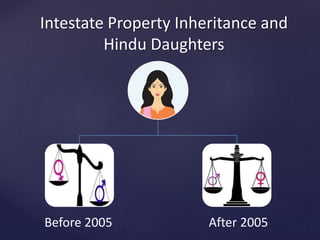
Before 2005 After 2005
Intestate Property Inheritance and
Hindu Daughters
Before 2005
 Daughters did not have equal rights to intestate ancestral
property
 They were considered as coparceners (= joint heirs) only in the
case of joint family property
After 2005
 Hindu Succession Act, 1956 was amended in 2005
 Daughters have been given equal rights as sons in
ancestral and self-acquired property
Hindu Succession act male female
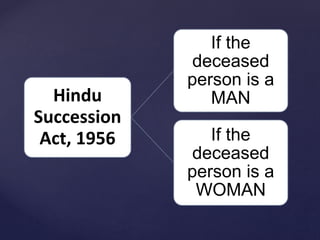
Hindu
Succession
Act, 1956
If the
deceased
person is a
MAN
If the
deceased
person is a
WOMAN
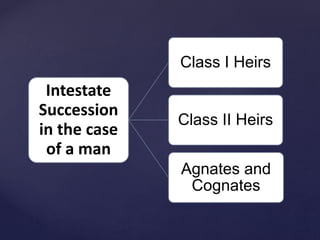
Male Hindu heirs
Intestate
Succession
in the case
of a man
Class I Heirs
Class II Heirs
Agnates and
Cognates
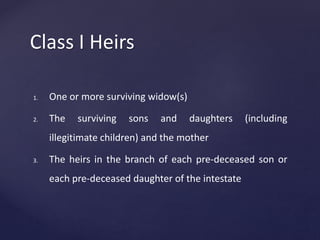
Class I Heirs
1. One or more surviving widow(s)
2. The surviving sons and daughters (including
illegitimate children) and the mother
3. The heirs in the branch of each pre-deceased son or
each pre-deceased daughter of the intestate
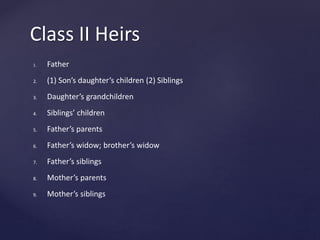
Class II Heirs
1. Father
2. (1) Son’s daughter’s children (2) Siblings
3. Daughter’s grandchildren
4. Siblings’ children
5. Father’s parents
6. Father’s widow; brother’s widow
7. Father’s siblings
8. Mother’s parents
9. Mother’s siblings
Agnates and Cognates
 Agnates = related by blood or adoption wholly through males
 Cognates = related by blood or adoption but not wholly
through males
Intestate Succession in the
case of a woman
 Children (including the children of any pre-deceased son or
daughter) and the husband
 Heirs of the husband
 Parents
 Heirs of the father
 Heirs of the mother
Muslim Personal Law
 Governed by Islamic Shariah and are primarily derived from the
Quran and Hadith
 Based on the concept of ‘Faraid’, which outlines the shares of
various heirs.
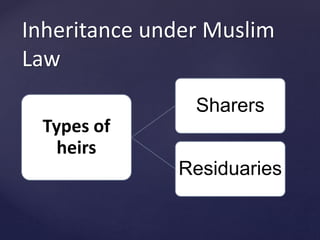
Types of
heirs
Sharers
Residuaries
Inheritance under Muslim
Law
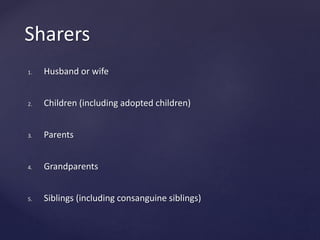
1. Husband or wife
2. Children (including adopted children)
3. Parents
4. Grandparents
5. Siblings (including consanguine siblings)
Sharers
Fixed Shares:
Some Examples
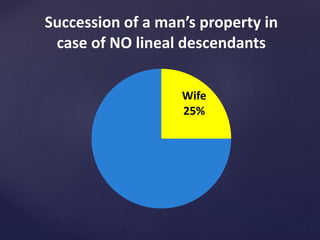
Wife
25%
Succession of a man’s property in
case of NO lineal descendants
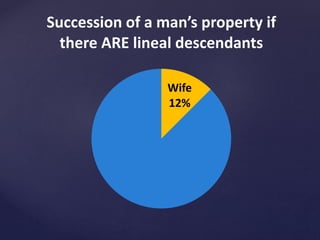
Wife
12%
Succession of a man’s property if
there ARE lineal descendants
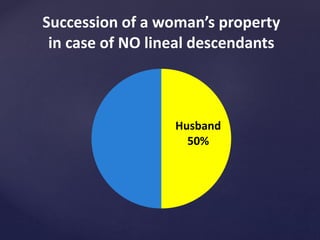
Husband
50%
Succession of a woman’s property
in case of NO lineal descendants
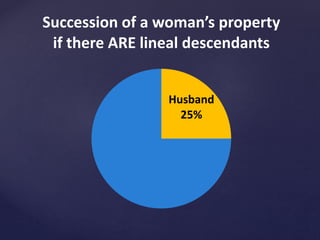
Husband
25%
Succession of a woman’s property
if there ARE lineal descendants
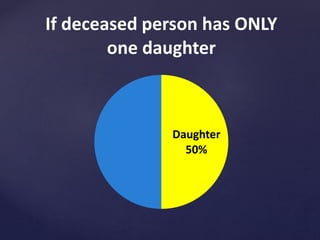
Daughter
50%
If deceased person has ONLY
one daughter
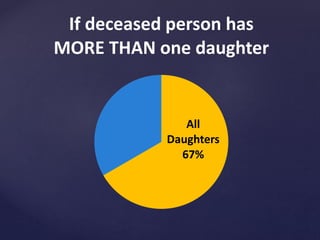
All
Daughters
67%
If deceased person has
MORE THAN one daughter
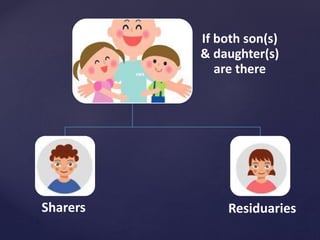
If both son(s)
& daughter(s)
are there
Sharers Residuaries
Indian Succession Act, 1925
 Applies to Christians, Parsis, and individuals not covered
under personal laws
 There are some special rules for Parsi intestates
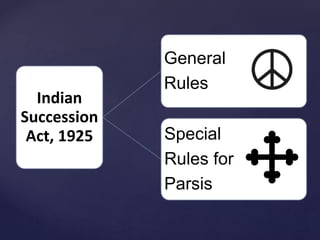
Indian
Succession
Act, 1925
General
Rules
Special
Rules for
Parsis
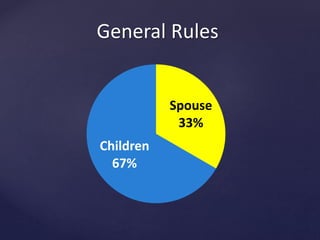
Spouse
33%
Children
67%
General Rules
 Parents
 Siblings
 Other relatives based on proximity of relationship
If no children or descendant,
who will get the property?
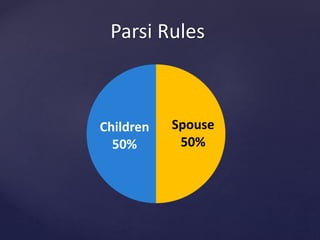
Spouse
50%
Children
50%
Parsi Rules
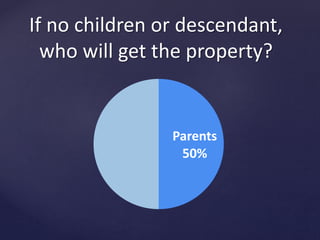
If no children or descendant,
who will get the property?
Parents
50%
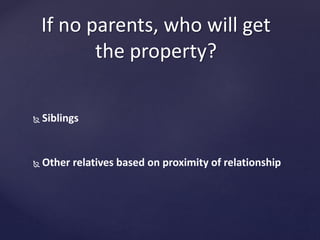
 Siblings
 Other relatives based on proximity of relationship
If no parents, who will get
the property?
 Succession of girls and women to ancestral
property is a RECENT phenomenon.
 It is a step towards WOMEN EMPOWERMENT.
What can be said?
References
1. Wolf, M. A. (2013). Powell on real property. Matthew
Bender
2. Hindu Law School
3. Hindu Succession Act, 1956
4. What is inheritance?
5. Who can inherit if there is no will?
Thank
You

Property Inheritance Laws in India.pptx

  • 1.
    PRESENTATION ON LAWSRELATED TO INTESTATE PROPERTY INHERITANCE IN INDIA COURSE: 1.4.6 GENDER, SCHOOL AND SOCIETY BY: ANKITA DATTA REGISTRATION NO. 2115007030 OF 2021-2022 UNIVERSITY ROLL 150072 NO. 21004 B.ED. SEMESTER IV SESSION: 2021-2023 UNDER THE SUPERVISION OF: DR. SUTAPA THAKUR, DR. KUMAR VISHWABANNDHU, DR. ENAKSHI BHATTACHARYA DUTTA GOVERNMENT COLLEGE OF EDUCATION (C.T.E.), BANIPUR
  • 2.
  • 3.
    Laws related to IntestateProperty Inheritance in India
  • 4.
    Property is asystem of rights that gives people legal control of valuable things, and also refers to the valuable things themselves. What is property?
  • 5.
     Inheritance, alsocalled succession, the devolution of property on an heir or heirs upon the death of the owner.  The term inheritance also designates the property itself. In modern society, the process is regulated in minute detail by law. What is property inheritance?
  • 6.
    Hindu inheritance intestatetestate Property Inheritance If a person is deceased AFTER leaving a valid Will If a person is deceased WITHOUT leaving a valid Will
  • 7.
    Testate Succession  Awill outlines how a person want their assets to be distributed among their heirs after they decease  It specifies who will receive what portion of the property  It may also include other provisions, such as the appointment of an executor to manage the distribution process
  • 8.
    When a persondies without leaving a valid will, their property must be shared out according to certain rules. Intestate Property
  • 9.
  • 10.
  • 11.
    Two Schools of HinduLaw Mitakshara Dayabhaga Two Schools of Hindu Law
  • 12.
    Mitakshara  Exists throughoutIndia EXCEPT in the State of West Bengal and Assam  Rights in the joint family property acquired by BIRTH  Females have NO right of succession to the family property  The right to property passes by survivorship to the other male members of the family.
  • 13.
    Dayabhaga  Is prevalentin WEST BENGAL and ASSAM  Rights in the joint family property are acquired by INHERITANCE or by WILL  The share of a deceased male member goes to his widow in default of a closed heir.
  • 14.
    Before 2005 After2005 Intestate Property Inheritance and Hindu Daughters
  • 15.
    Before 2005  Daughtersdid not have equal rights to intestate ancestral property  They were considered as coparceners (= joint heirs) only in the case of joint family property
  • 16.
    After 2005  HinduSuccession Act, 1956 was amended in 2005  Daughters have been given equal rights as sons in ancestral and self-acquired property
  • 17.
    Hindu Succession actmale female Hindu Succession Act, 1956 If the deceased person is a MAN If the deceased person is a WOMAN
  • 18.
    Male Hindu heirs Intestate Succession inthe case of a man Class I Heirs Class II Heirs Agnates and Cognates
  • 19.
    Class I Heirs 1.One or more surviving widow(s) 2. The surviving sons and daughters (including illegitimate children) and the mother 3. The heirs in the branch of each pre-deceased son or each pre-deceased daughter of the intestate
  • 20.
    Class II Heirs 1.Father 2. (1) Son’s daughter’s children (2) Siblings 3. Daughter’s grandchildren 4. Siblings’ children 5. Father’s parents 6. Father’s widow; brother’s widow 7. Father’s siblings 8. Mother’s parents 9. Mother’s siblings
  • 21.
    Agnates and Cognates Agnates = related by blood or adoption wholly through males  Cognates = related by blood or adoption but not wholly through males
  • 22.
    Intestate Succession inthe case of a woman  Children (including the children of any pre-deceased son or daughter) and the husband  Heirs of the husband  Parents  Heirs of the father  Heirs of the mother
  • 23.
    Muslim Personal Law Governed by Islamic Shariah and are primarily derived from the Quran and Hadith  Based on the concept of ‘Faraid’, which outlines the shares of various heirs.
  • 24.
  • 25.
    1. Husband orwife 2. Children (including adopted children) 3. Parents 4. Grandparents 5. Siblings (including consanguine siblings) Sharers
  • 26.
  • 27.
    Wife 25% Succession of aman’s property in case of NO lineal descendants
  • 28.
    Wife 12% Succession of aman’s property if there ARE lineal descendants
  • 29.
    Husband 50% Succession of awoman’s property in case of NO lineal descendants
  • 30.
    Husband 25% Succession of awoman’s property if there ARE lineal descendants
  • 31.
    Daughter 50% If deceased personhas ONLY one daughter
  • 32.
    All Daughters 67% If deceased personhas MORE THAN one daughter
  • 33.
    If both son(s) &daughter(s) are there Sharers Residuaries
  • 34.
    Indian Succession Act,1925  Applies to Christians, Parsis, and individuals not covered under personal laws  There are some special rules for Parsi intestates
  • 35.
  • 36.
  • 37.
     Parents  Siblings Other relatives based on proximity of relationship If no children or descendant, who will get the property?
  • 38.
  • 39.
    If no childrenor descendant, who will get the property? Parents 50%
  • 40.
     Siblings  Otherrelatives based on proximity of relationship If no parents, who will get the property?
  • 41.
     Succession ofgirls and women to ancestral property is a RECENT phenomenon.  It is a step towards WOMEN EMPOWERMENT. What can be said?
  • 42.
    References 1. Wolf, M.A. (2013). Powell on real property. Matthew Bender 2. Hindu Law School 3. Hindu Succession Act, 1956 4. What is inheritance? 5. Who can inherit if there is no will?
  • 43.