Propaedeutics Of Internal Diseses Subject
Introduction
SlideMake.com
Introduction to Propaedeutics
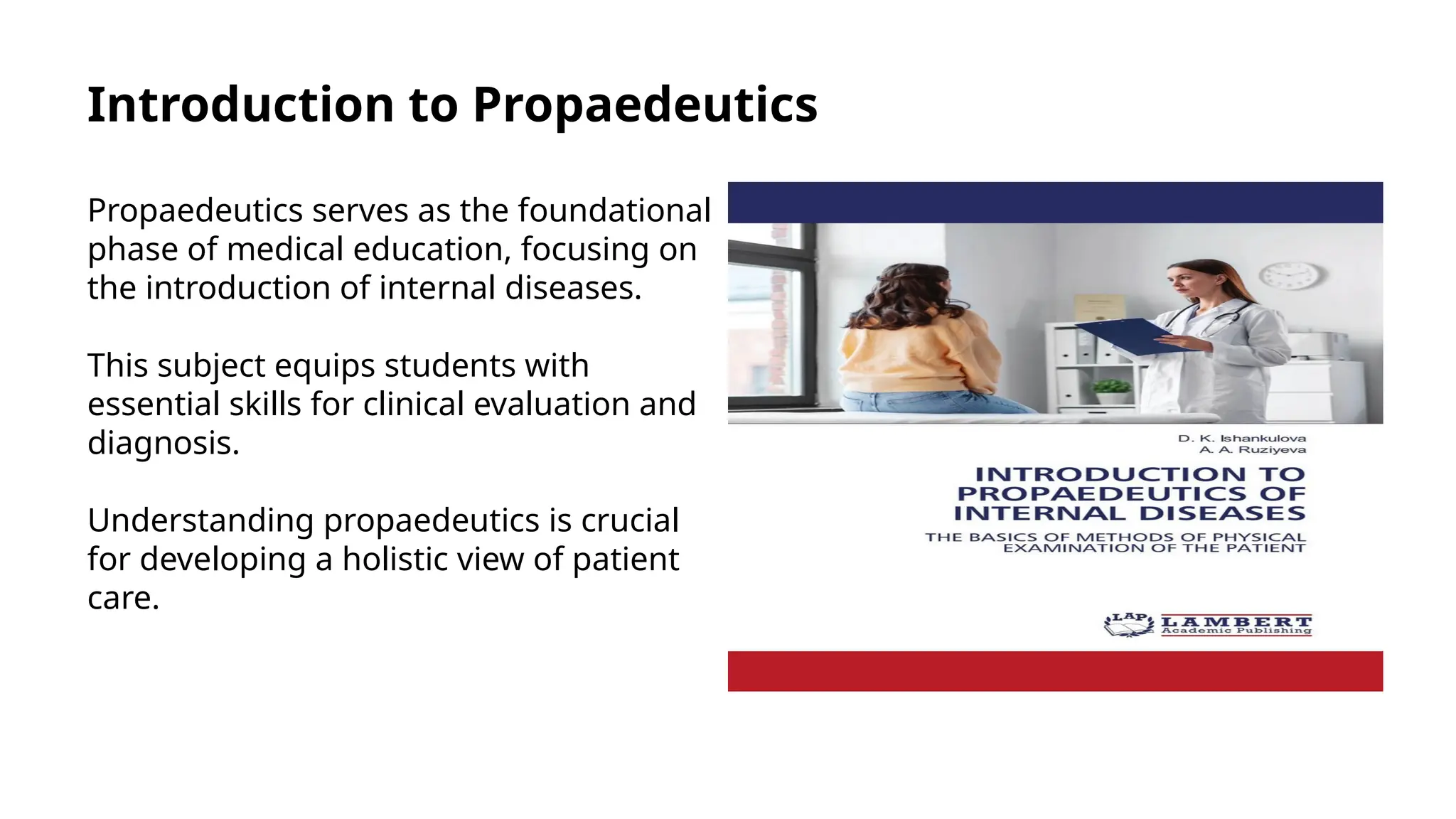
Propaedeutics serves as the foundational
phase of medical education, focusing on
the introduction of internal diseases.
This subject equips students with
essential skills for clinical evaluation and
diagnosis.
Understanding propaedeutics is crucial
for developing a holistic view of patient
care.
Historical Context
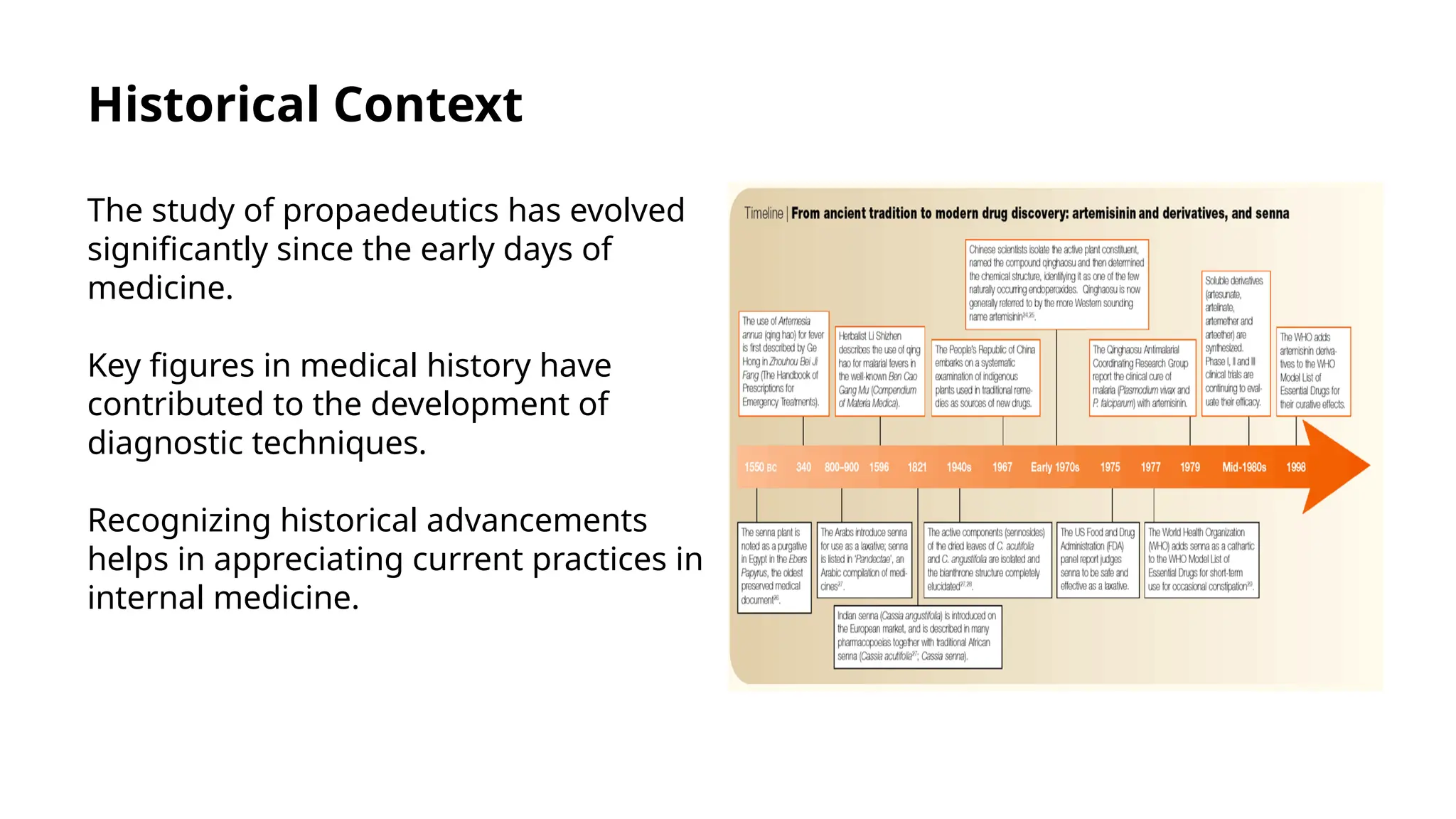
The study of propaedeutics has evolved
significantly since the early days of
medicine.
Key figures in medical history have
contributed to the development of
diagnostic techniques.
Recognizing historical advancements
helps in appreciating current practices in
internal medicine.
Importance of Propaedeutics
Propaedeutics lays the groundwork for
understanding complex internal
diseases.
It emphasizes the significance of a
thorough patient history and physical
examination.
Mastering these skills enhances a
physician's ability to make accurate
diagnoses.
Basic Principles of Diagnosis
Diagnosis involves a systematic
approach to identifying diseases based
on clinical signs and symptoms.
A comprehensive understanding of
pathophysiology is essential for effective
diagnosis.
Integrating laboratory and imaging
studies is key to confirming clinical
suspicions.
Patient History Taking
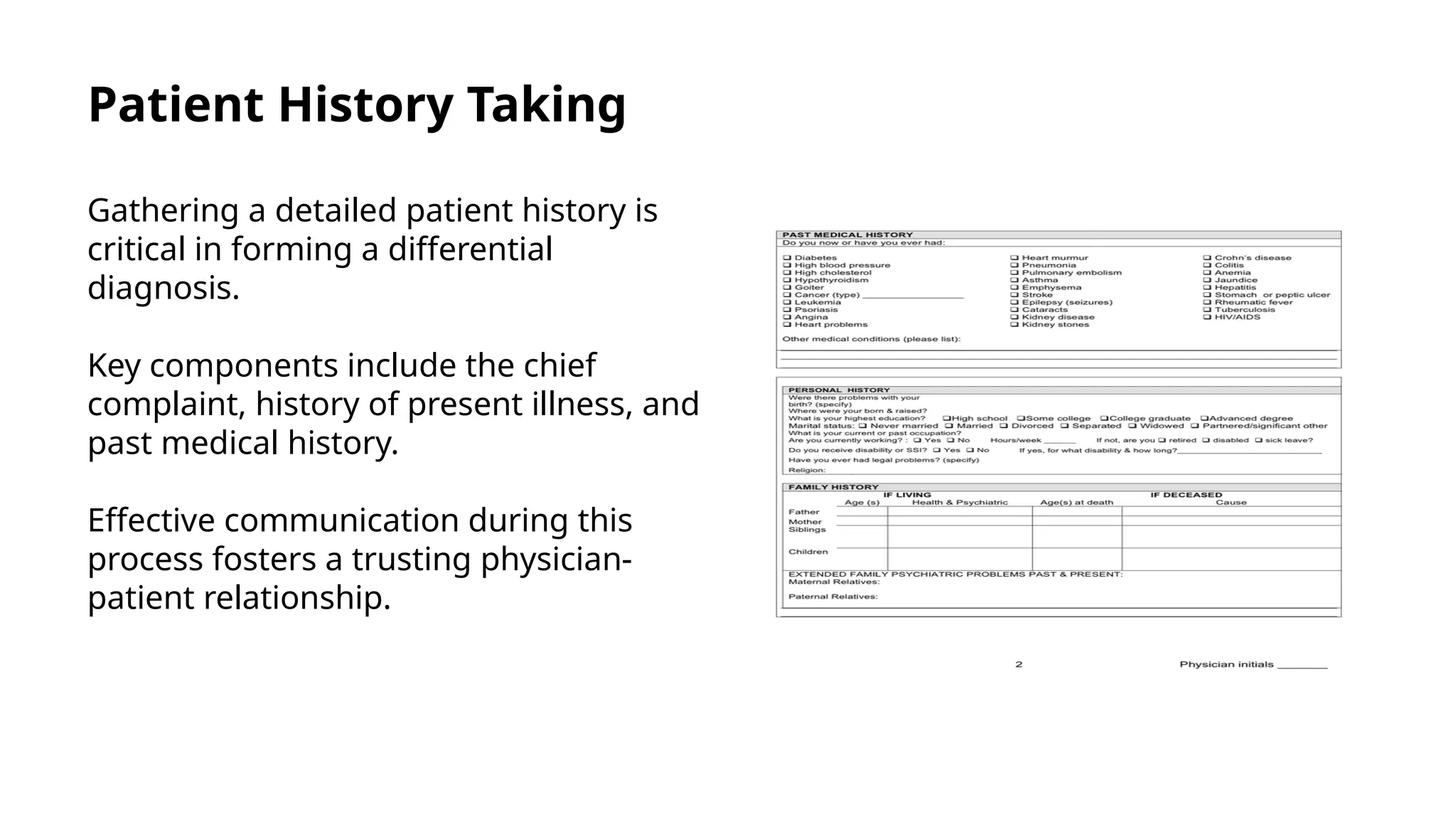
Gathering a detailed patient history is
critical in forming a differential
diagnosis.
Key components include the chief
complaint, history of present illness, and
past medical history.
Effective communication during this
process fosters a trusting physician-
patient relationship.
Physical Examination Techniques
A thorough physical examination can
reveal vital clues about a patient's
condition.
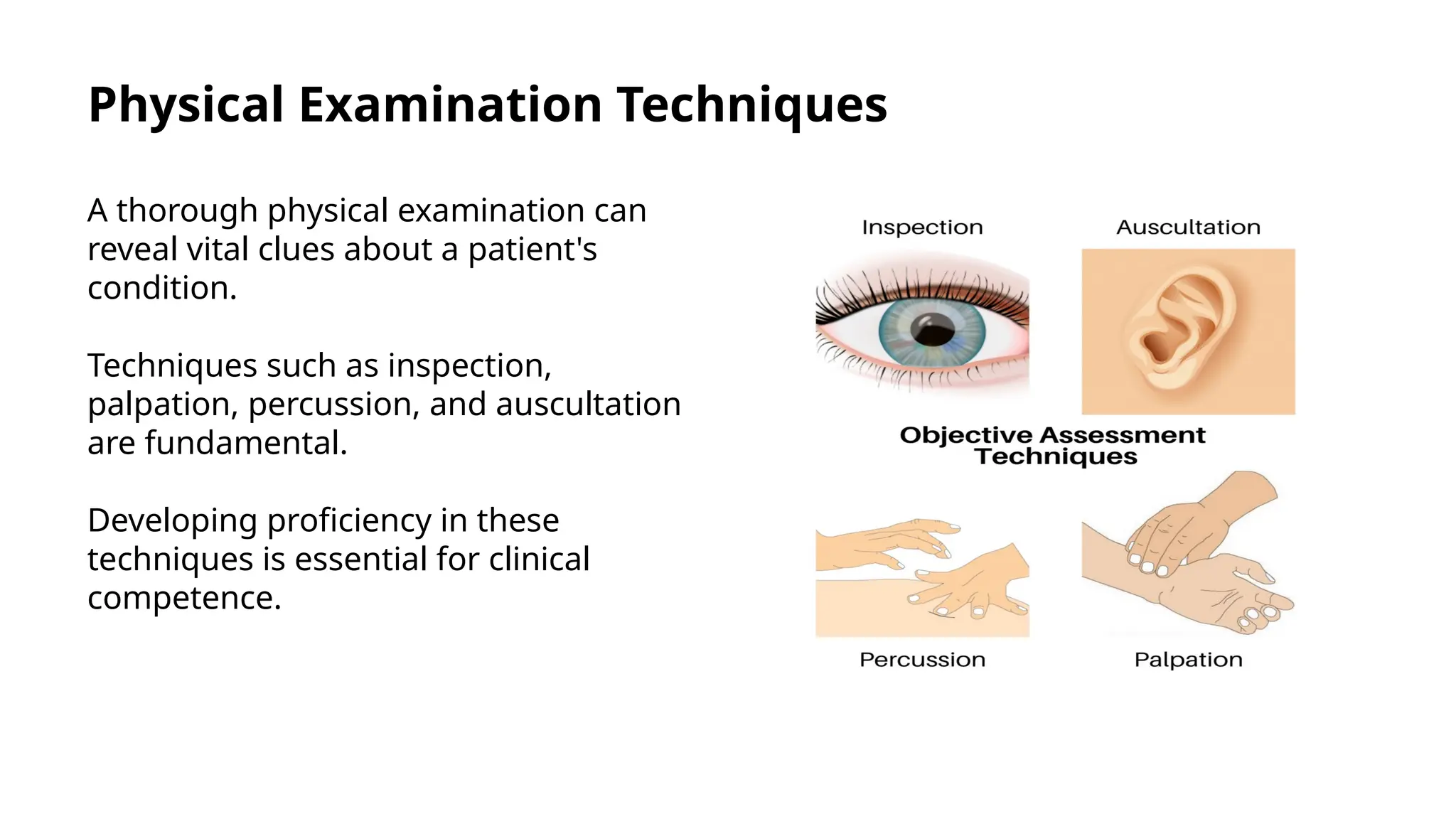
Techniques such as inspection,
palpation, percussion, and auscultation
are fundamental.
Developing proficiency in these
techniques is essential for clinical
competence.
Common Internal Diseases
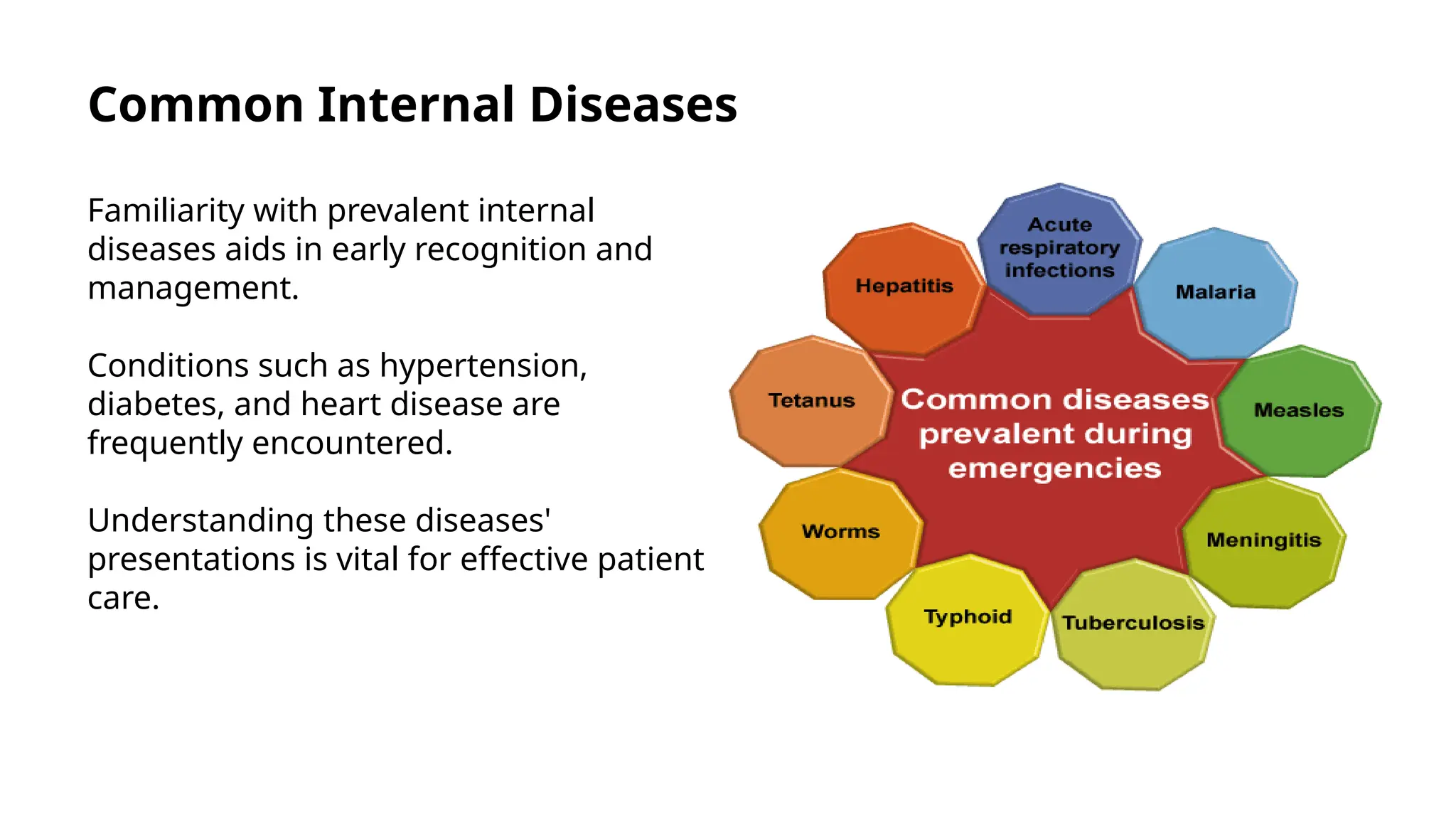
Familiarity with prevalent internal
diseases aids in early recognition and
management.
Conditions such as hypertension,
diabetes, and heart disease are
frequently encountered.
Understanding these diseases'
presentations is vital for effective patient
care.
Diagnostic Tools and Technologies
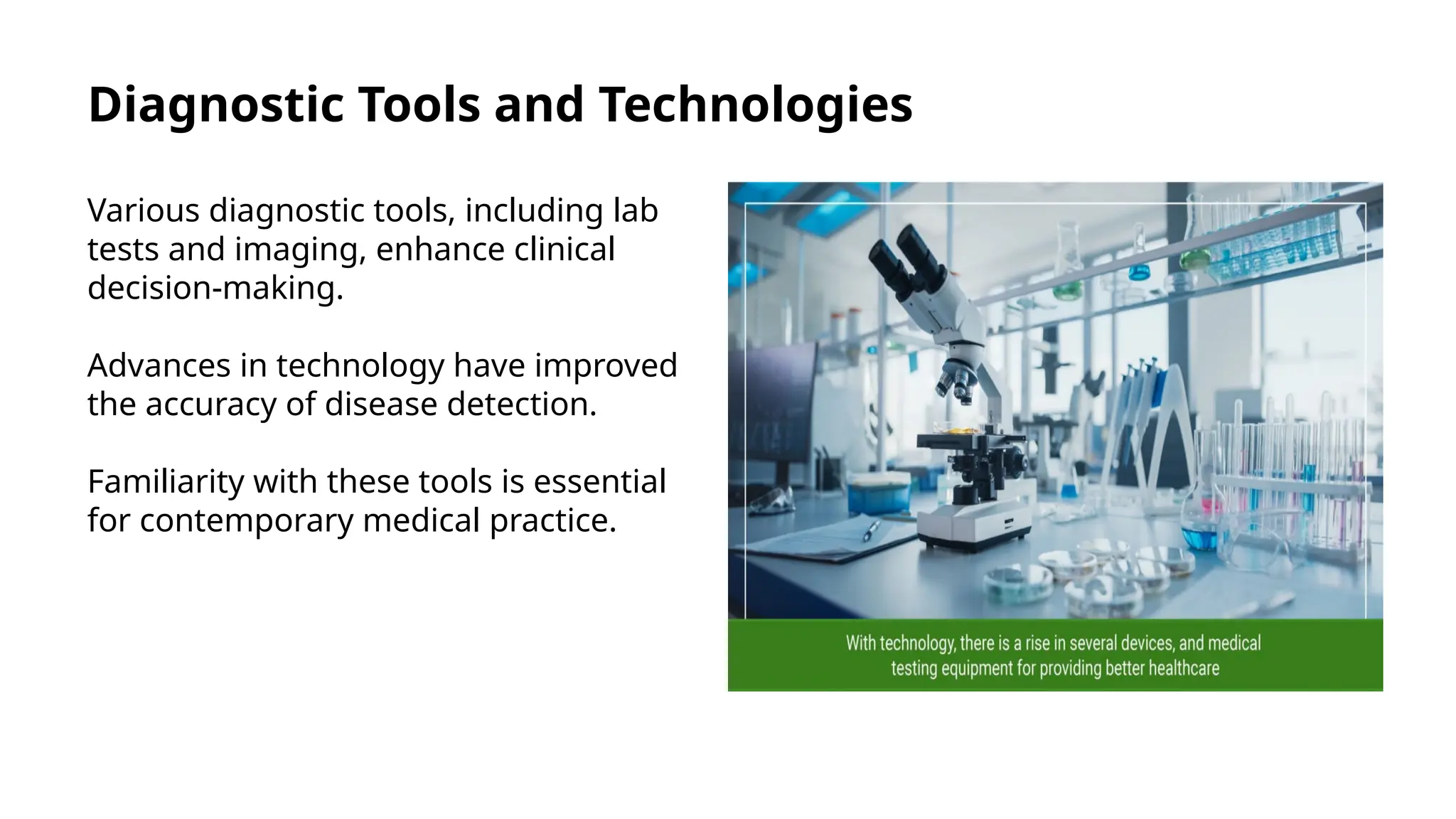
Various diagnostic tools, including lab
tests and imaging, enhance clinical
decision-making.
Advances in technology have improved
the accuracy of disease detection.
Familiarity with these tools is essential
for contemporary medical practice.
Clinical Reasoning Skills
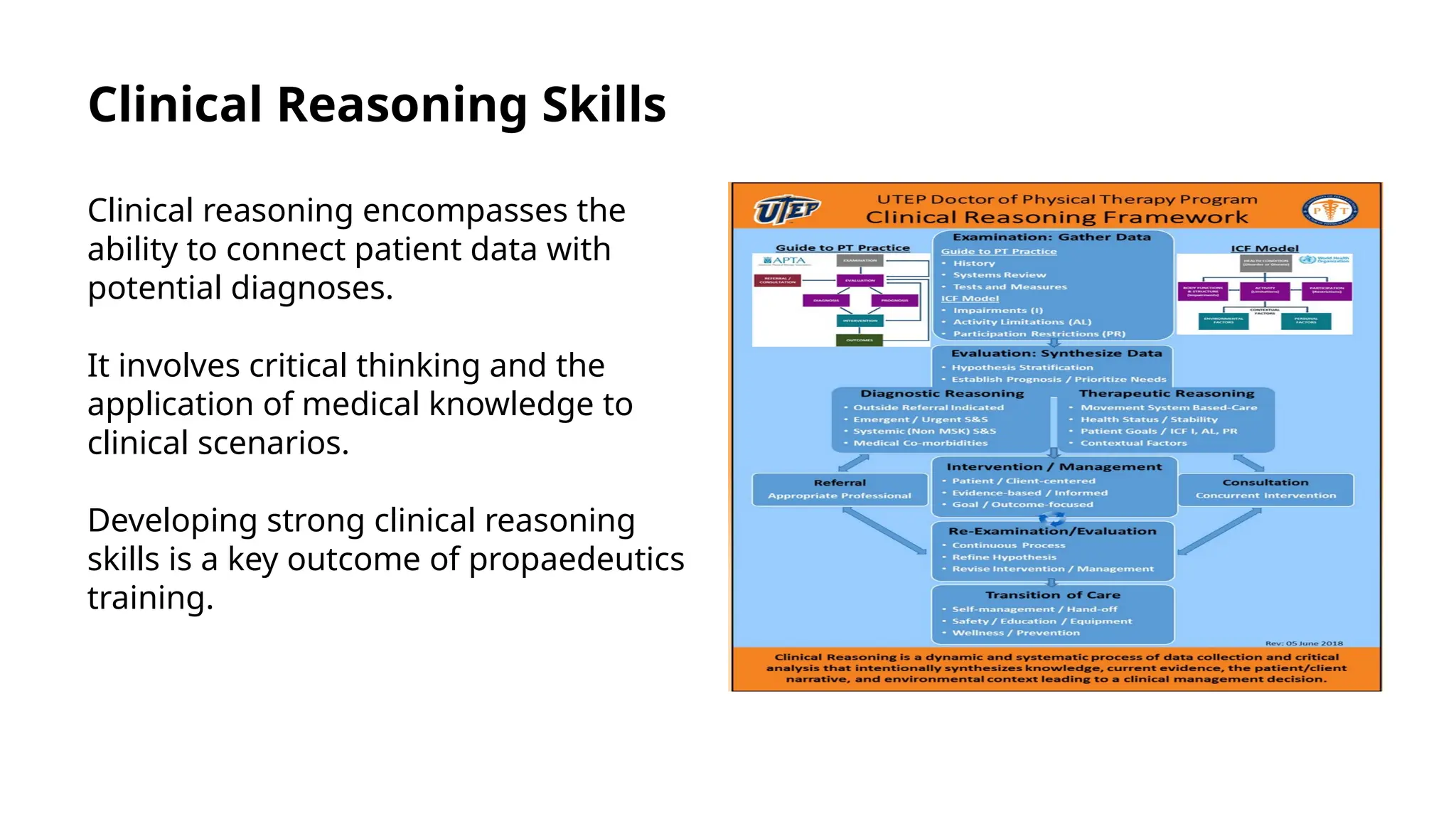
Clinical reasoning encompasses the
ability to connect patient data with
potential diagnoses.
It involves critical thinking and the
application of medical knowledge to
clinical scenarios.
Developing strong clinical reasoning
skills is a key outcome of propaedeutics
training.
Conclusion and Future Directions
Propaedeutics is a vital component of
medical education, shaping future
physicians.
Continuous learning and adaptation to
new medical knowledge are essential in
this field.
Emphasizing the importance of
propaedeutics will ultimately enhance
patient outcomes.

Propaedeutics Of Internal Diseses Subject Introduction.pptx

  • 1.
    Propaedeutics Of InternalDiseses Subject Introduction SlideMake.com
  • 2.
    Introduction to Propaedeutics Propaedeuticsserves as the foundational phase of medical education, focusing on the introduction of internal diseases. This subject equips students with essential skills for clinical evaluation and diagnosis. Understanding propaedeutics is crucial for developing a holistic view of patient care.
  • 3.
    Historical Context The studyof propaedeutics has evolved significantly since the early days of medicine. Key figures in medical history have contributed to the development of diagnostic techniques. Recognizing historical advancements helps in appreciating current practices in internal medicine.
  • 4.
    Importance of Propaedeutics Propaedeuticslays the groundwork for understanding complex internal diseases. It emphasizes the significance of a thorough patient history and physical examination. Mastering these skills enhances a physician's ability to make accurate diagnoses.
  • 5.
    Basic Principles ofDiagnosis Diagnosis involves a systematic approach to identifying diseases based on clinical signs and symptoms. A comprehensive understanding of pathophysiology is essential for effective diagnosis. Integrating laboratory and imaging studies is key to confirming clinical suspicions.
  • 6.
    Patient History Taking Gatheringa detailed patient history is critical in forming a differential diagnosis. Key components include the chief complaint, history of present illness, and past medical history. Effective communication during this process fosters a trusting physician- patient relationship.
  • 7.
    Physical Examination Techniques Athorough physical examination can reveal vital clues about a patient's condition. Techniques such as inspection, palpation, percussion, and auscultation are fundamental. Developing proficiency in these techniques is essential for clinical competence.
  • 8.
    Common Internal Diseases Familiaritywith prevalent internal diseases aids in early recognition and management. Conditions such as hypertension, diabetes, and heart disease are frequently encountered. Understanding these diseases' presentations is vital for effective patient care.
  • 9.
    Diagnostic Tools andTechnologies Various diagnostic tools, including lab tests and imaging, enhance clinical decision-making. Advances in technology have improved the accuracy of disease detection. Familiarity with these tools is essential for contemporary medical practice.
  • 10.
    Clinical Reasoning Skills Clinicalreasoning encompasses the ability to connect patient data with potential diagnoses. It involves critical thinking and the application of medical knowledge to clinical scenarios. Developing strong clinical reasoning skills is a key outcome of propaedeutics training.
  • 11.
    Conclusion and FutureDirections Propaedeutics is a vital component of medical education, shaping future physicians. Continuous learning and adaptation to new medical knowledge are essential in this field. Emphasizing the importance of propaedeutics will ultimately enhance patient outcomes.

Editor's Notes

  • #2 Image source: https://www.lap-publishing.com/catalog/details/store/gb/book/978-620-6-16624-5/introduction-to-propaedeutics-of-internal-diseases
  • #3 Image source: https://mungfali.com/explore/Medical-History-Timeline
  • #4 Image source: https://he.kendallhunt.com/product/propaedeutics-psychology-textbook-online-and-regular-classes
  • #5 Image source: https://www.researchgate.net/figure/Systematic-approach-for-the-diagnosis-and-management-of-patients-with-suspected_fig5_311475835
  • #6 Image source: https://www.vrogue.co/post/how-to-write-patient-medical-history
  • #7 Image source: https://pressbooks.library.ryerson.ca/ippa/chapter/chapter-1/
  • #8 Image source: https://healthanddisease12.blogspot.com/2015/02/mordern-health-and-diseases.html
  • #9 Image source: http://avignadiagnostics.com/creating-clarity/5-best-diagnostic-tools-for-medical-testing/
  • #10 Image source: https://www.utep.edu/chs/pt/academic-programs/clinical-reasoning-framework.html
  • #11 Image source: https://www.researchgate.net/publication/299643118_Conclusions_and_Future_Research_Directions