PROM and Chorioamnionitis
Dr Bellington Vwalika
(DGO,MMED,PGDipEpid)
• PROM –rupture of membranes before
labour starts
• Before 37/40- pPROM
• Incidence 4-18% of pregnancies
• Responsible for 50% preterm deliveries
and 10% perinatal mortality
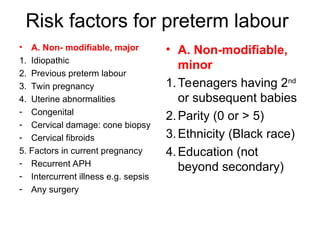
Risk factors for preterm labour
• A. Non- modifiable, major
1. Idiopathic
2. Previous preterm labour
3. Twin pregnancy
4. Uterine abnormalities
- Congenital
- Cervical damage: cone biopsy
- Cervical fibroids
5. Factors in current pregnancy
- Recurrent APH
- Intercurrent illness e.g. sepsis
- Any surgery
• A. Non-modifiable,
minor
1.Teenagers having 2nd
or subsequent babies
2.Parity (0 or > 5)
3.Ethnicity (Black race)
4.Education (not
beyond secondary)
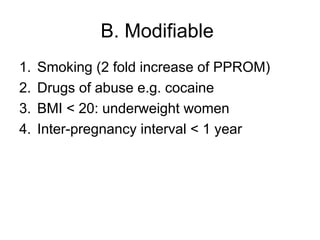
B. Modifiable
1. Smoking (2 fold increase of PPROM)
2. Drugs of abuse e.g. cocaine
3. BMI < 20: underweight women
4. Inter-pregnancy interval < 1 year
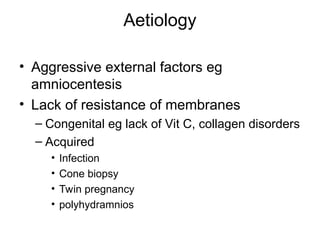
Aetiology
• Aggressive external factors eg
amniocentesis
• Lack of resistance of membranes
– Congenital eg lack of Vit C, collagen disorders
– Acquired
• Infection
• Cone biopsy
• Twin pregnancy
• polyhydramnios
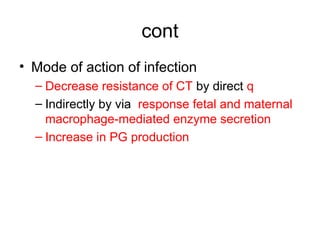
cont
• Mode of action of infection
– Decrease resistance of CT by direct q
– Indirectly by via response fetal and maternal
macrophage-mediated enzyme secretion
– Increase in PG production
Definition of BV
• Gram stain findings (Nugent Score): based on
number of:
1. Large Gram positive rods called lactobacilli
morphotypes (decrease in Lactobacillus scored as 0
to 4)
2. Increase in small Gram variable rods (Gardnerella
vaginalis morphotypes; scored as 0-4)
3. Increase in curved Gram variable rods (Mobiluncus
spp morphotypes; scored as 0 to 2)
Score range from 0 to 10.
A score of 7 to 10 is consistent with BV
• Clinical findings (Amsel criteria): 3 of the
following must be present:
– homogeneous vaginal discharge
– pH >4.5
– clue cells (>20%)
– amine odor on addition of KOH (+ whiff test)
BV and Adverse Outcomes in
Pregnancy
• Data support role for BV in promoting:
– postabortal infections
– preterm labor and delivery*
– premature rupture of membranes
– intramniotic infection
– histological chorioamnionitis
– postpartum endometritis
– spontaneous abortion in first trimester (IVF)
*infection implicated in up to 40% of cases
Diagnosis
• Clinical history and exam – SSE for
evidence of amniotic fluid in posterior
vaginal fornix and clothing
• Fetal fibronectin (fFN) test
• Nitrazine test
• Ferning test
Complications
• Maternal
– Infections(chorioamnionitis.endometritis)
– Obstetric interventions
– Anaesthesia
– Abruptio placenta
• Fetal complications
– Fetal and neonatal
infections(sepsis,meningitis,bronchopneumonia)
– Risk of fetal distress(umbilical cord
complications,abruptio,chorioamnionitis)
– Postoral deformities
management
• Consider
– expectant or active management
– Tocolytics
– Antibiotics
– Corticosteroid use
• Investigations
– Endocervical swab for m/c/s
– WCC total and differential
– ESR
– Fibronectin
– C-reative protein
– Amniocentesis for MCS to rule out
chorioamnionitis
• Fetal well being
– CTG, Kickchart, biophysical profile by USS
Management contd
• PROM at term or near term-best delivered
• 80% labour within first 24 hours, near to
10% next 24 hours
• Antibiotic cover after swab is taken
• Between 32 and 36 weeks give steroids
to mature lungs
• Under 32/40 aim to prolong gestation if
there no signs of fetal distress or infection
• Chorioamnionitis
– Monitor temp, pulse ,fetal heart rate
– Smell of liqour or pad
– Tender irritable abdomen
– Consider immediate delivery by fastest and
safest route
– Antibiotic cover: ampicillin + erythromycin
Drugs to give
1. Steroids e.g. dexamethasone or
beclomethasone
2. Antibiotics: ampicillin and erythromycin
3. Tocolytics
4. Analgesia
PROM and Chorioamnionitis.ppt. .

  • 1.
    PROM and Chorioamnionitis DrBellington Vwalika (DGO,MMED,PGDipEpid)
  • 2.
    • PROM –ruptureof membranes before labour starts • Before 37/40- pPROM • Incidence 4-18% of pregnancies • Responsible for 50% preterm deliveries and 10% perinatal mortality
  • 3.
    Risk factors forpreterm labour • A. Non- modifiable, major 1. Idiopathic 2. Previous preterm labour 3. Twin pregnancy 4. Uterine abnormalities - Congenital - Cervical damage: cone biopsy - Cervical fibroids 5. Factors in current pregnancy - Recurrent APH - Intercurrent illness e.g. sepsis - Any surgery • A. Non-modifiable, minor 1.Teenagers having 2nd or subsequent babies 2.Parity (0 or > 5) 3.Ethnicity (Black race) 4.Education (not beyond secondary)
  • 4.
    B. Modifiable 1. Smoking(2 fold increase of PPROM) 2. Drugs of abuse e.g. cocaine 3. BMI < 20: underweight women 4. Inter-pregnancy interval < 1 year
  • 5.
    Aetiology • Aggressive externalfactors eg amniocentesis • Lack of resistance of membranes – Congenital eg lack of Vit C, collagen disorders – Acquired • Infection • Cone biopsy • Twin pregnancy • polyhydramnios
  • 6.
    cont • Mode ofaction of infection – Decrease resistance of CT by direct q – Indirectly by via response fetal and maternal macrophage-mediated enzyme secretion – Increase in PG production
  • 7.
    Definition of BV •Gram stain findings (Nugent Score): based on number of: 1. Large Gram positive rods called lactobacilli morphotypes (decrease in Lactobacillus scored as 0 to 4) 2. Increase in small Gram variable rods (Gardnerella vaginalis morphotypes; scored as 0-4) 3. Increase in curved Gram variable rods (Mobiluncus spp morphotypes; scored as 0 to 2) Score range from 0 to 10. A score of 7 to 10 is consistent with BV
  • 8.
    • Clinical findings(Amsel criteria): 3 of the following must be present: – homogeneous vaginal discharge – pH >4.5 – clue cells (>20%) – amine odor on addition of KOH (+ whiff test)
  • 9.
    BV and AdverseOutcomes in Pregnancy • Data support role for BV in promoting: – postabortal infections – preterm labor and delivery* – premature rupture of membranes – intramniotic infection – histological chorioamnionitis – postpartum endometritis – spontaneous abortion in first trimester (IVF) *infection implicated in up to 40% of cases
  • 10.
    Diagnosis • Clinical historyand exam – SSE for evidence of amniotic fluid in posterior vaginal fornix and clothing • Fetal fibronectin (fFN) test • Nitrazine test • Ferning test
  • 11.
    Complications • Maternal – Infections(chorioamnionitis.endometritis) –Obstetric interventions – Anaesthesia – Abruptio placenta • Fetal complications – Fetal and neonatal infections(sepsis,meningitis,bronchopneumonia) – Risk of fetal distress(umbilical cord complications,abruptio,chorioamnionitis) – Postoral deformities
  • 12.
    management • Consider – expectantor active management – Tocolytics – Antibiotics – Corticosteroid use
  • 13.
    • Investigations – Endocervicalswab for m/c/s – WCC total and differential – ESR – Fibronectin – C-reative protein – Amniocentesis for MCS to rule out chorioamnionitis • Fetal well being – CTG, Kickchart, biophysical profile by USS
  • 14.
    Management contd • PROMat term or near term-best delivered • 80% labour within first 24 hours, near to 10% next 24 hours • Antibiotic cover after swab is taken • Between 32 and 36 weeks give steroids to mature lungs • Under 32/40 aim to prolong gestation if there no signs of fetal distress or infection
  • 15.
    • Chorioamnionitis – Monitortemp, pulse ,fetal heart rate – Smell of liqour or pad – Tender irritable abdomen – Consider immediate delivery by fastest and safest route – Antibiotic cover: ampicillin + erythromycin
  • 16.
    Drugs to give 1.Steroids e.g. dexamethasone or beclomethasone 2. Antibiotics: ampicillin and erythromycin 3. Tocolytics 4. Analgesia