PROKARYOTIC VS
EUKARYOTIC CELL
Presented by,
S.VAISHNAVI,
ASSISTANT PROFESSOR OF MICROBIOLOGY,
V.V.VANNIAPERUMAL COLLEGE FOR WOMEN
PROKARYOTIC CELL
 Prokaryotic cells are single-celled
microorganisms known to be the earliest on
earth. Prokaryotes include Bacteria and Archaea.
 A prokaryotic cell consists of a single membrane
and therefore, all the reactions occur within the
cytoplasm. They can be free-living or parasites.
CHARACTERISTICS
 They lack a nuclear membrane.
 Mitochondria, Golgi bodies, chloroplast, and lysosomes
are absent.
 The genetic material is present on a single
chromosome.
 The histone proteins, the important constituents of
eukaryotic chromosomes, are lacking in them.
 The cell wall is made up of carbohydrates and amino
acids.
 The plasma membrane acts as the mitochondrial
membrane carrying respiratory enzymes.
 They divide asexually by binary fission. The sexual
mode of reproduction involves conjugation.
STRUCTURE
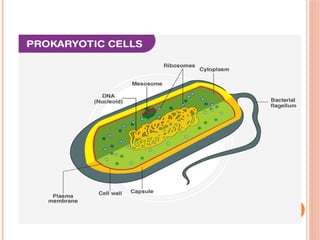
 Capsule– It is an outer protective covering found in the bacterial cells
 Cell Wall– It is the outermost layer of the cell which gives shape to
the cell.
 Cytoplasm– The cytoplasm is mainly composed of enzymes, salts, cell
organelles and is a gel-like component.
 Cell Membrane– This layer surrounds the cytoplasm and regulates
the entry and exit of substances in the cells.
 Pili– These are hair-like outgrowths that attach to the surface of
other bacterial cells.
 Flagella– These are long structures in the form of a whip, that help
in the locomotion of a cell.
 Ribosomes– These are involved in protein synthesis.
 Plasmids– Plasmids are non-chromosomal DNA structures. These
are not involved in reproduction.
 Nucleoid Region– It is the region in the cytoplasm where the
genetic material is present.
 A prokaryotic cell lacks certain organelles like
mitochondria, endoplasmic reticulum, and Golgi
bodies.
 Plasma Membrane- It is an outer protective
covering of phospholipid molecules which separates
the cell from the surrounding environment.
 Cytoplasm- It is a jelly-like substance present inside
the cell. All the cell organelles are suspended in it.
 DNA- It is the genetic material of the cell. All the
prokaryotes possess a circular DNA. It directs what
proteins the cell creates. It also regulates the actions
of the cell.
 Ribosomes- Protein synthesis occurs here.
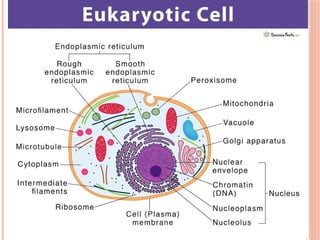
EUKARYOTIC CELL
 Eukaryotic cells have a nucleus enclosed within the nuclear
membrane and form large and complex organisms. Protozoa,
fungi, plants, and animals all have eukaryotic cells.
 CHARACTERISTICS:
 Eukaryotic cells have the nucleus enclosed within the
nuclear membrane.
 The cell has mitochondria.
 Flagella and cilia are the locomotory organs in a eukaryotic
cell.
 A cell wall is the outermost layer of the eukaryotic cells.
 The cells divide by a process called mitosis.
 The eukaryotic cells contain a cytoskeletal structure.
 The nucleus contains a single, linear DNA, which carries all
the genetic information.
STRUCTURE
 Plasma Membrane
 The plasma membrane separates the cell from the
outside environment.
 Cell Wall
 A cell wall is a rigid structure present outside the
plant cell. It is, however, absent in animal cells.
 It is composed of cellulose, hemicellulose, pectins,
proteins, etc
 Cytoskeleton
 The cytoskeleton is present inside the cytoplasm,
which consists of microfilaments, microtubules, and
fibres to provide perfect shape to the cell, anchor the
organelles, and stimulate the cell movement.
 Endoplasmic Reticulum
 It is a network of small, tubular structures
 Rough Endoplasmic Reticulum contains ribosomes.
 Smooth Endoplasmic Reticulum that lacks ribosomes
and is therefore smooth.
 Nucleus
 The nucleoplasm enclosed within the nucleus contains
DNA(genetic materials) and proteins.
 Golgi Apparatus
 It is made up of flat disc-shaped structures called
cisternae.
 It is an important site for the formation of glycoproteins
and glycolipids.
 Ribosomes
 These are the main site for protein synthesis and
are composed of proteins and ribonucleic acids.
 Mitochondria
 These are also known as “powerhouse of cells”
because they produce energy.
 It consists of an outer membrane and an inner
membrane. The inner membrane is divided into
folds called cristae.
 Lysosomes
 They are known as “suicidal bags” because they
possess hydrolytic enzymes to digest protein, lipids,
carbohydrates, and nucleic acids.
 Plastids
 These are double-membraned structures and are
found only in plant cells.
 Chloroplast that contains chlorophyll and is
involved in photosynthesis.
 Chromoplast that contains a pigment called
carotene that provides the plants yellow, red, or
orange colours.
 Leucoplasts that are colourless and store oil,
fats, carbohydrates, or proteins.
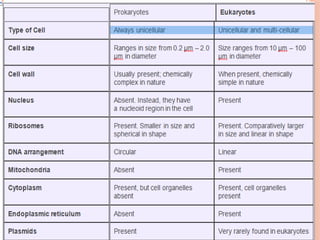
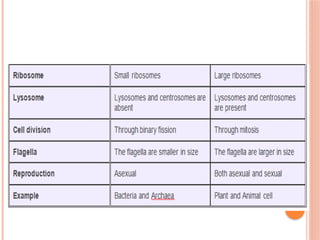
DIFFERENCE
REFERENCE
 Cell Biology, N. Arumugam Saras Publications
 https://byjus.com/question-answer/what-is-prokar
yotic-and-eukaryotic-cell
/
 https://
www.slideshare.net/slideshow/prokaryotes-and-e
ukaryotes-236721442/236721442

PROKARYOTIC VERSUS EUKARYOTIC CELL.pptx

  • 1.
    PROKARYOTIC VS EUKARYOTIC CELL Presentedby, S.VAISHNAVI, ASSISTANT PROFESSOR OF MICROBIOLOGY, V.V.VANNIAPERUMAL COLLEGE FOR WOMEN
  • 2.
    PROKARYOTIC CELL  Prokaryoticcells are single-celled microorganisms known to be the earliest on earth. Prokaryotes include Bacteria and Archaea.  A prokaryotic cell consists of a single membrane and therefore, all the reactions occur within the cytoplasm. They can be free-living or parasites.
  • 3.
    CHARACTERISTICS  They lacka nuclear membrane.  Mitochondria, Golgi bodies, chloroplast, and lysosomes are absent.  The genetic material is present on a single chromosome.  The histone proteins, the important constituents of eukaryotic chromosomes, are lacking in them.  The cell wall is made up of carbohydrates and amino acids.  The plasma membrane acts as the mitochondrial membrane carrying respiratory enzymes.  They divide asexually by binary fission. The sexual mode of reproduction involves conjugation.
  • 4.
    STRUCTURE  Capsule– Itis an outer protective covering found in the bacterial cells  Cell Wall– It is the outermost layer of the cell which gives shape to the cell.  Cytoplasm– The cytoplasm is mainly composed of enzymes, salts, cell organelles and is a gel-like component.  Cell Membrane– This layer surrounds the cytoplasm and regulates the entry and exit of substances in the cells.  Pili– These are hair-like outgrowths that attach to the surface of other bacterial cells.  Flagella– These are long structures in the form of a whip, that help in the locomotion of a cell.  Ribosomes– These are involved in protein synthesis.  Plasmids– Plasmids are non-chromosomal DNA structures. These are not involved in reproduction.  Nucleoid Region– It is the region in the cytoplasm where the genetic material is present.
  • 5.
     A prokaryoticcell lacks certain organelles like mitochondria, endoplasmic reticulum, and Golgi bodies.  Plasma Membrane- It is an outer protective covering of phospholipid molecules which separates the cell from the surrounding environment.  Cytoplasm- It is a jelly-like substance present inside the cell. All the cell organelles are suspended in it.  DNA- It is the genetic material of the cell. All the prokaryotes possess a circular DNA. It directs what proteins the cell creates. It also regulates the actions of the cell.  Ribosomes- Protein synthesis occurs here.
  • 7.
    EUKARYOTIC CELL  Eukaryoticcells have a nucleus enclosed within the nuclear membrane and form large and complex organisms. Protozoa, fungi, plants, and animals all have eukaryotic cells.  CHARACTERISTICS:  Eukaryotic cells have the nucleus enclosed within the nuclear membrane.  The cell has mitochondria.  Flagella and cilia are the locomotory organs in a eukaryotic cell.  A cell wall is the outermost layer of the eukaryotic cells.  The cells divide by a process called mitosis.  The eukaryotic cells contain a cytoskeletal structure.  The nucleus contains a single, linear DNA, which carries all the genetic information.
  • 8.
    STRUCTURE  Plasma Membrane The plasma membrane separates the cell from the outside environment.  Cell Wall  A cell wall is a rigid structure present outside the plant cell. It is, however, absent in animal cells.  It is composed of cellulose, hemicellulose, pectins, proteins, etc  Cytoskeleton  The cytoskeleton is present inside the cytoplasm, which consists of microfilaments, microtubules, and fibres to provide perfect shape to the cell, anchor the organelles, and stimulate the cell movement.
  • 9.
     Endoplasmic Reticulum It is a network of small, tubular structures  Rough Endoplasmic Reticulum contains ribosomes.  Smooth Endoplasmic Reticulum that lacks ribosomes and is therefore smooth.  Nucleus  The nucleoplasm enclosed within the nucleus contains DNA(genetic materials) and proteins.  Golgi Apparatus  It is made up of flat disc-shaped structures called cisternae.  It is an important site for the formation of glycoproteins and glycolipids.
  • 10.
     Ribosomes  Theseare the main site for protein synthesis and are composed of proteins and ribonucleic acids.  Mitochondria  These are also known as “powerhouse of cells” because they produce energy.  It consists of an outer membrane and an inner membrane. The inner membrane is divided into folds called cristae.  Lysosomes  They are known as “suicidal bags” because they possess hydrolytic enzymes to digest protein, lipids, carbohydrates, and nucleic acids.
  • 11.
     Plastids  Theseare double-membraned structures and are found only in plant cells.  Chloroplast that contains chlorophyll and is involved in photosynthesis.  Chromoplast that contains a pigment called carotene that provides the plants yellow, red, or orange colours.  Leucoplasts that are colourless and store oil, fats, carbohydrates, or proteins.
  • 13.
  • 15.
    REFERENCE  Cell Biology,N. Arumugam Saras Publications  https://byjus.com/question-answer/what-is-prokar yotic-and-eukaryotic-cell /  https:// www.slideshare.net/slideshow/prokaryotes-and-e ukaryotes-236721442/236721442