Presented By…


Abid Afsar
MSCC
January 2011
Why Live Shopping?
Departmental Store has never used this system before
 – Introducing live shopping technology
Not many people know about it
Customer has to be in Store to view products
Cash needs to be paid upfront by existing store
 customer.
Advantages of Live Shopping
Easy maintenance
Lower overheads
Customer profiling – identifying
 customer by their use buying and
 interest
Automatic processing of orders
New and increased revenue channels
Increased market reach
Improved loyalty
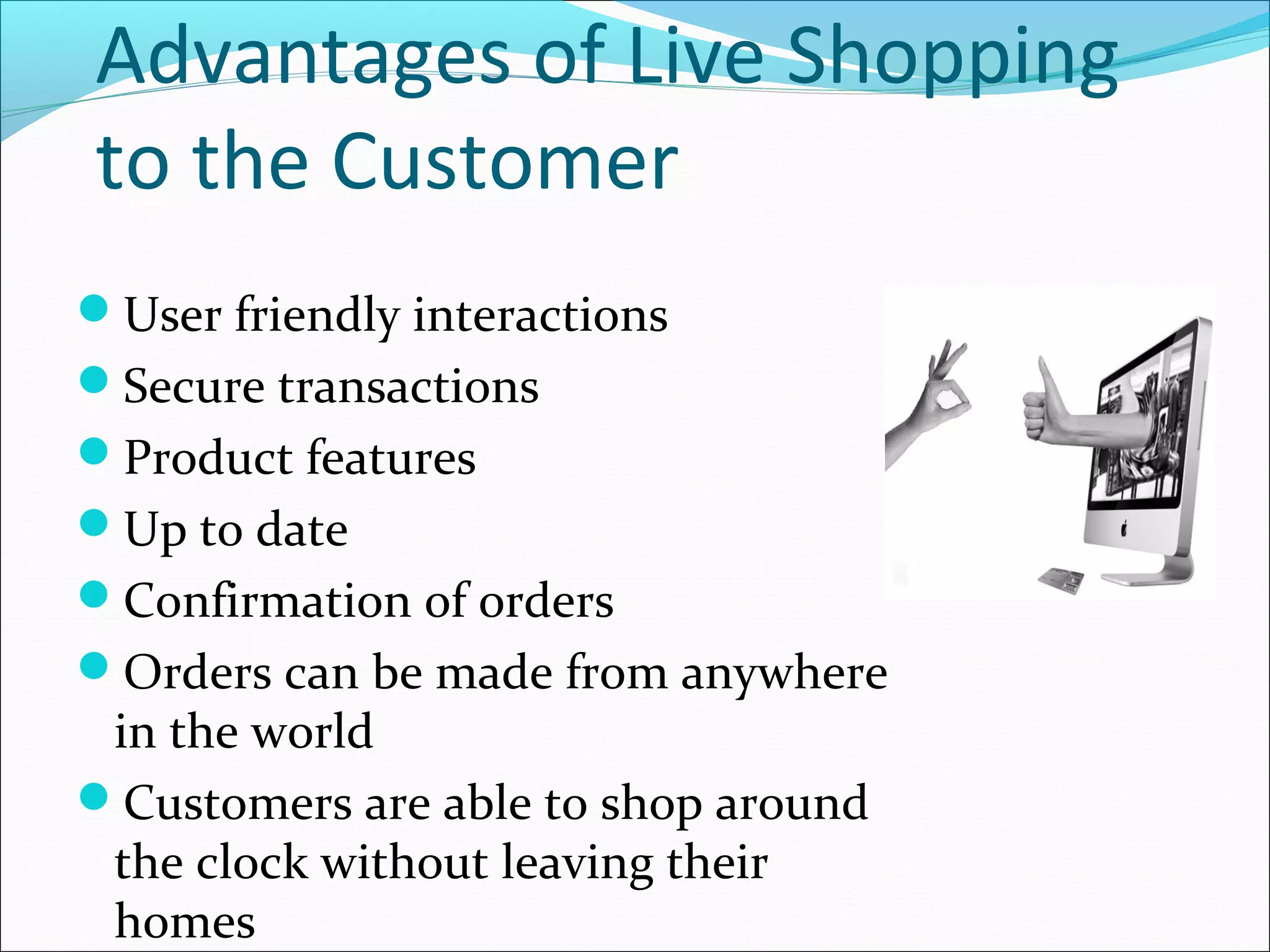
Advantages of Live Shopping
to the Customer
User friendly interactions
Secure transactions
Product features
Up to date
Confirmation of orders
Orders can be made from anywhere
 in the world
Customers are able to shop around
 the clock without leaving their
 homes
Concept of Integrated Services
       “Digital brand integration is part of
 the evolution of product placement. It's
 simply another tool marketers use to
 get products integrated into shows. If
 you can put it in a package, we can put
 it in a show ”
Diversity of ideas
Increased productivity, efficiency and
 quality
Real world – teams for projects
Aiming for a fully working system
Separation In Modules

Development       of live  Shopping
 Merchandiser module and Webpage
Development of live Shopping Customer
 module
Documentation for the above mentioned
 tasks of the project
Front-End Tools
JSP 2.0
    Technology that allows web developers and
    designers to rapidly develop and easily
      maintain, information-rich, dynamic web
      pages that leverage existing business
      systems
JavaScript 1.8.5
    Is a language which allows a webpage to have
    dynamic content
HTML 4.01
    The publishing language of the World Wide
    Web.
Back-End Tools
MySQL 5.5.19
   DBMS to store product and customer details
JDBC 3.0
   An industry standard for database independent connectivity
   between a computer platform or device operating in the Java
   environment and a wide range of databases
Tomcat 7.0.23 Web Server
   Is a Java based Web Application container that was created
   to run Servlets and JSP in Web applications.
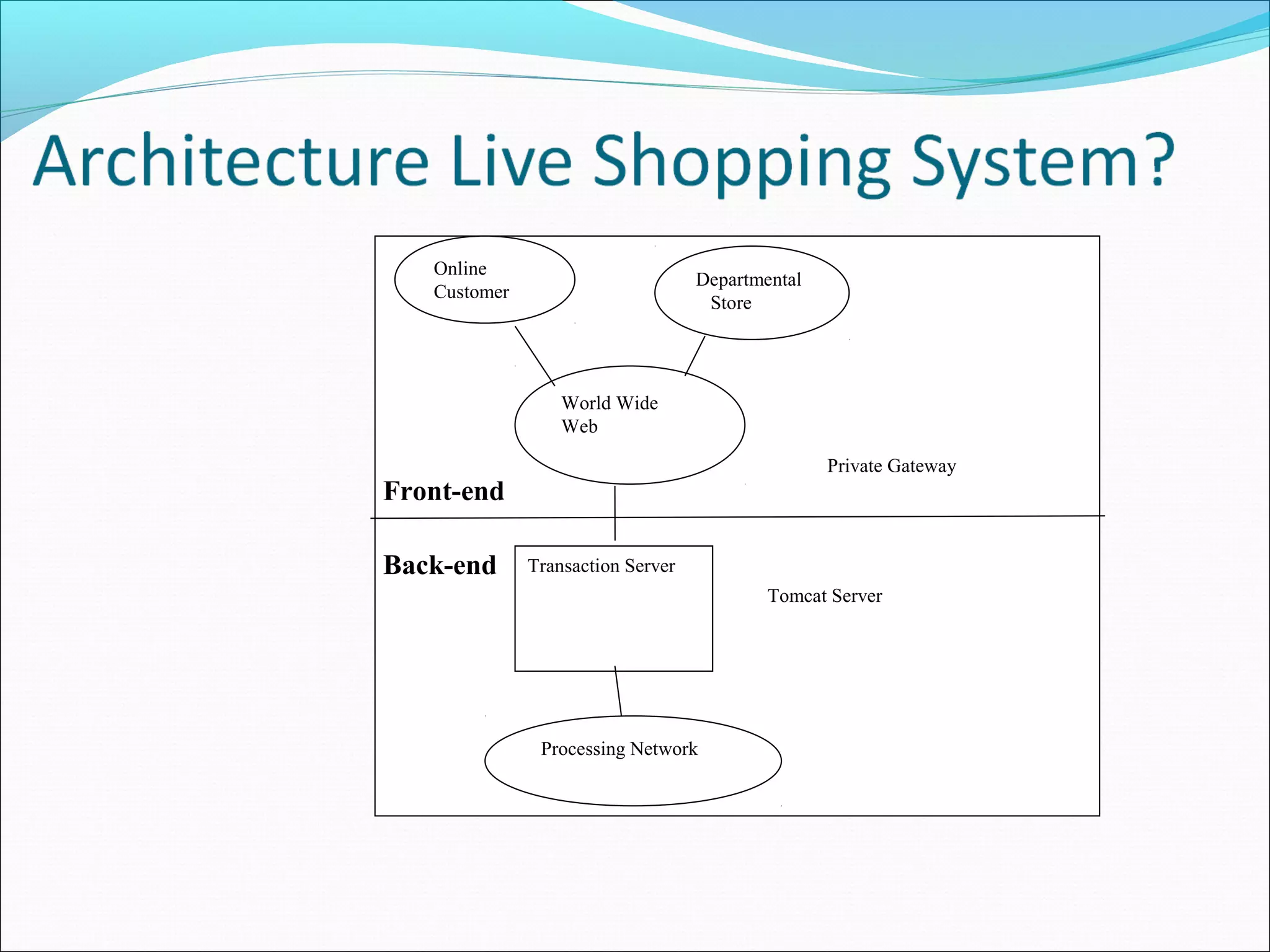
Online
                                   Departmental
   Customer
                                    Store


                  World Wide
                  Web

                                                  Private Gateway
Front-end

Back-end         Tomcat
              Transaction Server
                                           Tomcat Server


               Processing Network
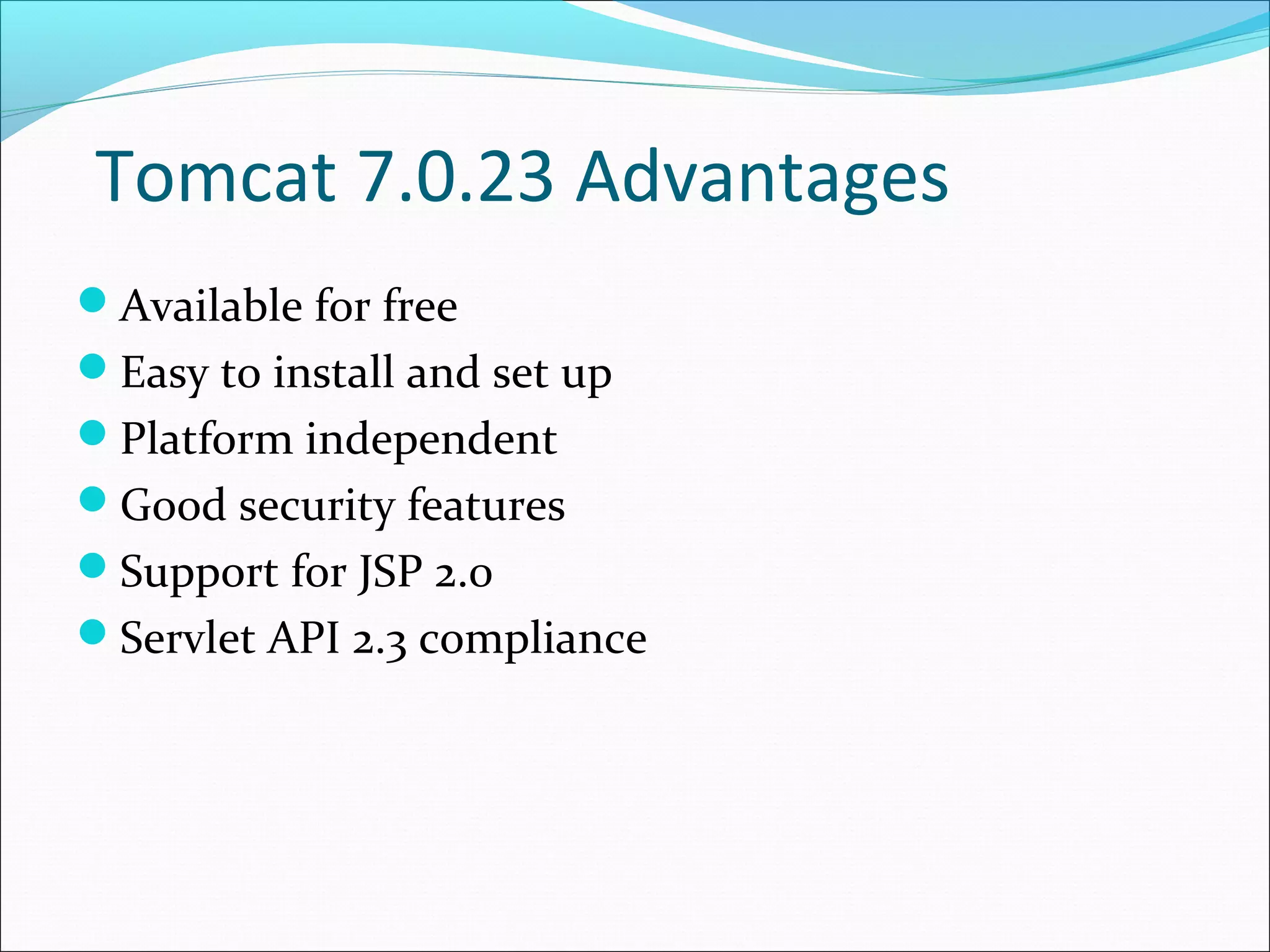
Tomcat 7.0.23 Advantages
Available for free
Easy to install and set up
Platform independent
Good security features
Support for JSP 2.0
Servlet API 2.3 compliance
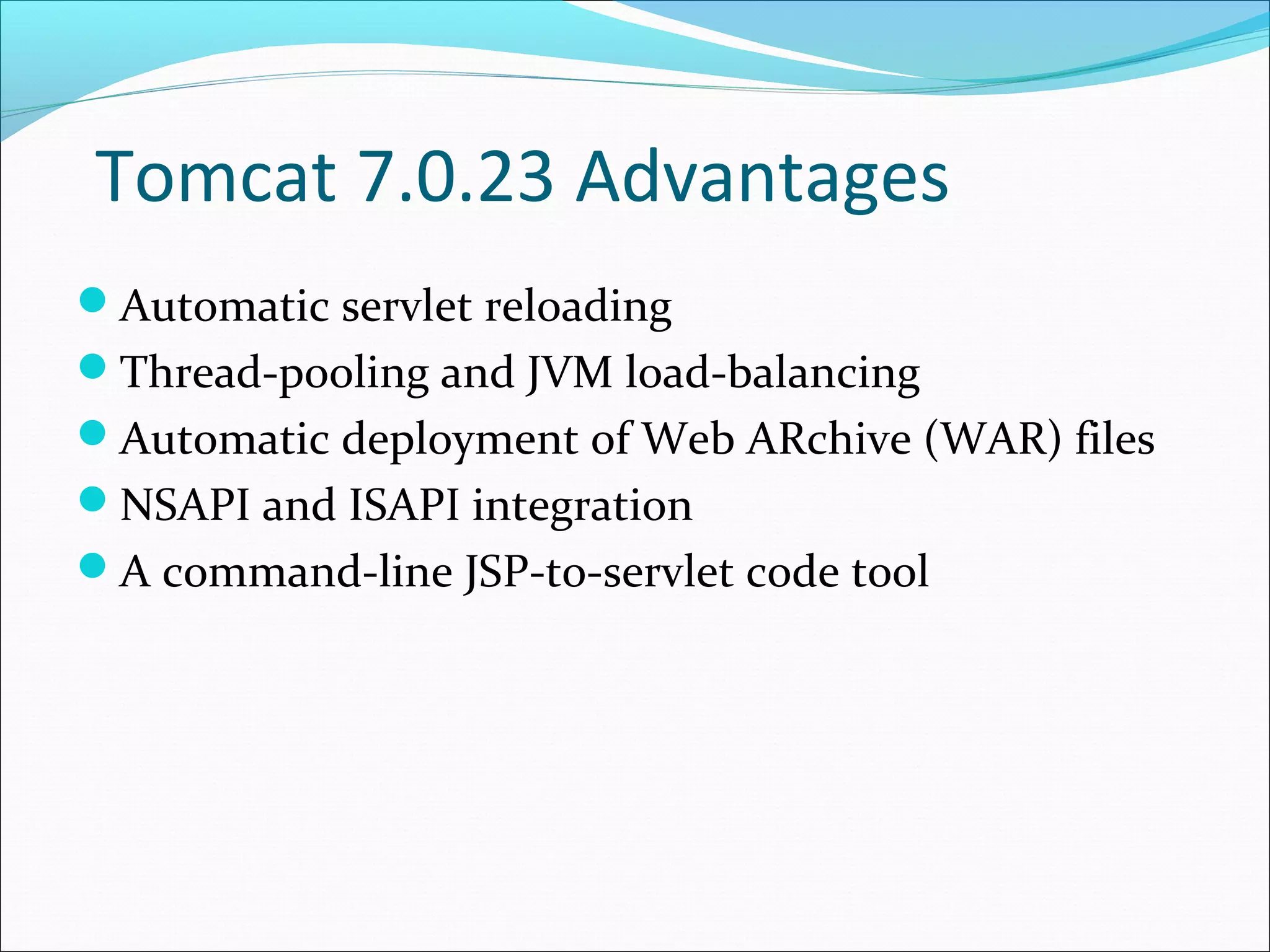
Tomcat 7.0.23 Advantages
Automatic servlet reloading
Thread-pooling and JVM load-balancing
Automatic deployment of Web ARchive (WAR) files
NSAPI and ISAPI integration
A command-line JSP-to-servlet code tool
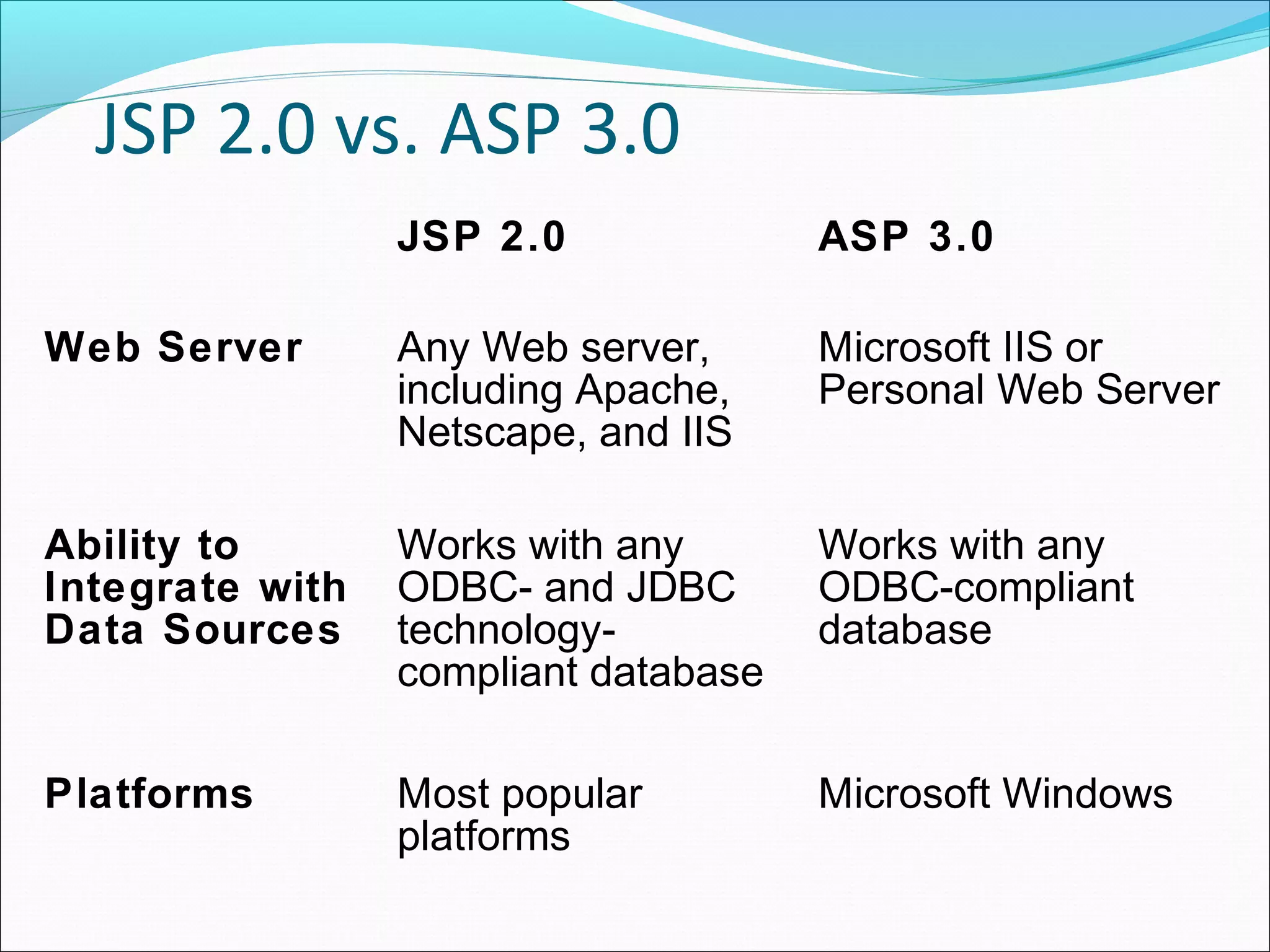
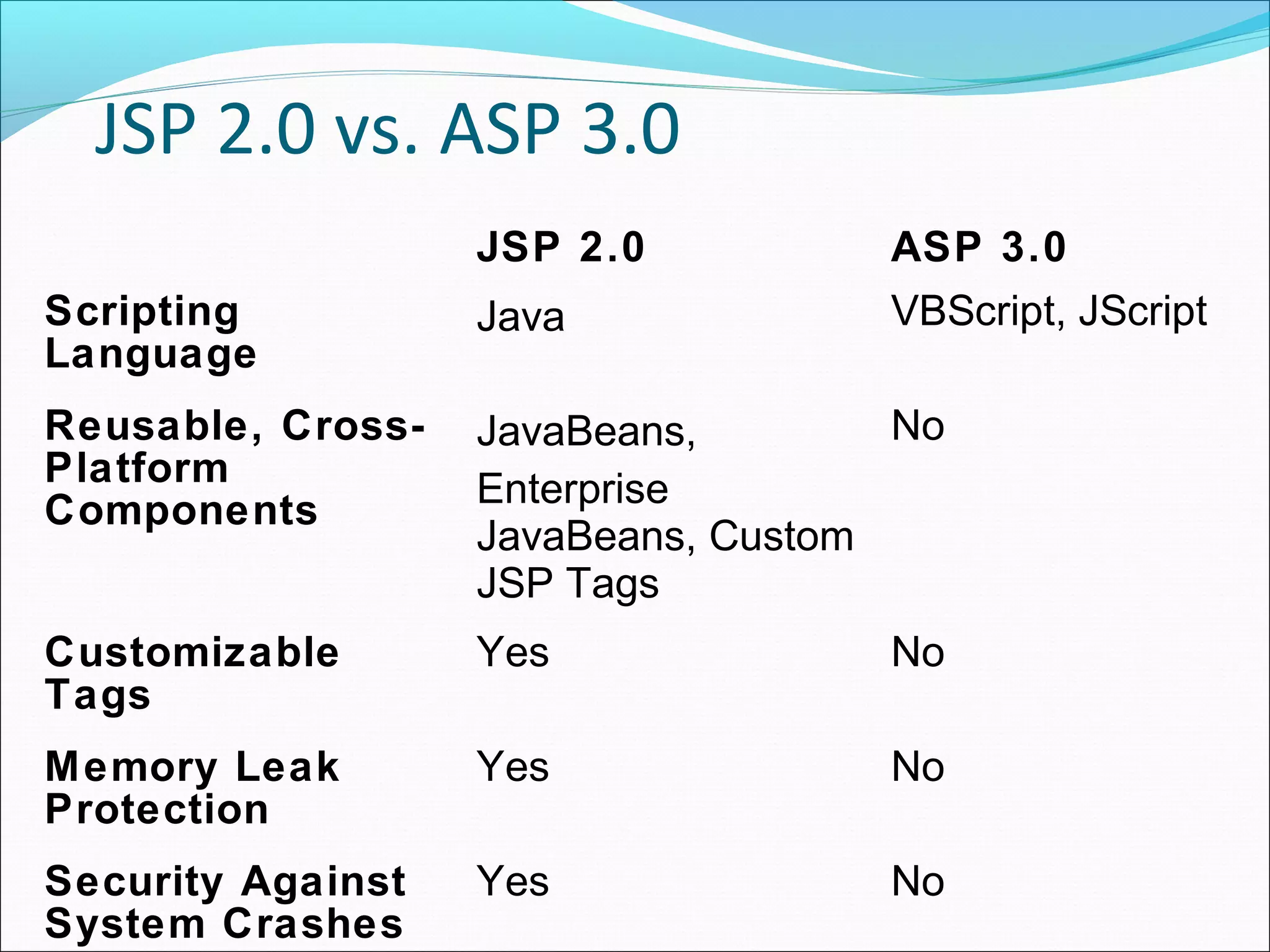
JSP 2.0 vs. ASP 3.0
                 JSP 2.0              ASP 3.0

Web Server       Any Web server,      Microsoft IIS or
                 including Apache,    Personal Web Server
                 Netscape, and IIS

Ability to       Works with any       Works with any
Integrate with   ODBC- and JDBC       ODBC-compliant
Data Sources     technology-          database
                 compliant database

Platforms        Most popular         Microsoft Windows
                 platforms
JSP 2.0 vs. ASP 3.0
                   JSP 2.0          ASP 3.0
Scripting          Java             VBScript, JScript
Language
Reusable, Cross-   JavaBeans,        No
Platform           Enterprise
Components
                   JavaBeans, Custom
                   JSP Tags
Customizable       Yes              No
Tags
Memory Leak        Yes              No
Protection
Security Against   Yes              No
System Crashes
Expected Outcome
The expected deliverables are:

The development of a Live Shopping system which,
 we hope, could be used at Departmental Store.
Documentation
[1]. Online Shopping: the Roles of Shopping Values and
Personality Traits. Rotterdam: Erasmus Universities, 2007.
Print.
[2]. Internet Shopping: New Competitor or New Frontier?
New York: National Retail Dry Goods Association, 1996.
Print.
[3]. Sundaram, Suresh T. Internet Shopping: the Critical
Role of Attribute-benefit Mapping Information in Online
Consumer Shopping. 2003. Print.

Project Presentation On Live Shopping System

  • 1.
  • 2.
    Why Live Shopping? DepartmentalStore has never used this system before – Introducing live shopping technology Not many people know about it Customer has to be in Store to view products Cash needs to be paid upfront by existing store customer.
  • 3.
    Advantages of LiveShopping Easy maintenance Lower overheads Customer profiling – identifying customer by their use buying and interest Automatic processing of orders New and increased revenue channels Increased market reach Improved loyalty
  • 4.
    Advantages of LiveShopping to the Customer User friendly interactions Secure transactions Product features Up to date Confirmation of orders Orders can be made from anywhere in the world Customers are able to shop around the clock without leaving their homes
  • 5.
    Concept of IntegratedServices “Digital brand integration is part of the evolution of product placement. It's simply another tool marketers use to get products integrated into shows. If you can put it in a package, we can put it in a show ” Diversity of ideas Increased productivity, efficiency and quality Real world – teams for projects Aiming for a fully working system
  • 6.
    Separation In Modules Development of live Shopping Merchandiser module and Webpage Development of live Shopping Customer module Documentation for the above mentioned tasks of the project
  • 7.
    Front-End Tools JSP 2.0 Technology that allows web developers and designers to rapidly develop and easily maintain, information-rich, dynamic web pages that leverage existing business systems JavaScript 1.8.5 Is a language which allows a webpage to have dynamic content HTML 4.01 The publishing language of the World Wide Web.
  • 8.
    Back-End Tools MySQL 5.5.19 DBMS to store product and customer details JDBC 3.0 An industry standard for database independent connectivity between a computer platform or device operating in the Java environment and a wide range of databases Tomcat 7.0.23 Web Server Is a Java based Web Application container that was created to run Servlets and JSP in Web applications.
  • 9.
    Online Departmental Customer Store World Wide Web Private Gateway Front-end Back-end Tomcat Transaction Server Tomcat Server Processing Network
  • 10.
    Tomcat 7.0.23 Advantages Availablefor free Easy to install and set up Platform independent Good security features Support for JSP 2.0 Servlet API 2.3 compliance
  • 11.
    Tomcat 7.0.23 Advantages Automaticservlet reloading Thread-pooling and JVM load-balancing Automatic deployment of Web ARchive (WAR) files NSAPI and ISAPI integration A command-line JSP-to-servlet code tool
  • 12.
    JSP 2.0 vs.ASP 3.0 JSP 2.0 ASP 3.0 Web Server Any Web server, Microsoft IIS or including Apache, Personal Web Server Netscape, and IIS Ability to Works with any Works with any Integrate with ODBC- and JDBC ODBC-compliant Data Sources technology- database compliant database Platforms Most popular Microsoft Windows platforms
  • 13.
    JSP 2.0 vs.ASP 3.0 JSP 2.0 ASP 3.0 Scripting Java VBScript, JScript Language Reusable, Cross- JavaBeans, No Platform Enterprise Components JavaBeans, Custom JSP Tags Customizable Yes No Tags Memory Leak Yes No Protection Security Against Yes No System Crashes
  • 14.
    Expected Outcome The expecteddeliverables are: The development of a Live Shopping system which, we hope, could be used at Departmental Store. Documentation
  • 15.
    [1]. Online Shopping:the Roles of Shopping Values and Personality Traits. Rotterdam: Erasmus Universities, 2007. Print. [2]. Internet Shopping: New Competitor or New Frontier? New York: National Retail Dry Goods Association, 1996. Print. [3]. Sundaram, Suresh T. Internet Shopping: the Critical Role of Attribute-benefit Mapping Information in Online Consumer Shopping. 2003. Print.