project ppt. (1).pptx department of conputer science
1.
nline food orderingwebsite
Depertment of computer science engineering
Government College Of Engineering & Techonology Ganderbal
Nov 2024
Presented By:- Roll No. Group Members:-
200374 Faizan-Ul-Jabar
200375 Saqib Hamza Lone
200376 Hamid Manzoor Mugloo
200334 Mohsin Rashid
Introduction
This system willallow hotels and restaurants to increase scope of
business by reducing the labor cost involved.
The system also allows to quickly and easily manage online menu
which customers can browse and use to place orders with just few
clicks.
It connects customers with restaurants, allowing them to browse
menus, place orders, and track deliveries—all from the comfort of
their home or on the go.
4.
Overview
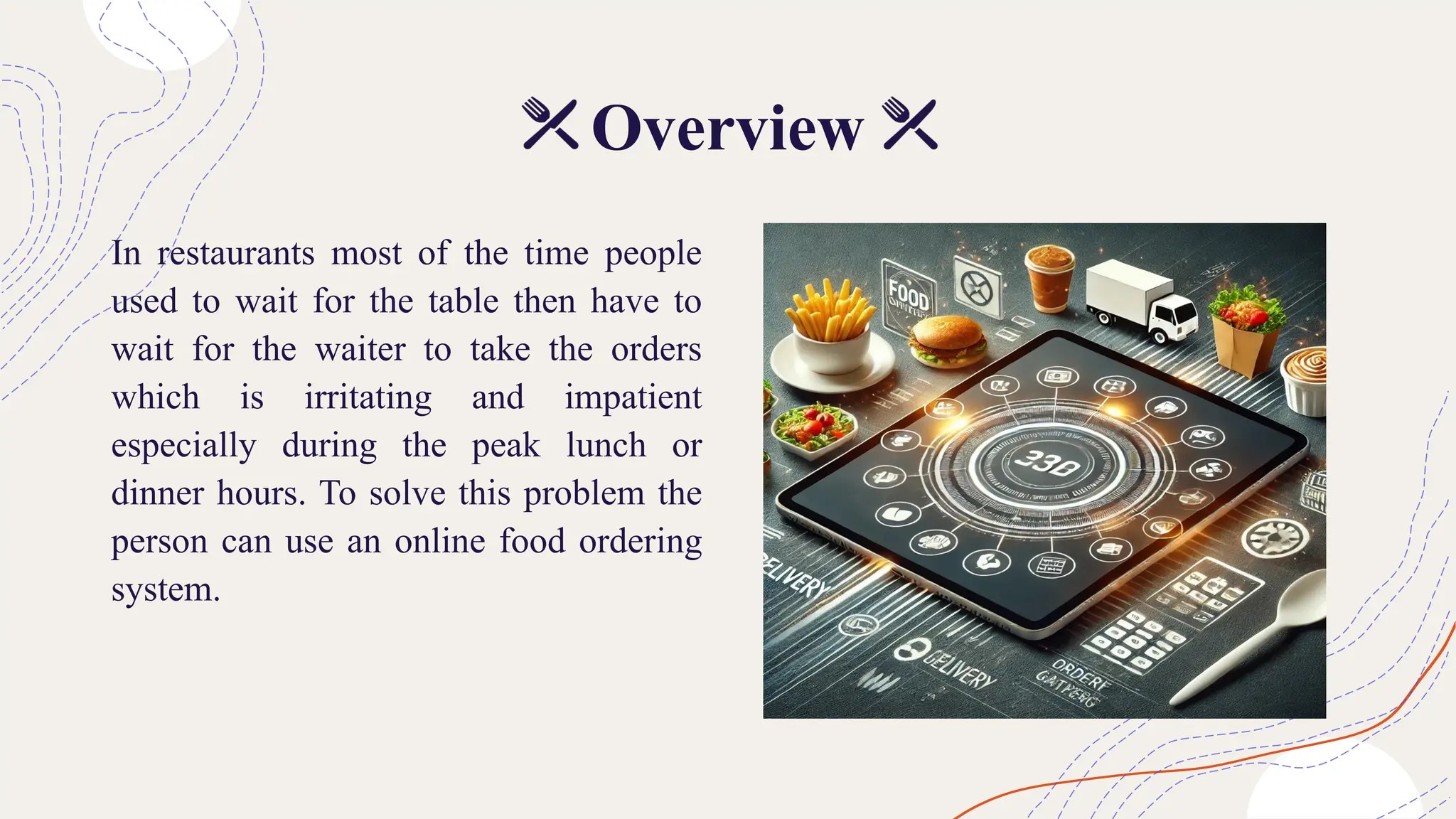
In restaurants mostof the time people
used to wait for the table then have to
wait for the waiter to take the orders
which is irritating and impatient
especially during the peak lunch or
dinner hours. To solve this problem the
person can use an online food ordering
system.
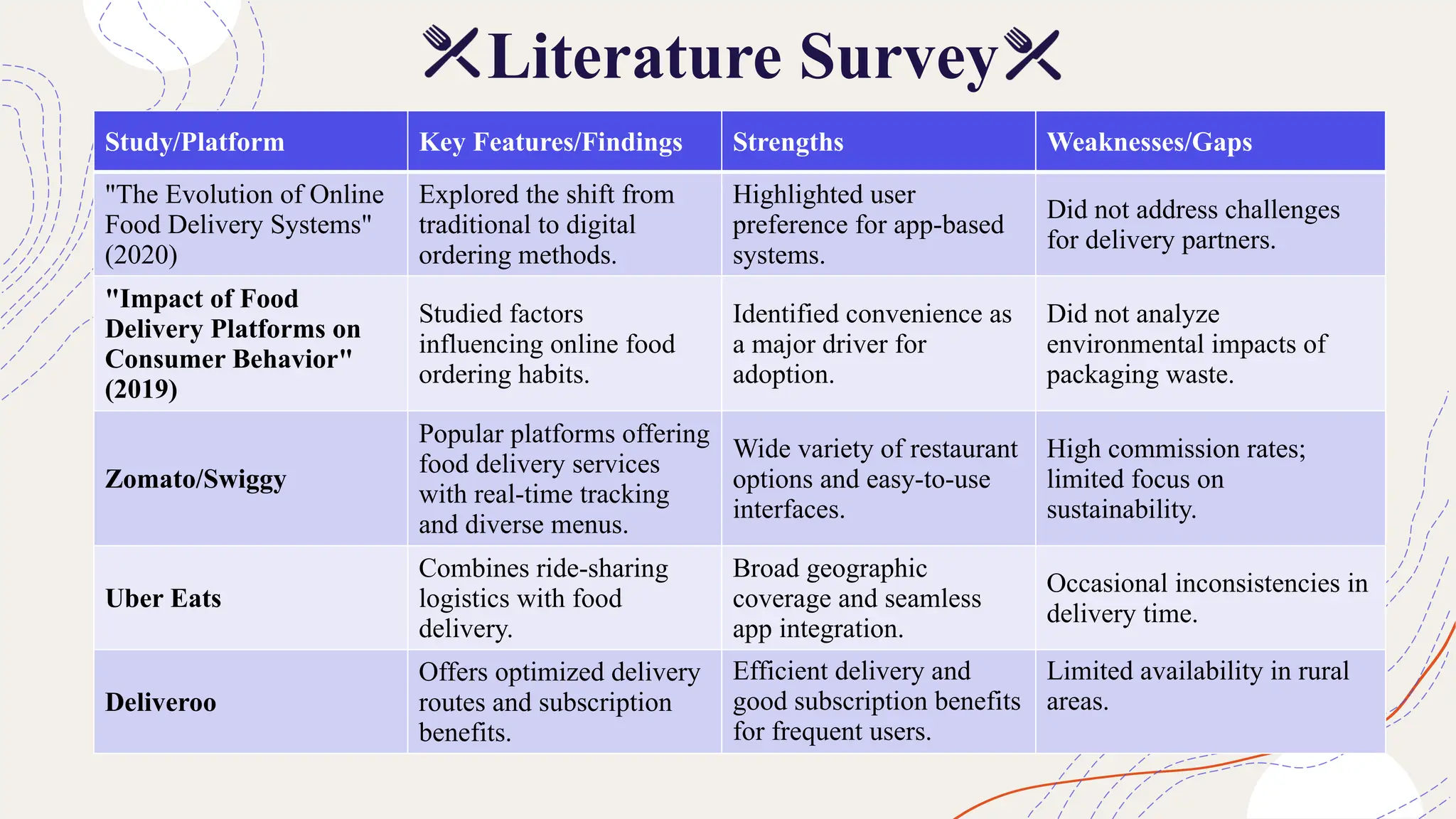
Study/Platform Key Features/FindingsStrengths Weaknesses/Gaps
"The Evolution of Online
Food Delivery Systems"
(2020)
Explored the shift from
traditional to digital
ordering methods.
Highlighted user
preference for app-based
systems.
Did not address challenges
for delivery partners.
"Impact of Food
Delivery Platforms on
Consumer Behavior"
(2019)
Studied factors
influencing online food
ordering habits.
Identified convenience as
a major driver for
adoption.
Did not analyze
environmental impacts of
packaging waste.
Zomato/Swiggy
Popular platforms offering
food delivery services
with real-time tracking
and diverse menus.
Wide variety of restaurant
options and easy-to-use
interfaces.
High commission rates;
limited focus on
sustainability.
Uber Eats
Combines ride-sharing
logistics with food
delivery.
Broad geographic
coverage and seamless
app integration.
Occasional inconsistencies in
delivery time.
Deliveroo
Offers optimized delivery
routes and subscription
benefits.
Efficient delivery and
good subscription benefits
for frequent users.
Limited availability in rural
areas.
Literature Survey
7.
Methodology
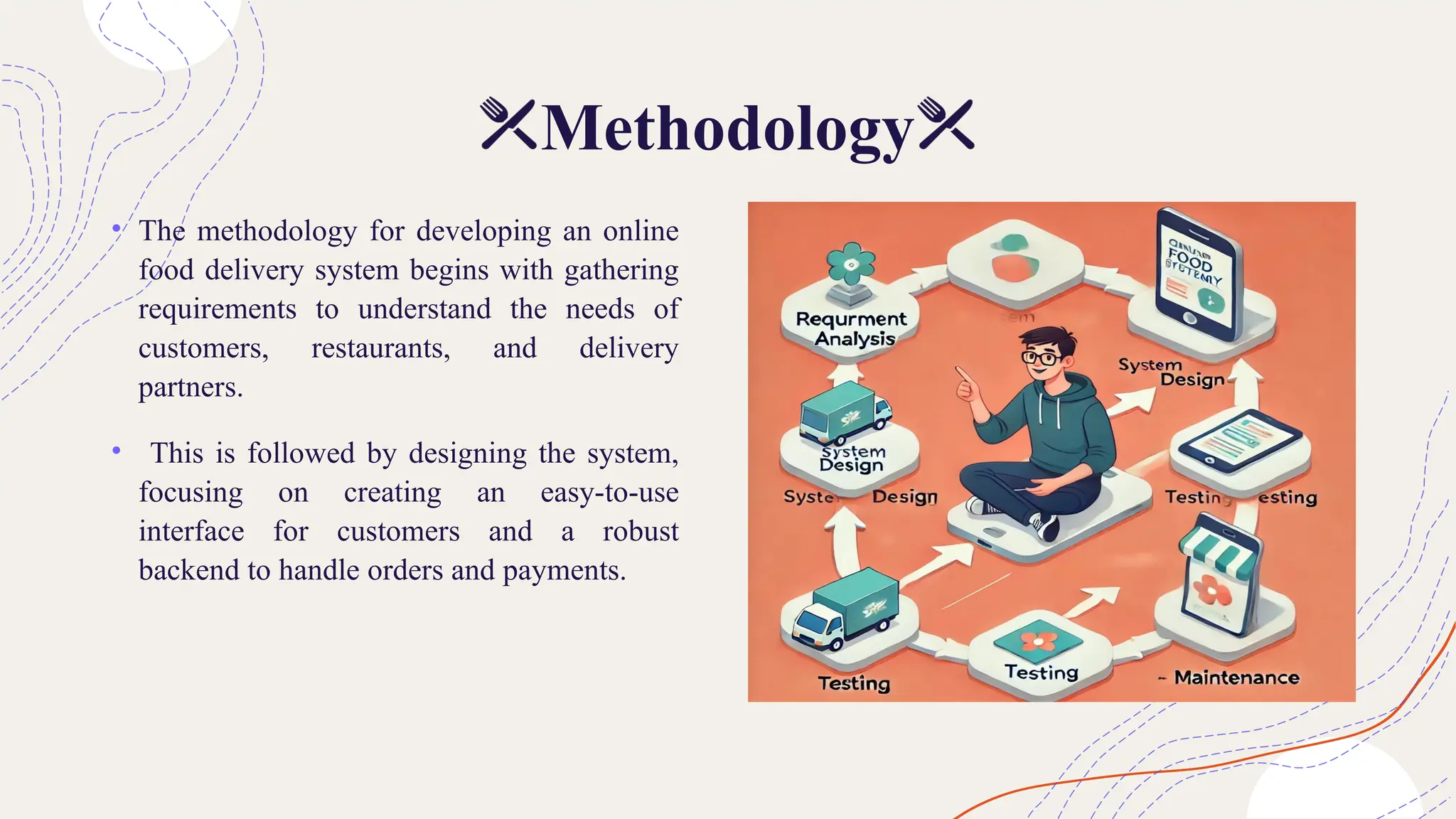
• The methodologyfor developing an online
food delivery system begins with gathering
requirements to understand the needs of
customers, restaurants, and delivery
partners.
• This is followed by designing the system,
focusing on creating an easy-to-use
interface for customers and a robust
backend to handle orders and payments.
8.
• The systemis then developed in modules, such as the customer, restaurant, and delivery modules,
using technologies like HTML,CSS,JS for the frontend and Mongo-DB for the backend.
• After development, thorough testing is conducted to ensure everything functions smoothly,
followed by deployment on a secure platform.
• Finally, the system is continuously monitored and maintained, ensuring updates and improvements
based on user feedback and performance.
9.
Proposed System
Allow thecustomer to make order, view order and make changes before submitting their order.
To prevent interface that shows customers orders detail to front-end.
A tool that allows the management to modify the food information such as price, add a new menu.
Accuracy in handling of data.
The volume of paper work will be greatly reduced.
Errors in the reports will be greatly minimized.
10.
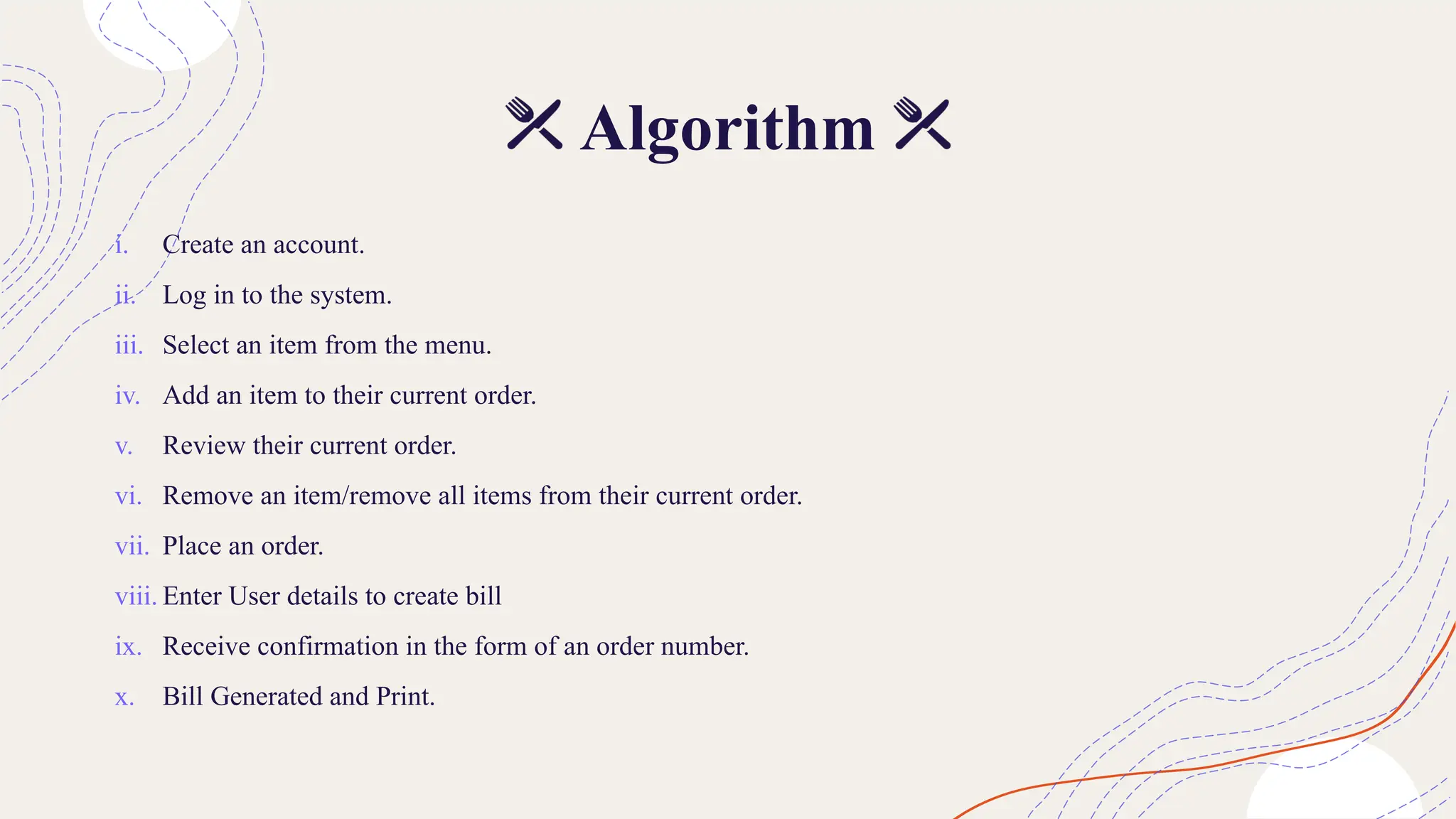
i. Create anaccount.
ii. Log in to the system.
iii. Select an item from the menu.
iv. Add an item to their current order.
v. Review their current order.
vi. Remove an item/remove all items from their current order.
vii. Place an order.
viii. Enter User details to create bill
ix. Receive confirmation in the form of an order number.
x. Bill Generated and Print.
Algorithm
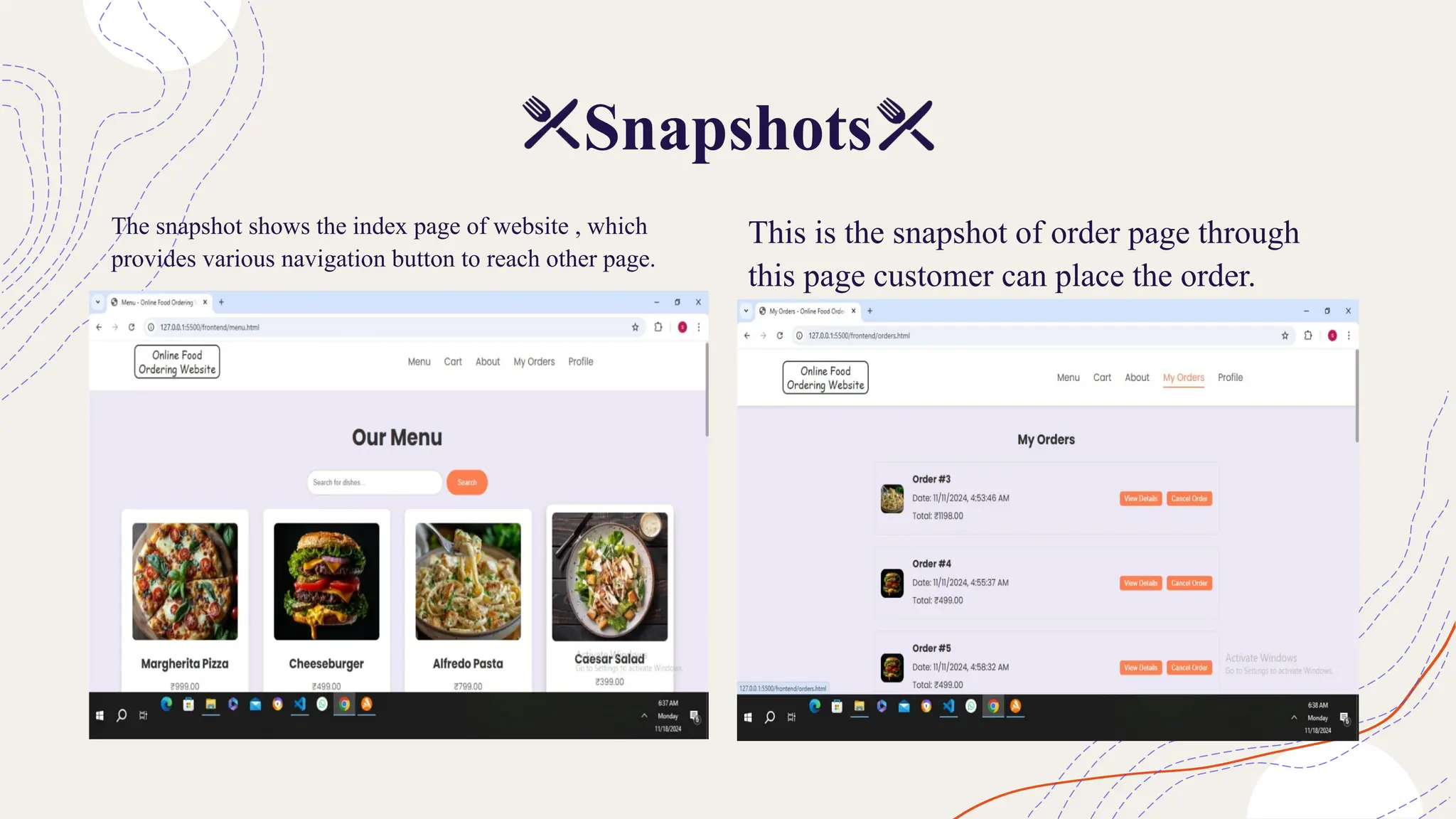
Snapshots
The snapshot showsthe index page of website , which
provides various navigation button to reach other page.
This is the snapshot of order page through
this page customer can place the order.
13.
Result
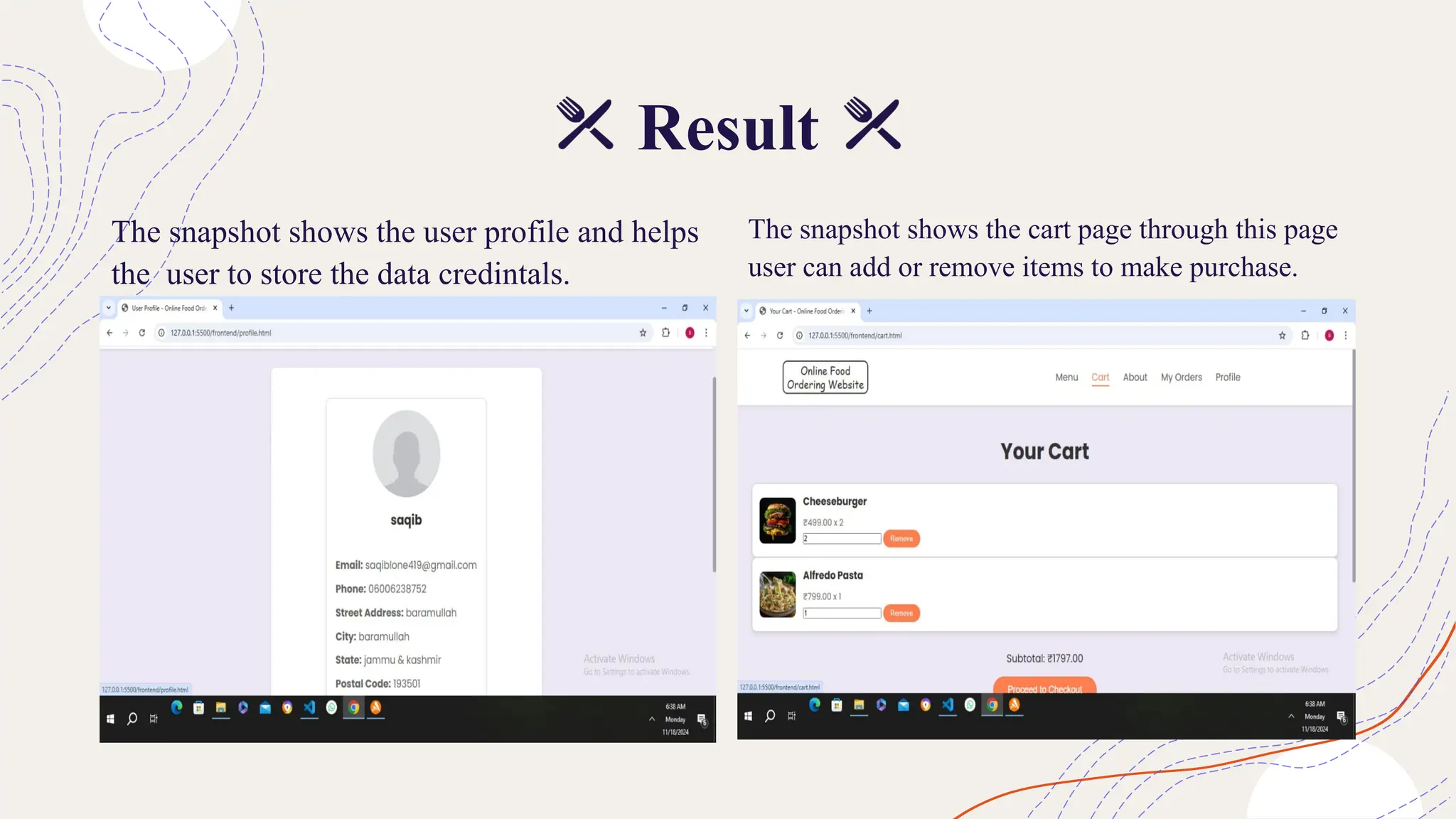
The snapshot showsthe user profile and helps
the user to store the data credintals.
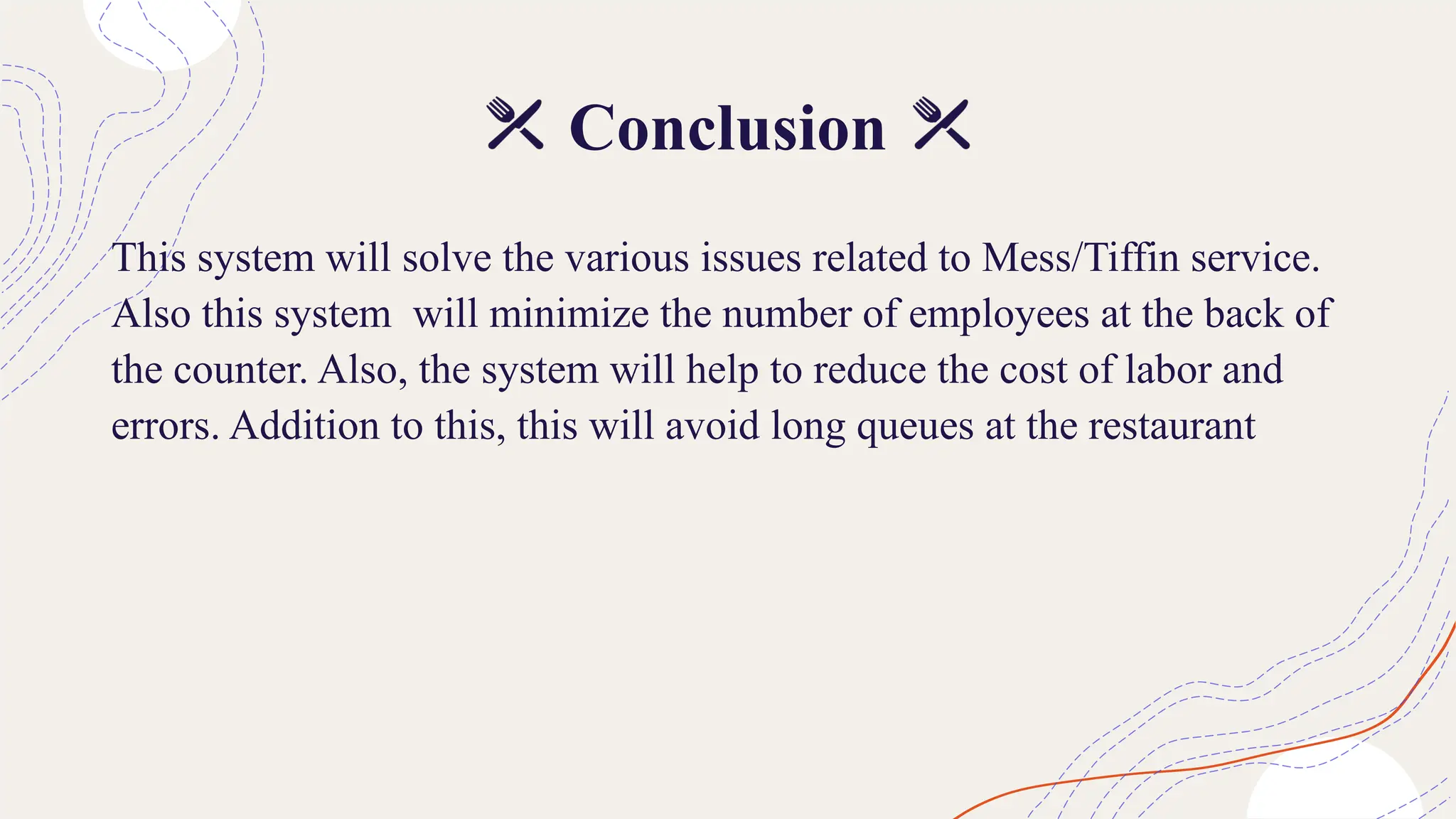
The snapshot shows the cart page through this page
user can add or remove items to make purchase.
14.
Conclusion
This system willsolve the various issues related to Mess/Tiffin service.
Also this system will minimize the number of employees at the back of
the counter. Also, the system will help to reduce the cost of labor and
errors. Addition to this, this will avoid long queues at the restaurant
15.
Reference
www.w3schools.com
HTMLhttps://youtu.be/HcOc7P5BMi4?si=vtjJnAZfEsJIX0cb
CSS https://youtu.be/ESnrn1kAD4E?si=woklXH3fynqSXTqj
JAVASCRIPT https://
youtube.com/playlist?list=PLGjplNEQ1it_oTvuLRNqXfz_v_0pq6unW&si=iHzmrYh0t0J
0lwZ4
Mongo-DB https://youtu.be/J6mDkcqU_ZE?si=NV6bfkoP8q1RpfrY
https://www.jdoodle.com/online-java-compiler
www.tutorialpoints.com
Also Got Some Help From Google Wikipedia