EDRM Project Management
Framework
The EDRM Project Management Framework (EPMF) is a comprehensive
guide for managing e-discovery projects, designed to maximize success
and streamline complex processes.
by Fuad Alramal
Framework Overview
Core Models
The EPMF consists of two primary models: the Project
Management Team Model and the Project Management
Process Model.
Key Principles
The framework emphasizes proactive communication,
alignment of teams, comprehensive planning, and risk
management.
Project Management Team
Model
Corporation
The corporation is responsible for
identifying data sources and
providing relevant information.
Law Firm
The law firm manages legal strategy
and oversees the e-discovery
process.
Vendor
The vendor provides technical
expertise and executes the e-
discovery tasks.
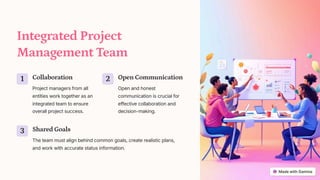
Integrated Project
Management Team
1 Collaboration
Project managers from all
entities work together as an
integrated team to ensure
overall project success.
2 Open Communication
Open and honest
communication is crucial for
effective collaboration and
decision-making.
3 Shared Goals
The team must align behind common goals, create realistic plans,
and work with accurate status information.
Project Management Process Model
1
Scoping Phase
Defines the project scope, vision, and goals, aligning
all teams towards a common objective.
2 Preliminary Planning Phase
Develops a preliminary project plan with sufficient
details for vendor selection.
3
Team and Vendor Selection Phase
Selects service providers and formalizes the
engagement, ensuring alignment with project goals.
4 Detailed Planning Phase
Creates a comprehensive plan detailing project
execution, including workflows, specifications, and
timelines.
5
Startup Phase
Sets up and tests workflows and technology,
conducts user training, and validates project
assumptions. 6 Execution Phase
Executes the project according to the plan, managing
schedules, quality, changes, and risks.
7
Closeout Phase
Formally closes the project, archives data,
summarizes metrics, and documents lessons
learned.
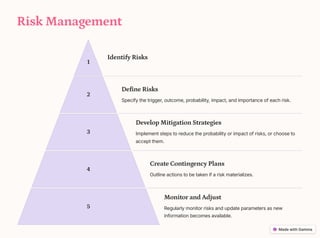
Risk Management
1
Identify Risks
2
Define Risks
Specify the trigger, outcome, probability, impact, and importance of each risk.
3
Develop Mitigation Strategies
Implement steps to reduce the probability or impact of risks, or choose to
accept them.
4
Create Contingency Plans
Outline actions to be taken if a risk materializes.
5
Monitor and Adjust
Regularly monitor risks and update parameters as new
information becomes available.
Change Management
1 Expect Change
2
Proactive Management
Plan for and manage change proactively to minimize negative impacts.
3
Open Communication
Open and honest discussions about project risks and changes lead to better
decision-making.
4
Positive Approach
Identifying and detailing risks is a sign of proactive project
management.
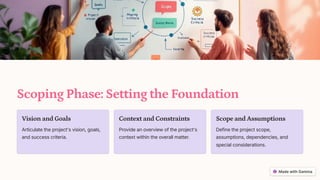
Scoping Phase: Setting the Foundation
Vision and Goals
Articulate the project's vision, goals,
and success criteria.
Context and Constraints
Provide an overview of the project's
context within the overall matter.
Scope and Assumptions
Define the project scope,
assumptions, dependencies, and
special considerations.
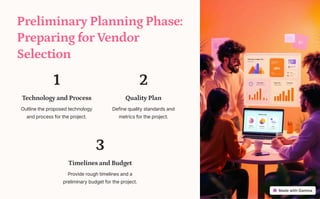
Preliminary Planning Phase:
Preparing for Vendor
Selection
1
Technology and Process
Outline the proposed technology
and process for the project.
2
Quality Plan
Define quality standards and
metrics for the project.
3
Timelines and Budget
Provide rough timelines and a
preliminary budget for the project.
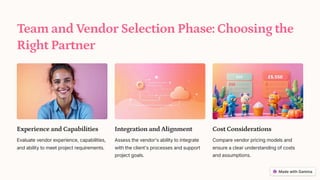
Team and Vendor Selection Phase: Choosing the
Right Partner
Experience and Capabilities
Evaluate vendor experience, capabilities,
and ability to meet project requirements.
Integration and Alignment
Assess the vendor's ability to integrate
with the client's processes and support
project goals.
Cost Considerations
Compare vendor pricing models and
ensure a clear understanding of costs
and assumptions.

Project Management Framework EDRM Overview Guide

  • 1.
    EDRM Project Management Framework TheEDRM Project Management Framework (EPMF) is a comprehensive guide for managing e-discovery projects, designed to maximize success and streamline complex processes. by Fuad Alramal
  • 2.
    Framework Overview Core Models TheEPMF consists of two primary models: the Project Management Team Model and the Project Management Process Model. Key Principles The framework emphasizes proactive communication, alignment of teams, comprehensive planning, and risk management.
  • 3.
    Project Management Team Model Corporation Thecorporation is responsible for identifying data sources and providing relevant information. Law Firm The law firm manages legal strategy and oversees the e-discovery process. Vendor The vendor provides technical expertise and executes the e- discovery tasks.
  • 4.
    Integrated Project Management Team 1Collaboration Project managers from all entities work together as an integrated team to ensure overall project success. 2 Open Communication Open and honest communication is crucial for effective collaboration and decision-making. 3 Shared Goals The team must align behind common goals, create realistic plans, and work with accurate status information.
  • 5.
    Project Management ProcessModel 1 Scoping Phase Defines the project scope, vision, and goals, aligning all teams towards a common objective. 2 Preliminary Planning Phase Develops a preliminary project plan with sufficient details for vendor selection. 3 Team and Vendor Selection Phase Selects service providers and formalizes the engagement, ensuring alignment with project goals. 4 Detailed Planning Phase Creates a comprehensive plan detailing project execution, including workflows, specifications, and timelines. 5 Startup Phase Sets up and tests workflows and technology, conducts user training, and validates project assumptions. 6 Execution Phase Executes the project according to the plan, managing schedules, quality, changes, and risks. 7 Closeout Phase Formally closes the project, archives data, summarizes metrics, and documents lessons learned.
  • 6.
    Risk Management 1 Identify Risks 2 DefineRisks Specify the trigger, outcome, probability, impact, and importance of each risk. 3 Develop Mitigation Strategies Implement steps to reduce the probability or impact of risks, or choose to accept them. 4 Create Contingency Plans Outline actions to be taken if a risk materializes. 5 Monitor and Adjust Regularly monitor risks and update parameters as new information becomes available.
  • 7.
    Change Management 1 ExpectChange 2 Proactive Management Plan for and manage change proactively to minimize negative impacts. 3 Open Communication Open and honest discussions about project risks and changes lead to better decision-making. 4 Positive Approach Identifying and detailing risks is a sign of proactive project management.
  • 8.
    Scoping Phase: Settingthe Foundation Vision and Goals Articulate the project's vision, goals, and success criteria. Context and Constraints Provide an overview of the project's context within the overall matter. Scope and Assumptions Define the project scope, assumptions, dependencies, and special considerations.
  • 9.
    Preliminary Planning Phase: Preparingfor Vendor Selection 1 Technology and Process Outline the proposed technology and process for the project. 2 Quality Plan Define quality standards and metrics for the project. 3 Timelines and Budget Provide rough timelines and a preliminary budget for the project.
  • 10.
    Team and VendorSelection Phase: Choosing the Right Partner Experience and Capabilities Evaluate vendor experience, capabilities, and ability to meet project requirements. Integration and Alignment Assess the vendor's ability to integrate with the client's processes and support project goals. Cost Considerations Compare vendor pricing models and ensure a clear understanding of costs and assumptions.