PROJECT
MANAGEMENT CYCLE
A Project is like a "system" is a dynamic and
complex whole,
interacting as a structured unit with
information flowing between the
different elements that compose the system.
What is Project Management Cycle?
Projects by definition are temporary endeavors made up of a
related set of activities undertaken to create a unique product or
service within specified requirements. This specific nature of
projects makes it easy to stay isolated from its environment
focusing solely on the delivery of activities. It is not unusual to
see project working hard to accomplish all the tasks and
activities designed on the logframe while ignoring the subtle
changes that are occurring around its environment
THE PROJECT MANAGEMENT ECOSYSTEM
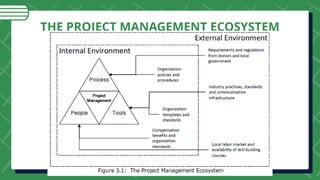
Projects don’t exist in isolation they are
influenced by two strong factors, the internal and
external environment. A project depends on three
basic components: processes, people and tools, all
integrated and influenced by the internal
environment (the organization) and an
external environment (the world), this is the
project ecosystem.
Process
The development activities
defined in the policies and
procedures and the roles and
responsibilities required in
managing development
projects, these include
government and donor
regulations which heavily
influence the project.
Processes determine the work
that needs to be accomplished
which drives the requirements
for people skills.
People
The skills and capabilities
of the people in charge of
managing the project, who
need to follow the processes
and procedures to ensure
quality of the services provided
by the organization. The people
component is influenced by the
compensation and values of the
organization and by the
external labor market that sets
conditions to find qualified staff.
Tools
The techniques and
devices selected by the
organizations with the aim to
facilitate the management of the
project, meet its objectives and
facilitate its contractual
obligations. Among the tools
are techniques to control
budgets, track project progress
and evaluate
performance.
The success of project management
depends on the equilibrium of the
three components, when one of them
fails or doesn’t receive the
adequate funding or support, the whole
system fails. It doesn’t do any
good to have the tools and processes if
the people have not being
trained in their use; or vice versa, have
the people with the right skills
but not provide them with the right
tools.
PROJECT MANAGEMENT PHASES
Projects operate as part of a system and involve
high degrees of uncertainty; by using a holistic
approach, project managers can integrate all
the internal and external issues into their
planning. It also helps them see projects as a
series of interrelated phases; by doing
this project managers have a better job of
ensuring project success.
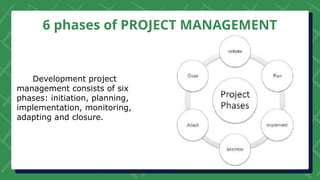
6 phases of PROJECT MANAGEMENT
Development project
management consists of six
phases: initiation, planning,
implementation, monitoring,
adapting and closure.
A good practice is to use each phase as a gate to review how the
project is going before moving to the next phase; the review should
occur at the end of each phase to evaluate progress and review initial
assumptions about the project objectives.
Project reviews are important for keeping projects on track and determine if
they should be continued, redirected, or terminated. By breaking a project into
manageable phases the organization can make
sure that the projects are still compatible with the needs of the stakeholders
and beneficiaries, it is a feedback loop that operates to keep the project on
check.
Project phases relate to each other not on a linear but on a cyclical manner.
The monitoring phase informs the implementation and the planning phases for
changes and modifications until there are no additional changes and all project
deliverables have been completed
1st
Phase
Initiation
This phase is where an idea or a proposal is authorized and funded as
a project. It may include some initial planning and estimating to clarify
its objective and scope. Usually, projects are started by an
organization in the form of a proposal or they are initiated by a donor
agency by a competitive bidding process or a cooperative agreement.
In either case the organization makes a decision to support the project
proposal.
2nd
Phase
PLANNING
Once the proposal is accepted and funds have been approved
the project is finally ready to start. The first step is the
development of all project plans, this phase includes two distinct
components; the development of plans that are required as part
of the proposal – core planning, and the plans to manage the
implementation of the project – facilitating planning.
2nd
Phase
PLANNING
Enabling plans or core planning includes the detailed planning documents that were initially
produced as part of the project proposal. The project manager’s first task is to develop in
more detail the project plans including the detailed project budget and schedule. Enabling
plans are the plans to manage the scope, schedule, budget and quality of the project.
o Facilitating Plans include the development of plans to manage all the other facilitating
processes required to manage the project, these include team, stakeholders, information,
risk, and contract management plans
3rd Phase
Implementation
Implementation includes taking all necessary actions to ensure the
activities in the project plan are completed and the outputs of the plan are
produced. Implementation occurs once the final project plans have been
approved by the organization and/or the donor agency. The project
manager starts by forming a team and the initial expenses required by the
project; these may include the purchase of office equipment, vehicles, and
other goods and services required to start the project.
4th Phase
MONITORING
Monitoring is about measuring the progress of a project against its
objectives, looking at deviations from the plan and taking
corrective steps to put the project back on track. Monitoring runs
across al project phases of the project life cycle. Traditionally the
focus is on monitoring the four project constraints of scope,
schedule, budget and quality.
5th Phase
ADAPTING
This phase refers to the process by which the project manager adapts its
project management methods and determines what works best for the
project. It also refers to the changes that need to be incorporated in the
original processes, approaches, strategies and methods planned to
deliver the project interventions. Adapting is taking corrective actions. It
uses inputs from the monitoring phase that informs what needs to be
changed or modified.
6th Phase
CLOSING
The closing phase of the project is when the project has
achieved the planned objectives and all deliverables have been
produced. There could be instances that a project is closed before
all deliverables have been completed, this could be caused by
changes in organizational strategies, unavailability of funds or
security conditions that make project work impossible.
PROJECT MANAGEMENT CYCLE
The Project Management phases follow a cyclical
approach throughout the life of the project. The
cycle represents a continuous process in which
each phase provides the foundation for the next.
For example, during implementation the
monitoring phase provides inputs and changes to
the original design which then modifies the
implementation plans. These cyclic nature among
the design, implement and monitor phases is
repeated throughout the life of the project.
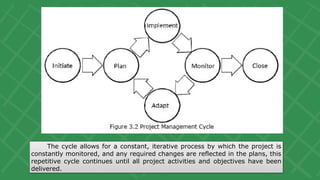
The cycle allows for a constant, iterative process by which the project is
constantly monitored, and any required changes are reflected in the plans, this
repetitive cycle continues until all project activities and objectives have been
delivered.
Each project is different and will
have different cycles during its
life; the project manager’s role is
to ensure that the cycles are
opportunities that give rise to
adjustments in the project and
contribute to learning. No
situation in which a project
intervenes is static, project
management is a cycle that is
continually repeated to adapt to a
changing context.
The application of project
management is an iterative
process. For example, within the
planning process group, several
iterations of planning may occur as
the team develops the best
approach and methodologies to
implement the project. This
process requires additional
refinements to the schedule,
budget estimates, quality
requirements and risk plans.
Thank you..
"The project management cycle ensures
continuous progress, from planning to
completion, by turning goals into actionable
steps and refining them along the way."

PROJECT MANAGEMENT CYCLE REPORT IN MASTERAL

  • 1.
  • 2.
    A Project islike a "system" is a dynamic and complex whole, interacting as a structured unit with information flowing between the different elements that compose the system.
  • 3.
    What is ProjectManagement Cycle? Projects by definition are temporary endeavors made up of a related set of activities undertaken to create a unique product or service within specified requirements. This specific nature of projects makes it easy to stay isolated from its environment focusing solely on the delivery of activities. It is not unusual to see project working hard to accomplish all the tasks and activities designed on the logframe while ignoring the subtle changes that are occurring around its environment
  • 4.
  • 5.
    Projects don’t existin isolation they are influenced by two strong factors, the internal and external environment. A project depends on three basic components: processes, people and tools, all integrated and influenced by the internal environment (the organization) and an external environment (the world), this is the project ecosystem.
  • 6.
    Process The development activities definedin the policies and procedures and the roles and responsibilities required in managing development projects, these include government and donor regulations which heavily influence the project. Processes determine the work that needs to be accomplished which drives the requirements for people skills. People The skills and capabilities of the people in charge of managing the project, who need to follow the processes and procedures to ensure quality of the services provided by the organization. The people component is influenced by the compensation and values of the organization and by the external labor market that sets conditions to find qualified staff.
  • 7.
    Tools The techniques and devicesselected by the organizations with the aim to facilitate the management of the project, meet its objectives and facilitate its contractual obligations. Among the tools are techniques to control budgets, track project progress and evaluate performance. The success of project management depends on the equilibrium of the three components, when one of them fails or doesn’t receive the adequate funding or support, the whole system fails. It doesn’t do any good to have the tools and processes if the people have not being trained in their use; or vice versa, have the people with the right skills but not provide them with the right tools.
  • 8.
  • 9.
    Projects operate aspart of a system and involve high degrees of uncertainty; by using a holistic approach, project managers can integrate all the internal and external issues into their planning. It also helps them see projects as a series of interrelated phases; by doing this project managers have a better job of ensuring project success.
  • 10.
    6 phases ofPROJECT MANAGEMENT Development project management consists of six phases: initiation, planning, implementation, monitoring, adapting and closure.
  • 11.
    A good practiceis to use each phase as a gate to review how the project is going before moving to the next phase; the review should occur at the end of each phase to evaluate progress and review initial assumptions about the project objectives. Project reviews are important for keeping projects on track and determine if they should be continued, redirected, or terminated. By breaking a project into manageable phases the organization can make sure that the projects are still compatible with the needs of the stakeholders and beneficiaries, it is a feedback loop that operates to keep the project on check. Project phases relate to each other not on a linear but on a cyclical manner. The monitoring phase informs the implementation and the planning phases for changes and modifications until there are no additional changes and all project deliverables have been completed
  • 12.
    1st Phase Initiation This phase iswhere an idea or a proposal is authorized and funded as a project. It may include some initial planning and estimating to clarify its objective and scope. Usually, projects are started by an organization in the form of a proposal or they are initiated by a donor agency by a competitive bidding process or a cooperative agreement. In either case the organization makes a decision to support the project proposal.
  • 13.
    2nd Phase PLANNING Once the proposalis accepted and funds have been approved the project is finally ready to start. The first step is the development of all project plans, this phase includes two distinct components; the development of plans that are required as part of the proposal – core planning, and the plans to manage the implementation of the project – facilitating planning.
  • 14.
    2nd Phase PLANNING Enabling plans orcore planning includes the detailed planning documents that were initially produced as part of the project proposal. The project manager’s first task is to develop in more detail the project plans including the detailed project budget and schedule. Enabling plans are the plans to manage the scope, schedule, budget and quality of the project. o Facilitating Plans include the development of plans to manage all the other facilitating processes required to manage the project, these include team, stakeholders, information, risk, and contract management plans
  • 15.
    3rd Phase Implementation Implementation includestaking all necessary actions to ensure the activities in the project plan are completed and the outputs of the plan are produced. Implementation occurs once the final project plans have been approved by the organization and/or the donor agency. The project manager starts by forming a team and the initial expenses required by the project; these may include the purchase of office equipment, vehicles, and other goods and services required to start the project.
  • 16.
    4th Phase MONITORING Monitoring isabout measuring the progress of a project against its objectives, looking at deviations from the plan and taking corrective steps to put the project back on track. Monitoring runs across al project phases of the project life cycle. Traditionally the focus is on monitoring the four project constraints of scope, schedule, budget and quality.
  • 17.
    5th Phase ADAPTING This phaserefers to the process by which the project manager adapts its project management methods and determines what works best for the project. It also refers to the changes that need to be incorporated in the original processes, approaches, strategies and methods planned to deliver the project interventions. Adapting is taking corrective actions. It uses inputs from the monitoring phase that informs what needs to be changed or modified.
  • 18.
    6th Phase CLOSING The closingphase of the project is when the project has achieved the planned objectives and all deliverables have been produced. There could be instances that a project is closed before all deliverables have been completed, this could be caused by changes in organizational strategies, unavailability of funds or security conditions that make project work impossible.
  • 19.
    PROJECT MANAGEMENT CYCLE TheProject Management phases follow a cyclical approach throughout the life of the project. The cycle represents a continuous process in which each phase provides the foundation for the next. For example, during implementation the monitoring phase provides inputs and changes to the original design which then modifies the implementation plans. These cyclic nature among the design, implement and monitor phases is repeated throughout the life of the project.
  • 20.
    The cycle allowsfor a constant, iterative process by which the project is constantly monitored, and any required changes are reflected in the plans, this repetitive cycle continues until all project activities and objectives have been delivered.
  • 21.
    Each project isdifferent and will have different cycles during its life; the project manager’s role is to ensure that the cycles are opportunities that give rise to adjustments in the project and contribute to learning. No situation in which a project intervenes is static, project management is a cycle that is continually repeated to adapt to a changing context. The application of project management is an iterative process. For example, within the planning process group, several iterations of planning may occur as the team develops the best approach and methodologies to implement the project. This process requires additional refinements to the schedule, budget estimates, quality requirements and risk plans.
  • 22.
  • 23.
    "The project managementcycle ensures continuous progress, from planning to completion, by turning goals into actionable steps and refining them along the way."