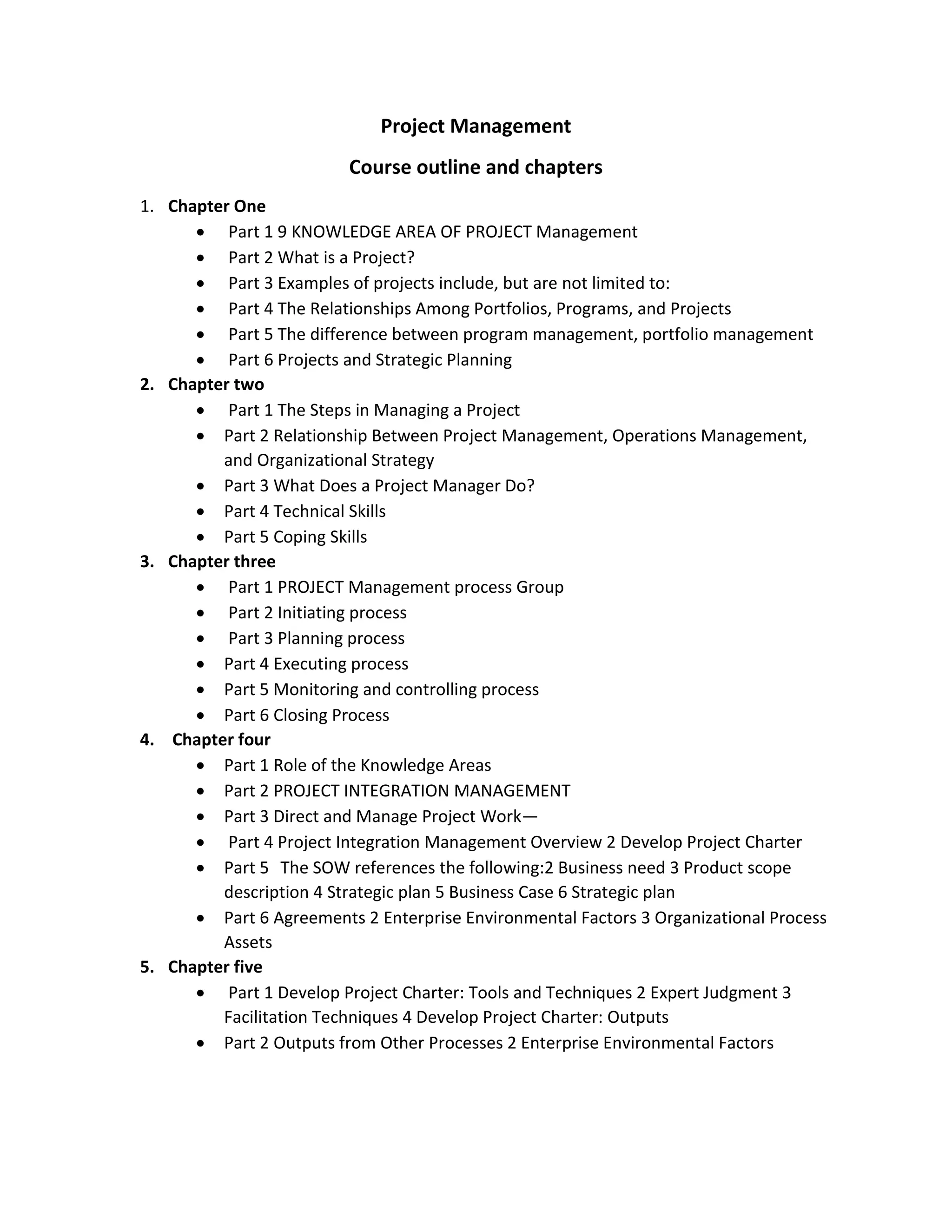
Project Management
Course outline and chapters
1. Chapter One
 Part 1 9 KNOWLEDGE AREA OF PROJECT Management
 Part 2 What is a Project?
 Part 3 Examples of projects include, but are not limited to:
 Part 4 The Relationships Among Portfolios, Programs, and Projects
 Part 5 The difference between program management, portfolio management
 Part 6 Projects and Strategic Planning
2. Chapter two
 Part 1 The Steps in Managing a Project
 Part 2 Relationship Between Project Management, Operations Management,
and Organizational Strategy
 Part 3 What Does a Project Manager Do?
 Part 4 Technical Skills
 Part 5 Coping Skills
3. Chapter three
 Part 1 PROJECT Management process Group
 Part 2 Initiating process
 Part 3 Planning process
 Part 4 Executing process
 Part 5 Monitoring and controlling process
 Part 6 Closing Process
4. Chapter four
 Part 1 Role of the Knowledge Areas
 Part 2 PROJECT INTEGRATION MANAGEMENT
 Part 3 Direct and Manage Project Work—
 Part 4 Project Integration Management Overview 2 Develop Project Charter
 Part 5 The SOW references the following:2 Business need 3 Product scope
description 4 Strategic plan 5 Business Case 6 Strategic plan
 Part 6 Agreements 2 Enterprise Environmental Factors 3 Organizational Process
Assets
5. Chapter five
 Part 1 Develop Project Charter: Tools and Techniques 2 Expert Judgment 3
Facilitation Techniques 4 Develop Project Charter: Outputs
 Part 2 Outputs from Other Processes 2 Enterprise Environmental Factors
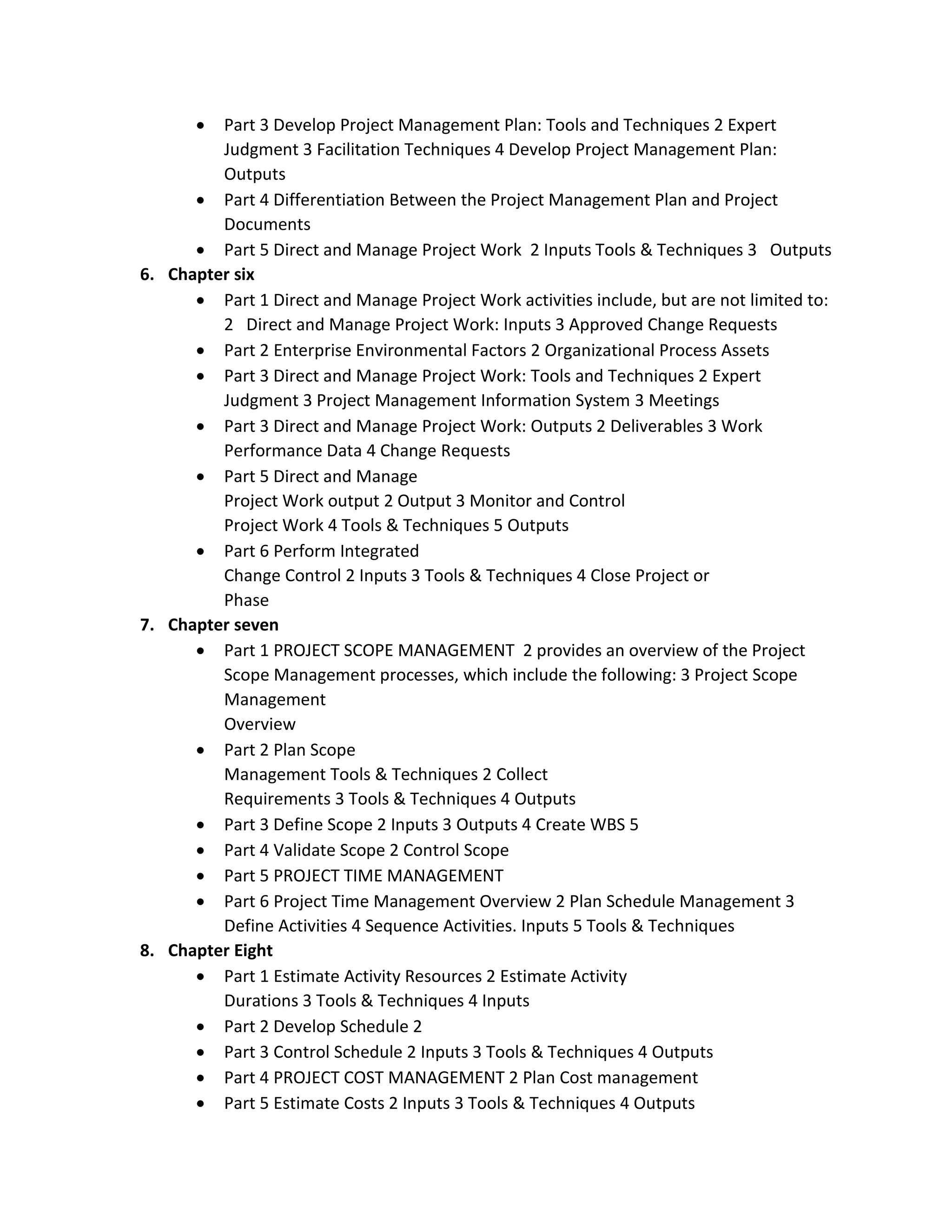
 Part 3 Develop Project Management Plan: Tools and Techniques 2 Expert
Judgment 3 Facilitation Techniques 4 Develop Project Management Plan:
Outputs
 Part 4 Differentiation Between the Project Management Plan and Project
Documents
 Part 5 Direct and Manage Project Work 2 Inputs Tools & Techniques 3 Outputs
6. Chapter six
 Part 1 Direct and Manage Project Work activities include, but are not limited to:
2 Direct and Manage Project Work: Inputs 3 Approved Change Requests
 Part 2 Enterprise Environmental Factors 2 Organizational Process Assets
 Part 3 Direct and Manage Project Work: Tools and Techniques 2 Expert
Judgment 3 Project Management Information System 3 Meetings
 Part 3 Direct and Manage Project Work: Outputs 2 Deliverables 3 Work
Performance Data 4 Change Requests
 Part 5 Direct and Manage
Project Work output 2 Output 3 Monitor and Control
Project Work 4 Tools & Techniques 5 Outputs
 Part 6 Perform Integrated
Change Control 2 Inputs 3 Tools & Techniques 4 Close Project or
Phase
7. Chapter seven
 Part 1 PROJECT SCOPE MANAGEMENT 2 provides an overview of the Project
Scope Management processes, which include the following: 3 Project Scope
Management
Overview
 Part 2 Plan Scope
Management Tools & Techniques 2 Collect
Requirements 3 Tools & Techniques 4 Outputs
 Part 3 Define Scope 2 Inputs 3 Outputs 4 Create WBS 5
 Part 4 Validate Scope 2 Control Scope
 Part 5 PROJECT TIME MANAGEMENT
 Part 6 Project Time Management Overview 2 Plan Schedule Management 3
Define Activities 4 Sequence Activities. Inputs 5 Tools & Techniques
8. Chapter Eight
 Part 1 Estimate Activity Resources 2 Estimate Activity
Durations 3 Tools & Techniques 4 Inputs
 Part 2 Develop Schedule 2
 Part 3 Control Schedule 2 Inputs 3 Tools & Techniques 4 Outputs
 Part 4 PROJECT COST MANAGEMENT 2 Plan Cost management
 Part 5 Estimate Costs 2 Inputs 3 Tools & Techniques 4 Outputs
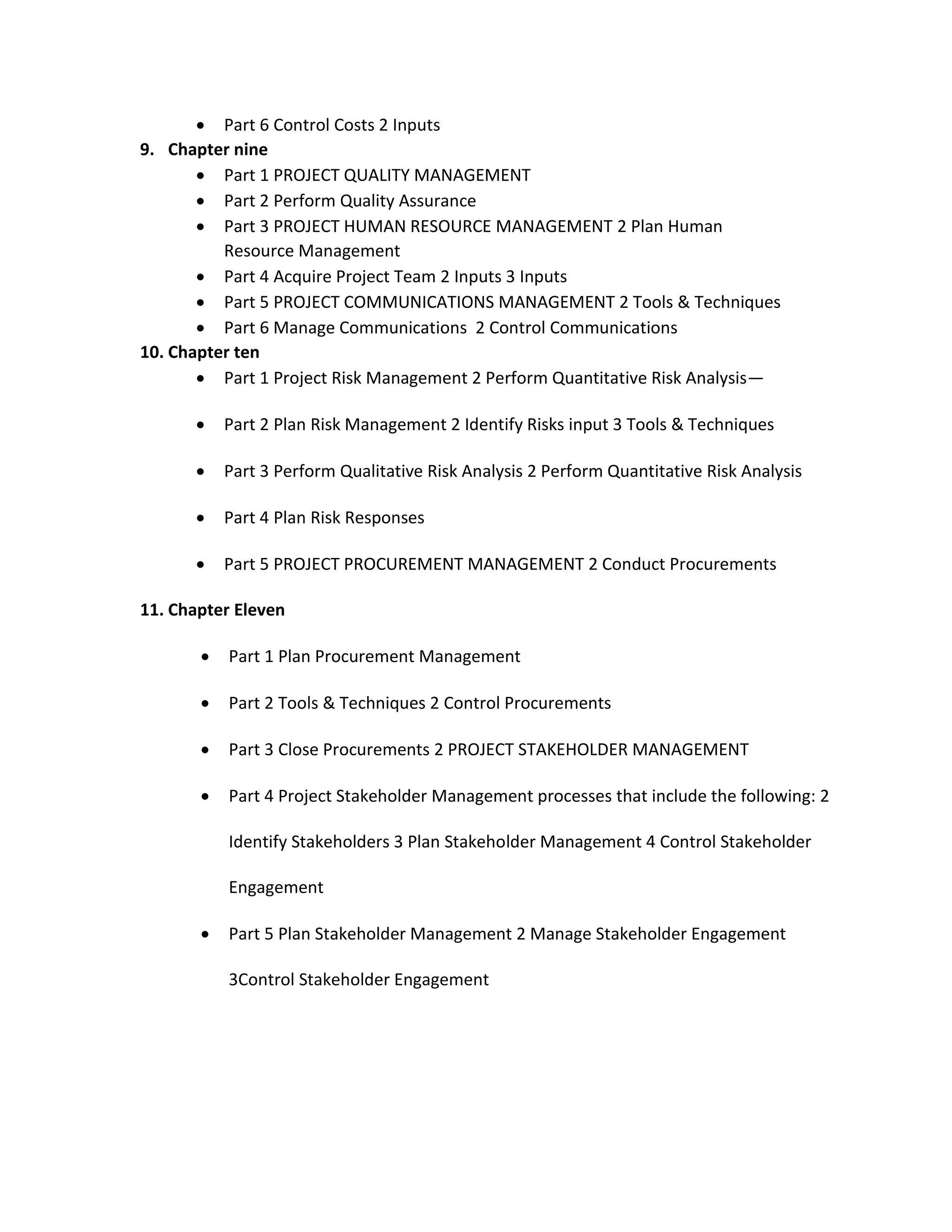
 Part 6 Control Costs 2 Inputs
9. Chapter nine
 Part 1 PROJECT QUALITY MANAGEMENT
 Part 2 Perform Quality Assurance
 Part 3 PROJECT HUMAN RESOURCE MANAGEMENT 2 Plan Human
Resource Management
 Part 4 Acquire Project Team 2 Inputs 3 Inputs
 Part 5 PROJECT COMMUNICATIONS MANAGEMENT 2 Tools & Techniques
 Part 6 Manage Communications 2 Control Communications
10. Chapter ten
 Part 1 Project Risk Management 2 Perform Quantitative Risk Analysis—
 Part 2 Plan Risk Management 2 Identify Risks input 3 Tools & Techniques
 Part 3 Perform Qualitative Risk Analysis 2 Perform Quantitative Risk Analysis
 Part 4 Plan Risk Responses
 Part 5 PROJECT PROCUREMENT MANAGEMENT 2 Conduct Procurements
11. Chapter Eleven
 Part 1 Plan Procurement Management
 Part 2 Tools & Techniques 2 Control Procurements
 Part 3 Close Procurements 2 PROJECT STAKEHOLDER MANAGEMENT
 Part 4 Project Stakeholder Management processes that include the following: 2
Identify Stakeholders 3 Plan Stakeholder Management 4 Control Stakeholder
Engagement
 Part 5 Plan Stakeholder Management 2 Manage Stakeholder Engagement
3Control Stakeholder Engagement
Project Management

Project Management

  • 1.
    Project Management Course outlineand chapters 1. Chapter One  Part 1 9 KNOWLEDGE AREA OF PROJECT Management  Part 2 What is a Project?  Part 3 Examples of projects include, but are not limited to:  Part 4 The Relationships Among Portfolios, Programs, and Projects  Part 5 The difference between program management, portfolio management  Part 6 Projects and Strategic Planning 2. Chapter two  Part 1 The Steps in Managing a Project  Part 2 Relationship Between Project Management, Operations Management, and Organizational Strategy  Part 3 What Does a Project Manager Do?  Part 4 Technical Skills  Part 5 Coping Skills 3. Chapter three  Part 1 PROJECT Management process Group  Part 2 Initiating process  Part 3 Planning process  Part 4 Executing process  Part 5 Monitoring and controlling process  Part 6 Closing Process 4. Chapter four  Part 1 Role of the Knowledge Areas  Part 2 PROJECT INTEGRATION MANAGEMENT  Part 3 Direct and Manage Project Work—  Part 4 Project Integration Management Overview 2 Develop Project Charter  Part 5 The SOW references the following:2 Business need 3 Product scope description 4 Strategic plan 5 Business Case 6 Strategic plan  Part 6 Agreements 2 Enterprise Environmental Factors 3 Organizational Process Assets 5. Chapter five  Part 1 Develop Project Charter: Tools and Techniques 2 Expert Judgment 3 Facilitation Techniques 4 Develop Project Charter: Outputs  Part 2 Outputs from Other Processes 2 Enterprise Environmental Factors
  • 2.
     Part 3Develop Project Management Plan: Tools and Techniques 2 Expert Judgment 3 Facilitation Techniques 4 Develop Project Management Plan: Outputs  Part 4 Differentiation Between the Project Management Plan and Project Documents  Part 5 Direct and Manage Project Work 2 Inputs Tools & Techniques 3 Outputs 6. Chapter six  Part 1 Direct and Manage Project Work activities include, but are not limited to: 2 Direct and Manage Project Work: Inputs 3 Approved Change Requests  Part 2 Enterprise Environmental Factors 2 Organizational Process Assets  Part 3 Direct and Manage Project Work: Tools and Techniques 2 Expert Judgment 3 Project Management Information System 3 Meetings  Part 3 Direct and Manage Project Work: Outputs 2 Deliverables 3 Work Performance Data 4 Change Requests  Part 5 Direct and Manage Project Work output 2 Output 3 Monitor and Control Project Work 4 Tools & Techniques 5 Outputs  Part 6 Perform Integrated Change Control 2 Inputs 3 Tools & Techniques 4 Close Project or Phase 7. Chapter seven  Part 1 PROJECT SCOPE MANAGEMENT 2 provides an overview of the Project Scope Management processes, which include the following: 3 Project Scope Management Overview  Part 2 Plan Scope Management Tools & Techniques 2 Collect Requirements 3 Tools & Techniques 4 Outputs  Part 3 Define Scope 2 Inputs 3 Outputs 4 Create WBS 5  Part 4 Validate Scope 2 Control Scope  Part 5 PROJECT TIME MANAGEMENT  Part 6 Project Time Management Overview 2 Plan Schedule Management 3 Define Activities 4 Sequence Activities. Inputs 5 Tools & Techniques 8. Chapter Eight  Part 1 Estimate Activity Resources 2 Estimate Activity Durations 3 Tools & Techniques 4 Inputs  Part 2 Develop Schedule 2  Part 3 Control Schedule 2 Inputs 3 Tools & Techniques 4 Outputs  Part 4 PROJECT COST MANAGEMENT 2 Plan Cost management  Part 5 Estimate Costs 2 Inputs 3 Tools & Techniques 4 Outputs
  • 3.
     Part 6Control Costs 2 Inputs 9. Chapter nine  Part 1 PROJECT QUALITY MANAGEMENT  Part 2 Perform Quality Assurance  Part 3 PROJECT HUMAN RESOURCE MANAGEMENT 2 Plan Human Resource Management  Part 4 Acquire Project Team 2 Inputs 3 Inputs  Part 5 PROJECT COMMUNICATIONS MANAGEMENT 2 Tools & Techniques  Part 6 Manage Communications 2 Control Communications 10. Chapter ten  Part 1 Project Risk Management 2 Perform Quantitative Risk Analysis—  Part 2 Plan Risk Management 2 Identify Risks input 3 Tools & Techniques  Part 3 Perform Qualitative Risk Analysis 2 Perform Quantitative Risk Analysis  Part 4 Plan Risk Responses  Part 5 PROJECT PROCUREMENT MANAGEMENT 2 Conduct Procurements 11. Chapter Eleven  Part 1 Plan Procurement Management  Part 2 Tools & Techniques 2 Control Procurements  Part 3 Close Procurements 2 PROJECT STAKEHOLDER MANAGEMENT  Part 4 Project Stakeholder Management processes that include the following: 2 Identify Stakeholders 3 Plan Stakeholder Management 4 Control Stakeholder Engagement  Part 5 Plan Stakeholder Management 2 Manage Stakeholder Engagement 3Control Stakeholder Engagement