We the People:  Project Citizen A program of the  Center for Civic Education in cooperation with the  National Conference of State Legislatures supported by the  United States Department of Education
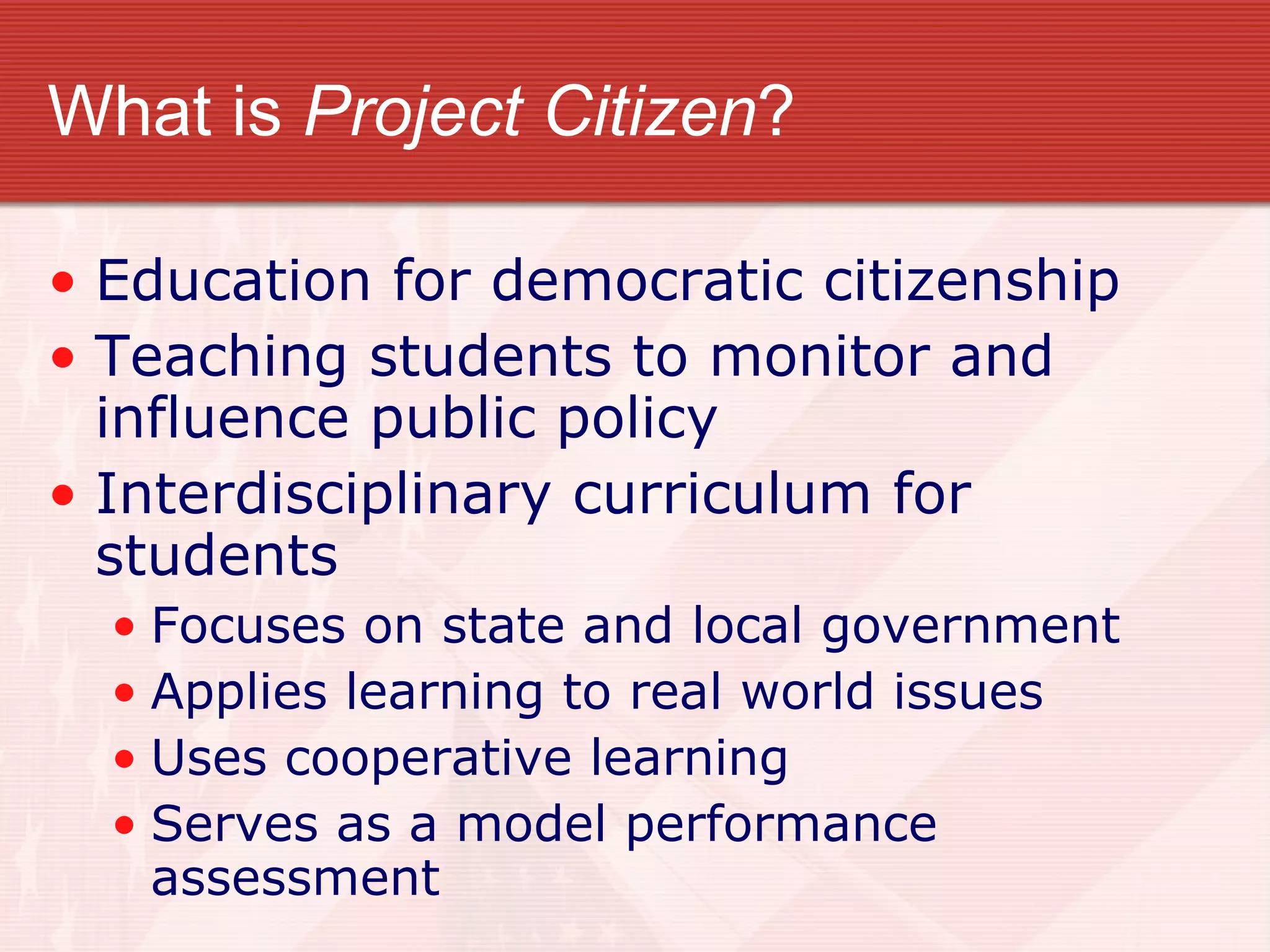
What is  Project Citizen ? Education for democratic citizenship Teaching students to monitor and influence public policy Interdisciplinary curriculum for  students Focuses on state and local government Applies learning to real world issues Uses cooperative learning Serves as a model performance assessment
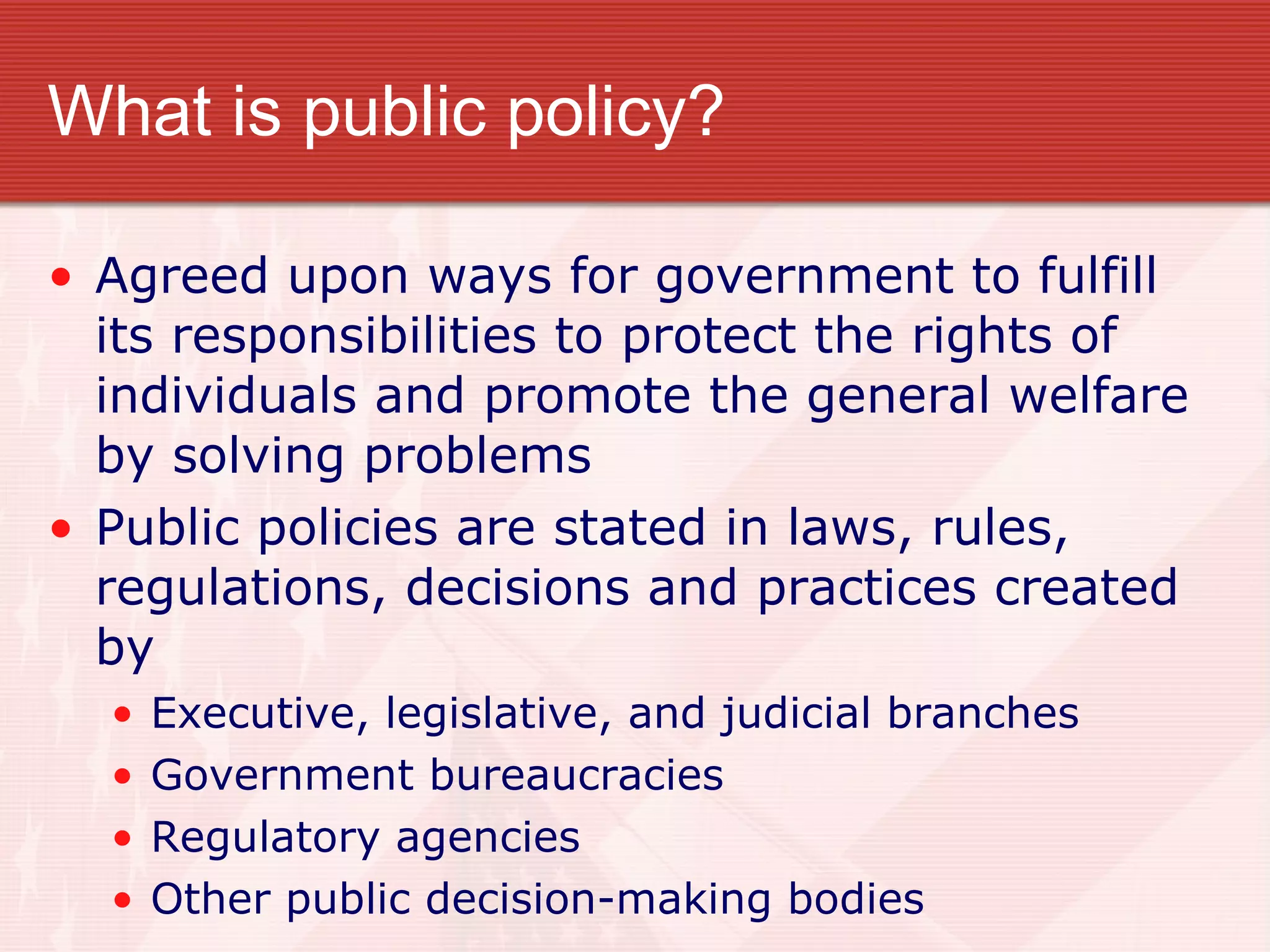
What is public policy? Agreed upon ways for government to fulfill its responsibilities to protect the rights of individuals and promote the general welfare by solving problems Public policies are stated in laws, rules, regulations, decisions and practices created by Executive, legislative, and judicial branches Government bureaucracies Regulatory agencies Other public decision-making bodies
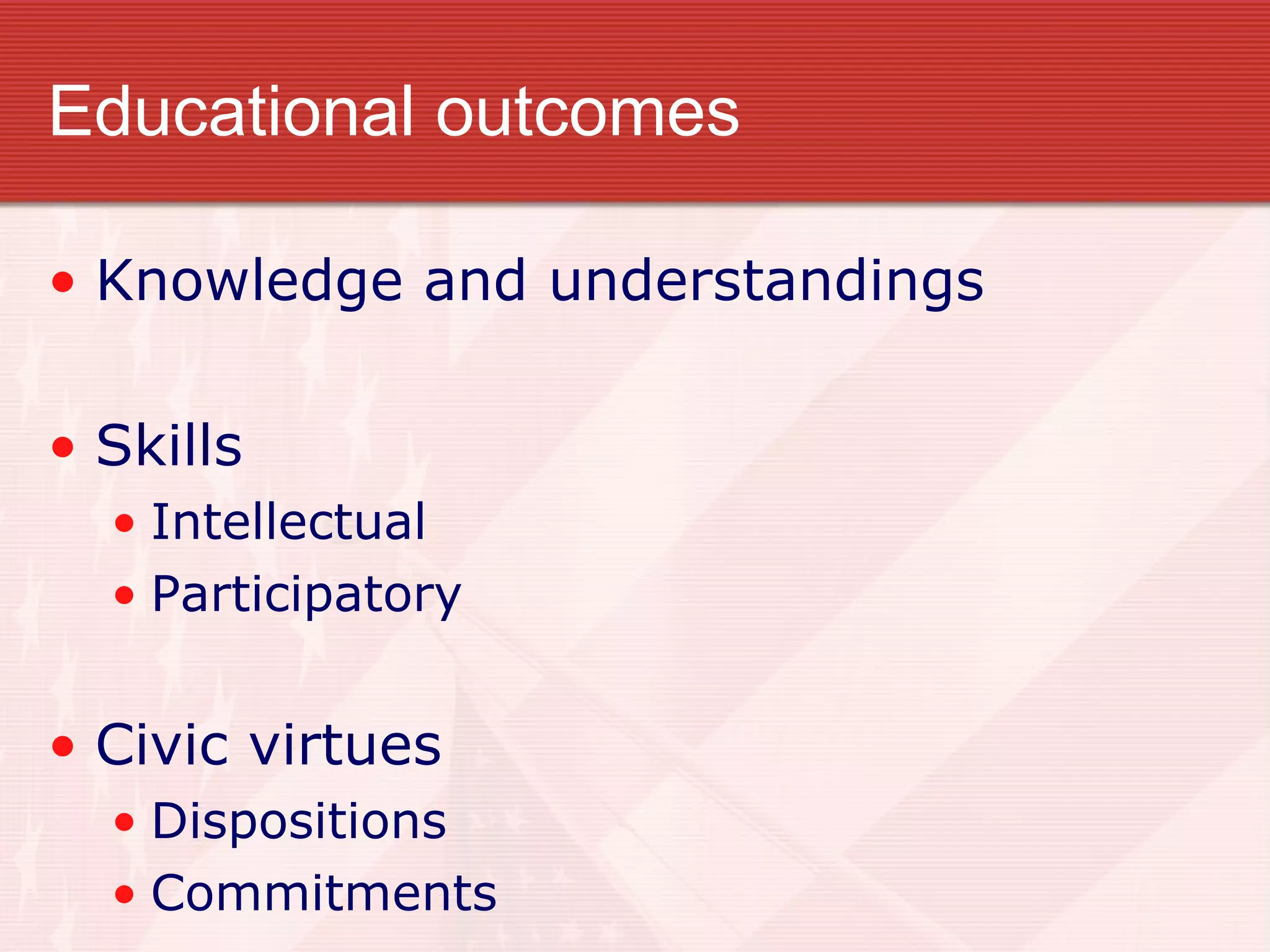
Educational outcomes Knowledge and understandings Skills Intellectual Participatory Civic virtues Dispositions Commitments
Sequence of steps in  Project Citizen As a class project, students work together to identify and study a public policy problem, propose a solution, and eventually develop an action plan for implementing their policy. Student work is displayed in a portfolio and documentation binder.
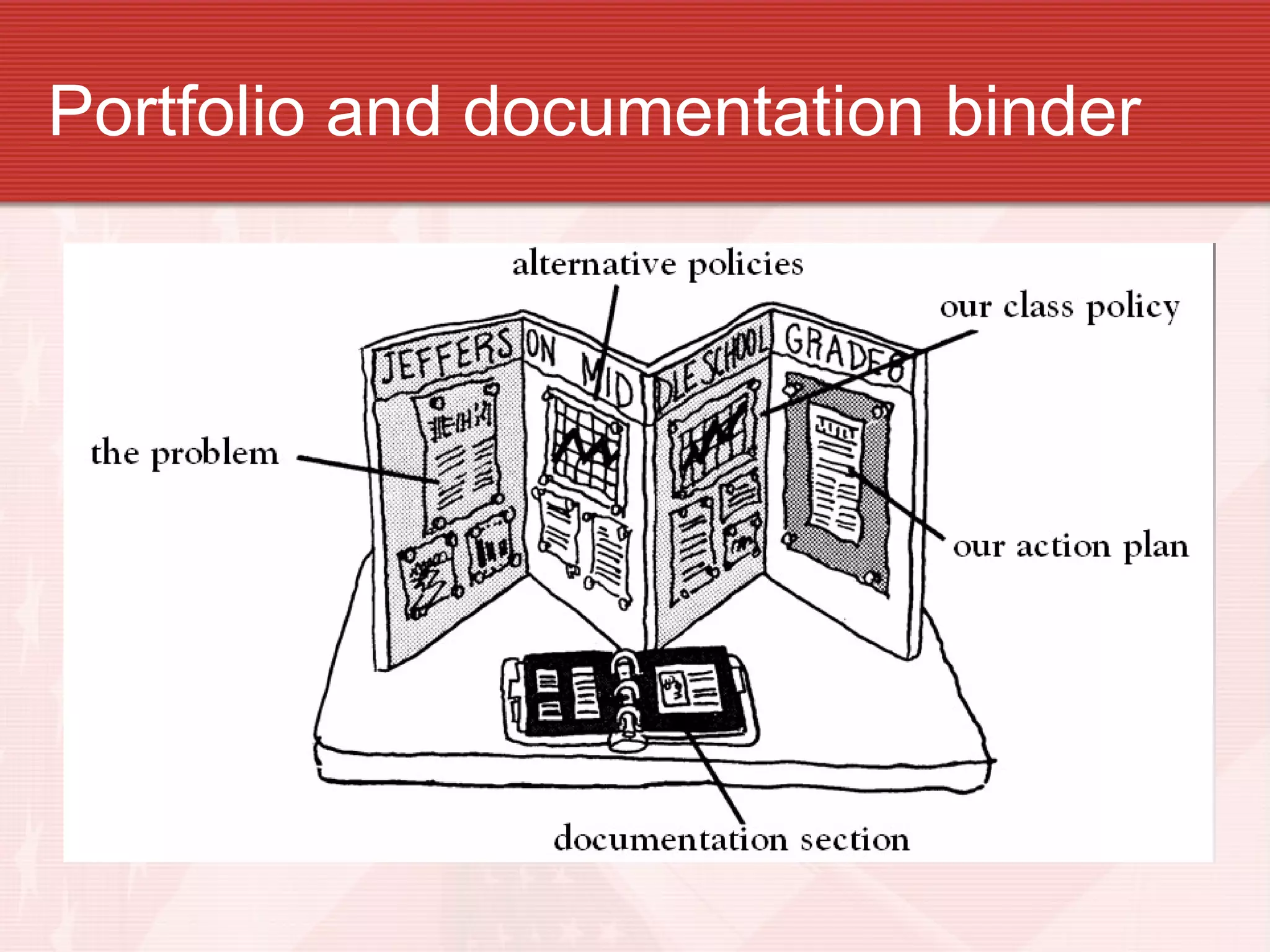
Portfolio and documentation binder
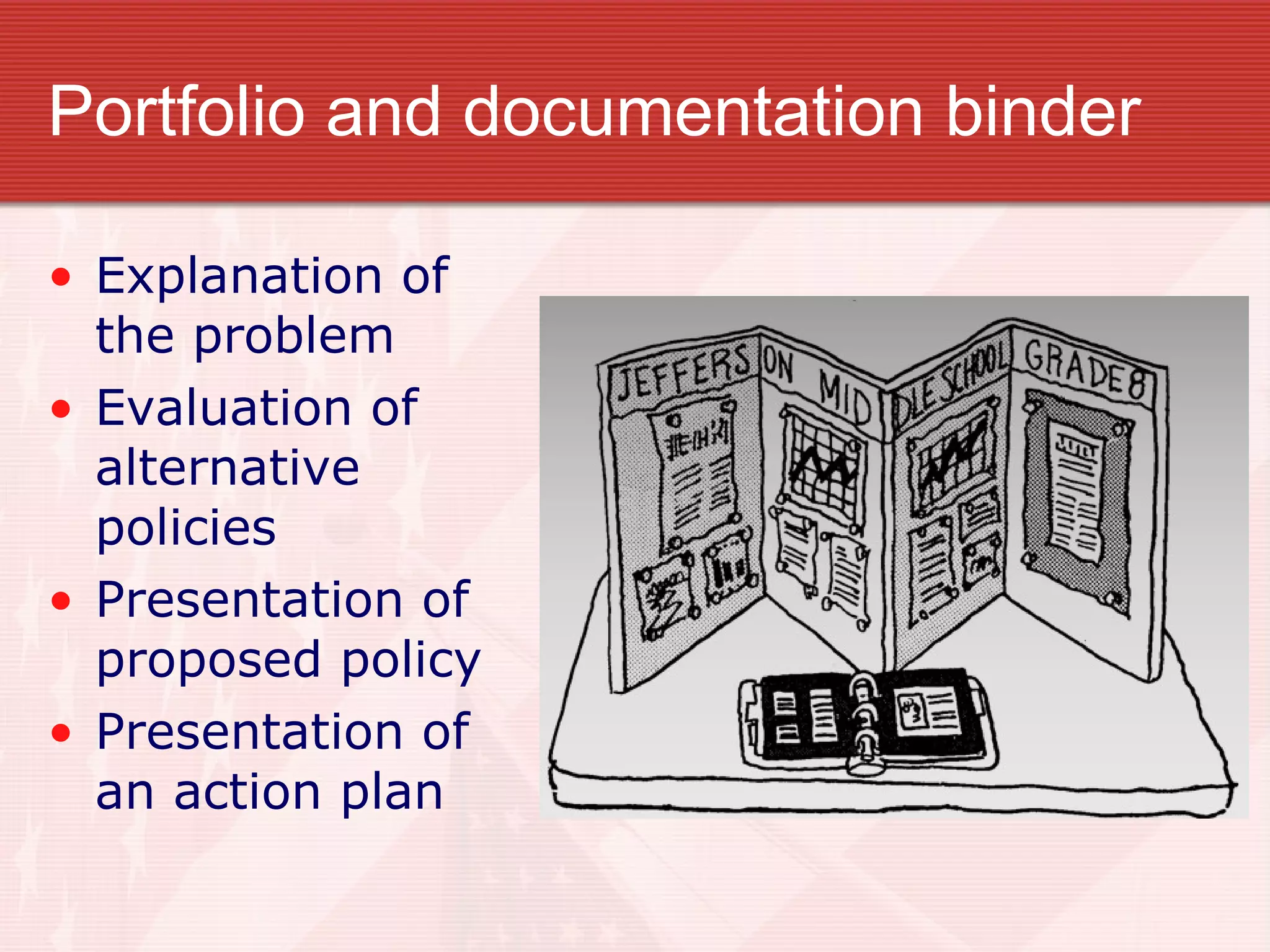
Portfolio and documentation binder Explanation of the problem Evaluation of alternative policies Presentation of proposed policy Presentation of an action plan
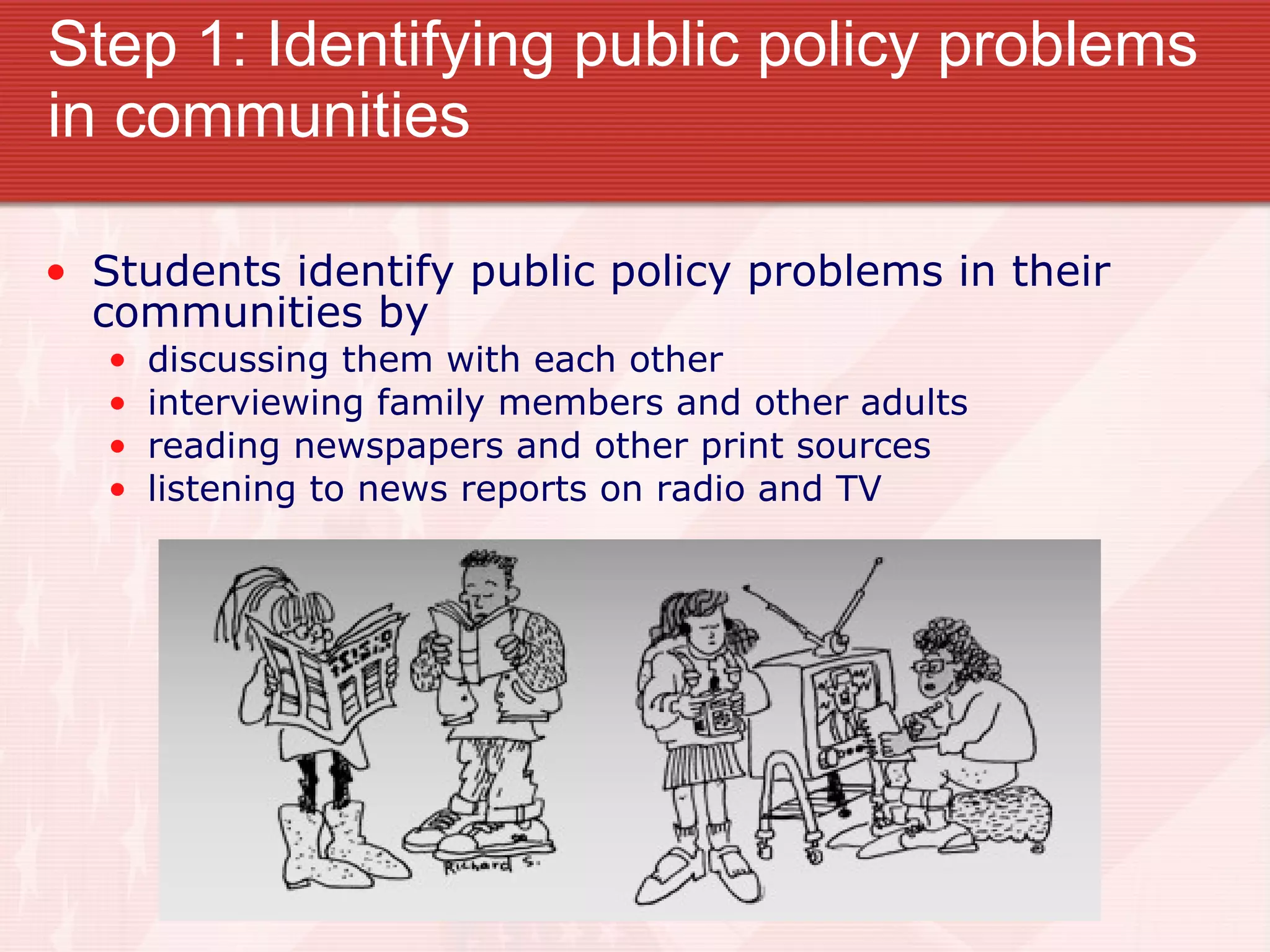
Step 1: Identifying public policy problems in communities Students identify public policy problems in their communities by discussing them with each other interviewing family members and other adults reading newspapers and other print sources listening to news reports on radio and TV
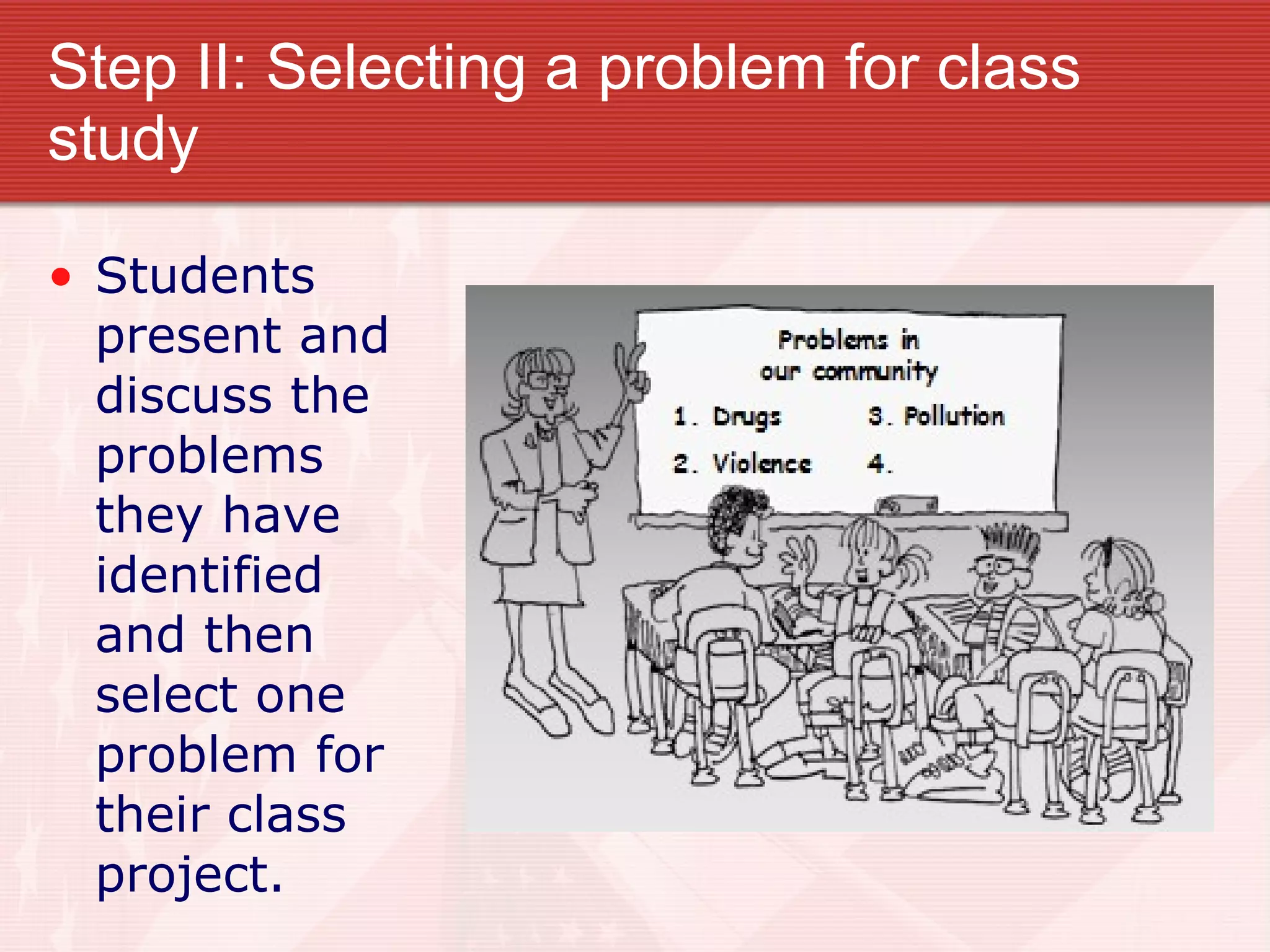
Step II: Selecting a problem for class study Students present and discuss the problems they have identified and then select one problem for their class project.
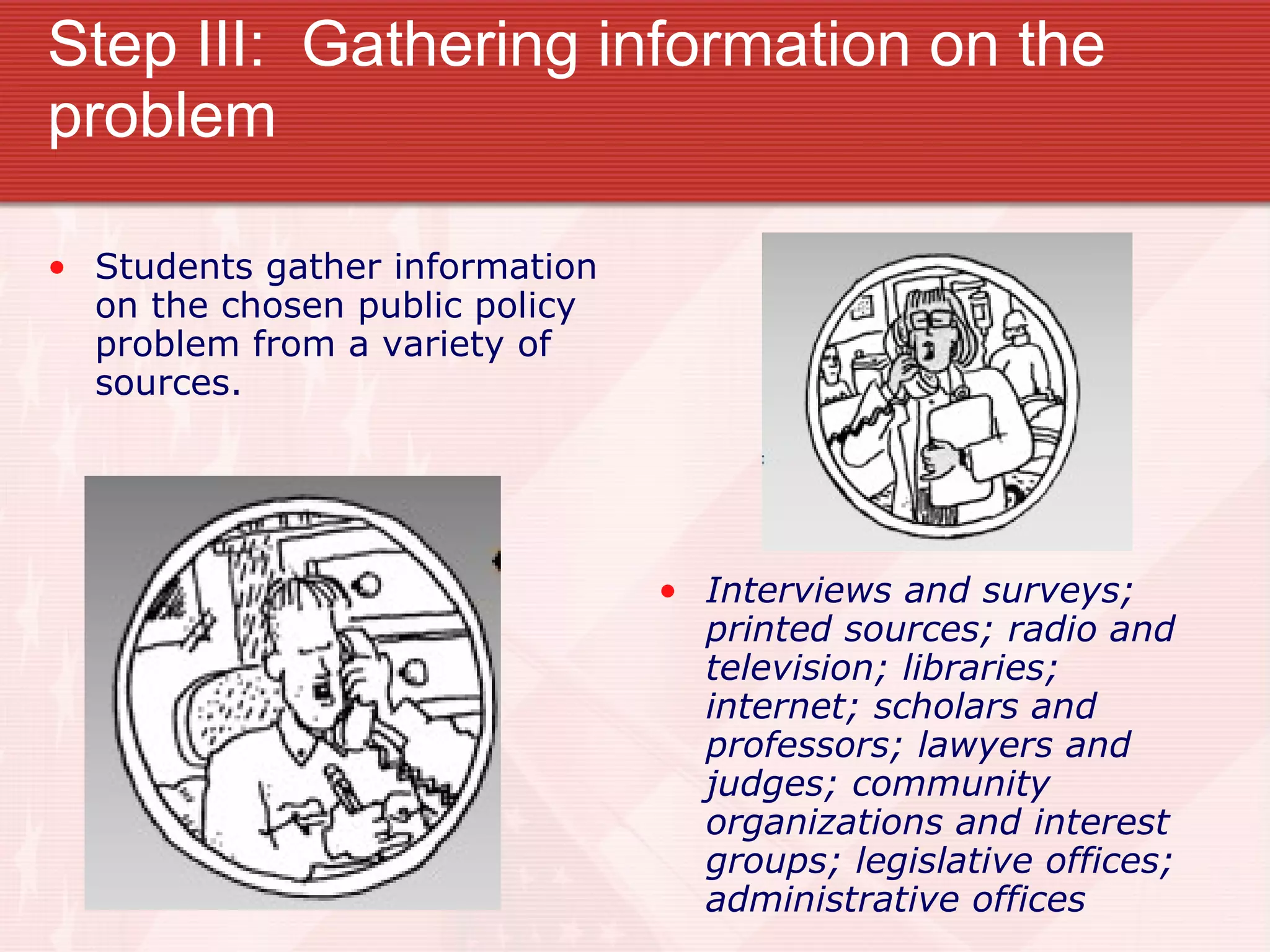
Step III:  Gathering information on the problem Students gather information on the chosen public policy problem from a variety of sources.  Interviews and surveys; printed sources; radio and television; libraries; internet; scholars and professors; lawyers and judges; community organizations and interest groups; legislative offices; administrative offices
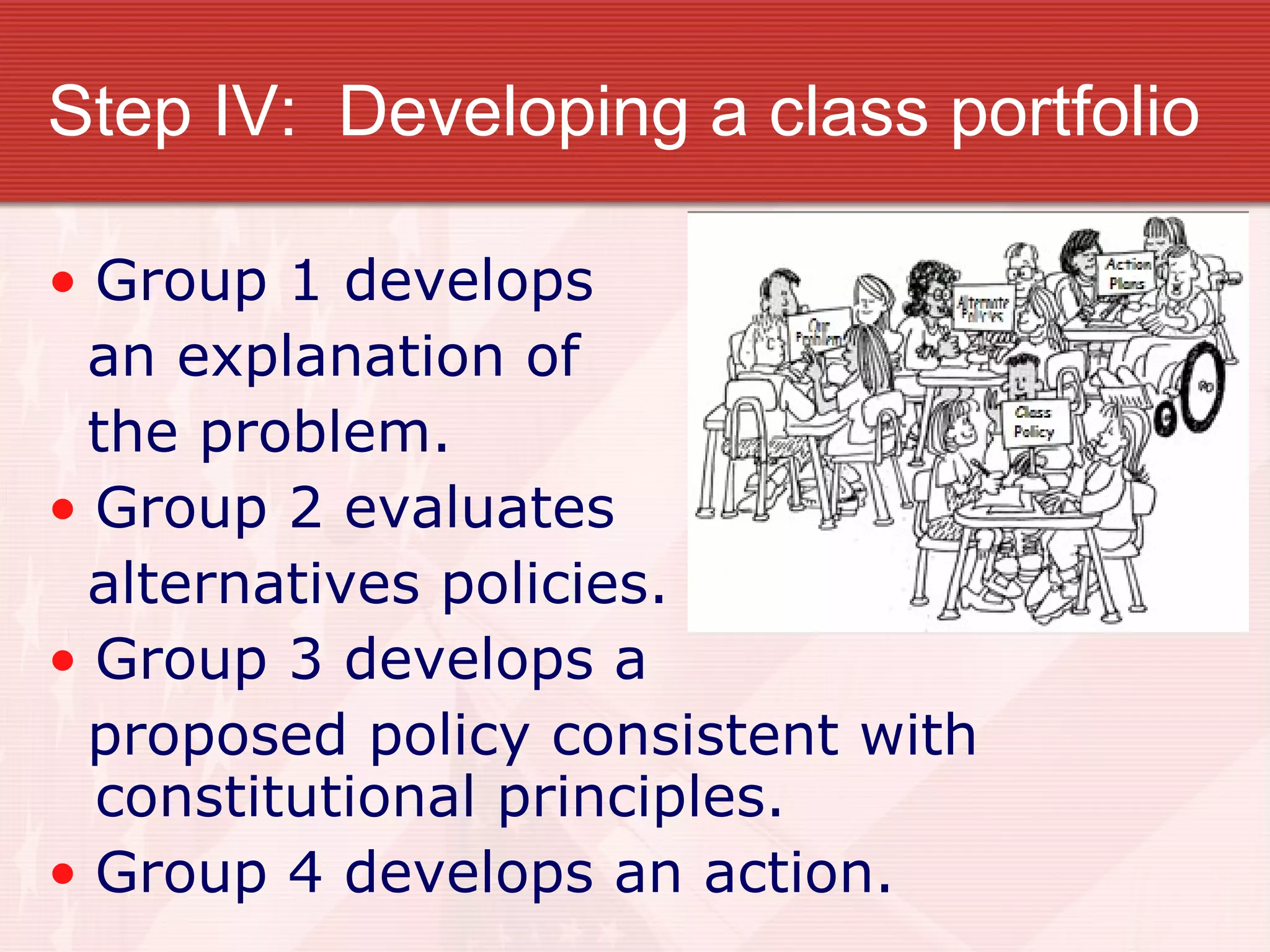
Step IV:  Developing a class portfolio Group 1 develops  an explanation of  the problem. Group 2 evaluates  alternatives policies. Group 3 develops a  proposed policy consistent with  constitutional principles. Group 4 develops an action.
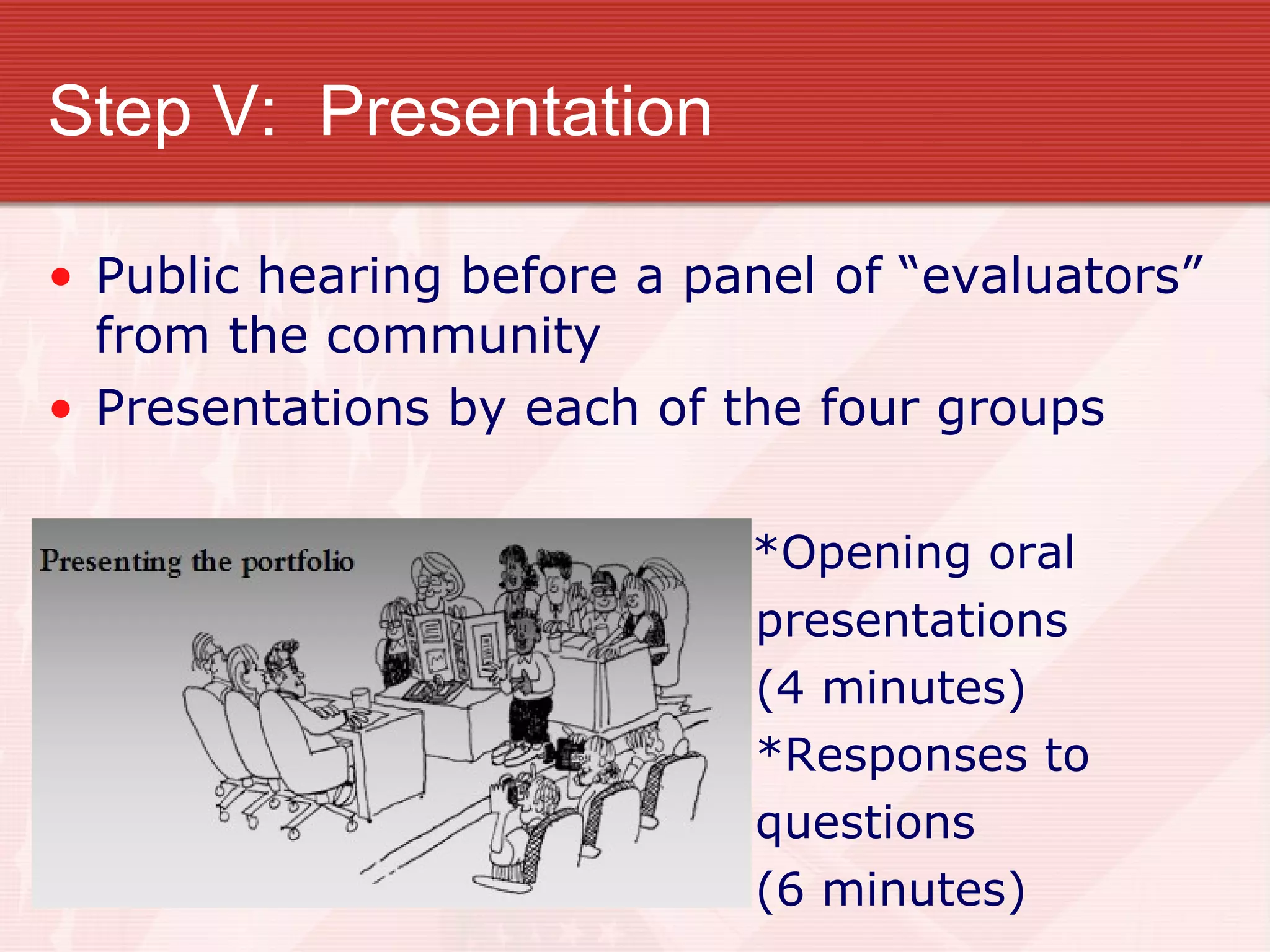
Step V:  Presentation Public hearing before a panel of “evaluators” from the community Presentations by each of the four groups   *Opening oral presentations  (4 minutes) *Responses to questions  (6 minutes)
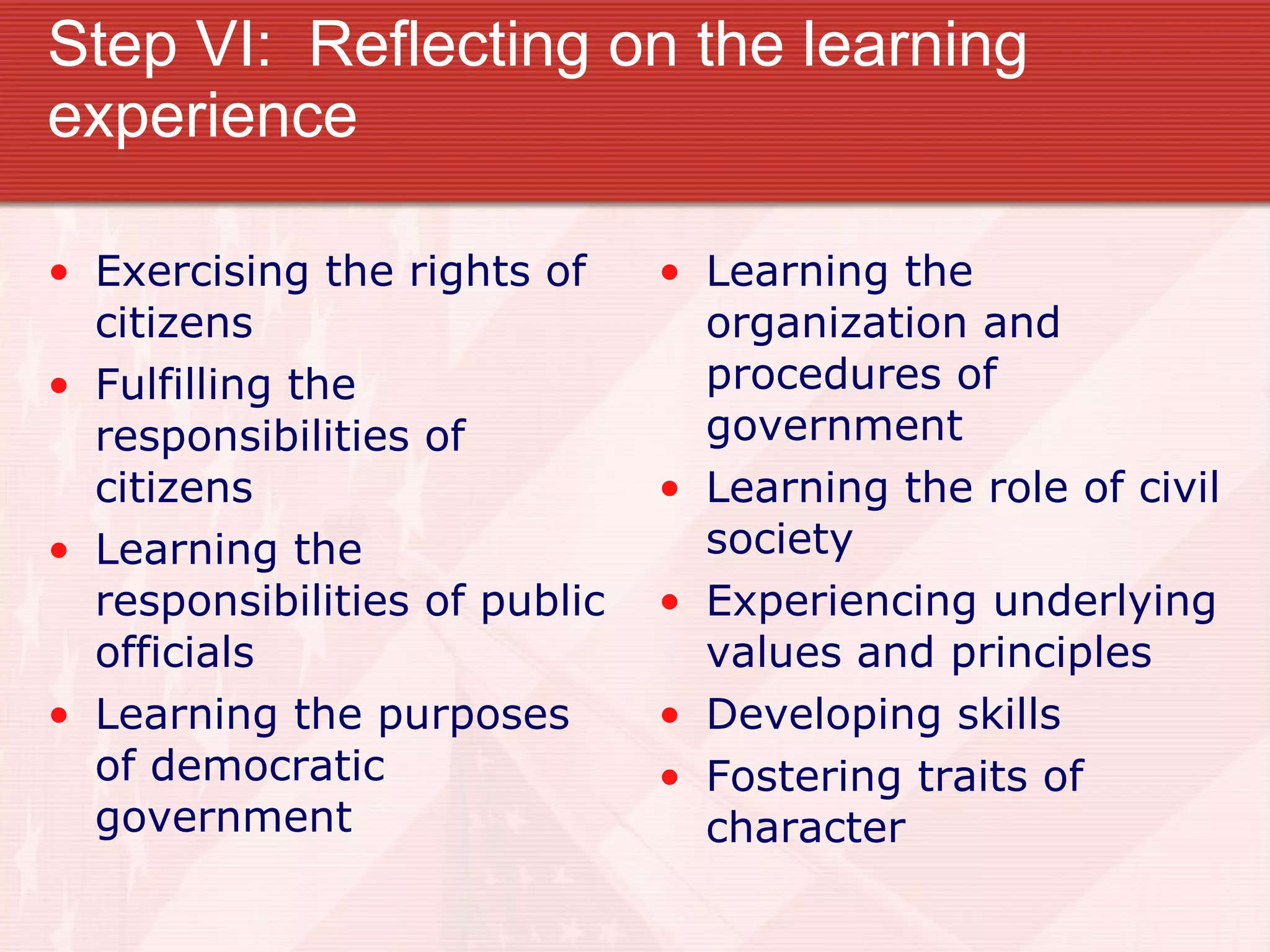
Step VI:  Reflecting on the learning experience Exercising the rights of citizens Fulfilling the responsibilities of citizens Learning the responsibilities of public officials Learning the purposes of democratic government Learning the organization and procedures of government Learning the role of civil society Experiencing underlying values and principles Developing skills Fostering traits of character

Project citizen intro power point

  • 1.
    We the People: Project Citizen A program of the Center for Civic Education in cooperation with the National Conference of State Legislatures supported by the United States Department of Education
  • 2.
    What is Project Citizen ? Education for democratic citizenship Teaching students to monitor and influence public policy Interdisciplinary curriculum for students Focuses on state and local government Applies learning to real world issues Uses cooperative learning Serves as a model performance assessment
  • 3.
    What is publicpolicy? Agreed upon ways for government to fulfill its responsibilities to protect the rights of individuals and promote the general welfare by solving problems Public policies are stated in laws, rules, regulations, decisions and practices created by Executive, legislative, and judicial branches Government bureaucracies Regulatory agencies Other public decision-making bodies
  • 4.
    Educational outcomes Knowledgeand understandings Skills Intellectual Participatory Civic virtues Dispositions Commitments
  • 5.
    Sequence of stepsin Project Citizen As a class project, students work together to identify and study a public policy problem, propose a solution, and eventually develop an action plan for implementing their policy. Student work is displayed in a portfolio and documentation binder.
  • 6.
  • 7.
    Portfolio and documentationbinder Explanation of the problem Evaluation of alternative policies Presentation of proposed policy Presentation of an action plan
  • 8.
    Step 1: Identifyingpublic policy problems in communities Students identify public policy problems in their communities by discussing them with each other interviewing family members and other adults reading newspapers and other print sources listening to news reports on radio and TV
  • 9.
    Step II: Selectinga problem for class study Students present and discuss the problems they have identified and then select one problem for their class project.
  • 10.
    Step III: Gathering information on the problem Students gather information on the chosen public policy problem from a variety of sources. Interviews and surveys; printed sources; radio and television; libraries; internet; scholars and professors; lawyers and judges; community organizations and interest groups; legislative offices; administrative offices
  • 11.
    Step IV: Developing a class portfolio Group 1 develops an explanation of the problem. Group 2 evaluates alternatives policies. Group 3 develops a proposed policy consistent with constitutional principles. Group 4 develops an action.
  • 12.
    Step V: Presentation Public hearing before a panel of “evaluators” from the community Presentations by each of the four groups *Opening oral presentations (4 minutes) *Responses to questions (6 minutes)
  • 13.
    Step VI: Reflecting on the learning experience Exercising the rights of citizens Fulfilling the responsibilities of citizens Learning the responsibilities of public officials Learning the purposes of democratic government Learning the organization and procedures of government Learning the role of civil society Experiencing underlying values and principles Developing skills Fostering traits of character