Programming And Scheduling Techniques Thomas E Uher
Programming And Scheduling Techniques Thomas E Uher
Programming And Scheduling Techniques Thomas E Uher
Programming And Scheduling Techniques Thomas E Uher
Programming And Scheduling Techniques Thomas E Uher
1.
Programming And SchedulingTechniques Thomas E
Uher download
https://ebookbell.com/product/programming-and-scheduling-
techniques-thomas-e-uher-4120566
Explore and download more ebooks at ebookbell.com
2.
Here are somerecommended products that we believe you will be
interested in. You can click the link to download.
Mathematical Programming And Financial Objectives For Scheduling
Projects 1st Edition Pd Dr Alf Kimms Auth
https://ebookbell.com/product/mathematical-programming-and-financial-
objectives-for-scheduling-projects-1st-edition-pd-dr-alf-kimms-
auth-4210088
Chemical Production Scheduling Mixedinteger Programming Models And
Methods Christos T Maravelias
https://ebookbell.com/product/chemical-production-scheduling-
mixedinteger-programming-models-and-methods-christos-t-
maravelias-46124836
Programming And Gui Fundamentals Tcltk For Electronic Design
Automation Suman Lata Tripathi
https://ebookbell.com/product/programming-and-gui-fundamentals-tcltk-
for-electronic-design-automation-suman-lata-tripathi-46318712
Programming And Mathematical Thinking A Gentle Introduction To
Discrete Math Featuring Python 1st Edition Allan M Stavely
https://ebookbell.com/product/programming-and-mathematical-thinking-a-
gentle-introduction-to-discrete-math-featuring-python-1st-edition-
allan-m-stavely-49183594
3.
Programming And EngineeringComputing With Matlab 2023 2023th Edition
Hueihuang Lee
https://ebookbell.com/product/programming-and-engineering-computing-
with-matlab-2023-2023th-edition-hueihuang-lee-54233130
Programming And Customizing The Avr Microcontroller Dhananjay Gadre
https://ebookbell.com/product/programming-and-customizing-the-avr-
microcontroller-dhananjay-gadre-2094058
Programming And Customizing The Pic Microcontroller Tab Electronics
3rd Edition Myke Predko
https://ebookbell.com/product/programming-and-customizing-the-pic-
microcontroller-tab-electronics-3rd-edition-myke-predko-2094184
Programming And Metaprogramming In Scheme Pearce Jon
https://ebookbell.com/product/programming-and-metaprogramming-in-
scheme-pearce-jon-21958698
Programming And Problem Solving With Java Nell B Dale Chip Weems
https://ebookbell.com/product/programming-and-problem-solving-with-
java-nell-b-dale-chip-weems-2532202
CONTENTS
Preface ix
Abbreviations x
CHAPTER1 THE CONCEPT OF PLANNING 1
Introduction 1
Planning process 2
Types of planning activities 7
Planning tools and techniques 8
Planning of construction projects 9
Planning tasks at different stages of the project lifecycle 16
Examples of construction plans and schedules 22
Summary 25
CHAPTER 2 BAR CHARTS 26
Introduction 26
What is a bar chart? 26
Linked bar chart 28
Process of developing a bar chart 29
Activity duration 30
Risk contingency 33
Method statement 34
Summary 37
CHAPTER 3 THE CRITICAL PATH METHOD 38
Introduction 38
A brief history of the critical path method 39
Arrow method 40
Precedence method 54
Concept of link lag 63
Summary 67
Exercises 68
CHAPTER 4 RESOURCE MANAGEMENT 72
Introduction 72
Resources 74
Distribution of resources 74
Resource levelling 77
10.
Resource levelling performedby computers 86
Managing the labour resource 87
Managing materials 90
Managing plant and equipment 92
Summary 96
Exercises 97
CHAPTER 5 OVERLAPPING NETWORK MODELS 101
Introduction 101
Finish-to-start link (FTS) 102
Start-to-start link (STS) 103
Finish-to-finish link (FTF) 105
Start-to-finish link (STF) 107
A compound link 108
Free and total float in overlapped networks 110
Calculating an overlapped critical path schedule 111
Overlapping of critical path schedules by computer 117
Redundant links in precedence schedules 118
Summary 118
Exercises 119
CHAPTER 6 PROJECT CONTROL 122
Introduction 122
Project performance outcomes 122
Project control system 123
Monitoring performance 124
Evaluating performance 127
Adjustments/updates 129
Example of monitoring, evaluation and adjusting or updating 129
of a critical path schedule
Cost–time optimisation 132
Earned value 146
Summary 152
Exercises 152
CHAPTER 7 CRITICAL PATH SCHEDULING BY COMPUTER 157
Introduction 157
Brief overview of Primavera Project Planner P3 software 158
Scheduling a residential project using Primavera P3 161
Overlapping models in Primavera P3 178
Summary 180
11.
CHAPTER 8 CRITICALCHAIN SCHEDULING 181
Introduction 181
Shortcomings of the critical path method 181
Theory of constraints 184
Critical chain scheduling 185
Summary 187
CHAPTER 9 MULTIPLE ACTIVITY CHARTS 188
Introduction 188
Format of a multiple activity chart 189
Preparation of a multiple activity chart 190
Example of MAC scheduling 192
Summary 200
Exercises 200
CHAPTER 10 THE LINE OF BALANCE TECHNIQUE 206
Introduction 206
Concept of line of balance 207
Concept of delivery program in LOB 209
Developing a LOB schedule 212
Developing a LOB schedule for projects requiring multiple crews 216
Summary 222
Exercises 222
CHAPTER 11 WORK STUDY 224
Introduction 224
Method study 226
Work measurement 236
Summary 249
Exercises 249
CHAPTER 12 RISK AND SCHEDULING 251
Introduction 251
Risk and uncertainty 252
Principles of risk management 253
Risk management plan 266
Probability scheduling 266
Summary 270
CHAPTER 13 THE PROGRAM EVALUATION AND REVIEW 271
TECHNIQUE (PERT)
Introduction 271
Network construction 272
12.
The probability conceptin PERT 273
The computational process in PERT 277
Example of a PERT schedule 278
An alternative approach to PERT 281
Summary 283
Exercises 284
References 287
Index 290
13.
PREFACE
Planning is animportant management function and its effective
execution is a condition precedent for successful project out-
comes. This book addresses operational rather than strategic
aspects of planning of construction projects. It describes specific
scheduling techniques and processes commonly used in the con-
struction industry. While used mainly at the construction stage,
the described techniques and processes are suitable for applica-
tion across all the stages of the project life cycle.
Many books have been written on aspects of construction
scheduling, but they largely focus on the critical path method and
do not provide a comprehensive review of a range of scheduling
techniques. This book attempts to redress this problem.
While this book serves as a reference for construction indus-
try practitioners, it has mainly been written as a text and refer-
ence material for students studying architecture, building,
construction management and civil engineering, and for quantity
surveying undergraduate and postgraduate programs.
The bulk of the book describes deterministic scheduling tech-
niques, but the last two chapters introduce the concept of proba-
bility scheduling using Monte Carlo simulation and PERT. The
book examines scheduling techniques such as the bar chart, criti-
cal path method, multiple activity chart and line of balance. It
includes a brief chapter on critical chain scheduling and describes
its main features. Although not a scheduling technique, work
study has nevertheless been included since it assists planners and
project managers in developing efficient production methods.
Practical exercises at the ends of chapters have detailed solutions
posted on the UNSW Press website:
http://www.unswpress.com.au
T.E. Uher
14.
ACWP Actual costfor work performed
AS Activity slack
BAC Budget at completion
BCWP Budget cost for work
performed
BCWS Budget cost for work schedule
CCM Critical chain management
CCS Critical chain scheduling
CIM Control interval and memory
CPI Cost performance index
CPM Critical path method
CV Cost variance
DEP Department
EAC Estimate at completion
EFD Earliest finish date
ES Event slack
ESD Earliest start date
ESTM Estimating department
EV Earned value
FF Free float
FTS Finish-to-start
FTF Finish-to-finish
ID Identification code
LSD Latest start date
LFD Latest finish date
LOB Line of balance
LSM Linear scheduling method
LSMh Linear scheduling model
MAC Multiple activity chart
MAX Maximum
MBO Management by objectives
MIN Minimum
PC Percentage complete
PERT Program evaluation and
review technique
RPM Repetitive project modelling
RUF Resource utilisation factor
SPI Scheduled performance index
STS Start-to-start
STF Start-to-finish
SV Scheduled variance
TF Total float
TOS Theory of constraints
VPM Vertical production method
WBS Work breakdown structure
ABBREVIATIONS
15.
CHAPTER 1
THE CONCEPTOF
PLANNING
INTRODUCTION
The purpose of this chapter is to introduce the concept of plan-
ning, and in particular operational planning. A systematic
approach to planning will be discussed first, followed by a brief
review of different types of planning activities such as strategic,
operational and co-ordinative. A range of planning tools and tech-
niques will then be examined, followed by a discussion on impor-
tant issues relevant to planning of construction projects. In
particular, the distinction will be made between time and resource
scheduling. In the next section, an overview of specific planning
tasks employed in individual stages of the project life cycle will be
given. Finally, examples of plans, programs and schedules used in
the construction industry will be illustrated.
Planning is one of the four main functions of management.
Together with organising, control and leading, it forms the foun-
dation pillars of effective management (Robbins et al. 2000). In
simple terms, planning is a process of forecasting future outcomes
that may be uncertain or even unknown. It means assessing the
future and making provision for it by gathering facts and opinions
in order to formulate an appropriate course of action. Planning thus
develops a strategy and defines expected outcomes (objectives) for
undertaking a specific task before committing to such a task.
Once a planning strategy has been determined and objectives
defined for a specific task, the manager will select and allocate
necessary resources for carrying out the work. This is referred to
as ‘organising’. It is the second of the four most important man-
agement functions.
1
The concept of planning
16.
Because a planis only a forecast of some specific future events
whose outcomes are uncertain, it would be unreasonable to
expect it to be accurate. Realistically, the manager must expect
the actual progress to deviate from the plan. Accepting that some
deviation will occur, the manager will look for it by monitoring
the progress, evaluating deviations from the plan and replanning
accordingly. This process is referred to as ‘control’. It is the third
of the four important management functions.
Planning, organising and control functions are closely linked
within a typical production process. This is illustrated graphically
in Figure 1.1.
Figure 1.1 A typical production process
Planning is the foundation stone of control. It would be point-
less to develop a plan if there was no attempt to control its imple-
mentation. Effective control of the production process involves its
continuous monitoring, evaluation and adjustment. The control
process needs to be dynamic to reflect changing circumstances
caused by issues such as:
• fluctuations in the level of demand and sales
• availability of resources
• changes in the level of economic activity
• changing strategies of competitors.
PLANNING PROCESS
If the main focus is to generate profit and increase it annually, the
organisation would regard profitability as its objective and would
develop appropriate strategies for achieving it. Construction proj-
ects are no different. They are expected to be completed on
schedule, within the cost budget and to the required quality stan-
dards. These are the most common objectives of projects.
Establishing objectives is the first step in a typical planning
process. Other steps are (Fulmar 1983):
2
Programming and Scheduling Techniques
17.
• forecasting
• examiningresources
• establishing policies
• developing alternatives
• creating procedures and rules
• establishing budgets
• establishing timetables
• determining standards.
These planning steps will now be briefly discussed.
Setting objectives
Planning begins by setting objectives and defining strategies for
achieving them. It occurs at each organisational level and leads to
the development of a comprehensive hierarchy of strategies and
actions relevant to the whole organisation as well as to its indi-
vidual levels of activity.
Planning across the entire organisation is a complex, system-
atic process that requires careful co-ordination and integration of
a wide range of activities. At the top are the objectives of the
organisation as a whole. These are broken up from the top down
into a set of objectives relevant for each level of organisational
activity.
The overall organisational objectives may often be vague.
Becoming the market leader, increasing profitability, providing
the best customer service or promoting best practice serve as
examples of organisational objectives that illustrate the degree of
their generality.
As organisational objectives are passed down the line, they
usually become more specific. For example, objectives of the con-
struction department of a building contractor might be to
improve the tender success rate, deliver construction projects
ahead of time or improve people’s skills. At a project level, objec-
tives become quite specific. For example, in the project period
they define its cost and the required quality standards. They may
also define safety performance and the maximum permissible
level of contractual and industrial disputes. With such specific
objectives in place, the project manager is able to assess the actu-
al level of progress and performance.
In setting objectives, particularly those at the organisational
level, the company’s management need to take a broader view of
objectives by asking themselves what business they are in and
what their customers really pay them for. If, for example,
3
The concept of planning
18.
Hewlett-Packard, which isbetter known for producing office
machines, had not defined its business as ‘supplying information’,
its growth could have been inhibited in the fast-expanding field
of information technology.
Similarly, in setting their own objectives, subordinate man-
agers need to identify what the organisation really wants from
them and from their functional units or projects. This process will
ensure that objectives are correctly defined and properly integrat-
ed across the entire organisation. They will then form an inte-
grated network or ‘a means-ends chain’ (Robbins et al. 2000: 260)
where the objectives at a lower level (referred to as means) need
to be satisfied if the objectives at the next higher level (referred to
as ends) are to be met.
Setting objectives from the top down has an advantage in that
subordinate managers know what they need to achieve within
their sphere of responsibility. Sometimes, however, managers
down the line may become frustrated when their input is not
sought from above in setting the objectives. This may impact
negatively on managers’ motivation and lead to inefficiency.
The ideal scenario is when managers down the line are asked
to contribute to setting objectives and the formulation of plans
for reaching them. For example, state managers of a construction
company may be required to forecast the future volume of work
in their respective states and suggest strategies for increasing
turnover. This information would help top management in devel-
oping the overall corporate objectives. When objectives are set
jointly by subordinates and their superiors across different levels
of organisation, and rewards allocated on the basis of achieving
progress, management practice is referred to as ‘management by
objectives’ (MBO). It is a popular and well-established system for
setting objectives and ensuring their successful accomplishment
(Robbins et al. 2000).
Forecasting
Forecasting is the estimation of future controllable and uncontrol-
lable events and opportunities pertinent to an organisation’s busi-
ness activities. It involves systematic assessment of future
conditions, such as economic climate, political and social issues,
future demand for goods and services, changes in the population
growth, and the like.
Forecasts are by their nature always wrong. It is therefore the
manager’s task to continually revise and update the information
that the manager uses in decision-making.
4
Programming and Scheduling Techniques
19.
Examining resources
The achievementof objectives is largely dependent on the correct
allocation of resources in the form of people, materials, plant,
equipment and money. Time may also be regarded as a resource.
Even well-defined plans may go astray. When, for example, a
project falls behind its schedule and the project manager is unable
to speed it up by simply making the committed resources work
harder or by improving the work method, often the only remedy
available is to inject additional resources. These, however, may not
be available when needed, or may not have the required skill or
capacity. Furthermore, the cost of injecting additional resources
may be prohibitive, particularly in the case of heavy plant or equip-
ment. The manager’s task is to allocate enough resources to achieve
the given objectives and to make contingency plans for securing
additional resources for times when they might be needed.
Establishing policies
Policies are guides for thinking. They govern the execution of
activities within an organisation. They are the foundation of an
organisation. ‘Policy is a broad pathway within which the work-
er moves toward an objective’ (Fulmar 1983: 103). The recruit-
ment policy and the promotion policy serve as examples of
typical organisation policies.
Organisations form their own policies, but sometimes policies
are imposed by external sources such as governments. The NSW
Government policy on tendering (NSW Government 1996) is an
example of an externally imposed policy on organisations bidding
for government work.
Developing alternatives
No planning task is accomplished without the development of
plausible alternatives. All possible courses of action need to be
identified and evaluated, even those that may appear to be unusu-
al or even ridiculed by some. It may well be that the most unusu-
al alternative will provide the best solution for achieving the
objectives.
Creating procedures and rules
Within the bounds of the organisation’s policies, procedures and
rules provide a precise recipe for the manager to follow in taking
action. Procedures define a logical sequence of steps to be fol-
lowed in decision-making. Rules are agreed to in advance. They
5
The concept of planning
20.
6
Programming and SchedulingTechniques
define specific conditions of various procedural steps. For exam-
ple, a contractor has a policy for awarding work to subcontractors
on the basis of competitive tendering. The tendering procedure
then defines, step by step, the contractor’s approach to adminis-
tering competitive tendering to subcontractors. One of the rules
defined in the tendering procedure may be that tenders must be
sought from at least three subcontractors per trade contract.
Establishing budgets
The purpose of budgets is to work out beforehand an expected
outlay of resources necessary for the accomplishment of the
objectives. Depending on the planning task, budgets may be
expressed in financial terms, which is the most common form, or
in some other terms, such as labour hours or the volume of mate-
rials installed.
Budgeting is both a planning and a control task. The accurate
knowledge of where the resources have actually gone to is essen-
tial in measuring efficiency in the production process. It also
assists in future planning.
Establishing timetables
Like cost and other resources, time is an important element in
planning. Practically all planning tasks are constrained by time.
There is almost always a deadline for accomplishing the work.
In the absence of any time constraints, a manager would be
able to establish the completion date of a project from the
planned quantity of work and the required level of resources
employed to carry out the work. However, most construction
projects are rigidly constrained by time. Delays in completion
have serious financial implications for the parties concerned. The
development of a project schedule often requires the project man-
ager to plan from the end, that is, from the deadline set for the
completion of the project. In such situations, the planning task is
focused more on fitting all the required work and the necessary
resources into a rigid time-frame, which often results in ineffi-
ciencies and high cost, rather than on developing a plan optimised
in terms of time, cost and other resources.
Determining standards
Since a plan is an essential element of control, it must be devel-
oped so as to permit assessment of progress and performance in
terms of time, cost, the use of resources and the like.
21.
7
The concept ofplanning
Reviewing
Before a plan for a particular task is finalised and implemented,
the manager will review the plan and critically reassess the over-
all planning strategy, particularly sequences, methods, resources
and budgets.
Implementing
No matter how good the plan is, its effectiveness will ultimately
depend on the degree of commitment the organisation’s person-
nel give it. The starting point in developing the required degree of
commitment is to involve those people who are going to be
affected by the plan in its development. If the plan requires the
adoption of new processes or techniques, people involved in such
processes may need to improve their existing skills or acquire
new ones through training.
TYPES OF PLANNING ACTIVITIES
Planning occurs at all levels of an organisation, but the emphases
vary from level to level. At the highest level is the ‘strategic plan-
ning’ that determines an overall business strategy such as mission
and objectives. At lower levels, ‘operational’ and ‘co-ordinative’
planning activities take place.
Strategic planning
Strategic planning is defined by Bryson & Alston (1996: 3) as ‘a
disciplined effort to produce fundamental decisions and actions
that shape and guide what an organisation is, what it does, and
why it does it’. While the definition suggests that an organisation
is an ongoing corporate entity, the concept of strategic planning is
equally relevant to an organisation of a limited life span, such as
a construction project organisation.
Strategic plans are long-term, covering a period of up to three
years. They include the formulation of a statement of mission,
objectives, and broader strategies for accomplishing the stated
objectives.
Operational planning
In comparison to strategic plans, operational plans are medium to
short-term with a time-scale defined in days, weeks or months.
The main purpose of operational plans is to develop detailed
22.
strategies for achievingspecific objectives. Construction sched-
ules are an example of operational plans.
Co-ordinative planning
Co-ordinative planning establishes policies, procedures, rules,
tactics and strategies through which strategic and operational
planning are linked together. A risk management plan or a quali-
ty management plan are examples of co-ordinative planning.
PLANNING TOOLS AND TECHNIQUES
Numerous planning tools and techniques have been developed to
assist managers with planning. A comprehensive description of
planning tools and techniques can be found in Robbins and col-
leagues (2000). Some of these will now be briefly reviewed.
Environmental scanning
Environmental scanning is a systematic screening of information
from which the manager is able to detect emerging trends. In
some industries such as IT, advances in technology are rapid.
Managers need to be constantly on the alert for new advances
and trends that could maintain or improve their organisation’s
competitiveness. The most commonly used techniques are com-
petitor intelligence, global scanning and scenario building.
Forecasting
Forecasting assists the manager to predict future outcomes. This
topic has already been briefly discussed on page 4.
Benchmarking
‘Benchmarking is the comparison of practices either between dif-
ferent departments within the company, or with other companies
in the same industry, or finally with other industries’ (McGeorge
& Palmer 1997: 81). The aim of benchmarking is to search for the
best practice in order to achieve superiority among competitors.
It has become a popular and a widespread technique across many
industries, including construction.
Budgeting
Budgets were defined on page 6 as plans for allocating resources
to specific activities that would be performed by an organisation
in its attempt to attain objectives. Budgets are formed for many
8
Programming and Scheduling Techniques
23.
different items orareas of activities, examples of which are rev-
enue, expense or capital expenditure budgets.
Operational planning tools
Operational planning tools are used by managers in day-to-day
problem-solving. This may involve scheduling of work using bar
charts or the critical path method, allocating and levelling
resources using linear programming, predicting profitability
through, say, break-even analysis, assessing cost performance by
way of earned value, and assessing risk in decision-making
through the concept of risk management. There are other tech-
niques such as queuing theory, marginal analysis and simulation
that assist managers in decision-making.
This is the area of planning that this book addresses. The fol-
lowing chapters will discuss several operational planning tools
used in planning and controlling construction projects.
PLANNING OF CONSTRUCTION PROJECTS
The foregoing discussion has addressed the general principles of
planning that can be applied in any organisation. Since the main
purpose of this book is to examine the scheduling of construction
projects, the focus of discussion will now shift to important issues
pertinent to the planning of construction projects.
A project can be said to be a particular and unique form of
organisation with a limited lifespan. It exists for a finite period
only: the achievement of its objective means that it comes to an
end. An important characteristic of projects is that they are driv-
en by objectives that are defined at the start. The project manag-
er assumes overall responsibility for the project and leads the
project team.
Between their beginning and their ending, projects pass
through a series of stages commonly known as the ‘project life-
cycle’, through which a project is conceived, designed, construct-
ed and commissioned. Planning activities that take place in
individual stages of the project lifecycle will be discussed later in
this chapter.
Definition of planning terms
Although the terms ‘planning’, ‘programming’ and ‘scheduling’
are generally used indiscriminately, they are fundamentally dif-
ferent from each other. Using a top-down hierarchical approach,
‘planning’ sits at the top. It is the overall approach to predicting a
9
The concept of planning
24.
future course ofaction. ‘Programming’ is placed in the middle. It
is the name given to the task of identifying activities, establishing
relationships, and developing logical sequences among such activ-
ities that would depict their order of execution. ‘Scheduling’ sits
at the bottom. It is a process of quantifying the program. This
involves, for example determining times and costs of activities,
and the efficiency of allocated resources.
For the sake of simplicity and clarity, no distinction will be
made between the terms ‘programming’ and ‘scheduling’ in this
book. But a distinction will be maintained between ‘planning’ and
‘scheduling’.
‘Construction planning’ may refer to a range of tasks con-
cerned with determining the manner in which a job is to be car-
ried out: budgeting, forecasting, preparing feasibility studies, or
creating construction schedules. ‘Construction scheduling’, how-
ever, is concerned only with sequencing and timing of activities in
a particular production process.
Hierarchy of plans and schedules
A well-planned construction project will use a series of plans and
schedules. There will be those that show the planned use of time,
such as bar charts or critical path schedules. There will also be
those that show planned use of other important resources such as
labour, materials, plant and money. These will be prepared in the
form of schedules, charts, graphs or histograms, with close atten-
tion paid to their co-ordination and integration.
While in theory it is possible to prepare a schedule for a large
project that would show activities across all its lifecycle stages in
great detail (for example charting each day), in practical terms
such a schedule would be too large, too complex and probably
unworkable. There is ample anecdotal evidence of schedules that
cover the entire wall space of site offices. Such schedules are bet-
ter suited for interior decoration of offices than for managing con-
struction projects.
Clearly, it is necessary right from the beginning to agree on a
hierarchical system of schedules for a given project. This is
achieved using a ‘work breakdown structure’ or WBS.
The WBS assists in breaking down the total scope of the proj-
ect into subsystems, elements and activities related to its design
and construction. Typically, the project is divided hierarchically
into five or six levels to show the required degree of detail and to
ensure that every important aspect of the project has been identi-
fied. A typical example of a WBS is given in Figure 1.2 where
10
Programming and Scheduling Techniques
25.
‘Subproject A’, forexample, may involve the development of a
brief, ‘Subproject B’ refers to the process of design and documen-
tation, and ‘Subproject C’ represents construction of the project.
Lower levels of WBS define project tasks in more detail.
Figure 1.2 WBS of a project (from Hamilton 1997: 86)
Once the WBS has been defined, scheduling of the work
begins for each level. The format of schedules developed at each
level of the WBS is likely to vary, as will the amount of detail
shown. Those prepared to higher levels of the WBS will show a
graphic overview of the total project period with only major work
sequences, while the amount of detail will increase for lower-
level schedules.
11
The concept of planning
26.
The program hierarchybecomes the basis for planning of
work activities, monitoring and evaluating their progress, and
exercising control. At the top is a long-term schedule for the
entire project. Its time-scale will commonly be in weeks or
months and will show the overall strategy for the job.
Specifically, it will show the start and completion of each project
stage, major activities and their interdependencies, the key
resources needed and the provision for delay contingency. It also
shows the key target dates that must be met across the entire
project lifecycle. Depending on the size of the project and its
overall period, it may well be that more than one long-term
schedule will be prepared. For example, for the project in Figure
1.2 the total of four long-term schedules may be prepared, one for
level 0 and three for level 1 of the WBS.
A ‘medium-term’ schedule is prepared next. It commonly
shows a period of 8–12 weeks of work within the overall long-
term schedule. It is more detailed than a long-term schedule and
commonly shows work tasks on a weekly scale. For the project in
Figure 1.2, three medium-term schedules would be prepared for
level 2 of the WBS.
A ‘short-term’ schedule shows the greatest level of detail,
such as resources. The main activities are broken down into sub-
activities in order to determine the extent of resource require-
ments. A short-term schedule commonly shows between one-
and four-week production periods and its scale is in days. Because
the main resources have already been committed, the task is then
to allocate the work to the committed resources. Short-term
schedules are thus said to be resource-driven.
A short-term schedule may further be broken down into a
series of ‘daily schedules’ for specific tasks. A daily schedule
would simply list activities to be performed in one day together
with their durations expressed in hours. Alternatively, a simple
bar chart can be used for this purpose.
An overall long-term schedule is a reference point for sched-
ules on the next lower level of WBS, which in turn becomes a ref-
erence point for schedules on levels further down.
The concept of scheduling
Scheduling involves answering the questions, such as ‘When can
the work be carried out?’ ‘How long will it take?’ and ‘What level
of resources will be needed?’ Scheduling is concerned with
sequencing and timing. Since time is money, it is also concerned
with cost.
12
Programming and Scheduling Techniques
27.
Scheduling is performedusing appropriate operational plan-
ning tools such as a bar chart or the critical path method.
Scheduling is a modelling task that assists in developing a desired
solution for a problem and tests its validity. Through modelling,
the physical size of a problem (say the development of an overall
construction schedule for a large project) is scaled down to a
smaller number of representative activities that are then sched-
uled by an appropriate scheduling tool. The solution is checked
and validated for accuracy. The derived schedule is used to plan,
organise and control construction of the project.
To check time progress, individual parts of the job are tracked
to determine if they are completed within the specified time lim-
its. Such information is then analysed to determine where the
problems are.
The most common form of a model in scheduling is a graph-
ic chart or network generated either by hand or by computer. The
form and shape of a chart varies from technique to technique. For
example, a sheet of paper lined with columns and rows represents
a bar chart format, while charts generated by the critical path
method are rather more complex and are commonly referred to
as networks (see for example Figures 3.7 or 3.14 in Chapter 3).
Types of schedules
This book makes reference to three types of schedules:
• a time schedule
• a resource schedule
• a target schedule.
Time schedule
Sometimes a schedule may be prepared to show a logical
sequence of activities with only notional information about dura-
tion of activities. The main aim would be to see the logic of the
production process and its approximate duration. Schedules pro-
duced for this purpose are referred to as ‘time schedules’.
A time schedule is prepared on the assumption that its activi-
ties will be given all the required resources when needed. In other
words, time scheduling assumes that resources are unlimited and
available when needed. This is an unrealistic assumption, how-
ever, since resources may simply be unavailable when needed, or
available in limited quantity, size and type or technical specifica-
tion. Furthermore, the assumption of unlimited resources will
13
The concept of planning
28.
lead to inefficientallocation of resources and the likelihood of
higher cost. This is illustrated in the following example.
Let’s focus on just three concurrent activities X, Y and Z in a
schedule in Figure 1.3(a). Assume that the three activities X, Y and
Z take two days each to complete. Let’s assume further that each
of the three activities requires access to a crane for two days.
Under the assumption of unlimited resources, a project manager
could order three cranes, one for each activity. The three activities
X, Y and Z would then be completed in two days.
Figure 1.3 Example of time and resource schedules
Time schedules are useful in developing an overall strategy with-
in a broadly defined time-frame. But since they assume that
resources are readily available when needed, they may not create
a realistic plan of the actual production process. More realistic
planning can be achieved using resource schedules.
Resource schedule
When resources are limited in availability, technical specification,
cost or some other means, those resources that are actually avail-
able then drive the scheduling task. For example, a very large
high-rise project may require a crew of 2000 workers to be
employed at the peak of activities. With such a large number of
people working on the site, part of the project manager’s task will
be to ensure that the site provides the required volume of site
amenities, the necessary safety equipment for the workers, and
14
Programming and Scheduling Techniques
29.
that the workerscan be moved efficiently through the structure
to their work stations. It may well be that the site is too confined
to provide the necessary volume of amenities for so many work-
ers. The site may also be too confined to accommodate a suffi-
cient number of personnel hoists that would ensure speedy
distribution of workers to their stations. The project manager
may respond by limiting the number of workers engaged on the
site (say 1200 maximum) to match available resources. The pro-
ject manager will then schedule the work around the maximum
number of 1200 workers. This approach ensures that resources
are used efficiently, but the project will take longer to complete.
A schedule based on the available or committed resources (in this
case based on the maximum of 1200 workers) is referred to as a
‘resource schedule’.
In resource schedules the work to be accomplished is assigned
to available or committed resources. When the volume of
resources is insufficient to carry out the work that has been
scheduled, the project manager would need to either inject more
resources or reschedule the work to free over-committed
resources. Injecting additional resources is likely to incur extra
cost while keeping to the same schedule. Rescheduling the work
around committed resources will most likely extend the project
period and possibly even its cost. In organising resources in the
planning stage, the project manager has the opportunity to seek
an optimum relationship between the cost and time of the pro-
ject. But once the project is under way with committed resources,
it is not possible for the project manager to keep the cost and time
at optimum when the committed resources are insufficient to
carry out the scheduled volume of work. The project manager
then has either to inject more resources or to reschedule the
work. Neither scenario is desirable since this is likely to increase
the project cost and extend its duration.
Let’s go back to the problem in Figure 1.3 and assume that
only one crane is available for the scheduled work involving activ-
ities X, Y and Z. Clearly, these activities cannot be performed con-
currently as scheduled. The project manager would need to
allocate the only available crane to one activity at a time in some
order of priority. Let’s assume that the order is X, Y and Z. The
completion of all three activities, X, Y and Z, will now take six
days as illustrated in Figure 1.3(b). In both (a) and (b), the total
volume of work will be the same: six crane days. But the com-
pletion times and costs will be different. The difference in com-
pletion times is clearly apparent, but why would the costs be
15
The concept of planning
30.
different? Since timeis money, the former case would incur lower
overhead costs due to a shorter schedule, but the cost of assem-
bling and dismantling the cranes would be higher than in the lat-
ter case.
In summary, the concept of time scheduling requires the proj-
ect manager to vary the volume of resources to meet work
demands. This means bringing in additional resources such as
plant/equipment and people to satisfy short-term peaks in
resource requirements, and removing them when they are no
longer required. Apart from the extra cost associated with bring-
ing resources in and taking them away, there is an additional
administrative cost associated with planning, organising and con-
trolling such activities.
An important observation here is that time schedules are likely
to provide an overly optimistic assessment of the project period.
For example, a contractor who has won a tender on the basis of a
time schedule runs a serious risk of either delaying the contract due
to having insufficient resources at certain times, or spending money
on additional resources that must be injected to keep the project on
schedule, or both.
Clearly, control of time and cost are more likely to be
achieved using resource-based scheduling. The process of manag-
ing resources, particularly in terms of allocation and levelling, will
be discussed in detail in Chapter 4.
Target schedule
Adding specific targets, such as starting or finishing dates, to
activities in a resource schedule results in the creation of a ‘target
schedule’. The term ‘target date’ implies that a specific activity or
task must be accomplished by that date. Target dates are com-
monly imposed by a contract. A schedule that is resource-based
and contains target dates is a realistic scheduling tool.
PLANNING TASKS AT DIFFERENT STAGES OF THE
PROJECT LIFECYCLE
A project success is dependent on the effective management of
each stage of the project lifecycle and the project as a whole.
The conceptual stage defines the project’s scope and includes
the client’s needs, the main objectives, and the preferred develop-
ment strategy. Upon these a project brief is framed from which
the design consultant designs and documents the project in the
design stage. The design documentation is then used in the ten-
16
Programming and Scheduling Techniques
31.
dering stage toassist in selecting a general contractor. In the pre-
construction stage, a successful contractor develops a strategy for
building the project and then constructs it in accordance with the
contract documentation in the construction stage. At the end of
the construction stage, the client takes possession of the complet-
ed project. This stage is commonly referred to as commissioning.
The individual stages of the project lifecycle are illustrated in
Figure 1.4.
Figure 1.4 Cost of change and possible cost–time reduction across the project lifecycle
Of particular importance are the first two stages, which are con-
cerned with defining the project concept and developing its
design. This is because the capacity to control project objectives
effectively (especially in terms of cost and time) diminishes as the
project progresses through its lifecycle. For example, if the client
alters the scope of the project at the conceptual stage, the impact
on the overall project cost–time is likely to be fairly small since no
design or construction have yet begun. But if the changes to the
scope occur in the later stages when the work either on the design
or construction is under way, the cost–time impact will be con-
siderably greater, particularly in the construction stage.
Conversely, effective co-ordination and management of the
conceptual and design stages provide an opportunity for better
control of cost and time later in the construction stage. The impor-
tance of the conceptual and design stages is shown in Figure 1.4.
The importance of effective lifecycle management is obvious.
Since planning is one of the essential elements of effective man-
17
The concept of planning
32.
agement, it isworth examining specific planning tasks that take
place in individual stages of the project lifecycle.
Planning at the conceptual stage
The conceptual stage is characterised by the definition of the pro-
ject’s scope, the development of the preferred strategy, budgeting,
and the formulation of a brief.
A project manager will be engaged in two distinct planning
tasks: (i) strategic planning, and (ii) scheduling.
The function of strategic planning was discussed on page 7.
Let’s now examine the function of scheduling at the conceptual
stage. Once the overall project strategy has been determined, the
project manager starts work on developing an overall project
schedule that shows important tasks or activities across all the
stages of the lifecycle. The schedule will be a time schedule that
will not show a great deal of detail but will show a logical
sequence of important activities to be accomplished at each stage.
It will also show relationships among activities within and across
individual lifecycle stages from which the project manager will
attempt to foresee potential co-ordination and integration prob-
lems. The degree of detail shown will be governed by the scale of
the schedule, which is likely be in months or perhaps even weeks.
Of particular importance is the identification of dates for major
decisions.
Apart from the overall project schedule, the project manager
also develops a detailed schedule for managing the conceptual
stage. It will be a medium-term schedule with a time-scale in
weeks. It will show a sequence of activities to be undertaken at
the conceptual stage, together with the dates for the key deci-
sions and targets. The most important target date will be that for
the completion of a brief. The execution of the work at the con-
ceptual stage requires commitment of human resources by spe-
cialist consultants. These need to be carefully assessed and built
into the schedule.
Planning at the design stage
The aim of the design stage is to design the project and prepare
the necessary design and tender documentation. Design is a cre-
ative task that is often difficult to fit into a rigid time-frame. It is
a time-consuming process that adds substantially to the total
development period. It is also a process that is often subjected to
a wide range of risks. Nevertheless, every effort is required to (i)
set aside a sufficient time for design and documentation, (ii) allo-
18
Programming and Scheduling Techniques
33.
cate the necessaryresources to ensure that the work can proceed
as planned, and (iii) monitor and control the process to ensure
that the work is completed on time.
Planning tasks in the design stage comprise the development of:
• a design management plan
• a medium-term schedule of design activities
• a short-term schedule of weekly design tasks
• a schedule of drawings.
A design management plan is basically a strategic plan formulat-
ed for the design stage. It states the main objectives, describes
strategies for achieving them, and gives budgets. For more infor-
mation on strategic planning, refer to page 7.
Apart from determining the overall strategy, the project man-
ager, together with a project team, prepares a design schedule (a
medium-term schedule) showing a sequence of design and docu-
mentation activities. This schedule will need to be developed
around available resources such as designers, draftspeople and
computer-aided graphics equipment, and must take into account
specific target dates such as that for submitting design documen-
tation to local councils for approval and the date for tendering.
Since the design work may involve a number of separate design
organisations, a design schedule is vitally important, not just for
planning of design activities but also for their co-ordination and
integration.
A weekly design schedule will be prepared to show in detail
activities and resources needed to accomplish the design work.
This schedule will be used to control the everyday design pro-
duction process.
Another important schedule that will be prepared in the
design stage is a schedule of drawings. Since the design process
brings together many different design organisations that may pro-
duce hundreds of drawings and details, a schedule of drawings
will assist in monitoring the production of individual drawings. It
will ensure that drawings are produced when required and dis-
tributed to the right parties.
Planning in the tendering stage
In the tendering stage, bidding general contractors prepare tender
proposals based on tender documentation and other relevant
information from which the client selects the winning tenderer.
Tendering is a form of competition for work among bidding
19
The concept of planning
34.
contractors. Each biddingcontractor estimates the cost of con-
struction based on a preferred construction strategy defined in a
tender schedule. In developing an appropriate construction strat-
egy, the contractor would need to focus on issues such as:
• type and nature of project to be built
• site location
• site conditions
• contract conditions
• alternative construction strategies
• an appropriate form of WBS.
A tender schedule is produced in the form of an overall construc-
tion program. It is resource-based and is sufficiently detailed to
enable the client to establish how the contractor will meet the
project objectives.
Planning in the pre-construction and construction stages
After the contract has been awarded to the general contractor, the
contractor begins work on developing an overall construction
schedule. At first, the contractor reviews a tender schedule and
highlights those tasks that may need to be modified as more up-
to-date information becomes available, particularly with regard to
the design. The contractor also reviews the previously defined
WBS and affirms its final structure.
The WBS determines the extent of the contractor’s scheduling
in the pre-construction stage. Large projects constructed over a
number of years will require the development of a hierarchy of
schedules from the top down, starting with an overall construc-
tion schedule that will be supplemented with schedules for each
level of the WBS. Smaller projects may require the development
of only one overall construction schedule.
In developing a construction schedule, the contractor needs to
consider a range of issues:
• off-site activities, for example prefabrication
• incomplete or missing segments of the design and documentation
• production of shop drawings
• lead times and processes for approvals by authorities, consultants and the client
• lead times for orders of materials and equipment, and their deliveries to the site
• off-site work of specialist contractors, particularly in the area of building servic-
es, such as air-conditioning, lifts, hydraulics and electrical
• risks associated with on-site and off-site activities that are generally outside the
contractor’s control
20
Programming and Scheduling Techniques
35.
• lead timesfor delivery and installation of temporary equipment such as cranes,
formwork systems and the like.
Since most construction activities are performed by specialist sub-
contractors, it is essential for the contractor to seek their input
into scheduling. This is particularly important for co-ordinating
and integrating the work of subcontractors and in defining the
required level of resources. Similarly, the contractor would need
to seek input into scheduling from suppliers of materials and
plant/equipment, particularly those whose delivery times are
likely to require long lead times. For example, in order to ensure
timely delivery of airconditioning plant manufactured overseas,
the contractor would want to know how many weeks in advance
the contractor would need to place an order with the manufac-
turer.
In the construction stage, the contractor uses the schedules
developed in the pre-construction planning to control the produc-
tion process. These schedules need to be reviewed in line with
the progress achieved, and updated at regular intervals.
The contractor manages date-to-date construction activities
using short-term schedules. These are prepared each week and
show in detail the work to be accomplished by committed
resources.
The contractor also prepares a range of schedules for control
of materials, labour, subcontractors, and plant/equipment. These
will be discussed in more detail in Chapter 4.
Planning in the commissioning stage
The commissioning stage is reached when the project under con-
struction is said to be ‘practically complete’. The client takes legal
possession of the project although it may not be fully completed.
From the legal perspective, the project has reached a defects lia-
bility period during which the contractor is required to complete
the work under the contract, commission all the services, and
repair any defects. It is also during this stage that the client signs
up tenants and commences fitout. Clearly, a schedule is needed at
the commissioning stage to plan, organise and control such a
wide range of activities. It is commonly the responsibility of the
project manager to prepare such a schedule. Since it covers a peri-
od between two and six months, the schedule will be medium-
range, with the time-scale in days.
21
The concept of planning
36.
EXAMPLES OF CONSTRUCTIONPLANS AND
SCHEDULES
There are many different types of plans and schedules used in
construction planning and control. They vary from simple tables
and charts to complex networks. The decision on what type of
plan or schedule to use is generally governed by the size of a proj-
ect, the WBS level of planning, which determines the level of
detail and the time-scale, and the nature of the activities to be
planned.
Plans and schedules must be presented in a manner that facil-
itates transfer of information from one party to another in the
most effective manner. Too often they may be mathematically
and technically correct but fail to communicate the planning
information effectively. Furthermore, plans and schedules must
be prepared in a manner suitable for monitoring and controlling
of the production process.
The most common examples of plans and schedules used in
the construction industry will now be briefly reviewed.
Lists
A list represents the simplest form of a schedule. It is nothing
more than a written account of a series of activities presented in
some logical order that need to be accomplished by a specific
resource in a fairly short time such as one day. The following
example shows the simplicity of such a list.
A list of activities to be performed by the plastering crew on
25 June 2002:
• sand back joints in plasterboard ceilings and walls in launch and dining rooms
• set joints (second coat) in plasterboard ceilings and walls in lunch and dining
rooms
• fix plasterboard sheets to ceilings in bedrooms 1 & 2
• fix plasterboard sheets to walls in bedrooms 1 & 2
• tape and set joints in plasterboard ceilings and walls in bedrooms 1 & 2.
Tables
Tables are similar to lists but are presented in a more compact and
systematic manner. For example, the following table shows spe-
cific activities that a site crane will perform on hourly basis over
one day.
22
Programming and Scheduling Techniques
37.
TIME ACTIVITY LOCATION
7–8amUnloading trucks Site loading zone
8–9am Lifting formwork From level 2 to 6
9–10am Lifting formwork From level 2 to 6
10–11am Pouring concrete Level 5 columns
11–12noon Pouring concrete Level 5 columns
12–1pm Lunch
1–2pm Lifting reinforcement From ground to level 6
2–3pm Lifting bricks From ground to level 1
3–4pm Lifting electrical material From ground to level 2
4–5pm Lifting a/c ducts From ground to level 2
Coloured or marked-up drawings
Contract drawings of large projects, particularly plans and sec-
tions, are often used to show daily or weekly expected progress
by marking up the work to be performed using different colours
or textures. Such plans are highly visual and are useful in planning
activities such as bulk excavation, installation of services, hori-
zontal formwork and the like.
Diagrams
Flowcharts, bar charts, line of balance charts and multiple activi-
ty charts are common examples of diagrams.
A ‘flow chart’ is a simple diagram showing a flow of informa-
tion or work. It is particularly useful for developing a logical
sequence of activities and for illustrating the flow of work in the
production process. A flow chart is shown in Figure 11.6.
A ‘bar chart’ is the most commonly used scheduling tool. It is
relatively easy to prepare and read, but its clarity diminishes with
an increasing number of activities. An example of a bar chart is
given in Figure 2.2.
A ‘multiple activity chart’ is used effectively for allocating the
work to committed resources on daily basis; see Figure 9.5.
A ‘line of balance’ is a chart used for scheduling highly repet-
itive work, which is performed by different resources; see Figure
10.7.
Graphs
Graphs are useful to highlight the relationship between two or
23
The concept of planning
38.
more variables. Theyare used in many applications including
cash flow forecasting, assessing distribution of resources, produc-
tion planning, and analysing production trends; see Figure 6.3.
TABLE 1.1
ADVANTAGES AND DISADVANTAGES OF DIFFERENT PRESENTATION FORMS OF PLANS AND SCHEDULES
PRESENTATION FORMS ADVANTAGES DISADVANTAGES
List Simple Doesn’t reflect complex situations
Easy to understand
Table Simple Doesn’t reflect complex situations
Easy to understand
Better structured
Coloured or marked-up Simple and visual Not capable of time and
drawing Easy to understand resource scheduling
Diagrams
Flow chart Simple and visual Not capable of time and resource
Easy to understand quantification
Bar chart Shows sequencing of activities Relationships between activities
Generally easy to understand shown by links
Time-scaled Not capable of quantification
Visual
Line of balance Shows a delivery program Not supported by computer software
Simple and powerful Difficult to update
Visual when coloured
Multiple activity chart Allocates work to committed Not supported by computer software
resources Its development is time-consuming
Useful to assess productivity
Graph Simple Doesn’t reflect complex situations
Easy to understand
Networks
CPM and PERT Work sequence shown Complicated
Easy to update and alter Not visual
Resources considered
24
Programming and Scheduling Techniques
39.
Networks
Networks are diagrammaticmodels showing a logical sequence
and relationships among activities. They provided a basis for the
critical path and PERT (program evaluation and review technique)
scheduling. These scheduling techniques will be discussed in
detail in Chapters 3 and 13 respectively. Examples of networks
are given in Figures 3.7 and 3.15.
The advantages and disadvantages of different presentation
forms of plans and schedules are summarised in Table 1.1.
SUMMARY
This chapter described the planning process in broad terms and
identified important issues relevant to planning and controlling
construction projects. In particular, it examined the hierarchy of
schedules defined by the WBS, types of schedules, planning tasks
in different stages of the project lifecycle, and examples of plans
and schedules commonly used in the construction industry. In the
next chapter, the scheduling technique known as a bar chart will
be discussed in detail.
25
The concept of planning
40.
CHAPTER 2
BAR CHARTS
INTRODUCTION
Thepurpose of this chapter is to examine bar chart scheduling
technique. A bar chart structure will be defined first, followed by a
description of the logical steps taken in developing a bar chart. This
will be followed by a process of determining the duration of an
activity. The development and application of method statements,
which serve the purpose of recording planning information for
future use, will be examined next, followed by a brief discussion of
the limitations of traditional, unlinked bar charts. The importance
of activity links in bar charts will be emphasised. Finally, the use of
bar charts will be demonstrated by a simple example.
The ‘bar chart’ is the first scheduling technique that will be
examined in this book. It is most popular and is widely used in
the construction industry. The work of Henry L. Gantt and
Frederick W. Taylor in the early 1900s, which was associated with
graphic representation of work on a time-scale, led to the devel-
opment of the Gantt or bar chart. The term ‘bar chart’ is more
commonly used and will be adopted in this book.
Scheduling is a decision-making task. It is also a modelling
task performed on the model provided by the format of the bar
chart. In scheduling, the planner reduces the physical size of the
project to a relatively small number of activities that can fit on a
sheet of paper. Upon finding the best solution, the planner relates
it to the actual project. In any modelling exercise, the accuracy of
the solution depends on the development of a model that is rep-
resentative of the actual project.
WHAT IS A BAR CHART?
A bar chart is a simple, visual scheduling tool that is easy to use.
It displays planning information graphically in a compact format
26
Programming and Scheduling Techniques
41.
to a time-scale.It is a diagram divided into columns and rows.
Columns represent a given time-scale, which could be expressed
as months, weeks, days or even hours. Activities are scheduled as
bars within horizontal rows.
The first column lists activities that are to be scheduled in a
more or less logical order of production. The production process
is then represented by horizontal bars which are drawn for each
activity within the time-frame of the bar chart. The length of an
activity bar gives activity duration. Figure 2.1 is an example of a
simple bar chart.
The start and end points of an activity bar are significant in
determining the position of that activity within a logical produc-
tion sequence. In other words, the start point of an activity bar is
closely related to the end point of a preceding activity bar.
Similarly, the end point of an activity bar shows the relationship
between that activity and the following activities. For example,
the start of the activity ‘Footings excavation’ is linked to the fin-
ish of the preceding activity, ‘Services excavation’, and the finish
of the activity ‘Footings excavation’ is linked to the start of the
next activity, ‘Concrete footings’.
Figure 2.1 A typical bar chart
27
Bar charts
42.
However, it isunclear whether the start of the activity ‘Concrete
footings’ is only related to the finish of the preceding activity,
‘Footings excavation’, or to ‘Concrete slab’ as well. It is also diffi-
cult to determine if the activity ‘Concrete footings’ is in any way
related to the activities ‘Electrical’ and ‘Plumbing’.
The graph shown in Figure 2.1 represents a traditional format
of bar chart. It should be clear from the foregoing discussion that
this format makes it difficult for the user to interpret the relation-
ships between activities. If one of the activities is delayed, would
the user be able to interpret the impact of this delay on other
activities? For example, would the user be able to correctly
deduce the impact of a one-day delay in the completion of the
activity ‘Concrete slab’ on the activities ‘Steel frame’, ‘Electrical’
and ‘Plumbing’? For this simple project, the experienced user
would most likely deduce the correct answer. When projects
become more complex, interpretation of relationships among
activities is much more difficult. This problem can easily be over-
come by constructing a linked bar chart.
LINKED BAR CHART
When the end of a preceding activity is connected to the start of
a following activity by a link line, the traditional bar chart format
is converted into a linked format; see Figure 2.2.
A linked bar chart provides a clear picture of relationships among
scheduled activities. It even defines relationships between those
activities that are scheduled concurrently. For example, the com-
pletion of ‘Walls’ affects the completion of ‘Plumbing’; similarly,
the completion of ‘Roof’ affects the completion of ‘Electrical’.
Without these links, the relationship between the activities ‘Wall’
and ‘Plumbing’, and ‘Roof’ and ‘Electrical’ would be extremely
difficult to define.
Linking of activities has overcome the main shortcoming of
bar charts. Positive features of a bar chart scheduling technique
include:
• speed and ease of development
• ease of understanding
• the ability to schedule complex relationships among activities
• the ability to communicate information
• the ability to monitor and control the production process.
28
Programming and Scheduling Techniques
43.
Figure 2.2 Alinked bar chart
Despite numerous benefits, linked bar charts are rarely used as a
primary planning tool, particularly on larger projects. This is
because they lack a computational base, which prevents calcula-
tion of a critical path (for the definition of a critical path, see
Chapter 3). This also prevents periodic recalculation of the sched-
ule, which is necessary for regular updating.
PROCESS OF DEVELOPING A BAR CHART
A typical planning process is defined in Chapter 1. It provides a
framework on which a process of developing a bar chart or any
other technique used in scheduling is based. Logical steps in
developing a bar chart include:
29
Bar charts
44.
1 identifying thework to be done and setting an objective
2 determining the extent of planning detail for a particular level of WBS
3 breaking the work down into activities
4 developing alternative planning strategies:
• preparing a logic diagram (that is, a logical sequence of activities) for each
alternative
• determining duration of activities (see this section for more details) based on
the volume of work and the required resources (that is, people, plant/equip-
ment, materials)
• recording planning information in method statements (see pages 33–34 for
details)
• preparing preliminary bar charts, one for each alternative
• considering the use of resources; for example, one crew of workers cannot be
scheduled to work on two separate activities at the same time
• checking the volume of resources at each time interval to prevent their
unnecessary accumulation
5 selecting the preferred planning strategy
6 reviewing the preferred planning strategy illustrated on a bar chart schedule.
Does it all make sense? Will the user be able to understand it? Does the bar
chart schedule include enough information to be workable? Has anything been
left out? Is there a better alternative? Does the bar chart schedule meet the
planning objectives?
7 committing to the bar chart schedule
8 monitoring the progress regularly.
ACTIVITY DURATION
An activity is a task that needs to be accomplished. It describes a
particular type of work, for example bulk excavation or plumb-
ing. But ‘work’ may not always involve human activity, for exam-
ple the curing of concrete occurs by natural means. Nevertheless,
it must be included in a schedule since it adds time to the project.
One of the most difficult tasks in planning is establishing the
duration of activities. To do that, the planner needs to know:
• the quantity of the work
• the resources needed for its execution
• productivity rates of the required resources
• the specific contractual requirements imposed on the project
• the presence of risk.
30
Programming and Scheduling Techniques
45.
Determining time durationof activities from labour productivity
rates
The quantity of work is commonly measured and compiled by a
quantity surveyor in a document called a ‘bill of quantities’. In
some countries, such as the USA and Japan, clients don’t com-
mission consulting quantity surveyors to prepare a bill of quanti-
ties as a bidding document; rather, bidding contractors are
required to prepare their own quantities.
When a bill of quantities for a particular project is available to
the contractor, the contractor’s planner can easily determine the
volume of work for each activity in the project. For example, the
bill of quantities specifies the quantity of ‘trench excavation’ as
60 m3. Let’s assume that the trench is 15 metres long, 2 metres
wide and 2 metres deep, and the soil is clay.
If this excavation activity is to be performed by labourers, the
planner needs to know a productivity rate or units of work for
labour excavating the trench. The planner may deduce this pro-
ductivity rate from experience or extract it from readily available
published databases. The task of calculating duration of this activ-
ity is fairly simple once the planner has determined the total vol-
ume of labour hours and the size of the labour crew.
Total labour hours = quantity of work × productivity rate
Activity duration = total labour hours/number of persons
Assume that 1.5 labour hours is required to excavate 1 m3 of soil.
Therefore,
Total labour hours = 60 m3 × 1.5 labour hours = 90 labour hours or
12 labour days (at 8 hrs per day).
With, say, three persons assigned to this activity, duration will be:
Activity duration = 12/3 = 4 days
The planner may vary the activity duration by either increas-
ing or decreasing the labour crew size, provided this is possible or
practicable. For example, with two and four people assigned to
the above activity, its duration would be six and three days
respectively. The planner may then optimise alternative activity
durations in terms of cost and time to determine the optimum
outcome. Cost/time optimisation will be examined in Chapter 6.
31
Bar charts
46.
Determining time durationof activities from daily output rates
of resources
Duration of activities can also be calculated from the volume of
work and the daily output rates of resources. In most countries,
output rates per day for plant/equipment and labour may be
obtained from published cost data catalogues. The calculation
process to determine activity duration in days is:
Activity duration in days = quantity of work/resource output rate per day
For the previous example, assume that a backhoe will be used to
excavate the trench. The output rate of the selected backhoe is
say 80 m3 per day. To excavate the required 60 m3 will be calcu-
lated as follows:
Activity duration = 60/80 = 0.75 day
Although it takes less than one day to excavate the trench, the
planner will probably round the duration to the nearest day, in
this case one day. More complex tasks performed by plant or
equipment may require the allocation of additional labour to
assist with and supervise such tasks.
Determining duration of activities from the target dates
Sometimes a bidding contractor is required to prepare a construc-
tion schedule that meets a tight completion date. The contractor’s
planner would need to schedule the project by working from its
completion date to the start date by fitting all the work within the
given time-frame. This often results in some activities having
unrealistically short durations. In such cases, the planner is
required to allocate whatever resources are needed to meet the
required activity duration.
Single-value estimates of activity duration
Before leaving this topic, it is useful to note that productivity and
output rates of resources from which activity durations are calcu-
lated are commonly expressed as single-value estimates. They are
extracted from databases in the form of mean or average rates. For
example, an average output rate for laying bricks extracted from a
database may be 300 per bricklayer per day. This rate has been
compiled from virtually thousands of past bricklaying output rates
stored in the database. An average estimate of the output rate is in
fact a mean of a distribution of individual output rates. The range
of the output rate distribution is defined by its standard deviation.
32
Programming and Scheduling Techniques
47.
When the standarddeviation is high, the range is correspondingly
wide. For example, with the standard deviation of 50 bricks per
day, the range of the output rate distribution would be approxi-
mately between 150 and 450 bricks per bricklayer per day.
By definition, the mean or average is 50 per cent. It means that
the output rate of 300 bricks per bricklayer per day has around 50
per cent probability of being achieved. Since the range of the dis-
tribution is wide, the actual output rate that will be achieved
could in fact be anywhere within the defined range. Scheduling a
project on the basis of average time estimates is obviously risky.
Scheduling that relies on using average productivity and out-
put rates of resources is referred to as single-value (deterministic)
scheduling. An alternative approach known as probability (sto-
chastic) scheduling expresses estimates of productivity and output
rates in the form of probability distributions. Using an appropriate
probability analysis method such as the Monte Carlo simulation,
the combined effect of individual probability distributions on the
schedule can be assessed statistically. The technique of the Monte
Carlo simulation will be discussed in Chapter 12.
RISK CONTINGENCY
Schedules built up from ‘average’ estimates of activity durations
do not reflect the presence of risk. Risk that may cause delays in
execution of the work is commonly assessed separately by the
planner. Most frequent risks responsible for delays include
inclement weather, latent site conditions, variations orders,
unavailability of resources, re-work, accidents and the like. From
the contractor’s perspective, delays caused by the client are not
risk events if the contractor is able to claim time extension under
the contract, for example delays caused by variations orders or
latent site conditions. For such risk events, the contractor will add
no time contingency to the schedule. However, the other risks for
which the contractor is responsible would need to be carefully
assessed and added to the schedule in the form of a time contin-
gency. The contractor may deal with a time contingency in one of
the following ways:
• add time contingencies to ‘risky activities’ only, or
• add a time contingency to the whole project as a lump-sum allowance (to the
end date of the schedule), or
• break up the lump-sum time contingency into a number of smaller contingen-
cies that are then added to the schedule at regular intervals, for example each
month.
33
Bar charts
48.
The issue ofcontingency will be discussed in Chapters 8 and 12.
METHOD STATEMENT
In determining the duration of activities, the planner makes a
series of decisions about required resources, productivity and out-
put rates of resources, and assessment of risk. If unrecorded, these
important decisions would be largely unknown to those who are
responsible for the schedule’s implementation. Instead of using
the previously formulated decisions, they would need to replicate
it entirely.
A detailed account of decisions made by the planner in the
preparation of a schedule can effectively be compiled in the form
of a method statement. When compiled systematically for each
activity, method statements store highly detailed information of
all key scheduling decisions for future retrieval. The project man-
ager is then able to review information in the method statements
and use it in developing the final operational schedule that meets
all the contract requirements.
The format and the development of method statements will
now be briefly demonstrated on the following simple example.
Let’s assume that a contractor’s planner is developing a tender
schedule for construction of a single-storey storage facility. The
work involves:
• excavating the site
• excavating footings
• forming footings
• reinforcing footings
• concreting footings
• stripping footings’ formwork
• forming the ground floor slab (edge formwork only)
• reinforcing the ground floor slab
• concreting the ground floor slab
• forming walls (internal formwork)
• forming walls (external formwork)
• reinforcing walls
• concreting walls
• stripping walls
• erecting the steel roof
• installing roofing
• electrical work
• cleaning up.
34
Programming and Scheduling Techniques
49.
Durations of activitiesare calculated from the quantities of work,
and productivity and output rates of required resources. A
method statement in Table 2.1 gives information on quantities,
units of quantities, output rates of specific resources, number of
resources, duration and the actual output rates. A largely sequen-
tial bar chart schedule for this project is given in Figure 2.3.
Figure 2.3 A sequential bar chart
35
Bar charts
50.
TABLE 2.1
A METHODSTATEMENT
QUANTITY UNIT RESOURCE NUMBER DURATION ACTUAL
OUTPUT OF IN DAYS TOTAL
PER DAY RESOURCES OUTPUT
Excavate site 2000 m3 5
1 m3 track excavator 450 1 2225
Labour to assist 1
Excavate footings 100 m3 2
1/3 m3 backhoe 80 1 160
Labour to assist 1
Form footings 320 m2 5
Formworkers 70 4 350
Reinforce footings 6 tonne 4
Steelfixers 1.5 6 6
Concrete footings 60 m3 1
Concrete pump 180 1 180
Concreters 100 6 100
Strip footing formwork 320 m2 2
Formworkers 160 6 320
Form ground floor (edges) 160 m 2
Formworkers 160 m 100 8 200
Reinforce ground floor 22 tonne 7
slab
Steelfixers 3.5 6 24.5
Concrete ground floor 240 m3 2
slab
Concrete pump 180 1 360
Concreters 140 8 280
Form walls (internal) 480 m2 6
Formworkers 90 10 540
Form walls (external) 490 m2 6
Formworkers 90 10 540
36
Programming and Scheduling Techniques
51.
Reinforce walls 10tonne 7
Steelfixers 1.5 6 10.5
Concrete walls 110 m3 2
Concrete pump 180 1 360
Concreters 60 6 120
Strip walls 980 m2 5
Formworkers 200 6 1000
Erect steel roof 50 tonne 7
Mobile crane 40 1 280
Riggers 8 6 56
Install roofing 160 m2 6
Mobile crane 100 1 600
Riggers 30 6 180
Electrical item 43
Subcontracted 2
Clean-up item 4
Labourers 6
SUMMARY
This chapter has reviewed the fundamentals of bar chart schedul-
ing. In particular, it focused on defining a process of developing a
bar chart and explaining the difference between the traditional
and the linked formats of bar charts. The chapter also examined
the process of determining activity duration. In the final section,
the importance of method statements in recording planning infor-
mation was discussed. The next chapter will examine the funda-
mentals of critical path scheduling.
37
Bar charts
52.
CHAPTER 3
THE CRITICALPATH
METHOD
INTRODUCTION
The purpose of this chapter is to describe the concept of critical
path scheduling, which is the most frequently used time-schedul-
ing technique in the construction industry. The critical path
method (CPM) will be defined first, followed by a brief history of
its development. Both the original format of the critical path
method, known as the ‘arrow method’, and a later version, the
‘precedence method’, will be described in detail, including calcu-
lation of forward and backward paths, identifying the critical
path, and the computation of ‘float’. An alternative computation-
al method known as the ‘link lag method’ will also be examined.
Although a bar chart is effective in communicating planning
information, it lacks a computational base for more detailed
analysis of a schedule. The lack of a computational algorism pre-
vents the planner from locating a critical path (that is, the longest
path through a schedule), calculating float, analysing the use of
resources, and accelerating a schedule at the least possible cost.
The CPM overcomes these shortcomings by providing a com-
putational algorism for a highly detailed level of schedule analy-
sis. The CPM has the ability to calculate the start and finish dates
of each activity in a schedule. These dates help to identify a spe-
cific chain of activities that cannot be delayed without delaying
the end date of the schedule. The path connecting these activities
from the start to the end of the schedule is known as a ‘critical
path’ and the activities are ‘critical activities’ in the sense that if
any one of them is delayed, the entire schedule would be delayed.
Non-critical activities, on the other hand, may be delayed, if
38
Programming and Scheduling Techniques
53.
needed, by theamount of time known as ‘float’ (see pages 49–53
for definition). The CPM also provides a framework for a highly
detailed analysis of committed resources and for achieving the
most effective schedule compression by keeping the cost and
time at optimum. These issues will be discussed in detail in
Chapters 4 and 6 respectively.
A CPM schedule is developed in the form of a graphic model
known as a ‘network’. A network is a maze of activities linked
together in a logical sequence to create a visual map of relation-
ships and dependencies. A convention has been established for
representing activities in networks. In the arrow network, activi-
ties are shown as arrows, each accompanied by a pair of circles
(see Figure 3.5), while in the precedence network, activities are
expressed as a set of connected boxes (see Figure 3.10).
A BRIEF HISTORY OF THE CRITICAL PATH METHOD
The CPM was first used in Great Britain in the mid-1950s on the
construction of a central electricity-generating complex. Its full
potential was later realised by Walker of Du Pont and Kelley of
Remington Rand, in the USA. Their critical path method was
based on a graphic network commonly referred to as the ‘arrow
method’. It was driven by a computational process requiring no
more than additions and subtractions. The benefits of critical path
scheduling were quickly realised by a wide range of organisations
including construction firms, many of whom have successfully
implemented it in their planning. The advent of the CPM com-
puter software in the 1970s has made the CPM a universal sched-
uling technique.
In 1961, Professor Fondahl of Stanford University presented a
different version of the CPM, known as the ‘precedence method’.
Fondahl’s method offers a number of improvements over the
arrow method, particularly with regard to schedule construction
and its analysis. This method has in recent years become the pre-
ferred critical path method.
The critical path method is widely used throughout the con-
struction industry. Apart from contractors, who are the main pro-
ponents of the method, other project participants such as clients,
designers, consultants and subcontractors rely on the CPM in
scheduling. In addition to planning activities, the CPM method
assists in organising resources and controlling progress.
39
The critical path method
54.
ARROW METHOD
The arrowmethod of critical path scheduling has largely been
superseded by the precedence method, but some organisations
continue to rely on it, largely because of the knowledge and the
experience it embodies. Another possible reason for retaining it
lies in its similarity to the bar chart in representing activities as
bars or lines.
Network construction
The arrow method of critical path scheduling is ‘event oriented’
because it emphasises individual events rather than activities.
Events are shown as nodes or circles and signify start and finish
points of activities. An activity is shown as an arrow that con-
nects a pair of start and finish events of that activity. The length
of an arrow has generally no significance since arrow networks
are not drawn to a time-scale. Events have no time duration but
activities do. Figure 3.1 shows how an activity is represented by
its two events and an arrow.
Figure 3.1 Graphic representation of activity in an arrow schedule
The activity ‘Form bridge piers’ in Figure 3.1 is interpreted in the
following terms:
• Event 1 is the start of the activity ‘Form bridge piers’.
• Event 2 is the finish of the activity ‘Form bridge piers’ and the start of another
event.
• An arrow connecting events 1 and 2 is the activity ‘Form bridge piers’.
Finish events of preceding activities are linked to start events of
succeeding activities to form relationships depicting the logic of a
production sequence. The convention requires arrows to be
drawn from left to right in the arc between horizontal and verti-
cal to ensure that for any pair of preceding and succeeding activ-
ities, the preceding activity is to the left of the succeeding activity.
Drawing arrows from right to left is not allowed.
40
Programming and Scheduling Techniques
paternal concern forthe prosperity, honor, and happiness of our
country, which has uniformly distinguished your past administration.
Our anxiety arising from the licentious and open resistance to the
laws in the western counties of Pennsylvania, has been increased by
the proceedings of certain self-created societies, relative to the laws
and administration of the Government; proceedings, in our
apprehension, founded in political error, calculated, if not intended,
to disorganize our Government, and which, by inspiring delusive
hopes of support, have been influential in misleading our fellow-
citizens in the scene of insurrection.
In a situation so delicate and important, the lenient and persuasive
measures which you adopted merit and receive our affectionate
approbation. These failing to produce their proper effect, and
coercion having become inevitable, we have derived the highest
satisfaction from the enlightened patriotism and animating zeal with
which the citizens of New Jersey, Pennsylvania, Maryland, and
Virginia, have rallied around the standard of Government, in
opposition to anarchy and insurrection.
Our warm and cordial acknowledgments are due to you, sir, for the
wisdom and decision with which you arrayed the militia, to execute
the public will; and to them, for the disinterestedness and alacrity
with which they obeyed your summons.
The example is precious to the theory of our Government, and
confers the brightest honor upon the patriots who have given it.
We shall readily concur in such farther provisions for the security of
internal peace and a due obedience to the laws, as the occasion
manifestly requires.
The effectual organization of the militia, and a prudent attention to
the fortifications of our ports and harbors, are subjects of great
national importance, and together with the other measures you have
been pleased to recommend, will receive our deliberate
consideration.
57.
The success ofthe troops under the command of General Wayne
cannot fail to produce essential advantages. The pleasure with which
we acknowledge the merits of that gallant General and army, is
enhanced by the hope that their victories will lay the foundation of a
just and durable peace with the Indian tribes.
At a period so momentous in the affairs of nations, the temperate,
just, and firm policy that you have pursued, in respect to foreign
powers, has been eminently calculated to promote the great and
essential interest of our country, and has created the fairest title to
the public gratitude and thanks.
JOHN ADAMS,
Vice President of the United States,
and President of the Senate.
Ordered, That the committee who prepared the Address wait on the
President of the United States, and desire him to acquaint the Senate
at what time and place it will be most convenient for him that it
should be presented.
Mr. King reported, from the committee, that they had waited on the
President of the United States, and that he would receive the Address
of the Senate to-morrow at 12 o'clock, at his own house.
Saturday, November 22.
The Senate waited on the President of the United States, and the Vice
President, in their name, presented the Address agreed to on the
21st instant.
To which the President of the United States was pleased to make the
following reply:
Gentlemen:
Among the occasions which have been afforded for expressing my
sense of the zealous and steadfast co-operation of the Senate, in the
58.
maintenance of Government,none has yet occurred more forcibly
demanding my unqualified acknowledgments than the present.
Next to the consciousness of upright intentions, it is the highest
pleasure to be approved by the enlightened Representatives of a
free nation. With the satisfaction, therefore, which arises from an
unalterable attachment to public order, do I learn, that the Senate
discountenance those proceedings, which would arrogate the
direction of our affairs, without any degree of authority derived from
the people.
It has been more than once the lot of our Government to be thrown
into new and delicate situations; and of these, the insurrection has
not been the least important. Having been compelled at length to lay
aside my repugnance to resort to arms, I derive much happiness
from being confirmed by your judgment in the necessity of decisive
measures, and from the support of my fellow-citizens of the militia,
who were the patriotic instruments of that necessity.
With such demonstrations of affection for our constitution; with an
adequate organization of the militia; with the establishment of
necessary fortifications; with a continuance of those judicious and
spirited exertions which have brought victory to our Western Army;
with a due attention to public credit and an unsullied honor towards
all nations; we may meet, under every assurance of success, our
enemies from within and from without.
G. WASHINGTON.
The Senate returned to their own Chamber, and then adjourned.
Monday, November 24.
John Rutherford, from New Jersey, attended.
Wednesday, November 26.
59.
John Henry, fromMaryland, and James Ross, from Pennsylvania,
severally attended.
Friday, November 28.
Stephen R. Bradley, from Vermont, and Caleb Strong, from
Massachusetts, severally attended.
Tuesday, December 9.
Richard Potts, from Maryland, attended to-day.
Thursday, December 11.
Frederick Frelinghuysen, from New Jersey, attended.
Monday, December 15.
Stephen Mix Mitchell, from Connecticut, attended to-day.
Monday, December 29.
Henry Tazewell, appointed a Senator by the State of Virginia, in the
place of John Taylor, resigned, produced his credentials, which were
read, and the Vice President administered to him the oath required by
law, and he took his seat in the Senate.
Friday, February 20.
The Vice President being absent, the Senate proceeded to the
election of a President pro tempore, as the constitution provides, and
Samuel Livermore was duly elected; who, declining the appointment,
60.
The Senate proceededto the election of Henry Tazewell to that office.
Ordered, That the Secretary wait on the President of the United
States, and notify him of the election of Mr. Tazewell to be President
of the Senate pro tempore.
Saturday, February 28.
Henry Latimer, from the State of Delaware, in place of George Read,
resigned, attended, and produced his credentials, which were read;
and, the oath prescribed by law being administered, he took his seat
in the Senate.
James Gunn, from Georgia, attended.
Tuesday, March 3.
Mr. Burr laid before the Senate a motion, as follows:
"Resolved by the Senate and House of Representatives of the United
States of America in Congress assembled, two-thirds of both Houses
concurring, That the following article be proposed to the Legislatures
of the several States, as an amendment to the Constitution of the
United States, which, when ratified by three-fourths of the said
Legislatures, shall be valid as part of the said constitution, to wit:
"That the term for which the members of the Senate and House of
Representatives of the next Congress are or shall be chosen shall
expire on the first day of June next following the third day of March,
on which it would have expired if this amendment to the constitution
had not been adopted."
Ordered, That this motion lie for consideration.
Tuesday Evening, March 3.
61.
A message fromthe House of Representatives informed the Senate
that the House, having finished the business of the session, are
about to adjourn.
Ordered, That Messrs. Izard and Morris be a committee, jointly, with
such committee as the House of Representatives may appoint on
their part, to wait on the President of the United States, and inform
him that Congress is ready to adjourn without day, unless he may
have any further communications to make.
Ordered, That the Secretary acquaint the House of Representatives
therewith, and desire the appointment of a committee on their part.
A message from the House of Representatives informed the Senate
that the House have appointed a joint committee on their part to
wait on the President of the United States, and inform him that
Congress is ready to adjourn.
Mr. Izard reported, from the joint committee, that they had waited
on the President of the United States, who informed them that he had
no further communications to make to Congress during this session.
Whereupon, it was
Resolved, That the Senate adjourn without day.
62.
EXECUTIVE JOURNAL.
THE TENTHSESSION OF THE SENATE OF THE
UNITED STATES, CONVENED ON
MONDAY, JUNE 8, 1795.
Monday, June 8, 1795.
Pursuant to a call from the President of the United States, in a circular
addressed to the several Senators, informing each that "certain
matters touching the public good required that the Senate should be
convened on the above day, at the Senate Chamber, in Philadelphia,
then and there to receive and deliberate on such communications as
he shall then make to them:" the Senate assembled accordingly.
PRESENT. John Adams, Vice President of the United States and
President of the Senate.
From New Hampshire.—John Langdon and Samuel Livermore.
From Massachusetts.—Caleb Strong and George Cabot.
From Vermont.—Moses Robinson.
From Connecticut.—Oliver Ellsworth and Jonathan Trumbull.
From Rhode Island.—Theodore Foster and William Bradford.
From New York.—Rufus King and Arron Burr.
From New Jersey.—John Rutherford.
From Pennsylvania.—James Ross and William Bingham.
From Delaware.—Henry Latimer.
63.
From Maryland.—Richard Potts.
FromVirginia.—Henry Tazewell and Stevens Thomson Mason.
From Kentucky.—John Brown and Humphrey Marshall.
From North Carolina.—Alexander Martin and Timothy Bloodworth.
From South Carolina.—Jacob Read.
From Georgia.—James Jackson.
Ordered, That Mr. Strong and Mr. Langdon be a committee to wait on
the President of the United States, and notify him that a quorum of
the Senate is assembled, and ready to receive any communications
he may be pleased to make.
Mr. Strong reported, from the committee, that they had waited on
the President of the United States, and that he informed them he
would make some communications to the Senate immediately.
Tuesday, June 9.
Pierce Butler, from the State of South Carolina, and Frederick
Frelinghuysen, from the State of New Jersey, severally attended.
James Gunn, from the State of Georgia, produced his credentials, and,
the usual oath being administered, took his seat in the Senate.
Friday, June 12.
John Henry, from the State of Maryland, produced his credentials,
and, the usual oath being administered, he took his seat in the
Senate.
Saturday, June 13.
Elijah Paine, from the State of Vermont, produced his credentials, and
the usual oath being administered, he took his seat in the Senate.
64.
Monday, June 15.
JohnVining, from the State of Delaware, attended.
The Senate resumed the consideration of the Treaty, communicated
by the President of the United States, with his Message of the 8th
instant: and, after progress, the Senate adjourned.
Wednesday, June 17.
The Senate resumed the consideration of the Treaty, communicated
with the Message of the President of the United States, of the 8th
instant, and after discussion on the remaining articles, a motion was
made and seconded, that it he
"Resolved, (two-thirds of the Senate concurring therein,) That they
do consent to, and advise the President of the United States, to
ratify the Treaty of Amity, Commerce, and Navigation, between His
Britannic Majesty and the United States of America, concluded at
London, the 19th day of November, 1794, on condition that there be
added to the said Treaty an article whereby it shall be agreed to
suspend the operation of so much of the 12th article as respects the
trade which his said Majesty thereby consents may be carried on
between the United States and his Islands in the West Indies, in the
manner, and on the terms and conditions therein specified.
"And the Senate recommend to the President, to proceed, without
delay, to further friendly negotiations with His Majesty, on the
subject of the said trade, and of the terms and conditions in
question."
On motion, it was agreed, that this motion lie for consideration until
to-morrow.[52]
Monday, June 22.
65.
The Vice Presidentlaid before the Senate a letter from the Secretary
for the Department of State, with a "list of the negroes, to which the
correspondence between the Commander-in-chief of the American
Army and Sir Guy Carleton relates;" which was read, and, with the
document referred to, ordered to lie on the table.
Wednesday, June 24.
Deported Slaves of the Revolution.
A motion was made by Mr. Gunn, seconded by Mr. Read, as follows:
"Whereas it is alleged by divers American citizens, that negroes, and
other property, to a considerable amount, were carried away, in
contravention of the seventh article of the Treaty of Peace between
the United States and His Britannic Majesty:
"Resolved, That the Senate recommend to the President of the
United States, to renew, by friendly negotiation with his said
Majesty, the claims of the American citizens, to compensation for the
negroes and other property, so alleged to have been carried away;
and in case the disagreement that has hitherto existed, relative to
the construction in this behalf of the said article, cannot be removed
by candid and amicable discussions, that it be proposed, as a
measure calculated to cherish and confirm the good understanding
and friendship which it is desired may prevail between the two
countries, that commissioners be appointed, in the manner directed
by the sixth article of the Treaty of Amity, Commerce, and
Navigation, lately concluded between the United States and his said
Majesty, with authority to ascertain and decide, as well the
interpretation of the said seventh article in this respect, as likewise
the amount of the losses sustained by the alleged violation of the
same.
"But the Senate are of opinion that the negotiation on this subject
should be distinct from, and subsequent to that recommended by
66.
their act ofthe 24th instant, respecting the trade and intercourse
between the United States and his said Majesty's islands in the West
Indies."
And, after debate, it was agreed that this motion lie until to-morrow
for consideration.
Thursday, June 25.
The motion made by Mr. Gunn, as last recited, and yesterday referred
to this day for consideration, was resumed.
On motion to divide this motion, and to agree to all that is contained
from the word "whereas," to the word "same," at the end of the first
paragraph of the resolution inclusive, it passed in the affirmative—
yeas 27, nay 1, as follows:
67.
Yeas.—Messrs. Bingham, Bloodworth,Bradford, Brown, Burr, Butler,
Cabot, Ellsworth, Foster, Frelinghuysen, Gunn, Jackson, King,
Langdon, Latimer, Livermore, Marshall, Martin, Paine, Potts, Read,
Robinson, Boss, Rutherford, Strong, Trumbull, and Vining.
Mr. Tazewell voted in the negative.[53]
The yeas and nays were required by one-fifth of the Senators
present.
Those who voted in the affirmative, are—Messrs. Bingham, Bradford,
Butler, Cabot, Ellsworth, Foster, Frelinghuysen, Gunn, King, Latimer,
Livermore, Paine, Potts, Read, Ross, Rutherford, Strong, Trumbull,
and Vining.
These who voted in the negative, are—Messrs. Bloodworth, Brown,
Burr, Jackson, Langdon, Marshall, Martin, Mason, Robinson, and
Tazewell.
Yeas 19, nays 10. So the question of reconsideration was lost, there
not being two-thirds of the Senators present in the affirmative.
On motion, by Mr. Rutherford, for the question on the resolution as
amended, to wit:
"Whereas, it is alleged by divers American citizens, that negroes and
other property, to a considerable amount, were carried away in
contravention of the 7th article of the Treaty of Peace between the
United States and His Britannic Majesty:
"Resolved, That the Senate recommend to the President of the United
States to renew, by friendly negotiation with his said Majesty, the
claims of the American citizens to compensation for the negroes and
other property so alleged to have been carried away; and in case the
disagreement, that has hitherto existed relative to the construction
in this behalf of the said article, cannot be removed by candid and
amicable discussions, that it be proposed, as a measure calculated
to cherish and confirm the good understanding and friendship which
it is desired may prevail between the two countries, that
68.
commissioners be appointedin the manner directed by the 6th
article of the Treaty of Amity, Commerce, and Navigation lately
concluded between the United States and his said Majesty, with
authority to ascertain and decide, as well the interpretation of the
said 7th article, in this respect, as likewise the amount of the losses
sustained by the alleged violation of the same."
It passed in the negative—yeas 14, nays 15, as follows:
Yeas.—Messrs. Bloodworth, Brown, Butler, Burr, Gunn, Jackson,
Langdon, Marshall, Martin, Mason, Paine, Read, Robinson, and
Tazewell.
Nays.—Messrs. Bingham, Bradford, Cabot, Ellsworth, Foster,
Frelinghuysen, King, Latimer, Livermore, Potts, Ross, Rutherford,
Strong, Trumbull, and Vining.
Friday, June 26.
Mr. Cabot reported that the President of the United States had no
further communications to make to the Senate, than his hearty
wishes that, in a speedy meeting with their friends, they may enjoy
every felicity.
On motion,
Ordered, That there be paid by the Secretary of the Senate, out of
the moneys appropriated for the contingent expenses of the Senate,
to James Mathers, Doorkeeper, three dollars per day, and to
Cornelius Maxwell, assistant Doorkeeper, two dollars per day, as
compensation for their respective attendance during this special
session of the Senate, over and above their stated allowance.
On motion, the Senate adjourned without day.
Attest:
SAM. A. OTIS, Secretary.
70.
THIRD CONGRESS.—SECOND
SESSION.
PROCEEDINGS ANDDEBATES
IN
THE HOUSE OF REPRESENTATIVES.
Monday, November 3, 1794.
The following members appeared, and took their seats, to wit:
From New Hampshire.—Nicholas Gilman, Jeremiah Smith, and Paine
Wingate.
From Massachusetts.—Fisher Ames, David Cobb, Henry Dearborn, Dwight
Foster, Benjamin Goodhue, Samuel Holten, George Thatcher, Peleg
Wadsworth, and Artemas Ward.
From Connecticut.—Joshua Coit, Amasa Learned, Zephaniah Swift, Uriah
Tracy, and Jonathan Trumbull.
From Vermont.—Israel Smith.
From New York.—Theodorus Bailey, Philip Van Cortlandt, and John
Watts.
From New Jersey.—John Beatty and Elias Boudinot.
From Pennsylvania.—Thomas Hartley, John Wilkes Kittera, Frederick A.
Muhlenberg, (Speaker,) and Peter Muhlenberg.
From Maryland.—Gabriel Christie and George Dent.
71.
From Virginia.—Isaac Coles,Samuel Griffin, John Heath, Joseph Neville,
Anthony New, Josiah Parker, and Robert Rutherford.
From Kentucky.—Christopher Greenup.
From North Carolina.—Thomas Blount, William Johnston Dawson,
Nathaniel Macon, and Alexander Mebane.
From South Carolina.—William Smith.
From Georgia.—Abraham Baldwin.
A quorum of the whole number not being present, the House
adjourned until to-morrow.
Tuesday, November 4.
Several other members, to wit: from Rhode Island, Francis Malbone;
from New York, Henry Glenn, James Gordon, and John E. Van Allen;
from New Jersey, Jonathan Dayton; from Pennsylvania, Thomas
Fitzsimons; from Delaware, Henry Latimer; from Maryland, William Vans
Murray; from Virginia, George Hancock, Richard Bland Lee, James
Madison, Andrew Moore, Francis Preston, and Francis Walker; and from
North Carolina, Matthew Locke, appeared, and took their seats in the
House.
And a quorum, consisting of a majority of the whole number, being
present,
Ordered, That a message be sent to the Senate, to inform them that
a quorum of this House is assembled, and ready to proceed to
business; and that the Clerk of this House do go with said message.
Wednesday, November 5.
Several other members, to wit: from New Hampshire, John S.
Sherburne; from Massachusetts, William Lyman; from Connecticut,
James Hillhouse; from Vermont, Nathaniel Niles; from New York, Ezekiel
Gilbert; from Maryland, William Hindman; from Virginia, Thomas
72.
Claiborne; and fromGeorgia, Thomas P. Carnes, appeared, and took
their seats in the House.
Notice was received that the Senate had not yet been able to form a
quorum.
Upon this, Mr. Dayton moved that a committee shall be appointed to
examine the business left unfinished last session, and report to the
House. He saw no reason for losing time by waiting for the Senate.
Mr. Goodhue objected to the motion as improper.
Mr. Dayton challenged the gentleman to point out wherein the
impropriety consisted. For two or three weeks the House of
Representatives would have full employment, while the Senate, in
reality, had none. He was positive as to the legality and expediency
of proceeding.
The Speaker put the question, and the ayes and noes were equal,
each being twenty-five.
The Speaker then informed the House that, as a quorum of their
number was not present, it would be requisite to adjourn.
The House rose immediately, after adjourning till to-morrow.
Thursday, November 6.
Two other members, to wit: from Massachusetts, Peleg Coffin, and
from Virginia, John Nicholas, appeared, and took their seats in the
House.
Friday, November 7.
Several other members, to wit: from Pennsylvania, James Armstrong
and William Montgomery; from Virginia, William B. Giles; from North
Carolina, Joseph Winston; and from South Carolina, John Hunter,
appeared, and took their seats in the House.
73.
On motion,
Resolved, Thata Standing Committee of Elections be appointed,
whose duty it shall be to examine and report upon the certificates of
election, or other credentials of the members returned to serve in
this House, and to take into their consideration all such matters as
shall or may come in question, and be referred to them by the
House, touching returns and elections, and to report their
proceedings with their opinion thereupon, to the House.
And a committee was appointed of Mr. Dayton, Mr. Hillhouse, Mr.
Sherburne, Mr. Dent, Mr. Lee, Mr. Macon, and Mr. Hunter.
Ordered, That the letter from the Governor of Maryland, together
with the return of the election of Gabriel Duvall, to serve as one of
the members of this House for the said State, in the room of John
Francis Mercer, who has resigned his seat, which was laid before the
House at the last session, be referred to the said Committee of
Elections.
Monday, November 10.
Several other members, to wit: from New York, Thomas Tredwell;
from New Jersey, Lambert Cadwalader; from Pennsylvania, John Smilie;
from North Carolina, William Barry Grove and Joseph McDowell; and
from South Carolina, Richard Winn, appeared, and took their seats in
the House.
The Speaker informed the House that the Senate had not yet been
able to make a quorum. Fifteen members only appeared. One more
was necessary.
Tuesday, November 11.
Two other members, to wit: from Massachusetts, Shearjashub Bourne,
and from New York, Peter Van Gaasbeck, appeared, and took their
seats in the House.
74.
The Speaker informedthe House that one Senator was yet wanting to
the making of a quorum. [The Senate consists of thirty members, of
whom only fifteen have yet (Tuesday) made their appearance; of
consequence, a majority is wanting. The Vice President has, it is true,
arrived, but he is not, strictly speaking, a Senator. He does not give
a vote in questions that come before the Senate, unless the voices
on a division are equal.]
The Speaker laid before the House a letter from James White,
enclosing the credentials of his appointment as a Representative of
the territory of the United States, south of the river Ohio, in the
Congress of the United States, according to the ordinance of
Congress of the thirteenth of July, one thousand seven hundred and
eighty-seven; which were read, and ordered to be referred to Mr.
Baldwin, Mr. Gilbert, Mr. Walker, Mr. Swift, and Mr. Jeremiah Smith, with
instructions to examine the matter thereof, and report the same,
with their opinion thereupon, to the House.
Wednesday, November 12.
Another member, to wit, Carter B. Harrison, from Virginia, appeared,
and took his seat in the House.
Thursday, November 13.
Two other members, to wit: Andrew Gregg and Daniel Heister, from
Pennsylvania, appeared, and took their seats in the House.
Friday, November 14.
Several other members, to wit: from Massachusetts, Samuel Dexter;
from Virginia, Abraham Venable; and from Kentucky, Alexander D. Orr,
appeared, and took their seats in the House.
75.
Monday, November 17.
Twoother members, to wit: from Rhode Island, Benjamin Bourne, and
from South Carolina, Andrew Pickens, appeared, and took their seats
in the House.
Delegate south of the Ohio.
The House resolved itself into a Committee of the whole House on
the report of the committee to whom was referred the letter from
James White, together with the credentials of his appointment as a
Representative of the territory of the United States south of the river
Ohio.
Mr. Swift objected to complying with the report of the committee. He
thought that it could not be carried into execution, because it
involved inconsistencies. If the object of the law referred to, was to
admit this person to debate, and not to vote, that was
unconstitutional. He was, by that law, to be a member of Congress;
but the House of Representatives are not Congress, and, therefore,
this person may equally vote in the House of Representatives and in
the Senate; while, at the same time, he may interrupt the President
consenting to a bill, by giving his advice. The constitution has made
no provision for such a member as this person is intended to be. If
we can admit a delegate to Congress or a member of the House of
Representatives, we may with equal propriety admit a stranger from
any quarter of the world. We may as well admit the gallery, or a
foreign Minister, as this person from the territory south-west of the
Ohio. At this rate, we may very soon overturn the constitution. If this
person has any proper title to a seat, it must be in the Senate; it
could not be in the House of Representatives, who were not
delegates. The Senate, perhaps, might be called such. His election
was nearer the mode of theirs, than that of this House.
Mr. Smith (of South Carolina) had no difficulty in declaring that the
gentleman was fully qualified to take a seat in that House, by the
76.
terms of anexpress compact with the people. He was convinced that
the Representatives have a right to admit those whom they regard
as lawfully entitled to a seat in the House, for the purpose of
debating. They may admit the Secretary of State, if they consider it
as expedient. If this gentleman had applied to the Senate, that body
also were authorized to admit him, if they thought it lawful. Under
the old constitution, he would have been a member sui generis. He
does not claim a right of voting, but of speaking only; and when the
affairs of the South-western Territory were agitated in the Senate,
he had a right, in his (Mr. S.'s) judgment, to speak and debate in
that House also. Mr. S. wished that there had been previously settled
another part of this business, viz: by whom the delegate was to be
paid for his attendance. It may be a future question, also, whether
he is to be dismissed when the galleries are cleared?
Mr. Giles was not prepared to speak on the subject. On the score of
expediency, his present opinion was, that the delegate from the
south-west of the Ohio should be admitted. He had no objection to
the motion of the member from Maryland, (Mr. Murray,) for the
committee rising, but he would never consent to it for the sake of
consulting the Senate. He would agree to it, for the sake of further
deliberation among themselves. If the House chose to consult the
gallery—a resource for information that he should never wish to see
adopted—they had a right to consult it, or to ask advice from any
other quarter, notwithstanding the assertion of the gentleman from
Connecticut.
Mr. Dexter said, he thought the obstacle should be got over by a
formal act of the Legislature. He was clear that the House had a
right to consult or admit to the privilege of debating, any individual
whom they thought proper. They might, for instance, admit an
advocate to plead; in a particular case; but that was entirely a
different matter from allowing him to give a vote on the question
before the House. Mr. D. declared that he would vote against the
report, as it now stands, not because he thought the gentleman
from the South-western Territory unentitled to a seat, but because
77.
Welcome to ourwebsite – the perfect destination for book lovers and
knowledge seekers. We believe that every book holds a new world,
offering opportunities for learning, discovery, and personal growth.
That’s why we are dedicated to bringing you a diverse collection of
books, ranging from classic literature and specialized publications to
self-development guides and children's books.
More than just a book-buying platform, we strive to be a bridge
connecting you with timeless cultural and intellectual values. With an
elegant, user-friendly interface and a smart search system, you can
quickly find the books that best suit your interests. Additionally,
our special promotions and home delivery services help you save time
and fully enjoy the joy of reading.
Join us on a journey of knowledge exploration, passion nurturing, and
personal growth every day!
ebookbell.com




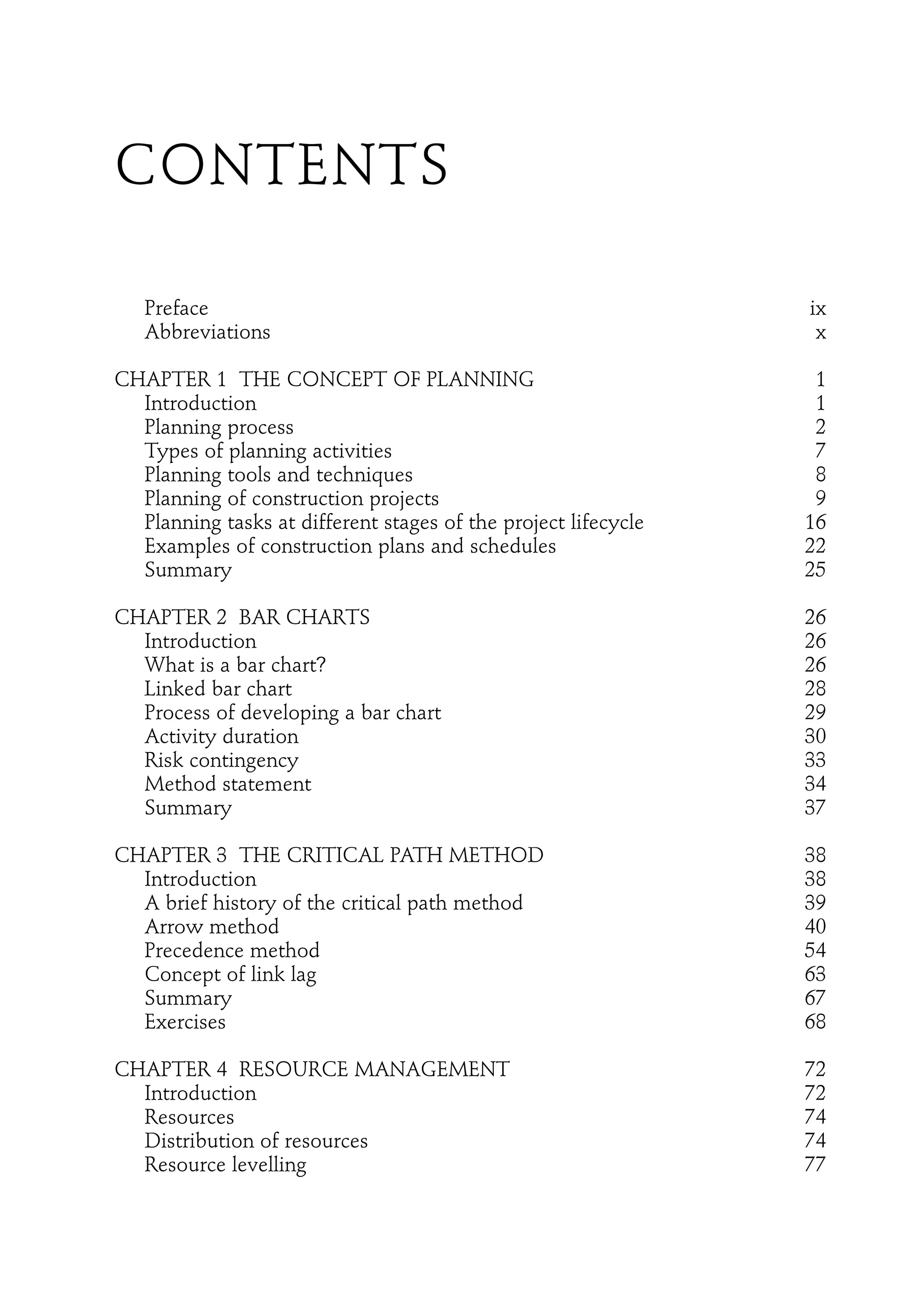
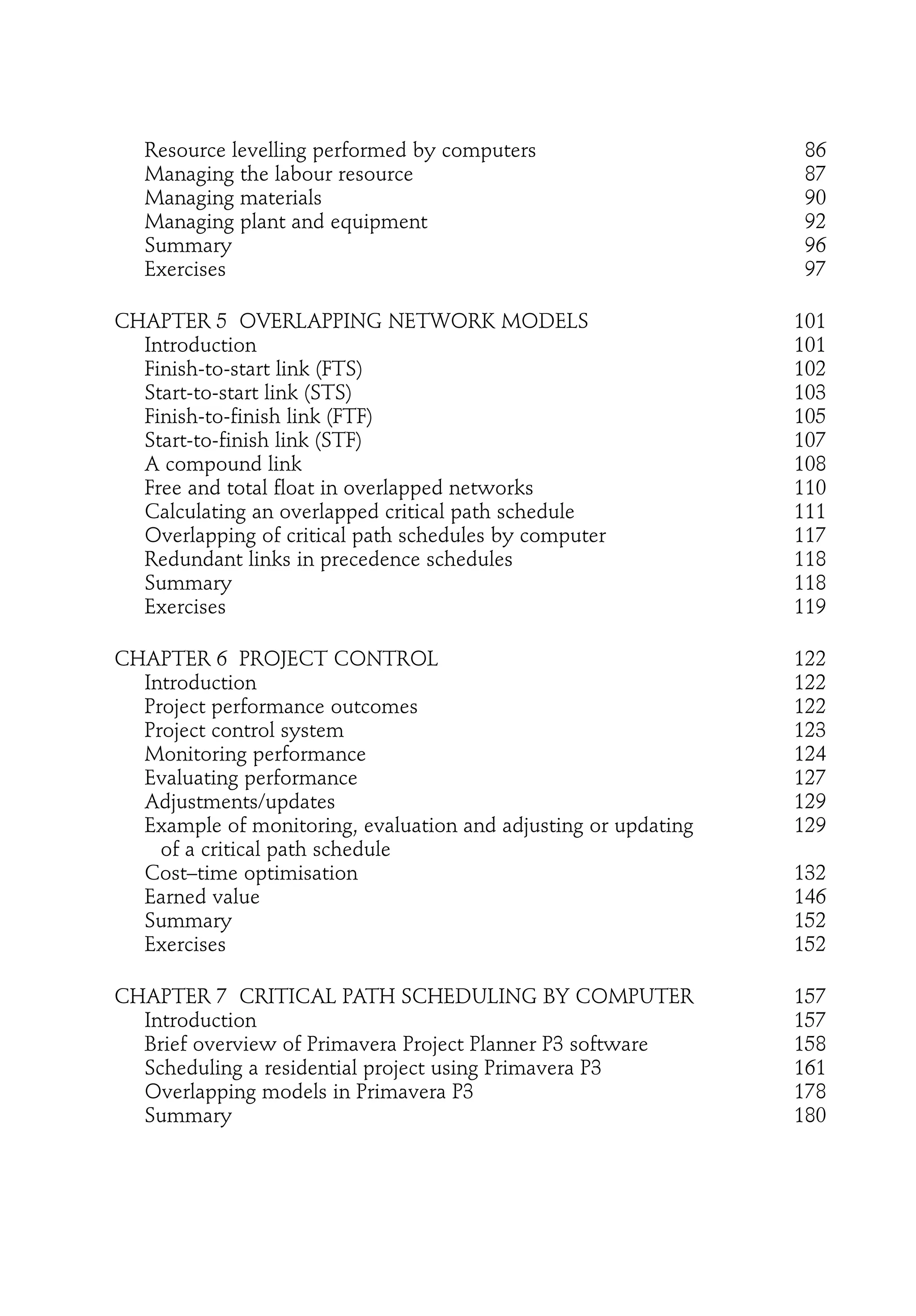

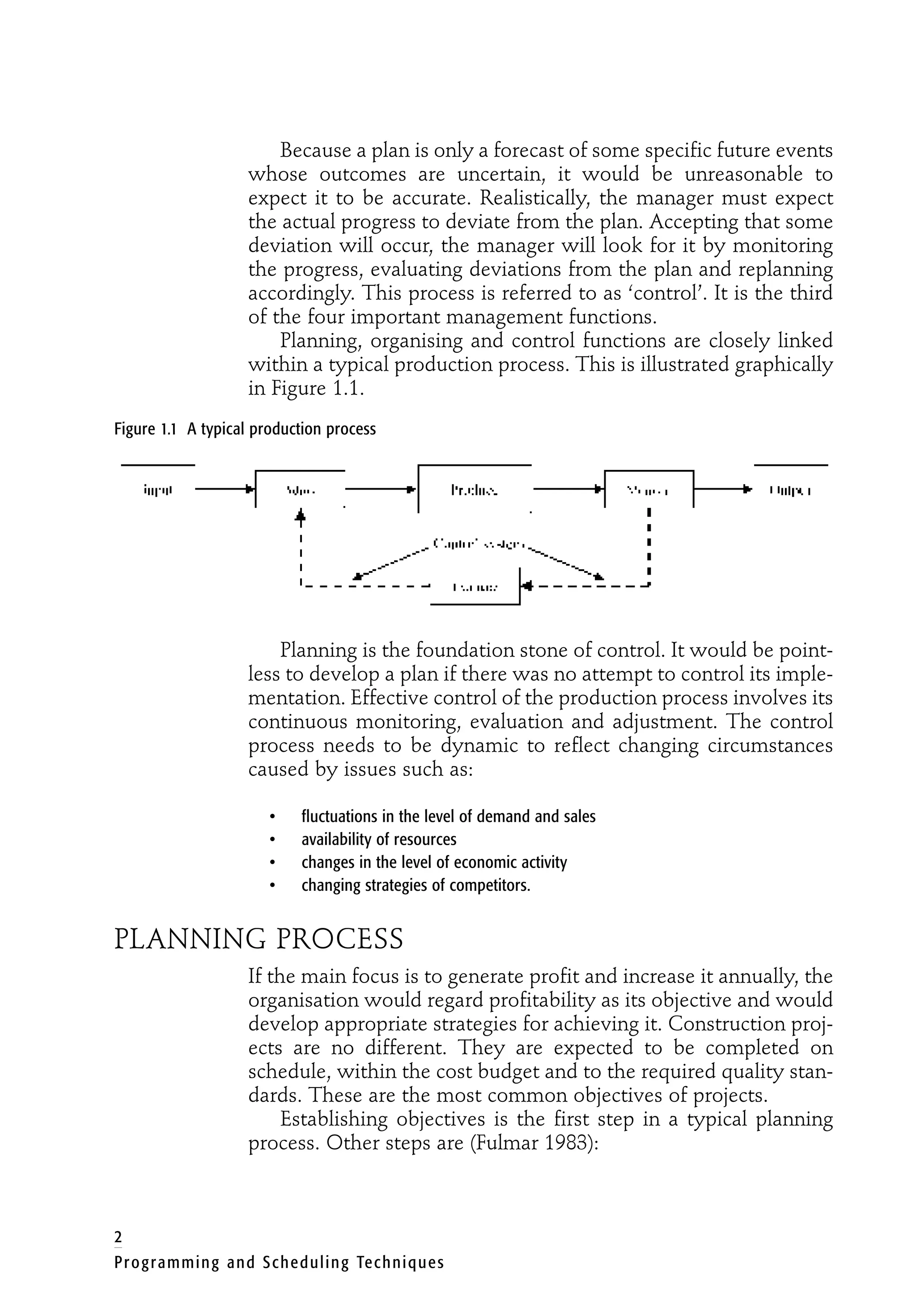
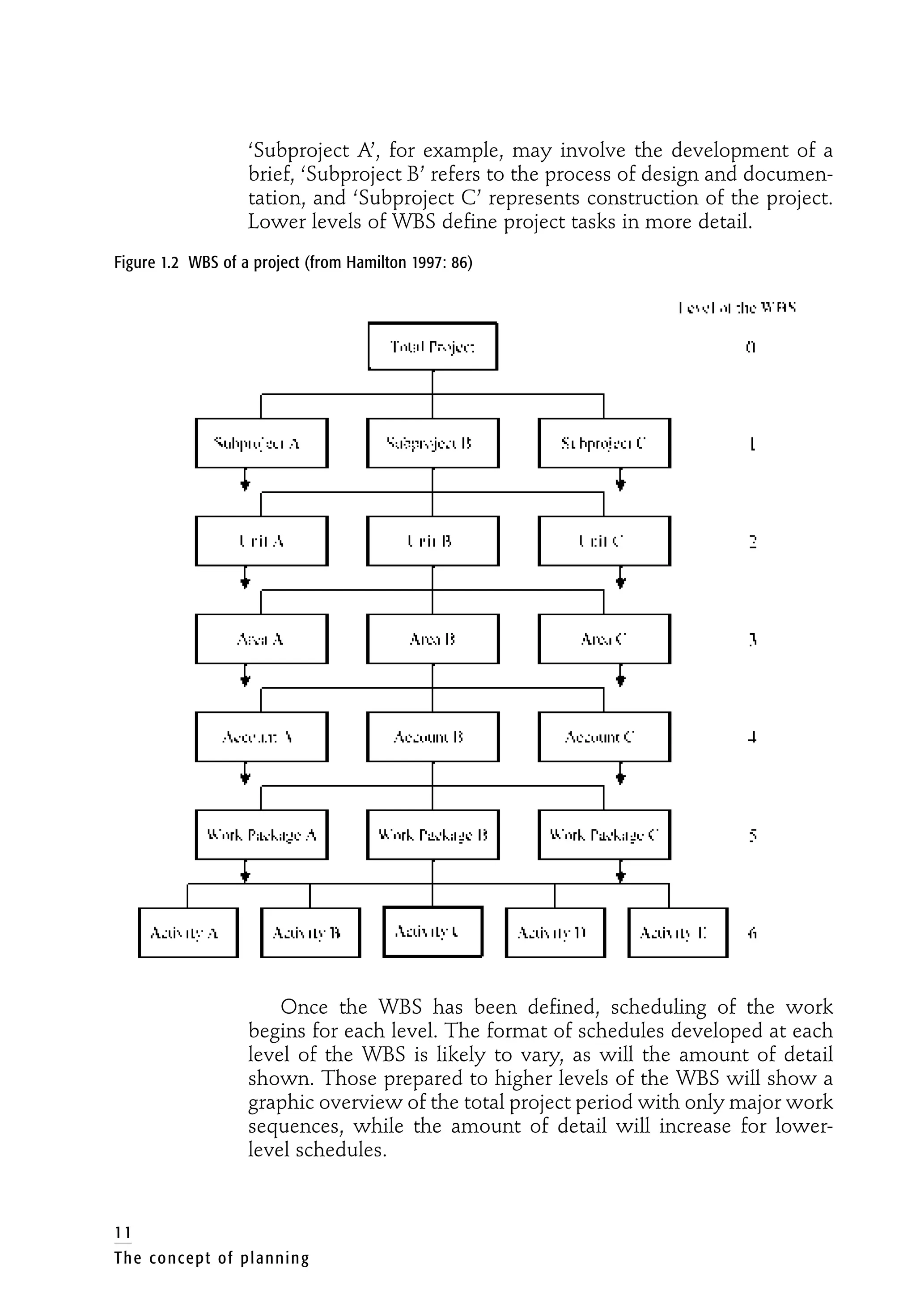
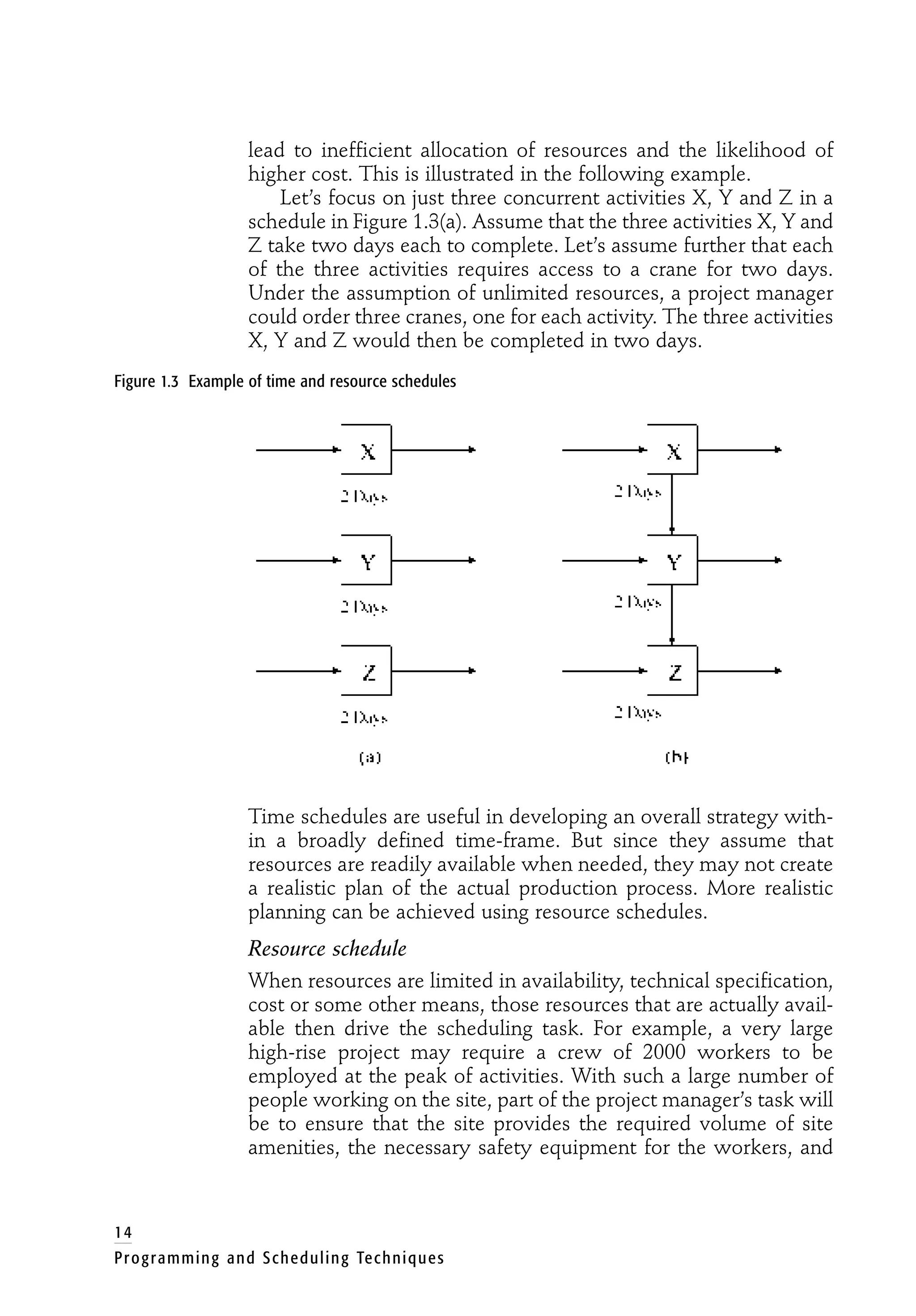
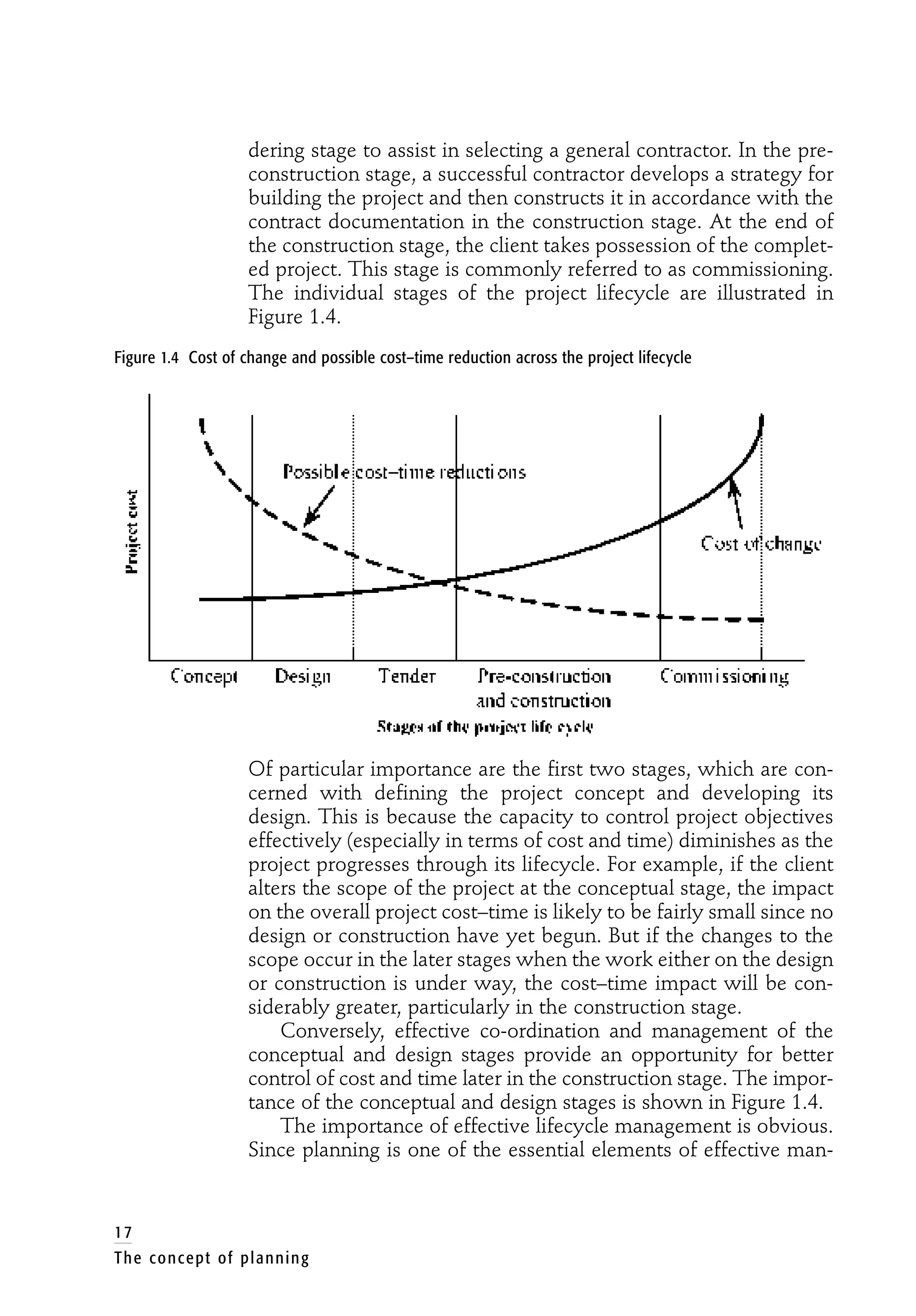
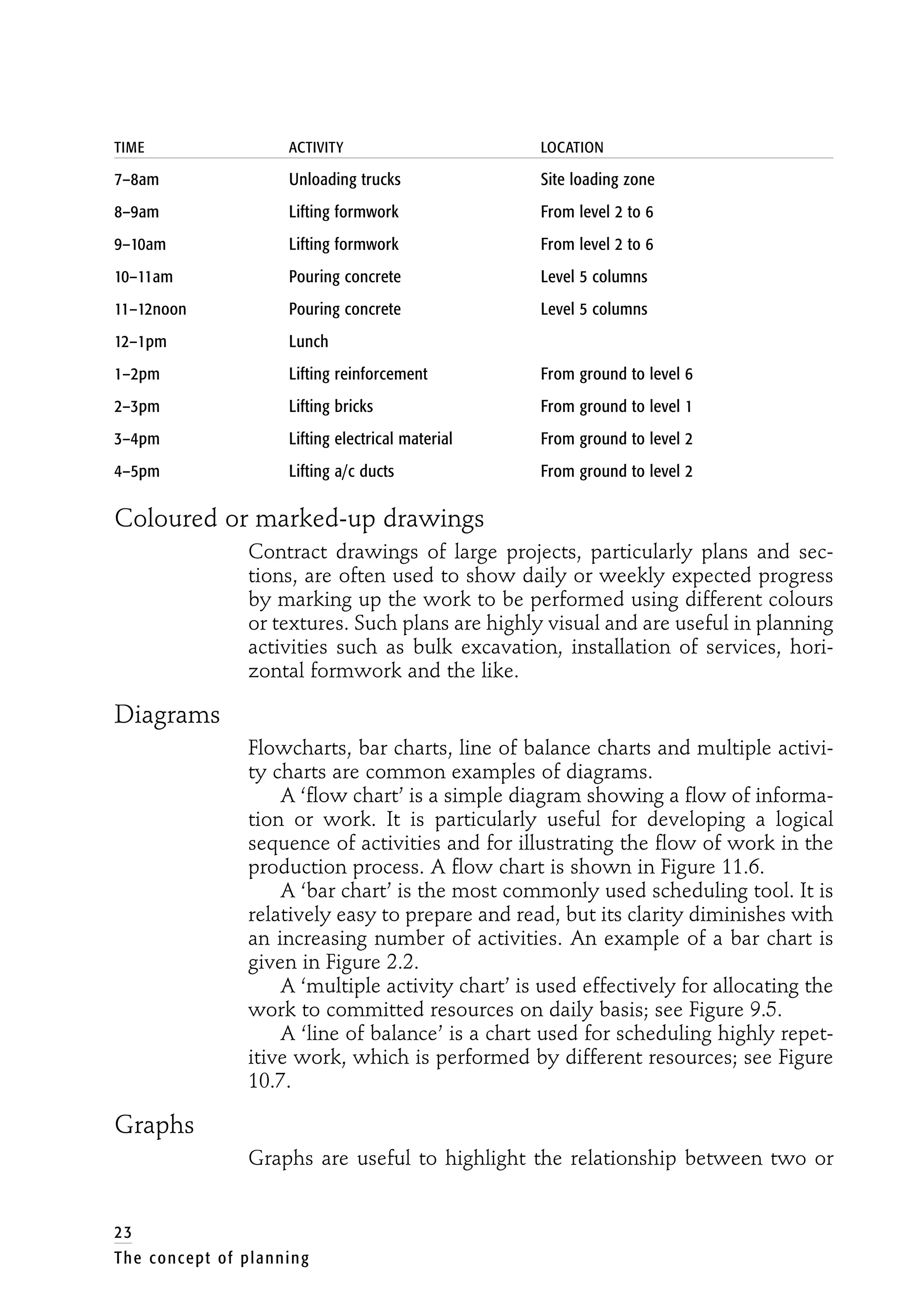
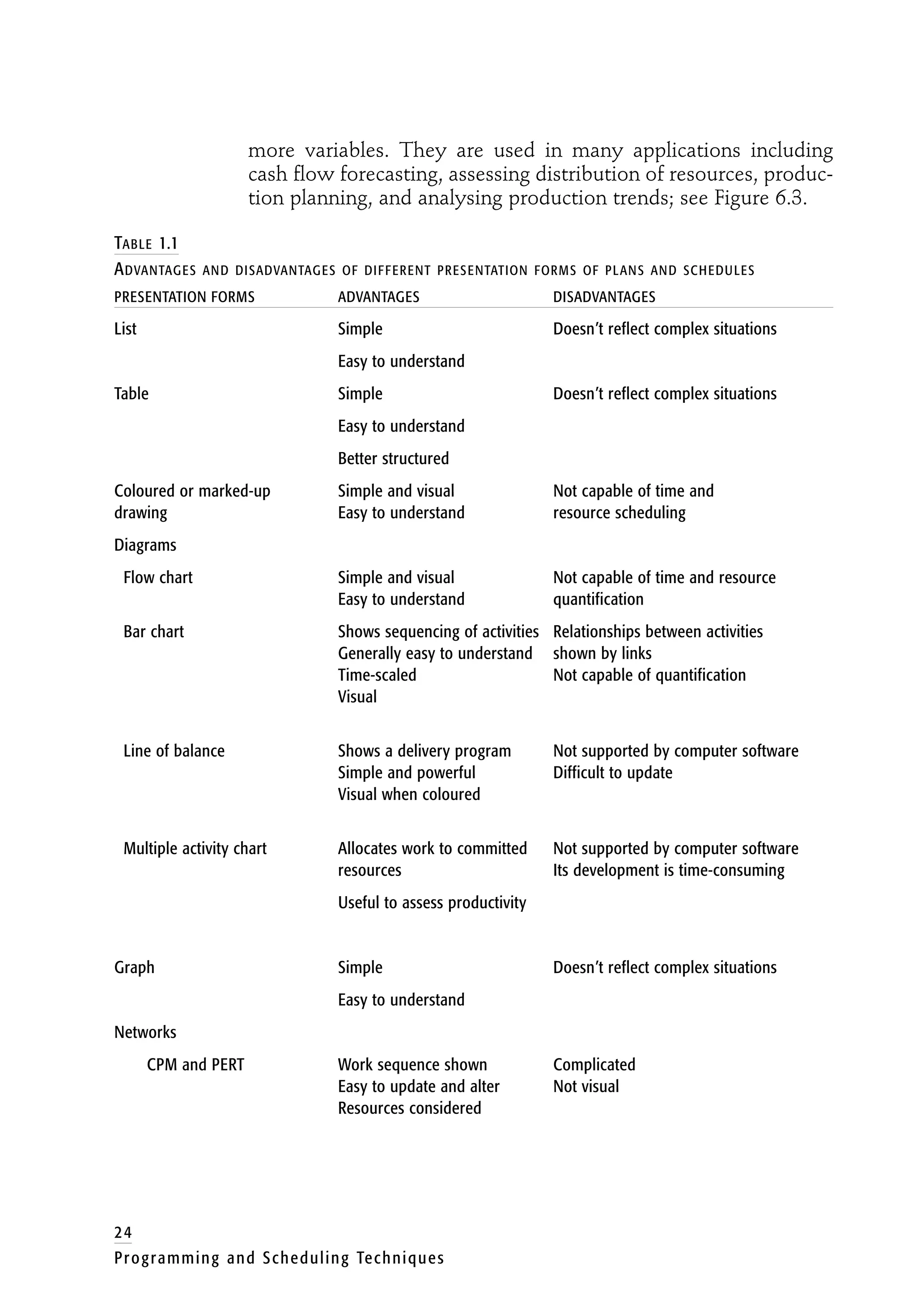
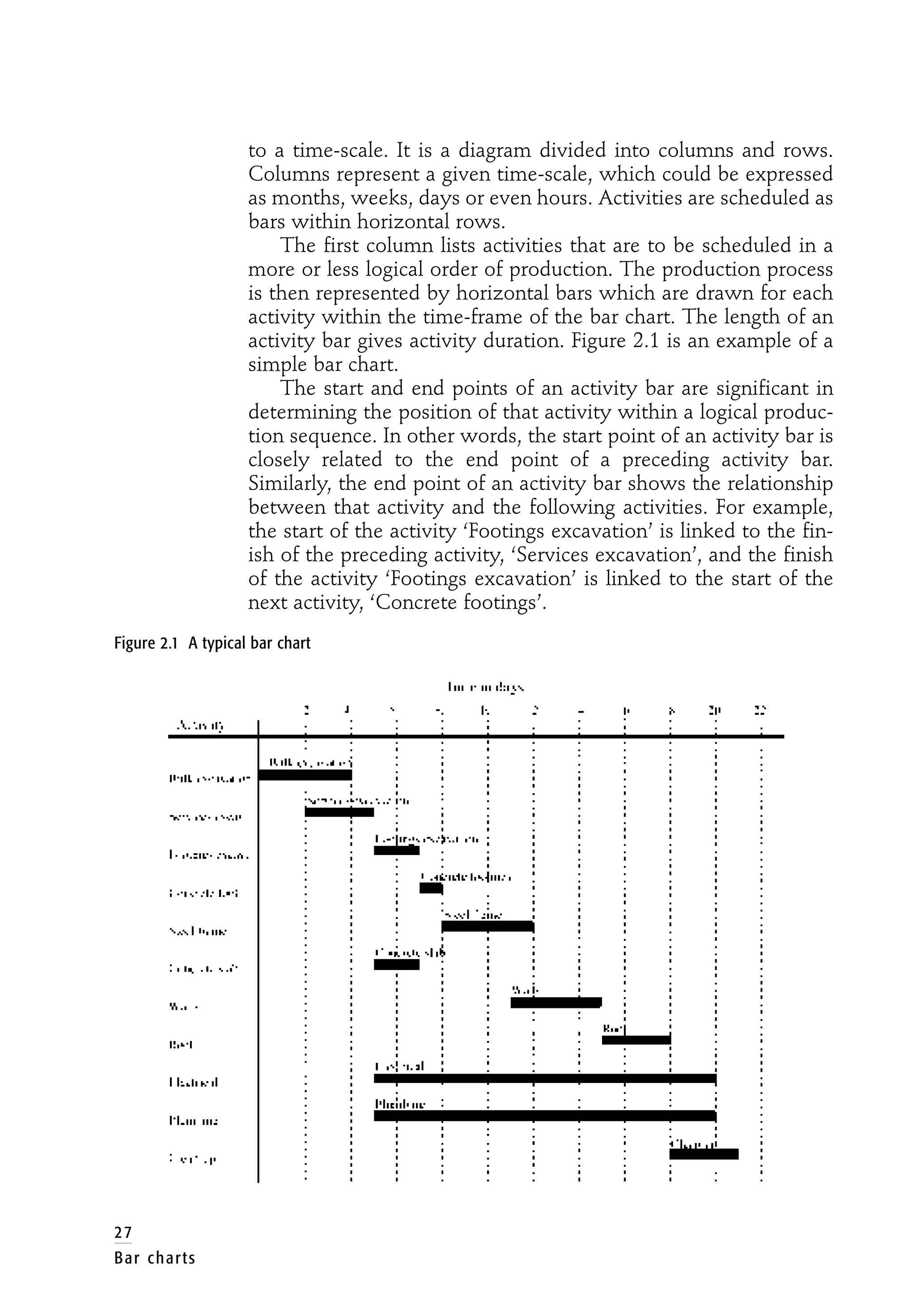
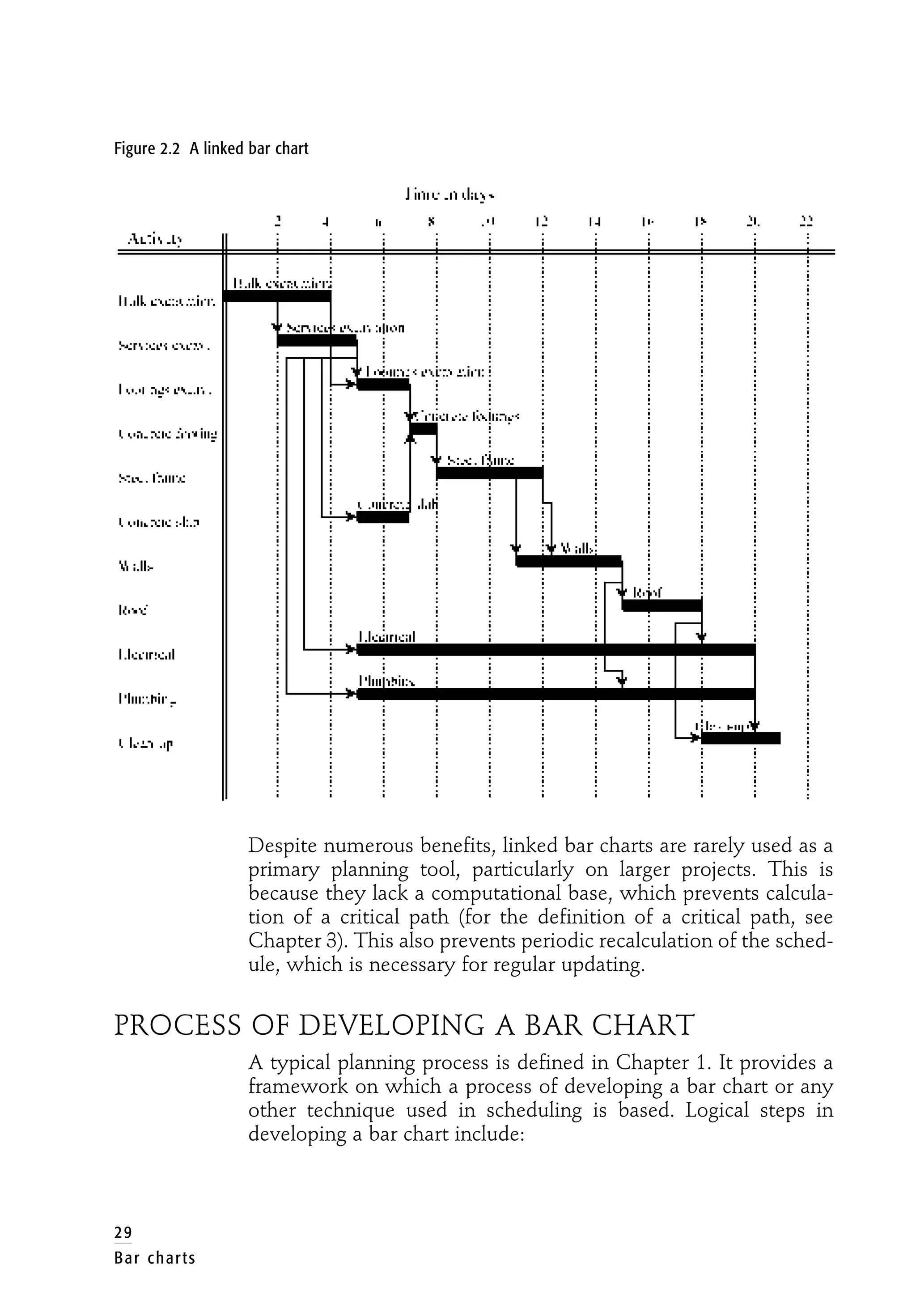
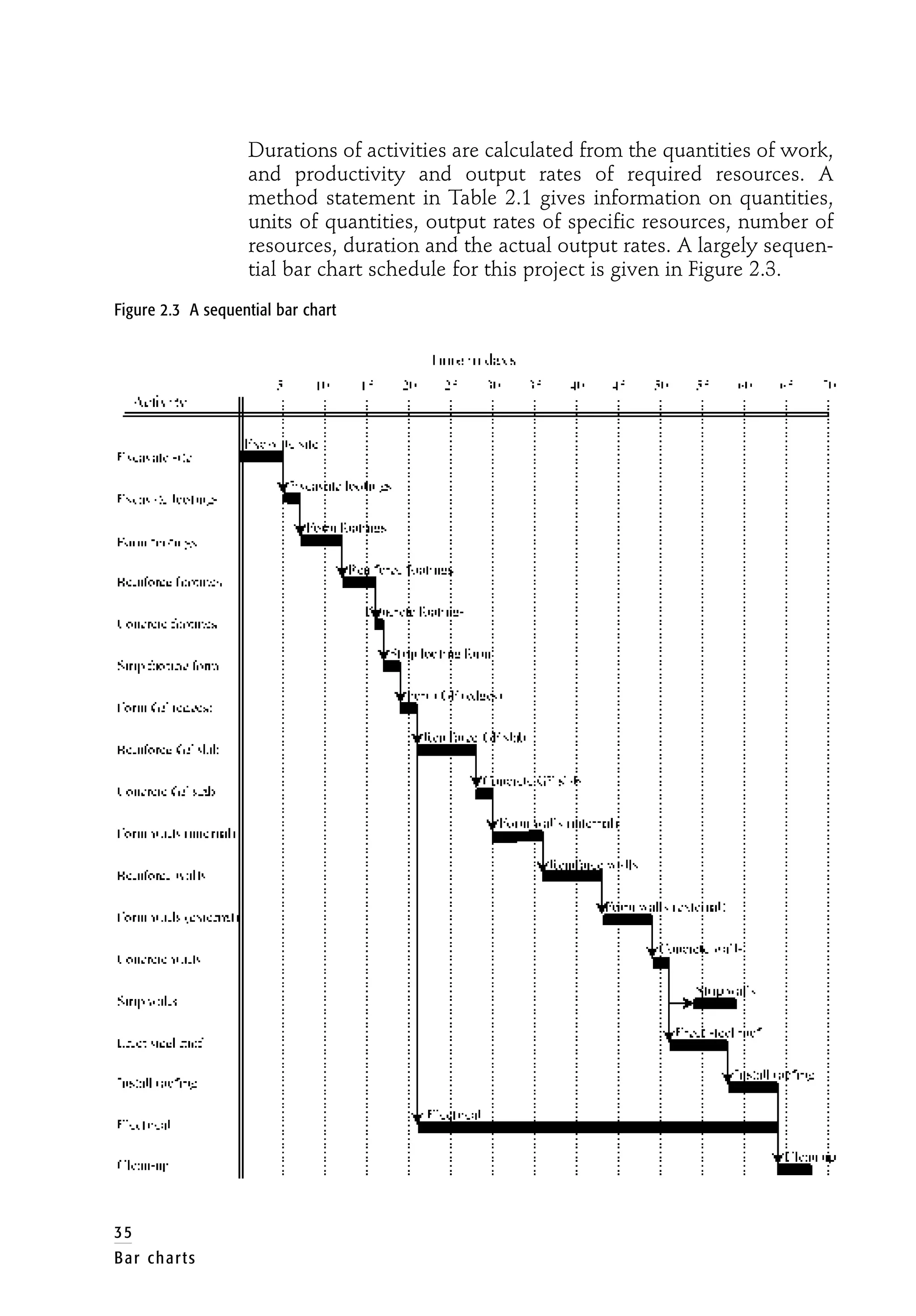
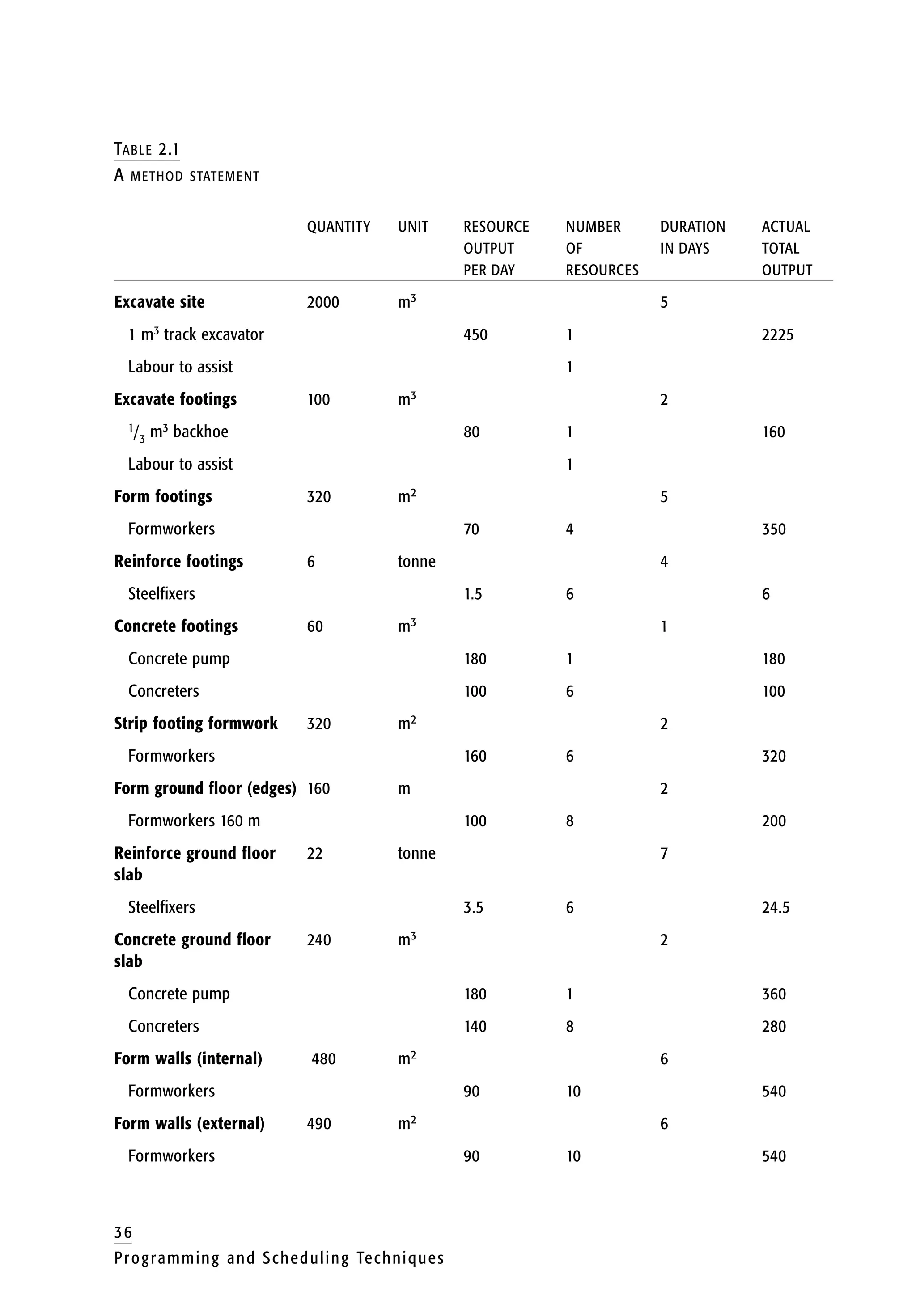
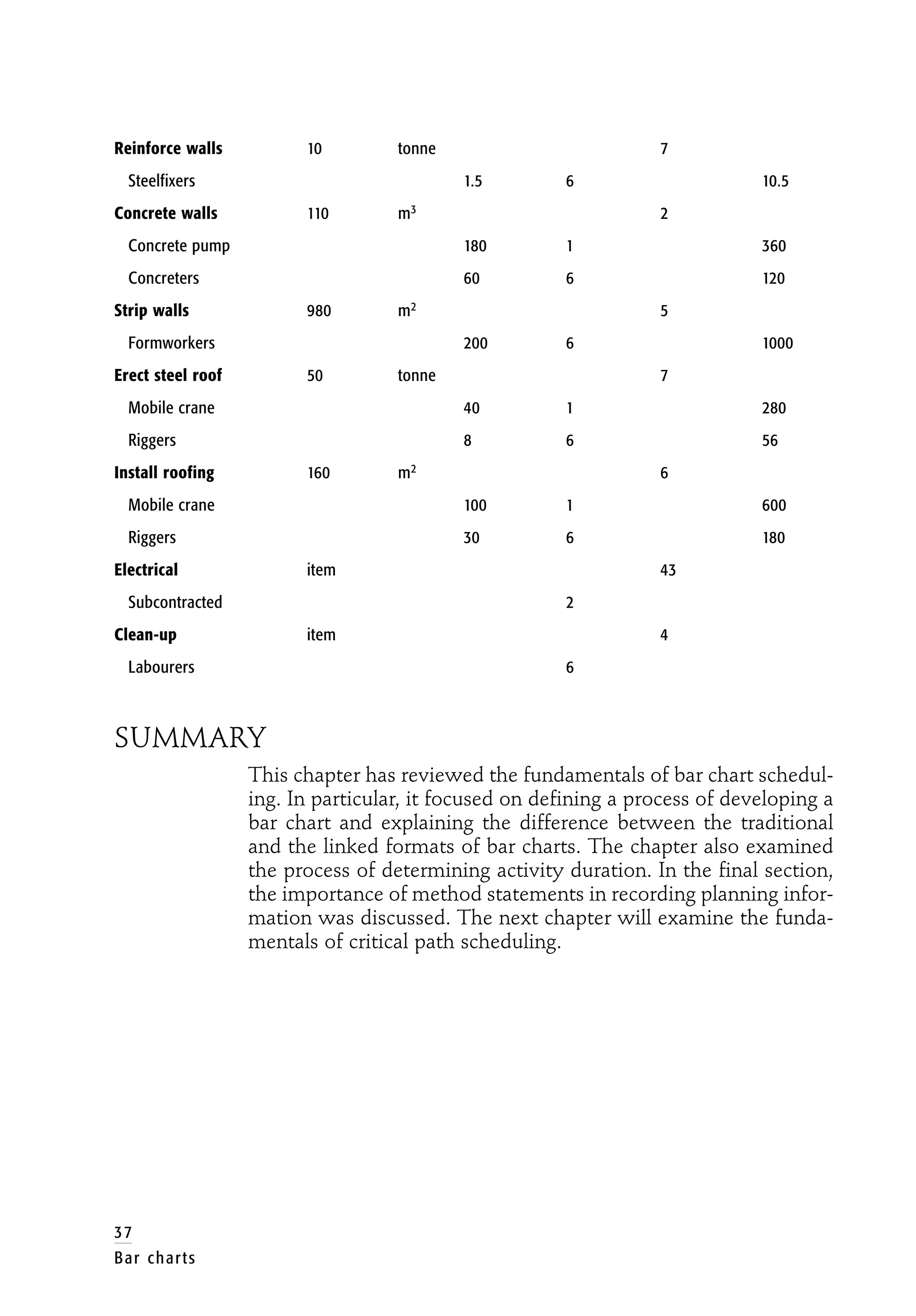
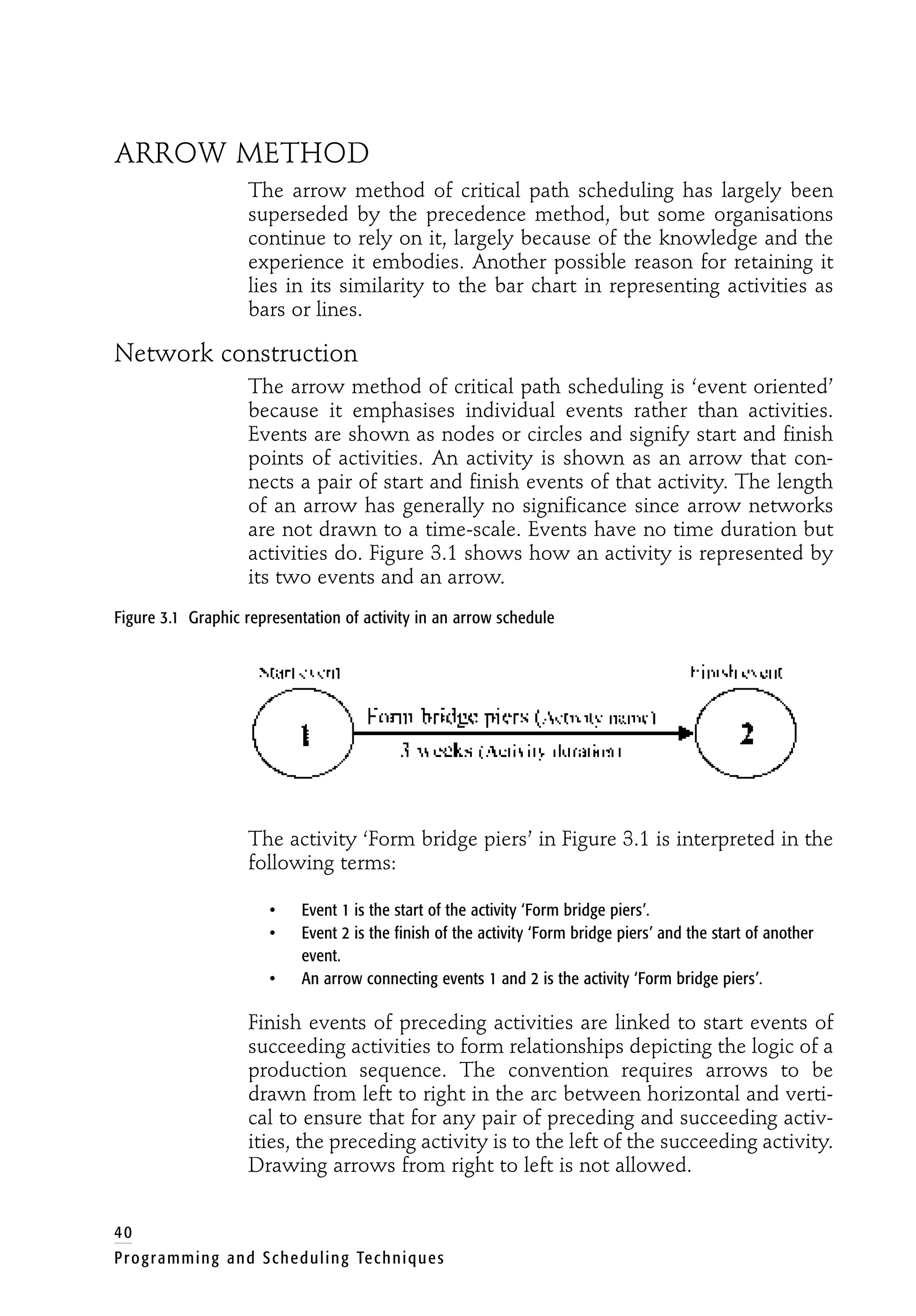

![Monday, June 15.
John Vining, from the State of Delaware, attended.
The Senate resumed the consideration of the Treaty, communicated
by the President of the United States, with his Message of the 8th
instant: and, after progress, the Senate adjourned.
Wednesday, June 17.
The Senate resumed the consideration of the Treaty, communicated
with the Message of the President of the United States, of the 8th
instant, and after discussion on the remaining articles, a motion was
made and seconded, that it he
"Resolved, (two-thirds of the Senate concurring therein,) That they
do consent to, and advise the President of the United States, to
ratify the Treaty of Amity, Commerce, and Navigation, between His
Britannic Majesty and the United States of America, concluded at
London, the 19th day of November, 1794, on condition that there be
added to the said Treaty an article whereby it shall be agreed to
suspend the operation of so much of the 12th article as respects the
trade which his said Majesty thereby consents may be carried on
between the United States and his Islands in the West Indies, in the
manner, and on the terms and conditions therein specified.
"And the Senate recommend to the President, to proceed, without
delay, to further friendly negotiations with His Majesty, on the
subject of the said trade, and of the terms and conditions in
question."
On motion, it was agreed, that this motion lie for consideration until
to-morrow.[52]
Monday, June 22.](https://image.slidesharecdn.com/2060283-250605065850-6abdd3de/75/Programming-And-Scheduling-Techniques-Thomas-E-Uher-64-2048.jpg)
![Yeas.—Messrs. Bingham, Bloodworth, Bradford, Brown, Burr, Butler,
Cabot, Ellsworth, Foster, Frelinghuysen, Gunn, Jackson, King,
Langdon, Latimer, Livermore, Marshall, Martin, Paine, Potts, Read,
Robinson, Boss, Rutherford, Strong, Trumbull, and Vining.
Mr. Tazewell voted in the negative.[53]
The yeas and nays were required by one-fifth of the Senators
present.
Those who voted in the affirmative, are—Messrs. Bingham, Bradford,
Butler, Cabot, Ellsworth, Foster, Frelinghuysen, Gunn, King, Latimer,
Livermore, Paine, Potts, Read, Ross, Rutherford, Strong, Trumbull,
and Vining.
These who voted in the negative, are—Messrs. Bloodworth, Brown,
Burr, Jackson, Langdon, Marshall, Martin, Mason, Robinson, and
Tazewell.
Yeas 19, nays 10. So the question of reconsideration was lost, there
not being two-thirds of the Senators present in the affirmative.
On motion, by Mr. Rutherford, for the question on the resolution as
amended, to wit:
"Whereas, it is alleged by divers American citizens, that negroes and
other property, to a considerable amount, were carried away in
contravention of the 7th article of the Treaty of Peace between the
United States and His Britannic Majesty:
"Resolved, That the Senate recommend to the President of the United
States to renew, by friendly negotiation with his said Majesty, the
claims of the American citizens to compensation for the negroes and
other property so alleged to have been carried away; and in case the
disagreement, that has hitherto existed relative to the construction
in this behalf of the said article, cannot be removed by candid and
amicable discussions, that it be proposed, as a measure calculated
to cherish and confirm the good understanding and friendship which
it is desired may prevail between the two countries, that](https://image.slidesharecdn.com/2060283-250605065850-6abdd3de/75/Programming-And-Scheduling-Techniques-Thomas-E-Uher-67-2048.jpg)

![The Speaker informed the House that one Senator was yet wanting to
the making of a quorum. [The Senate consists of thirty members, of
whom only fifteen have yet (Tuesday) made their appearance; of
consequence, a majority is wanting. The Vice President has, it is true,
arrived, but he is not, strictly speaking, a Senator. He does not give
a vote in questions that come before the Senate, unless the voices
on a division are equal.]
The Speaker laid before the House a letter from James White,
enclosing the credentials of his appointment as a Representative of
the territory of the United States, south of the river Ohio, in the
Congress of the United States, according to the ordinance of
Congress of the thirteenth of July, one thousand seven hundred and
eighty-seven; which were read, and ordered to be referred to Mr.
Baldwin, Mr. Gilbert, Mr. Walker, Mr. Swift, and Mr. Jeremiah Smith, with
instructions to examine the matter thereof, and report the same,
with their opinion thereupon, to the House.
Wednesday, November 12.
Another member, to wit, Carter B. Harrison, from Virginia, appeared,
and took his seat in the House.
Thursday, November 13.
Two other members, to wit: Andrew Gregg and Daniel Heister, from
Pennsylvania, appeared, and took their seats in the House.
Friday, November 14.
Several other members, to wit: from Massachusetts, Samuel Dexter;
from Virginia, Abraham Venable; and from Kentucky, Alexander D. Orr,
appeared, and took their seats in the House.](https://image.slidesharecdn.com/2060283-250605065850-6abdd3de/75/Programming-And-Scheduling-Techniques-Thomas-E-Uher-74-2048.jpg)