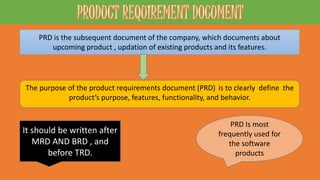
PRD is the subsequent document of the company, which documents about 
upcoming product , updation of existing products and its features. 
The purpose of the product requirements document (PRD) is to clearly define the 
product’s purpose, features, functionality, and behavior. 
It should be written after 
MRD AND BRD , and 
before TRD. 
PRD Is most 
frequently used for 
the software 
products
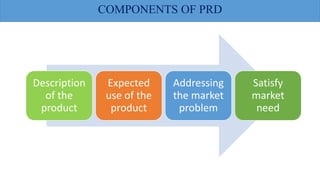
COMPONENTS OF PRD 
Description 
of the 
product 
Expected 
use of the 
product 
Addressing 
the market 
problem 
Satisfy 
market 
need
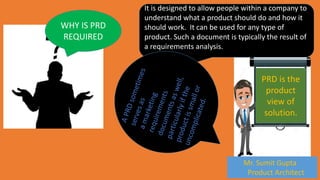
WHY IS PRD 
REQUIRED 
It is designed to allow people within a company to 
understand what a product should do and how it 
should work. It can be used for any type of 
product. Such a document is typically the result of 
a requirements analysis. 
PRD is the 
product 
view of 
solution. 
Mr. Sumit Gupta 
Product Architect
PRODUCT REQUIREMENT DOCUMENT SAMPLE FOR SOFTWARE PRODUCTS 
 Components 
Understand the market ,competitors and 
demographics 
 Product Overview and Use Cases 
 Demand and supply 
 Functional Requirement 
 Support Requirement 
 Environment Requirement 
 Interaction Requirement(software proper connectivity with 
operating systems)
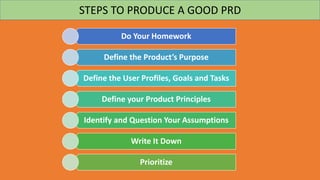
STEPS TO PRODUCE A GOOD PRD 
Do Your Homework 
Define the Product’s Purpose 
Define the User Profiles, Goals and Tasks 
Define your Product Principles 
Identify and Question Your Assumptions 
Write It Down 
Prioritize
Common Mistakes that is common in PRD 
You Are Not Your Customer- common mistakes to assume that if you like 
your product, then your customers will like it too. 
Too Little Detail- It takes a lot of work and thought to fully specify the 
requirements of a product. But if areas are not covered, then bad things 
can happen. 
Too Much Detail- The reverse problem is also possible. The product 
manager decides to provide so much detail that the result is a 
specification so massive that the product team doesn’t even read it.
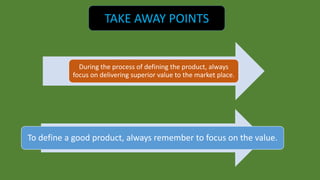
TAKE AWAY POINTS 
During the process of defining the product, always 
focus on delivering superior value to the market place. 
To define a good product, always remember to focus on the value.
Product Requirement Document(PRD)

Product Requirement Document(PRD)

  • 3.
    PRD is thesubsequent document of the company, which documents about upcoming product , updation of existing products and its features. The purpose of the product requirements document (PRD) is to clearly define the product’s purpose, features, functionality, and behavior. It should be written after MRD AND BRD , and before TRD. PRD Is most frequently used for the software products
  • 4.
    COMPONENTS OF PRD Description of the product Expected use of the product Addressing the market problem Satisfy market need
  • 5.
    WHY IS PRD REQUIRED It is designed to allow people within a company to understand what a product should do and how it should work. It can be used for any type of product. Such a document is typically the result of a requirements analysis. PRD is the product view of solution. Mr. Sumit Gupta Product Architect
  • 6.
    PRODUCT REQUIREMENT DOCUMENTSAMPLE FOR SOFTWARE PRODUCTS  Components Understand the market ,competitors and demographics  Product Overview and Use Cases  Demand and supply  Functional Requirement  Support Requirement  Environment Requirement  Interaction Requirement(software proper connectivity with operating systems)
  • 7.
    STEPS TO PRODUCEA GOOD PRD Do Your Homework Define the Product’s Purpose Define the User Profiles, Goals and Tasks Define your Product Principles Identify and Question Your Assumptions Write It Down Prioritize
  • 8.
    Common Mistakes thatis common in PRD You Are Not Your Customer- common mistakes to assume that if you like your product, then your customers will like it too. Too Little Detail- It takes a lot of work and thought to fully specify the requirements of a product. But if areas are not covered, then bad things can happen. Too Much Detail- The reverse problem is also possible. The product manager decides to provide so much detail that the result is a specification so massive that the product team doesn’t even read it.
  • 10.
    TAKE AWAY POINTS During the process of defining the product, always focus on delivering superior value to the market place. To define a good product, always remember to focus on the value.