The world’s most loved product
management software
Let’s talk about the one thing
getting in the way of your greatest
product possible.
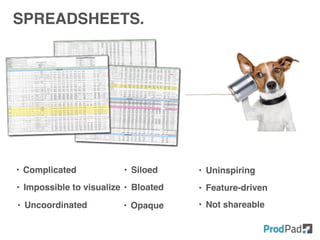
• Complicated • Siloed • Uninspiring
• Bloated• Impossible to visualize
• Opaque• Uncoordinated
• Feature-driven
• Not shareable
SPREADSHEETS.
Spreadsheets are where ideas go to die.
IDEA!
“That’s brilliant! Let’s put it in
the spreadsheet/send me an
email.”
[QUICKLY LOST/
FORGOTTEN]
[two months later…]
“Who came up with this
nonsense? Why’s this
here?”
SALES doesn’t care enough to look at them.
They promise leads and customers features that don’t exist (and never will.)
DEVS don’t look at them.
They end up working on poorly cobbled specs and a lot of guesswork.
SUPPORT has just kind of given up.
They have lots of ideas from their daily interactions with customers, but they
have no way of drumming up support or consensus around them.
Surprise! No one’s happy.
Spreadsheets are black holes
where ideas enter and rarely re-emerge.
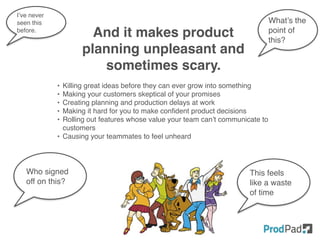
And it makes product
planning unpleasant and
sometimes scary.
What’s the
point of
this?
I’ve never
seen this
before.
Who signed
off on this?
This feels
like a waste
of time
• Killing great ideas before they can ever grow into something
• Making your customers skeptical of your promises
• Creating planning and production delays at work
• Making it hard for you to make confident product decisions
• Rolling out features whose value your team can’t communicate to
customers
• Causing your teammates to feel unheard
So let’s start over.
Remember your product vision,
goals and KPIs?
I.
Write them down and share them with the whole team.
(Yes, even sales.)
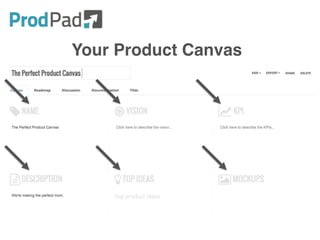
Your Product Canvas
Now everyone knows what we’re
here to do. It’s there in writing.
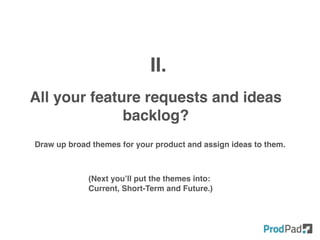
All your feature requests and ideas
backlog?
II.
Draw up broad themes for your product and assign ideas to them.
(Next you’ll put the themes into:
Current, Short-Term and Future.)
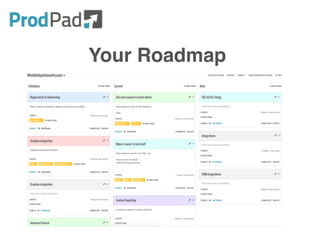
Your Roadmap
Now everyone knows what our
priorities are as a business, today,
tomorrow and down the line.
What about all those new ideas?
III.
Keep capturing them from your team and customers.
(Your team will be able to vote
internally. So will your customers.)
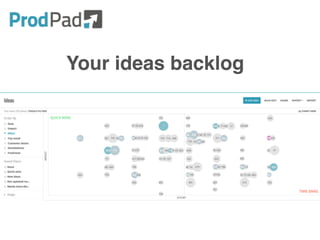
Your ideas backlog
Now everyone’s getting involved because they
can see decisions as they’re being made. Plus
they can influence the product’s future.
And sending specs over to devs?
IV.
Send them what they’ve always wanted: clear requirements, use
cases, business context and purpose
(Hey, they’re part of
the team too.)
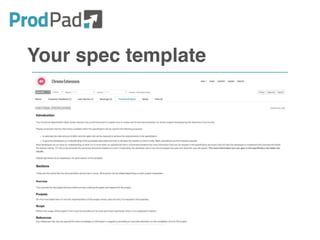
Your spec template
Now you don’t have to deal with expensive
delays, backups and production stage
debates. The feature is a go.
1.Everyone pitches in ideas
2.Plan around themes, not features
3.Change priorities flexibly
4.Hold votes and discussions
gives you a better way to
manage your product.
Ready for a closer look at
?
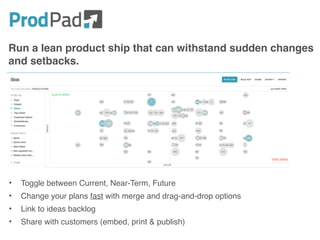
• Toggle between Current, Near-Term, Future
• Change your plans fast with merge and drag-and-drop options
• Link to ideas backlog
• Share with customers (embed, print & publish)
Run a lean product ship that can withstand sudden changes
and setbacks.
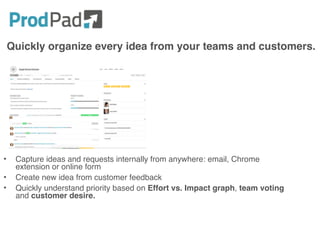
Quickly organize every idea from your teams and customers.
• Capture ideas and requests internally from anywhere: email, Chrome
extension or online form
• Create new idea from customer feedback
• Quickly understand priority based on Effort vs. Impact graph, team voting
and customer desire.
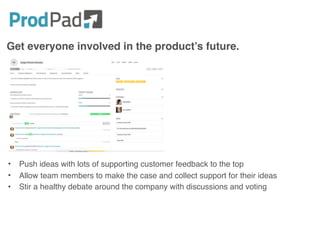
Get everyone involved in the product’s future.
• Push ideas with lots of supporting customer feedback to the top
• Allow team members to make the case and collect support for their ideas
• Stir a healthy debate around the company with discussions and voting
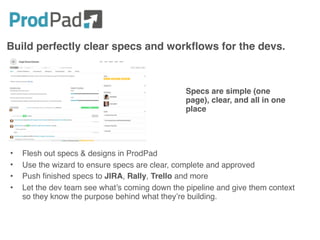
Build perfectly clear specs and workflows for the devs.
• Flesh out specs & designs in ProdPad
• Use the wizard to ensure specs are clear, complete and approved
• Push finished specs to JIRA, Rally, Trello and more
• Let the dev team see what’s coming down the pipeline and give them context
so they know the purpose behind what they’re building.
Specs are simple (one
page), clear, and all in one
place
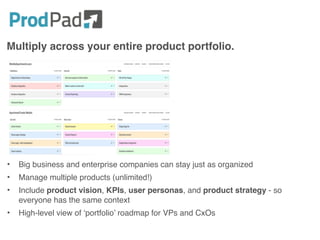
Multiply across your entire product portfolio.
• Big business and enterprise companies can stay just as organized
• Manage multiple products (unlimited!)
• Include product vision, KPIs, user personas, and product strategy - so
everyone has the same context
• High-level view of ‘portfolio’ roadmap for VPs and CxOs
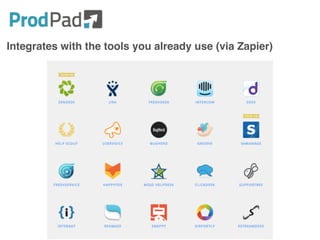
Integrates with the tools you already use (via Zapier)
(And it changes the way your business runs
right under your nose.)
brings together your
people
products
ideas
That’s why
of the world’s most-loved products.
is at the
QUESTIONS?

ProdPad Sales Deck - Software for Highly Effective Product Managers

  • 1.
    The world’s mostloved product management software
  • 2.
    Let’s talk aboutthe one thing getting in the way of your greatest product possible.
  • 3.
    • Complicated •Siloed • Uninspiring • Bloated• Impossible to visualize • Opaque• Uncoordinated • Feature-driven • Not shareable SPREADSHEETS.
  • 4.
    Spreadsheets are whereideas go to die. IDEA! “That’s brilliant! Let’s put it in the spreadsheet/send me an email.” [QUICKLY LOST/ FORGOTTEN] [two months later…] “Who came up with this nonsense? Why’s this here?”
  • 5.
    SALES doesn’t careenough to look at them. They promise leads and customers features that don’t exist (and never will.) DEVS don’t look at them. They end up working on poorly cobbled specs and a lot of guesswork. SUPPORT has just kind of given up. They have lots of ideas from their daily interactions with customers, but they have no way of drumming up support or consensus around them. Surprise! No one’s happy. Spreadsheets are black holes where ideas enter and rarely re-emerge.
  • 6.
    And it makesproduct planning unpleasant and sometimes scary. What’s the point of this? I’ve never seen this before. Who signed off on this? This feels like a waste of time • Killing great ideas before they can ever grow into something • Making your customers skeptical of your promises • Creating planning and production delays at work • Making it hard for you to make confident product decisions • Rolling out features whose value your team can’t communicate to customers • Causing your teammates to feel unheard
  • 7.
  • 8.
    Remember your productvision, goals and KPIs? I. Write them down and share them with the whole team. (Yes, even sales.)
  • 9.
  • 10.
    Now everyone knowswhat we’re here to do. It’s there in writing.
  • 11.
    All your featurerequests and ideas backlog? II. Draw up broad themes for your product and assign ideas to them. (Next you’ll put the themes into: Current, Short-Term and Future.)
  • 12.
  • 13.
    Now everyone knowswhat our priorities are as a business, today, tomorrow and down the line.
  • 14.
    What about allthose new ideas? III. Keep capturing them from your team and customers. (Your team will be able to vote internally. So will your customers.)
  • 15.
  • 16.
    Now everyone’s gettinginvolved because they can see decisions as they’re being made. Plus they can influence the product’s future.
  • 17.
    And sending specsover to devs? IV. Send them what they’ve always wanted: clear requirements, use cases, business context and purpose (Hey, they’re part of the team too.)
  • 18.
  • 19.
    Now you don’thave to deal with expensive delays, backups and production stage debates. The feature is a go.
  • 20.
    1.Everyone pitches inideas 2.Plan around themes, not features 3.Change priorities flexibly 4.Hold votes and discussions gives you a better way to manage your product.
  • 21.
    Ready for acloser look at ?
  • 22.
    • Toggle betweenCurrent, Near-Term, Future • Change your plans fast with merge and drag-and-drop options • Link to ideas backlog • Share with customers (embed, print & publish) Run a lean product ship that can withstand sudden changes and setbacks.
  • 23.
    Quickly organize everyidea from your teams and customers. • Capture ideas and requests internally from anywhere: email, Chrome extension or online form • Create new idea from customer feedback • Quickly understand priority based on Effort vs. Impact graph, team voting and customer desire.
  • 24.
    Get everyone involvedin the product’s future. • Push ideas with lots of supporting customer feedback to the top • Allow team members to make the case and collect support for their ideas • Stir a healthy debate around the company with discussions and voting
  • 25.
    Build perfectly clearspecs and workflows for the devs. • Flesh out specs & designs in ProdPad • Use the wizard to ensure specs are clear, complete and approved • Push finished specs to JIRA, Rally, Trello and more • Let the dev team see what’s coming down the pipeline and give them context so they know the purpose behind what they’re building. Specs are simple (one page), clear, and all in one place
  • 26.
    Multiply across yourentire product portfolio. • Big business and enterprise companies can stay just as organized • Manage multiple products (unlimited!) • Include product vision, KPIs, user personas, and product strategy - so everyone has the same context • High-level view of ‘portfolio’ roadmap for VPs and CxOs
  • 27.
    Integrates with thetools you already use (via Zapier)
  • 28.
    (And it changesthe way your business runs right under your nose.) brings together your people products ideas
  • 29.
    That’s why of theworld’s most-loved products. is at the
  • 30.