Change Solutions Group, LLP
Helping Leaders Achieve Their Vision
© 2012 Change Solutions Group, LLP Page 1 www.ChangeSolutionsGroup.com
TM
IMPROVING PROCUREMENT PRACTICES TO BETTER MEET BUSINESS
NEEDS, REDUCE COSTS AND INCREASE PROFIT MARGINS
Business Issue
Too often procurement organizations do not have the capabilities, processes / procedures, or
technology tools needed to properly support the business needs of their company. Additionally, the
procurement organization may not fully understand what is needed of them by the business, or know
what actions must be taken to help the business be successful.
There are numerous root causes contributing to these issues, and these can be difficult to identify, much
less to correct or eliminate. The rigor and pace of day-to-day operations can make it extremely difficult to
ensure that the procurement organization is procuring the best value products and services, especially
when the emphasis is often to “get it here as soon as possible”.
Procurement Assessment Overview
To assist organizations in their efforts to address these business issues, Change Solutions Group works
with clients to conduct a "current-state assessment" of their Procurement practices. This Procurement
Assessment is a structured process, conducted side-by-side with business leaders and procurement
personnel, to identify procurement strengths and improvement opportunities.
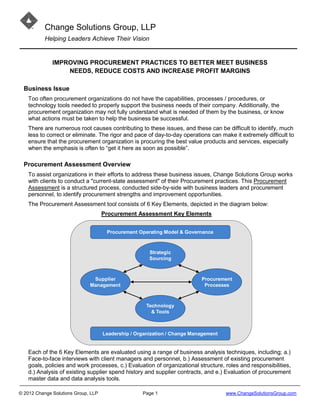
The Procurement Assessment tool consists of 6 Key Elements, depicted in the diagram below:
Procurement Assessment Key Elements
Each of the 6 Key Elements are evaluated using a range of business analysis techniques, including; a.)
Face-to-face interviews with client managers and personnel, b.) Assessment of existing procurement
goals, policies and work processes, c.) Evaluation of organizational structure, roles and responsibilities,
d.) Analysis of existing supplier spend history and supplier contracts, and e.) Evaluation of procurement
master data and data analysis tools.
Supplier
Management
Strategic
Sourcing
Procurement
Processes
Procurement Operating Model & Governance
Leadership / Organization / Change Management
Technology
& Tools
Change Solutions Group, LLP
Helping Leaders Achieve Their Vision
© 2012 Change Solutions Group, LLP Page 2 www.ChangeSolutionsGroup.com
TM
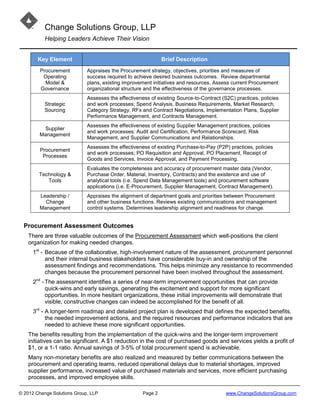
Key Element Brief Description
Procurement
Operating
Model &
Governance
Appraises the Procurement strategy, objectives, priorities and measures of
success required to achieve desired business outcomes. Review departmental
plans, existing improvement initiatives and resources. Assess current Procurement
organizational structure and the effectiveness of the governance processes.
Strategic
Sourcing
Assesses the effectiveness of existing Source-to-Contract (S2C) practices, policies
and work processes; Spend Analysis, Business Requirements, Market Research,
Category Strategy, RFx and Contract Negotiations, Implementation Plans, Supplier
Performance Management, and Contracts Management.
Supplier
Management
Assesses the effectiveness of existing Supplier Management practices, policies
and work processes: Audit and Certification, Performance Scorecard, Risk
Management, and Supplier Communications and Relationships.
Procurement
Processes
Assesses the effectiveness of existing Purchase-to-Pay (P2P) practices, policies
and work processes; PO Requisition and Approval, PO Placement, Receipt of
Goods and Services, Invoice Approval, and Payment Processing.
Technology &
Tools
Evaluates the completeness and accuracy of procurement master data (Vendor,
Purchase Order, Material, Inventory, Contracts) and the existence and use of
analytical tools (i.e. Spend Data Management tools) and procurement software
applications (i.e. E-Procurement, Supplier Management, Contract Management).
Leadership /
Change
Management
Appraises the alignment of department goals and priorities between Procurement
and other business functions. Reviews existing communications and management
control systems. Determines leadership alignment and readiness for change.
Procurement Assessment Outcomes
There are three valuable outcomes of the Procurement Assessment which well-positions the client
organization for making needed changes.
1st
- Because of the collaborative, high-involvement nature of the assessment, procurement personnel
and their internal business stakeholders have considerable buy-in and ownership of the
assessment findings and recommendations. This helps minimize any resistance to recommended
changes because the procurement personnel have been involved throughout the assessment.
2nd
- The assessment identifies a series of near-term improvement opportunities that can provide
quick-wins and early savings, generating the excitement and support for more significant
opportunities. In more hesitant organizations, these initial improvements will demonstrate that
visible, constructive changes can indeed be accomplished for the benefit of all.
3rd
- A longer-term roadmap and detailed project plan is developed that defines the expected benefits,
the needed improvement actions, and the required resources and performance indicators that are
needed to achieve these more significant opportunities.
The benefits resulting from the implementation of the quick-wins and the longer-term improvement
initiatives can be significant. A $1 reduction in the cost of purchased goods and services yields a profit of
$1, or a 1-1 ratio. Annual savings of 3-5% of total procurement spend is achievable.
Many non-monetary benefits are also realized and measured by better communications between the
procurement and operating teams, reduced operational delays due to material shortages, improved
supplier performance, increased value of purchased materials and services, more efficient purchasing
processes, and improved employee skills.

Procurement Assessment

  • 1.
    Change Solutions Group,LLP Helping Leaders Achieve Their Vision © 2012 Change Solutions Group, LLP Page 1 www.ChangeSolutionsGroup.com TM IMPROVING PROCUREMENT PRACTICES TO BETTER MEET BUSINESS NEEDS, REDUCE COSTS AND INCREASE PROFIT MARGINS Business Issue Too often procurement organizations do not have the capabilities, processes / procedures, or technology tools needed to properly support the business needs of their company. Additionally, the procurement organization may not fully understand what is needed of them by the business, or know what actions must be taken to help the business be successful. There are numerous root causes contributing to these issues, and these can be difficult to identify, much less to correct or eliminate. The rigor and pace of day-to-day operations can make it extremely difficult to ensure that the procurement organization is procuring the best value products and services, especially when the emphasis is often to “get it here as soon as possible”. Procurement Assessment Overview To assist organizations in their efforts to address these business issues, Change Solutions Group works with clients to conduct a "current-state assessment" of their Procurement practices. This Procurement Assessment is a structured process, conducted side-by-side with business leaders and procurement personnel, to identify procurement strengths and improvement opportunities. The Procurement Assessment tool consists of 6 Key Elements, depicted in the diagram below: Procurement Assessment Key Elements Each of the 6 Key Elements are evaluated using a range of business analysis techniques, including; a.) Face-to-face interviews with client managers and personnel, b.) Assessment of existing procurement goals, policies and work processes, c.) Evaluation of organizational structure, roles and responsibilities, d.) Analysis of existing supplier spend history and supplier contracts, and e.) Evaluation of procurement master data and data analysis tools. Supplier Management Strategic Sourcing Procurement Processes Procurement Operating Model & Governance Leadership / Organization / Change Management Technology & Tools
  • 2.
    Change Solutions Group,LLP Helping Leaders Achieve Their Vision © 2012 Change Solutions Group, LLP Page 2 www.ChangeSolutionsGroup.com TM Key Element Brief Description Procurement Operating Model & Governance Appraises the Procurement strategy, objectives, priorities and measures of success required to achieve desired business outcomes. Review departmental plans, existing improvement initiatives and resources. Assess current Procurement organizational structure and the effectiveness of the governance processes. Strategic Sourcing Assesses the effectiveness of existing Source-to-Contract (S2C) practices, policies and work processes; Spend Analysis, Business Requirements, Market Research, Category Strategy, RFx and Contract Negotiations, Implementation Plans, Supplier Performance Management, and Contracts Management. Supplier Management Assesses the effectiveness of existing Supplier Management practices, policies and work processes: Audit and Certification, Performance Scorecard, Risk Management, and Supplier Communications and Relationships. Procurement Processes Assesses the effectiveness of existing Purchase-to-Pay (P2P) practices, policies and work processes; PO Requisition and Approval, PO Placement, Receipt of Goods and Services, Invoice Approval, and Payment Processing. Technology & Tools Evaluates the completeness and accuracy of procurement master data (Vendor, Purchase Order, Material, Inventory, Contracts) and the existence and use of analytical tools (i.e. Spend Data Management tools) and procurement software applications (i.e. E-Procurement, Supplier Management, Contract Management). Leadership / Change Management Appraises the alignment of department goals and priorities between Procurement and other business functions. Reviews existing communications and management control systems. Determines leadership alignment and readiness for change. Procurement Assessment Outcomes There are three valuable outcomes of the Procurement Assessment which well-positions the client organization for making needed changes. 1st - Because of the collaborative, high-involvement nature of the assessment, procurement personnel and their internal business stakeholders have considerable buy-in and ownership of the assessment findings and recommendations. This helps minimize any resistance to recommended changes because the procurement personnel have been involved throughout the assessment. 2nd - The assessment identifies a series of near-term improvement opportunities that can provide quick-wins and early savings, generating the excitement and support for more significant opportunities. In more hesitant organizations, these initial improvements will demonstrate that visible, constructive changes can indeed be accomplished for the benefit of all. 3rd - A longer-term roadmap and detailed project plan is developed that defines the expected benefits, the needed improvement actions, and the required resources and performance indicators that are needed to achieve these more significant opportunities. The benefits resulting from the implementation of the quick-wins and the longer-term improvement initiatives can be significant. A $1 reduction in the cost of purchased goods and services yields a profit of $1, or a 1-1 ratio. Annual savings of 3-5% of total procurement spend is achievable. Many non-monetary benefits are also realized and measured by better communications between the procurement and operating teams, reduced operational delays due to material shortages, improved supplier performance, increased value of purchased materials and services, more efficient purchasing processes, and improved employee skills.