PROBLEM
SOLVING
AND
DECISION
MAKING
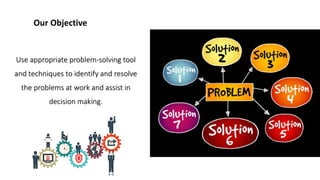
Our Objective
Use appropriate problem-solving tool
and techniques to identify and resolve
the problems at work and assist in
decision making.
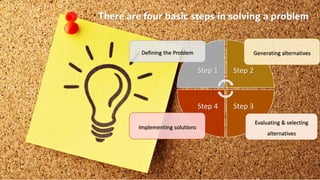
There are four basic steps in solving a problem
Step 1 Step 2
Step 3
Step 4
Evaluating & selecting
alternatives
Implementing solutions
Generating alternatives
Defining the Problem
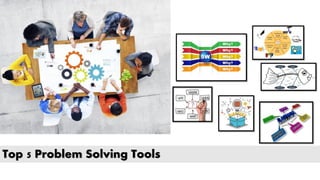
Top 5 Problem Solving Tools
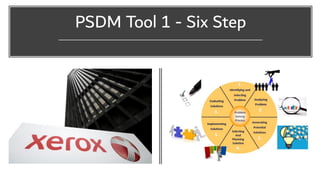
PSDM Tool 1 - Six Step
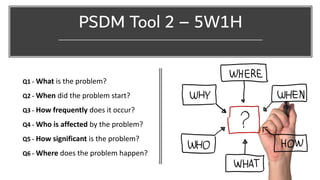
PSDM Tool 2 – 5W1H
Q1 - What is the problem?
Q2 - When did the problem start?
Q3 - How frequently does it occur?
Q4 - Who is affected by the problem?
Q5 - How significant is the problem?
Q6 - Where does the problem happen?
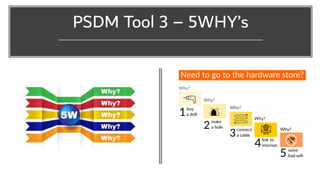
PSDM Tool 3 – 5WHY’s
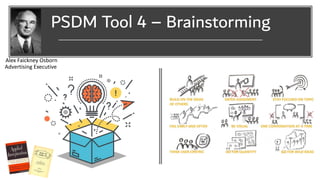
PSDM Tool 4 – Brainstorming
Alex Faickney Osborn
Advertising Executive
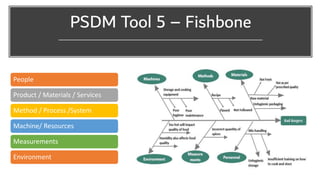
PSDM Tool 5 – Fishbone
People
Product / Materials / Services
Method / Process /System
Machine/ Resources
Measurements
Environment
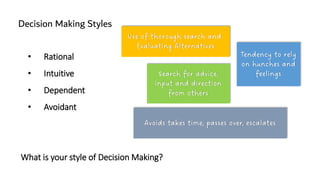
Decision Making Styles
• Rational
• Intuitive
• Dependent
• Avoidant
Use of thorough search and
Evaluating Alternatives
Tendency to rely
on hunches and
feelings
Search for advice,
input and direction
from others
Avoids takes time, passes over, escalates
What is your style of Decision Making?
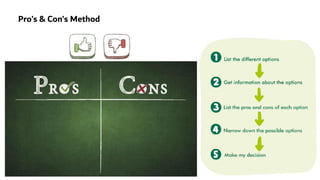
Pro’s & Con’s Method
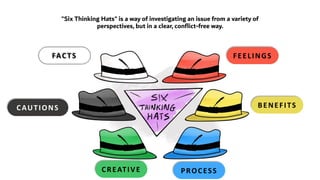
"Six Thinking Hats" is a way of investigating an issue from a variety of
perspectives, but in a clear, conflict-free way.
PROCESS
BENEFITS
CAUTIONS
FACTS FEELINGS
CREATIVE
Behaviors to Manage Problems !!
Stop and think/plan/prepare
Ask people for their opinions
Understand what is actually happening
Calmly collect all the relevant
information about the situation
Keep everyone involved and informed
about what is happening
Warn/advise others who may be
affected with what is happening
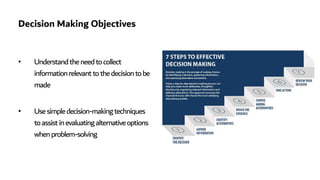
Decision Making Objectives
• Understandtheneedtocollect
informationrelevanttothedecisiontobe
made
• Usesimpledecision-makingtechniques
toassistinevaluatingalternativeoptions
whenproblem-solving
Problem Solving and Decision Making Handout.pdf

Problem Solving and Decision Making Handout.pdf

  • 1.
  • 2.
    Our Objective Use appropriateproblem-solving tool and techniques to identify and resolve the problems at work and assist in decision making.
  • 3.
    There are fourbasic steps in solving a problem Step 1 Step 2 Step 3 Step 4 Evaluating & selecting alternatives Implementing solutions Generating alternatives Defining the Problem
  • 4.
    Top 5 ProblemSolving Tools
  • 5.
    PSDM Tool 1- Six Step
  • 6.
    PSDM Tool 2– 5W1H Q1 - What is the problem? Q2 - When did the problem start? Q3 - How frequently does it occur? Q4 - Who is affected by the problem? Q5 - How significant is the problem? Q6 - Where does the problem happen?
  • 7.
    PSDM Tool 3– 5WHY’s
  • 8.
    PSDM Tool 4– Brainstorming Alex Faickney Osborn Advertising Executive
  • 9.
    PSDM Tool 5– Fishbone People Product / Materials / Services Method / Process /System Machine/ Resources Measurements Environment
  • 11.
    Decision Making Styles •Rational • Intuitive • Dependent • Avoidant Use of thorough search and Evaluating Alternatives Tendency to rely on hunches and feelings Search for advice, input and direction from others Avoids takes time, passes over, escalates What is your style of Decision Making?
  • 12.
  • 13.
    "Six Thinking Hats"is a way of investigating an issue from a variety of perspectives, but in a clear, conflict-free way. PROCESS BENEFITS CAUTIONS FACTS FEELINGS CREATIVE
  • 14.
    Behaviors to ManageProblems !! Stop and think/plan/prepare Ask people for their opinions Understand what is actually happening Calmly collect all the relevant information about the situation Keep everyone involved and informed about what is happening Warn/advise others who may be affected with what is happening
  • 15.
    Decision Making Objectives •Understandtheneedtocollect informationrelevanttothedecisiontobe made • Usesimpledecision-makingtechniques toassistinevaluatingalternativeoptions whenproblem-solving