Guttenberg Ferreira Passoshttps://medium.com/@kozyr_91350/o-guia-definitivo-
para-come%C3%A7ar-com-ia-e7e7dc68f376
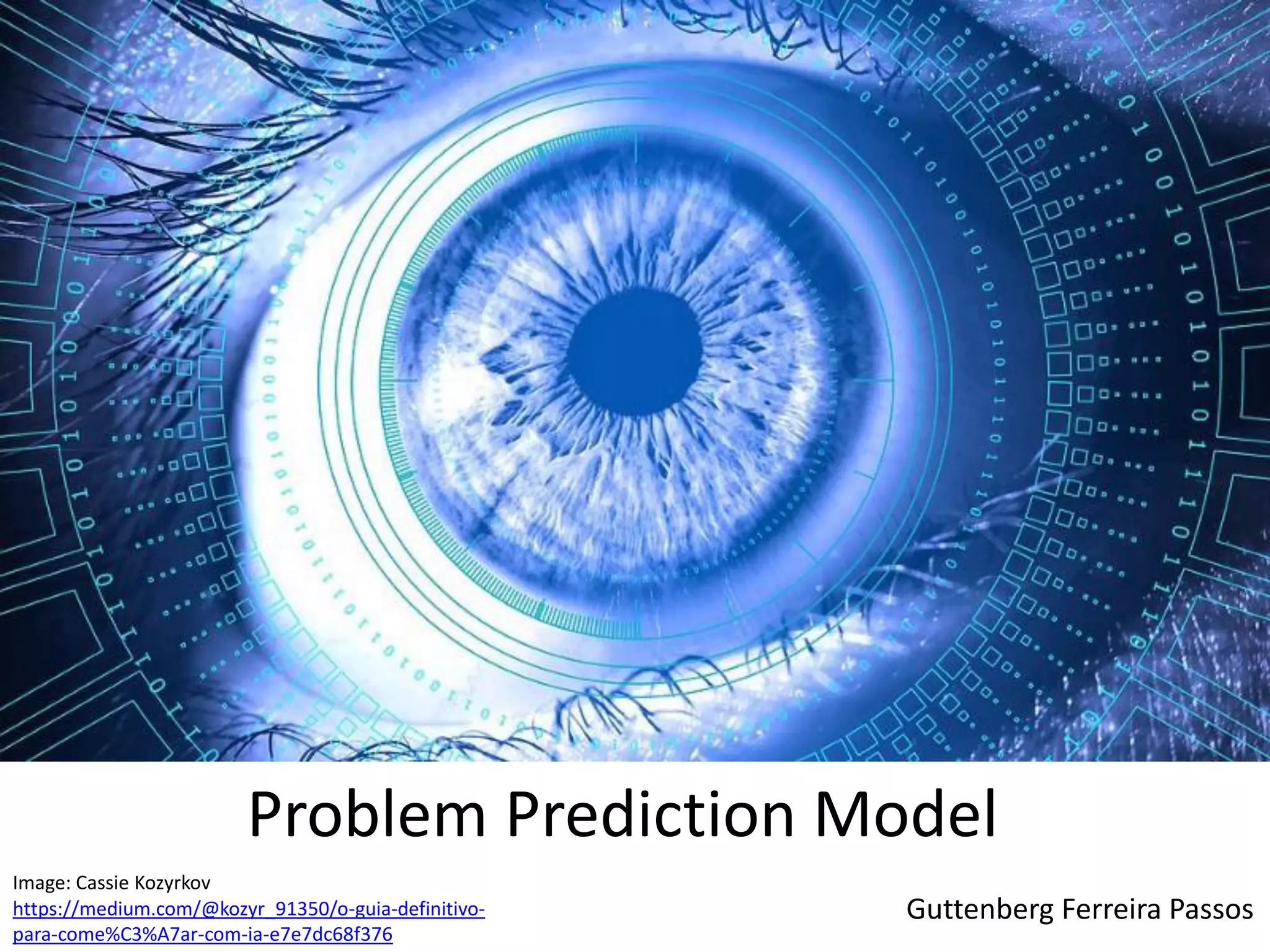
Image: Cassie Kozyrkov
Problem Prediction Model
Agenda
1. Challenges
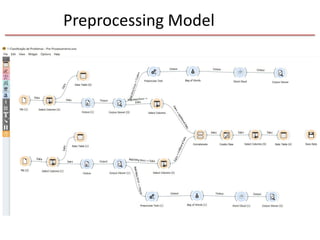
2. Preprocessing Model
3. Analysis Model
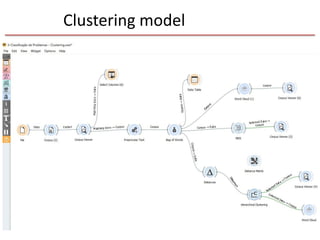
4. Clustering model
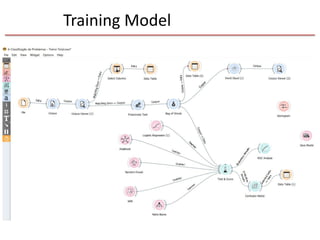
5. Training Model
6. Prediction Model
7. Predictions
8. Conclusion
Challenges
1. Identify the most relevant change and
problem (ITIL) words in an Information
Technology company;
2. Evaluate changes using various artificial
intelligence algorithms to anticipate
potential problems.
Orange Canvas
• Sandeco
https://www.youtube.com/watch?v=5bjY_WyZKm4
• Ajda Pretnar
https://www.youtube.com/watch?v=HXjnDIgGDuI&t=10s
Preprocessing Model
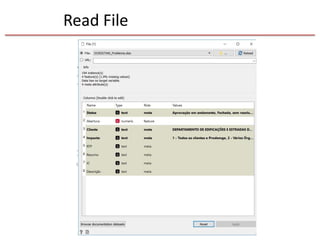
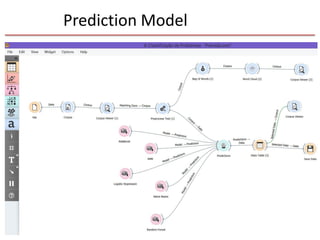
Read File
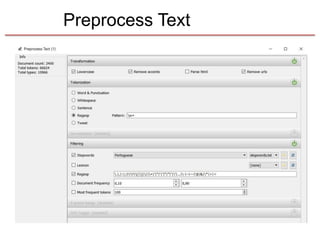
Preprocess Text
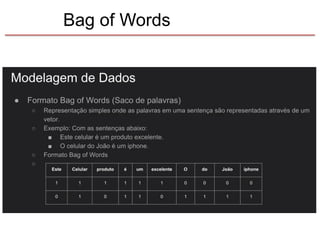
Bag of Words
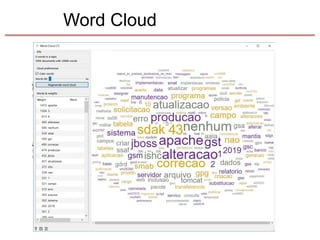
Word Cloud
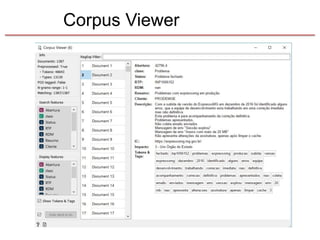
Corpus Viewer
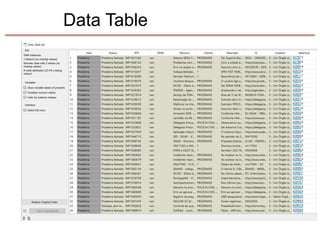
Data Table
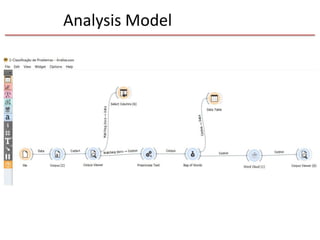
Analysis Model
Clustering model
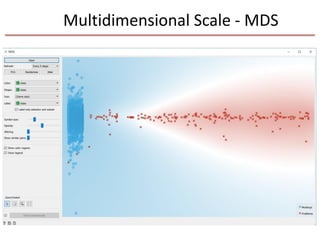
Multidimensional Scale - MDS
Training Model
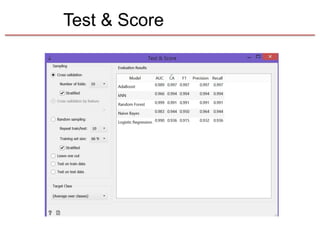
Test & Score
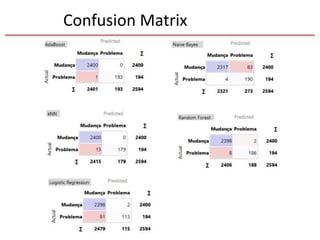
Confusion Matrix
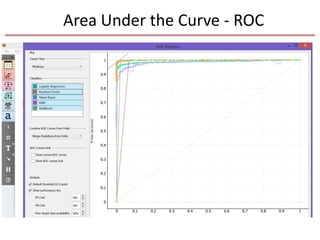
Area Under the Curve - ROC
Prediction Model
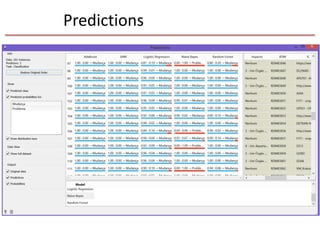
Predictions
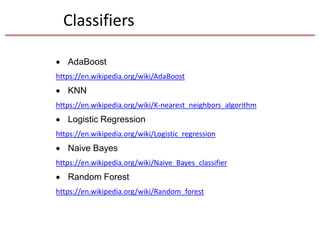
Classifiers
 AdaBoost
https://en.wikipedia.org/wiki/AdaBoost
 KNN
https://en.wikipedia.org/wiki/K-nearest_neighbors_algorithm
 Logistic Regression
https://en.wikipedia.org/wiki/Logistic_regression
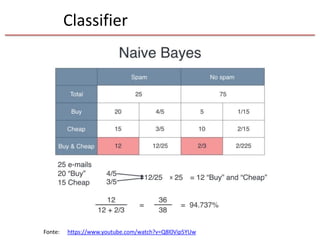
 Naive Bayes
https://en.wikipedia.org/wiki/Naive_Bayes_classifier
 Random Forest
https://en.wikipedia.org/wiki/Random_forest
Classifier
https://www.youtube.com/watch?v=Q8l0Vip5YUwFonte:
The Problem Prediction Model has the function of evaluate the changes
(Change Management discipline - ITIL), using various artificial
intelligence algorithms, to anticipate possible problems (Problem
Management discipline – ITIL).
All 194 knowledge base problems, 2,400 changes from the last 3
months, and 201 forecast changes were used in the model.
The result can already be considered positive, because the model
identified, for example, one change of 10/29/2019, likely to cause a
problem.
A multidisciplinary team was looking into that problem, still out of the
knowledge base, just to address this issue.
We conclude that the Model is an important tool for change analysis
aiming to identify the main occurrences and anticipate possible
problems, using the Naive Bayes classifier from Orange software.
Conclusion
Next steps
1. Identify the keywords (tokens & tags) of changes and problems to
properly feed Bag of Words
2. Replace the contents of the Impact field of the problem file with
another type of identification (Token & Tag)
3. Replace the contents of the Customers field from the problem file
with the Customer related to the Control Item - CI
4. Identify problem-causing keywords (tokens & tags)
5. Develop Incident Model
6. Develop a Decision Intelligence Model based on the Cynefin
framework to determine the context of change according to the 5
realms: simple, complicated, complex, chaotic and disorder
Thanks!
Guttenberg Ferreira Passos
gut.passos@gmail.com

Problem prediction model