DEFINITION
Problem- based learning (PBL) is the
basic human learning process that
allowed primitive man to survive in his
environment.
- Barrows& Tamblyn(1980)
Problem- based learning is a curriculum
development and instructional method
that place the students in an active role
as a problem solver confronted with ill-
structured real life situations.
-Bob Harrison(2007)
AIMS OF PBL
 PROBLEM SOLVING
 SELF DIRECTED LEARNING
 SMALL GROUP LEARNING
 CRITICAL THINKING SKILLS
 INTEGRATION OF DIFFERENT PARTS OF
CURRICULUM
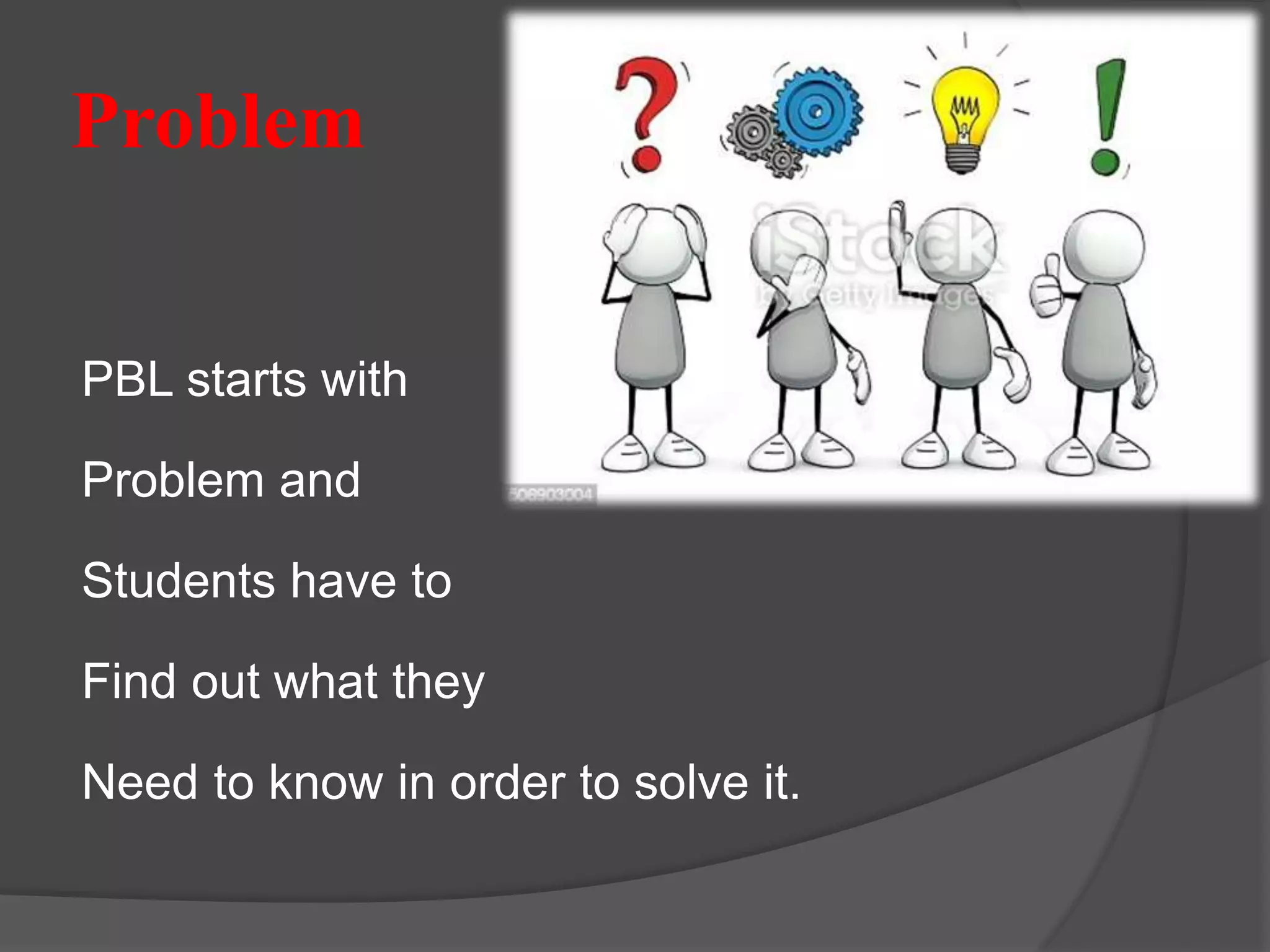
Problem
PBL starts with
Problem and
Students have to
Find out what they
Need to know in order to solve it.
CHARACTERISTICS
 Learning is driven by challenging open-
ended questions
 Learning is student- centered
 Students works in small collaborative
groups
 Teacher takes on the role as a facilitator/
guide of learning.
 New information is acquired through self-
directed learning
 It helps the students to;
i. Acquire necessary knowledge and
skills
ii. Learn how to apply this method
iii. Become a lifelong learner
Savoy and Hughes recommended
the following actions for providing
PBL experiences to the students;
 Identify a problem suitable for the
students
 Connect the problem suitable for the
students
 Connect the problem with professional
practice.
 Organize the subject matter around the
problem
 Give students the responsibility for
defining their learning experiences and to
understand the problem.
 Encourage collaboration by creating
learning teams
 Expects all students to demonstrate
the results of their learning through a
product or performance.
GROUP MEMBERS
1. The group leader
2. The scribe
3. Tutor
4. The group members
a. Role of group leader
 Keeping the discussions goal-
oriented
 Guiding the PBL steps
 Clarifying discussions
 Stimulating participation
 Guiding documentation
 Argument mediator
 Motivator
 Equal participation completes
records
 Time gate keeper.
b. Role of the scribe
 Records the points
 Helps grounds to order their thoughts
 Participate in discussions
 Records resources used by the groups
 making clean and short notes
 Summarizing information
 External memory
 Not to be selective
c. Role of the tutor
 Encourages the groups to participate
 Assist chair with group dynamics and
keeping to time.
 Plays a key role in PBL
 Back born of the PBL
 Makes learning student- centered.
 Facilitates learning instead of
dispensing knowledge
 Guides never directs
 Committed to the group learning
 Active listening
 Must keep the process alive and on
the track by non- directive stimuli.
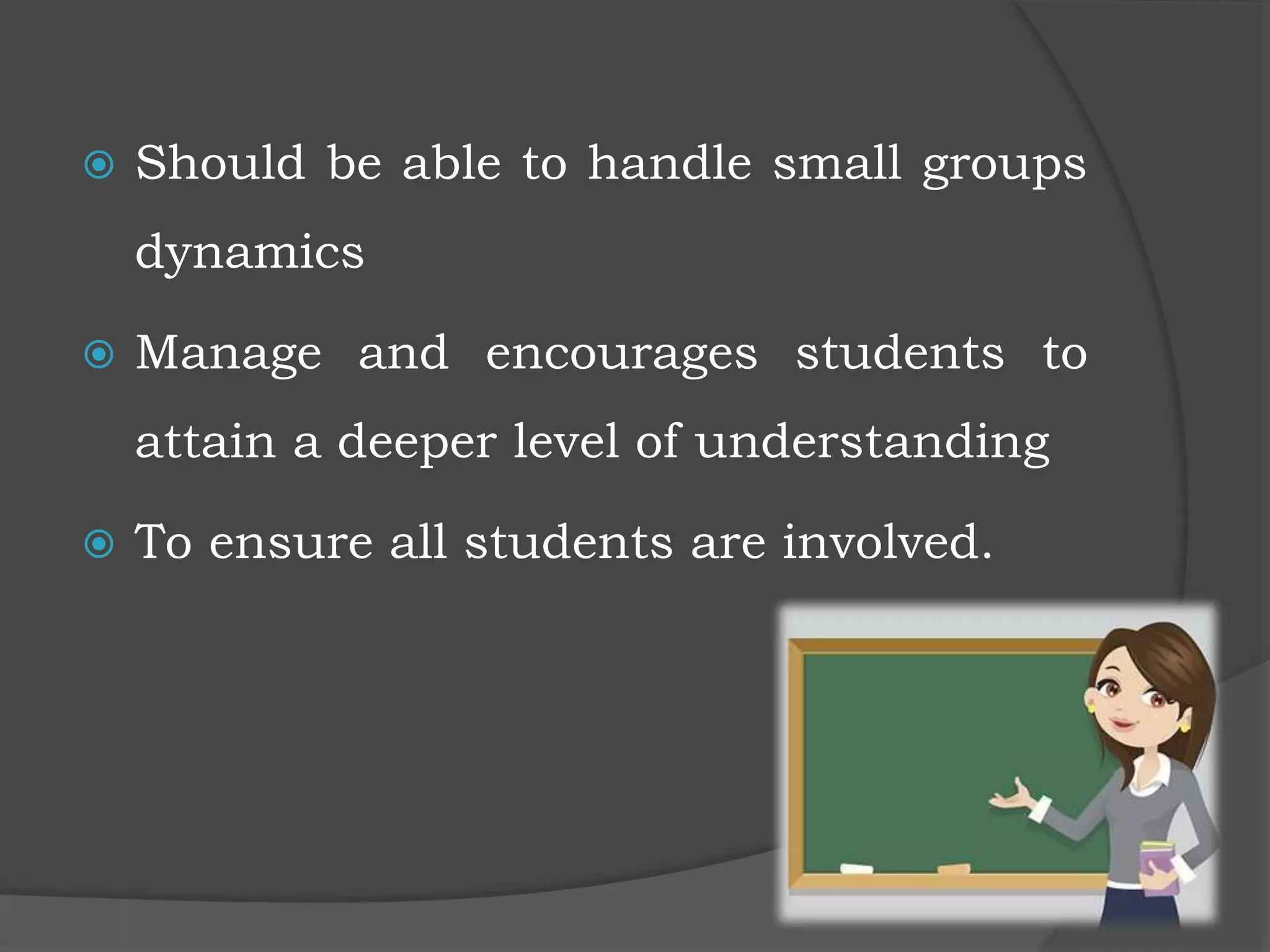
 Should be able to handle small groups
dynamics
 Manage and encourages students to
attain a deeper level of understanding
 To ensure all students are involved.
d. Role of the group
members
 Follows the steps of process in
sequences
 Participate in discussion
 Listen to and respect contribution of
others
 Ask open- ended questions.
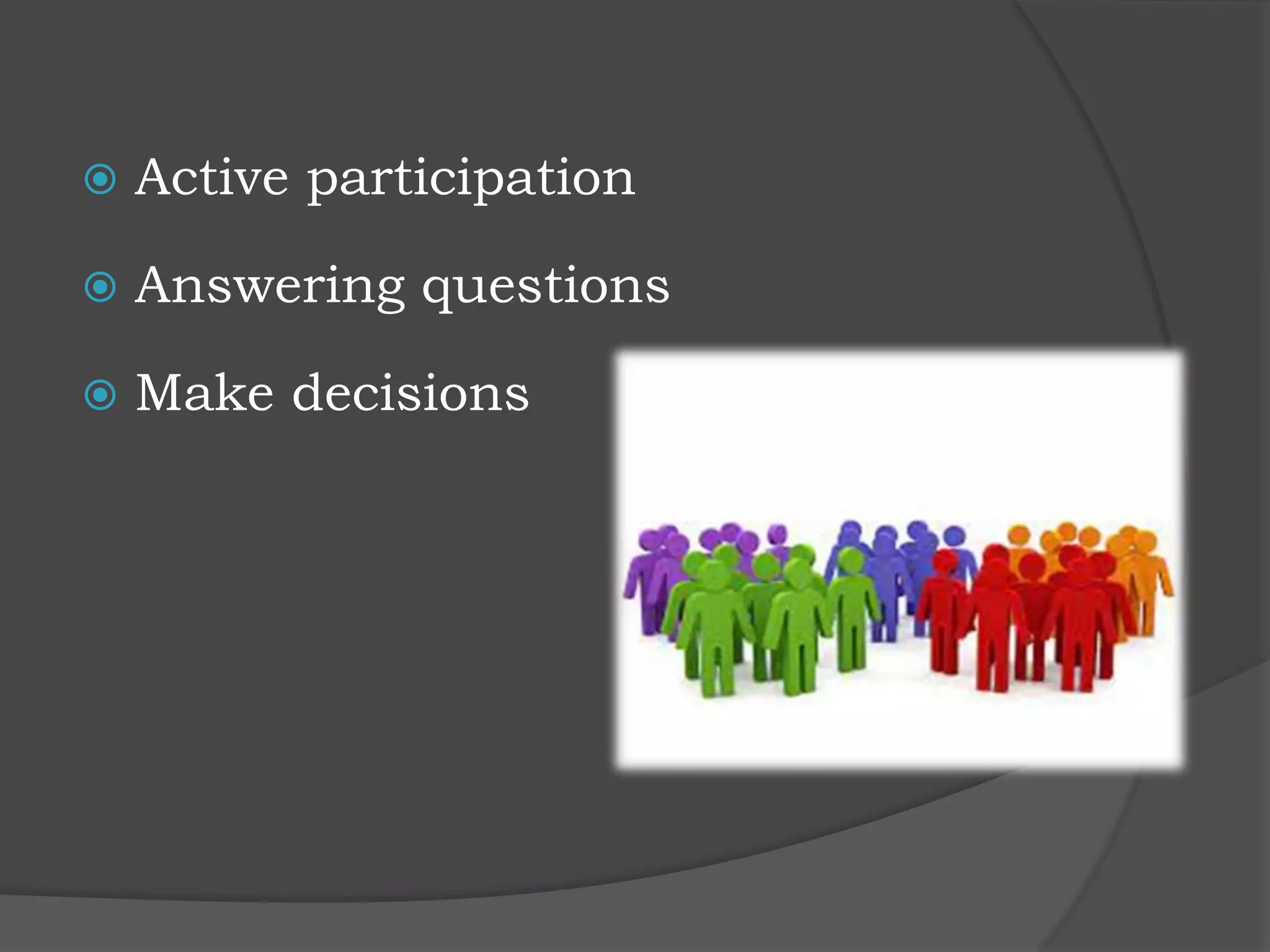
 Active participation
 Answering questions
 Make decisions
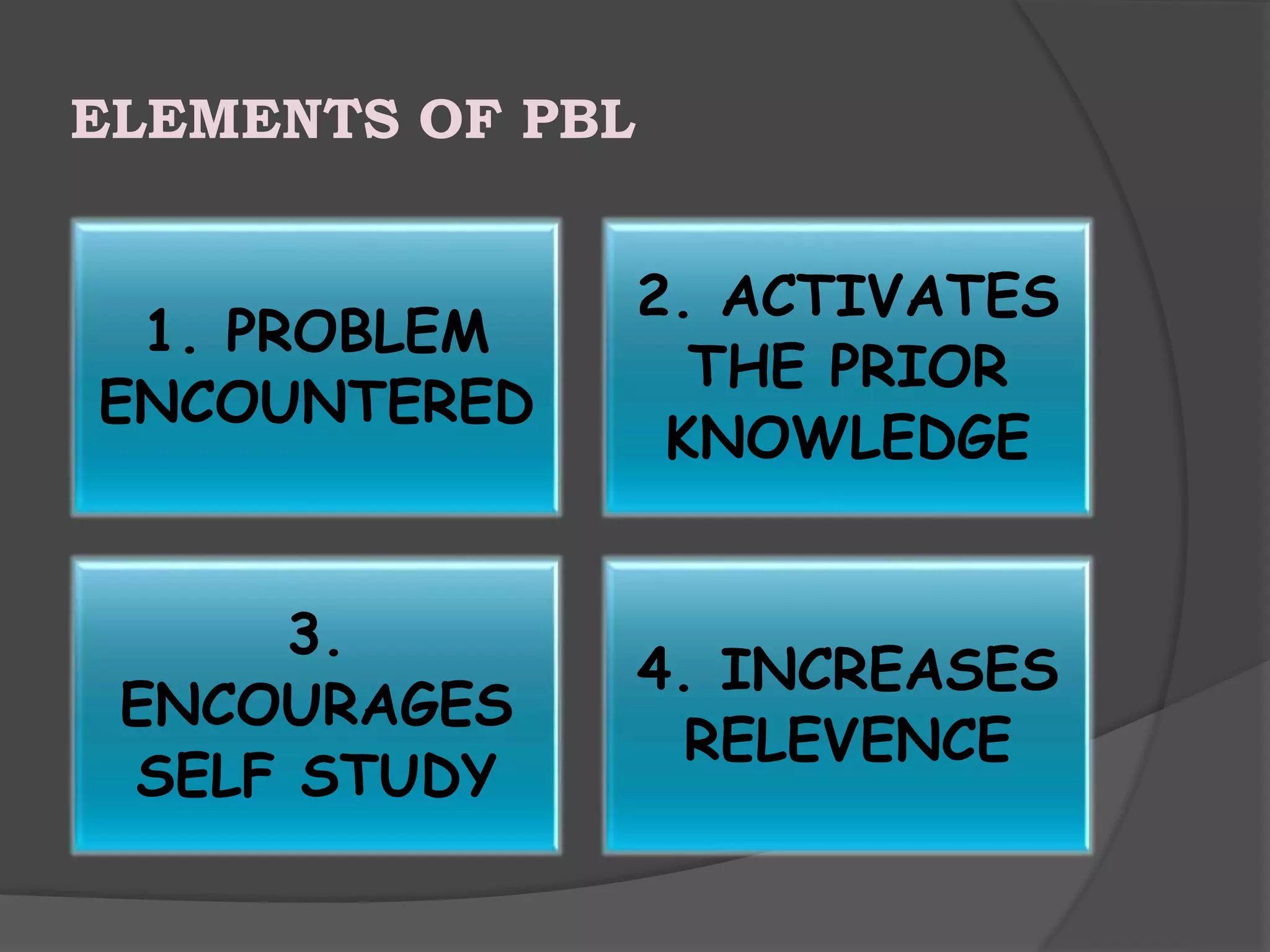
ELEMENTS OF PBL
1. PROBLEM
ENCOUNTERED
2. ACTIVATES
THE PRIOR
KNOWLEDGE
3.
ENCOURAGES
SELF STUDY
4. INCREASES
RELEVENCE
ADVANTAGES
1. It promotes student learning
2. It creates interest and motivation among
students
3. It helps the students to apply learned
knowledge into practice
4. It’s a natural teaching method which
develops individualization.
5. It encourages self learning
6. Helps in building team work and
collaboration
7. It develops complex problem solving
abilities and creative thinking
8. It makes learning enjoyable.
9. It enhances learner’s
communication skills
10.Improves self expression and
presentation skills
11.It makes learning more permanent.
DISADVANTAGES
1. Very time consuming
2. Requires team’s dedicated efforts
3. Not all teachers can be good
facilitators; they may requires training
4. Assessing students in a team work is a
common issue.
5. Tutors who enjoys passing on their
own knowledge and understanding
may find PBL facilitation difficult and
frustrating.
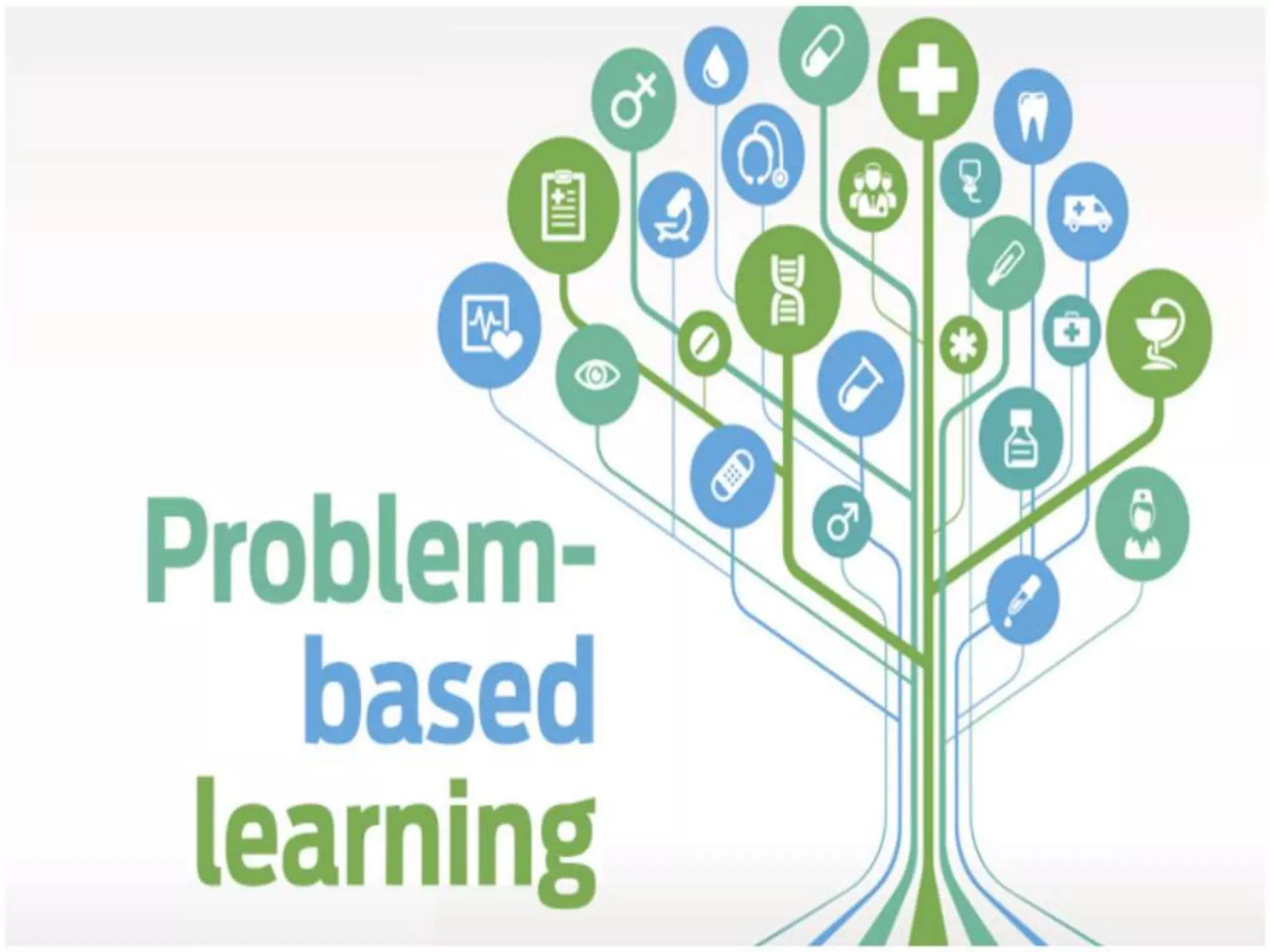
Problem Based Learning

Problem Based Learning

  • 2.
    DEFINITION Problem- based learning(PBL) is the basic human learning process that allowed primitive man to survive in his environment. - Barrows& Tamblyn(1980)
  • 3.
    Problem- based learningis a curriculum development and instructional method that place the students in an active role as a problem solver confronted with ill- structured real life situations. -Bob Harrison(2007)
  • 4.
    AIMS OF PBL PROBLEM SOLVING  SELF DIRECTED LEARNING  SMALL GROUP LEARNING  CRITICAL THINKING SKILLS  INTEGRATION OF DIFFERENT PARTS OF CURRICULUM
  • 5.
    Problem PBL starts with Problemand Students have to Find out what they Need to know in order to solve it.
  • 6.
    CHARACTERISTICS  Learning isdriven by challenging open- ended questions  Learning is student- centered  Students works in small collaborative groups  Teacher takes on the role as a facilitator/ guide of learning.
  • 7.
     New informationis acquired through self- directed learning  It helps the students to; i. Acquire necessary knowledge and skills ii. Learn how to apply this method iii. Become a lifelong learner
  • 9.
    Savoy and Hughesrecommended the following actions for providing PBL experiences to the students;
  • 10.
     Identify aproblem suitable for the students  Connect the problem suitable for the students  Connect the problem with professional practice.
  • 11.
     Organize thesubject matter around the problem  Give students the responsibility for defining their learning experiences and to understand the problem.  Encourage collaboration by creating learning teams
  • 12.
     Expects allstudents to demonstrate the results of their learning through a product or performance.
  • 13.
    GROUP MEMBERS 1. Thegroup leader 2. The scribe 3. Tutor 4. The group members
  • 14.
    a. Role ofgroup leader  Keeping the discussions goal- oriented  Guiding the PBL steps  Clarifying discussions  Stimulating participation  Guiding documentation
  • 15.
     Argument mediator Motivator  Equal participation completes records  Time gate keeper.
  • 16.
    b. Role ofthe scribe  Records the points  Helps grounds to order their thoughts  Participate in discussions  Records resources used by the groups  making clean and short notes
  • 17.
     Summarizing information External memory  Not to be selective
  • 18.
    c. Role ofthe tutor  Encourages the groups to participate  Assist chair with group dynamics and keeping to time.  Plays a key role in PBL  Back born of the PBL  Makes learning student- centered.
  • 19.
     Facilitates learninginstead of dispensing knowledge  Guides never directs  Committed to the group learning  Active listening  Must keep the process alive and on the track by non- directive stimuli.
  • 20.
     Should beable to handle small groups dynamics  Manage and encourages students to attain a deeper level of understanding  To ensure all students are involved.
  • 21.
    d. Role ofthe group members  Follows the steps of process in sequences  Participate in discussion  Listen to and respect contribution of others  Ask open- ended questions.
  • 22.
     Active participation Answering questions  Make decisions
  • 23.
    ELEMENTS OF PBL 1.PROBLEM ENCOUNTERED 2. ACTIVATES THE PRIOR KNOWLEDGE 3. ENCOURAGES SELF STUDY 4. INCREASES RELEVENCE
  • 24.
    ADVANTAGES 1. It promotesstudent learning 2. It creates interest and motivation among students 3. It helps the students to apply learned knowledge into practice 4. It’s a natural teaching method which develops individualization.
  • 25.
    5. It encouragesself learning 6. Helps in building team work and collaboration 7. It develops complex problem solving abilities and creative thinking 8. It makes learning enjoyable.
  • 26.
    9. It enhanceslearner’s communication skills 10.Improves self expression and presentation skills 11.It makes learning more permanent.
  • 27.
    DISADVANTAGES 1. Very timeconsuming 2. Requires team’s dedicated efforts 3. Not all teachers can be good facilitators; they may requires training 4. Assessing students in a team work is a common issue.
  • 28.
    5. Tutors whoenjoys passing on their own knowledge and understanding may find PBL facilitation difficult and frustrating.