PRICING
STRATEGIES OF I-
EMAP
Objectives
 Definition of price and pricing.
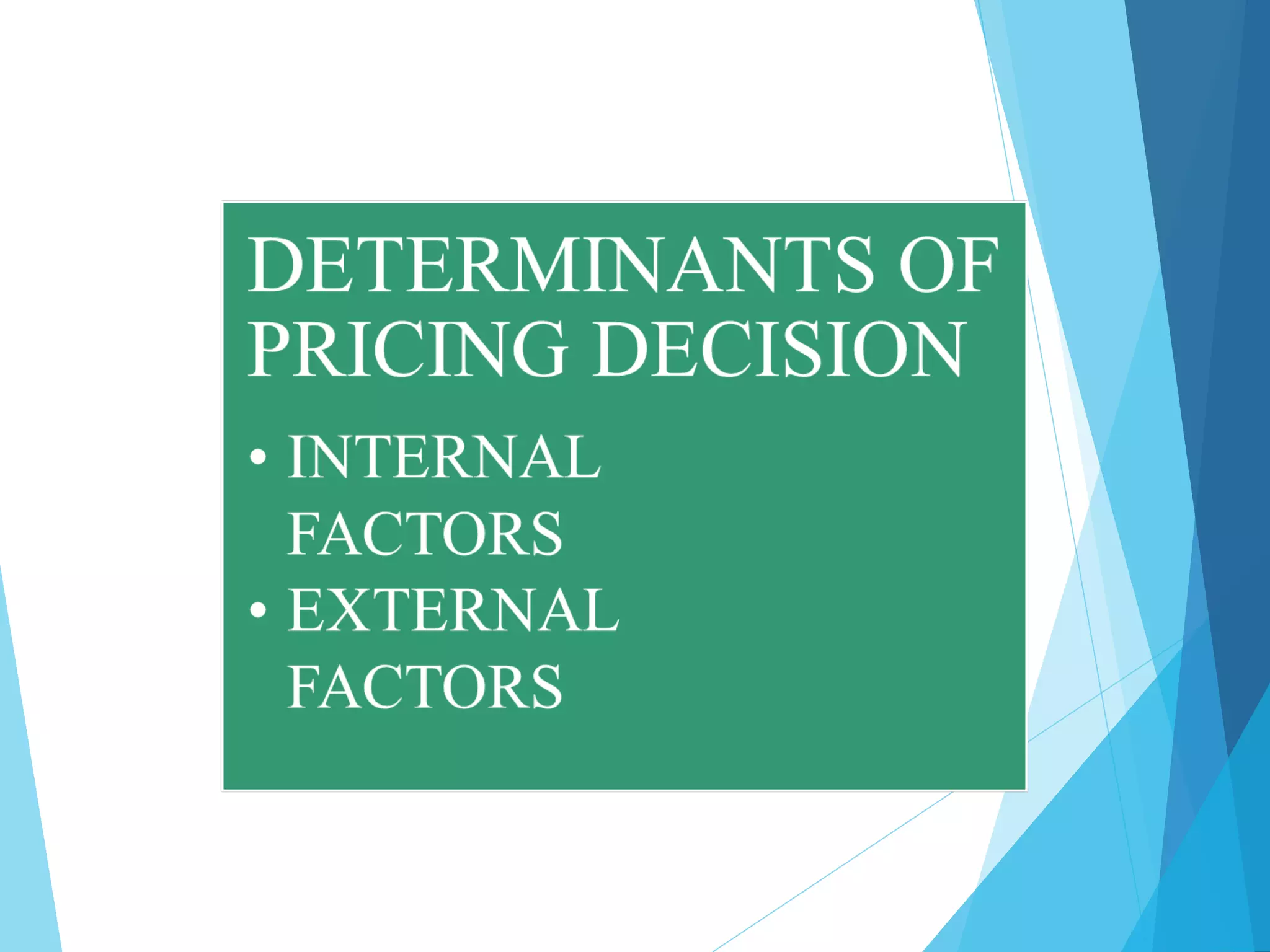
 Factors influencing pricing decision
 Analyze methods of pricing and approaches to pricing.
price
Price may be defined as the value of product attributes
expressed in monetary terms which a consumer pays or is
expected to pay in exchange and anticipation of the expected
or offered utility.
pricing
Pricing is the function of determining product value in monetary
terms by the marketing management of a company before it is
offered to the target consumer for sale.
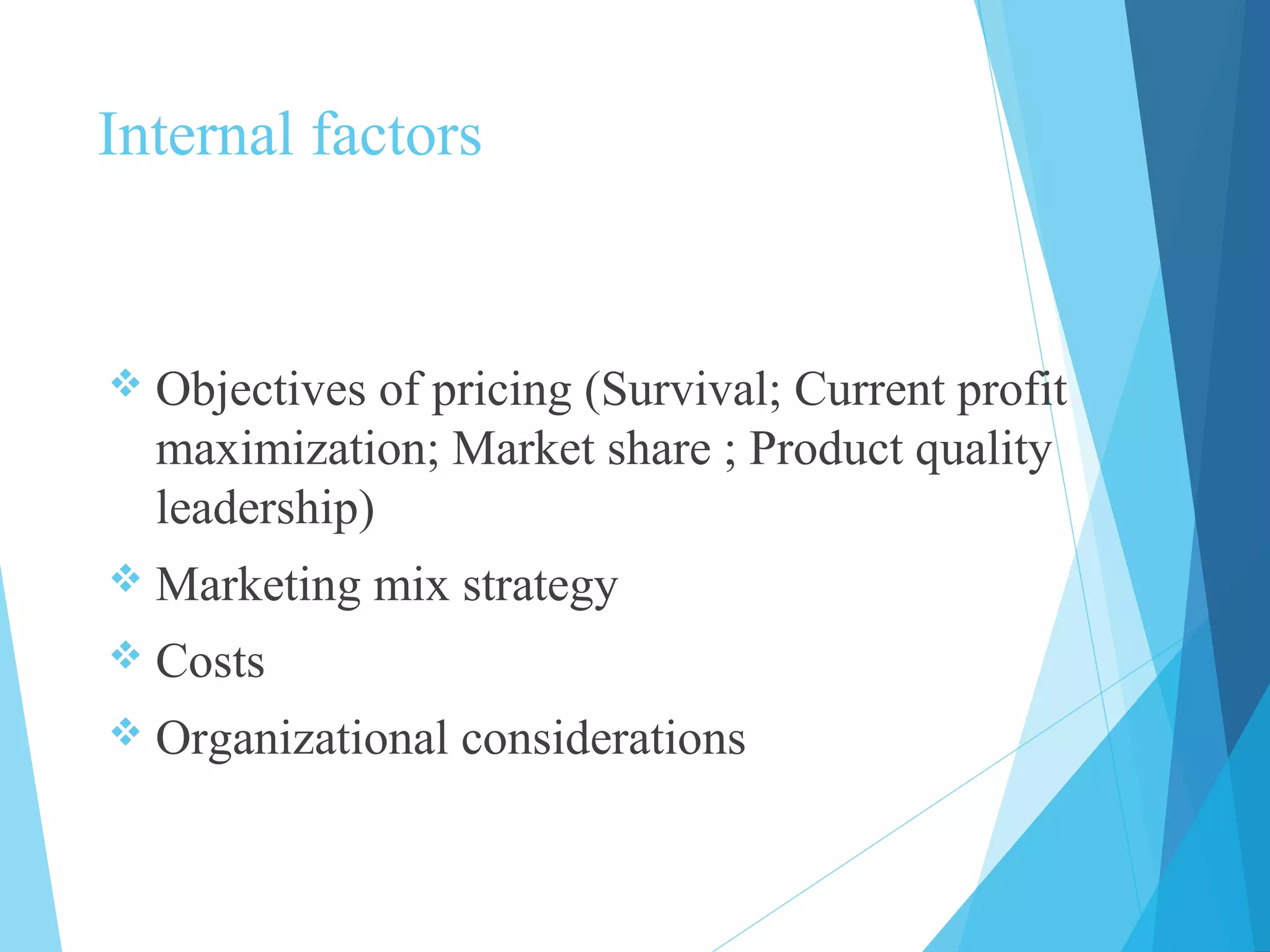
Internal factors
 Objectives of pricing (Survival; Current profit
maximization; Market share ; Product quality
leadership)
 Marketing mix strategy
 Costs
 Organizational considerations
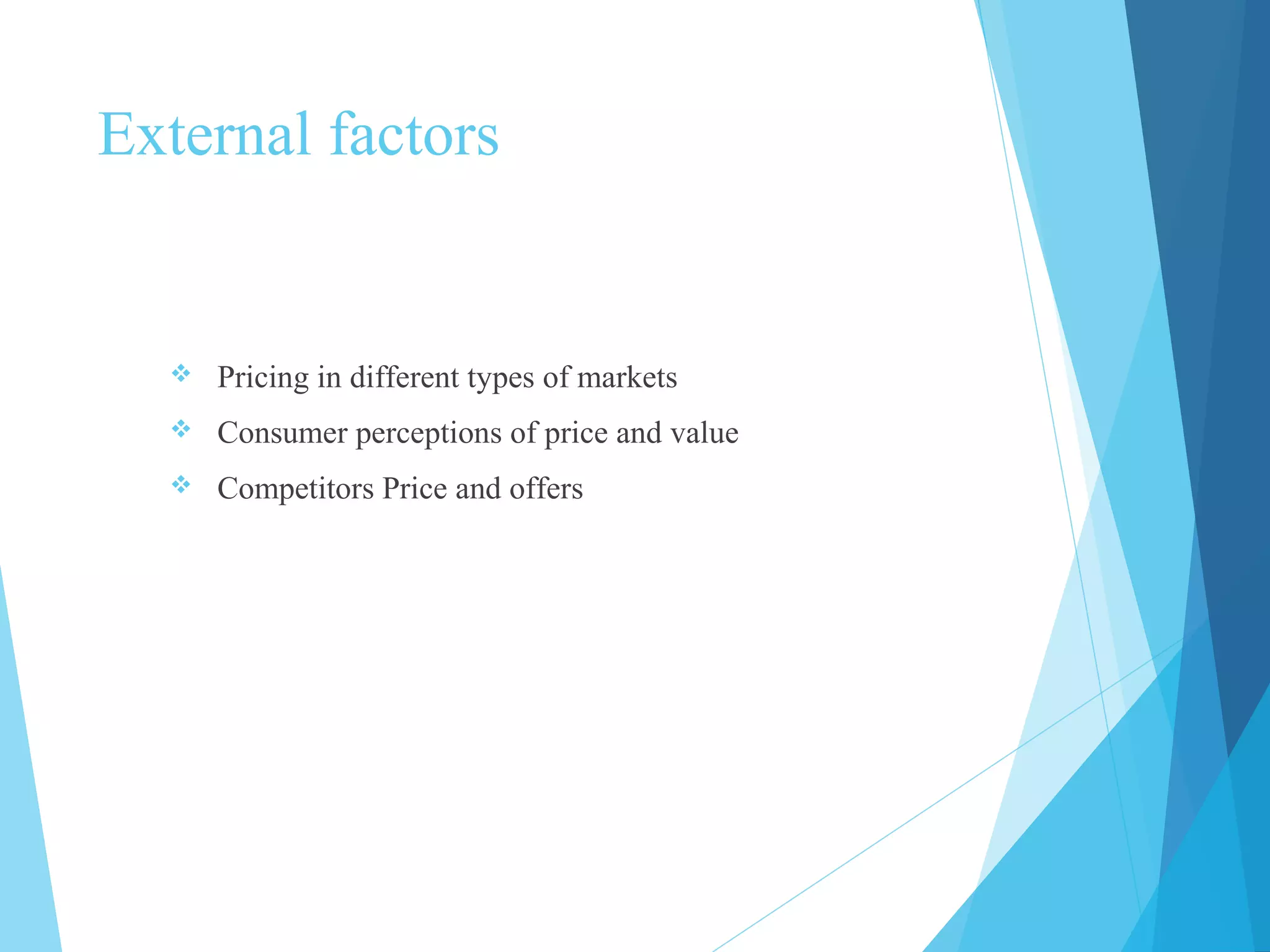
External factors
 Pricing in different types of markets
 Consumer perceptions of price and value
 Competitors Price and offers
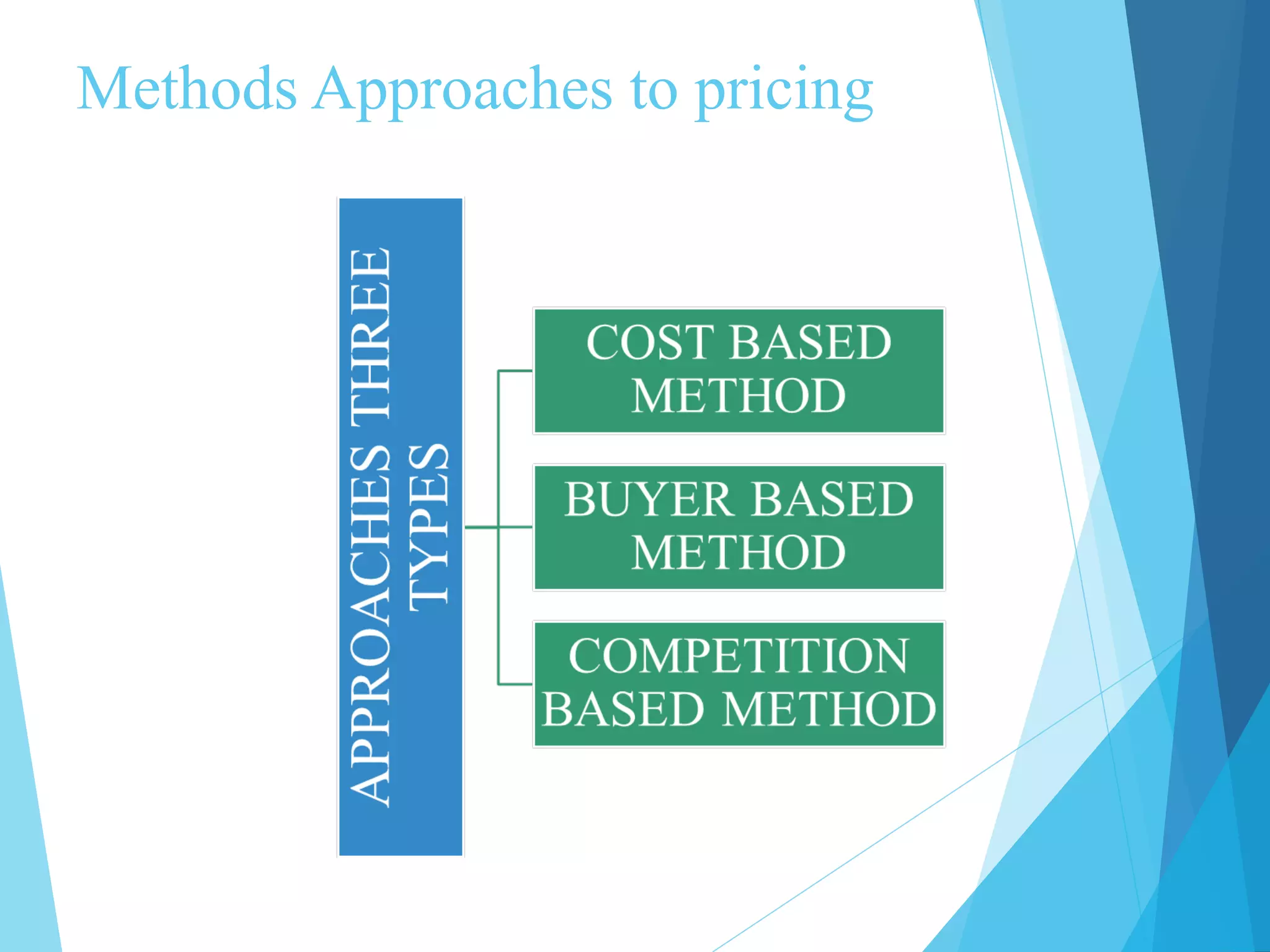
Methods Approaches to pricing
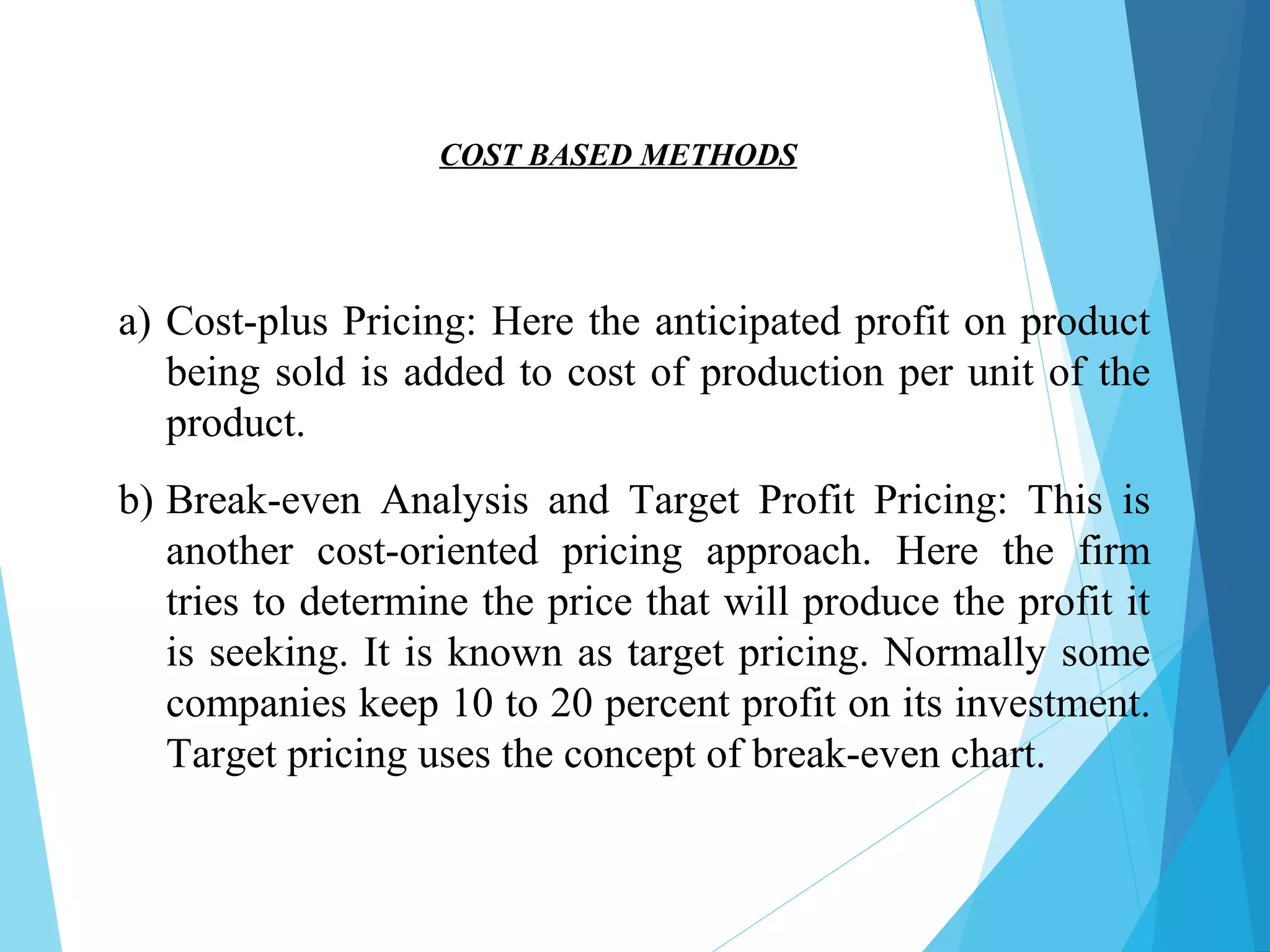
a) Cost-plus Pricing: Here the anticipated profit on product
being sold is added to cost of production per unit of the
product.
b) Break-even Analysis and Target Profit Pricing: This is
another cost-oriented pricing approach. Here the firm
tries to determine the price that will produce the profit it
is seeking. It is known as target pricing. Normally some
companies keep 10 to 20 percent profit on its investment.
Target pricing uses the concept of break-even chart.
COST BASED METHODS
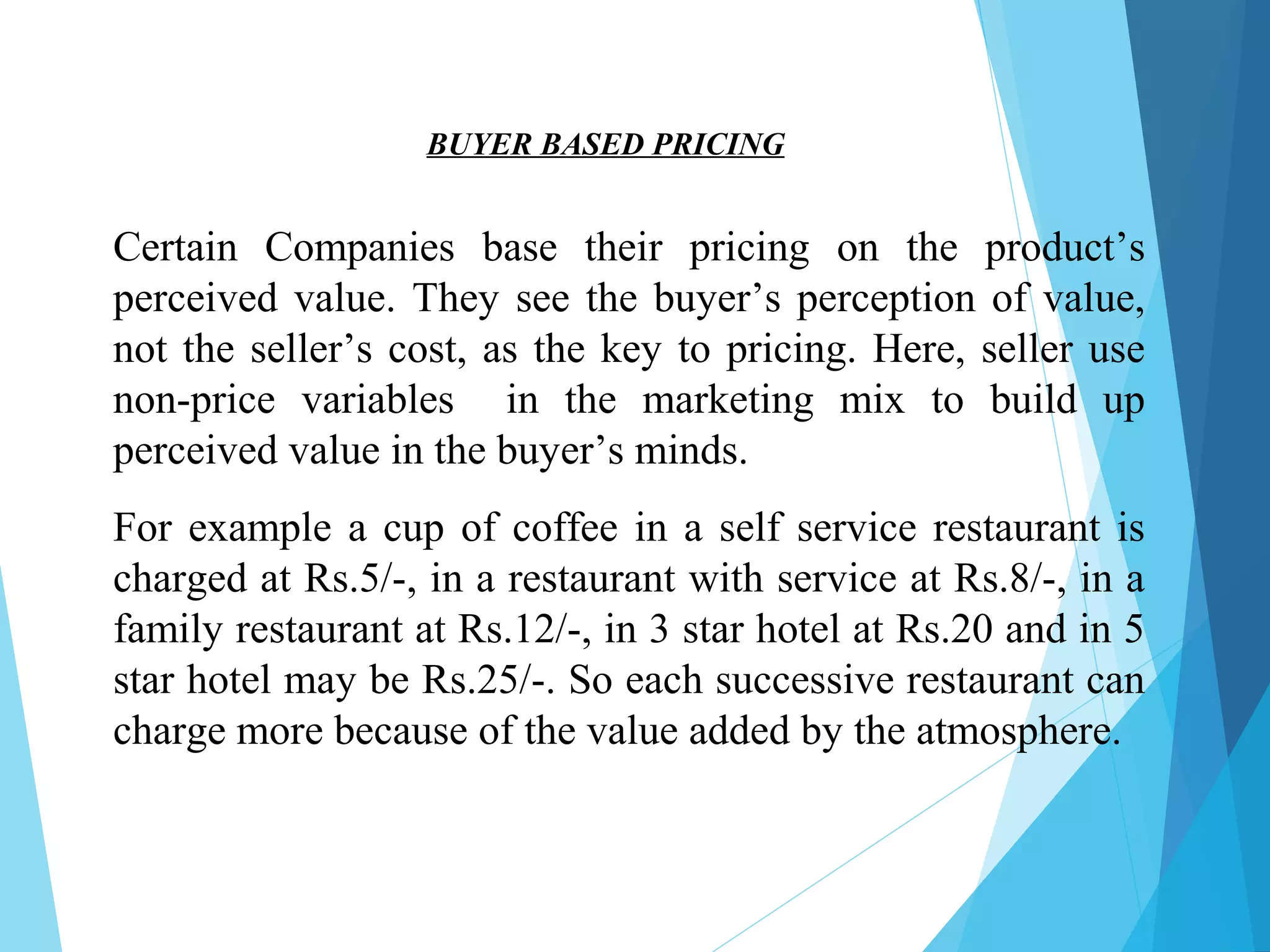
Certain Companies base their pricing on the product’s
perceived value. They see the buyer’s perception of value,
not the seller’s cost, as the key to pricing. Here, seller use
non-price variables in the marketing mix to build up
perceived value in the buyer’s minds.
For example a cup of coffee in a self service restaurant is
charged at Rs.5/-, in a restaurant with service at Rs.8/-, in a
family restaurant at Rs.12/-, in 3 star hotel at Rs.20 and in 5
star hotel may be Rs.25/-. So each successive restaurant can
charge more because of the value added by the atmosphere.
BUYER BASED PRICING
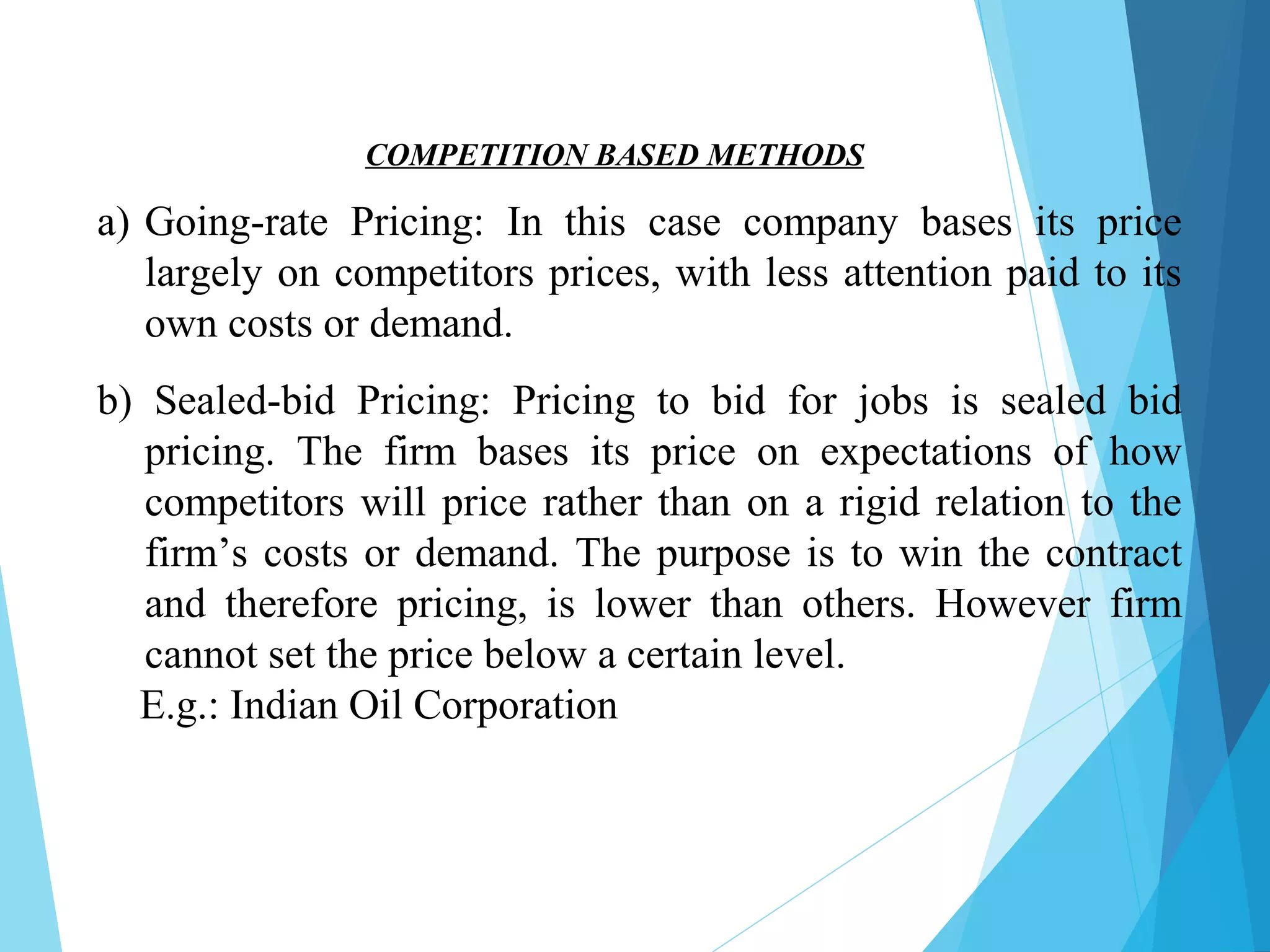
a) Going-rate Pricing: In this case company bases its price
largely on competitors prices, with less attention paid to its
own costs or demand.
b) Sealed-bid Pricing: Pricing to bid for jobs is sealed bid
pricing. The firm bases its price on expectations of how
competitors will price rather than on a rigid relation to the
firm’s costs or demand. The purpose is to win the contract
and therefore pricing, is lower than others. However firm
cannot set the price below a certain level.
E.g.: Indian Oil Corporation
COMPETITION BASED METHODS
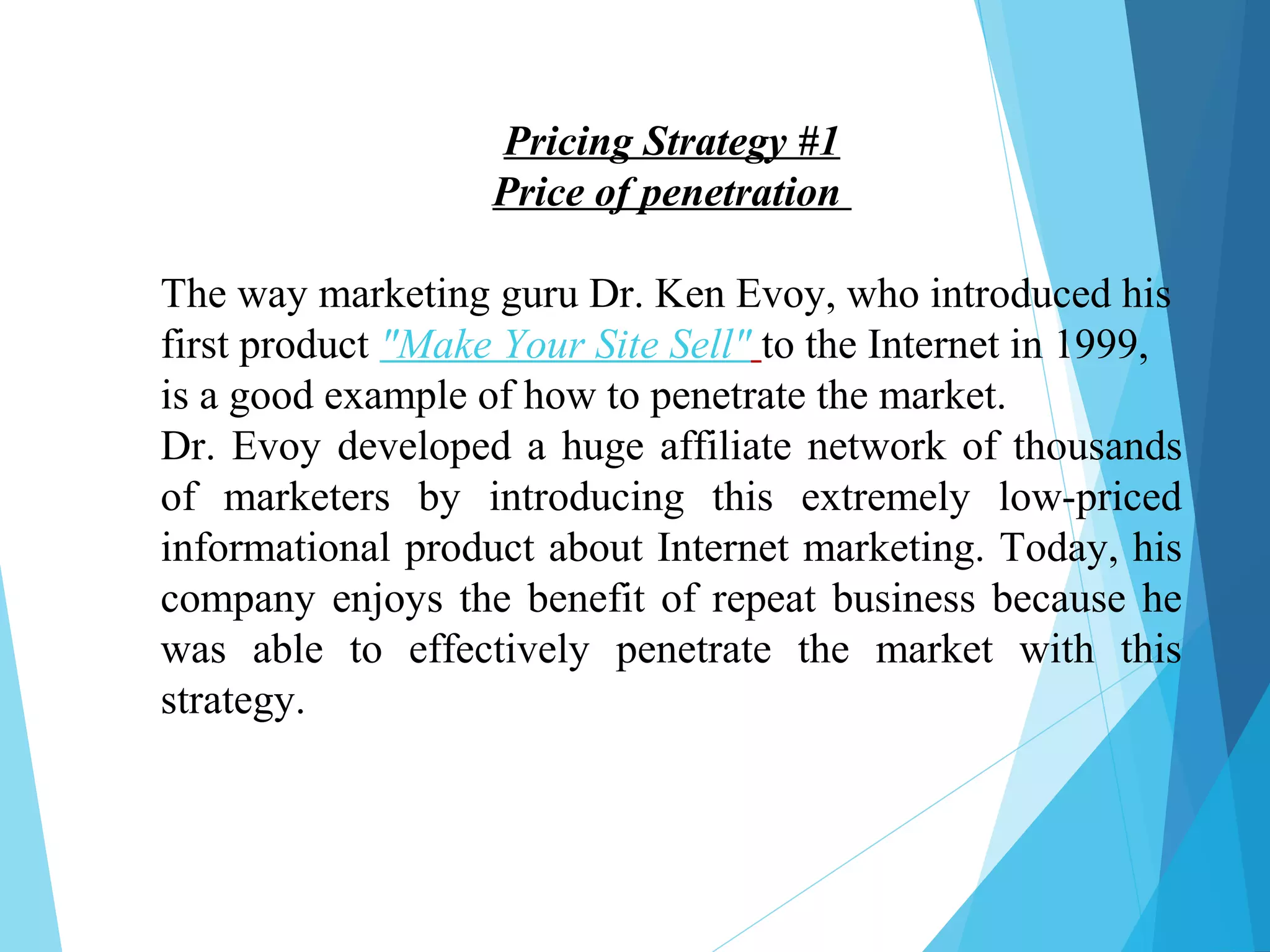
Pricing Strategy #1
Price of penetration
The way marketing guru Dr. Ken Evoy, who introduced his
first product "Make Your Site Sell" to the Internet in 1999,
is a good example of how to penetrate the market.
Dr. Evoy developed a huge affiliate network of thousands
of marketers by introducing this extremely low-priced
informational product about Internet marketing. Today, his
company enjoys the benefit of repeat business because he
was able to effectively penetrate the market with this
strategy.
Pricing Strategy #2 Price Skimming
price Skimming is the opposite of penetration. This is a high
priced model, sometimes called "top pricing."
The idea behind this philosophy is to give you high profits,
even at the cost of losing a large number of potential
customers.
Typically, when a company launches a new product, they
charge higher prices in the beginning to help recoup
expenditures quickly.
Pricing Strategy #3 The Loss Leader
Want to kill your competition? The loss leader is the way
to set your prices to get the job done.
No matter the cost!
Even at a loss in profits!
In its truest form, this approach has one objective --
ELIMINATE THE COMPETITION!
The consequences of even a slight misjudgment in using
this retail pricing strategy could be devastating to your
business.

pricing strategies of I-Emap

  • 1.
  • 2.
    Objectives  Definition ofprice and pricing.  Factors influencing pricing decision  Analyze methods of pricing and approaches to pricing.
  • 3.
    price Price may bedefined as the value of product attributes expressed in monetary terms which a consumer pays or is expected to pay in exchange and anticipation of the expected or offered utility.
  • 4.
    pricing Pricing is thefunction of determining product value in monetary terms by the marketing management of a company before it is offered to the target consumer for sale.
  • 6.
    Internal factors  Objectivesof pricing (Survival; Current profit maximization; Market share ; Product quality leadership)  Marketing mix strategy  Costs  Organizational considerations
  • 7.
    External factors  Pricingin different types of markets  Consumer perceptions of price and value  Competitors Price and offers
  • 8.
  • 9.
    a) Cost-plus Pricing:Here the anticipated profit on product being sold is added to cost of production per unit of the product. b) Break-even Analysis and Target Profit Pricing: This is another cost-oriented pricing approach. Here the firm tries to determine the price that will produce the profit it is seeking. It is known as target pricing. Normally some companies keep 10 to 20 percent profit on its investment. Target pricing uses the concept of break-even chart. COST BASED METHODS
  • 10.
    Certain Companies basetheir pricing on the product’s perceived value. They see the buyer’s perception of value, not the seller’s cost, as the key to pricing. Here, seller use non-price variables in the marketing mix to build up perceived value in the buyer’s minds. For example a cup of coffee in a self service restaurant is charged at Rs.5/-, in a restaurant with service at Rs.8/-, in a family restaurant at Rs.12/-, in 3 star hotel at Rs.20 and in 5 star hotel may be Rs.25/-. So each successive restaurant can charge more because of the value added by the atmosphere. BUYER BASED PRICING
  • 11.
    a) Going-rate Pricing:In this case company bases its price largely on competitors prices, with less attention paid to its own costs or demand. b) Sealed-bid Pricing: Pricing to bid for jobs is sealed bid pricing. The firm bases its price on expectations of how competitors will price rather than on a rigid relation to the firm’s costs or demand. The purpose is to win the contract and therefore pricing, is lower than others. However firm cannot set the price below a certain level. E.g.: Indian Oil Corporation COMPETITION BASED METHODS
  • 12.
    Pricing Strategy #1 Priceof penetration The way marketing guru Dr. Ken Evoy, who introduced his first product "Make Your Site Sell" to the Internet in 1999, is a good example of how to penetrate the market. Dr. Evoy developed a huge affiliate network of thousands of marketers by introducing this extremely low-priced informational product about Internet marketing. Today, his company enjoys the benefit of repeat business because he was able to effectively penetrate the market with this strategy.
  • 13.
    Pricing Strategy #2Price Skimming price Skimming is the opposite of penetration. This is a high priced model, sometimes called "top pricing." The idea behind this philosophy is to give you high profits, even at the cost of losing a large number of potential customers. Typically, when a company launches a new product, they charge higher prices in the beginning to help recoup expenditures quickly.
  • 14.
    Pricing Strategy #3The Loss Leader Want to kill your competition? The loss leader is the way to set your prices to get the job done. No matter the cost! Even at a loss in profits! In its truest form, this approach has one objective -- ELIMINATE THE COMPETITION! The consequences of even a slight misjudgment in using this retail pricing strategy could be devastating to your business.