#EğitimdeUğur
HOŞGELDİNİZ
PRESENT SIMPLE TENSE
We use present simple tense when talking about:
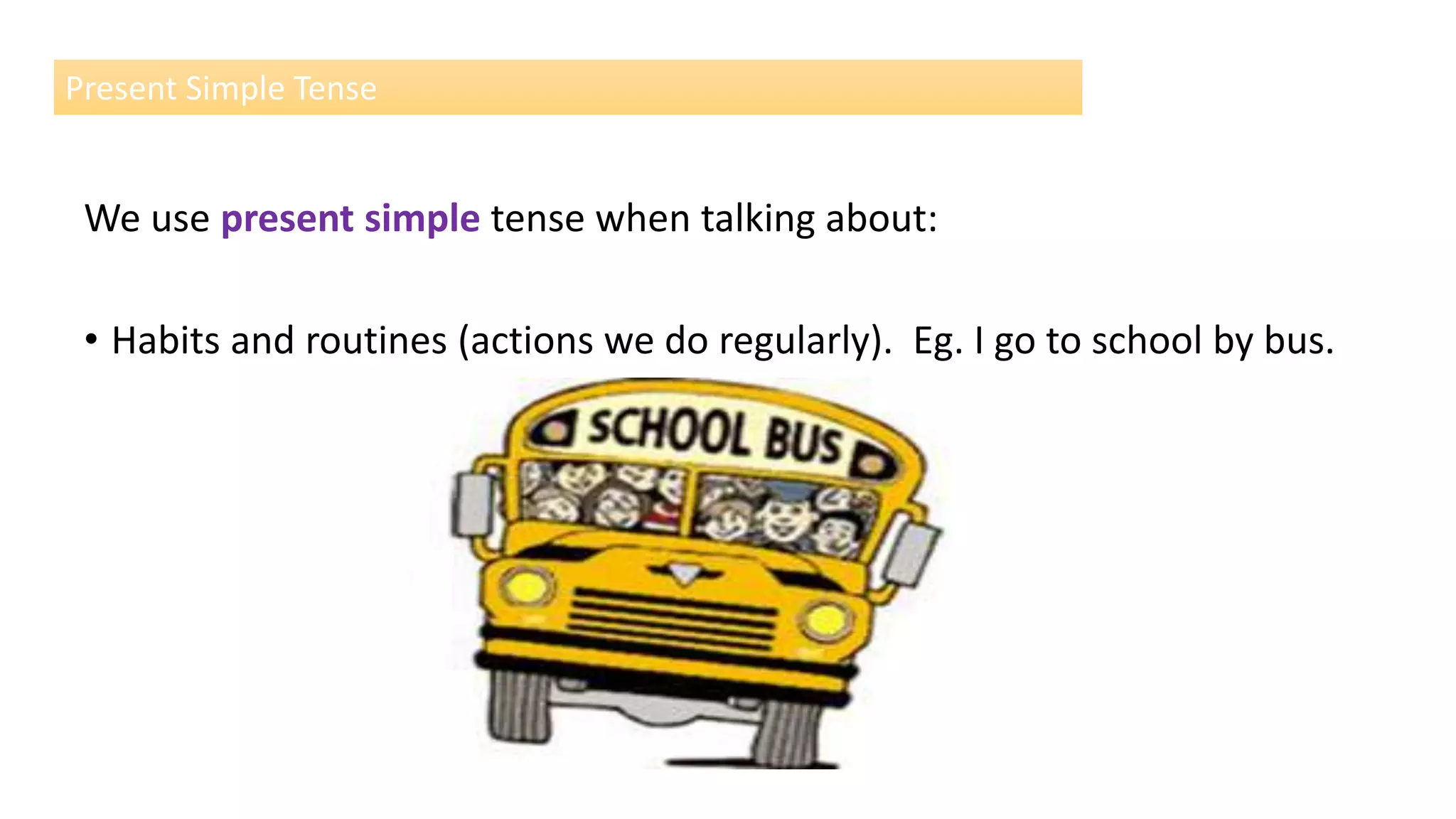
• Habits and routines (actions we do regularly). Eg. I go to school by bus.
Present Simple Tense
We use present simple tense when talking about:
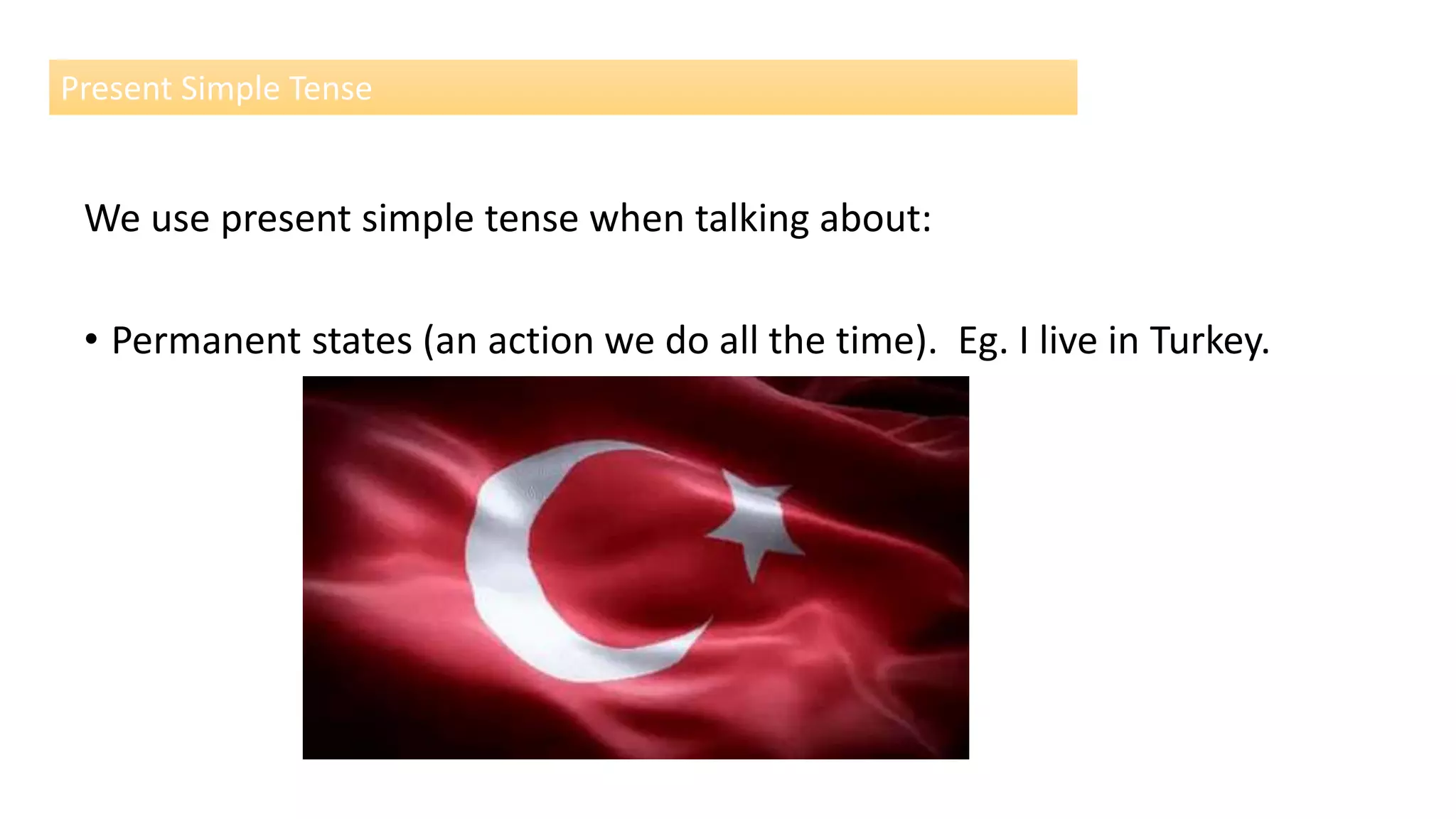
• Permanent states (an action we do all the time). Eg. I live in Turkey.
Present Simple Tense
We use present simple tense when talking about:
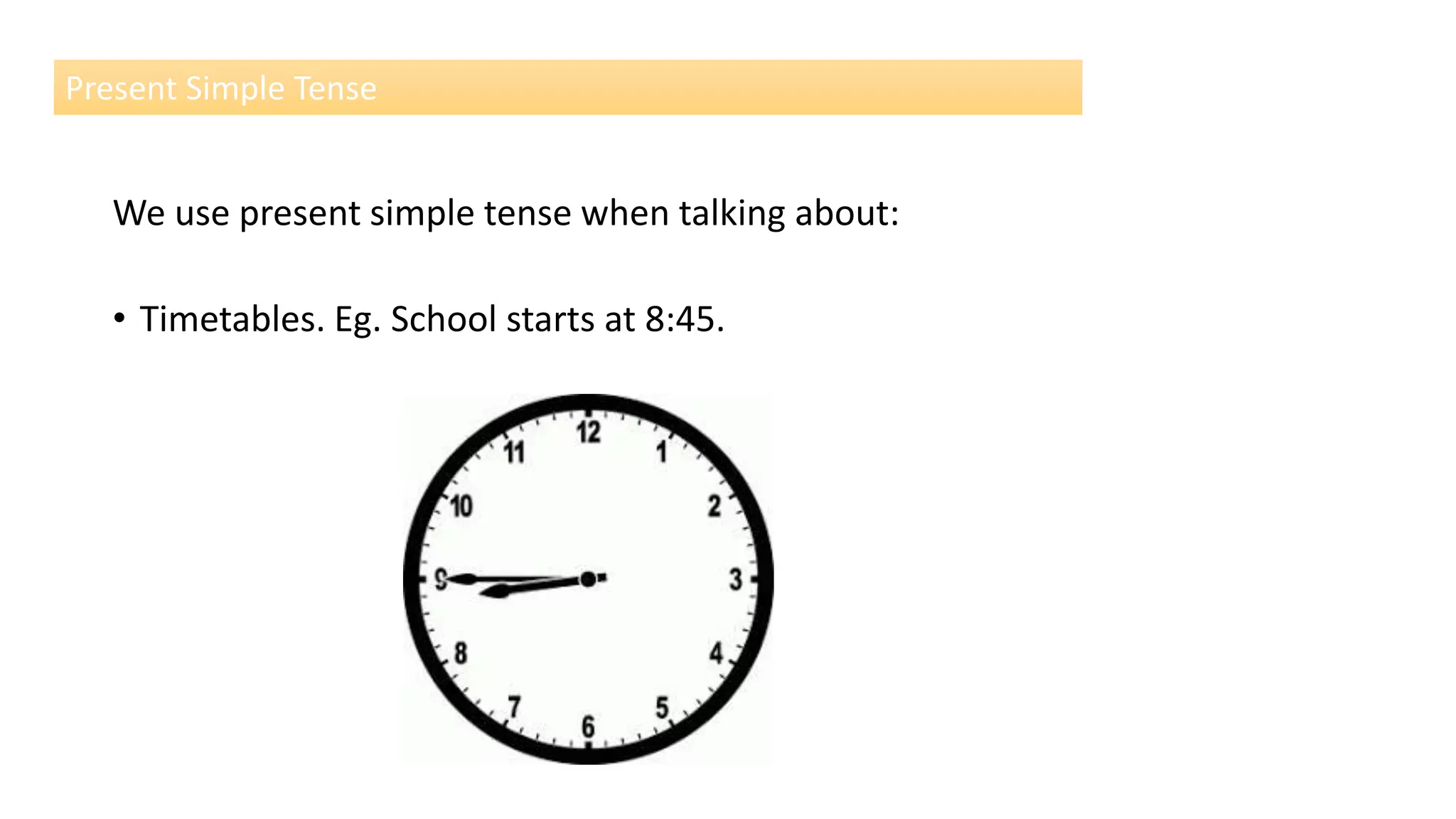
• Timetables. Eg. School starts at 8:45.
Present Simple Tense
We use present simple tense when talking about:
• Time expressions used with present simple:
every hour / day / week / month / usually / always / sometimes / often etc.
Present Simple Tense
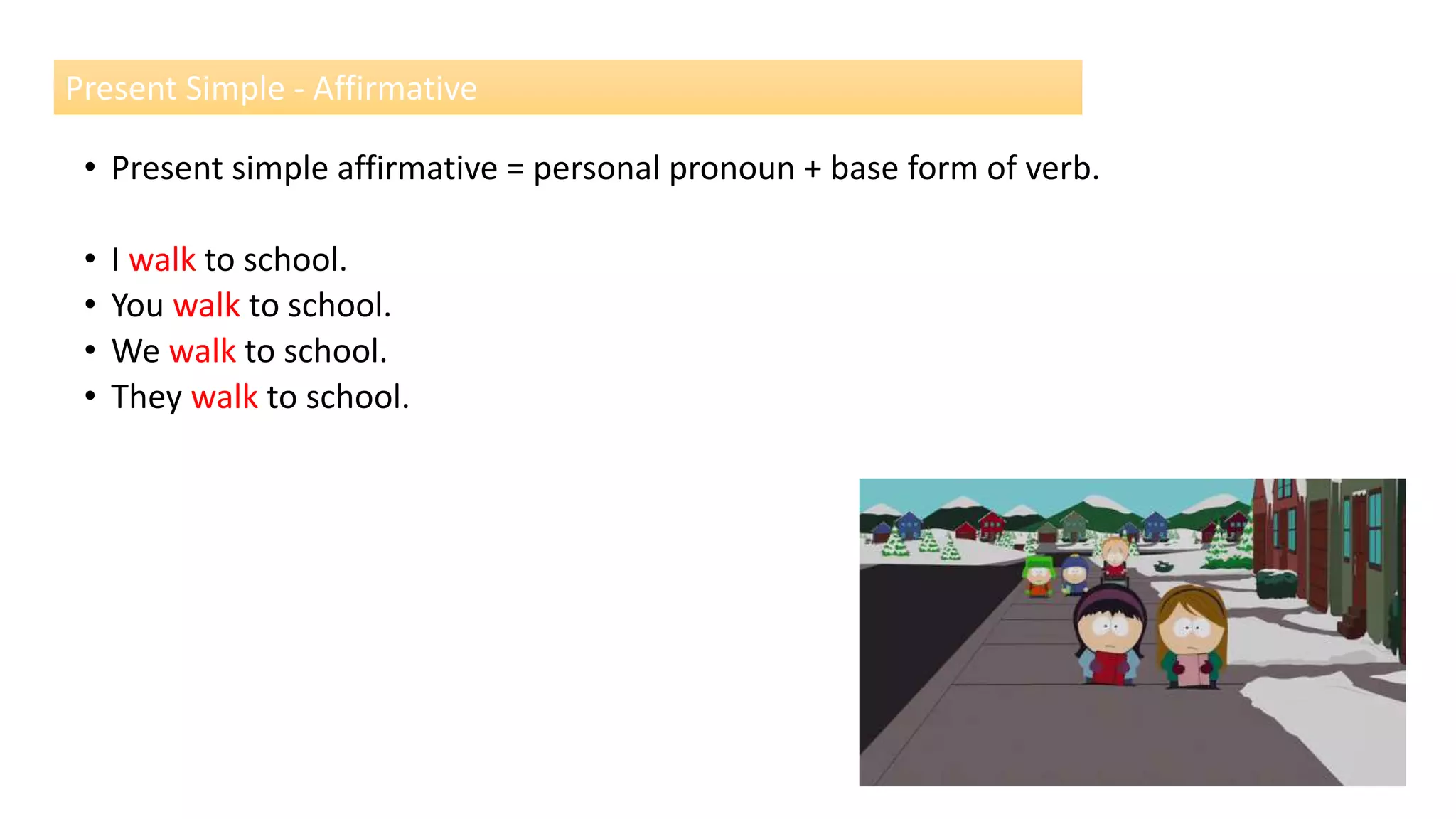
• Present simple affirmative = personal pronoun + base form of verb.
• I walk to school.
• You walk to school.
• We walk to school.
• They walk to school.
Present Simple - Affirmative
Personal pronoun + base form verb + s / es / ies.
Verbs ending in ch – o – sh – ss or x sound take on ‘–es’
Verbs ending in y – drop the ‘y’ and add ‘ies’.
• He walks to school. He goes to sleep. He carries the ball.
• She walks to school. She goes to sleep. She carries the ball.
• It walks to school. It goes to sleep. It carries the ball.
Present Simple Affirmative
3rd person singular
• Present simple negative = personal pronoun + don’t + base form of verb.
• I don’t walk to school.
• You don’t walk to school.
• We don’t walk to school.
• They don’t walk to school.
Present Simple - Negative
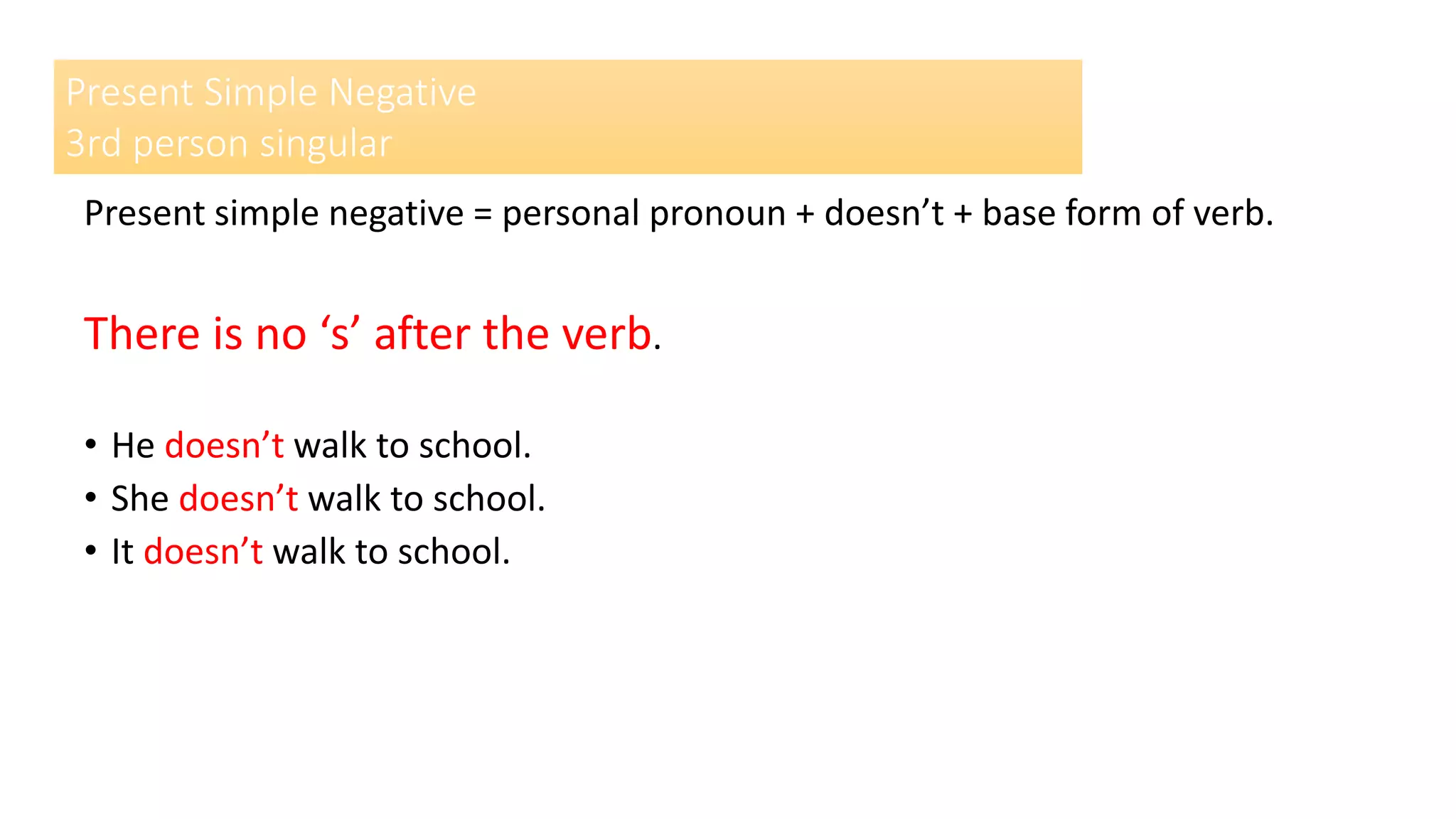
Present simple negative = personal pronoun + doesn’t + base form of verb.
There is no ‘s’ after the verb.
• He doesn’t walk to school.
• She doesn’t walk to school.
• It doesn’t walk to school.
Present Simple Negative
3rd person singular
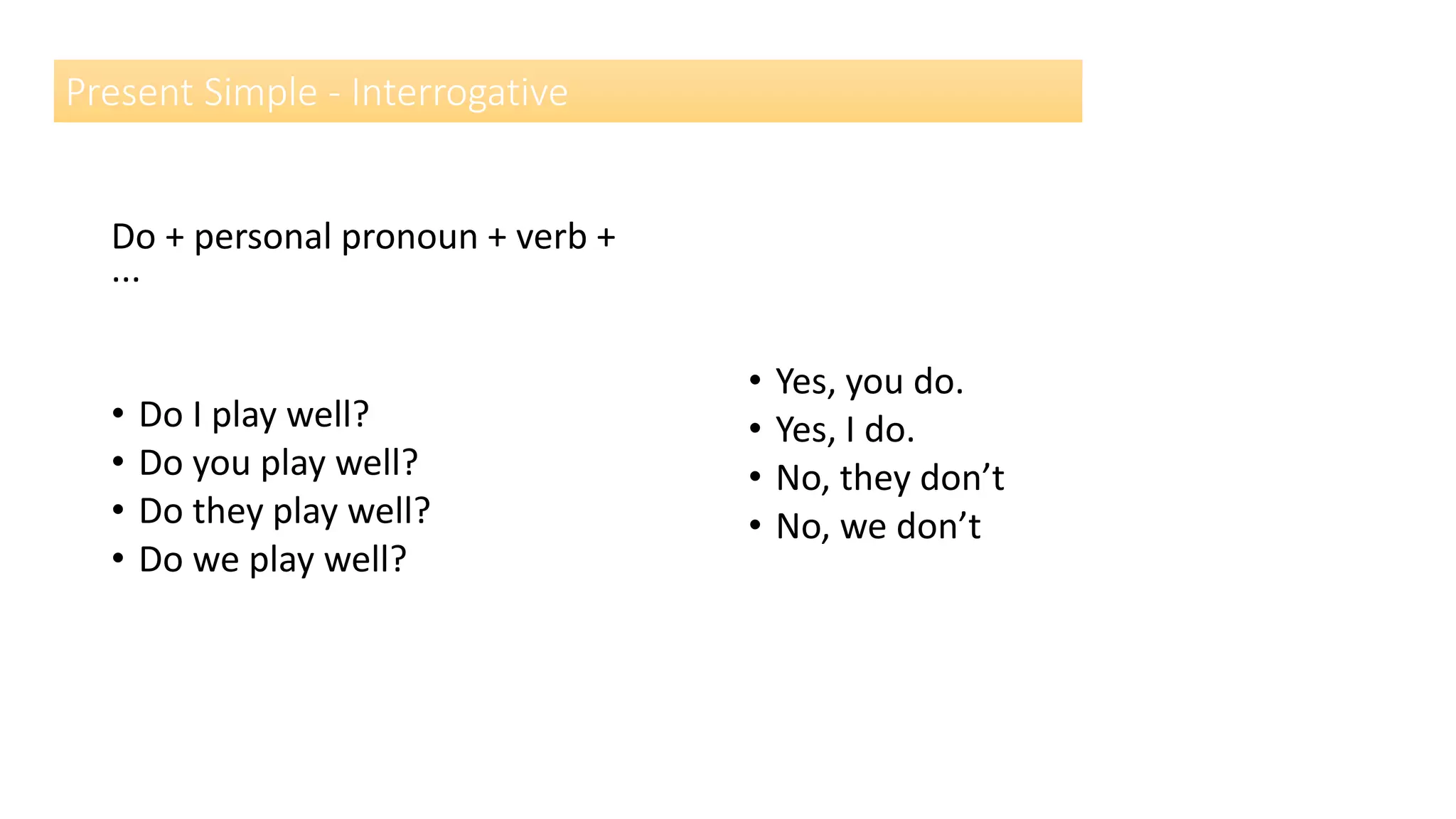
Do + personal pronoun + verb +
...
• Do I play well?
• Do you play well?
• Do they play well?
• Do we play well?
• Yes, you do.
• Yes, I do.
• No, they don’t
• No, we don’t
Present Simple - Interrogative
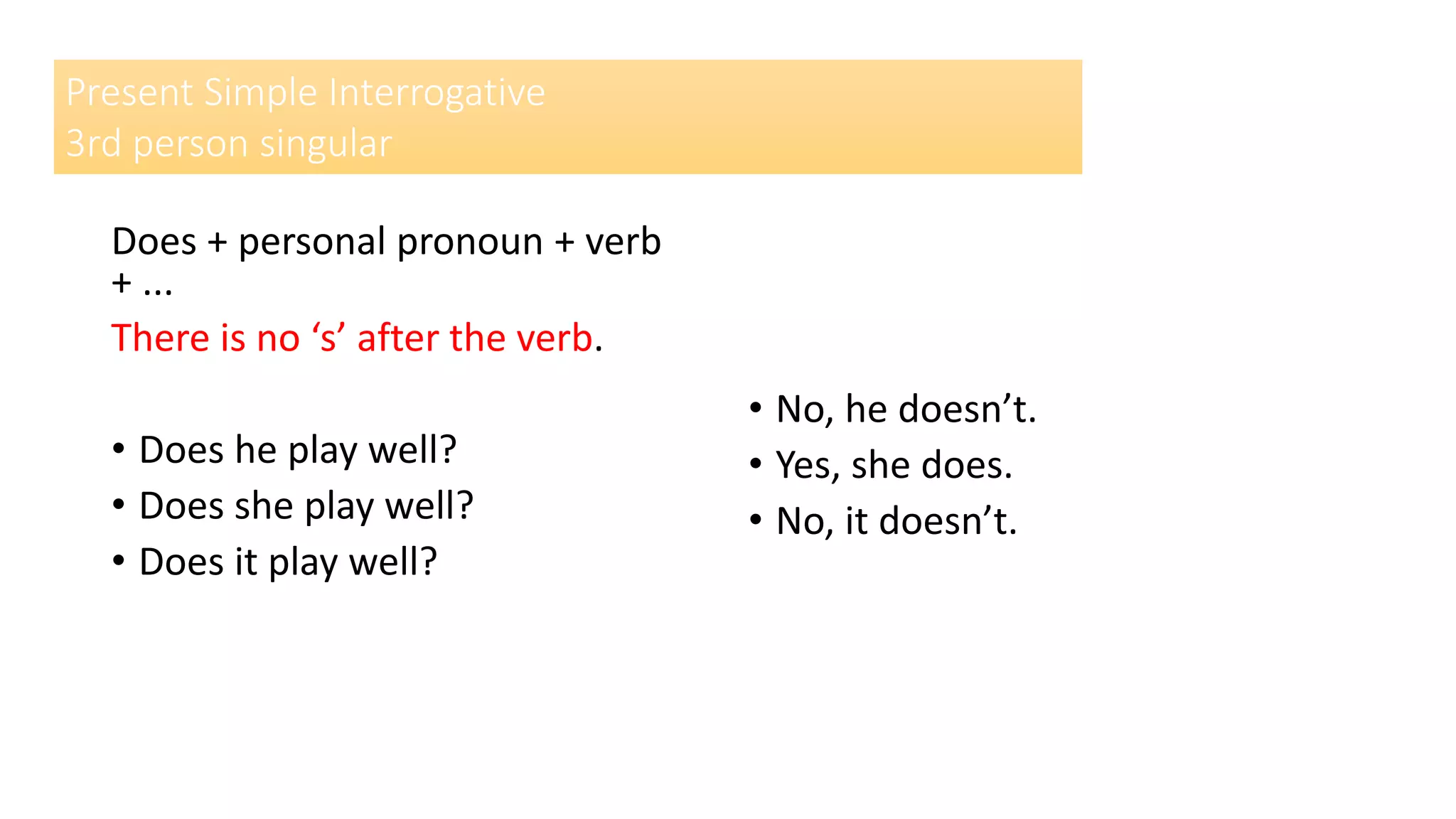
Does + personal pronoun + verb
+ ...
There is no ‘s’ after the verb.
• Does he play well?
• Does she play well?
• Does it play well?
• No, he doesn’t.
• Yes, she does.
• No, it doesn’t.
Present Simple Interrogative
3rd person singular
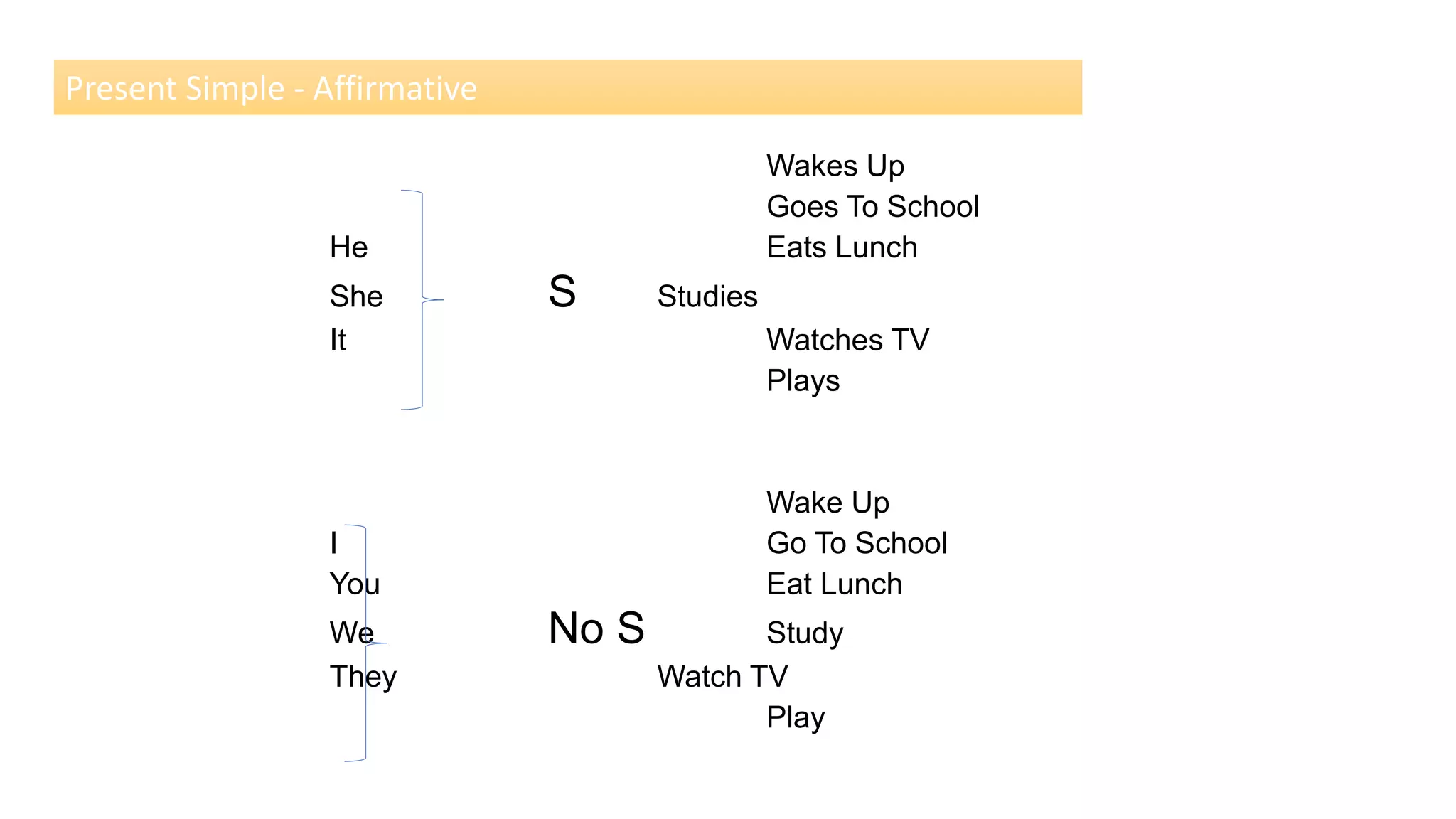
Wakes Up
Goes To School
He Eats Lunch
She S Studies
It Watches TV
Plays
Wake Up
I Go To School
You Eat Lunch
We No S Study
They Watch TV
Play
Present Simple - Affirmative
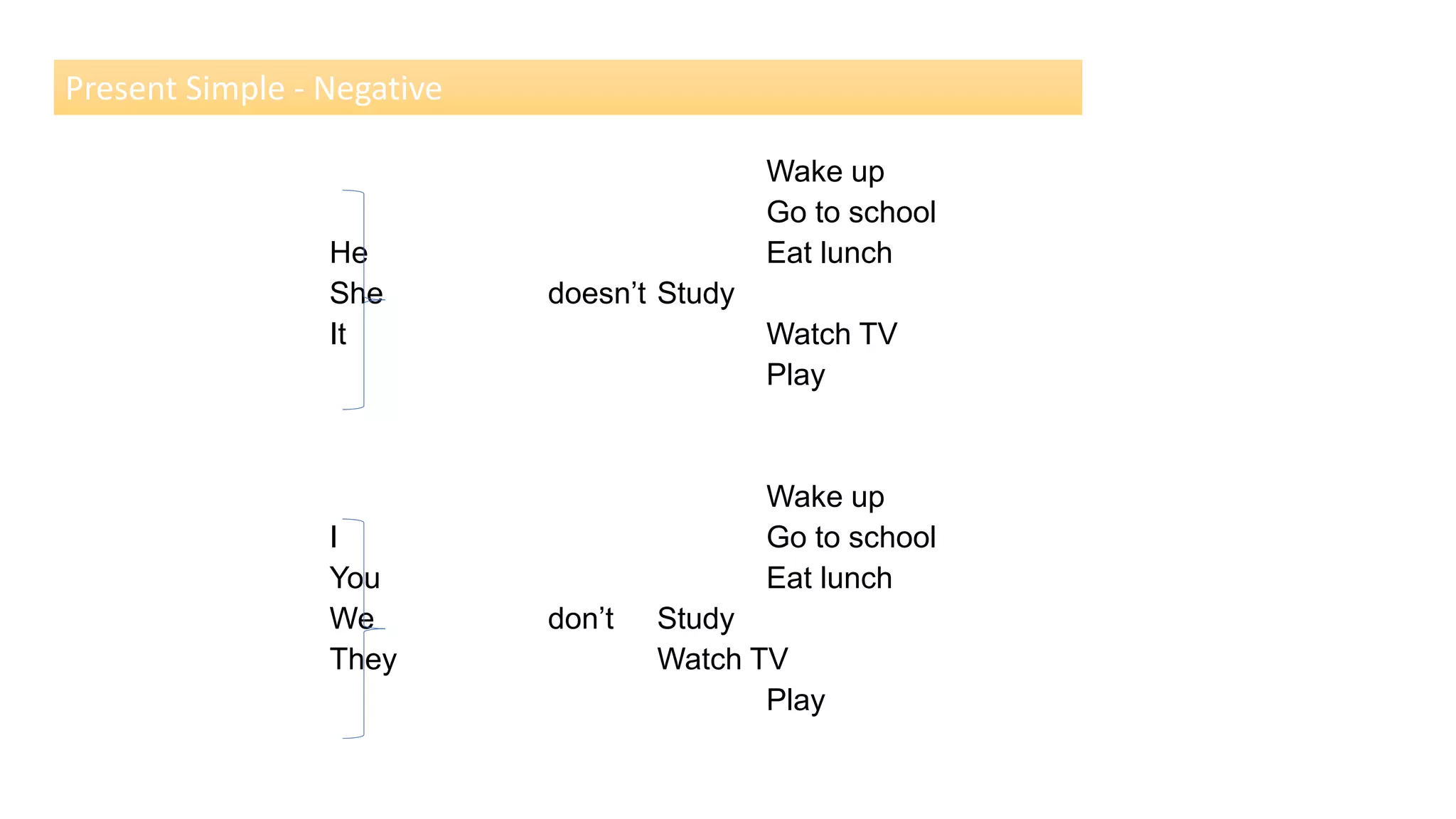
Wake up
Go to school
He Eat lunch
She doesn’t Study
It Watch TV
Play
Wake up
I Go to school
You Eat lunch
We don’t Study
They Watch TV
Play
Present Simple - Negative
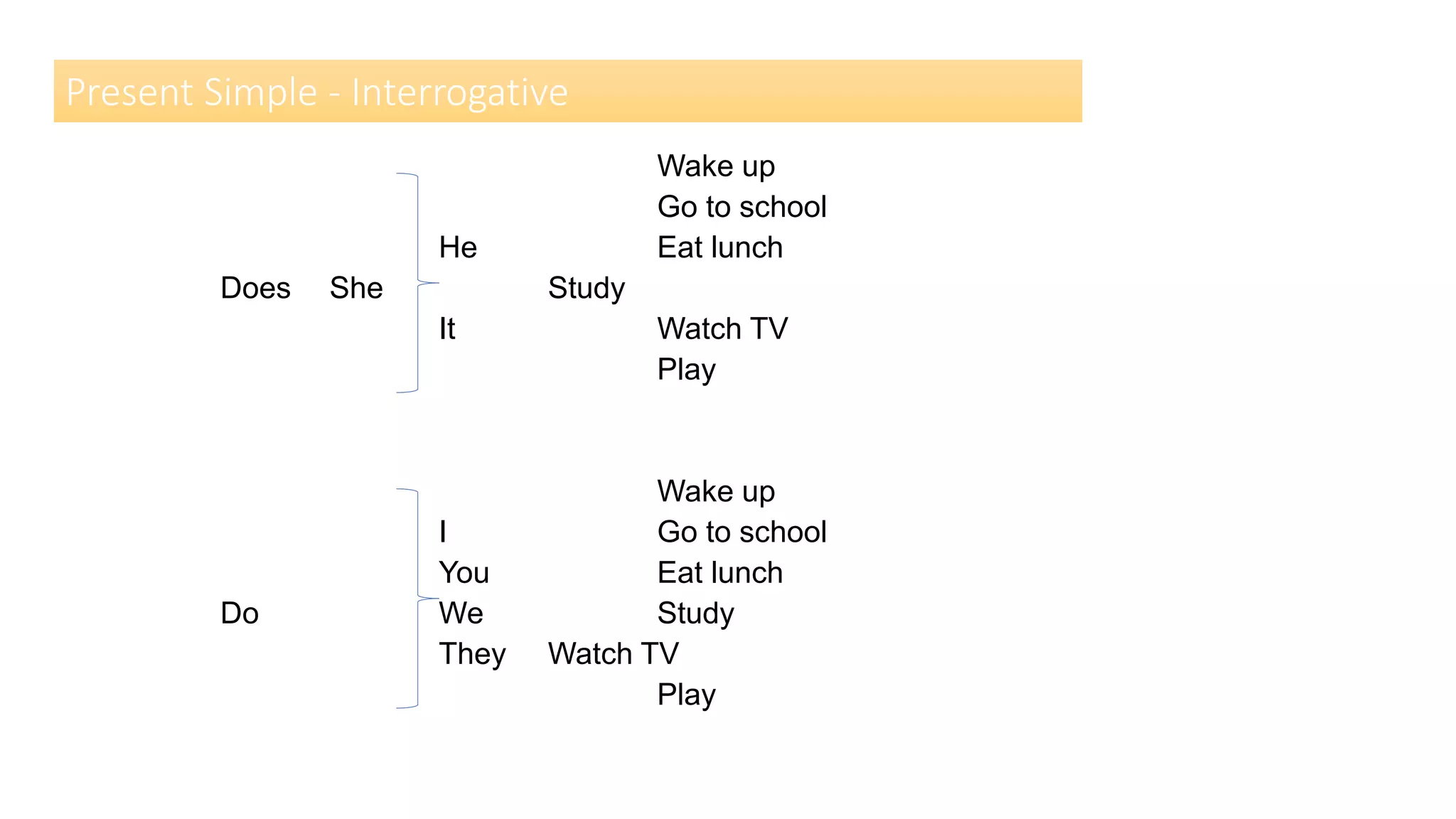
Wake up
Go to school
He Eat lunch
Does She Study
It Watch TV
Play
Wake up
I Go to school
You Eat lunch
Do We Study
They Watch TV
Play
Present Simple - Interrogative
He He
Yes She does No She doesn’t
It It
I I
You You
Yes We do No We don’t
They They
Present Simple – Short Answers
THANK YOU ☺

PRESENT.SIMPLE.ppt

  • 1.
  • 2.
    We use presentsimple tense when talking about: • Habits and routines (actions we do regularly). Eg. I go to school by bus. Present Simple Tense
  • 3.
    We use presentsimple tense when talking about: • Permanent states (an action we do all the time). Eg. I live in Turkey. Present Simple Tense
  • 4.
    We use presentsimple tense when talking about: • Timetables. Eg. School starts at 8:45. Present Simple Tense
  • 5.
    We use presentsimple tense when talking about: • Time expressions used with present simple: every hour / day / week / month / usually / always / sometimes / often etc. Present Simple Tense
  • 6.
    • Present simpleaffirmative = personal pronoun + base form of verb. • I walk to school. • You walk to school. • We walk to school. • They walk to school. Present Simple - Affirmative
  • 7.
    Personal pronoun +base form verb + s / es / ies. Verbs ending in ch – o – sh – ss or x sound take on ‘–es’ Verbs ending in y – drop the ‘y’ and add ‘ies’. • He walks to school. He goes to sleep. He carries the ball. • She walks to school. She goes to sleep. She carries the ball. • It walks to school. It goes to sleep. It carries the ball. Present Simple Affirmative 3rd person singular
  • 8.
    • Present simplenegative = personal pronoun + don’t + base form of verb. • I don’t walk to school. • You don’t walk to school. • We don’t walk to school. • They don’t walk to school. Present Simple - Negative
  • 9.
    Present simple negative= personal pronoun + doesn’t + base form of verb. There is no ‘s’ after the verb. • He doesn’t walk to school. • She doesn’t walk to school. • It doesn’t walk to school. Present Simple Negative 3rd person singular
  • 10.
    Do + personalpronoun + verb + ... • Do I play well? • Do you play well? • Do they play well? • Do we play well? • Yes, you do. • Yes, I do. • No, they don’t • No, we don’t Present Simple - Interrogative
  • 11.
    Does + personalpronoun + verb + ... There is no ‘s’ after the verb. • Does he play well? • Does she play well? • Does it play well? • No, he doesn’t. • Yes, she does. • No, it doesn’t. Present Simple Interrogative 3rd person singular
  • 12.
    Wakes Up Goes ToSchool He Eats Lunch She S Studies It Watches TV Plays Wake Up I Go To School You Eat Lunch We No S Study They Watch TV Play Present Simple - Affirmative
  • 13.
    Wake up Go toschool He Eat lunch She doesn’t Study It Watch TV Play Wake up I Go to school You Eat lunch We don’t Study They Watch TV Play Present Simple - Negative
  • 14.
    Wake up Go toschool He Eat lunch Does She Study It Watch TV Play Wake up I Go to school You Eat lunch Do We Study They Watch TV Play Present Simple - Interrogative
  • 15.
    He He Yes Shedoes No She doesn’t It It I I You You Yes We do No We don’t They They Present Simple – Short Answers
  • 16.