"Coming together is a
beginning, staying
together is progress, and
working together is
success."
Henry Ford
Marketing is the process of creating
or directing an organization to be
successful in selling a product or
service that people not only desire,
but are willing to buy.
A marketing plan can play an
important role in the success of your
small business.
working to define your vision, and then doing whatever it takes to reach that
vision
Your products and/or services
Your demographic audience
Methods of selling
Pricing
Your budget
Your geographic market
Your competition and your competitive edge
To look “bigger” and “established”:
 Home-printed business cards or cards printed with Microsoft clipart
scream "small-time vendor" to your potential clients — and that is how
they will want to compensate you.
To increase your chance of earning venture capital or of selling a business:
 If you present a well-rounded business package that includes marketing
materials and graphics, your business will look
more complete.
To attract more clients:
 Some clients look for a well-defined company,
and "look and feel" may be one of their criteria
 for making a purchasing decision.
To brand yourself:
  If you are a consultant, you need a logo in order
 to build an image and a brand that is greater
 than your individual identity.
To convey that you are reputable:
A logo and professionally-printed materials show that you
are committed to both your business and to your clients.
To give clients a sense of stability:
You may not have been in business "since 1908," but if you
have invested in your identity, you are more likely to
remain firm and relevant in the eyes of your customers. It
goes a long way toward building that all-important "trust."
To be more memorable:
Forty percent of people better remember what they see than
what they hear or read. So to have graphics associated with
your business, and to keep those graphics consistent, makes
you more likely to be at the forefront of potential clients'
minds when they need your goods or services.
To explain your company name:
If your company name contains a little-known word or an
acronym, the logo can give visual clues to its meaning.
“Business owners care about
 making a difference in the
 world, and really crave
 seeing their customers'
 happy reactions
 to their product
 or service.”
Not thinking analytically.
Not maintaining your brand.
Trying to appease everyone.
Not knowing who you really are.
Not fully committing to branding.
Not having a dedicated marketing plan.
Using too much jargon.
Trying too hard to be different.
Not knowing when you have got them.
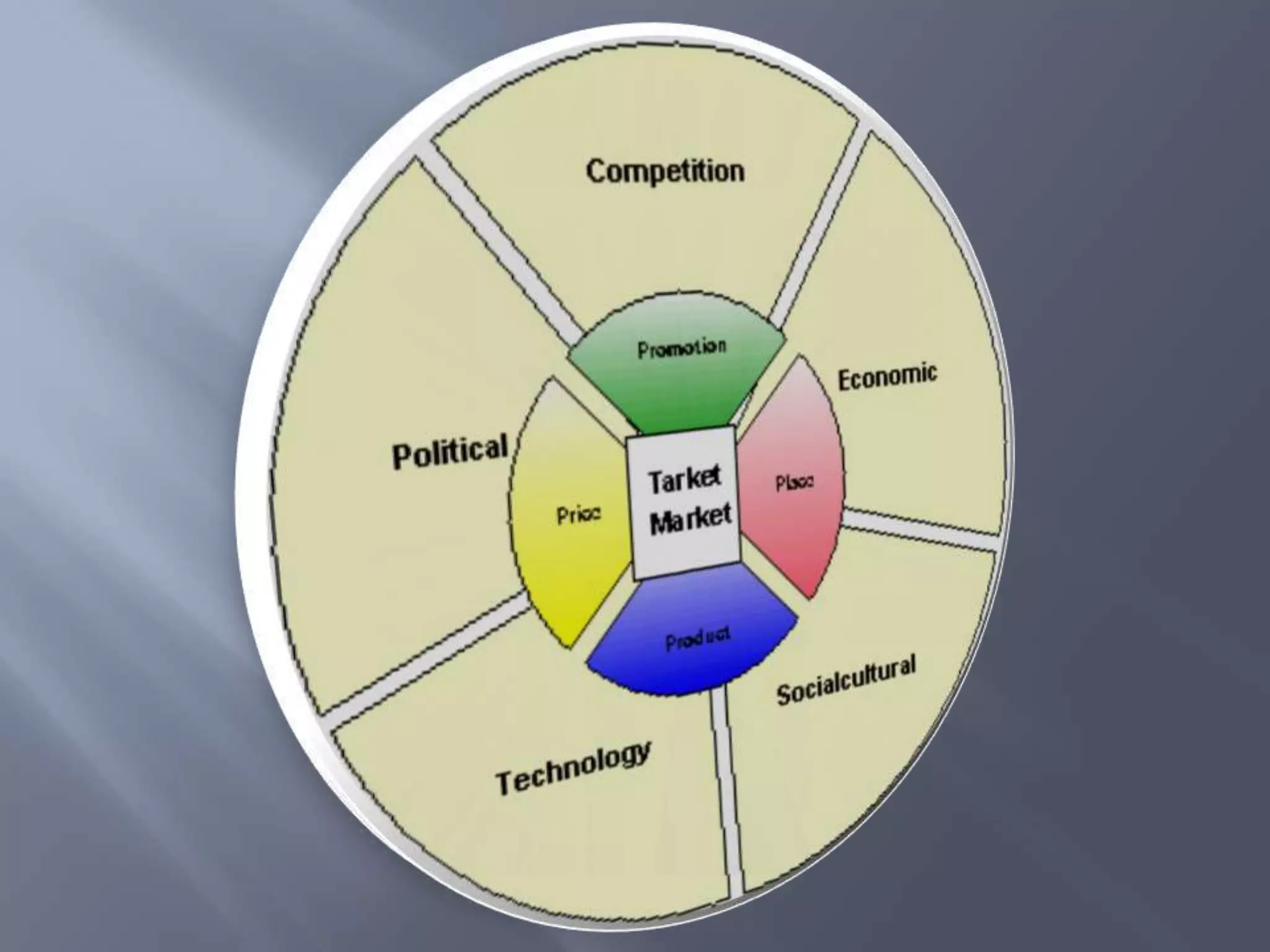
product: The product aspects of marketing deal with
the specifications of the actual goods or services.
pricing: The process of setting a price for a product,
including discounts.
 placement: : How the product gets to the customer.
promotion: This includes advertising, sales promotion,
publicity, and personal selling.
people: Any person coming into contact with
customers can have an impact on overall
satisfaction.
process: This is the process(es) involved in
providing a service and the behaviour of
people, which can be
crucial to customer satisfaction.
physical evidence: such as case studies,
testimonials or demonstrations.
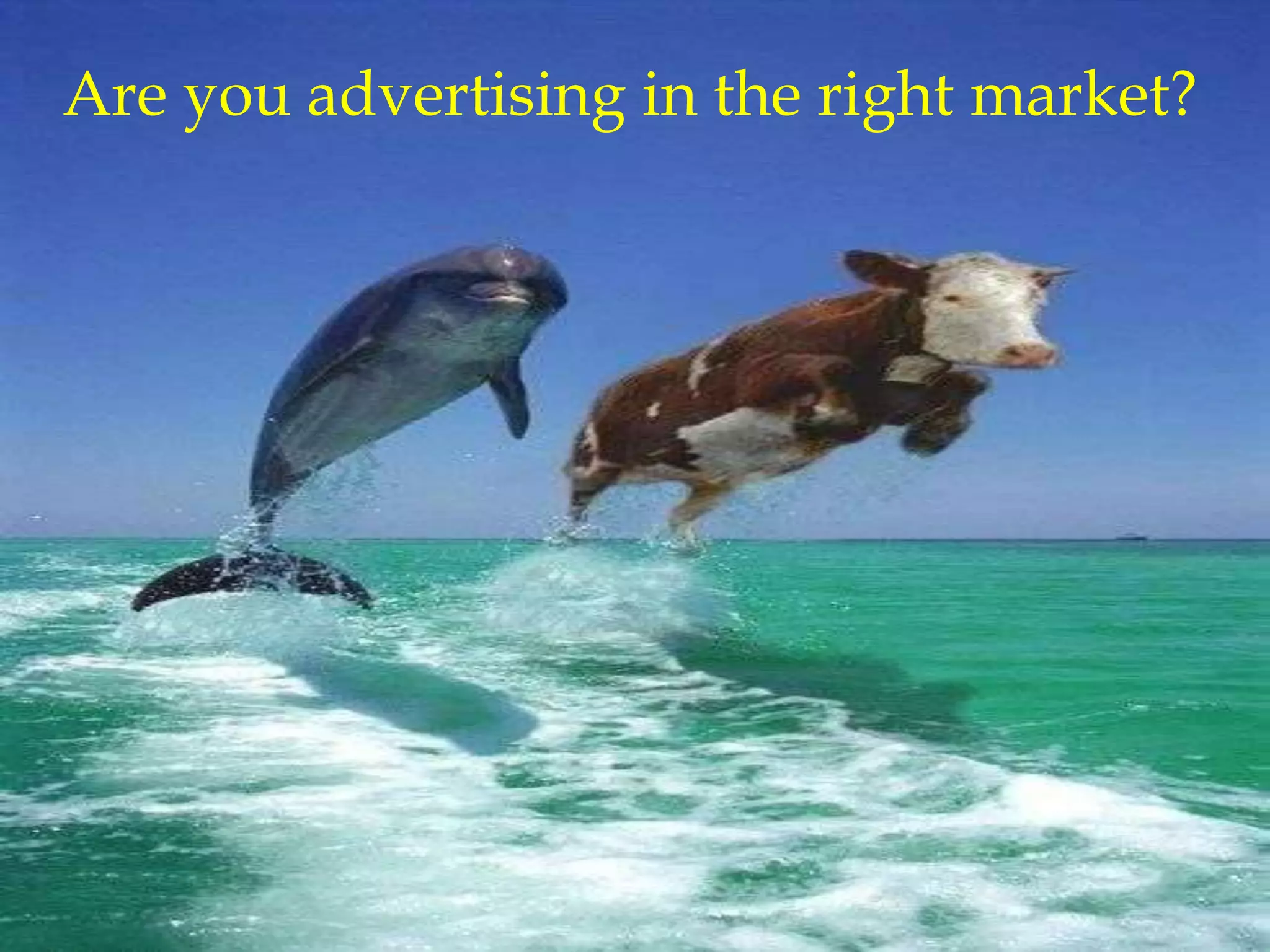
Are you advertising in the right market?
Focus - In order to survive, most small businesses must
adopt a narrow market focus. In doing so they can
develop a premium reputation for serving that narrow
market.
Reach - Small business owners are so close to their
markets they can experience what their market
experiences.
Nurture - Small businesses can grow with customer needs.
Often, they can create products and services that address
highly personalized requests at a moments notice.
Surprise - The best small businesses understand the value
of surprising their clients from time to time.
Transform - Small businesses can obtain new data from a
market, or even a client or two, and dramatically change
their business model to align with a new opportunity.
Partner - Smart small businesses create networks of strategic
partners and address the needs of their clients with the best
and brightest every time.
Automate - The proper use of technology allows small
businesses to put up big shop follow-up, service and
prospecting without the overhead.
Educate - Lacking big ad budget, small businesses must
educate their prospects before they can make any ground
selling them.
Meaning - Small business is personal. Markets are hungry
for businesses that allow them to connect to something
beyond the products and services.
Play - Why does someone start a business anyway - To get
more life, to develop a passion, to get free? It doesn’t really
matter that freedom comes with an 80 hour work week.
Passion and purpose are sexy and contagious.
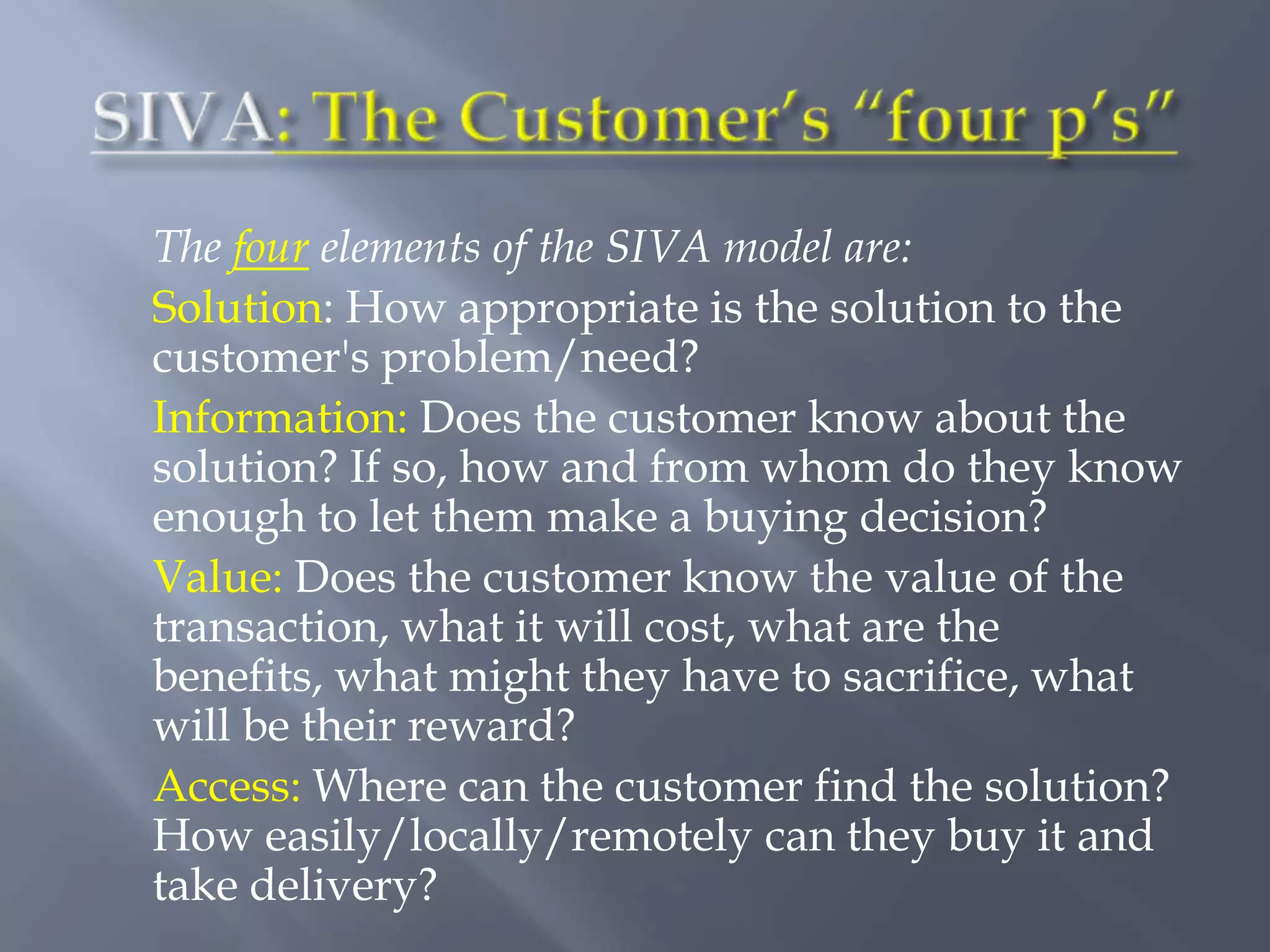
The four elements of the SIVA model are:
Solution: How appropriate is the solution to the
customer's problem/need?
Information: Does the customer know about the
solution? If so, how and from whom do they know
enough to let them make a buying decision?
Value: Does the customer know the value of the
transaction, what it will cost, what are the
benefits, what might they have to sacrifice, what
will be their reward?
Access: Where can the customer find the solution?
How easily/locally/remotely can they buy it and
take delivery?
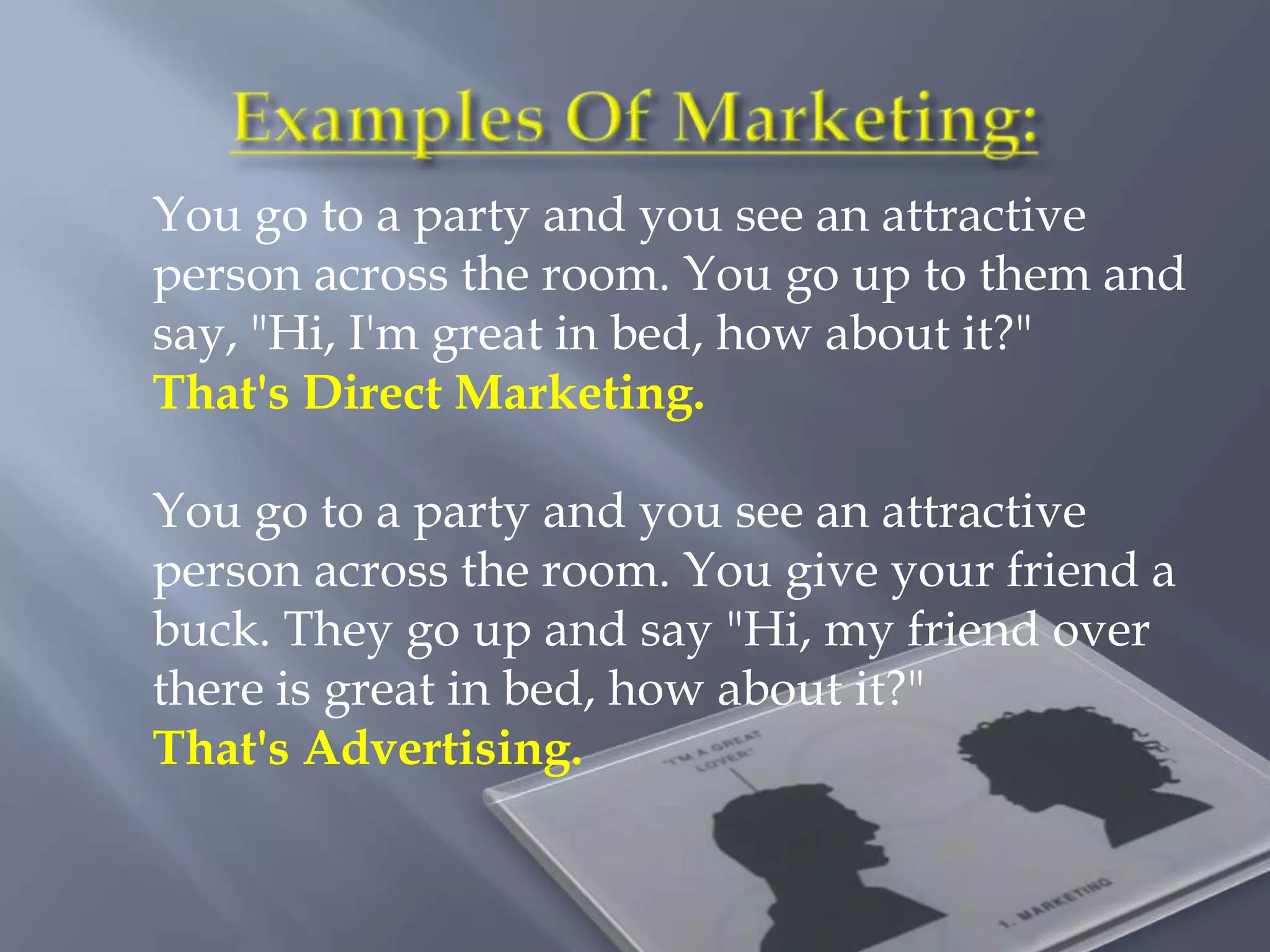
You go to a party and you see an attractive
person across the room. You go up to them and
say, "Hi, I'm great in bed, how about it?"
That's Direct Marketing.

You go to a party and you see an attractive
person across the room. You give your friend a
buck. They go up and say "Hi, my friend over
there is great in bed, how about it?"
That's Advertising.
They Help you to define your “vision” and
determine your business “goals”.

They take any business, in any given industry,
and figure out a way to help boost their sales
and increase their revenue.
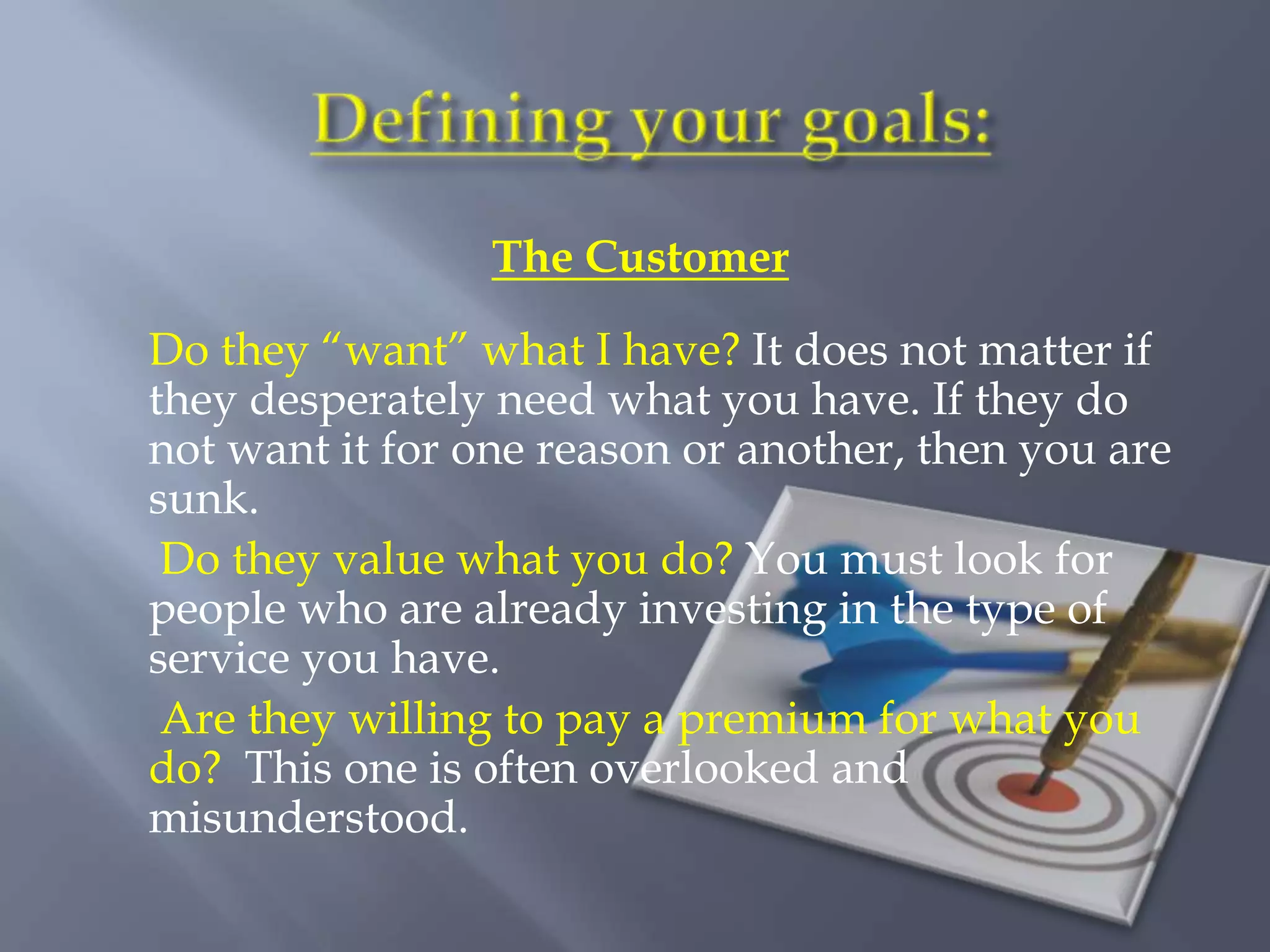
The Customer

Do they “want” what I have? It does not matter if
they desperately need what you have. If they do
not want it for one reason or another, then you are
sunk.
 Do they value what you do? You must look for
people who are already investing in the type of
service you have.
 Are they willing to pay a premium for what you
do? This one is often overlooked and
misunderstood.
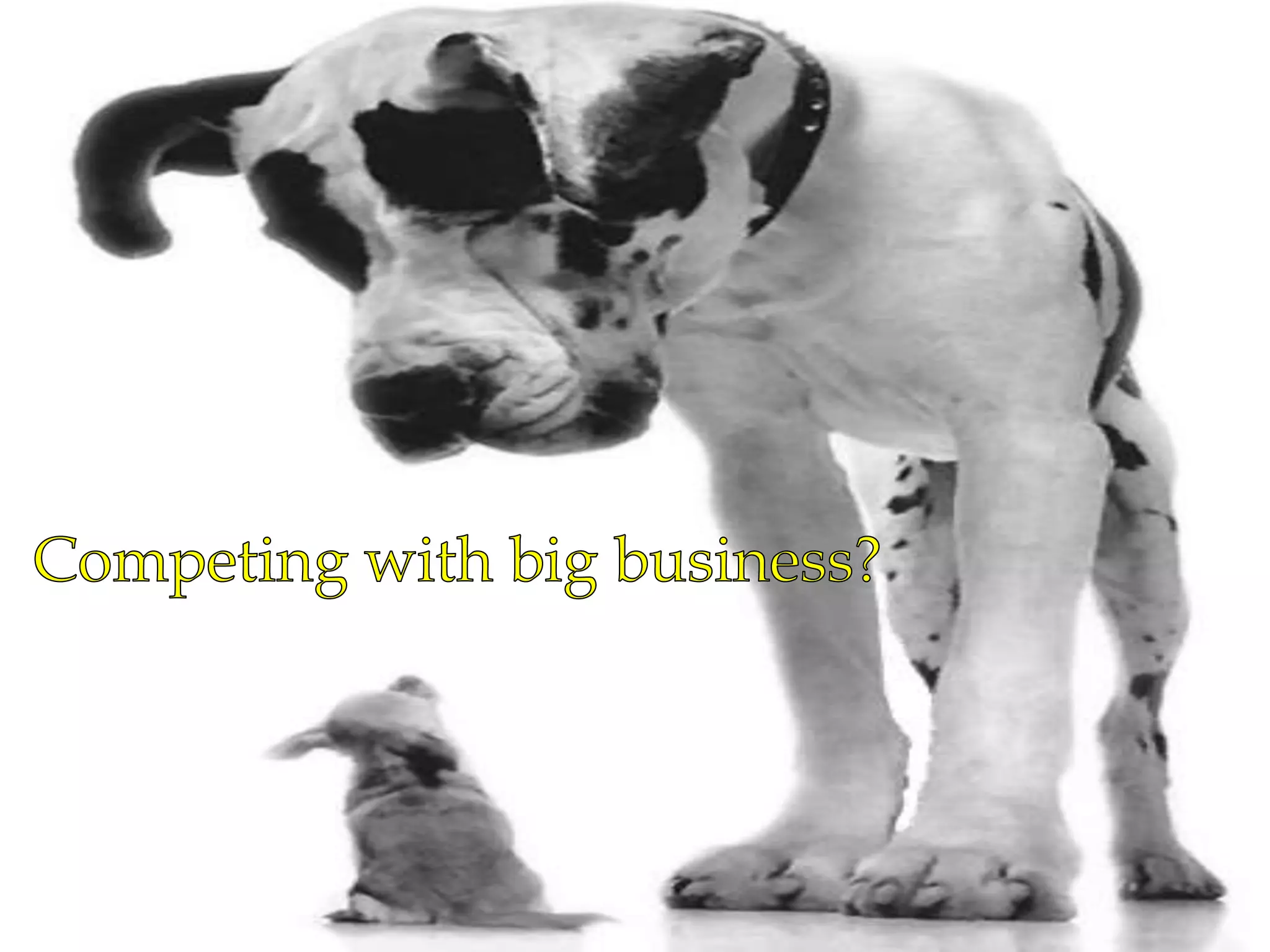
Size doesn't really matter. Ability matters and also
sometimes, the best firms are simply small and specialized.
Market yourself like a big shot if you have the best product
or service, and you are marketing it well, the
professionalism you project will create a position of
leadership for you, even if you aren't the biggest.
Price yourself as though you are the market leader. People
generally believe that the highest priced product is the
best…and if you are trying to convince them you are the
best, it will be a lot easier if your price reflects the same
story
So there you go. It isn't biggest likes biggest. It's best likes
best. And if you keep thinking that way, you'll soon find
you become one of the biggest too

Presentation Finals

  • 3.
    "Coming together isa beginning, staying together is progress, and working together is success." Henry Ford
  • 4.
    Marketing is theprocess of creating or directing an organization to be successful in selling a product or service that people not only desire, but are willing to buy. A marketing plan can play an important role in the success of your small business. working to define your vision, and then doing whatever it takes to reach that vision
  • 5.
    Your products and/orservices Your demographic audience Methods of selling Pricing Your budget Your geographic market Your competition and your competitive edge
  • 7.
    To look “bigger”and “established”: Home-printed business cards or cards printed with Microsoft clipart scream "small-time vendor" to your potential clients — and that is how they will want to compensate you. To increase your chance of earning venture capital or of selling a business: If you present a well-rounded business package that includes marketing materials and graphics, your business will look more complete. To attract more clients: Some clients look for a well-defined company, and "look and feel" may be one of their criteria for making a purchasing decision. To brand yourself: If you are a consultant, you need a logo in order to build an image and a brand that is greater than your individual identity.
  • 8.
    To convey thatyou are reputable: A logo and professionally-printed materials show that you are committed to both your business and to your clients. To give clients a sense of stability: You may not have been in business "since 1908," but if you have invested in your identity, you are more likely to remain firm and relevant in the eyes of your customers. It goes a long way toward building that all-important "trust." To be more memorable: Forty percent of people better remember what they see than what they hear or read. So to have graphics associated with your business, and to keep those graphics consistent, makes you more likely to be at the forefront of potential clients' minds when they need your goods or services. To explain your company name: If your company name contains a little-known word or an acronym, the logo can give visual clues to its meaning.
  • 10.
    “Business owners careabout making a difference in the world, and really crave seeing their customers' happy reactions to their product or service.”
  • 11.
    Not thinking analytically. Notmaintaining your brand. Trying to appease everyone. Not knowing who you really are. Not fully committing to branding. Not having a dedicated marketing plan. Using too much jargon. Trying too hard to be different. Not knowing when you have got them.
  • 12.
    product: The productaspects of marketing deal with the specifications of the actual goods or services. pricing: The process of setting a price for a product, including discounts. placement: : How the product gets to the customer. promotion: This includes advertising, sales promotion, publicity, and personal selling.
  • 14.
    people: Any personcoming into contact with customers can have an impact on overall satisfaction. process: This is the process(es) involved in providing a service and the behaviour of people, which can be crucial to customer satisfaction. physical evidence: such as case studies, testimonials or demonstrations.
  • 15.
    Are you advertisingin the right market?
  • 16.
    Focus - Inorder to survive, most small businesses must adopt a narrow market focus. In doing so they can develop a premium reputation for serving that narrow market. Reach - Small business owners are so close to their markets they can experience what their market experiences. Nurture - Small businesses can grow with customer needs. Often, they can create products and services that address highly personalized requests at a moments notice. Surprise - The best small businesses understand the value of surprising their clients from time to time. Transform - Small businesses can obtain new data from a market, or even a client or two, and dramatically change their business model to align with a new opportunity.
  • 17.
    Partner - Smartsmall businesses create networks of strategic partners and address the needs of their clients with the best and brightest every time. Automate - The proper use of technology allows small businesses to put up big shop follow-up, service and prospecting without the overhead. Educate - Lacking big ad budget, small businesses must educate their prospects before they can make any ground selling them. Meaning - Small business is personal. Markets are hungry for businesses that allow them to connect to something beyond the products and services. Play - Why does someone start a business anyway - To get more life, to develop a passion, to get free? It doesn’t really matter that freedom comes with an 80 hour work week. Passion and purpose are sexy and contagious.
  • 18.
    The four elementsof the SIVA model are: Solution: How appropriate is the solution to the customer's problem/need? Information: Does the customer know about the solution? If so, how and from whom do they know enough to let them make a buying decision? Value: Does the customer know the value of the transaction, what it will cost, what are the benefits, what might they have to sacrifice, what will be their reward? Access: Where can the customer find the solution? How easily/locally/remotely can they buy it and take delivery?
  • 19.
    You go toa party and you see an attractive person across the room. You go up to them and say, "Hi, I'm great in bed, how about it?" That's Direct Marketing. You go to a party and you see an attractive person across the room. You give your friend a buck. They go up and say "Hi, my friend over there is great in bed, how about it?" That's Advertising.
  • 20.
    They Help youto define your “vision” and determine your business “goals”. They take any business, in any given industry, and figure out a way to help boost their sales and increase their revenue.
  • 22.
    The Customer Do they“want” what I have? It does not matter if they desperately need what you have. If they do not want it for one reason or another, then you are sunk. Do they value what you do? You must look for people who are already investing in the type of service you have. Are they willing to pay a premium for what you do? This one is often overlooked and misunderstood.
  • 24.
    Size doesn't reallymatter. Ability matters and also sometimes, the best firms are simply small and specialized. Market yourself like a big shot if you have the best product or service, and you are marketing it well, the professionalism you project will create a position of leadership for you, even if you aren't the biggest. Price yourself as though you are the market leader. People generally believe that the highest priced product is the best…and if you are trying to convince them you are the best, it will be a lot easier if your price reflects the same story So there you go. It isn't biggest likes biggest. It's best likes best. And if you keep thinking that way, you'll soon find you become one of the biggest too