HISTORY OF
SWAT
Topics to cover
 Background
 Languages
 Buddhism
 Hinduism
 Gandhara civilization
 Political history of gandhara
 Alexander rule in swat
 The governments from 18th century to 19th century
 Terrorist attacks of 2007
BACKGROUND:
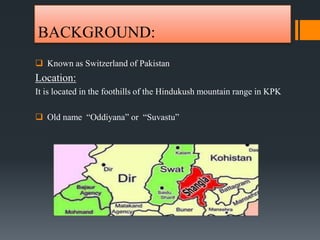
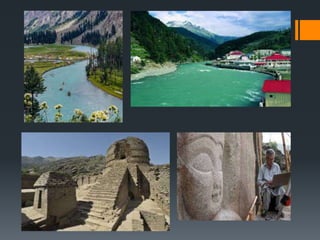
 Known as Switzerland of Pakistan
Location:
It is located in the foothills of the Hindukush mountain range in KPK
 Old name “Oddiyana” or “Suvastu”
Major tourist attraction destination due to:
• Lush greenery
• Home for one of the oldest civilization
• Archeology
• Arts
Majority of the population belong to
following groups:
• Pakhtuns
• Yousafzais
• Awans
• Gujars
MAJOR LANGUAGES:
Totally seven languages are spoken in
Swat:
1. Pashto
2. Torwali
3. Gujuri
4. Gawri
5. Qashqri
6. Ushojo
7. Badeshi
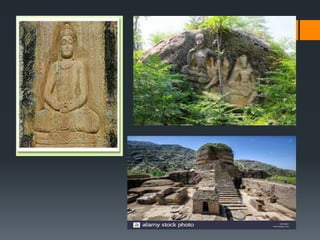
BUDDHISM:
Buddhism entered in swat around 2300 years
ago by King Ashoka. Also known as
“Ashoka the Great”.
• First came in the late 7th century
• Mostly flourished during the era of Raja
Chandragupta.
• World’s second largest buddhist statue
Hinduism:
• Existed 1300 years ago
• There is no exact history about the arrival of
Hinduism in swat but the recent artifacts found
by archeologists witness that Hindu religion
ruled swat
• Hindu Shahi period was between 850 -1026 B.C
• In a Holy book of Hindus “RAG VED” swat
was called “Suvasta” meaning pure water
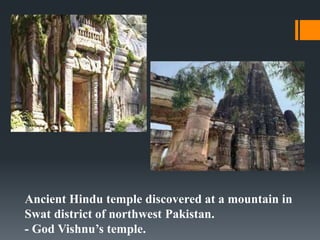
Ancient Hindu temple discovered at a mountain in
Swat district of northwest Pakistan.
- God Vishnu’s temple.
Gandhara civilization:
• Gandhara was the name given to the land and its associated
civilization that existed in what is now Northern Pakistan
• Gandhara is amalgamation of two words Gand + Hara. Gand / Qand
means "fragrance" and Har means ‘lands’, hence the simplest
definition being 'Land of Fragrance'.
• The extent of Gandhara included the Peshawar valley, the hills of
Swat, Dir, Buner and Bajaur, all of which lie within the northern
bounds of the modern day nation of Pakistan
POLITICAL HISTORY OF
GANDHARA:
Gandhara witnessed the rule of several major powers of
antiquity as listed below:
• Achaemenids (600-400 BCE)
• Greeks (326-324 BCE),
• Mauryans (324-185 BCE)
• Indo-Greeks (250-190 BCE)
• Scythians (2nd century to 1st century)
• Parthians (1st century to 1st century)
• Kushans (1st to 5th century)
• White Huns (5th century)
• Hindu Shahi (9th to 10th century)
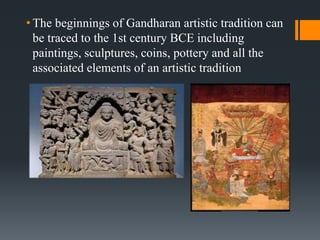
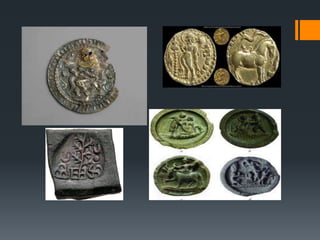
• The beginnings of Gandharan artistic tradition can
be traced to the 1st century BCE including
paintings, sculptures, coins, pottery and all the
associated elements of an artistic tradition
ALEXANDER THE GREAT:
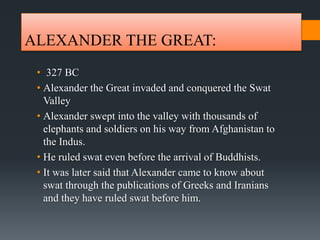
• 327 BC
• Alexander the Great invaded and conquered the Swat
Valley
• Alexander swept into the valley with thousands of
elephants and soldiers on his way from Afghanistan to
the Indus.
• He ruled swat even before the arrival of Buddhists.
• It was later said that Alexander came to know about
swat through the publications of Greeks and Iranians
and they have ruled swat before him.
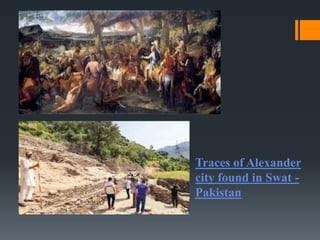
Traces of Alexander
city found in Swat -
Pakistan
• 1849-Syed Akbar Shah was
appointed as a leader to establish
a stable government in Swat.
• establishment of shariat govt
• 1857-Death of Akbar.
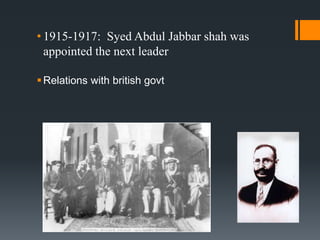
• 1915-1917: Syed Abdul Jabbar shah was
appointed the next leader
Relations with british govt
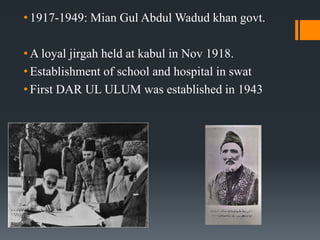
• 1917-1949: Mian Gul Abdul Wadud khan govt.
• A loyal jirgah held at kabul in Nov 1918.
• Establishment of school and hospital in swat
• First DAR UL ULUM was established in 1943
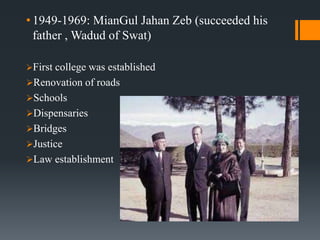
• 1949-1969: MianGul Jahan Zeb (succeeded his
father , Wadud of Swat)
First college was established
Renovation of roads
Schools
Dispensaries
Bridges
Justice
Law establishment
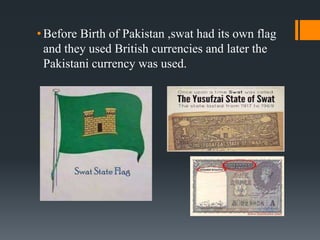
• Before Birth of Pakistan ,swat had its own flag
and they used British currencies and later the
Pakistani currency was used.
AGREEMENT
• After independence of Pakistan, an agreement was
signed by swat and it was stated that all the laws and
regulations implemented in swat will be made as per the
constitution of Pakistan.
• In July 28, 1969 ,Yahya Khan (Chief Martial Law
Administrator) Affiliated Swat with Pakistan.
THANK YOU!

History of swat

  • 1.
  • 2.
    Topics to cover Background  Languages  Buddhism  Hinduism  Gandhara civilization  Political history of gandhara  Alexander rule in swat  The governments from 18th century to 19th century  Terrorist attacks of 2007
  • 3.
    BACKGROUND:  Known asSwitzerland of Pakistan Location: It is located in the foothills of the Hindukush mountain range in KPK  Old name “Oddiyana” or “Suvastu”
  • 4.
    Major tourist attractiondestination due to: • Lush greenery • Home for one of the oldest civilization • Archeology • Arts
  • 6.
    Majority of thepopulation belong to following groups: • Pakhtuns • Yousafzais • Awans • Gujars
  • 7.
    MAJOR LANGUAGES: Totally sevenlanguages are spoken in Swat: 1. Pashto 2. Torwali 3. Gujuri 4. Gawri 5. Qashqri 6. Ushojo 7. Badeshi
  • 8.
    BUDDHISM: Buddhism entered inswat around 2300 years ago by King Ashoka. Also known as “Ashoka the Great”. • First came in the late 7th century • Mostly flourished during the era of Raja Chandragupta. • World’s second largest buddhist statue
  • 10.
    Hinduism: • Existed 1300years ago • There is no exact history about the arrival of Hinduism in swat but the recent artifacts found by archeologists witness that Hindu religion ruled swat • Hindu Shahi period was between 850 -1026 B.C • In a Holy book of Hindus “RAG VED” swat was called “Suvasta” meaning pure water
  • 11.
    Ancient Hindu templediscovered at a mountain in Swat district of northwest Pakistan. - God Vishnu’s temple.
  • 12.
    Gandhara civilization: • Gandharawas the name given to the land and its associated civilization that existed in what is now Northern Pakistan • Gandhara is amalgamation of two words Gand + Hara. Gand / Qand means "fragrance" and Har means ‘lands’, hence the simplest definition being 'Land of Fragrance'. • The extent of Gandhara included the Peshawar valley, the hills of Swat, Dir, Buner and Bajaur, all of which lie within the northern bounds of the modern day nation of Pakistan
  • 13.
    POLITICAL HISTORY OF GANDHARA: Gandharawitnessed the rule of several major powers of antiquity as listed below: • Achaemenids (600-400 BCE) • Greeks (326-324 BCE), • Mauryans (324-185 BCE) • Indo-Greeks (250-190 BCE) • Scythians (2nd century to 1st century) • Parthians (1st century to 1st century) • Kushans (1st to 5th century) • White Huns (5th century) • Hindu Shahi (9th to 10th century)
  • 14.
    • The beginningsof Gandharan artistic tradition can be traced to the 1st century BCE including paintings, sculptures, coins, pottery and all the associated elements of an artistic tradition
  • 16.
    ALEXANDER THE GREAT: •327 BC • Alexander the Great invaded and conquered the Swat Valley • Alexander swept into the valley with thousands of elephants and soldiers on his way from Afghanistan to the Indus. • He ruled swat even before the arrival of Buddhists. • It was later said that Alexander came to know about swat through the publications of Greeks and Iranians and they have ruled swat before him.
  • 17.
    Traces of Alexander cityfound in Swat - Pakistan
  • 18.
    • 1849-Syed AkbarShah was appointed as a leader to establish a stable government in Swat. • establishment of shariat govt • 1857-Death of Akbar.
  • 19.
    • 1915-1917: SyedAbdul Jabbar shah was appointed the next leader Relations with british govt
  • 20.
    • 1917-1949: MianGul Abdul Wadud khan govt. • A loyal jirgah held at kabul in Nov 1918. • Establishment of school and hospital in swat • First DAR UL ULUM was established in 1943
  • 21.
    • 1949-1969: MianGulJahan Zeb (succeeded his father , Wadud of Swat) First college was established Renovation of roads Schools Dispensaries Bridges Justice Law establishment
  • 22.
    • Before Birthof Pakistan ,swat had its own flag and they used British currencies and later the Pakistani currency was used.
  • 23.
    AGREEMENT • After independenceof Pakistan, an agreement was signed by swat and it was stated that all the laws and regulations implemented in swat will be made as per the constitution of Pakistan. • In July 28, 1969 ,Yahya Khan (Chief Martial Law Administrator) Affiliated Swat with Pakistan.
  • 24.