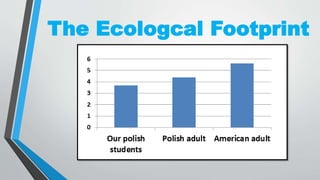
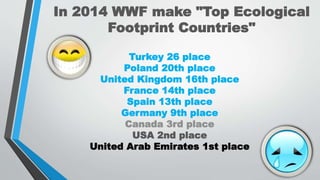
The ecological footprint is a measurement of human demand on nature that takes into account population size, consumption levels, and technologies. It indicates whether the planet's biocapacity can keep up with humanity's demands. In 2014, the United Arab Emirates had the largest ecological footprint, while the United States and Canada also ranked among the top three. Individual actions like using less energy, recycling, reducing meat consumption, and choosing more sustainable transportation can help lower our ecological footprints.