Linking learning spaces with 
teacher pedagogy 
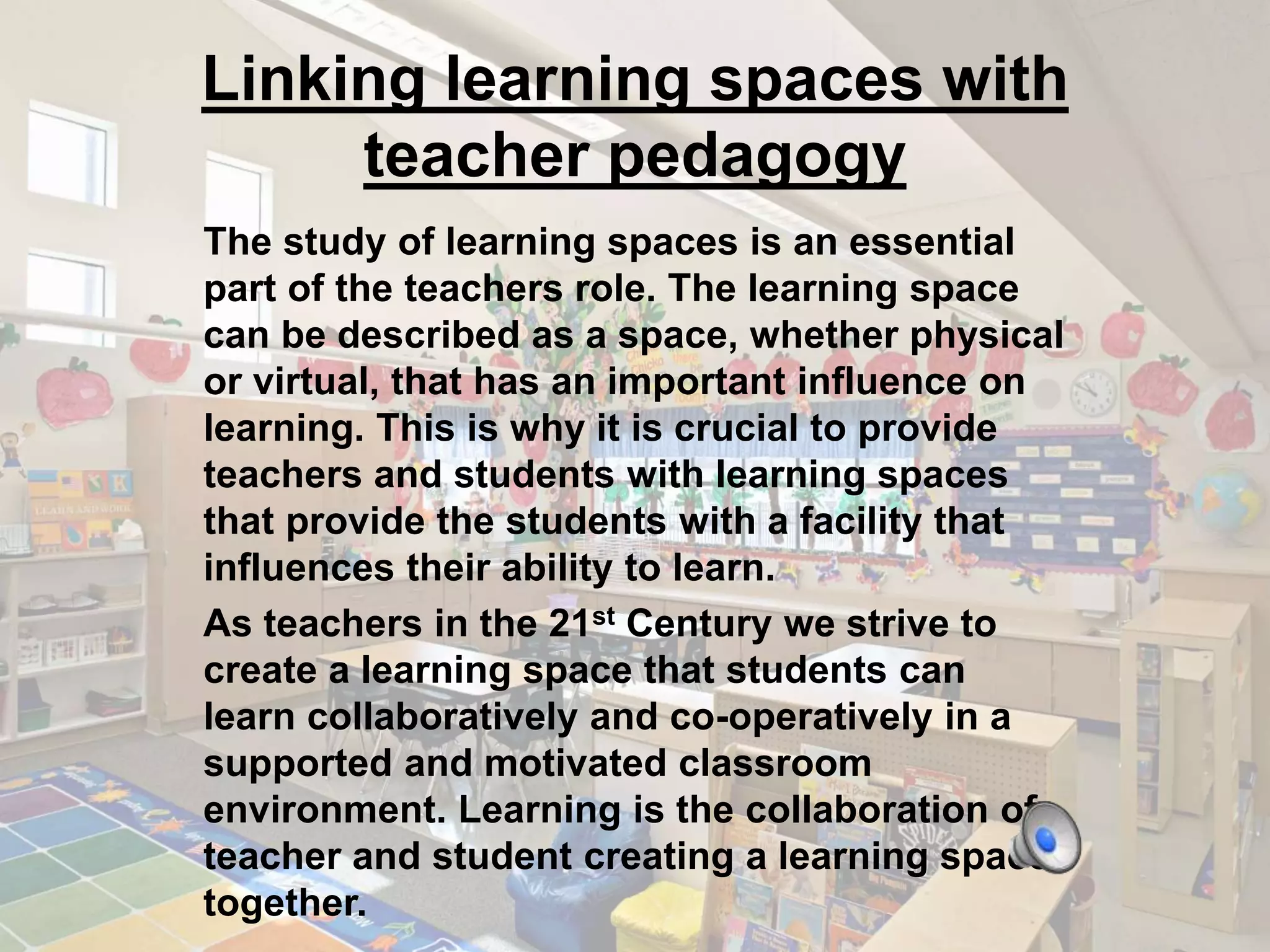
The study of learning spaces is an essential 
part of the teachers role. The learning space 
can be described as a space, whether physical 
or virtual, that has an important influence on 
learning. This is why it is crucial to provide 
teachers and students with learning spaces 
that provide the students with a facility that 
influences their ability to learn. 
As teachers in the 21st Century we strive to 
create a learning space that students can 
learn collaboratively and co-operatively in a 
supported and motivated classroom 
environment. Learning is the collaboration of 
teacher and student creating a learning space 
together.
The classroom and the school 
What to consider when designing the 
classroom and the school 
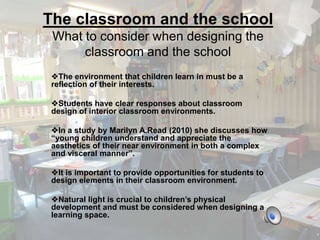
The environment that children learn in must be a 
reflection of their interests. 
Students have clear responses about classroom 
design of interior classroom environments. 
In a study by Marilyn A.Read (2010) she discusses how 
“young children understand and appreciate the 
aesthetics of their near environment in both a complex 
and visceral manner”. 
It is important to provide opportunities for students to 
design elements in their classroom environment. 
Natural light is crucial to children’s physical 
development and must be considered when designing a 
learning space.
Beyond the classroom 
Why do we need to consider teaching 
beyond four walls? 
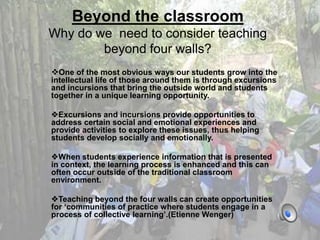
One of the most obvious ways our students grow into the 
intellectual life of those around them is through excursions 
and incursions that bring the outside world and students 
together in a unique learning opportunity. 
Excursions and incursions provide opportunities to 
address certain social and emotional experiences and 
provide activities to explore these issues, thus helping 
students develop socially and emotionally. 
When students experience information that is presented 
in context, the learning process is enhanced and this can 
often occur outside of the traditional classroom 
environment. 
Teaching beyond the four walls can create opportunities 
for ‘communities of practice where students engage in a 
process of collective learning’.(Etienne Wenger)
The electronic learning space 
How can the 21st Century classroom 
incorporate the electronic learning space? 
‘In order to prepare current K-12 students for productive lives in 
the 21st Century more emphasis is needed on models of teaching 
that take into consideration more modern theories of how people 
learn’. Murray,O. and Olcese, N (2011) p42-48-Teaching with ipads, 
ready or not? 
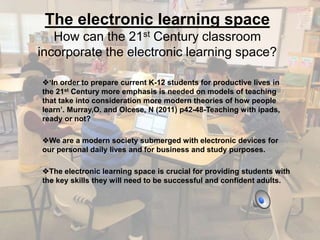
We are a modern society submerged with electronic devices for 
our personal daily lives and for business and study purposes. 
The electronic learning space is crucial for providing students with 
the key skills they will need to be successful and confident adults.
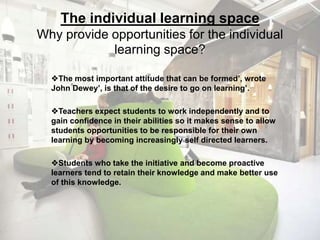
The individual learning space 
Why provide opportunities for the individual 
learning space? 
The most important attitude that can be formed’, wrote 
John Dewey’, is that of the desire to go on learning’. 
Teachers expect students to work independently and to 
gain confidence in their abilities so it makes sense to allow 
students opportunities to be responsible for their own 
learning by becoming increasingly self directed learners. 
Students who take the initiative and become proactive 
learners tend to retain their knowledge and make better use 
of this knowledge.
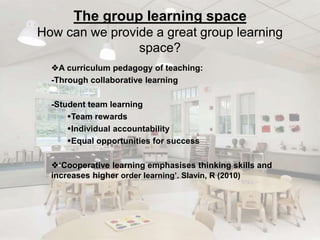
The group learning space 
How can we provide a great group learning 
space? 
A curriculum pedagogy of teaching: 
-Through collaborative learning 
-Student team learning 
Team rewards 
Individual accountability 
Equal opportunities for success 
‘Cooperative learning emphasises thinking skills and 
increases higher order learning’. Slavin, R (2010)
Resources 
Text: 
Read,M (2010) Contemplating design:listening to children’s preferences about classroom 
design. Creative Education, 2, 75-80 
Beyond four walls: experiential and situated learning. Johnson, J (2009) p18-20 
Schratzenstaller,A (2010). The Classroom of the Past. In K.Makitalo-Siegl. J. Zottmann. F.Kaplan. 
F.Fischer (Eds.) Classroom of the Future. Orchestrating Collaborative Spaces (pp.15-39) 
Netherlands: Sense Publishers 
Smith, M (2009) Communities of Practice: Retrieved from 
http://www.infed.org/biblio/communities_of_practice.htm 
Murray, O & Olcese, M (2011) Teaching and Learning wigth iPads: Ready or Not? TechTrends . 
55 (6).42-48 
J,Zottmann, F.Kaplan, &F.Fischer (Eds.), Classroom of the Future:Orchestrating collaborative 
spaces (pp.87-114). Rotterdam, the Netherlands: Sense Publishers. 
Images: 
http://interiorbuz.com/interior-design-for-barrett-ranch-elementary-school-classroom-ideas/ 
http://openlearningspaces.blogspot.com.au/2012/10/pushing-boundaries-what-might-be.html 
http://www.tynker.com/blog/

Presentation1

  • 1.
    Linking learning spaceswith teacher pedagogy The study of learning spaces is an essential part of the teachers role. The learning space can be described as a space, whether physical or virtual, that has an important influence on learning. This is why it is crucial to provide teachers and students with learning spaces that provide the students with a facility that influences their ability to learn. As teachers in the 21st Century we strive to create a learning space that students can learn collaboratively and co-operatively in a supported and motivated classroom environment. Learning is the collaboration of teacher and student creating a learning space together.
  • 2.
    The classroom andthe school What to consider when designing the classroom and the school The environment that children learn in must be a reflection of their interests. Students have clear responses about classroom design of interior classroom environments. In a study by Marilyn A.Read (2010) she discusses how “young children understand and appreciate the aesthetics of their near environment in both a complex and visceral manner”. It is important to provide opportunities for students to design elements in their classroom environment. Natural light is crucial to children’s physical development and must be considered when designing a learning space.
  • 3.
    Beyond the classroom Why do we need to consider teaching beyond four walls? One of the most obvious ways our students grow into the intellectual life of those around them is through excursions and incursions that bring the outside world and students together in a unique learning opportunity. Excursions and incursions provide opportunities to address certain social and emotional experiences and provide activities to explore these issues, thus helping students develop socially and emotionally. When students experience information that is presented in context, the learning process is enhanced and this can often occur outside of the traditional classroom environment. Teaching beyond the four walls can create opportunities for ‘communities of practice where students engage in a process of collective learning’.(Etienne Wenger)
  • 4.
    The electronic learningspace How can the 21st Century classroom incorporate the electronic learning space? ‘In order to prepare current K-12 students for productive lives in the 21st Century more emphasis is needed on models of teaching that take into consideration more modern theories of how people learn’. Murray,O. and Olcese, N (2011) p42-48-Teaching with ipads, ready or not? We are a modern society submerged with electronic devices for our personal daily lives and for business and study purposes. The electronic learning space is crucial for providing students with the key skills they will need to be successful and confident adults.
  • 5.
    The individual learningspace Why provide opportunities for the individual learning space? The most important attitude that can be formed’, wrote John Dewey’, is that of the desire to go on learning’. Teachers expect students to work independently and to gain confidence in their abilities so it makes sense to allow students opportunities to be responsible for their own learning by becoming increasingly self directed learners. Students who take the initiative and become proactive learners tend to retain their knowledge and make better use of this knowledge.
  • 6.
    The group learningspace How can we provide a great group learning space? A curriculum pedagogy of teaching: -Through collaborative learning -Student team learning Team rewards Individual accountability Equal opportunities for success ‘Cooperative learning emphasises thinking skills and increases higher order learning’. Slavin, R (2010)
  • 7.
    Resources Text: Read,M(2010) Contemplating design:listening to children’s preferences about classroom design. Creative Education, 2, 75-80 Beyond four walls: experiential and situated learning. Johnson, J (2009) p18-20 Schratzenstaller,A (2010). The Classroom of the Past. In K.Makitalo-Siegl. J. Zottmann. F.Kaplan. F.Fischer (Eds.) Classroom of the Future. Orchestrating Collaborative Spaces (pp.15-39) Netherlands: Sense Publishers Smith, M (2009) Communities of Practice: Retrieved from http://www.infed.org/biblio/communities_of_practice.htm Murray, O & Olcese, M (2011) Teaching and Learning wigth iPads: Ready or Not? TechTrends . 55 (6).42-48 J,Zottmann, F.Kaplan, &F.Fischer (Eds.), Classroom of the Future:Orchestrating collaborative spaces (pp.87-114). Rotterdam, the Netherlands: Sense Publishers. Images: http://interiorbuz.com/interior-design-for-barrett-ranch-elementary-school-classroom-ideas/ http://openlearningspaces.blogspot.com.au/2012/10/pushing-boundaries-what-might-be.html http://www.tynker.com/blog/