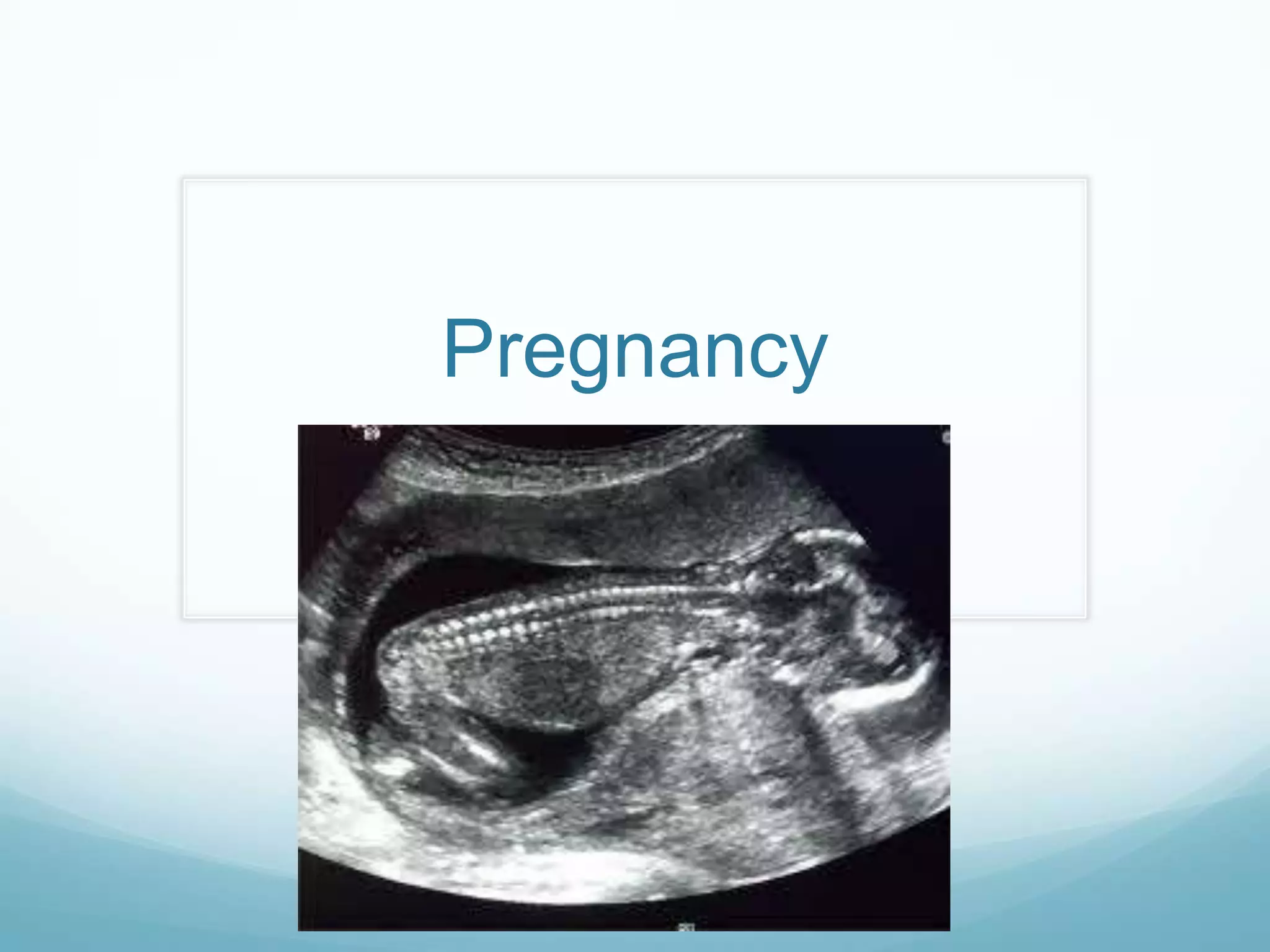
Pregnancy
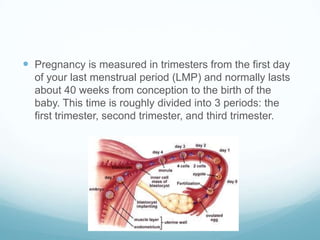
 Pregnancy is measured in trimesters from the first day
  of your last menstrual period (LMP) and normally lasts
  about 40 weeks from conception to the birth of the
  baby. This time is roughly divided into 3 periods: the
  first trimester, second trimester, and third trimester.
The Three Stages of
             Pregnancy
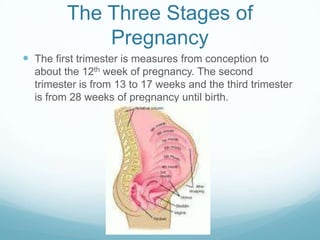
 The first trimester is measures from conception to
  about the 12th week of pregnancy. The second
  trimester is from 13 to 17 weeks and the third trimester
  is from 28 weeks of pregnancy until birth.
First Trimester
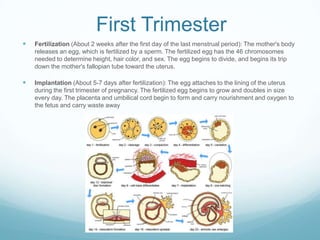
   Fertilization (About 2 weeks after the first day of the last menstrual period): The mother's body
    releases an egg, which is fertilized by a sperm. The fertilized egg has the 46 chromosomes
    needed to determine height, hair color, and sex. The egg begins to divide, and begins its trip
    down the mother's fallopian tube toward the uterus.

   Implantation (About 5-7 days after fertilization): The egg attaches to the lining of the uterus
    during the first trimester of pregnancy. The fertilized egg begins to grow and doubles in size
    every day. The placenta and umbilical cord begin to form and carry nourishment and oxygen to
    the fetus and carry waste away
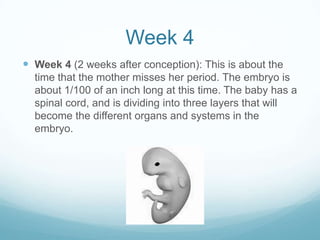
Week 4
 Week 4 (2 weeks after conception): This is about the
  time that the mother misses her period. The embryo is
  about 1/100 of an inch long at this time. The baby has a
  spinal cord, and is dividing into three layers that will
  become the different organs and systems in the
  embryo.
Week 6
 (4 weeks after conception): The embryo is about 1/6
  inch long.

 Limb buds, which will become the legs and arms begin
  to appear.

 The embryo’s brain and heart have begun to form
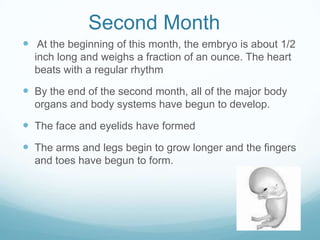
Second Month
 At the beginning of this month, the embryo is about 1/2
  inch long and weighs a fraction of an ounce. The heart
  beats with a regular rhythm

 By the end of the second month, all of the major body
  organs and body systems have begun to develop.

 The face and eyelids have formed
 The arms and legs begin to grow longer and the fingers
  and toes have begun to form.
Third Month
 The embryo is now officially called a fetus, and will be completely
   formed by the end of this month.
 The fetus is beginning to move its hands and legs, and opening
   and closing its mouth.
 Fingers and toes are now distinct, and hair is beginning to form on
   the head.
 By the end of this month, the fetus will be about 4 inches long and
   weigh just over an ounce.
 The external sex organs show if the fetus is male or female
 Eyelids close to protect the developing eyes and will not open
   again until the 28th week
Second Trimester
 The uterus, the muscular organ that holds the
  developing fetus, can expand up to 20 times its normal
  size during pregnancy.

 Although the fetus begins to move and takes
  recognizable human shape during the first trimester, it
  is not until the second trimester that movement of the
  fetus, referred to as “quickening”, can be felt.
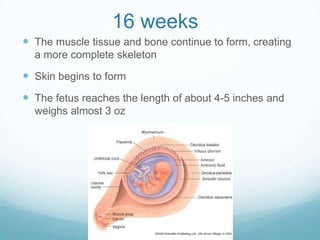
16 weeks
 The muscle tissue and bone continue to form, creating
  a more complete skeleton

 Skin begins to form
 The fetus reaches the length of about 4-5 inches and
  weighs almost 3 oz
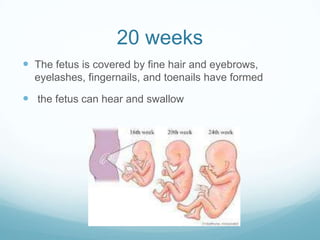
20 weeks
 The fetus is covered by fine hair and eyebrows,
  eyelashes, fingernails, and toenails have formed

 the fetus can hear and swallow
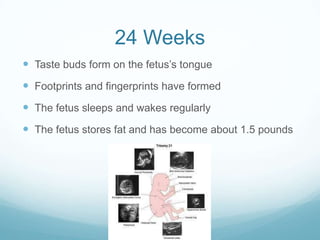
24 Weeks
 Taste buds form on the fetus’s tongue
 Footprints and fingerprints have formed
 The fetus sleeps and wakes regularly
 The fetus stores fat and has become about 1.5 pounds
Third Trimester
 There is head engagement in the third trimester, that is,
  the fetal head descends into the pelvic cavity so that
  only a small part (or none) of it can be felt abdominally.
  The perenium and cervix are further flattened and the
  head may be felt vaginally. Head engagement is known
  colloquially as the baby drop, and in natural medicine
  as the lightening because of the release of pressure on
  the upper abdomen and renewed ease in breathing.
  However, it severely reduces bladder capacity,
  increases pressure on the pelvic floor and the rectum
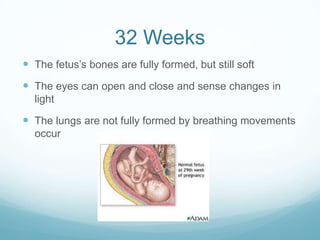
32 Weeks
 The fetus’s bones are fully formed, but still soft
 The eyes can open and close and sense changes in
  light

 The lungs are not fully formed by breathing movements
  occur
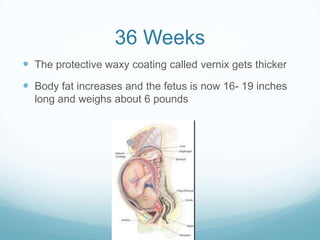
36 Weeks
 The protective waxy coating called vernix gets thicker
 Body fat increases and the fetus is now 16- 19 inches
  long and weighs about 6 pounds
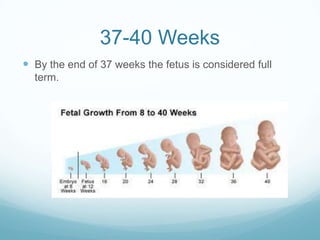
37-40 Weeks
 By the end of 37 weeks the fetus is considered full
  term.

Presentation1

  • 1.
  • 2.
     Pregnancy ismeasured in trimesters from the first day of your last menstrual period (LMP) and normally lasts about 40 weeks from conception to the birth of the baby. This time is roughly divided into 3 periods: the first trimester, second trimester, and third trimester.
  • 3.
    The Three Stagesof Pregnancy  The first trimester is measures from conception to about the 12th week of pregnancy. The second trimester is from 13 to 17 weeks and the third trimester is from 28 weeks of pregnancy until birth.
  • 4.
    First Trimester  Fertilization (About 2 weeks after the first day of the last menstrual period): The mother's body releases an egg, which is fertilized by a sperm. The fertilized egg has the 46 chromosomes needed to determine height, hair color, and sex. The egg begins to divide, and begins its trip down the mother's fallopian tube toward the uterus.  Implantation (About 5-7 days after fertilization): The egg attaches to the lining of the uterus during the first trimester of pregnancy. The fertilized egg begins to grow and doubles in size every day. The placenta and umbilical cord begin to form and carry nourishment and oxygen to the fetus and carry waste away
  • 5.
    Week 4  Week4 (2 weeks after conception): This is about the time that the mother misses her period. The embryo is about 1/100 of an inch long at this time. The baby has a spinal cord, and is dividing into three layers that will become the different organs and systems in the embryo.
  • 6.
    Week 6  (4weeks after conception): The embryo is about 1/6 inch long.  Limb buds, which will become the legs and arms begin to appear.  The embryo’s brain and heart have begun to form
  • 7.
    Second Month  Atthe beginning of this month, the embryo is about 1/2 inch long and weighs a fraction of an ounce. The heart beats with a regular rhythm  By the end of the second month, all of the major body organs and body systems have begun to develop.  The face and eyelids have formed  The arms and legs begin to grow longer and the fingers and toes have begun to form.
  • 8.
    Third Month  Theembryo is now officially called a fetus, and will be completely formed by the end of this month.  The fetus is beginning to move its hands and legs, and opening and closing its mouth.  Fingers and toes are now distinct, and hair is beginning to form on the head.  By the end of this month, the fetus will be about 4 inches long and weigh just over an ounce.  The external sex organs show if the fetus is male or female  Eyelids close to protect the developing eyes and will not open again until the 28th week
  • 9.
    Second Trimester  Theuterus, the muscular organ that holds the developing fetus, can expand up to 20 times its normal size during pregnancy.  Although the fetus begins to move and takes recognizable human shape during the first trimester, it is not until the second trimester that movement of the fetus, referred to as “quickening”, can be felt.
  • 10.
    16 weeks  Themuscle tissue and bone continue to form, creating a more complete skeleton  Skin begins to form  The fetus reaches the length of about 4-5 inches and weighs almost 3 oz
  • 11.
    20 weeks  Thefetus is covered by fine hair and eyebrows, eyelashes, fingernails, and toenails have formed  the fetus can hear and swallow
  • 12.
    24 Weeks  Tastebuds form on the fetus’s tongue  Footprints and fingerprints have formed  The fetus sleeps and wakes regularly  The fetus stores fat and has become about 1.5 pounds
  • 13.
    Third Trimester  Thereis head engagement in the third trimester, that is, the fetal head descends into the pelvic cavity so that only a small part (or none) of it can be felt abdominally. The perenium and cervix are further flattened and the head may be felt vaginally. Head engagement is known colloquially as the baby drop, and in natural medicine as the lightening because of the release of pressure on the upper abdomen and renewed ease in breathing. However, it severely reduces bladder capacity, increases pressure on the pelvic floor and the rectum
  • 14.
    32 Weeks  Thefetus’s bones are fully formed, but still soft  The eyes can open and close and sense changes in light  The lungs are not fully formed by breathing movements occur
  • 15.
    36 Weeks  Theprotective waxy coating called vernix gets thicker  Body fat increases and the fetus is now 16- 19 inches long and weighs about 6 pounds
  • 16.
    37-40 Weeks  Bythe end of 37 weeks the fetus is considered full term.