What’s Happening to Me?
Grade 4
Land Acknowledgement
Presentation Format
Guiding Questions: Big idea questions that students
can brainstorm and share previous knowledge or new
information with.
Think, Pair, Share: Opportunity for students to work
with partner or group and share ideas based on a
prompt.
Presentation Format
Videos: Students will watch a short video clip that
connects with topic. Discussion can follow before or
after videos.
Final Activity: Activity that concludes the presentation.
Curriculum Expectations – Grade 4
D1.5 describe the physical changes that occur at puberty and the
emotional and social impacts that may result from these changes.
D2.4 demonstrate an understanding of personal care needs
and the application of personal hygienic practices associated
with the onset of puberty.
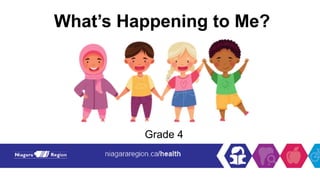
What’s Happening to Me?
Grade 4
Learning Objectives
At the end of this presentation, you will understand how your body
changes as you grow up. You will also:
• Understand the physical changes that might happen during puberty
• Learn that differences are ok; this is what makes us unique
• Create a safe space for your peers
• Respect your classmates for who they are
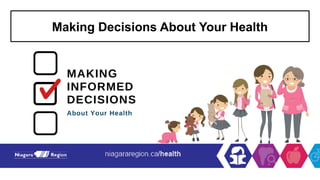
Making Decisions About Your Health
Feelings about Puberty…
It’s Okay…
• To feel embarrassed or uncomfortable
• To ask questions
• To not already know about this
• For us to learn about each others bodies
Inclusive Language
When discussing the topic of puberty, it is important to use gender-
neutral terms. Let’s review some terms that can be used:
Instead of: Use:
· Mother or Father · Parent or Guardian
· Boyfriend or Girlfriend · Partner or Significant Other
· Brother or Sister · Sibling
· Boys and Girls · Class, Students, Everybody
Guiding Question #1
What do you think of when you hear the
word puberty?
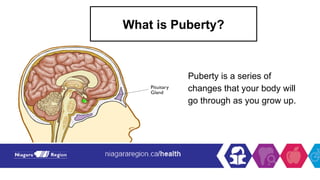
What is Puberty?
Puberty is a series of
changes that your body will
go through as you grow up.
When does puberty happen?
Puberty often begins during
adolescence.
It usually occurs between the ages
of 7 and 18.
But this process is different for
everyone.
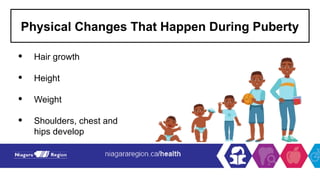
Physical Changes That Happen During Puberty
• Hair growth
• Height
• Weight
• Shoulders, chest and
hips develop
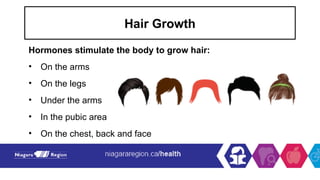
Hair Growth
Hormones stimulate the body to grow hair:
• On the arms
• On the legs
• Under the arms
• In the pubic area
• On the chest, back and face
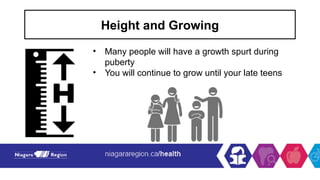
Height and Growing
• Many people will have a growth spurt during
puberty
• You will continue to grow until your late teens
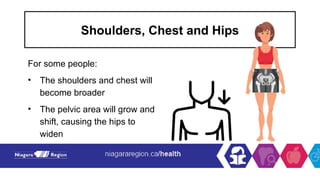
Shoulders, Chest and Hips
For some people:
• The shoulders and chest will
become broader
• The pelvic area will grow and
shift, causing the hips to
widen
Foods and Healthy Eating
Eating a variety of healthy foods during the school day is important!
• Food will help you feel energized
• Food will help you stay focused
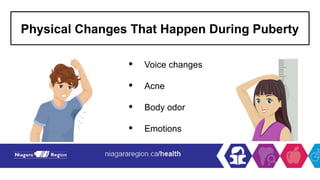
Physical Changes That Happen During Puberty
• Voice changes
• Acne
• Body odor
• Emotions
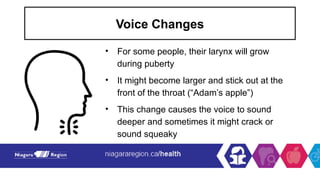
Voice Changes
• For some people, their larynx will grow
during puberty
• It might become larger and stick out at the
front of the throat (“Adam’s apple”)
• This change causes the voice to sound
deeper and sometimes it might crack or
sound squeaky
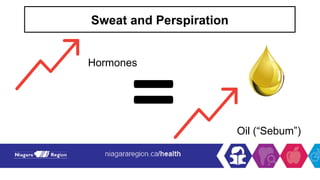
Sweat and Perspiration
Hormones
Oil (“Sebum”)
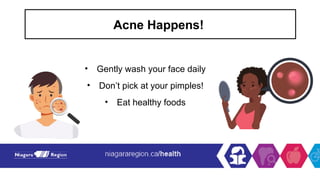
Acne Happens!
• Gently wash your face daily
• Don’t pick at your pimples!
• Eat healthy foods
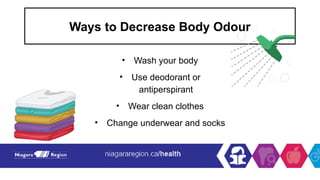
Ways to Decrease Body Odour
• Wash your body
• Use deodorant or
antiperspirant
• Wear clean clothes
• Change underwear and socks
Video – Every Body Curious: Puberty
After watching the video,
answer the following
question:
• What are some signs our
bodies are going through
puberty?
• When does puberty start?
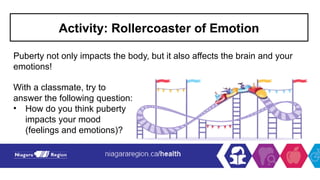
Activity: Rollercoaster of Emotion
Puberty not only impacts the body, but it also affects the brain and your
emotions!
With a classmate, try to
answer the following question:
• How do you think puberty
impacts your mood
(feelings and emotions)?
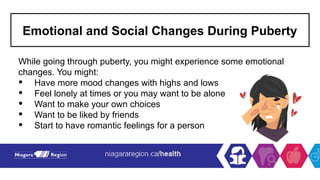
Emotional and Social Changes During Puberty
While going through puberty, you might experience some emotional
changes. You might:
• Have more mood changes with highs and lows
• Feel lonely at times or you may want to be alone
• Want to make your own choices
• Want to be liked by friends
• Start to have romantic feelings for a person
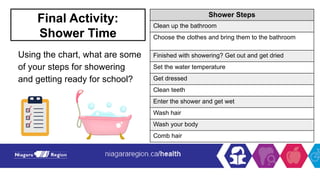
Final Activity:
Shower Time
Using the chart, what are some
of your steps for showering
and getting ready for school?
Shower Steps
Clean up the bathroom
Choose the clothes and bring them to the bathroom
Finished with showering? Get out and get dried
Set the water temperature
Get dressed
Clean teeth
Enter the shower and get wet
Wash hair
Wash your body
Comb hair
More Questions? Talk to Someone:
• Parents/ Guardian
• Teacher/ Principal
• Doctor or Health Care Professional
• School Health Nurse
• Child and Youth Worker
• Kids Help Phone
Think, Pair, Share
Turn to a classmate and talk about:
• 3 things you learned today
• 2 things you already knew
• 1 question you still have
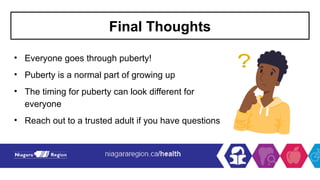
Final Thoughts
• Everyone goes through puberty!
• Puberty is a normal part of growing up
• The timing for puberty can look different for
everyone
• Reach out to a trusted adult if you have questions
Questions?

Presentation on Puberty, The meaning, The effects etc

  • 1.
  • 2.
  • 3.
    Presentation Format Guiding Questions:Big idea questions that students can brainstorm and share previous knowledge or new information with. Think, Pair, Share: Opportunity for students to work with partner or group and share ideas based on a prompt.
  • 4.
    Presentation Format Videos: Studentswill watch a short video clip that connects with topic. Discussion can follow before or after videos. Final Activity: Activity that concludes the presentation.
  • 5.
    Curriculum Expectations –Grade 4 D1.5 describe the physical changes that occur at puberty and the emotional and social impacts that may result from these changes. D2.4 demonstrate an understanding of personal care needs and the application of personal hygienic practices associated with the onset of puberty.
  • 6.
  • 7.
    Learning Objectives At theend of this presentation, you will understand how your body changes as you grow up. You will also: • Understand the physical changes that might happen during puberty • Learn that differences are ok; this is what makes us unique • Create a safe space for your peers • Respect your classmates for who they are
  • 8.
  • 9.
    Feelings about Puberty… It’sOkay… • To feel embarrassed or uncomfortable • To ask questions • To not already know about this • For us to learn about each others bodies
  • 10.
    Inclusive Language When discussingthe topic of puberty, it is important to use gender- neutral terms. Let’s review some terms that can be used: Instead of: Use: · Mother or Father · Parent or Guardian · Boyfriend or Girlfriend · Partner or Significant Other · Brother or Sister · Sibling · Boys and Girls · Class, Students, Everybody
  • 11.
    Guiding Question #1 Whatdo you think of when you hear the word puberty?
  • 12.
    What is Puberty? Pubertyis a series of changes that your body will go through as you grow up.
  • 13.
    When does pubertyhappen? Puberty often begins during adolescence. It usually occurs between the ages of 7 and 18. But this process is different for everyone.
  • 14.
    Physical Changes ThatHappen During Puberty • Hair growth • Height • Weight • Shoulders, chest and hips develop
  • 15.
    Hair Growth Hormones stimulatethe body to grow hair: • On the arms • On the legs • Under the arms • In the pubic area • On the chest, back and face
  • 16.
    Height and Growing •Many people will have a growth spurt during puberty • You will continue to grow until your late teens
  • 17.
    Shoulders, Chest andHips For some people: • The shoulders and chest will become broader • The pelvic area will grow and shift, causing the hips to widen
  • 18.
    Foods and HealthyEating Eating a variety of healthy foods during the school day is important! • Food will help you feel energized • Food will help you stay focused
  • 19.
    Physical Changes ThatHappen During Puberty • Voice changes • Acne • Body odor • Emotions
  • 20.
    Voice Changes • Forsome people, their larynx will grow during puberty • It might become larger and stick out at the front of the throat (“Adam’s apple”) • This change causes the voice to sound deeper and sometimes it might crack or sound squeaky
  • 21.
  • 22.
    Acne Happens! • Gentlywash your face daily • Don’t pick at your pimples! • Eat healthy foods
  • 23.
    Ways to DecreaseBody Odour • Wash your body • Use deodorant or antiperspirant • Wear clean clothes • Change underwear and socks
  • 24.
    Video – EveryBody Curious: Puberty After watching the video, answer the following question: • What are some signs our bodies are going through puberty? • When does puberty start?
  • 25.
    Activity: Rollercoaster ofEmotion Puberty not only impacts the body, but it also affects the brain and your emotions! With a classmate, try to answer the following question: • How do you think puberty impacts your mood (feelings and emotions)?
  • 26.
    Emotional and SocialChanges During Puberty While going through puberty, you might experience some emotional changes. You might: • Have more mood changes with highs and lows • Feel lonely at times or you may want to be alone • Want to make your own choices • Want to be liked by friends • Start to have romantic feelings for a person
  • 27.
    Final Activity: Shower Time Usingthe chart, what are some of your steps for showering and getting ready for school? Shower Steps Clean up the bathroom Choose the clothes and bring them to the bathroom Finished with showering? Get out and get dried Set the water temperature Get dressed Clean teeth Enter the shower and get wet Wash hair Wash your body Comb hair
  • 28.
    More Questions? Talkto Someone: • Parents/ Guardian • Teacher/ Principal • Doctor or Health Care Professional • School Health Nurse • Child and Youth Worker • Kids Help Phone
  • 29.
    Think, Pair, Share Turnto a classmate and talk about: • 3 things you learned today • 2 things you already knew • 1 question you still have
  • 30.
    Final Thoughts • Everyonegoes through puberty! • Puberty is a normal part of growing up • The timing for puberty can look different for everyone • Reach out to a trusted adult if you have questions
  • 31.

Editor's Notes

  • #1 **The following slides (1-6) are for teacher use only** The speaker’s notes are also intended for teacher use only. The notes include general information, background knowledge, questions and/or prompts. The information included in these notes should not be read word for word. Teacher’s should review the notes before using the presentation to become familiar with the content, as it is to supplement what is on the slide. **Important** The language of “boys” and “girls” or “male” and “female” is gender interpreted, and often assigned based on a person’s biological sex at birth. It excludes individuals who are intersexed and/or whose gender identity does not align with their assigned biological sex. It is more accurate to talk about anatomy rather than gender and use “bodies with” or “people with” language when referring to developments and changes in puberty. Using this language supports an inclusive classroom in which diversity is recognized and provides a strong model to help students understand that bodies are unique, come in all shapes, sizes, types, and all bodies are good bodies. This presentation will use the term people assigned female at birth/ people assigned male at birth to refer to individuals who are born with certain sex organs, hormones and/or chromosomes. However, it’s important to note that people may have a different gender identity than the sex assigned to them at birth.  Image from Canva Last Updated: January 2023
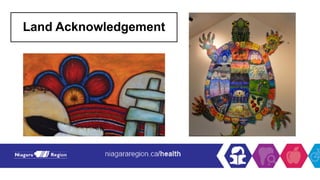
  • #2 Niagara Region is situated on treaty land. This land is steeped in the rich history of the First Nations such as the Hatiwendaronk (Hat-i-wen-DA-ronk), the Haudenosaunee (Hoe-den-no-SHOW-nee), and the Anishinaabe (Ah-nish-ih-NAH-bey), including the Mississauga's of the Credit First Nation. There are many First Nations, Métis, and Inuit peoples from across Turtle Island that live and work in Niagara today. The Regional Municipality of Niagara stands with all Indigenous peoples, past and present, in promoting the wise stewardship of the lands on which we live. *Disclaimer: In the Spirit of Truth and Reconciliation, Niagara Region Public Health acknowledges that people are gathered on the customary and traditional lands of the Indigenous Peoples of this territory. We recognize that the land on which you are situated will vary depending on where you are located in Ontario. It is advised that you reach out to your school’s principal or school board for the school-specific treaty land. If you have already done a land acknowledgement on the same day you are presenting this lesson, you are welcome to skip this slide. However, it is always encouraged to complete a land acknowledgement before continuing on with this presentation.* Information about the image on the left: There are seven objects that have been purposely selected and included in the design of the artwork: an Inukshuk, an eagle feather, two drums, a Métis sash, an embroidered flower, and wampum belt. Each object reflects the diversity of First Nations, Métis and Inuit in North America. The iconic stone monument, the Inukshuk, is used as a marker identifying important sites and as a navigational tool to communicate direction. The eagle feather is significant to the spiritual beliefs of some Métis and First Nations peoples. Its symbolism includes honour, wisdom, and courage among many others. It is considered an honour to be given an eagle feather. The two drums include the Inuit drum and the Métis and First Nations drum. The drum is symbolic of the heartbeat of Mother Earth and is often played at various traditional gatherings and ceremonies. The embroidered flower is woven into many traditional garments and various objects through beadwork, painting, or etchings. It is also considered one of Canada’s first art forms. The Métis sash was once a tool of the voyageurs and fur traders. It is also a symbol of knowledge and the relationship between the Métis, the First Nations, and Europeans. At the top of the poster are four lines reminiscent of the traditional beaded wampum belt. There are many types of wampum belts with different significant meanings, including agreements made between two groups/nations, knowledge sharing, and storytelling. The four lines in this wampum belt represent the equality and diversity of the four peoples (First Nations, Metis, Inuit, and European settlers) and to acknowledge the journey of living together peacefully (ETFO, 2022). For more information on Indigenous Education and First Nations, Metis and Inuit (FNMI), check out the following resources: https://www.otffeo.on.ca/en/learning/indigenous-education https://www.etfo.ca/socialjusticeunion/first-nation,-metis-and-inuit-(fnmi) Photo References: Image on the Left: Elementary Teacher Federation of Ontario (ETFO). (2022). ETFO Land Acnowledgements. https://www.etfo.ca/about-us/governance/etfo-land-acknowledgement Image on the Right: Creating Our Way Forward: Recommendations for Improving Niagara Region Public Health & Emergency Services’ Indigenous Engagement (2019). https://www.niagararegion.ca/health/equity/pdf/indigenous-engagement-report.pdf Mural of Turtle Island  Cover photo: Oneida nation artist, Sharon Sarnowski (deceased) This is a picture taken of the mural in the Boardroom of the Oneida Tribal Council office, Oneida, Wisconsin.
  • #3 Images from Canva
  • #4 Images from Canva
  • #5 Image from Canva
  • #6 This is where the presentation begins. Note: Hygiene habits, norms and practices will vary from family to family. It is important to be aware of, and respect and accept these differences. Be sensitive to the fact that not everyone can afford to have their clothes laundered regularly, have multiple changes of clothes, etc. Similarly, students may not have access to regular opportunities to bathe or may not be able to afford a variety of hygiene products. Teachers need to be alert to ensure the classroom climate is positive and caring. Consider seeking out local sources of support for students to access hygiene items free of charge. Image from Canva
  • #7 General Information The information we are going to talk about today is important for many reasons. We want to ensure that you learn that everyone is unique and the things that make you unique is what makes you interesting and special. We want you to feel good about your body, how it is changing, and how you approach different types of relationships you may have with people. It is important that everyone feels safe, accepted and included at school and understand that differences are ok. This will help to reduce bullying and feelings of loneliness or isolation. Background Knowledge Students will learn and understand about themselves and their bodies as they grow and mature Students need to understand that everyone has different qualities that make up their self-concept; this makes them unique There needs to be an emphasis on feeling safe, included and accepted in the school community Empathetic towards others…
  • #8 General Information When it comes to your health, there are many decisions you will have to make throughout your life as you mature and grow. Making decisions about your health is important because you need to know how the physical changes that occur during puberty can impact your well-being. When deciding what is best for you and your health, you should understand and be well informed about the choices available. It is important that information comes from a trusted source that is current and accurate. There is a lot of great information available on the internet and social media, but sometimes there is a lot of misinformation as well, this is why we recommend talking to a trusted adult, as they can offer information to help you make the best decisions for you and your health. Images from Canva
  • #9 General Information 4 Okays Today we’re going to be talking about what makes us different and what makes us the same. We understand that for some of you, this may be the first time you’re learning about this topic, and for others this may be something you know a lot about. It may feel uncomfortable to talk about your body and puberty with your parents or friends, but it’s important we all understand puberty so we can be supportive and respectful of others. So let’s review the 4 OKs. It is perfectly OK: If you feel embarrassed or uncomfortable. The only way for us to overcome this uncomfortable feeling is to learn and grow. We can often feel uncomfortable about things we don’t fully understand. But if we take the time to learn about a topic and understand it, we become more educated and comfortable, which creates a supportive environment for everyone! It’s okay to be curious and to ask questions. It’s okay if you don’t know this information already. We’re all going to learn this together. And… It is okay for us to know about each other’s bodies and experiences. This helps us to understand one another better, and be respectful of each individual person regardless of our similarities and differences. Teacher Prompt Puberty is a time of change that can be both exciting and frightening Explore why students might find this topic difficult to discuss Discuss why parents or other trusted adults might also feel embarrassment (think children are too young, no one ever talked to them, it is a private topic, not used to discussing it, or think they should have all the answers) Background Information Embarrassment Embarrassment is common; giggling or blushing, and wiggling in chairs is expected (the topic can also be uncomfortable for some students) Most people want to know about their bodies and those of the opposite assigned sex Knowing the information helps youth to feel more comfortable and prepared as they go through puberty Knowing/Not Knowing Is important to learn about puberty; helps to understand the changes that are happening and will happen Some students have very limited knowledge and others might know more For some, this may be the first opportunity to explore the changes of puberty For those with some knowledge, it is important to continue talking about puberty and to make sure that the information they have is correct Students may have learned about these topics from friends or the media. However, those sources are not always accurate It is important that everyone gets to know and learn about each other (and everyone) Discuss respect of each other and of the topic We spend a lot of our lives relating to people of the opposite assigned sex (fathers, brothers, sons, mothers, sisters, daughters). If we learn about them and their concerns, perhaps we can understand them better and can improve our relationships with them It may be more difficult to discuss these topics in the co-ed setting, but it is a good introduction to understanding and communicating in a respectful way Asking questions… If a student has a question, it’s likely other students have the same question Introduce the question box (if using) Images from Canva
  • #10 Reminder: When discussing the topic of puberty, it is important to use gender-neutral and inclusive terms and refer to assigned sex using the terms “people assigned female/male at birth”, “sex assigned at birth”, or a person with a penis/person with a vagina, instead of the terms “sex” or “biological sex”. Background Knowledge on Inclusive Language For most people, using inclusive language is a huge shift and will take some time to get used to. Don’t worry about making mistakes, just make the effort. Your students will appreciate your intentions! Here are some strategies for using inclusive language in your sexual health lessons:  Using “they/their” as a singular, gender free pronoun e.g. People often get more vaginal discharge before they get their first period. Removing gender labels from people, parts, processes and partners e.g. If someone has a wet dream, they might notice a wet spot on their pajamas or sheets. If it’s ever necessary to refer to assigned sex, using the terms “sex assigned at birth” instead of the terms “sex” or “biological sex” e.g. Everyone has some breast changes during puberty. For people who are assigned male at birth, the changes are usually temporary. For those assigned female, changes in shape and size are usually lasting. When talking about anatomy, always explicitly acknowledge diversity e.g. We’re learning about 2 types of reproductive systems. Everyone is different so some people might have a system that is different from the 2 examples we’ll learn about here. Depending on the cognitive or developmental level of your students, you may need to support students to understand inclusive language. e.g. “Assigned male at birth means that when a baby was born, the doctor saw they had a penis and said the baby is male. Most people who are assigned male are boys.” e.g. “People usually get their first period during puberty. Only people with vaginas get periods.” Important Note: The use of language that is gender non-specific is used to show consideration to people of sexual and gender minorities. Please recognize and acknowledge that there are students who may identify as a gender that does not match the sex they were assigned at birth. Reference: Alberta Health Services. (2022). Teaching Sexual Health: Inclusive Language. https://teachingsexualhealth.ca/teachers/sexual-health-education/understanding-your-role/get-prepared/inclusive-language/ Image from Canva
  • #11 Teacher Prompt Have you heard the term ‘puberty’ before? Have you heard about the idea of your body changing? Have you felt like your body is changing? Maybe you are growing taller? Have you experienced any new emotions/feelings that are new? Try to encourage the students that its okay to talk about puberty, even though it might seem weird. Continue onto the next slide to begin discussion on puberty, what it is and how it begins. Image from Canva
  • #12 General Information What exactly is puberty? What is meant by the term puberty? Puberty is the stage of development when a person starts to change from a child to an adult… The body begins to develop and change This happens over time and doesn’t just happen all at once A person doesn’t just become an adult as soon as puberty begins. There are changes that will occur during adolescence, to indicate that a person is going through puberty Changes include physical, emotional, social and thinking (cognitive) changes How does it all happen? Pituitary gland (think of a “cherry pit” shape) which is located at the bottom of the brain sends out chemical messages, called hormones, to get things started Hormones travel in the blood stream to different parts of the body These hormones then travel in the blood stream and tell other parts of the body to start changing. They cause changes allowing children’s bodies to grow into adult bodies Images from Canva Reference: Dowshen, S. (2015, October). Nemours TeensHealth: Everything you wanted to know about puberty. https://kidshealth.org/en/teens/puberty.html#:~:text=When%20GnRH%20reaches%20the%20pituitary,these%20hormones%20in%20their%20bodies.
  • #13 General Information When does puberty happen? Changes of puberty happen at different times for different people. It’s almost like a personal alarm clock. No two clocks are set exactly the same. The timing of puberty is influenced by many different factors, such as family genes, nutrition, physical activity, etc. These can all affect when puberty will start for you. Although there’s no way to tell for sure when puberty will begin, it usually starts between the ages of 10 and 13 for most. External and Internal changes (physical), as well as the emotional and social impacts as a result of puberty, may begin as early as age 9 and go until 18 years old. There are typical age ranges when changes during puberty occurs, but it is normal for each person to develop at their own rate. For those who were assigned female at birth, they tend to experience changes and puberty between the ages of 7 and 13. While those who were assigned male at birth, they tend to experience changes and puberty between the ages of 9 and 14. For some individuals, these changes might begin earlier and for others, the changes might start later. Puberty is usually complete by ages 18-20, but it will be different for everyone. Reference: Dowshen, S. (2015, October). Nemours KidsHealth: All About Puberty. https://kidshealth.org/en/kids/puberty.html Image from Canva
  • #14 Background Knowledge The list on the slide is an overview of some of the changes that students/youth might experience when going through puberty… The following slides will go more in detail about each of these changes. PLEASE NOTE: If students mention Menstruation or Spermatogenesis as a change of puberty, please let students know this is a change of puberty and it will be discussed next year. Menstruation and Spermatogenesis are not included in the curriculum for Grade 4. However, as the teacher, you can briefly discuss what menstruation is, as there might be students who have already started their period and have questions.  Menstruation: menstruation (having periods) starts when the body’s reproductive system is fully developed and potentially capable of getting pregnant. Menstruation usually begins around age 12 or 13 (although age can vary, it’s generally about two years into puberty) and happens about once per month afterward. Some people experience symptoms before/during their period such as mood changes or cramps. This is known as premenstrual syndrome (PMS). Image from Canva Reference: Dowshen, S. (2015, October). Nemours TeensHealth: Everything you wanted to know about puberty. https://kidshealth.org/en/teens/puberty.html#:~:text=When%20GnRH%20reaches%20the%20pituitary,these%20hormones%20in%20their%20bodies. Kids Help Phone (2021, December 1). Puberty and people assigned female at birth. https://kidshelpphone.ca/get-info/puberty-and-people-assigned-female-at-birth/ Kids Help Phone (2021, December 1). Puberty and people assigned male at birth. https://kidshelpphone.ca/get-info/puberty-and-people-assigned-male-at-birth/ OPHEA (2022). Always Changing and Growing Up (Grades 5 & 6). https://ophea.net/always-changing-growing
  • #15 General Information At puberty, nearly all people experience some growth of hair under the arms, on the legs, and on the pubic area, while the amount, colour, and texture of hair varies from person to person. No two people are exactly the same and this is also true of the development of body parts during puberty; genitals vary in shape, size and colour and that is normal. Hair As a result of increased hormone production your hair may become oilier, just as skin gets oilier. Regular shampooing and daily brushing/combing of hair is important. Hair Growth You will start to notice hair growing in places that you didn’t have hair before. This is a change that children sometimes find embarrassing. Hormones are what stimulate body hair to grow on the arms and under arms, in the pubic area (area between the legs) and on the legs. If you have higher testosterone, you may also start to notice hair on your chest, back and face. Some people have been taught to remove the hair under their arms and on their legs, however this may not be what everyone chooses to do, and that is OK. Many choose to shave their legs and armpits. What’s important is respecting each individual’s decision. (If you decide to start shaving, talk to a trusted adult to learn how to shave properly and get your own razor). You may start to notice hair on your chest, back and face – not all of those with testosterone grow back/chest hair. Again, everyone is different and the amount of hair that one grows will vary. Consideration for the practices of others in our multicultural society is important Previously, some people have been taught to remove the hair from under their arms and/or on their legs. However, this may not be everyone’s practice (religious, cultural, etc.) Some cultures remove body hair, where as some cultures also keep their body hair. Remember this is a personal choice. Reference: Dowshen, S. (2015, October). Nemours TeensHealth: Everything you wanted to know about puberty. https://kidshealth.org/en/teens/puberty.html#:~:text=When%20GnRH%20reaches%20the%20pituitary,these%20hormones%20in%20their%20bodies. KidsHealth Medical Experts. (n.d.). Nemours KidsHealth: Shaving. https://kidshealth.org/en/kids/shaving.html KidsHealth Medical Experts. (n.d.). Nemours KidsHealth: Your Hair. https://kidshealth.org/en/kids/hair.html Images from Canva
  • #16 General Information Growth spurt Sometimes people are concerned about their height for different reasons. As we said before, everyone starts puberty at different times. This can affect height and means some take longer to grow. This can make some people feel that they are too short or too tall. Now how tall you will be is hard to predict. A lot of that depends on your family, if your parents are tall, chances are you’ll be taller too. Everyone is different and grows according to their own schedule. You’ll continue to grow on and off until your late teens. Muscles: Kids might wish they could be muscular like their favourite superhero or athlete that is seen in the media (i.e., superman). You can do a lot to build strong, healthy bodies by being physically active and eating a variety of nutritious foods. Some children talk about going to the gym or lifting weights to help them develop muscles. Youth might find that building muscle takes time and doesn’t always happen quickly. This is because their muscles are still growing and developing, and muscles don’t usually become bigger/stronger until puberty has stopped. This doesn’t mean building muscles before then isn’t possible. It just takes time and patience. Muscles take time to build, it will not just happen right away. This can happen over time with physical activity. **However, lifting weights is not encouraged until after children turn 14. Lifting weight early in life, to build muscle, can cause muscle damage and might stunt a child’s growth.** If children are interested in working out to build muscles, encourage them to talk to a trusted health professional, such as a personal trainer, before participating. This is encouraged to avoid serious injury. Reference: Dowshen, S. (2015, October). Nemours TeensHealth: Everything you wanted to know about puberty. https://kidshealth.org/en/teens/puberty.html#:~:text=When%20GnRH%20reaches%20the%20pituitary,these%20hormones%20in%20their%20bodies. Dowshen, S. (2016, September). Nemours KidsHealth: Feeling Too Tall or Too Short. https://kidshealth.org/en/kids/my-height.html Image from Canva
  • #17 General Information Shoulders As you go through puberty, if you have higher levels of testosterone, you will see your shoulders and chest broaden. Breasts and Hips: Everyone has some form of breast growth and changes during puberty. For people assigned female at birth, their breasts will grow and the hips (pelvis) will shift and widen during puberty. This change helps to make room for all the parts where a baby will grow and make it possible for them to give birth. Even if your body does produce testosterone, you may notice some minor temporary breast changes/development. This is a result of hormones changing in your body and the body trying to regulate them. People assigned female at birth will most likely experience breast change over time, especially when they become pregnant. Their breasts change so that if they have a baby they can breastfeed. Breastfeeding is a natural and healthy way to feed our babies. These changes (hips and breasts) mainly prepare those with a vagina for potential childbirth! Breasts are sometimes different sizes and that is normal. You might experience a bit of discomfort and or tenderness as your breasts change and as hormone levels go up and down. Some may find it more comfortable to wear a bra, sports bra or bralette as their breasts get bigger. Reference: Gavin, M. L. (2018). Nemours KidsHealth: Breasts and Bras. https://kidshealth.org/en/kids/breasts-bras.html Images from Canva
  • #18 General Information Weight: People come in all different shapes and sizes, and the best weight is the one that is right for your body type and size, as well as level of physical activity. It can be unhealthy to be underweight or overweight (this is determined by your doctor). Eating enough food is like putting gas in a car – if you run out of gas, it stops working! Everyone needs to eat a nutrient-rich and balanced plate of foods to grow, to fight off infections, to feel awake, to do well in school, and to just feel good. Eating a variety of foods that meet the requirements of Canada’s Food Guide, is the best way. Note: Not all students will have access or money to buy healthy and nutritious foods. Image from Canva
  • #19 Note: The list on the slide is an overview of some of the changes that students/youth might experience when going through puberty… The following slides will go more in detail about each of these changes. Images from Canva Reference: Dowshen, S. (2015, October). Nemours TeensHealth: Everything you wanted to know about puberty. https://kidshealth.org/en/teens/puberty.html#:~:text=When%20GnRH%20reaches%20the%20pituitary,these%20hormones%20in%20their%20bodies. Kids Help Phone (2021, December 1). Puberty and people assigned female at birth. https://kidshelpphone.ca/get-info/puberty-and-people-assigned-female-at-birth/ Kids Help Phone (2021, December 1). Puberty and people assigned male at birth. https://kidshelpphone.ca/get-info/puberty-and-people-assigned-male-at-birth/ OPHEA (2022). Always Changing and Growing Up (Grades 5 & 6). https://ophea.net/always-changing-growing
  • #20 General Information Voice Changes When a person with higher testosterone levels reaches puberty, the larynx (also known as the voice box) begins to grow and the vocal cords get longer and thicker. When the larynx grows larger during puberty, it sticks out at the front of the throat. This is what's called an Adam's apple. Everyone's larynx grows during puberty, but if you do not have high testosterone in the body the larynx doesn't grow as much and you won’t have an Adam's apple. Those who were assigned male at birth tend to have higher levels of testosterone, which will cause the larynx to grow noticeably. Where as those who were assigned female at birth do not typically have high enough levels of testosterone and won’t grow an “Adam's apple”. It is also important to share with the class that everyone will have some degree of voice changes as they mature. This change causes the voice to sound deeper. Sometimes, this will make your voice crack and sound squeaky in the middle of talking. That’s because your larynx is adjusting to its new size. Reference: Pitone, M.L. (2021, January). Nemours KidsHealth: Your Changing Voice. https://kidshealth.org/en/kids/changing-voice.html Nemours KidsHealth (n.d.). What’s an Adam’s Apple? https://kidshealth.org/en/kids/adams-apple.html Image from Canva
  • #21 General Information The increase in hormones during puberty causes your body to produce excess amounts of oil called sebum. There are a lot of oil glands on the face (especially across the forehead, nose, chin in the “T-zone”), neck, shoulders, upper chest and back. Excess oil may cause acne, perspiration, and body odour, which will be discussed on the following slides. Teacher Prompt “What are some ways we can take care of our bodies to minimize body odour/acne because of sweat and perspiration?” Elicit the following responses: Bathe or shower daily Use deodorants or antiperspirants. Deodorants are meant to cover up the unpleasant odour where antiperspirants slow the sweating process Deodorants/antiperspirants are only effective if applied to clean skin Do not substitute the use of body sprays, perfumes, colognes etc. for showers. If using these products it is important to use sparingly. Discuss the increasing prevalence of scent-free zones in schools, workplaces, stores etc. Wear clean clothes Change socks and underwear daily or more often if physically active  Reference: Dowshen, S. (2015, October). Nemours KidsHealth: All About Puberty. https://kidshealth.org/en/kids/puberty.html#catbody-stuff Images from Canva
  • #22 General Information Acne As mentioned earlier, increase in hormones during puberty causes oil (sebaceous) glands to produce excess amounts of oil (sebum). This excess oil can combine with dead skin cells to clog pores, trap bacteria and cause pimples on the face, neck, shoulders, upper chest and back. Pimples happen to everyone. There are some things you can do to decrease acne, such as using cleanses and washes, and make sure you do not pick them. Some people may need to seek treatment from their health care professional (family doctor, nurse practitioner or dermatologist) if acne persists and becomes an issue. The best way to help keep your skin clear is to: Wash face with mild soap or cleansers and warm water 1-2x daily (in the morning after waking up and/or at night before bed) Do not squeeze or pick at pimples as this can cause an infection and scarring Avoid creams and makeup that contain oil. Remove all makeup before going to bed Eat a well-balanced meal with fruits and vegetables Stay hydrated by drinking water Wash hair more often and keep hair back off the face If acne gets worse the next step would be to buy acne products (washes and creams) which can be purchased over the counter (meaning from the store without a prescription) or you may see your doctor for a prescription. It’s always important to talk to a parent or guardian before trying or buying any new products. Reference: Cronan, K. M. (2020, August). Nemours KidsHealth: Acne. https://kidshealth.org/en/kids/acne.html Images from Canva
  • #23 General Information Perspiration, body odour We are all born with two different kinds of sweat glands. The first kind is called eccrine glands. These glands produce a clear odourless perspiration (or sweat). People perspire or sweat all the time, not just during physical activity. Perspiring is how the body regulates its temperature. As perspiration evaporates from the skin’s surface, it cools the body. At puberty a different set of sweat glands called apocrine glands start to secrete a different substance along with a salty, watery solution. This, mixed with bacteria on the skin, results in a body odour. Major sweat glands are located in the underarms, groin area, palms of the hands and soles of feet. Some ways of reducing/decreasing body odour include: Wear clean clothes, change your socks and underwear everyday and more often if physically active Taking a bath or a shower; If you don’t have shower/bath, you can use a washcloth to wash your body Using deodorants or antiperspirants. Deodorants are meant to cover up the unpleasant odour where antiperspirants slow the sweating process. Deodorants/antiperspirants are only effective if applied to clean skin. Do not substitute showers for the use of body sprays, perfumes, colognes etc. If using these products it is important to use sparingly, which means using only a little. *Important Reminder* A lot of places like schools and workplaces are what we call scent-free zones due to allergies and sensitivities. Note Equitable and cultural considerations: It is also important to remember that everyone might not have access to the options on the slide. Also, some families have different cultural practices and might not shower/bath everyday or use deodorants/antiperspirants. The goal is to encourage hygienic practices and to help students make informed decisions. Reference: Dowshen, S. (2015, October). Nemours KidsHealth: All About Puberty. https://kidshealth.org/en/kids/puberty.html KidsHealth Medical Experts (n.d.). Nemours KidsHealths: Why Do Feet Stink? https://kidshealth.org/en/kids/feet-stink.html Nemours KidsHealth (n.d.). What’s Sweat? https://kidshealth.org/en/kids/sweat.html#catbody-stuff Images from Canva
  • #24 To access video you must be in present mode to play OR open the hyperlink in a separate Internet browser. Video link: https://youtu.be/tyzXx2e5y1U Also hyperlinked in the title. Length of Video: 7:44  It is recommended that you end the video at 6:44. Video Description: “Puberty can be a confusing time, but knowledge can help make things a little easier! What are some signs our bodies are going through puberty? When does it start? And what happens when it does? Hosts Eva and Nadine share some fun fruit analogies to highlight what’s going on with the body. In this episode, we’ll learn about what’s happening in the mind and in the body during puberty. We also get some insight into what causes those adolescent mood swings as Louisa Jewell, Canada’s leading expert in positive psychology shares what’s really going on.” Every Body Curious is a fun and illuminating web series for young people (and their parents!) that explores the birds and the bees with ease in today’s digital landscape. It's a safe setting where leading sex educators answer real questions from real kids, and open and honest conversations about sexuality, bodies and healthy relationships are encouraged. Visit https://everybodycurious.com The Every Body Curious website is certified by the kidSAFE Seal Program. To learn more go to https://kidsafeseal.com/ We understand that not every family will interact with this content the same way, and that’s ok. Every Body Curious is for those families interested in evidence-based material to help facilitate these sorts of conversations with their kids. Image from Canva
  • #25 Teacher Prompt (Activity) Before continuing with this activity, ask students if they think there are any other changes that can/might happen during puberty. Rollercoaster of Emotion Activity: Instructions Explain that puberty not only affects the body, but it also affects the brain and emotions Explain that puberty is also often accompanied by mood swings and can feel like a rollercoaster of emotions Begin a discussion about puberty and its effects on emotions: Possible Teacher Prompt: How do you think puberty impacts your mood (feelings and emotions)? Encourage students to think about what kinds of emotions people might experience (e.g. anger, sadness, happiness) and how shifting quickly and dramatically between emotions might feel. Talking Points: Emotional, Social and Cognitive Changes Some changes that occur during puberty you can see and others you cannot, such as the changes that are happening to the brain The brain is under construction during puberty and won’t be complete until the early twenties… Explain that with all these emotional and social changes during puberty and adolescence, students may find themselves or their friends struggling. Possible Teacher Prompt: What could you do if you were having a hard time with these changes? Examples might include: talking to a trusted adult, reaching out to a good friend, distancing yourself from friends who pressure you to do things that you do not want to do, finding helpful resources or services (e.g. Kids Help Phone), practice healthy habits (e.g. get adequate sleep, eat healthy foods, do physical activity, get some fresh air, refrain from doing drugs) to promote mental health and emotional well-being. Variations Conduct discussion as a think-pair-share Offer students the opportunity to come up with some more suggestions to promote healthy development and decision-making. Encourage them to think about something they might do that would be proactive. The students might suggest trying to create healthy habits in the classroom (e.g. a meditation or movement period after recess) The students might suggest creating an anonymous question box in the classroom The students might suggest having the opportunity to practice standing up to peer pressure and modelling healthy relationships Background Knowledge Mental Health It is common for students going through puberty to feel like they’re on an “emotional rollercoaster”; happy, positive and confident one minute, sad/angry, withdrawn or nervous the next minute Students might also identify feelings of confusion, loneliness or excitement Encourage students to seek out credible information and to talk to a trusted adult if they continue to feel sad or angry, their friends may not have the most up-to-date information about puberty but could be a good source of support when going through difficult changes Image from Canva
  • #26 Teacher prompt: “What are some of the feelings a Grade 4 student might have as they start to experience changes during puberty? How can you manage these feelings and help others manage their feelings?” General Information While growing up and going through puberty, kids will likely experience may changes to their bodies. As a result of the physical changes that occur, there are emotional and social impacts that may result from them changes. Because the hormones in our bodies are constantly fluctuating during puberty, it may impact a person’s feeling and emotions are also changing. Emotional and Social Changes might include, but are not limited to: May begin to experience more emotional highs and lows Sometimes feeling lonely and isolated Relationships change as the mind and body mature (e.g., interested in dating, friends become very important, etc) Wanting to be liked Wanting more independence (choices for dinners; freedom hangout with friends; walk alone to school; etc.) Sexual thoughts and feelings might begin/increase Become concerned about looks Romantic feelings might begin - It is normal to start to have different feelings about a person during puberty Image from Canva Reference: Dowshen, S. (2015, October). Nemours TeensHealth: Everything you wanted to know about puberty. https://kidshealth.org/en/teens/puberty.html#:~:text=When%20GnRH%20reaches%20the%20pituitary,these%20hormones%20in%20their%20bodies. Kids Help Phone (2021, December 1). Puberty and people assigned female at birth. https://kidshelpphone.ca/get-info/puberty-and-people-assigned-female-at-birth/ Kids Help Phone (2021, December 1). Puberty and people assigned male at birth. https://kidshelpphone.ca/get-info/puberty-and-people-assigned-male-at-birth/ OPHEA (2022). Always Changing and Growing Up (Grades 5 & 6). https://ophea.net/always-changing-growing
  • #27 Teacher Prompt: “With all the changes that are happening, it is important to have a regular and daily routine that incorporates some personal hygiene practices. What are some of the steps you take to be hygienic? Using the chart, what are some of your steps for showering and/or getting ready for school” Final Activity: Ask your students to walk through what getting ready for school looks like for them and what their hygiene routine might be. Try to get them to incorporate as much information as possible. Correct Order and Discussion Points (The teacher might want to explain the importance of each of these steps): Choose clothes and bring them to the bathroom  Can you wear the same clothes you wore yesterday? Set the water temperature Enter the shower and get wet Wash hair  What kind of shampoo should you use? How often should you wash your hair? What are the steps for properly washing your hair? Wash your hair using your fingertips so that your scalp gets clean too. Wash your body  What kind of soap is best for you? Wash all body parts. Finished with showering? Get out and get dried  Why is it important to dry yourself well when you’re done your shower? Getting dressed  Discuss dressing in clean clothes. Combining hair  Discuss brushing hair. Cleaning teeth  What are the steps for properly cleaning your teeth? What about flossing? Cleaning up the bathroom  Whose job should it be to clean up the bathroom when you’re done? Which clothes are dirty? What do you do with the dirty clothes? **Possible Extension** Opportunity to discuss deodorants/antiperspirants/perfumes/aftershave/body lotions/body creams… Highlight the increasing prevalence of scent-free zones in schools, workplaces, stores etc. Variations: There are various ways to incorporate this activity. It could be used as a class discussion, or pair up students and get them to lay out the steps together and bring everyone back after 10 minutes to ask what the correct “shower steps” are. Also, you could create a slip of paper for each student and their partner, and get them to line up at the front of the classroom in the correct order. Proceed with discussion, using the following prompts: How often should you take a shower/bath? How many times a day should you brush your teeth? Allow students the opportunity to ask any outstanding questions about the topic Image from Canva
  • #28 General Information There are many people and places you can reach out to in order to get help or ask questions about relationships and sexual health. If you ever have questions/concerns, need help or know someone who needs help, you can always talk to someone. There are many options out there available to you. Among these are: A trusted adult (such as a parent or teacher) A health care provider (such as a doctor or nurse) A child and youth worker The school health nurse The school social worker Any of the Niagara Region Sexual Health Centres Kids Help Phone Services for Youth - Niagara Region, Ontario  https://www.niagararegion.ca/health/schools/youth-services.aspx Other community resources: Kids Help Phone: Call 1-800-668-6868 or https://kidshelpphone.ca/ Image from Canva
  • #29 Variation: If students feel uncomfortable about some of the concepts that were discussed, the teacher can give out cue cards or a piece of paper to the students and they can write the 3-2-1 there. The teacher can then collect them and read them out loud. The students name DOES NOT have to go on their piece of paper/cue card, unless the teacher is assessing the students. Image from Canva
  • #30 General Information Now that you have a better understanding of the changes that you and everyone around you will experience during puberty, it’s important to remember that you are not alone. Everyone goes through puberty, it is a normal part of growing up and becoming an adult. When puberty happens you might experience physical, emotional, social and thinking (cognitive) changes to your body and brain. The pituitary gland in the brain sends chemical messages, called hormones, to “turn on” puberty. We also want to remind you that it’s important to get information from a trusted source. The information we hear online or from friends, can be untrue. So remember to ask a trusted adult if you have any questions or feel that something you heard may be untrue. The more that we talk about puberty and understand the changes we ALL go through, the healthier and happier we all will be. Additional Activities: For supplementary activities related to puberty, check out Alex’s Story, What’s in the Bag?, and Advice Corner under the Grade 4 Puberty Teaching Tool on our Niagara Region Public Health webpage. Image from Canva
  • #31 Image from Canva