S U B M I T T E D B Y : S U B M I T T E D T O :
S H A G U N P U R I D R . A M A N P R E E T S I N G H
2 0 4 2 1 0 2 6
PRESENTATION
ON
Joint Venture Technology
INTRODUCTION
A joint venture is a business entity created by two or
more parties, generally characterized by shared
ownership, profitability and shared risks and shared
governance.
Joint Ventures can be with a company of same
industry or can be of some other industry, but with a
combination of both, they will generate a competitive
advantage over other players in the market.
JOINT VENTURE:
Joint Venture is a business preparation in which more than
two organizations or parties share the ownership, expense,
return of investments, profit, governance, etc. To gain a
positive synergy from their competitors, various
organizations expand either by infusing more capital or by
the medium of Joint Ventures with organizations.
Pros of Joint Venture:
 New insights and expertise
 Better resources
 It is only temporary
 Both parties share the risks and costs
 Joint ventures can be flexible
 There are ways to exit a joint venture
 You are more likely to succeed
 You will build relationships and networks
 Your potential will virtually be limitless
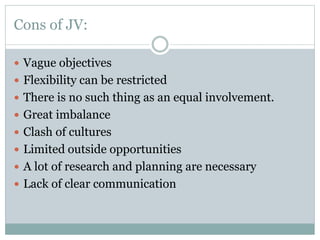
Cons of JV:
 Vague objectives
 Flexibility can be restricted
 There is no such thing as an equal involvement.
 Great imbalance
 Clash of cultures
 Limited outside opportunities
 A lot of research and planning are necessary
 Lack of clear communication
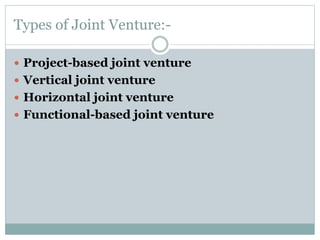
Types of Joint Venture:-
 Project-based joint venture
 Vertical joint venture
 Horizontal joint venture
 Functional-based joint venture
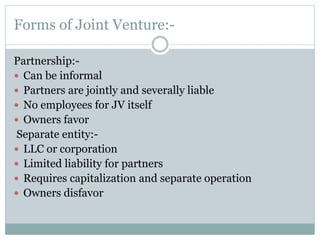
Forms of Joint Venture:-
Partnership:-
 Can be informal
 Partners are jointly and severally liable
 No employees for JV itself
 Owners favor
Separate entity:-
 LLC or corporation
 Limited liability for partners
 Requires capitalization and separate operation
 Owners disfavor
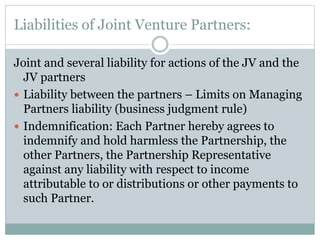
Liabilities of Joint Venture Partners:
Joint and several liability for actions of the JV and the
JV partners
 Liability between the partners – Limits on Managing
Partners liability (business judgment rule)
 Indemnification: Each Partner hereby agrees to
indemnify and hold harmless the Partnership, the
other Partners, the Partnership Representative
against any liability with respect to income
attributable to or distributions or other payments to
such Partner.
 Joint venture agreement will set the framework for
how the partnership operates. The agreement
should clearly outline the respective roles and
responsibilities of the firms involved, including
partner liability allocation and a dispute resolution
procedure. Joint ventures are generally considered
to have “joint and several liability.”
 Each firm is responsible for the partnership’s
actions.
 The joint venture, or a partner, can be named as
defendant in a suit
 A claimant can possibly recover a full award from
either or both parties.
Benefits and Risks of Joint Venture:
Benefits
Some of the main benefits of joint ventures are:
 They provide new investment opportunities for the
partners, broadening their market prospects
 The liability is shared equally among all the partners,
making risk management easier
 Each partner gets access to better and more
diversified resources
 Joint ventures are flexible as their term is limited
Risks
Some of the major risks involved with joint
ventures are:
 Lack of clarity regarding the obligations and
responsibilities of each of the partners
 Clash in the management styles and techniques of
different partners, leading to frequent conflict
 An imbalance of the capital and the resources
invested by the partners leading to frequent
arguments and conflicts of interest
 Ineffective resolution of conflicts
Conclusion:
 Any two businesses can enter into a
new joint venture agreement to prospect and make
a profit which diversifies the product line of the
company and makes them competitive among their
peers. Joint ventures as a business alliance are
growing rapidly and it has gained its importance in
the market.
 Joint Venture refers to that kind of business which is
formed when two businesses combine together and
meet their different skill set to achieve a common
business objective.
 The joint venture is just like any other business like
companies or partnership the difference between it
is that joint venture is only owned by two different
persons or parties. It is just like a business
agreement in which both partners agree to share a
profit in a specific ratio of their ownership. The
partners in the business are also known as co-
ventures. A joint venture is generally formed to
achieve a specific project or a goal.
THANK YOU

Presentation of Joint venture Technology

  • 1.
    S U BM I T T E D B Y : S U B M I T T E D T O : S H A G U N P U R I D R . A M A N P R E E T S I N G H 2 0 4 2 1 0 2 6 PRESENTATION ON Joint Venture Technology
  • 2.
    INTRODUCTION A joint ventureis a business entity created by two or more parties, generally characterized by shared ownership, profitability and shared risks and shared governance. Joint Ventures can be with a company of same industry or can be of some other industry, but with a combination of both, they will generate a competitive advantage over other players in the market.
  • 3.
    JOINT VENTURE: Joint Ventureis a business preparation in which more than two organizations or parties share the ownership, expense, return of investments, profit, governance, etc. To gain a positive synergy from their competitors, various organizations expand either by infusing more capital or by the medium of Joint Ventures with organizations.
  • 4.
    Pros of JointVenture:  New insights and expertise  Better resources  It is only temporary  Both parties share the risks and costs  Joint ventures can be flexible  There are ways to exit a joint venture  You are more likely to succeed  You will build relationships and networks  Your potential will virtually be limitless
  • 5.
    Cons of JV: Vague objectives  Flexibility can be restricted  There is no such thing as an equal involvement.  Great imbalance  Clash of cultures  Limited outside opportunities  A lot of research and planning are necessary  Lack of clear communication
  • 6.
    Types of JointVenture:-  Project-based joint venture  Vertical joint venture  Horizontal joint venture  Functional-based joint venture
  • 7.
    Forms of JointVenture:- Partnership:-  Can be informal  Partners are jointly and severally liable  No employees for JV itself  Owners favor Separate entity:-  LLC or corporation  Limited liability for partners  Requires capitalization and separate operation  Owners disfavor
  • 8.
    Liabilities of JointVenture Partners: Joint and several liability for actions of the JV and the JV partners  Liability between the partners – Limits on Managing Partners liability (business judgment rule)  Indemnification: Each Partner hereby agrees to indemnify and hold harmless the Partnership, the other Partners, the Partnership Representative against any liability with respect to income attributable to or distributions or other payments to such Partner.
  • 9.
     Joint ventureagreement will set the framework for how the partnership operates. The agreement should clearly outline the respective roles and responsibilities of the firms involved, including partner liability allocation and a dispute resolution procedure. Joint ventures are generally considered to have “joint and several liability.”  Each firm is responsible for the partnership’s actions.  The joint venture, or a partner, can be named as defendant in a suit  A claimant can possibly recover a full award from either or both parties.
  • 10.
    Benefits and Risksof Joint Venture: Benefits Some of the main benefits of joint ventures are:  They provide new investment opportunities for the partners, broadening their market prospects  The liability is shared equally among all the partners, making risk management easier  Each partner gets access to better and more diversified resources  Joint ventures are flexible as their term is limited
  • 11.
    Risks Some of themajor risks involved with joint ventures are:  Lack of clarity regarding the obligations and responsibilities of each of the partners  Clash in the management styles and techniques of different partners, leading to frequent conflict  An imbalance of the capital and the resources invested by the partners leading to frequent arguments and conflicts of interest  Ineffective resolution of conflicts
  • 12.
    Conclusion:  Any twobusinesses can enter into a new joint venture agreement to prospect and make a profit which diversifies the product line of the company and makes them competitive among their peers. Joint ventures as a business alliance are growing rapidly and it has gained its importance in the market.  Joint Venture refers to that kind of business which is formed when two businesses combine together and meet their different skill set to achieve a common business objective.
  • 13.
     The jointventure is just like any other business like companies or partnership the difference between it is that joint venture is only owned by two different persons or parties. It is just like a business agreement in which both partners agree to share a profit in a specific ratio of their ownership. The partners in the business are also known as co- ventures. A joint venture is generally formed to achieve a specific project or a goal.
  • 14.