
Facility Safety Management
Contents:
Showcase
Engineered Safety
Personal Protection
Safe Maintenance
Spotlight
Engineered Safety
Personal Protection
Safe Maintenance
Spotlight
What does it take to prevent workplace
injuries?
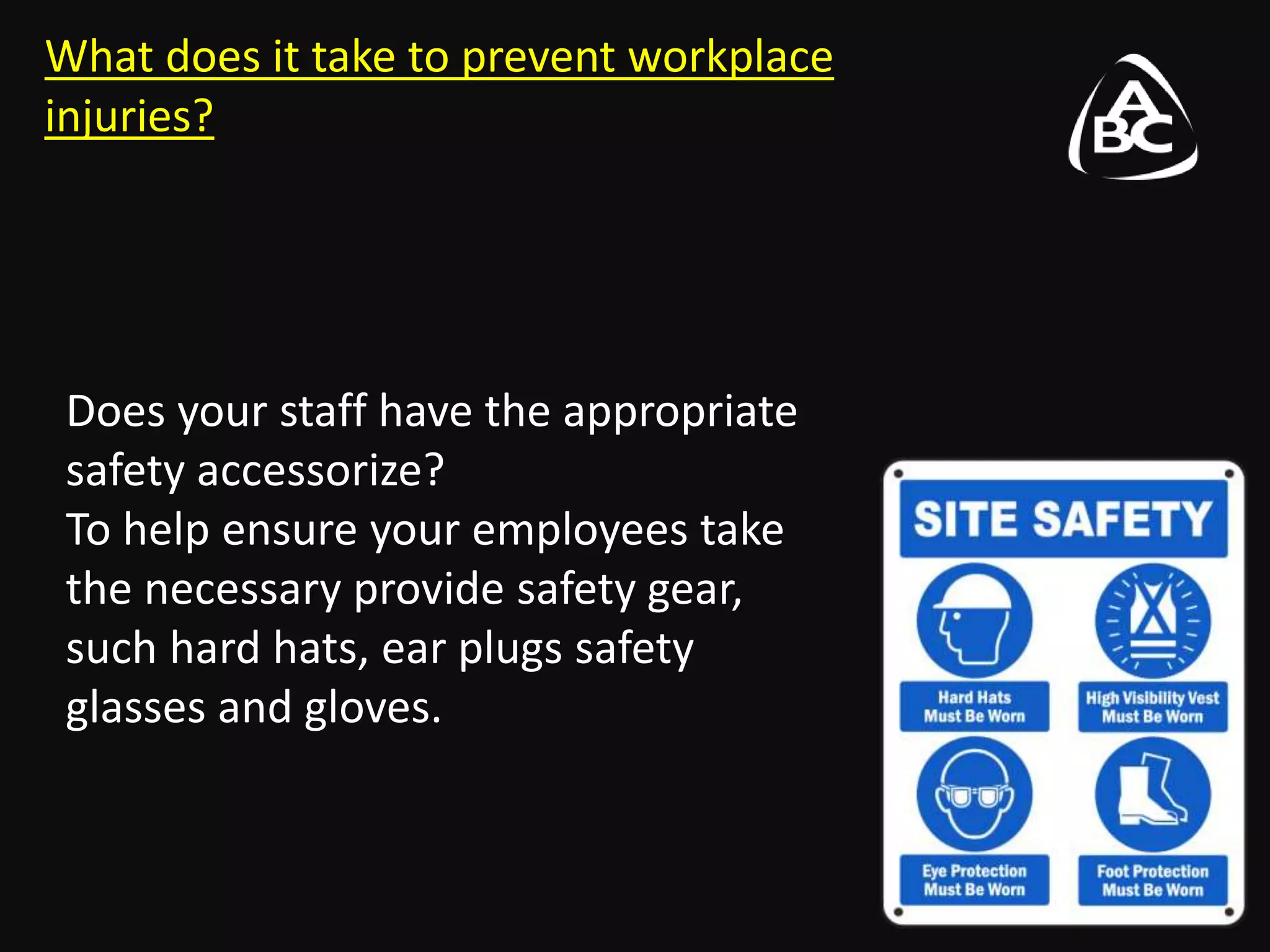
Does your staff have the appropriate
safety accessorize?
To help ensure your employees take
the necessary provide safety gear,
such hard hats, ear plugs safety
glasses and gloves.
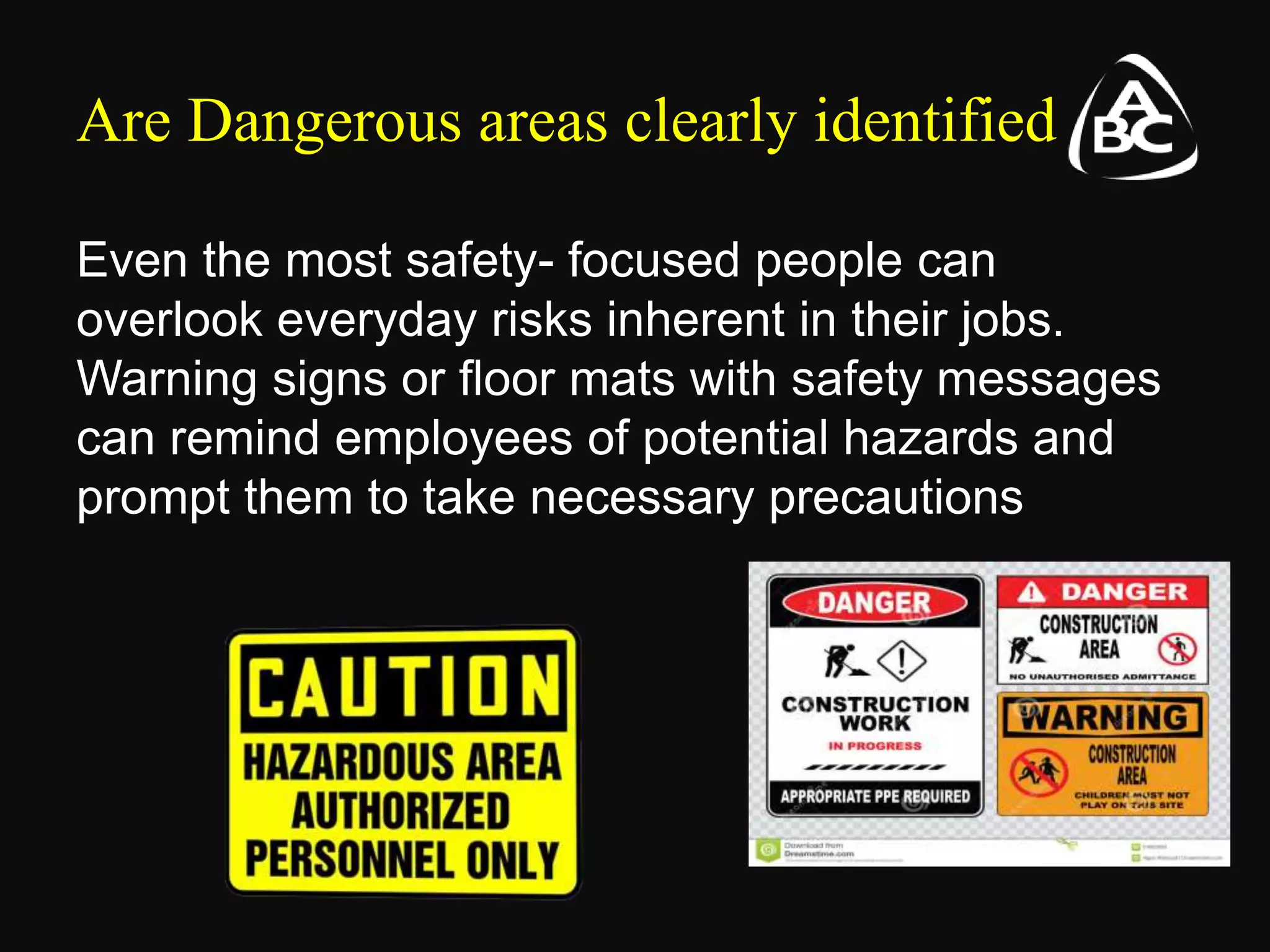
Are Dangerous areas clearly identified
Even the most safety- focused people can
overlook everyday risks inherent in their jobs.
Warning signs or floor mats with safety messages
can remind employees of potential hazards and
prompt them to take necessary precautions
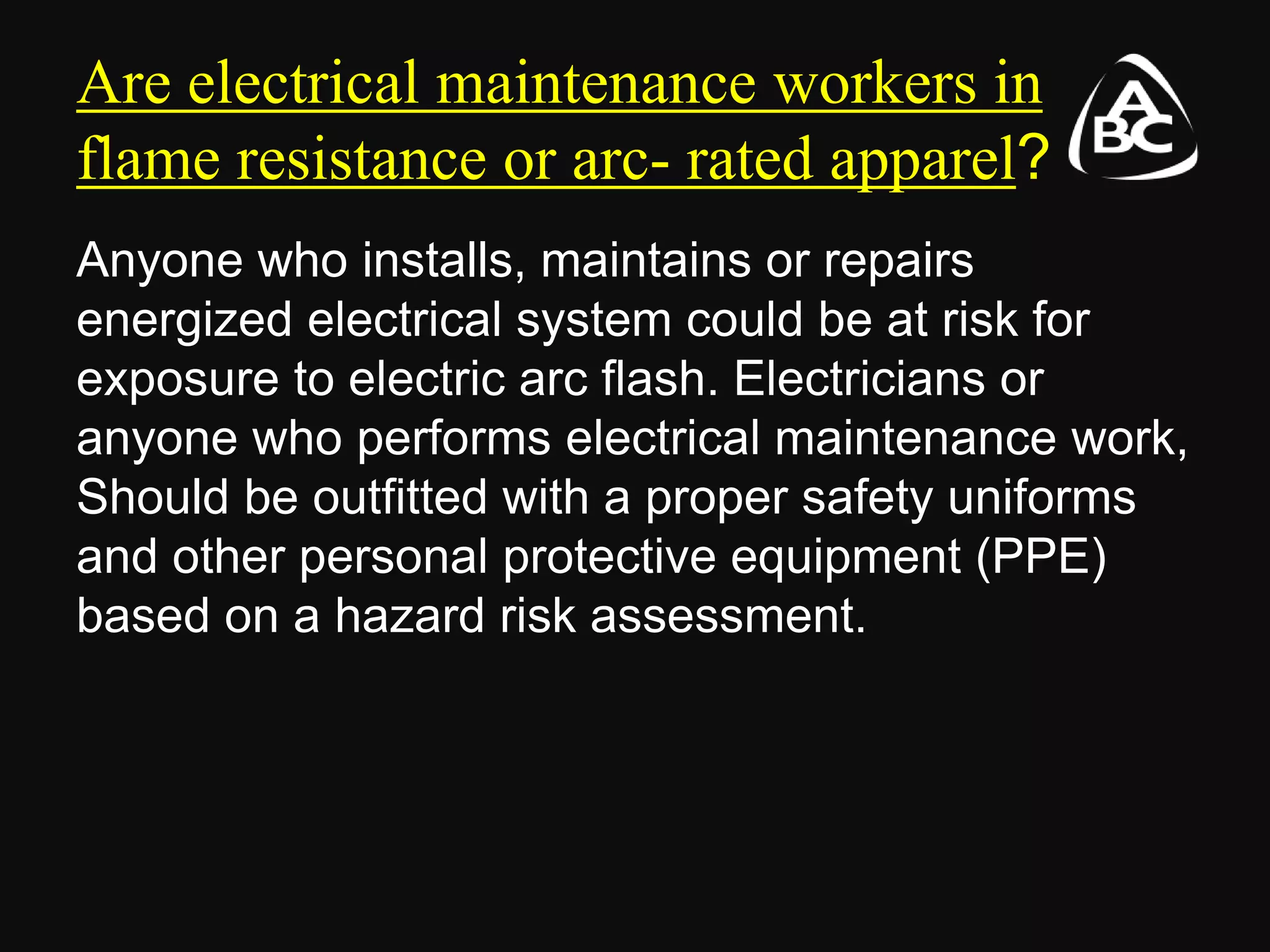
Are Employees visible in low – light areas?
Employee visibility is critical to workplace
safety, enhanced visibility and height visibility(
ANSI – compliant) uniforms offer increased
visibility for people who work in low – light or
hazardous environments, such as warehouses,
construction sites, and areas near high speed
vehicles.
Are electrical maintenance workers in
flame resistance or arc- rated apparel?
Anyone who installs, maintains or repairs
energized electrical system could be at risk for
exposure to electric arc flash. Electricians or
anyone who performs electrical maintenance work,
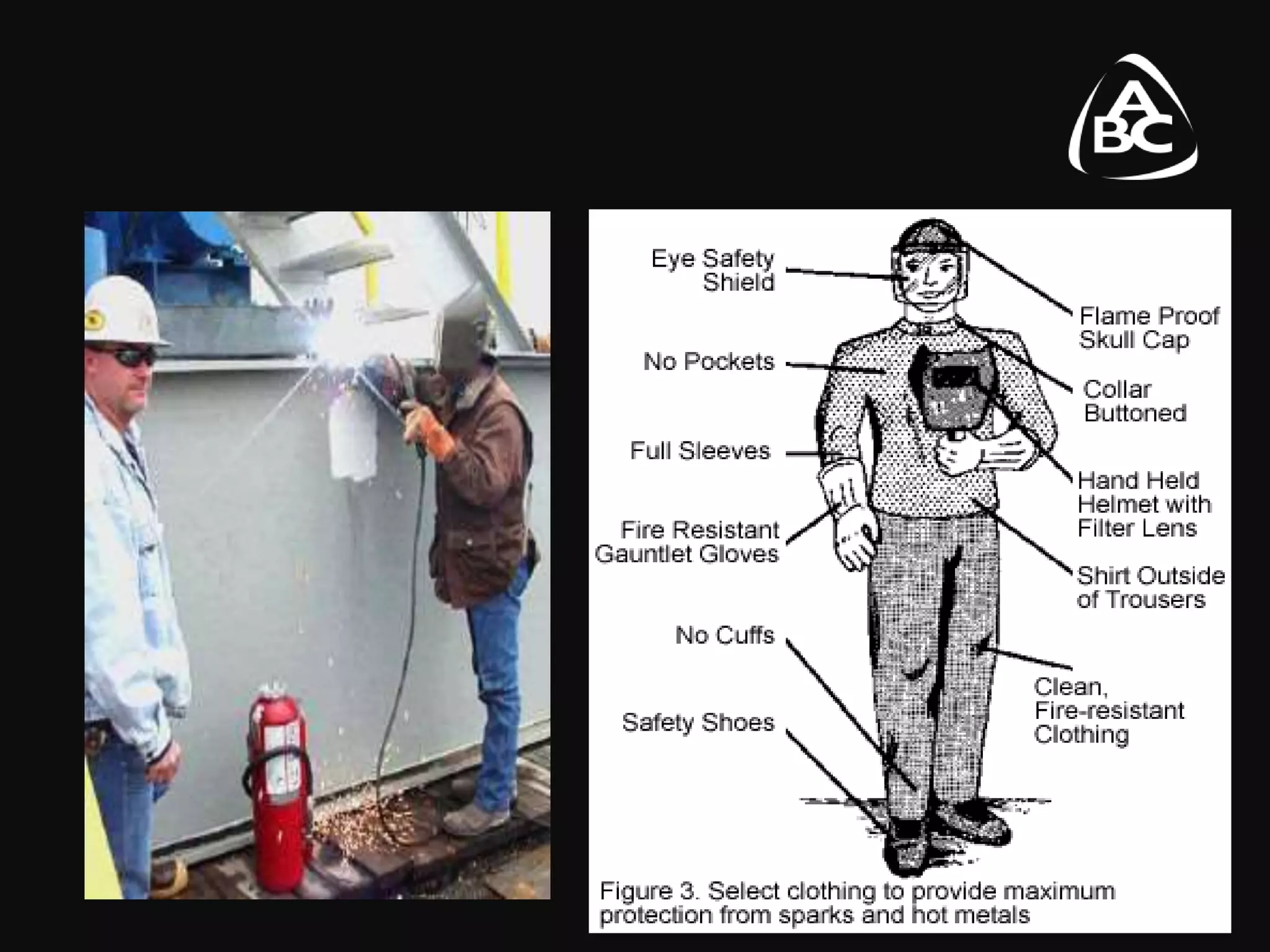
Should be outfitted with a proper safety uniforms
and other personal protective equipment (PPE)
based on a hazard risk assessment.
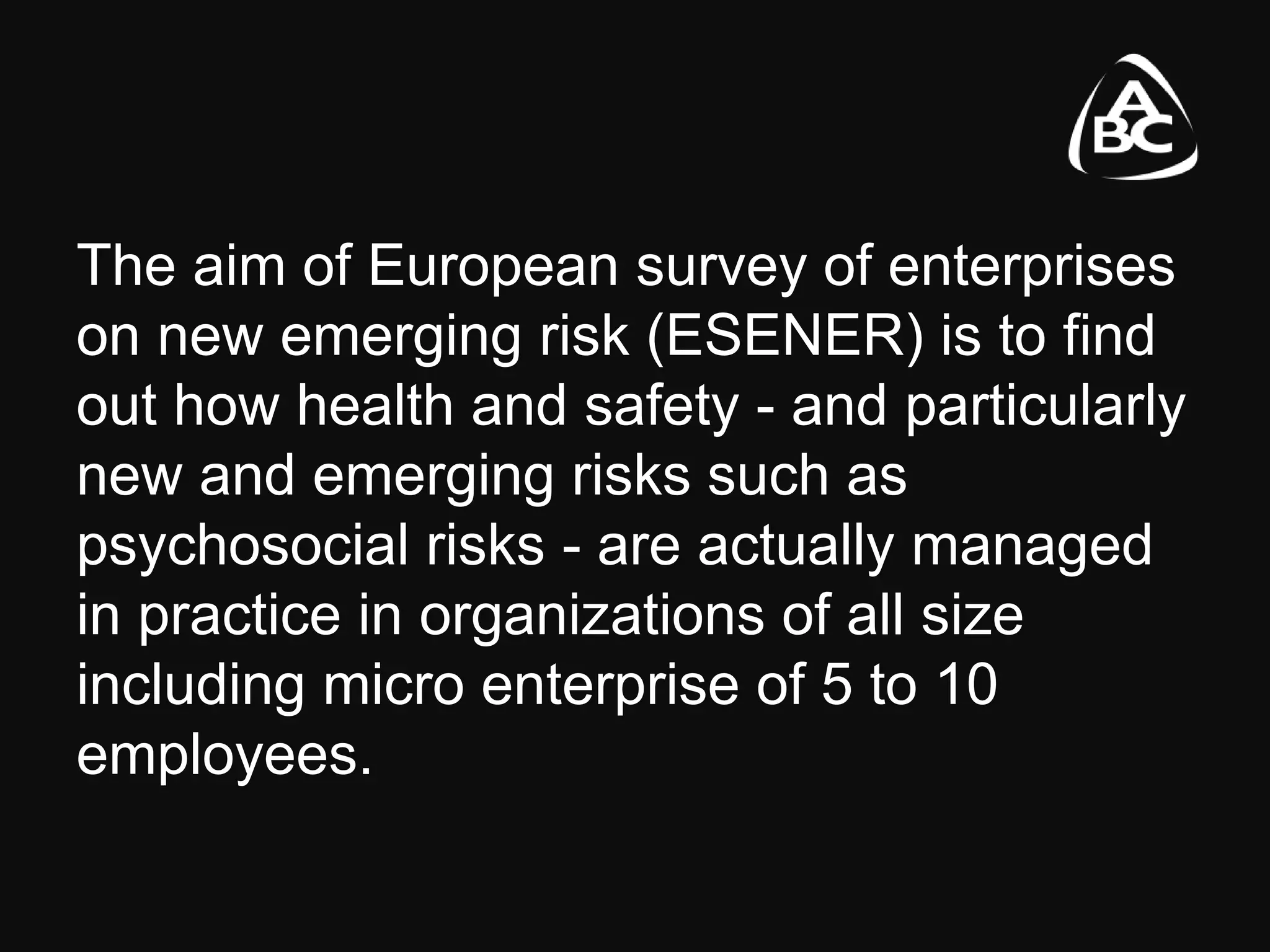
Is a first – aid kit available?
OSHA advice the first aid kit should be stored in a
place where they are readily available for
emergency access. To comply with ANSI
Standards, first aid must contain ten required
items, these items can quickly become depleted,
so check first aid kits frequently to ensure these
items are stock and ready for use.
The aim of European survey of enterprises
on new emerging risk (ESENER) is to find
out how health and safety - and particularly
new and emerging risks such as
psychosocial risks - are actually managed
in practice in organizations of all size
including micro enterprise of 5 to 10
employees.
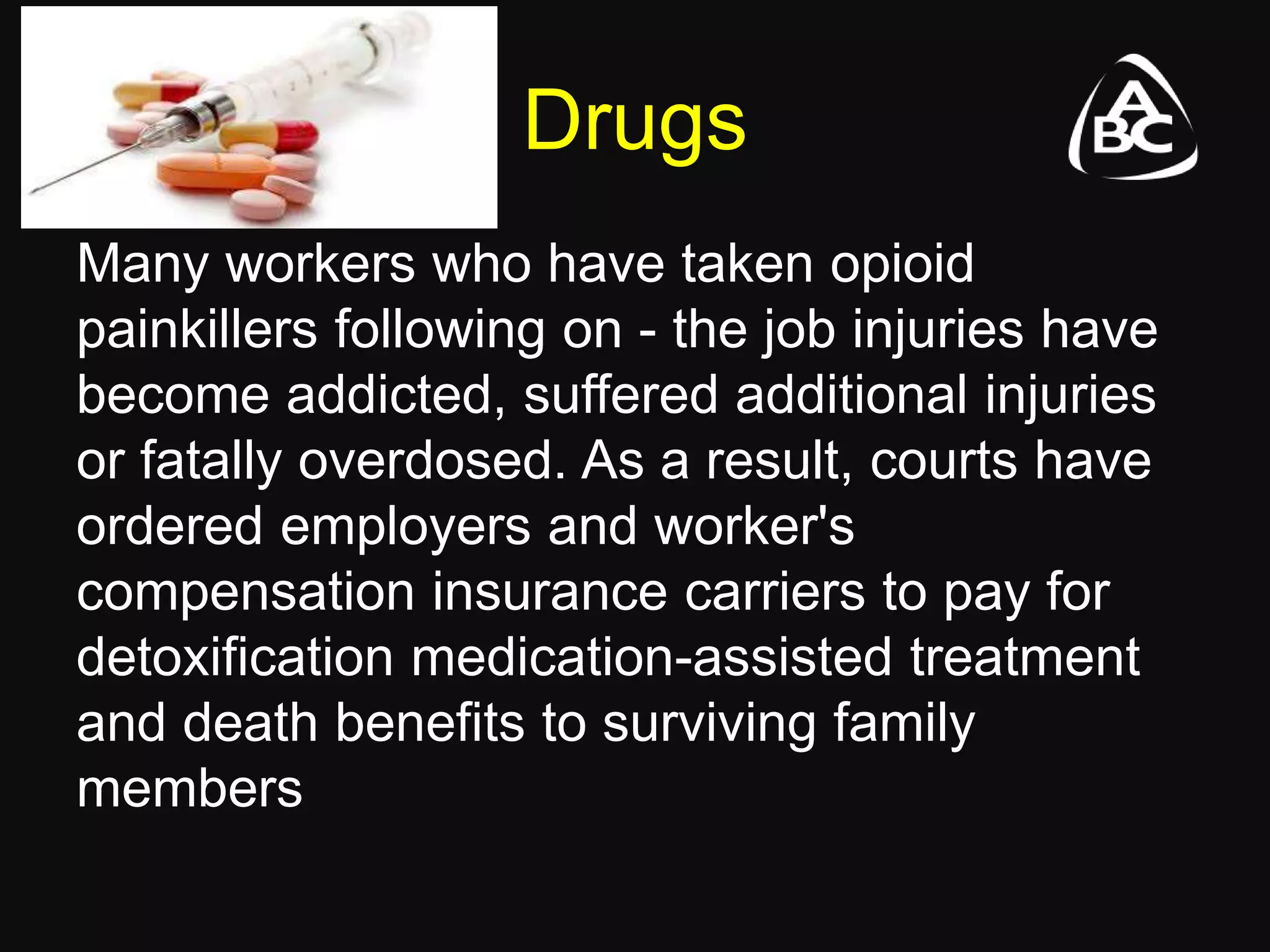
Drugs
Many workers who have taken opioid
painkillers following on - the job injuries have
become addicted, suffered additional injuries
or fatally overdosed. As a result, courts have
ordered employers and worker's
compensation insurance carriers to pay for
detoxification medication-assisted treatment
and death benefits to surviving family
members
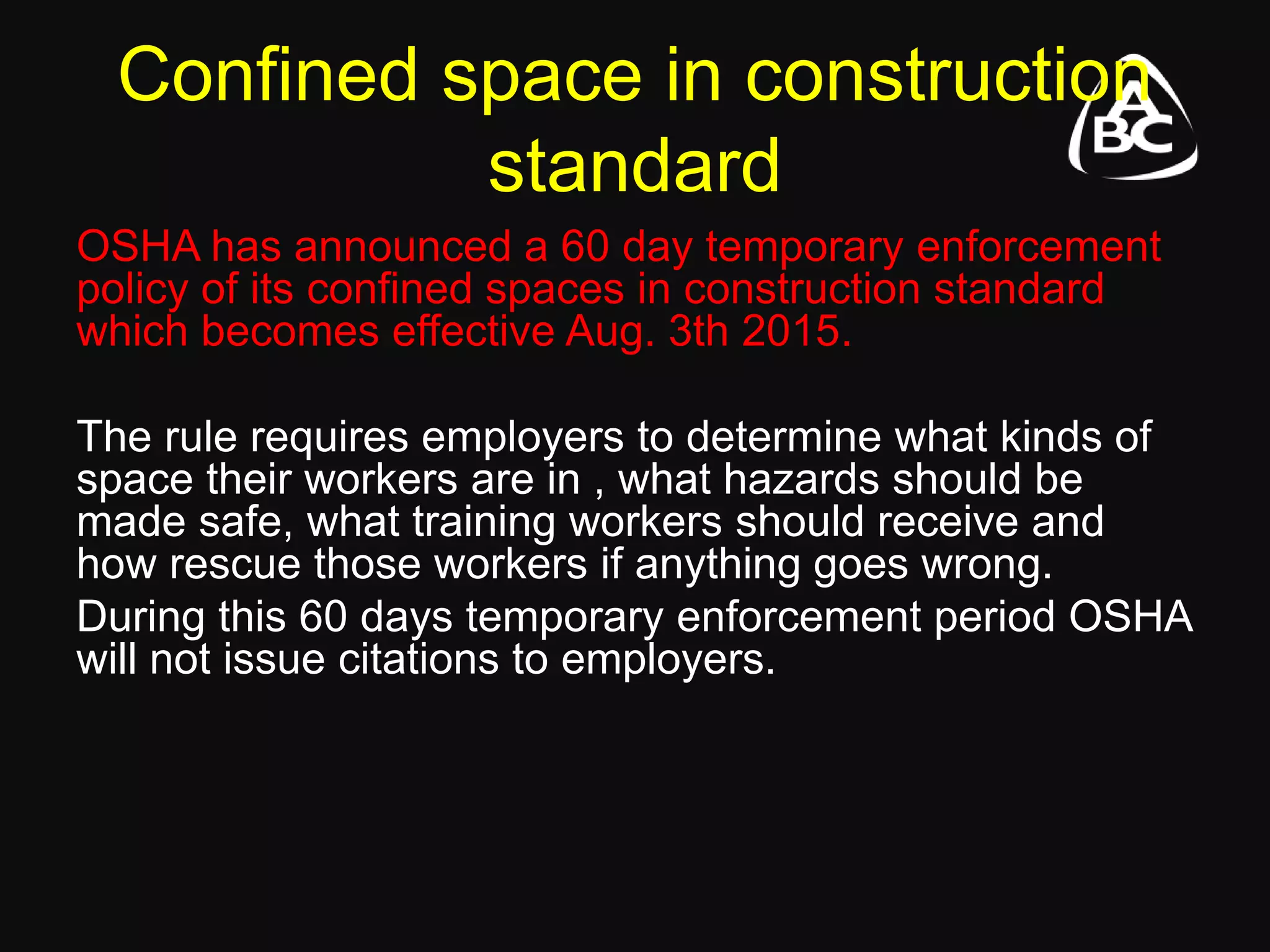
Cell phone
The national safety council estimates that 26
percent of crashes are caused by cell phone use.
(Every single incident is preventable. that is why
employers must have comprehensive policies).
Confined space in construction
standard
OSHA has announced a 60 day temporary enforcement
policy of its confined spaces in construction standard
which becomes effective Aug. 3th 2015.
The rule requires employers to determine what kinds of
space their workers are in , what hazards should be
made safe, what training workers should receive and
how rescue those workers if anything goes wrong.
During this 60 days temporary enforcement period OSHA
will not issue citations to employers.
Employers must be in compliance with either
the training requirement. Of the new standard
or the previous standard.
OSHA estimates the confined spaces rule could
protect nearly 800 construction workers a year
from serious injuries and reduce life threatening
hazards.
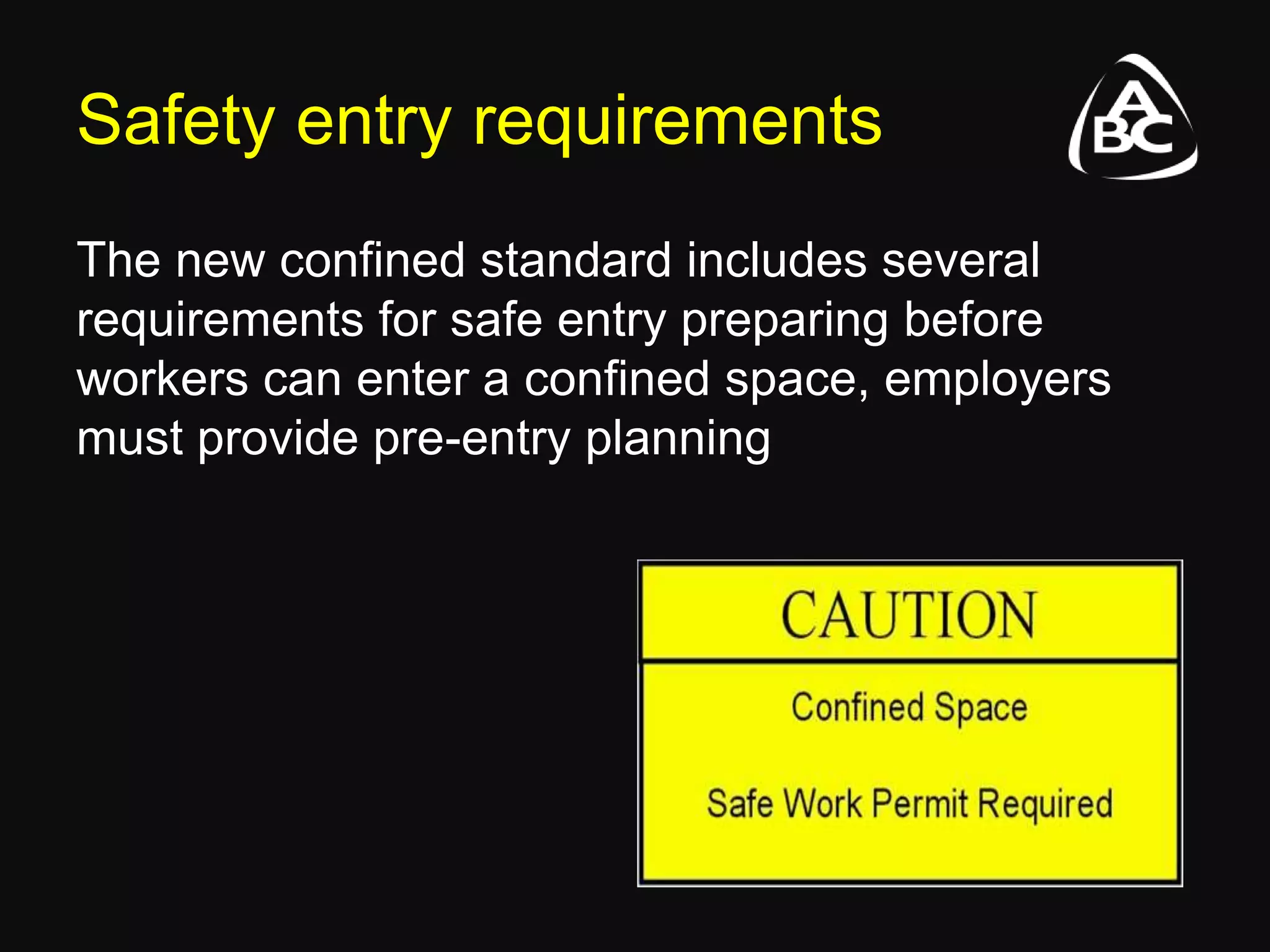
Safety entry requirements
The new confined standard includes several
requirements for safe entry preparing before
workers can enter a confined space, employers
must provide pre-entry planning
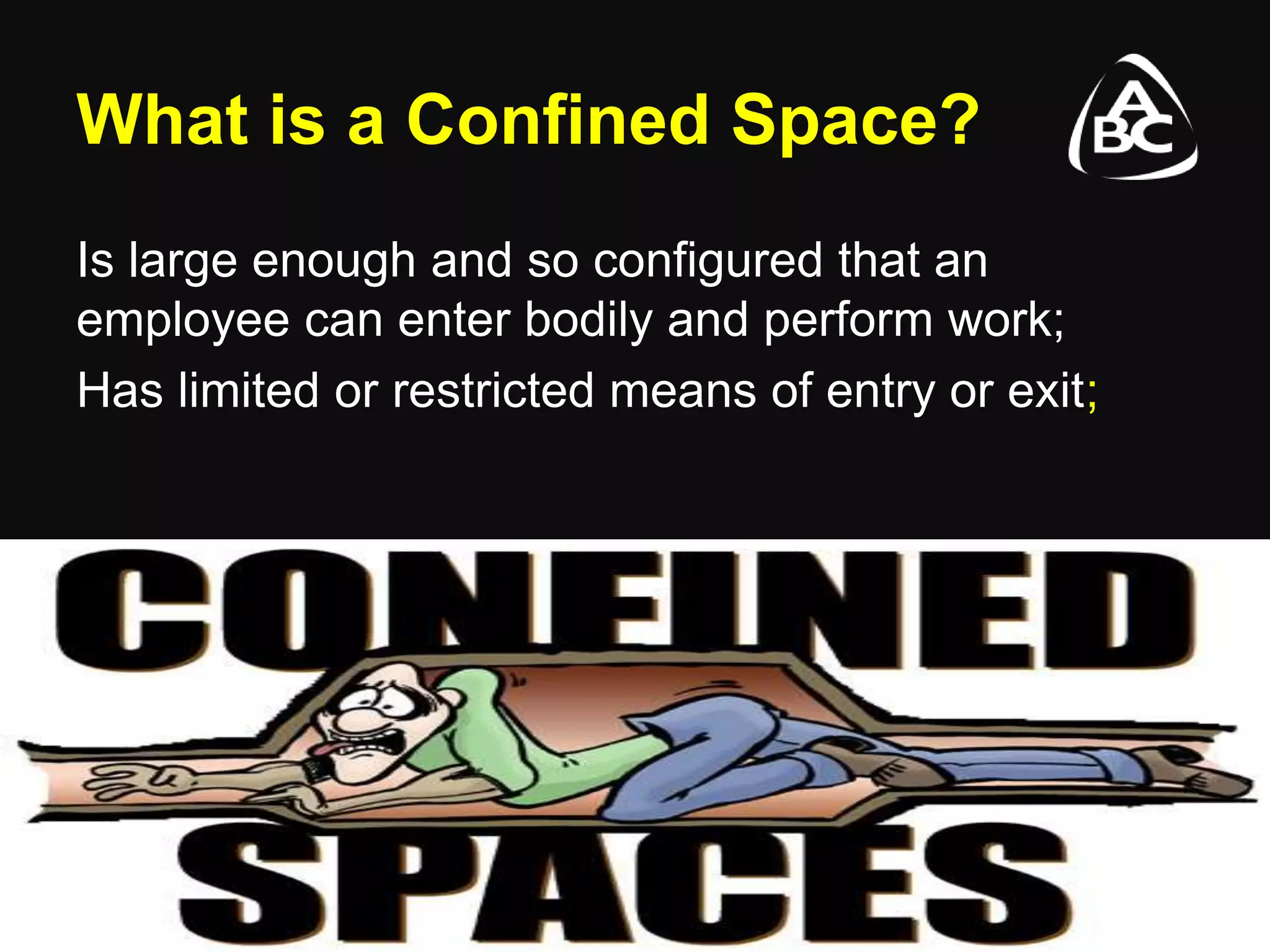
What is a Confined Space?
Is large enough and so configured that an
employee can enter bodily and perform work;
Has limited or restricted means of entry or exit;
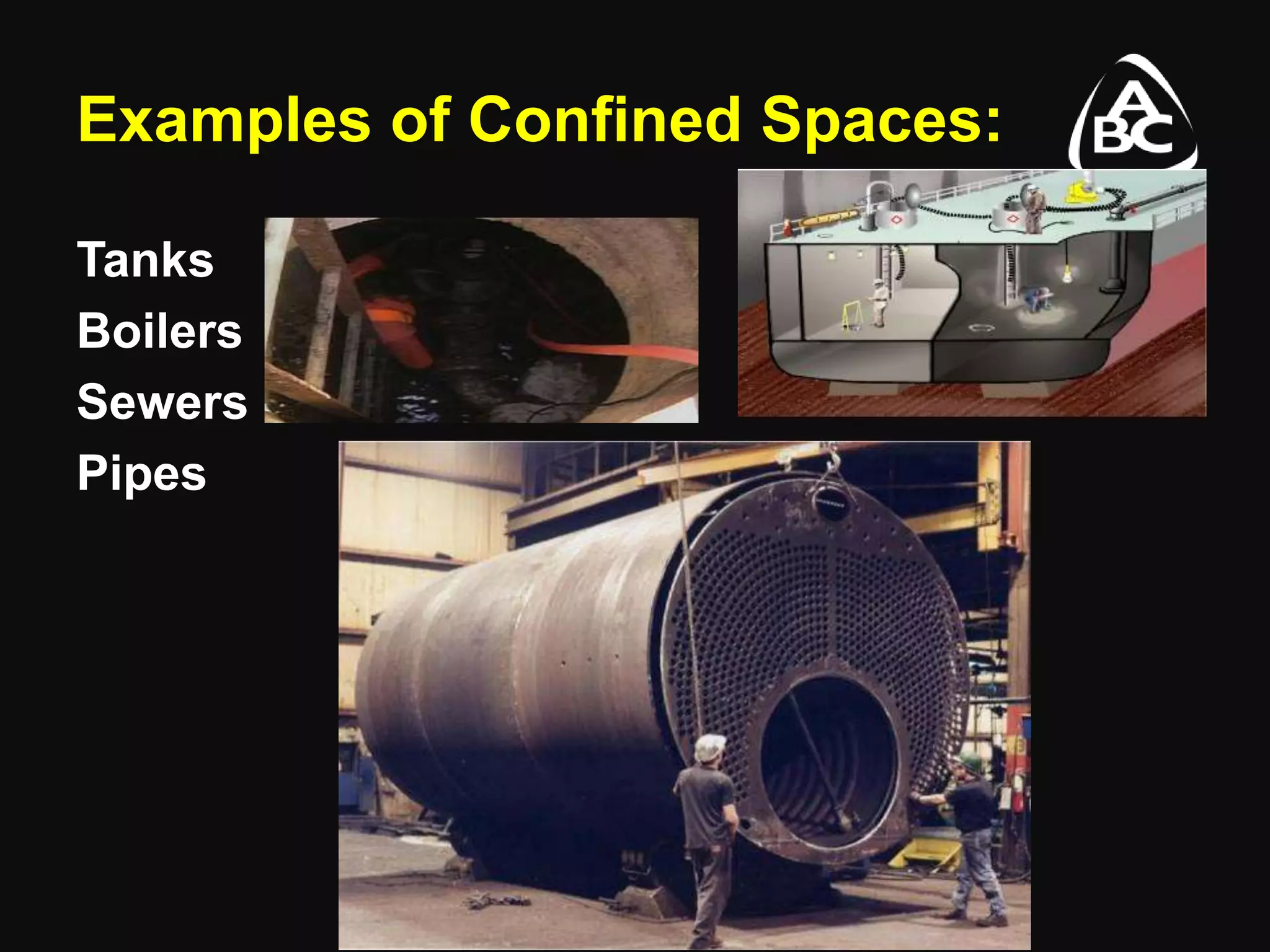
Examples of Confined Spaces:
Tanks
Boilers
Sewers
Pipes
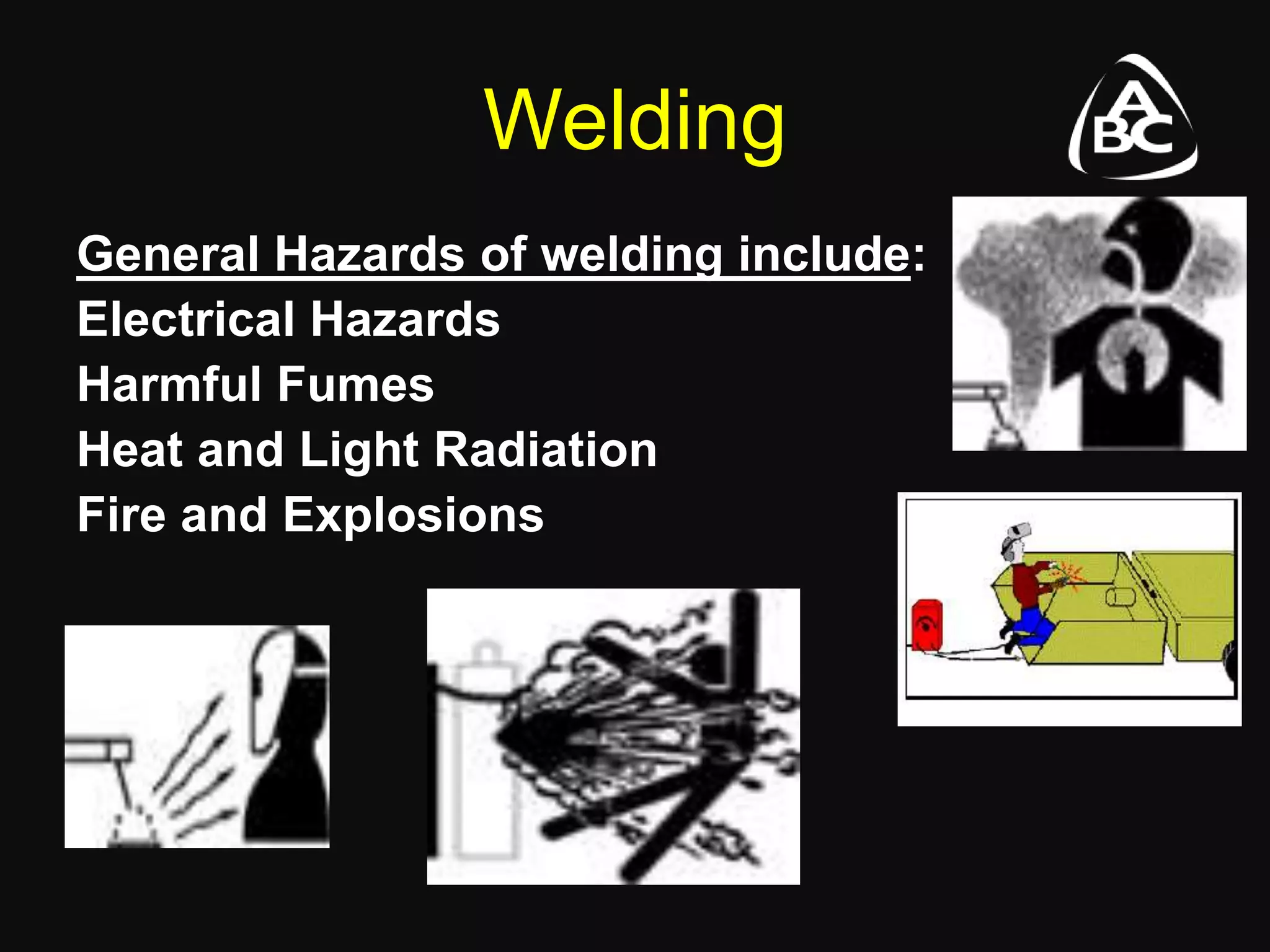
Welding
General Hazards of welding include:
Electrical Hazards
Harmful Fumes
Heat and Light Radiation
Fire and Explosions
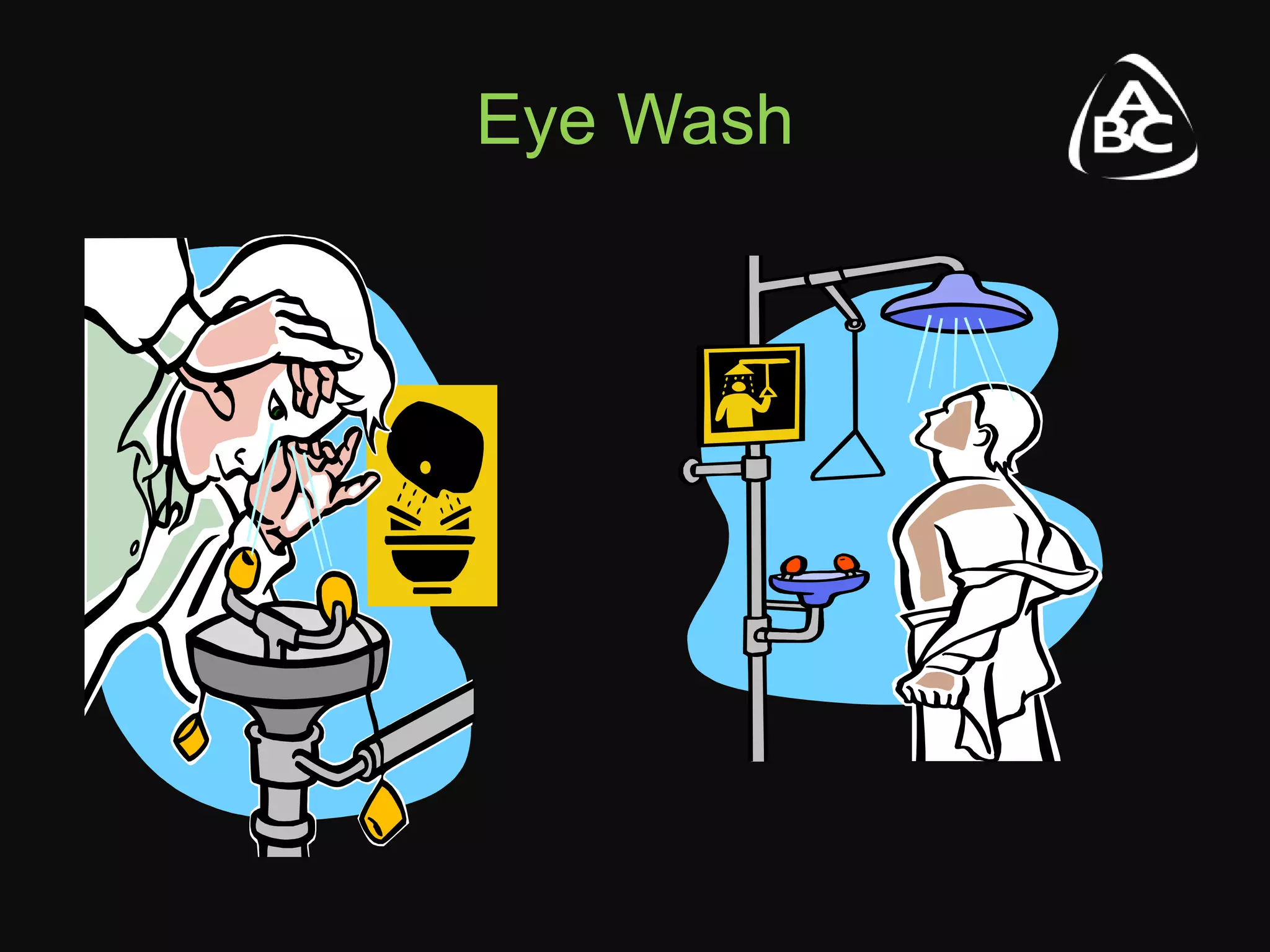
Eye Wash
General Requirements
ANSI Z358.1-1998 – Emergency Eyewash & Shower Equipment
Where emergency washing facilities are
needed, they must be readily available and
accessible as follows:
 Free from obstructions or obstacles
 Can be reached in 10 seconds or less
 Function properly
 Free from obstructions or obstacles
 Can be reached in 10 seconds or less
 Function properly
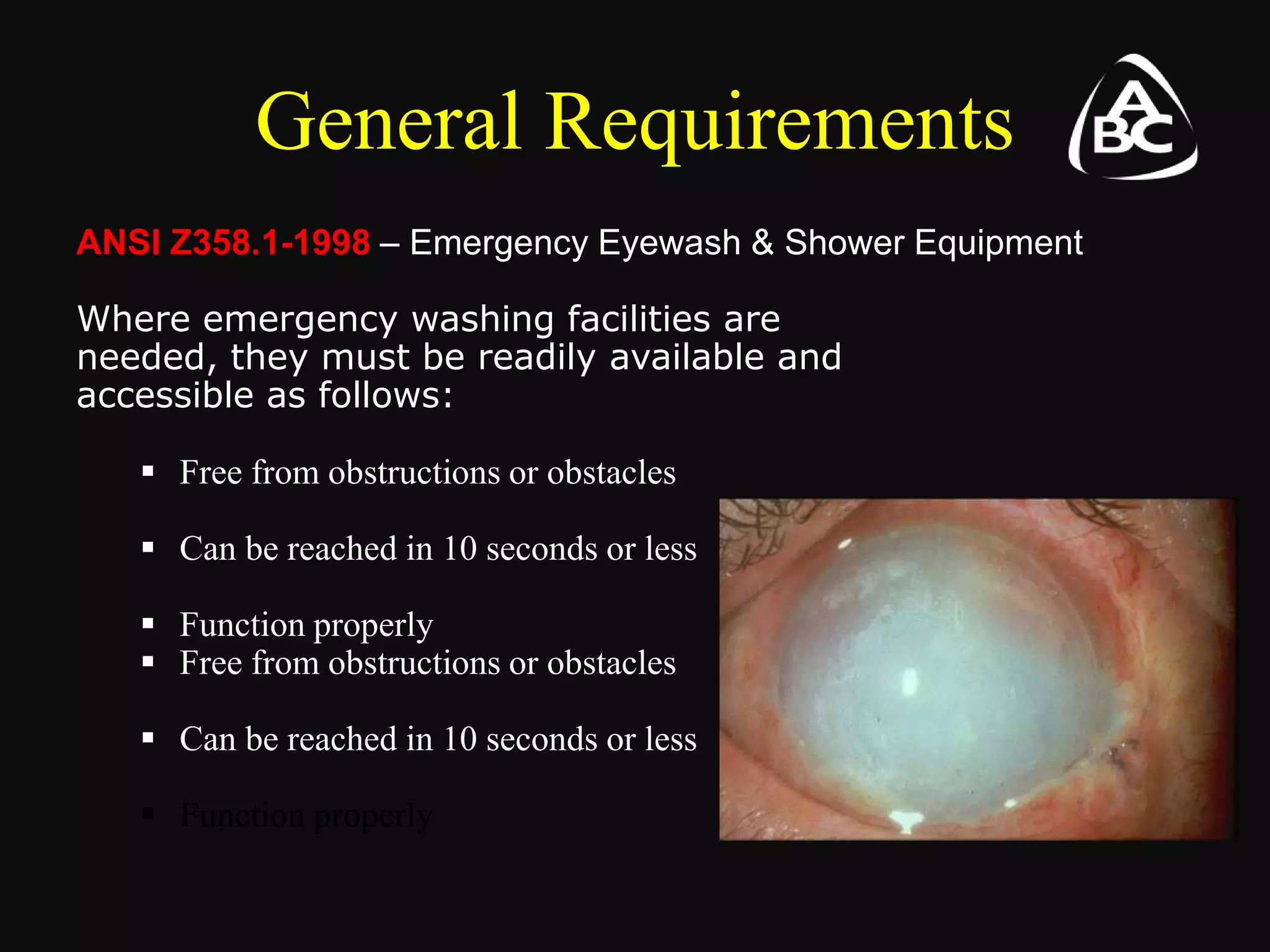
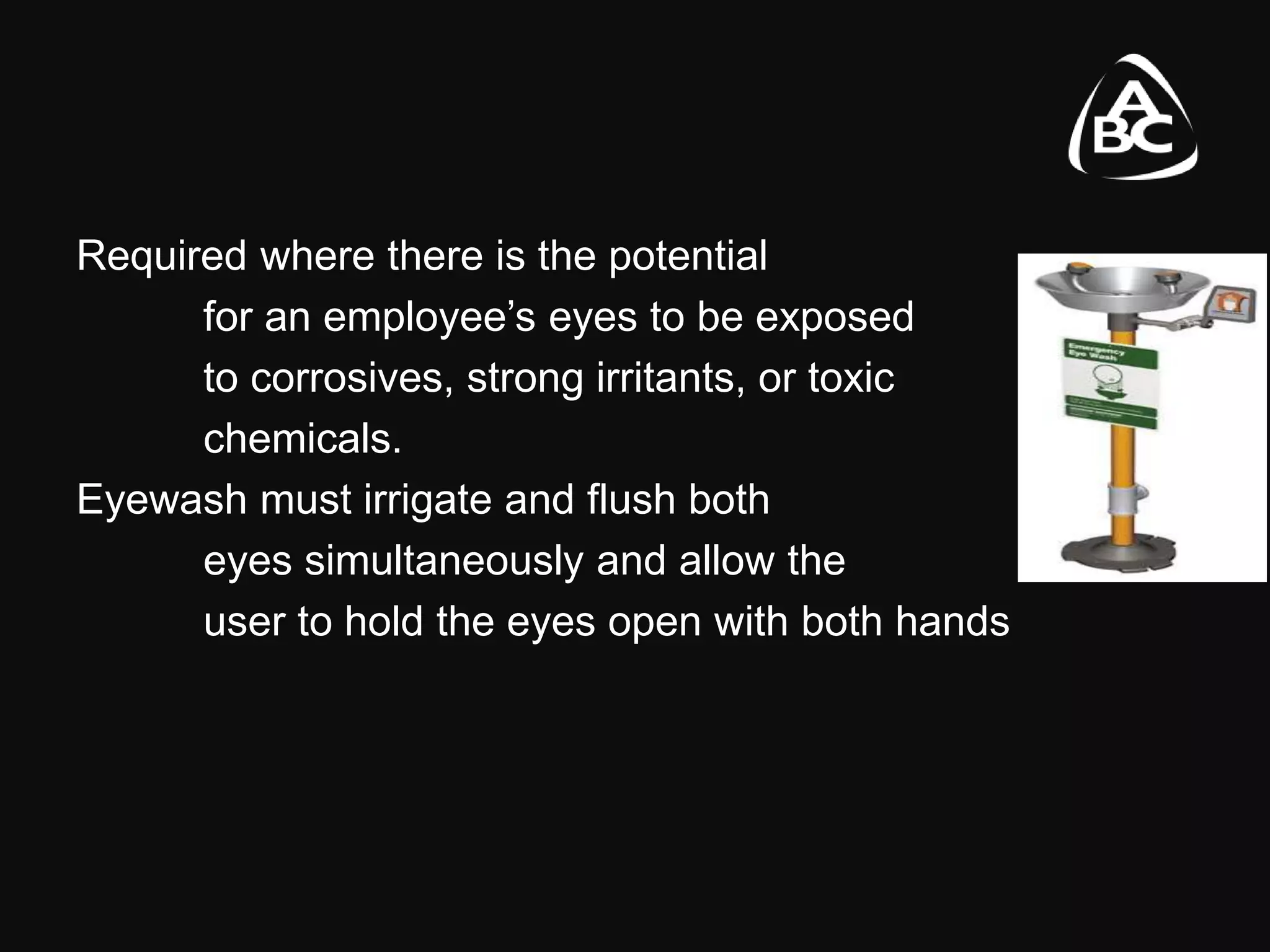
Required where there is the potential
for an employee’s eyes to be exposed
to corrosives, strong irritants, or toxic
chemicals.
Eyewash must irrigate and flush both
eyes simultaneously and allow the
user to hold the eyes open with both hands
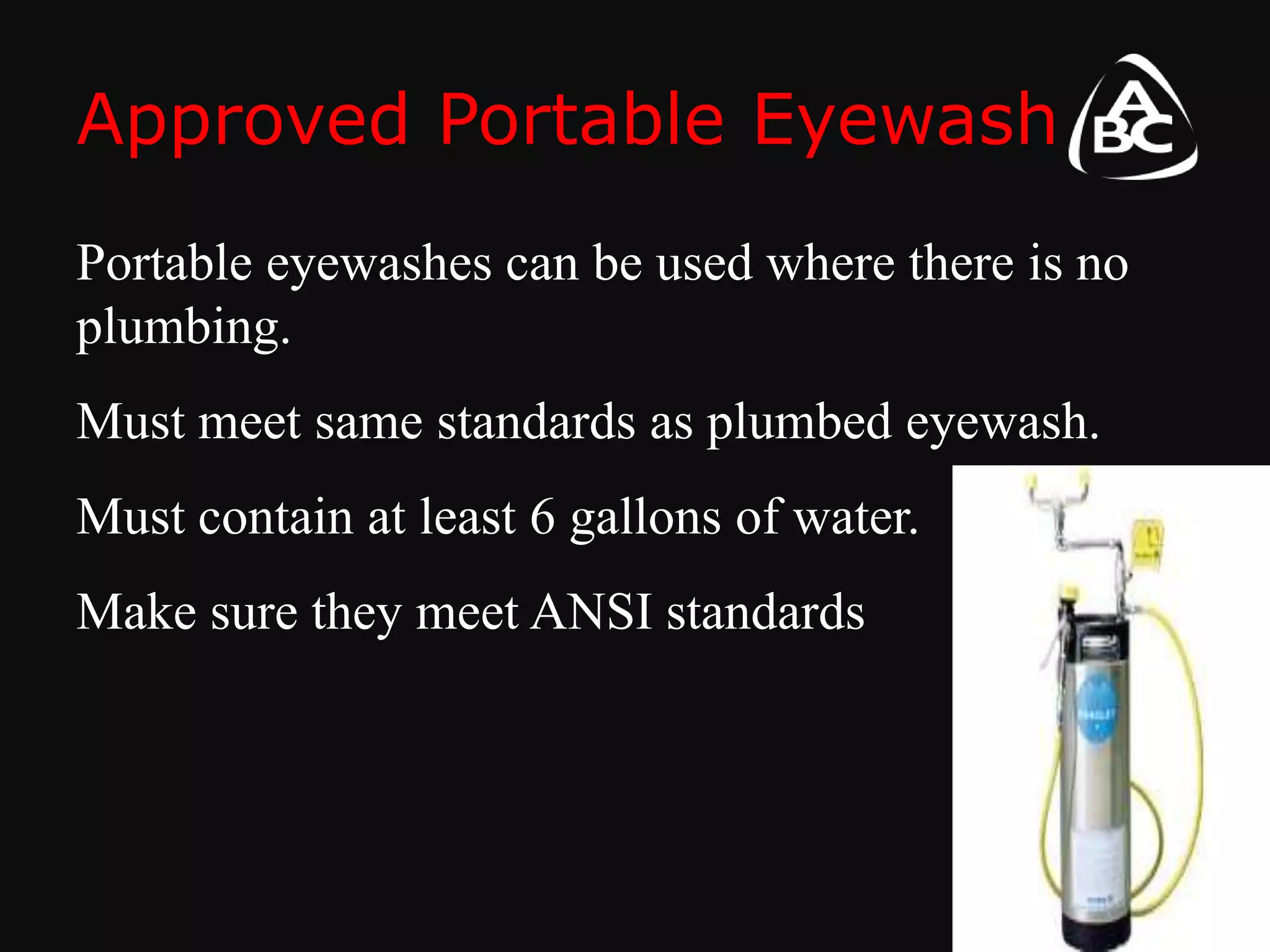
Approved Portable Eyewash
Portable eyewashes can be used where there is no
plumbing.
Must meet same standards as plumbed eyewash.
Must contain at least 6 gallons of water.
Make sure they meet ANSI standards
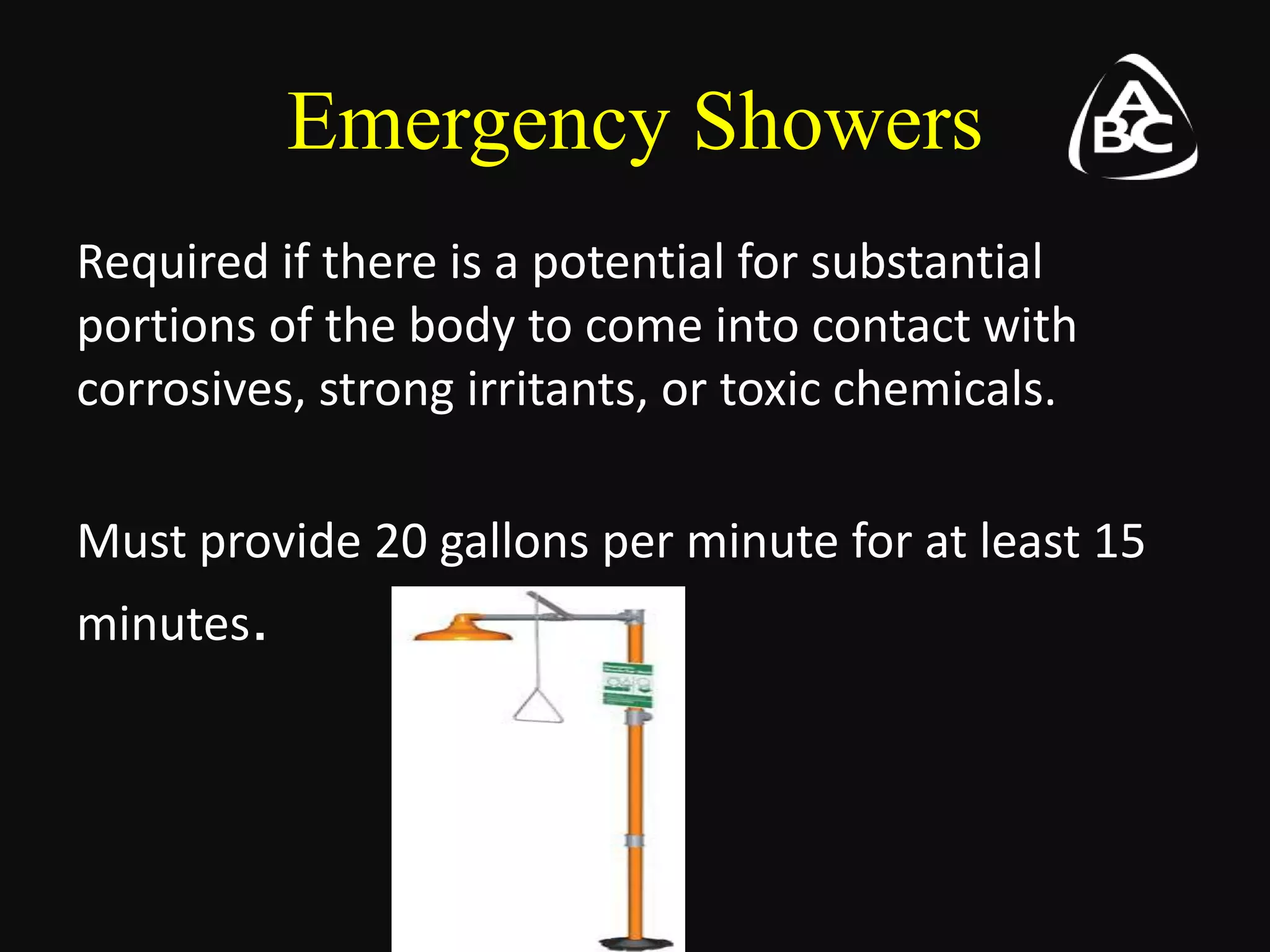
Emergency Showers
Required if there is a potential for substantial
portions of the body to come into contact with
corrosives, strong irritants, or toxic chemicals.
Must provide 20 gallons per minute for at least 15
minutes.
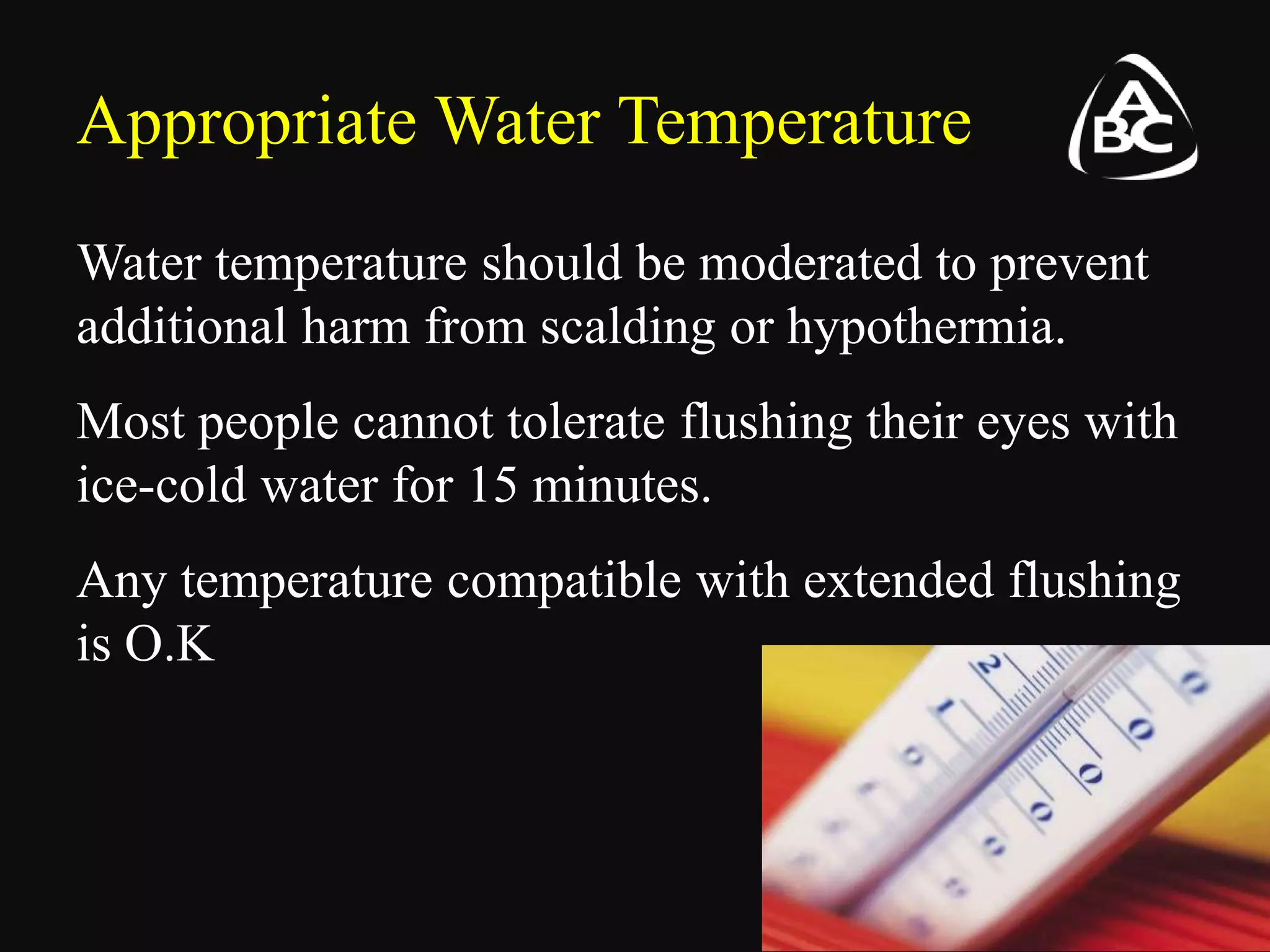
Appropriate Water Temperature
Water temperature should be moderated to prevent
additional harm from scalding or hypothermia.
Most people cannot tolerate flushing their eyes with
ice-cold water for 15 minutes.
Any temperature compatible with extended flushing
is O.K
Working safely on aerial work platforms
Must use the limitations of controls in the
platforms.
Control labels instructions and warning on the
machine.
Rules of the employer and government
regulations
Use approved fall protection device if required
Means to avoid the hazards of unprotected
electrical conductors
Enough knowledge of the mechanical
operation.
Start with a pre – start inspection
Before starting we should determine if the machine
is safe during a pre - start inspection personal
protective equipment the pre - start should include
check level oil, hydraulic oil, anti-freeze, batteries,
Etc.
Thank you

Presentation Facility Safety Management

  • 1.
  • 2.
    Contents: Showcase Engineered Safety Personal Protection SafeMaintenance Spotlight Engineered Safety Personal Protection Safe Maintenance Spotlight
  • 3.
    What does ittake to prevent workplace injuries? Does your staff have the appropriate safety accessorize? To help ensure your employees take the necessary provide safety gear, such hard hats, ear plugs safety glasses and gloves.
  • 4.
    Are Dangerous areasclearly identified Even the most safety- focused people can overlook everyday risks inherent in their jobs. Warning signs or floor mats with safety messages can remind employees of potential hazards and prompt them to take necessary precautions
  • 5.
    Are Employees visiblein low – light areas? Employee visibility is critical to workplace safety, enhanced visibility and height visibility( ANSI – compliant) uniforms offer increased visibility for people who work in low – light or hazardous environments, such as warehouses, construction sites, and areas near high speed vehicles.
  • 6.
    Are electrical maintenanceworkers in flame resistance or arc- rated apparel? Anyone who installs, maintains or repairs energized electrical system could be at risk for exposure to electric arc flash. Electricians or anyone who performs electrical maintenance work, Should be outfitted with a proper safety uniforms and other personal protective equipment (PPE) based on a hazard risk assessment.
  • 7.
    Is a first– aid kit available? OSHA advice the first aid kit should be stored in a place where they are readily available for emergency access. To comply with ANSI Standards, first aid must contain ten required items, these items can quickly become depleted, so check first aid kits frequently to ensure these items are stock and ready for use.
  • 8.
    The aim ofEuropean survey of enterprises on new emerging risk (ESENER) is to find out how health and safety - and particularly new and emerging risks such as psychosocial risks - are actually managed in practice in organizations of all size including micro enterprise of 5 to 10 employees.
  • 9.
    Drugs Many workers whohave taken opioid painkillers following on - the job injuries have become addicted, suffered additional injuries or fatally overdosed. As a result, courts have ordered employers and worker's compensation insurance carriers to pay for detoxification medication-assisted treatment and death benefits to surviving family members
  • 10.
    Cell phone The nationalsafety council estimates that 26 percent of crashes are caused by cell phone use. (Every single incident is preventable. that is why employers must have comprehensive policies).
  • 11.
    Confined space inconstruction standard OSHA has announced a 60 day temporary enforcement policy of its confined spaces in construction standard which becomes effective Aug. 3th 2015. The rule requires employers to determine what kinds of space their workers are in , what hazards should be made safe, what training workers should receive and how rescue those workers if anything goes wrong. During this 60 days temporary enforcement period OSHA will not issue citations to employers.
  • 12.
    Employers must bein compliance with either the training requirement. Of the new standard or the previous standard. OSHA estimates the confined spaces rule could protect nearly 800 construction workers a year from serious injuries and reduce life threatening hazards.
  • 13.
    Safety entry requirements Thenew confined standard includes several requirements for safe entry preparing before workers can enter a confined space, employers must provide pre-entry planning
  • 14.
    What is aConfined Space? Is large enough and so configured that an employee can enter bodily and perform work; Has limited or restricted means of entry or exit;
  • 15.
    Examples of ConfinedSpaces: Tanks Boilers Sewers Pipes
  • 17.
    Welding General Hazards ofwelding include: Electrical Hazards Harmful Fumes Heat and Light Radiation Fire and Explosions
  • 19.
  • 20.
    General Requirements ANSI Z358.1-1998– Emergency Eyewash & Shower Equipment Where emergency washing facilities are needed, they must be readily available and accessible as follows:  Free from obstructions or obstacles  Can be reached in 10 seconds or less  Function properly  Free from obstructions or obstacles  Can be reached in 10 seconds or less  Function properly
  • 21.
    Required where thereis the potential for an employee’s eyes to be exposed to corrosives, strong irritants, or toxic chemicals. Eyewash must irrigate and flush both eyes simultaneously and allow the user to hold the eyes open with both hands
  • 22.
    Approved Portable Eyewash Portableeyewashes can be used where there is no plumbing. Must meet same standards as plumbed eyewash. Must contain at least 6 gallons of water. Make sure they meet ANSI standards
  • 23.
    Emergency Showers Required ifthere is a potential for substantial portions of the body to come into contact with corrosives, strong irritants, or toxic chemicals. Must provide 20 gallons per minute for at least 15 minutes.
  • 24.
    Appropriate Water Temperature Watertemperature should be moderated to prevent additional harm from scalding or hypothermia. Most people cannot tolerate flushing their eyes with ice-cold water for 15 minutes. Any temperature compatible with extended flushing is O.K
  • 25.
    Working safely onaerial work platforms Must use the limitations of controls in the platforms. Control labels instructions and warning on the machine. Rules of the employer and government regulations Use approved fall protection device if required Means to avoid the hazards of unprotected electrical conductors Enough knowledge of the mechanical operation.
  • 26.
    Start with apre – start inspection Before starting we should determine if the machine is safe during a pre - start inspection personal protective equipment the pre - start should include check level oil, hydraulic oil, anti-freeze, batteries, Etc.
  • 27.