
Electronic population
registration system - e-PRS
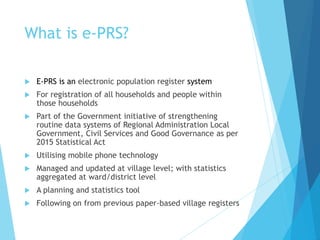
What is e-PRS?
 E-PRS is an electronic population register system
 For registration of all households and people within
those households
 Part of the Government initiative of strengthening
routine data systems of Regional Administration Local
Government, Civil Services and Good Governance as per
2015 Statistical Act
 Utilising mobile phone technology
 Managed and updated at village level; with statistics
aggregated at ward/district level
 A planning and statistics tool
 Following on from previous paper-based village registers
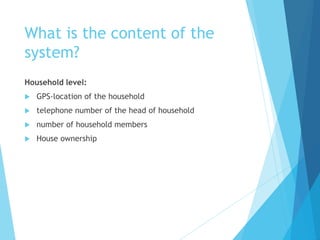
What is the content of the
system?
Household level:
 GPS-location of the household
 telephone number of the head of household
 number of household members
 House ownership
What is the content of the
system? Cont.
Individual level
 full name of each household member,
 sex,
 Date of birth
 Photograph of individuals
 disability status
 possession of ID documents such as birth notification or
certificate, voter’s registration card, passport (which will
be used to link the system with other systems)
 For children (under 18): whether the child’s parents live in
the household and linking the parents’ record to the child.
 For Population (5-24 year) : whether the child is in school,
and also which school the child attends
Who is involved?
 PORALG (lead)
 NBS (responsible for overseeing statistical exercises in
the country)
 EASTC (designer of the e-PRS)
 RITA and sector ministries (partners and users of the e-
PRS)
 UNICEF and UNFPA supported the pilot and continue
advocating for its use
Current progress
 Initial piloting began in April 2016 in Mapinga Ward
(peri-urban area), Bagamoyo district
 Piloted wards are Mapinga (peri-urban area),in Fukayuse
Ward (rural area) and Makurunge (Urban area)
 The system was rolled out to Bagamoyo and 5 wards of
challinze district
 The system was rolled out to the head teachers of
Bagamoyo 32 PS and 9 Sec school
 The system was rolled out to Mbozi district in Songwe
 Planned to rollout in one of district in Zanzibar
Some findings from piloting
 Initial limited understanding among population and local
leaders of what system is about
 Awareness raising is essential
 Local leader appreciation for the e-PRS as it is easier to
manage, with less time needed to complete registration
and generating a summary
 Most people are happy to be registered
 Technical issues were identified and addressed
What is the linkage with
other sectors?
 Education: system is linked to an existing mapping of enrolment in
schools and potential to identify out of school children.
 CRVS: The register records whether each person has a birth
certificate, which means unregistered children can be identified.
There is convergence in actors at the local level with VEO being
involved in management of both systems.
 Statistics: population register can provide accurate population
figures for hamlets, villages, wards, districts, regions etc., which
can be used for sampling and listing purposes of household surveys,
also provide the correct denominator for various indicators.
 Other sector linkages: the register has potential as a planning tool
for social sector services for children in that it allows for easy
generation of numbers and lists of children in a targeted age group
for a particular service, such as immunisation. The register can be
linked with other databases and case management systems.
What is the connection with
SDGs?
 Tool for local level monitoring of key indicators
 Real time population data
 Registering everybody – leaving no one behind
 Updated population data at region, district, ward
village/street and hamlet level contributes to
strengthened statistics and monitoring
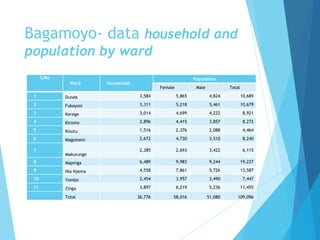
Bagamoyo- data household and
population by ward
S/No
Ward Households
Population
Female Male Total
1 Dunda 3,584 5,865 4,824 10,689
2 Fukayosi 3,311 5,218 5,461 10,679
3 Kerege 3,014 4,699 4,222 8,921
4 Kiromo 2,896 4,415 3,857 8,272
5 Kisutu 1,516 2,376 2,088 4,464
6 Magomeni 2,672 4,730 3,510 8,240
7
Makurunge
2,385 2,693 3,422 6,115
8 Mapinga 6,489 9,983 9,244 19,227
9 Nia Njema 4,558 7,861 5,726 13,587
10 Yombo 2,454 3,957 3,490 7,447
11 Zinga 3,897 6,219 5,236 11,455
Total 36,776 58,016 51,080 109,096
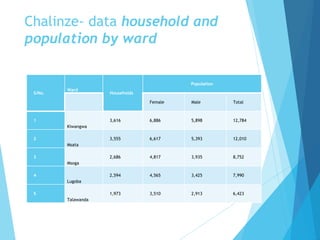
Chalinze- data household and
population by ward
S/No.
Ward
Households
Population
Female Male Total
1
Kiwangwa
3,616 6,886 5,898 12,784
2
Msata
3,555 6,617 5,393 12,010
3
Msoga
2,686 4,817 3,935 8,752
4
Lugoba
2,594 4,565 3,425 7,990
5
Talawanda
1,973 3,510 2,913 6,423
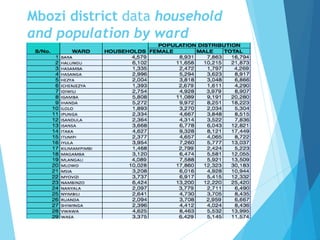
Mbozi district data household
and population by ward
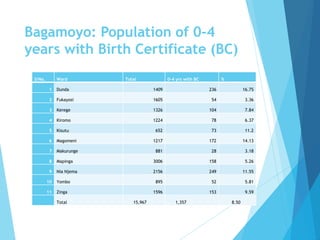
Bagamoyo: Population of 0-4
years with Birth Certificate (BC)
S/No. Ward Total 0-4 yrs with BC %
1 Dunda 1409 236 16.75
2 Fukayosi 1605 54 3.36
3 Kerege 1326 104 7.84
4 Kiromo 1224 78 6.37
5 Kisutu 652 73 11.2
6 Magomeni 1217 172 14.13
7 Makurunge 881 28 3.18
8 Mapinga 3006 158 5.26
9 Nia Njema 2156 249 11.55
10 Yombo 895 52 5.81
11 Zinga 1596 153 9.59
Total 15,967 1,357 8.50
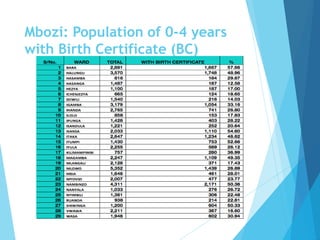
Mbozi: Population of 0-4 years
with Birth Certificate (BC)
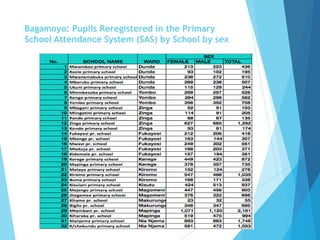
Bagamoyo: Pupils Reregistered in the Primary
School Attendance System (SAS) by School by sex
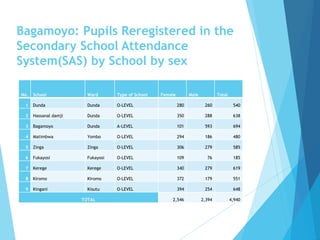
Bagamoyo: Pupils Reregistered in the
Secondary School Attendance
System(SAS) by School by sex
No. School Ward Type of School Female Male Total
1 Dunda Dunda O-LEVEL 280 260 540
2 Hassanal damji Dunda O-LEVEL 350 288 638
3 Bagamoyo Dunda A-LEVEL 101 593 694
4 Matimbwa Yombo O-LEVEL 294 186 480
5 Zinga Zinga O-LEVEL 306 279 585
6 Fukayosi Fukayosi O-LEVEL 109 76 185
7 Kerege Kerege O-LEVEL 340 279 619
8 Kiromo Kiromo O-LEVEL 372 179 551
9 Kingani Kisutu O-LEVEL 394 254 648
TOTAL 2,546 2,394 4,940
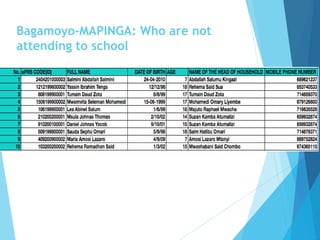
Bagamoyo-MAPINGA: Who are not
attending to school
SOURCE/LINKS

Presentation ePRS project

  • 1.
  • 2.
    What is e-PRS? E-PRS is an electronic population register system  For registration of all households and people within those households  Part of the Government initiative of strengthening routine data systems of Regional Administration Local Government, Civil Services and Good Governance as per 2015 Statistical Act  Utilising mobile phone technology  Managed and updated at village level; with statistics aggregated at ward/district level  A planning and statistics tool  Following on from previous paper-based village registers
  • 3.
    What is thecontent of the system? Household level:  GPS-location of the household  telephone number of the head of household  number of household members  House ownership
  • 4.
    What is thecontent of the system? Cont. Individual level  full name of each household member,  sex,  Date of birth  Photograph of individuals  disability status  possession of ID documents such as birth notification or certificate, voter’s registration card, passport (which will be used to link the system with other systems)  For children (under 18): whether the child’s parents live in the household and linking the parents’ record to the child.  For Population (5-24 year) : whether the child is in school, and also which school the child attends
  • 5.
    Who is involved? PORALG (lead)  NBS (responsible for overseeing statistical exercises in the country)  EASTC (designer of the e-PRS)  RITA and sector ministries (partners and users of the e- PRS)  UNICEF and UNFPA supported the pilot and continue advocating for its use
  • 6.
    Current progress  Initialpiloting began in April 2016 in Mapinga Ward (peri-urban area), Bagamoyo district  Piloted wards are Mapinga (peri-urban area),in Fukayuse Ward (rural area) and Makurunge (Urban area)  The system was rolled out to Bagamoyo and 5 wards of challinze district  The system was rolled out to the head teachers of Bagamoyo 32 PS and 9 Sec school  The system was rolled out to Mbozi district in Songwe  Planned to rollout in one of district in Zanzibar
  • 7.
    Some findings frompiloting  Initial limited understanding among population and local leaders of what system is about  Awareness raising is essential  Local leader appreciation for the e-PRS as it is easier to manage, with less time needed to complete registration and generating a summary  Most people are happy to be registered  Technical issues were identified and addressed
  • 8.
    What is thelinkage with other sectors?  Education: system is linked to an existing mapping of enrolment in schools and potential to identify out of school children.  CRVS: The register records whether each person has a birth certificate, which means unregistered children can be identified. There is convergence in actors at the local level with VEO being involved in management of both systems.  Statistics: population register can provide accurate population figures for hamlets, villages, wards, districts, regions etc., which can be used for sampling and listing purposes of household surveys, also provide the correct denominator for various indicators.  Other sector linkages: the register has potential as a planning tool for social sector services for children in that it allows for easy generation of numbers and lists of children in a targeted age group for a particular service, such as immunisation. The register can be linked with other databases and case management systems.
  • 9.
    What is theconnection with SDGs?  Tool for local level monitoring of key indicators  Real time population data  Registering everybody – leaving no one behind  Updated population data at region, district, ward village/street and hamlet level contributes to strengthened statistics and monitoring
  • 10.
    Bagamoyo- data householdand population by ward S/No Ward Households Population Female Male Total 1 Dunda 3,584 5,865 4,824 10,689 2 Fukayosi 3,311 5,218 5,461 10,679 3 Kerege 3,014 4,699 4,222 8,921 4 Kiromo 2,896 4,415 3,857 8,272 5 Kisutu 1,516 2,376 2,088 4,464 6 Magomeni 2,672 4,730 3,510 8,240 7 Makurunge 2,385 2,693 3,422 6,115 8 Mapinga 6,489 9,983 9,244 19,227 9 Nia Njema 4,558 7,861 5,726 13,587 10 Yombo 2,454 3,957 3,490 7,447 11 Zinga 3,897 6,219 5,236 11,455 Total 36,776 58,016 51,080 109,096
  • 11.
    Chalinze- data householdand population by ward S/No. Ward Households Population Female Male Total 1 Kiwangwa 3,616 6,886 5,898 12,784 2 Msata 3,555 6,617 5,393 12,010 3 Msoga 2,686 4,817 3,935 8,752 4 Lugoba 2,594 4,565 3,425 7,990 5 Talawanda 1,973 3,510 2,913 6,423
  • 12.
    Mbozi district datahousehold and population by ward
  • 13.
    Bagamoyo: Population of0-4 years with Birth Certificate (BC) S/No. Ward Total 0-4 yrs with BC % 1 Dunda 1409 236 16.75 2 Fukayosi 1605 54 3.36 3 Kerege 1326 104 7.84 4 Kiromo 1224 78 6.37 5 Kisutu 652 73 11.2 6 Magomeni 1217 172 14.13 7 Makurunge 881 28 3.18 8 Mapinga 3006 158 5.26 9 Nia Njema 2156 249 11.55 10 Yombo 895 52 5.81 11 Zinga 1596 153 9.59 Total 15,967 1,357 8.50
  • 14.
    Mbozi: Population of0-4 years with Birth Certificate (BC)
  • 15.
    Bagamoyo: Pupils Reregisteredin the Primary School Attendance System (SAS) by School by sex
  • 16.
    Bagamoyo: Pupils Reregisteredin the Secondary School Attendance System(SAS) by School by sex No. School Ward Type of School Female Male Total 1 Dunda Dunda O-LEVEL 280 260 540 2 Hassanal damji Dunda O-LEVEL 350 288 638 3 Bagamoyo Dunda A-LEVEL 101 593 694 4 Matimbwa Yombo O-LEVEL 294 186 480 5 Zinga Zinga O-LEVEL 306 279 585 6 Fukayosi Fukayosi O-LEVEL 109 76 185 7 Kerege Kerege O-LEVEL 340 279 619 8 Kiromo Kiromo O-LEVEL 372 179 551 9 Kingani Kisutu O-LEVEL 394 254 648 TOTAL 2,546 2,394 4,940
  • 17.
    Bagamoyo-MAPINGA: Who arenot attending to school
  • 18.