Disaster Management
System
Submitted by
Kailash Chandra
Pradhan
2101020016
Sujal Gupta 2101020018
Sambit Padhi 2101020019
Tehsen Ansari 2101020021
CONTENTS
1.Introduction
2.Objective
3.Recovery & Resilience
4.Technology Integration
5.Continous Improvement
6.Conclusion
Introduction
1 Training
Provide comprehensive training programs for emergency personnel
and volunteers.
2 Drills &Exercises
Conduct regular simulations to test plans and refine response
procedures.
3 Public Education
Empower communities with awareness campaigns and preparedness
resources.
Objective
1
Rapid Activation
Mobilize emergency
personnel and resources
immediately upon disaster
onset.
2
Damage
Assessment
Conduct thorough
evaluations to identify
priority needs and direct
relief efforts.
3
Coordinated Relief
Collaborate with local
authorities and aid
organizations to deliver
essential supplies.
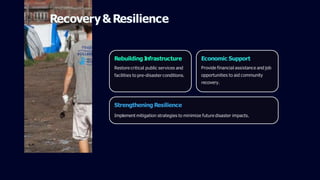
Recovery&Resilience
Rebuilding Infrastructure
Restore critical public services and
facilities to pre-disaster conditions.
Economic Support
Provide financial assistance and job
opportunities to aid community
recovery.
Strengthening Resilience
Implement mitigation strategies to minimize future disaster impacts.
TechnologicalIntegration
SatelliteMonitoring
Utilize satellite imagery for
real-time situational
awareness and early warning.
Data Analytics
Leverage predictive modeling
and data-driven decision-
making tools.
Communication
Networks
Ensure reliable,redundant
communication systems for
uninterrupted coordination.
Continuous Improvement
1 Monitoring &Evaluation
Regularly assess the effectiveness of disaster management plans and
procedures.
2 Lessons Learned
Capture and apply insights from past incidents to enhance future
preparedness.
3 Innovative Strategies
Incorporate emerging best practices and technologies to optimize
disaster response.
CONCLUSIO
N
Implementing a disaster management system within an enterprise
Java project presents a robust solution for addressing the
complexities and challenges of disaster response and recovery.
Leveraging Java's scalability, reliability, and extensive ecosystem,
such a system can effectively coordinate emergency response
efforts, facilitate communication among stakeholders, and
streamline resource allocation during crises.
Thank
You

Presentation(Disaster Management System).pptx

  • 1.
    Disaster Management System Submitted by KailashChandra Pradhan 2101020016 Sujal Gupta 2101020018 Sambit Padhi 2101020019 Tehsen Ansari 2101020021
  • 2.
    CONTENTS 1.Introduction 2.Objective 3.Recovery & Resilience 4.TechnologyIntegration 5.Continous Improvement 6.Conclusion
  • 3.
    Introduction 1 Training Provide comprehensivetraining programs for emergency personnel and volunteers. 2 Drills &Exercises Conduct regular simulations to test plans and refine response procedures. 3 Public Education Empower communities with awareness campaigns and preparedness resources.
  • 4.
    Objective 1 Rapid Activation Mobilize emergency personneland resources immediately upon disaster onset. 2 Damage Assessment Conduct thorough evaluations to identify priority needs and direct relief efforts. 3 Coordinated Relief Collaborate with local authorities and aid organizations to deliver essential supplies.
  • 5.
    Recovery&Resilience Rebuilding Infrastructure Restore criticalpublic services and facilities to pre-disaster conditions. Economic Support Provide financial assistance and job opportunities to aid community recovery. Strengthening Resilience Implement mitigation strategies to minimize future disaster impacts.
  • 6.
    TechnologicalIntegration SatelliteMonitoring Utilize satellite imageryfor real-time situational awareness and early warning. Data Analytics Leverage predictive modeling and data-driven decision- making tools. Communication Networks Ensure reliable,redundant communication systems for uninterrupted coordination.
  • 7.
    Continuous Improvement 1 Monitoring&Evaluation Regularly assess the effectiveness of disaster management plans and procedures. 2 Lessons Learned Capture and apply insights from past incidents to enhance future preparedness. 3 Innovative Strategies Incorporate emerging best practices and technologies to optimize disaster response.
  • 8.
    CONCLUSIO N Implementing a disastermanagement system within an enterprise Java project presents a robust solution for addressing the complexities and challenges of disaster response and recovery. Leveraging Java's scalability, reliability, and extensive ecosystem, such a system can effectively coordinate emergency response efforts, facilitate communication among stakeholders, and streamline resource allocation during crises.
  • 9.